Postcards From Pyongyang – Brian Souders ’09, Ph.D., LLC

 Brian Souders ’09, Ph.D., language, literacy and culture, has directed UMBC’s Study Abroad program since 2000. His own travels and study have taken him to (among many locations) Finland and Russia, but Souders spent a week this past spring in one of the most secretive and closed-off nations in the world: North Korea.
Officially known as the Democratic People’s Republic of Korea (or DPRK), North Korea hosts only a few thousand tourists annually – and only a fraction of that number are Americans.
A week spent in North Korea in March is not a spring break trip to Cancún by any stretch of the imagination. Most group tours do not start with a two-hour orientation that involves each individual signing a statement that they are not a journalist trying to sneak into the country. Nor do most group tours elsewhere in the world have a long list of rules and regulations – no photographs of soldiers, scenes of poverty, strategic buildings or anything that could remotely be construed as a military target or a source of embarrassment to the North Korean government.
In exchange for our agreement to these conditions? We were to be accompanied at all times by guides from the North Korean state travel agency. No long strolls on your own across Kim Il Sung Square in the capital city of Pyongyang. In fact, there was no time scheduled for any individual activity. Our assigned guides could get into serious trouble were we to wander off.
Time Traveling to North Korea
The best way to describe the week I spent in North Korea is “time travel.” A journey back to my very first visit to the then-Soviet Union in 1982. At the time, I was a high school exchange student spending my junior year in Finland – and our program included a weekend trip to Leningrad (now St. Petersburg).
As was the case in Leningrad in the latter days of the Cold War, Pyongyang is devoid of any commercial advertising. The city is full of propaganda in support of the Korean Workers’ Party (North Korea’s Communist Party) and the Korean People’s Army. The same lantern-jawed proletarians depicted in Soviet propaganda posters also appeared in Pyongyang with Asian – instead of European – features.
Even more ubiquitous were images of the three men who have ruled North Korea since its founding in 1948: the Great Leader and Eternal President, Kim Il Sung (1948-1994); his son, the Dear Leader Kim Jong Il (1994-2012); and his grandson, current leader, Kim Jong Un.
In the 1980s, the cult of personality among Soviet leaders had largely vanished, with only founder Vladimir Lenin’s portrait still widely displayed. The cult of the Kim family, however, is inescapable – disseminated via posters and portraits in libraries, schools, public squares, and in every single car of the Pyongyang metro.
Our itinerary for the week also included visits to Mansu Hill (where statues of Kim Il Sung and Kim Jong Il tower over the square) and Kumsusan Palace of the Sun (where both men are buried). We also paid a five-hour visit to the International Friendship Exhibition Hall, a museum with an endless maze of corridors connecting rooms filled with the more than 90,000 gifts given to the Great Leader and the Dear Leader by a long list of dead dictators – including the late presidents of Iraq, Libya, Romania, the Soviet Union.
“If you were to spend one minute looking at each gift in this museum to the Eternal President and his son, the Dear Leader,” our guide told us as the tour commenced, “you could spend a year here.”
We exchanged silent glances of panic.
A Chill in the Air
In March, the Korean Peninsula is swept by chilly winds from Siberia. But the contrast between South and North Korea in March is revealing.
When I visited South Korea in March 2012 to run the Seoul Marathon, I regularly had to open the windows in my overheated hotel room. But I rarely did so in North Korea – where hot water was sporadic, electricity intermittent (even in the capital) and indoor heating was not universal.
As our group headed into the Light Industry section of the Museum of the Three Revolutions during our trip, I had a bad feeling.
“Bundle up,” I told one of my fellow travelers. “We’re going inside.” We could see our own breath as we wandered from exhibition to exhibition.
I did catch a few memorable and unscripted glimpses of the country seen through the windows of our comfortable tour bus. The public face of Pyongyang glistened in comparison with empty, pothole-filled highways that wound past high-rise apartment rows marked by extreme poverty.
And I saw life beyond the city, too – glimpses of a stunning countryside where peasant farmers hacked through the snow-covered fields, following ox-powered plows in the bitter cold as they prepared for spring planting.
But was I able to experience the “real” North Korea? Our group never entered a regular shop or interacted with anyone other than roller-blading children at Kim Il Sung Stadium. We never touched (or even saw) North Korean currency.
The answer, sadly, is no.
]]>
Brian Souders ’09, Ph.D., language, literacy and culture, has directed UMBC’s Study Abroad program since 2000. His own travels and study have taken him to (among many locations) Finland and...
https://umbc.edu/stories/postcards-from-pyongyang-north-korea/
https://my3.my.umbc.edu/api/v0/pixel/news/123060/guest@my.umbc.edu/9fb239bfc3de3589a253627d5567ba89/api/pixel
fall-2013
perspectives
UMBC News & Magazine
https://my3.my.umbc.edu/groups/umbc-news-magazine
https://assets1-my.umbc.edu/system/shared/avatars/groups/000/001/943/24435aa6207c452e7bc15cc74b42c7bb/xsmall.png?1748556657
https://assets1-my.umbc.edu/system/shared/avatars/groups/000/001/943/24435aa6207c452e7bc15cc74b42c7bb/original.png?1748556657
https://assets2-my.umbc.edu/system/shared/avatars/groups/000/001/943/24435aa6207c452e7bc15cc74b42c7bb/xxlarge.png?1748556657
https://assets2-my.umbc.edu/system/shared/avatars/groups/000/001/943/24435aa6207c452e7bc15cc74b42c7bb/xlarge.png?1748556657
https://assets3-my.umbc.edu/system/shared/avatars/groups/000/001/943/24435aa6207c452e7bc15cc74b42c7bb/large.png?1748556657
https://assets1-my.umbc.edu/system/shared/avatars/groups/000/001/943/24435aa6207c452e7bc15cc74b42c7bb/medium.png?1748556657
https://assets2-my.umbc.edu/system/shared/avatars/groups/000/001/943/24435aa6207c452e7bc15cc74b42c7bb/small.png?1748556657
https://assets1-my.umbc.edu/system/shared/avatars/groups/000/001/943/24435aa6207c452e7bc15cc74b42c7bb/xsmall.png?1748556657
https://assets2-my.umbc.edu/system/shared/avatars/groups/000/001/943/24435aa6207c452e7bc15cc74b42c7bb/xxsmall.png?1748556657
UMBC News & Magazine
0
0
false
Thu, 26 Sep 2013 19:34:43 -0400
Ninja Star – Adam Grossman ’06, EnvEng, M.S. ’98, CivEng

Adam Grossman ’06, environmental science, and ’98, M.S., civil engineering, has always loved competition.
As an unheralded runner out of Pikesville High School, Grossman helped UMBC’s track and field program find success as a sprinter and member of the relay teams – and eventually earned a spot in the university’s Athletic Hall of Fame in 2011.
Five years after his last track meet, this former Retriever has found another – and even more high profile – way to continue his passion to compete.
He’s a ninja.
Grossman discovered the TV show American Ninja Warrior by accident one night and quickly grew enamored with it. A video submission earned Grossman a spot on the NBC show in 2011, and he has made the competition cut for three straight years, earning his way through mandatory regional rounds to the show’s final round in Las Vegas in both 2012 and 2013.
The show’s grand prize is $500,000, but Grossman – who works for the U.S. Navy as an engineer with a focus on pollution prevention – doesn’t really expect to see that money.
“I do it for the camaraderie and the competition,” he says. “Even though I’m in shape and I’m pretty good at this, I see winning the $500,000 as kind of like winning the Lotto. I just like doing the things [on the show]. It’s so much fun.”
One of the centerpieces of American Ninja Warrior is a brutal four-stage obstacle course testing the strength and endurance of competitors in numerous ways. There are usually six to eight obstacles per stage with names such as “Quintuple Step,” “Warped Wall” and “Cliffhanger,” each of which requires a different skill set and approach. Contestants need to be well-rounded athletes, because failure in any single obstacle results in elimination.
Not surprisingly, finishing the obstacle course without failure for the first time in competition is Grossman’s favorite American Ninja Warrior memory. He did so in Miami last year during the preliminary round of the regional tryouts. Grossman had been eliminated the previous year when he lost his battle with the Warped Wall, and he’d been looking forward to a rematch. The wall loomed as the final obstacle in Miami and he was elated when made it to the top and hit the red buzzer signifying his completion of the course.
“It seemed pretty surreal,” Grossman said. “I got to do an interview with Angela Sun, the show’s sideline reporter, and then got to run by the audience and high-five everyone.”
Grossman now trains for American Ninja Warrior year-round at his home in Northern Virginia, teaming up with Mike Bernardo, another regular participant in the show whom he met at the finals in Las Vegas. They have jointly stepped up the intensity of their training and even go to local gyms that have elements found in various obstacles courses on the show. It is a specialized training that Grossman credits with improving his competition skills over the past year.
Being a ninja warrior has its costs, however. Grossman has to balance his job with his training and travel – and contestants must pay for expenses they incur at the regional level out of their own pocket. But Grossman doesn’t see himself quitting anytime soon.
“As long as the show gets renewed, I’m going back,” he says.
– Jeff Seidel ’85
]]>
Adam Grossman ’06, environmental science, and ’98, M.S., civil engineering, has always loved competition. As an unheralded runner out of Pikesville High School, Grossman helped UMBC’s track and...
https://umbc.edu/stories/ninja-star-adam-grossman-06-enveng-m-s-98-civeng/
https://my3.my.umbc.edu/api/v0/pixel/news/123061/guest@my.umbc.edu/37aeaff1404befdde812f4bb392292ac/api/pixel
alumni
fall-2013
UMBC News & Magazine
https://my3.my.umbc.edu/groups/umbc-news-magazine
https://assets1-my.umbc.edu/system/shared/avatars/groups/000/001/943/24435aa6207c452e7bc15cc74b42c7bb/xsmall.png?1748556657
https://assets1-my.umbc.edu/system/shared/avatars/groups/000/001/943/24435aa6207c452e7bc15cc74b42c7bb/original.png?1748556657
https://assets2-my.umbc.edu/system/shared/avatars/groups/000/001/943/24435aa6207c452e7bc15cc74b42c7bb/xxlarge.png?1748556657
https://assets2-my.umbc.edu/system/shared/avatars/groups/000/001/943/24435aa6207c452e7bc15cc74b42c7bb/xlarge.png?1748556657
https://assets3-my.umbc.edu/system/shared/avatars/groups/000/001/943/24435aa6207c452e7bc15cc74b42c7bb/large.png?1748556657
https://assets1-my.umbc.edu/system/shared/avatars/groups/000/001/943/24435aa6207c452e7bc15cc74b42c7bb/medium.png?1748556657
https://assets2-my.umbc.edu/system/shared/avatars/groups/000/001/943/24435aa6207c452e7bc15cc74b42c7bb/small.png?1748556657
https://assets1-my.umbc.edu/system/shared/avatars/groups/000/001/943/24435aa6207c452e7bc15cc74b42c7bb/xsmall.png?1748556657
https://assets2-my.umbc.edu/system/shared/avatars/groups/000/001/943/24435aa6207c452e7bc15cc74b42c7bb/xxsmall.png?1748556657
UMBC News & Magazine
0
0
false
Thu, 26 Sep 2013 19:33:18 -0400
In Good Company – Isaac Kinde ’05, BioSci
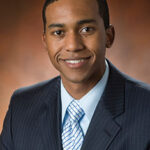
Isaac Kinde ’05, biological sciences, has a habit of surrounding himself with the right people.
As a high school student in Redlands, Calif., he ranked at the top of his class, applying to the top national research universities. Then, as a Meyerhoff Scholar at UMBC, he collaborated with like-minded undergraduate researchers to examine the molecular makeup of HIV. Now, in his eighth year of an M.D./Ph.D. program at the Johns Hopkins University, he works alongside some of the nation’s leading cancer researchers in the Sidney Kimmel Comprehensive Cancer Center.
“I never had a master plan for my life,” Kinde says. “I just remember thinking that being around the right people would be helpful. And, I think that’s been the common thread.”
Named one of Forbes magazine’s “30 Under 30” rising stars this year, Kinde’s research has focused on developing effective screening tests for cancer – specifically colon, pancreatic, and ovarian and endometrial cancers. He created a preliminary technology that can detect ovarian and endometrial cancers in women who exhibit no symptoms of the diseases.
Using samples collected during annual exams, Kinde and his team use this new technology to sequence the DNA and distinguish any genetic mutations that are precursors to these types of cancer. Kinde’s findings are particularly exciting because—for the first time—researchers are detecting cancers based on specific DNA alterations. (Current screening tests, which are not recommended for general use due to their ineffectiveness, only study cancerous cells versus normal cells.)
Since Kinde began working in the Ludwig Center for Cancer Genetics & Therapeutics, which is part of the Kimmel Center, he has co-authored six articles in publications including Science Translational Medicine, Nature, and PLoS One. His advisor, Dr. Bert Vogelstein, director of the Ludwig Center and a professor of oncology and pathology, recalls being “immediately impressed with Isaac’s curiosity, earnestness, and intelligence.”
That strong first impression led Vogelstein to do something he admits that he rarely if ever does: reserve a space for Kinde in his laboratory, where the UMBC alumnus has joined the ranks of an ambitious group of researchers tackling some of the world’s biggest public-health issues.
Some of Kinde’s earliest exposures to medical research occurred in the laboratory of Michael Summers, a professor of chemistry and biochemistry at UMBC and a Howard Hughes Medical Institute investigator. Kinde worked with Summers on designing a new class of HIV inhibitors, examining a part of the virus that hadn’t been targeted before.
“I was close to working 40 hours a week [in the lab] and even more during the summer and winter breaks,” Kinde says. “And I just remember really loving what I was doing.”
In August, Kinde will begin the final stages of what will be a ten-year journey. He’s already completed the first two years of medical school and will now move through two-month rotations across a variety of departments such as medicine, surgery, and obstetrics and gynecology. After completing these required rotations (and finishing medical school), he’ll choose a specialty for his residency.
But Kinde says that UMBC – and the Meyerhoff Scholars Program in particular – have helped shape his remarkable trajectory.
“The Meyerhoff Program is one big family,” says Kinde. “It provides the mentorship you need and surrounds you with like-minded people who also want to succeed. And it has a proven track record of producing very successful people.”
Count Isaac Kinde as one of them – with even greater successes on the horizon.
– B. Rose Huber
]]>
Isaac Kinde ’05, biological sciences, has a habit of surrounding himself with the right people. As a high school student in Redlands, Calif., he ranked at the top of his class, applying to the...
https://umbc.edu/stories/in-good-company-isaac-kinde-05-biosci/
https://my3.my.umbc.edu/api/v0/pixel/news/123062/guest@my.umbc.edu/342fc58239d667bc81e784465dc53b2c/api/pixel
alumni
fall-2013
UMBC News & Magazine
https://my3.my.umbc.edu/groups/umbc-news-magazine
https://assets1-my.umbc.edu/system/shared/avatars/groups/000/001/943/24435aa6207c452e7bc15cc74b42c7bb/xsmall.png?1748556657
https://assets1-my.umbc.edu/system/shared/avatars/groups/000/001/943/24435aa6207c452e7bc15cc74b42c7bb/original.png?1748556657
https://assets2-my.umbc.edu/system/shared/avatars/groups/000/001/943/24435aa6207c452e7bc15cc74b42c7bb/xxlarge.png?1748556657
https://assets2-my.umbc.edu/system/shared/avatars/groups/000/001/943/24435aa6207c452e7bc15cc74b42c7bb/xlarge.png?1748556657
https://assets3-my.umbc.edu/system/shared/avatars/groups/000/001/943/24435aa6207c452e7bc15cc74b42c7bb/large.png?1748556657
https://assets1-my.umbc.edu/system/shared/avatars/groups/000/001/943/24435aa6207c452e7bc15cc74b42c7bb/medium.png?1748556657
https://assets2-my.umbc.edu/system/shared/avatars/groups/000/001/943/24435aa6207c452e7bc15cc74b42c7bb/small.png?1748556657
https://assets1-my.umbc.edu/system/shared/avatars/groups/000/001/943/24435aa6207c452e7bc15cc74b42c7bb/xsmall.png?1748556657
https://assets2-my.umbc.edu/system/shared/avatars/groups/000/001/943/24435aa6207c452e7bc15cc74b42c7bb/xxsmall.png?1748556657
UMBC News & Magazine
0
0
false
Thu, 26 Sep 2013 19:31:42 -0400
How To Sew (a Flag) and Tell (a Great American Story)

 With Kristin Schenning ’15, Mimi Dietrich ’70, and Vickie Greisman ’13
By Meredith Purvis
Americans take immense pride in their flag. The simple rectangle of red, white and blue fabric sewn together is a national symbol that helps knit Americans together as a people. But how much does the average person know about the actual flag that “Star Spangled Banner” author Francis Scott Key saw flying over Fort McHenry during the War of 1812?
Kristin Schenning, a UMBC graduate student and the education director for the Maryland State Historical Society, and a team of volunteers want to help Americans reconnect with that fabled pastby creating a full-sized replica of the famous flag. The project is called: “Stitching History: Recreating the Star Spangled Banner Flag.”
Step 1: Brush Up On Your History
Before you sew a stitch, you need a pattern. And this pattern required Schenning to crack open some history books. The flag that flew above Fort McHenry was created in 1813 by Mary Pickersgill, a Baltimore flag maker. Pickersgill worked for six weeks in a local brewery by candlelight to stitch the 30’ x 42’ flag that inspired Key to pen the anthem.
“[The War of 1812] is sometimes called the forgotten war, but what we got from that war is so important in how we see ourselves as Americans,” says Schenning.
Step 2: Get to the Market
Once you’ve brushed up on history, you’ll need supplies. And making a 30’ x 42’ flag requires a lot of material, especially if you want to find materials that match the original fabrics used by Pickersgill. Thanks to research done by the Smithsonian Institution, Schenning was able to make a shopping list. The most challenging item to obtain was English wool bunting. “You can’t just get this fabric at a store or take in a piece of the original flag for duplication,” she says. So Schenning sought out weavers, and settled on a family-run company in Pennsylvania that could replicate it. She also turned to Baltimore-based businesses G. Krug and Son for iron grommets, and to Historic Ships for rope splicing.
Step 3: Marshal Your Troops

You need many skilled hands to help lighten the workload of recreating history. So Schenning turned to local quilting clubs and guilds for expert help. In just a few months, she was able to recruit around 200 stitchers. The volunteers also needed to understand the history. “We took the stitchers on several field trips to Fort McHenry, the Flag House and the Smithsonian,” she says.
Several of these volunteers are UMBC alumni, including former UMBC Alumna of the Year Award winner Mimi Dietrich ‘70 and Vicki Greisman ’13. Both women have worked on the project since it kicked off on July 4 – and Schenning and her volunteers wanted to complete the flag in roughly the same time and manner that Pickersgill did.
“Because of the place [of the flag] in Baltimore’s history, this project has a real place in my heart,” say Dietrich
“People are thrilled [by the project],” adds Greisman.
Schenning also invited in the public for open sewing days. While it may seem odd to ask folks without any sewing experience to come in and put a stitch in the flag, there was a good reasonto seek the extra help: “The goal of this project is hands-on history,” Schenning explains. “We want people to identify with that iconic national symbol, and to be able to put themselves in Mary Pickersgill’s place.”

Step 4: Run It Up the Flagpole (We’ll All Salute!)
All this hard work in recreating history deserves some celebration, and Schenning and the Maryland Historical Society are planning a number of events featuring the flag. Upon its completion, the flag will fly over Fort McHenry on Defender’s Day in September 2013, and will travel around the state of Maryland and beyond, retracing the path of key events in Maryland during the War of 1812. There are also ongoing discussions about a national tour as well.
“I was one of the first students to attend UMBC when it was founded, and we’re referred to as pioneers,” says Dietrich. “I like that. I like to get involved with projects [like this] and help figure them out.”

By the numbers
110 yards of red fabric
110 yards of white fabric
55 yards of blue fabric
15 stars
13 stripes
200 volunteers
6 weeks of work
$10,000 for supplies
]]>
With Kristin Schenning ’15, Mimi Dietrich ’70, and Vickie Greisman ’13 By Meredith Purvis Americans take immense pride in their flag. The simple rectangle of red, white and blue fabric sewn...
https://umbc.edu/stories/how-to-sew-a-flag-and-tell-a-great-american-story/
https://my3.my.umbc.edu/api/v0/pixel/news/123063/guest@my.umbc.edu/7fba2041f4ce87a73577ff7bd4b58271/api/pixel
fall-2013
perspectives
UMBC News & Magazine
https://my3.my.umbc.edu/groups/umbc-news-magazine
https://assets1-my.umbc.edu/system/shared/avatars/groups/000/001/943/24435aa6207c452e7bc15cc74b42c7bb/xsmall.png?1748556657
https://assets1-my.umbc.edu/system/shared/avatars/groups/000/001/943/24435aa6207c452e7bc15cc74b42c7bb/original.png?1748556657
https://assets2-my.umbc.edu/system/shared/avatars/groups/000/001/943/24435aa6207c452e7bc15cc74b42c7bb/xxlarge.png?1748556657
https://assets2-my.umbc.edu/system/shared/avatars/groups/000/001/943/24435aa6207c452e7bc15cc74b42c7bb/xlarge.png?1748556657
https://assets3-my.umbc.edu/system/shared/avatars/groups/000/001/943/24435aa6207c452e7bc15cc74b42c7bb/large.png?1748556657
https://assets1-my.umbc.edu/system/shared/avatars/groups/000/001/943/24435aa6207c452e7bc15cc74b42c7bb/medium.png?1748556657
https://assets2-my.umbc.edu/system/shared/avatars/groups/000/001/943/24435aa6207c452e7bc15cc74b42c7bb/small.png?1748556657
https://assets1-my.umbc.edu/system/shared/avatars/groups/000/001/943/24435aa6207c452e7bc15cc74b42c7bb/xsmall.png?1748556657
https://assets2-my.umbc.edu/system/shared/avatars/groups/000/001/943/24435aa6207c452e7bc15cc74b42c7bb/xxsmall.png?1748556657
UMBC News & Magazine
0
0
false
Thu, 26 Sep 2013 19:29:37 -0400
Zip and Volt
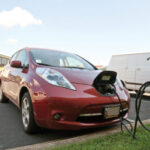
Transportation counts for more than one third of UMBC’s carbon footprint, so getting more students, faculty and staff to campus with fewer vehicles is high on the university’s sustainability agenda.
The university has a dedicated system of commuter buses serving surrounding communities (UMBC Transit), but a campus initiative called Transportation Alternatives for a Greener UMBC (TAG UMBC) now offers alternatives to single passenger commuting that make driving to the university a greener experience as well.
TAG UMBC works alongside the Climate Change Taskforce, specifically the Transportation Workgroup chaired by Julianne Simpson, the university’s assistant director for planning .
“The taskforce has different initiatives to reduce pollution and emissions,” says Simpson. “Transportation has been the most active because it’s something that’s tangible.”
One TAG UMBC initiative was to place two electric car-charging stations in the Stadium Parking Lot. The stations, installed in October 2011, were funded by the Baltimore Electric Vehicle Initiative (BEVI) and are free and open to use by the entire UMBC community.
TAG UMBC also sponsors a carpooling program with Parking Services and Off-Campus Student Services. Participants are matched with other individuals who live nearby – and carpool drivers receive a special parking permit that allows them to park closer to campus as an incentive.
The most popular of TAG UMBC’s green alternatives is Zipcar, which has been in place since May 2011. The service allows students—and even faculty and staff—to rent one of two campus Zipcars for personal use. According to Lena Salins ’13, theatre and anthropology, Zipcar is a great resource for residential students without cars on campus.
“I had opted not to get a meal plan senior year since my apartment on campus had a full kitchen, but I had no way to get to the grocery store,” says Salins. “Zipcar was really useful for those short trips I couldn’t have made otherwise.”
Simpson hopes that bringing greater visibility to TAG UMBC initiatives will make the campus community reflect on the impact their vehicles have on the environment – and create support for future green transportation alternatives, such as the bike share program that is currently in the works.
“It’s all about implementing a system of awareness,” says Simpson. “That’s the key to greener transportation at UMBC.”
– Laura Lefavor ’13
]]>
Transportation counts for more than one third of UMBC’s carbon footprint, so getting more students, faculty and staff to campus with fewer vehicles is high on the university’s sustainability...
https://umbc.edu/stories/zip-and-volt/
https://my3.my.umbc.edu/api/v0/pixel/news/123064/guest@my.umbc.edu/bf934566ad080324bebf519bc476672e/api/pixel
discovery
fall-2013
green-issue
UMBC News & Magazine
https://my3.my.umbc.edu/groups/umbc-news-magazine
https://assets1-my.umbc.edu/system/shared/avatars/groups/000/001/943/24435aa6207c452e7bc15cc74b42c7bb/xsmall.png?1748556657
https://assets1-my.umbc.edu/system/shared/avatars/groups/000/001/943/24435aa6207c452e7bc15cc74b42c7bb/original.png?1748556657
https://assets2-my.umbc.edu/system/shared/avatars/groups/000/001/943/24435aa6207c452e7bc15cc74b42c7bb/xxlarge.png?1748556657
https://assets2-my.umbc.edu/system/shared/avatars/groups/000/001/943/24435aa6207c452e7bc15cc74b42c7bb/xlarge.png?1748556657
https://assets3-my.umbc.edu/system/shared/avatars/groups/000/001/943/24435aa6207c452e7bc15cc74b42c7bb/large.png?1748556657
https://assets1-my.umbc.edu/system/shared/avatars/groups/000/001/943/24435aa6207c452e7bc15cc74b42c7bb/medium.png?1748556657
https://assets2-my.umbc.edu/system/shared/avatars/groups/000/001/943/24435aa6207c452e7bc15cc74b42c7bb/small.png?1748556657
https://assets1-my.umbc.edu/system/shared/avatars/groups/000/001/943/24435aa6207c452e7bc15cc74b42c7bb/xsmall.png?1748556657
https://assets2-my.umbc.edu/system/shared/avatars/groups/000/001/943/24435aa6207c452e7bc15cc74b42c7bb/xxsmall.png?1748556657
UMBC News & Magazine
0
0
false
Thu, 26 Sep 2013 19:26:33 -0400
Raising the Roof
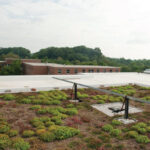
Want to see UMBC’s sustainable future? Just make your way to the roof of Patapsco Hall – where efforts make UMBC greener are intersecting with pedagogy and academic research.
A recent $16.5 million renovation and addition to the residence hall – designed by Newman Architects and built by KBE Building Corporation – recently received a Leadership in Energy and Environmental Design (LEED) Gold certification. It is the first building on campus to receive this designation.
One of the key features in obtaining this certification is Patapsco Hall’s “green roof.” These green roofs are important elements of sustainable design since they help reduce storm water runoff that is key cause of pollution in the Chesapeake Bay and in other local streams and rivers. Rooftop vegetation helps to insulate the building, reducing energy consumption. Vegetated surfaces also improve air quality and capture the greenhouse gas carbon dioxide.
Patapsco Hall’s green roof is also the platform for a research project focusing on sustainable design and construction. The green roof is paired with an identically-sized control area. Each area features dedicated drainage systems and rainwater quantity and quality measurement devices.
Andrew J. Miller, a professor in UMBC’s geography and environmental systems department, says that the data generated by the system will document storm water retention and monitor runoff from both portions of the roof, allowing comparisons in terms of quantity and quality. Storm water retention totals and storm hydrographs are displayed in real-time in the building’s lobby – and Miller plans incorporate the data into his classes.
When I teach hydrology, I always have the students access real data from local USGS stream gages as well as rainfall data from nearby sources,” he observes. “One of the best ways to assess [green roofs’] effectiveness is to have monitoring sites side by side on the same roof, comparing how much water runs off the traditional roof compared with the green roof. Having such a monitoring site right here on campus collecting information in real time presents a great educational opportunity.”
The LEED rating system was developed by the U.S. Green Building Council (USGBC) in 2000 and provides verification that a building was designed and built using aspects of efficient environmental health conservation strategies. Certifications of Silver, Gold, and Platinum recognizes varying levels of design and performance in areas including sustainable site development, water savings, energy efficiency, materials selection, and indoor environmental quality.
The push for new LEED designated sites at UMBC is not limited to Patapsco. The university’s Performing Arts and Humanities Building has been awarded a LEED Silver designation. Its sustainable features include a rainwater harvesting system (for on-site irrigation), use of pervious concrete sidewalks and a white roof which will reduce the building’s urban heat island effect.
– Chelsea Haddaway
]]>
Want to see UMBC’s sustainable future? Just make your way to the roof of Patapsco Hall – where efforts make UMBC greener are intersecting with pedagogy and academic research. A recent $16.5...
https://umbc.edu/stories/raising-the-roof/
https://my3.my.umbc.edu/api/v0/pixel/news/123065/guest@my.umbc.edu/76639baff49d9dcfdf906a5f620a5f1f/api/pixel
discovery
fall-2013
green-issue
UMBC News & Magazine
https://my3.my.umbc.edu/groups/umbc-news-magazine
https://assets1-my.umbc.edu/system/shared/avatars/groups/000/001/943/24435aa6207c452e7bc15cc74b42c7bb/xsmall.png?1748556657
https://assets1-my.umbc.edu/system/shared/avatars/groups/000/001/943/24435aa6207c452e7bc15cc74b42c7bb/original.png?1748556657
https://assets2-my.umbc.edu/system/shared/avatars/groups/000/001/943/24435aa6207c452e7bc15cc74b42c7bb/xxlarge.png?1748556657
https://assets2-my.umbc.edu/system/shared/avatars/groups/000/001/943/24435aa6207c452e7bc15cc74b42c7bb/xlarge.png?1748556657
https://assets3-my.umbc.edu/system/shared/avatars/groups/000/001/943/24435aa6207c452e7bc15cc74b42c7bb/large.png?1748556657
https://assets1-my.umbc.edu/system/shared/avatars/groups/000/001/943/24435aa6207c452e7bc15cc74b42c7bb/medium.png?1748556657
https://assets2-my.umbc.edu/system/shared/avatars/groups/000/001/943/24435aa6207c452e7bc15cc74b42c7bb/small.png?1748556657
https://assets1-my.umbc.edu/system/shared/avatars/groups/000/001/943/24435aa6207c452e7bc15cc74b42c7bb/xsmall.png?1748556657
https://assets2-my.umbc.edu/system/shared/avatars/groups/000/001/943/24435aa6207c452e7bc15cc74b42c7bb/xxsmall.png?1748556657
UMBC News & Magazine
0
0
false
Thu, 26 Sep 2013 19:25:16 -0400
Passing the Sniff Test

Most people stop thinking about their trash once they toss it in a bin. But with composting, the bin is only the beginning.
“Composting is a way to make food waste into new food growth,” explains Madeline Hall ’12, geography and environmental systems, who was a key player in establishing a composting program at UMBC. “It’s a way to bring the process full circle.”
Even before she became a Student Government Association sustainability intern in 2011, Hall was working to show that composting was something students really wanted. But before composting could become a part of UMBC’s sustainability efforts, Hall needed to forge a new relationship between the university (which oversees campus waste disposal) and Chartwells (which holds the university’s catering contract). And because UMBC’s Campus Card Office oversees the Chartwells contract, it also became involved with compost planning.
Angie Hammerbacher, manager of the Campus Card Office, worked with Hall to sort out the logistics of composting on a large scale. “It’s just the natural direction UMBC was going in,” says Hammerbacher. “The community understood that something needed to be done to promote sustainability on campus, and composting was one of the ways we could do that.”
Because of UMBC’s size, the accumulated waste needs to be taken off campus to be composted. So the university signed a contract with Waste Neutral to do so, and composting was introduced into the True Grits dining hall in July 2011.
True Grits employees are trained to recognize compostable material, which includes not only food waste but also paper products without a plastic coating. This waste is taken to a special dumpster outside the dining hall, which is emptied by the contractors twice per week.
UMBC’s composting is carried out almost completely behind the scenes, so student advocacy is a key element in building a constituency for the effort. Brent Mattox ’13, computer science, continued Hall’s efforts when he took on the sustainability intern post last year.
“At the end of the day, our success is all about outreach,” says Mattox. “It starts with the students—if people see that we really want it, they’ll start to make the changes too.”
Mattox organized composting at large campus events such as Quadmania and EcoFest to help advertise the program. He also helped implement an extension of UMBC’s composting program to The Commons in February.
To date, 107.77 tons of waste has been composted at UMBC between the dining hall, The Commons and campus events.
“Composting at UMBC is unique because so many people have to come together to make it happen,” says Hall. “And to do that at a time when resources could easily be allocated elsewhere—that really shows our campus’ commitment to sustainable actions.”
– Laura Lefavor’13
]]>
Most people stop thinking about their trash once they toss it in a bin. But with composting, the bin is only the beginning. “Composting is a way to make food waste into new food growth,”...
https://umbc.edu/stories/passing-the-sniff-test/
https://my3.my.umbc.edu/api/v0/pixel/news/123066/guest@my.umbc.edu/a55e5ba83c48ceb0227eb9e7ce8ec7ba/api/pixel
discovery
fall-2013
green-issue
UMBC News & Magazine
https://my3.my.umbc.edu/groups/umbc-news-magazine
https://assets1-my.umbc.edu/system/shared/avatars/groups/000/001/943/24435aa6207c452e7bc15cc74b42c7bb/xsmall.png?1748556657
https://assets1-my.umbc.edu/system/shared/avatars/groups/000/001/943/24435aa6207c452e7bc15cc74b42c7bb/original.png?1748556657
https://assets2-my.umbc.edu/system/shared/avatars/groups/000/001/943/24435aa6207c452e7bc15cc74b42c7bb/xxlarge.png?1748556657
https://assets2-my.umbc.edu/system/shared/avatars/groups/000/001/943/24435aa6207c452e7bc15cc74b42c7bb/xlarge.png?1748556657
https://assets3-my.umbc.edu/system/shared/avatars/groups/000/001/943/24435aa6207c452e7bc15cc74b42c7bb/large.png?1748556657
https://assets1-my.umbc.edu/system/shared/avatars/groups/000/001/943/24435aa6207c452e7bc15cc74b42c7bb/medium.png?1748556657
https://assets2-my.umbc.edu/system/shared/avatars/groups/000/001/943/24435aa6207c452e7bc15cc74b42c7bb/small.png?1748556657
https://assets1-my.umbc.edu/system/shared/avatars/groups/000/001/943/24435aa6207c452e7bc15cc74b42c7bb/xsmall.png?1748556657
https://assets2-my.umbc.edu/system/shared/avatars/groups/000/001/943/24435aa6207c452e7bc15cc74b42c7bb/xxsmall.png?1748556657
UMBC News & Magazine
0
0
false
Thu, 26 Sep 2013 19:23:52 -0400
A Greener UMBC?
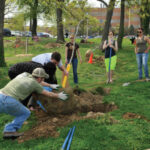
When UMBC President Freeman A. Hrabowski, III, signed the American College & University Presidents’ Climate Commitment in 2007, he took the first step to put UMBC on the path to a more sustainable future.
Tanvi Gadhia ’09, geography and environmental systems, has the job of assessing UMBC’s progress in making its goal of becoming climate neutral and helping push the university to get there even more quickly.
Gadhia was hired last year as UMBC’s first environmental sustainability coordinator. As a student, she led groups including UMBC Students for Environmental Awareness and the Maryland Student Climate Coalition – raising awareness about the issue of climate change and advocating for change.
In her new job, Gadhia coordinates the sustainability efforts across the entire campus, tracking the university’s movement toward its climate targets and increasing community awareness of those goals.
Coordination is necessary because of the diverse groups working under the umbrella of UMBC’s Climate Change Task Force. Larger initiatives such as reducing energy consumption on campus, providing greener alternatives to single-person commuting and managing the university’s parking resources are being led by various administrative departments at the university.
Yet the push for a greener UMBC isn’t just coming from the top down. “A lot of the progress that we’re seeing is from grassroots initiatives,” Gadhia says. A composting proposal was created and led by UMBC students. And UMBC faculty members are pursuing new research to create a sustainable future as they organize workshops to weave climate issues into the curriculum.
Gadhia was especially inspired by a June workshop specifically designed to brainstorm ways to integrate sustainability into courses across the university. “There was representation across so many different disciplines,” she says. “Having faculty from environmental engineering and political science in the same room, and seeing all these different lenses through which we can view the issue. There was interest in even more collaboration across those boundaries – and a desire to link up research efforts and classroom efforts.”
These combined efforts have already had a tangible effect on UMBC’s push for climate neutrality. “As of the most recent reporting, we have reduced our carbon footprint by 13.3 percent since 2007,” Gadhia says. The university’s goal is to reduce such emissions by 15 percent by 2015 and by 25 percent by 2020.
Other numbers also show progress. The rate at which UMBC recycles has more than doubled since 2008, from 20.1 percent to 40.4 percent. And a $5 million chilled water optimization project across the campus’s heating and cooling systems will reduce UMBC’s climate footprint by another 3.5 percent.
“The percentage of the energy that we purchase from renewable energy sources like solar and wind is now 20 percent,” Gadhia observes.
Ask Gadhia where UMBC struggles most to make positive changes, and she says “transportation definitely moves to the forefront of my mind. Being situated in the suburbs, we exist in a very automobile-dependent culture.”
Gadhia points to carpooling as one area where grassroots momentum toward more sustainable practices is being accelerated with university support – including providing carpoolers with preferential parking spots on campus.
“In recent surveys we started asking how many people are casually carpooling,” Gadhia says. “We found that many, many people have set up their own carpooling systems independently so what we’re doing is we’re strategizing ways to help facilitate and foster that.”
UMBC is making other efforts to reduce single-passenger commuting. “We have new bus stop shelters that are solar powered,” she says, “and the [Maryland Transit Authority] buses are stopping here now. We have improved UMBC Transit in so many ways. We’ve upgraded the shuttle vehicles so that they’re more efficient and more appealing. And we’ve done research to determine where everyone lives and optimal routes that our buses can serve.”
Gadhia is intent on making every member of the UMBC community aware of their ability to help address the climate crisis.
“We have a huge untapped opportunity to raise awareness on simple things each and every one of us can do,” she says. “Creating a culture where we don’t walk around campus and see classrooms, conference rooms and common rooms where lights are left on all night every night. We can make a huge dent doing simple things.”
UMBC’s successes so far – and the collaborative spirit in which they have been achieved – also inspire the woman in charge of guiding the university’s efforts.
“I have been really kind of pleasantly surprised at how rapidly things happen,” Gadhia says. “If an idea comes up, how quickly that idea actually takes root and actually is implemented. A lot of the things that have been really successful have been things that build community and bring people together. We are laying the groundwork for substantial infrastructure changes by creating a strong, vibrant, active, and very engaged community of people who will support making major changes happen.”
– Richard Byrne ’86
]]>
When UMBC President Freeman A. Hrabowski, III, signed the American College & University Presidents’ Climate Commitment in 2007, he took the first step to put UMBC on the path to a more...
https://umbc.edu/stories/a-greener-umbc/
https://my3.my.umbc.edu/api/v0/pixel/news/123067/guest@my.umbc.edu/10e7c9b40436950c626f40d8467cddb0/api/pixel
discovery
fall-2013
green-issue
UMBC News & Magazine
https://my3.my.umbc.edu/groups/umbc-news-magazine
https://assets1-my.umbc.edu/system/shared/avatars/groups/000/001/943/24435aa6207c452e7bc15cc74b42c7bb/xsmall.png?1748556657
https://assets1-my.umbc.edu/system/shared/avatars/groups/000/001/943/24435aa6207c452e7bc15cc74b42c7bb/original.png?1748556657
https://assets2-my.umbc.edu/system/shared/avatars/groups/000/001/943/24435aa6207c452e7bc15cc74b42c7bb/xxlarge.png?1748556657
https://assets2-my.umbc.edu/system/shared/avatars/groups/000/001/943/24435aa6207c452e7bc15cc74b42c7bb/xlarge.png?1748556657
https://assets3-my.umbc.edu/system/shared/avatars/groups/000/001/943/24435aa6207c452e7bc15cc74b42c7bb/large.png?1748556657
https://assets1-my.umbc.edu/system/shared/avatars/groups/000/001/943/24435aa6207c452e7bc15cc74b42c7bb/medium.png?1748556657
https://assets2-my.umbc.edu/system/shared/avatars/groups/000/001/943/24435aa6207c452e7bc15cc74b42c7bb/small.png?1748556657
https://assets1-my.umbc.edu/system/shared/avatars/groups/000/001/943/24435aa6207c452e7bc15cc74b42c7bb/xsmall.png?1748556657
https://assets2-my.umbc.edu/system/shared/avatars/groups/000/001/943/24435aa6207c452e7bc15cc74b42c7bb/xxsmall.png?1748556657
UMBC News & Magazine
0
0
false
Thu, 26 Sep 2013 19:22:47 -0400
Green Future: The Long View
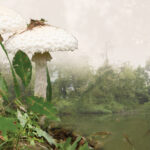
Climate change created by human activity is seen as a relatively recent phenomenon. But is it?
There is general agreement that we now live in an epoch called the Anthropocene (or “the Age of Man”), in which there has been a new and accelerating human impact on Earth’s ecology due to industrial civilization.
Many scientists peg the era’s starting point as 50, or perhaps 250, years ago. But Erle Ellis, a professor of geography and environmental systems at UMBC, is among those who argue that the Anthropocene wasn’t born yesterday.
“Human engineering of ecosystems, which changed the biosphere at globally significant levels in order to sustain human populations, likely began 3,000 years ago or earlier,” he says.
Long before the emergence of agriculture, Ellis explains, human populations had adapted to denser populations by increasing the productivity of their land use systems, burning forests to attract game, consuming broader diets, and propagating favored species. The emergence of agriculture only continued the trend.
“We have been pushing past natural limits as long as we have been a species,” he observes.
Ellis and other colleagues have been publishing about the extended Anthropocene era and its possible implications in journals including Proceedings of the National Academy of Sciences and Trends in Ecology and Evolution.
Some of the ripple effects from taking a longer view of the Anthropocene may be surprising. Ellis observes that rises in agricultural productivity mean that humans are using far less land per person than even a century ago. As populations level off and concentrate within cities, land is increasingly being returned to other species- a process that might ultimately allow biodiversity to recover worldwide.
Widening the time frame through which we examine human effects on the biosphere and climate offers a very different view of the planetary changes we humans are responsible for.
Some observers, for instance, frame the question of global environmental change as a recent crisis: are humans now causing changes in Earth’s ecosystems that might soon trigger a global tipping point? Is the Anthropocene biosphere accelerating towards a point of no return?
While global tipping points can be difficult to recognize, Ellis points out, ecological tipping points at the local level are well studied.
“If you add nutrients to a lake,” he explains, “it will continue on as before until you surpass a certain level of nutrients. Then the lake’s ecosystem will suddenly shift to a new state – it will have reached its tipping point. The lake will go from having very clear water to very turbid water, the kinds of fish will change and the chemistry and the ecology of the lake will change almost completely. It is then very hard to get that lake back into its previous state.”
Such a planetary tipping point in Earth’s ecosystems might occur if systems across the planet responded to the same human pressures in similar ways, or if there were strong connections across continents and ecosystems that enabled ecological responses to be transmitted rapidly across the planet. Yet Ellis and other researchers have shown that there is virtually no precedent or current evidence for such processes in the Earth system.
Our planet’s animals, plants, microbes and ecosystems are greatly limited in their ability to interact at global scales by distance and barriers such as oceans and mountain ranges, and their responses to human pressures, including rapid climate change, depend largely on local conditions. As a result, even rapid changes in global climate are unlikely to produce a coherent global shift in ecology because local ecosystems respond so differently to changes in climate and other human pressures.
“Essentially, local changes aren’t acting to push each other over the edge, as is the case with tipping points,” Ellis says. “They are simply adding up to cause long-term global changes in ecology.” His work on long-term human changes in the terrestrial biosphere shows clearly that while these changes are massive, they have been sustained for millennia. While recent changes are more rapid and dramatic than ever, the longer view shows that these represent less of a crisis than a continuation of human transformation of the Earth.
Ellis argues that the big picture of human effects on the terrestrial biosphere calls for a renewed emphasis on managing ecosystems at the local and regional levels. “The overwhelming disadvantage of thinking in terms of global tipping points,” says Ellis, “is that if you think you are far from the brink, no need to act, and if you think you’ve passed the tipping point you might as well give up.” “The real question is – how can we all work together to create the planet that future generations will be proud of.”
– Nicole Ruediger
]]>
Climate change created by human activity is seen as a relatively recent phenomenon. But is it? There is general agreement that we now live in an epoch called the Anthropocene (or “the Age of...
https://umbc.edu/stories/green-future-the-long-view/
https://my3.my.umbc.edu/api/v0/pixel/news/123068/guest@my.umbc.edu/00925424f7b941f518c0e6b9e3e3a721/api/pixel
discovery
fall-2013
green-issue
UMBC News & Magazine
https://my3.my.umbc.edu/groups/umbc-news-magazine
https://assets1-my.umbc.edu/system/shared/avatars/groups/000/001/943/24435aa6207c452e7bc15cc74b42c7bb/xsmall.png?1748556657
https://assets1-my.umbc.edu/system/shared/avatars/groups/000/001/943/24435aa6207c452e7bc15cc74b42c7bb/original.png?1748556657
https://assets2-my.umbc.edu/system/shared/avatars/groups/000/001/943/24435aa6207c452e7bc15cc74b42c7bb/xxlarge.png?1748556657
https://assets2-my.umbc.edu/system/shared/avatars/groups/000/001/943/24435aa6207c452e7bc15cc74b42c7bb/xlarge.png?1748556657
https://assets3-my.umbc.edu/system/shared/avatars/groups/000/001/943/24435aa6207c452e7bc15cc74b42c7bb/large.png?1748556657
https://assets1-my.umbc.edu/system/shared/avatars/groups/000/001/943/24435aa6207c452e7bc15cc74b42c7bb/medium.png?1748556657
https://assets2-my.umbc.edu/system/shared/avatars/groups/000/001/943/24435aa6207c452e7bc15cc74b42c7bb/small.png?1748556657
https://assets1-my.umbc.edu/system/shared/avatars/groups/000/001/943/24435aa6207c452e7bc15cc74b42c7bb/xsmall.png?1748556657
https://assets2-my.umbc.edu/system/shared/avatars/groups/000/001/943/24435aa6207c452e7bc15cc74b42c7bb/xxsmall.png?1748556657
UMBC News & Magazine
0
0
false
Thu, 26 Sep 2013 19:21:22 -0400
Green Future: Seeds and Synergies

Imagine driving a car fueled by reprocessed household trash. Or visiting a farm where a herd of beef cattle is fed with algae that might be vastly better for the environment than the corn and grains in common use today.
Those are just two of the visions being that have been pursued over the past four years by small companies in the Maryland Clean Energy Technology Incubator (CETI) at bwtech@UMBC Research & Technology Park.
As the youngest of three business incubators housed within the research park, CETI has had its share of growing pains. When the incubator was founded in 2009, the clean-energy sector was awash in federal stimulus money. Today, companies must scrap for every bit of private investment and public research support they can muster.
Fledgling clean-energy companies in the CETI get inexpensive office space, ample laboratory facilities, and a host of less-tangible benefits – including proximity to UMBC faculty members and students and membership in a statewide network of energy companies – to help grow their businesses.
“You can meet people here who you’d never meet if you rented offices in a random building in Columbia,” says Bjorn Frogner, who serves as the incubator’s “entrepreneur-in-residence.” With more than three decades of experience in energy and software companies, Frogner gives CETI companies informal advice and troubleshoots problems related to grant proposals, patenting, and human resources.
“Having an entrepreneur-in-residence is a real value,” says George Oyler, the founder of Clean Green Chesapeake, a start-up company piloting systems for converting algae to cattle feed and liquid transportation fuels. “My background was as an M.D./Ph.D. Many academics dream about transitioning into some sort of start-up, but there’s not a lot of appreciation for what it means to be in business as opposed to research. It is really helpful to have people like Bjorn who have a history in this kind of work.”
Perhaps the best-known clean-energy company at BWTECH is Fiberight, which will soon break ground on a large-scale plant in Iowa that will convert municipal waste into ethanol fuels. (The company has begun the planning-and-permitting process for constructing similar plants in Maryland.) Fiberight was already two years old when the CETI was founded, company CEO Craig Stuart-Paul leapt at the chance to move the company’s headquarters there when he learned about its creation.
“There’s no question that you get better access to academic expertise if you’re located in a center like this,” Stuart-Paul says. His company has hired three UMBC graduates as full-time staff members and regularly brings UMBC students aboard as summer interns.
Bryan Kim ’13, chemical engineering, worked as an intern at Fiberight in 2012 and accepted a full-time job this past May after graduation. “I’ve mostly been creating process-and-instrumentation diagrams for our small pilot plant in Virginia,” Kim says. “But I’ve met everyone, and I’ve gotten to do a little bit of everything. That’s the great thing about working for a start-up. This is the best introduction I can imagine to the post-college work world.”
Frogner also hopes that some of the collective expertise of companies at CETI can pay off for the UMBC campus itself, including the possibility of applying “smart grid” technology developed at the incubator to future campus construction projects.
Other companies in the clean-energy incubator include Plant Sensory Systems, which has large federal grants to support the development of genetically-engineered plants with high oil yields and low requirements for nitrate fertilizers; Innovative Bios, which converts animal wastes into cell culture broths for the biotechnology industry; and Agira Energy, a solar-cell manufacturer.
David J. Fink, director of entrepreneurial services at bwtech@UMBC, says that he believes that even more companies at CETI will be helping create a greener future in the marketplace – and maybe sooner than anyone thinks.
“We have today a very strong and diverse set of companies,” Fink says, “and they’re all geared toward bringing products and services to market very rapidly.”
– David Glenn
]]>
Imagine driving a car fueled by reprocessed household trash. Or visiting a farm where a herd of beef cattle is fed with algae that might be vastly better for the environment than the corn and...
https://umbc.edu/stories/green-future-seeds-and-synergies/
https://my3.my.umbc.edu/api/v0/pixel/news/123069/guest@my.umbc.edu/69d0b1af0b69c3c0a83ef92f72d16065/api/pixel
discovery
fall-2013
green-issue
UMBC News & Magazine
https://my3.my.umbc.edu/groups/umbc-news-magazine
https://assets1-my.umbc.edu/system/shared/avatars/groups/000/001/943/24435aa6207c452e7bc15cc74b42c7bb/xsmall.png?1748556657
https://assets1-my.umbc.edu/system/shared/avatars/groups/000/001/943/24435aa6207c452e7bc15cc74b42c7bb/original.png?1748556657
https://assets2-my.umbc.edu/system/shared/avatars/groups/000/001/943/24435aa6207c452e7bc15cc74b42c7bb/xxlarge.png?1748556657
https://assets2-my.umbc.edu/system/shared/avatars/groups/000/001/943/24435aa6207c452e7bc15cc74b42c7bb/xlarge.png?1748556657
https://assets3-my.umbc.edu/system/shared/avatars/groups/000/001/943/24435aa6207c452e7bc15cc74b42c7bb/large.png?1748556657
https://assets1-my.umbc.edu/system/shared/avatars/groups/000/001/943/24435aa6207c452e7bc15cc74b42c7bb/medium.png?1748556657
https://assets2-my.umbc.edu/system/shared/avatars/groups/000/001/943/24435aa6207c452e7bc15cc74b42c7bb/small.png?1748556657
https://assets1-my.umbc.edu/system/shared/avatars/groups/000/001/943/24435aa6207c452e7bc15cc74b42c7bb/xsmall.png?1748556657
https://assets2-my.umbc.edu/system/shared/avatars/groups/000/001/943/24435aa6207c452e7bc15cc74b42c7bb/xxsmall.png?1748556657
UMBC News & Magazine
0
0
false
Thu, 26 Sep 2013 19:19:45 -0400