<?xml version="1.0"?>
<News hasArchived="true" page="8758" pageCount="10823" pageSize="10" timestamp="Fri, 18 Sep 2026 10:17:06 -0400" url="https://my3.my.umbc.edu/posts.xml?mode=activity&amp;page=8758&amp;range=2">
<NewsItem contentIssues="true" id="30847" important="false" status="posted" url="https://my3.my.umbc.edu/posts/30847">
<Title>Tool Kit: Building Your Own Web Site, Free</Title>
<Body>
<![CDATA[
    <div class="html-content">Internet users have many free, feature-rich services to choose from — no coding skills required.<div><table border="0"><tbody><tr><td>
    <a href="http://share.feedsportal.com/share/twitter/?u=http%3A%2F%2Fwww.nytimes.com%2F2013%2F06%2F06%2Ftechnology%2Fpersonaltech%2Fbuilding-your-own-web-site-free.html%3Fpartner%3Drss%26emc%3Drss&amp;t=Tool+Kit%3A+Building+Your+Own+Web+Site%2C+Free" rel="nofollow external" class="bo"><img src="http://res3.feedsportal.com/social/twitter.png" style="max-width: 100%; height: auto;"></a> <a href="http://share.feedsportal.com/share/facebook/?u=http%3A%2F%2Fwww.nytimes.com%2F2013%2F06%2F06%2Ftechnology%2Fpersonaltech%2Fbuilding-your-own-web-site-free.html%3Fpartner%3Drss%26emc%3Drss&amp;t=Tool+Kit%3A+Building+Your+Own+Web+Site%2C+Free" rel="nofollow external" class="bo"><img src="http://res3.feedsportal.com/social/facebook.png" style="max-width: 100%; height: auto;"></a> <a href="http://share.feedsportal.com/share/linkedin/?u=http%3A%2F%2Fwww.nytimes.com%2F2013%2F06%2F06%2Ftechnology%2Fpersonaltech%2Fbuilding-your-own-web-site-free.html%3Fpartner%3Drss%26emc%3Drss&amp;t=Tool+Kit%3A+Building+Your+Own+Web+Site%2C+Free" rel="nofollow external" class="bo"><img src="http://res3.feedsportal.com/social/linkedin.png" style="max-width: 100%; height: auto;"></a> <a href="http://share.feedsportal.com/share/gplus/?u=http%3A%2F%2Fwww.nytimes.com%2F2013%2F06%2F06%2Ftechnology%2Fpersonaltech%2Fbuilding-your-own-web-site-free.html%3Fpartner%3Drss%26emc%3Drss&amp;t=Tool+Kit%3A+Building+Your+Own+Web+Site%2C+Free" rel="nofollow external" class="bo"><img src="http://res3.feedsportal.com/social/googleplus.png" style="max-width: 100%; height: auto;"></a> <a href="http://share.feedsportal.com/share/email/?u=http%3A%2F%2Fwww.nytimes.com%2F2013%2F06%2F06%2Ftechnology%2Fpersonaltech%2Fbuilding-your-own-web-site-free.html%3Fpartner%3Drss%26emc%3Drss&amp;t=Tool+Kit%3A+Building+Your+Own+Web+Site%2C+Free" rel="nofollow external" class="bo"><img src="http://res3.feedsportal.com/social/email.png" style="max-width: 100%; height: auto;"></a>
    </td></tr></tbody></table></div>
    <br><br><a href="http://da.feedsportal.com/r/165664869888/u/0/f/640387/c/34625/s/2ce14c7a/kg/342-363/a2.htm" rel="nofollow external" class="bo"><img src="http://da.feedsportal.com/r/165664869888/u/0/f/640387/c/34625/s/2ce14c7a/kg/342-363/a2.img" style="max-width: 100%; height: auto;"></a>
    </div>
]]>
</Body>
<Summary>Internet users have many free, feature-rich services to choose from — no coding skills required.     </Summary>
<Website>http://www.nytimes.com/2013/06/06/technology/personaltech/building-your-own-web-site-free.html?partner=rss&amp;emc=rss</Website>
<TrackingUrl>https://my3.my.umbc.edu/api/v0/pixel/news/30847/guest@my.umbc.edu/6f36013abf726314c2a48f7476ec348f/api/pixel</TrackingUrl>
<Tag>aol-inc-aol-nyse</Tag>
<Tag>computers-and-the-internet</Tag>
<Tag>facebook-inc-fb-nasdaq</Tag>
<Tag>gartner-inc-it-nyse</Tag>
<Tag>linkedin-corporation-lnkd-nyse</Tag>
<Tag>new</Tag>
<Tag>social-networking-internet</Tag>
<Tag>technology</Tag>
<Tag>weebly-inc</Tag>
<Tag>york</Tag>
<Group token="retired-583">Web Developer - Build Group</Group>
<GroupUrl>https://my3.my.umbc.edu/groups/retired-583</GroupUrl>
<AvatarUrl>https://assets3-my.umbc.edu/system/shared/avatars/groups/000/000/583/fc60f5d7abc2e080599bb6dc465db54d/xsmall.png?1363101197</AvatarUrl>
<AvatarUrl size="original">https://assets4-my.umbc.edu/system/shared/avatars/groups/000/000/583/fc60f5d7abc2e080599bb6dc465db54d/original.jpg?1363101197</AvatarUrl>
<AvatarUrl size="xxlarge">https://assets4-my.umbc.edu/system/shared/avatars/groups/000/000/583/fc60f5d7abc2e080599bb6dc465db54d/xxlarge.png?1363101197</AvatarUrl>
<AvatarUrl size="xlarge">https://assets4-my.umbc.edu/system/shared/avatars/groups/000/000/583/fc60f5d7abc2e080599bb6dc465db54d/xlarge.png?1363101197</AvatarUrl>
<AvatarUrl size="large">https://assets3-my.umbc.edu/system/shared/avatars/groups/000/000/583/fc60f5d7abc2e080599bb6dc465db54d/large.png?1363101197</AvatarUrl>
<AvatarUrl size="medium">https://assets3-my.umbc.edu/system/shared/avatars/groups/000/000/583/fc60f5d7abc2e080599bb6dc465db54d/medium.png?1363101197</AvatarUrl>
<AvatarUrl size="small">https://assets4-my.umbc.edu/system/shared/avatars/groups/000/000/583/fc60f5d7abc2e080599bb6dc465db54d/small.png?1363101197</AvatarUrl>
<AvatarUrl size="xsmall">https://assets3-my.umbc.edu/system/shared/avatars/groups/000/000/583/fc60f5d7abc2e080599bb6dc465db54d/xsmall.png?1363101197</AvatarUrl>
<AvatarUrl size="xxsmall">https://assets4-my.umbc.edu/system/shared/avatars/groups/000/000/583/fc60f5d7abc2e080599bb6dc465db54d/xxsmall.png?1363101197</AvatarUrl>
<Sponsor>Web Developer - Build Group</Sponsor>
<PawCount>0</PawCount>
<CommentCount>0</CommentCount>
<CommentsAllowed>true</CommentsAllowed>
<PostedAt>Wed, 05 Jun 2013 10:09:12 -0400</PostedAt>
</NewsItem>

<NewsItem contentIssues="false" id="30844" important="false" status="posted" url="https://my3.my.umbc.edu/posts/30844">
<Title>Getting Things Done &gt; Grade Point Average</Title>
<Body>
<![CDATA[
    <div class="html-content">
    <p><em>This post by Alexis Ohanian, co-founder of reddit, was originally published on LinkedIn</em>. </p>
    
    <p><img src="http://media.licdn.com/mpr/mpr/p/6/000/277/244/1ba06b9.jpg" alt="Graduation" style="max-width: 100%; height: auto;"></p>
    
    <h4>We're a <a href="http://www.nytimes.com/2012/05/13/business/student-loans-weighing-down-a-generation-with-heavy-debt.html?pagewanted=all&amp;_r=0" rel="nofollow external" class="bo">generation in debt.</a>
    </h4>
    
    <p>I had a world-class education at the University of Virginia. I met my <a href="http://reddit.com" rel="nofollow external" class="bo">reddit</a> co-founder Steve Huffman there on move-in day. That chance encounter changed both of our lives. I had some awesome professors. There was the fortuitous trip to Waffle House that convinced me I wanted to be an entrepreneur, not a lawyer. I've written <a href="http://www.amazon.com/gp/product/B00BAXFJ16?ie=UTF8&amp;camp=213733&amp;creative=393177&amp;creativeASIN=B00BAXFJ16&amp;linkCode=shr&amp;tag=thinyouvere07-20&amp;qid=1362250000&amp;sr=8-1&amp;keywords=without+their+permission" rel="nofollow external" class="bo">the book</a> about internet entrepreneurship I wish I had back then. <strong>But my kids won't have the same education I did. And that's a good thing.</strong></p>
    
    <p>A year ago I sat on a panel at the White House for a room full of deans from universities across the country. We were tasked to talk about entrepreneurship and how to better prepare our nation's undergraduates for an uncertain job market. </p>
    
    <h4>"A critical skill I see in great entrepreneurs and employees alike is resourcefulness. Resourcefulness doesn't come from case-studies, it comes from doing things."</h4>
    
    <p>This turned out to be quite the applause line.</p>
    
    <p><a href="http://www.paulgraham.com/relres.html" rel="nofollow external" class="bo">Paul Graham says</a> the best founders are "relentlessly resourceful."</p>
    
    <p>I've been thinking about that day in D.C. ever since.</p>
    
    <h4>Getting Things Done &gt; Grade Point Average</h4>
    
    <p>I'm an employer and I don't really care where you went to school or what your GPA was -- I want to know what you've done. Paid off student loan debt by tutoring computer science in New York? Rock on. Raised $20,000 on kickstarter for a daft punk tribute album? Awesome! Started the 'dear photograph' meme? Splendid! Blogged years worth of eating across the world and now creating food-tour-guides? Now we're cooking with bacon.</p>
    
    <p><em><a href="http://www.linkedin.com/today/post/article/20130604184748-4421225-getting-things-done-grade-point-average" rel="nofollow external" class="bo">Read the full article</a></em> </p>
    
    <hr>
    </div>
]]>
</Body>
<Summary>This post by Alexis Ohanian, co-founder of reddit, was originally published on LinkedIn.         We're a generation in debt.    I had a world-class education at the University of Virginia. I met...</Summary>
<Website>http://www.codecademy.com/blog/76-getting-things-done-grade-point-average</Website>
<TrackingUrl>https://my3.my.umbc.edu/api/v0/pixel/news/30844/guest@my.umbc.edu/e2a54c1bea75f48865e9215d01a554cf/api/pixel</TrackingUrl>
<Tag>academy</Tag>
<Tag>code</Tag>
<Tag>codecademy</Tag>
<Tag>learning</Tag>
<Group token="retired-583">Web Developer - Build Group</Group>
<GroupUrl>https://my3.my.umbc.edu/groups/retired-583</GroupUrl>
<AvatarUrl>https://assets3-my.umbc.edu/system/shared/avatars/groups/000/000/583/fc60f5d7abc2e080599bb6dc465db54d/xsmall.png?1363101197</AvatarUrl>
<AvatarUrl size="original">https://assets4-my.umbc.edu/system/shared/avatars/groups/000/000/583/fc60f5d7abc2e080599bb6dc465db54d/original.jpg?1363101197</AvatarUrl>
<AvatarUrl size="xxlarge">https://assets4-my.umbc.edu/system/shared/avatars/groups/000/000/583/fc60f5d7abc2e080599bb6dc465db54d/xxlarge.png?1363101197</AvatarUrl>
<AvatarUrl size="xlarge">https://assets4-my.umbc.edu/system/shared/avatars/groups/000/000/583/fc60f5d7abc2e080599bb6dc465db54d/xlarge.png?1363101197</AvatarUrl>
<AvatarUrl size="large">https://assets3-my.umbc.edu/system/shared/avatars/groups/000/000/583/fc60f5d7abc2e080599bb6dc465db54d/large.png?1363101197</AvatarUrl>
<AvatarUrl size="medium">https://assets3-my.umbc.edu/system/shared/avatars/groups/000/000/583/fc60f5d7abc2e080599bb6dc465db54d/medium.png?1363101197</AvatarUrl>
<AvatarUrl size="small">https://assets4-my.umbc.edu/system/shared/avatars/groups/000/000/583/fc60f5d7abc2e080599bb6dc465db54d/small.png?1363101197</AvatarUrl>
<AvatarUrl size="xsmall">https://assets3-my.umbc.edu/system/shared/avatars/groups/000/000/583/fc60f5d7abc2e080599bb6dc465db54d/xsmall.png?1363101197</AvatarUrl>
<AvatarUrl size="xxsmall">https://assets4-my.umbc.edu/system/shared/avatars/groups/000/000/583/fc60f5d7abc2e080599bb6dc465db54d/xxsmall.png?1363101197</AvatarUrl>
<Sponsor>Web Developer - Build Group</Sponsor>
<PawCount>0</PawCount>
<CommentCount>0</CommentCount>
<CommentsAllowed>true</CommentsAllowed>
<PostedAt>Wed, 05 Jun 2013 09:54:00 -0400</PostedAt>
<EditAt>Wed, 05 Jun 2013 09:54:00 -0400</EditAt>
</NewsItem>

<NewsItem contentIssues="true" id="30837" important="false" status="posted" url="https://my3.my.umbc.edu/posts/30837">
<Title>DealBook: Dell Files Mathematical Argument Against Icahn Plan</Title>
<Body>
<![CDATA[
    <div class="html-content">Dell calculated that the special dividend called for by Southeastern Asset Management and Carl C. Icahn would leave the company with a nearly $4 billion cash shortfall.<div><table border="0"><tbody><tr><td>
    <a href="http://share.feedsportal.com/share/twitter/?u=http%3A%2F%2Fdealbook.nytimes.com%2F2013%2F06%2F05%2Fdells-mathematical-argument-against-the-southeastern-icahn-plan%2F%3Fpartner%3Drss%26emc%3Drss&amp;t=DealBook%3A+Dell+Files+Mathematical+Argument+Against+Icahn+Plan" rel="nofollow external" class="bo"><img src="http://res3.feedsportal.com/social/twitter.png" style="max-width: 100%; height: auto;"></a> <a href="http://share.feedsportal.com/share/facebook/?u=http%3A%2F%2Fdealbook.nytimes.com%2F2013%2F06%2F05%2Fdells-mathematical-argument-against-the-southeastern-icahn-plan%2F%3Fpartner%3Drss%26emc%3Drss&amp;t=DealBook%3A+Dell+Files+Mathematical+Argument+Against+Icahn+Plan" rel="nofollow external" class="bo"><img src="http://res3.feedsportal.com/social/facebook.png" style="max-width: 100%; height: auto;"></a> <a href="http://share.feedsportal.com/share/linkedin/?u=http%3A%2F%2Fdealbook.nytimes.com%2F2013%2F06%2F05%2Fdells-mathematical-argument-against-the-southeastern-icahn-plan%2F%3Fpartner%3Drss%26emc%3Drss&amp;t=DealBook%3A+Dell+Files+Mathematical+Argument+Against+Icahn+Plan" rel="nofollow external" class="bo"><img src="http://res3.feedsportal.com/social/linkedin.png" style="max-width: 100%; height: auto;"></a> <a href="http://share.feedsportal.com/share/gplus/?u=http%3A%2F%2Fdealbook.nytimes.com%2F2013%2F06%2F05%2Fdells-mathematical-argument-against-the-southeastern-icahn-plan%2F%3Fpartner%3Drss%26emc%3Drss&amp;t=DealBook%3A+Dell+Files+Mathematical+Argument+Against+Icahn+Plan" rel="nofollow external" class="bo"><img src="http://res3.feedsportal.com/social/googleplus.png" style="max-width: 100%; height: auto;"></a> <a href="http://share.feedsportal.com/share/email/?u=http%3A%2F%2Fdealbook.nytimes.com%2F2013%2F06%2F05%2Fdells-mathematical-argument-against-the-southeastern-icahn-plan%2F%3Fpartner%3Drss%26emc%3Drss&amp;t=DealBook%3A+Dell+Files+Mathematical+Argument+Against+Icahn+Plan" rel="nofollow external" class="bo"><img src="http://res3.feedsportal.com/social/email.png" style="max-width: 100%; height: auto;"></a>
    </td></tr></tbody></table></div>
    <br><br><a href="http://da.feedsportal.com/r/165665219167/u/0/f/640387/c/34625/s/2ce09b9b/kg/342-363/a2.htm" rel="nofollow external" class="bo"><img src="http://da.feedsportal.com/r/165665219167/u/0/f/640387/c/34625/s/2ce09b9b/kg/342-363/a2.img" style="max-width: 100%; height: auto;"></a>
    </div>
]]>
</Body>
<Summary>Dell calculated that the special dividend called for by Southeastern Asset Management and Carl C. Icahn would leave the company with a nearly $4 billion cash shortfall.     </Summary>
<Website>http://dealbook.nytimes.com/2013/06/05/dells-mathematical-argument-against-the-southeastern-icahn-plan/?partner=rss&amp;emc=rss</Website>
<TrackingUrl>https://my3.my.umbc.edu/api/v0/pixel/news/30837/guest@my.umbc.edu/adf1df888084bfe8df3d9ad156ada7ec/api/pixel</TrackingUrl>
<Tag>computers-and-the-internet</Tag>
<Tag>dell-inc</Tag>
<Tag>dell-inc-dell-nasdaq</Tag>
<Tag>dell-michael-s</Tag>
<Tag>icahn-carl-c</Tag>
<Tag>mergers-acquisitions-and-divestitures</Tag>
<Tag>mergers-and-acquisitions</Tag>
<Tag>new</Tag>
<Tag>silver-lake-partners</Tag>
<Tag>southeastern-asset-management</Tag>
<Tag>technology</Tag>
<Tag>top-headline-1</Tag>
<Tag>york</Tag>
<Group token="retired-583">Web Developer - Build Group</Group>
<GroupUrl>https://my3.my.umbc.edu/groups/retired-583</GroupUrl>
<AvatarUrl>https://assets3-my.umbc.edu/system/shared/avatars/groups/000/000/583/fc60f5d7abc2e080599bb6dc465db54d/xsmall.png?1363101197</AvatarUrl>
<AvatarUrl size="original">https://assets4-my.umbc.edu/system/shared/avatars/groups/000/000/583/fc60f5d7abc2e080599bb6dc465db54d/original.jpg?1363101197</AvatarUrl>
<AvatarUrl size="xxlarge">https://assets4-my.umbc.edu/system/shared/avatars/groups/000/000/583/fc60f5d7abc2e080599bb6dc465db54d/xxlarge.png?1363101197</AvatarUrl>
<AvatarUrl size="xlarge">https://assets4-my.umbc.edu/system/shared/avatars/groups/000/000/583/fc60f5d7abc2e080599bb6dc465db54d/xlarge.png?1363101197</AvatarUrl>
<AvatarUrl size="large">https://assets3-my.umbc.edu/system/shared/avatars/groups/000/000/583/fc60f5d7abc2e080599bb6dc465db54d/large.png?1363101197</AvatarUrl>
<AvatarUrl size="medium">https://assets3-my.umbc.edu/system/shared/avatars/groups/000/000/583/fc60f5d7abc2e080599bb6dc465db54d/medium.png?1363101197</AvatarUrl>
<AvatarUrl size="small">https://assets4-my.umbc.edu/system/shared/avatars/groups/000/000/583/fc60f5d7abc2e080599bb6dc465db54d/small.png?1363101197</AvatarUrl>
<AvatarUrl size="xsmall">https://assets3-my.umbc.edu/system/shared/avatars/groups/000/000/583/fc60f5d7abc2e080599bb6dc465db54d/xsmall.png?1363101197</AvatarUrl>
<AvatarUrl size="xxsmall">https://assets4-my.umbc.edu/system/shared/avatars/groups/000/000/583/fc60f5d7abc2e080599bb6dc465db54d/xxsmall.png?1363101197</AvatarUrl>
<Sponsor>Web Developer - Build Group</Sponsor>
<PawCount>0</PawCount>
<CommentCount>0</CommentCount>
<CommentsAllowed>true</CommentsAllowed>
<PostedAt>Wed, 05 Jun 2013 09:18:42 -0400</PostedAt>
<EditAt>Wed, 05 Jun 2013 13:23:10 -0400</EditAt>
</NewsItem>

<NewsItem contentIssues="true" id="30836" important="false" status="posted" url="https://my3.my.umbc.edu/posts/30836">
<Title>Gadgetwise Blog: A Garden Hose With an Electronic Brain</Title>
<Body>
<![CDATA[
    <div class="html-content">The RoboReel Water, a $650 automated electronic garden hose and reel, might qualify as the Maserati of watering devices.<div><table border="0"><tbody><tr><td>
    <a href="http://share.feedsportal.com/share/twitter/?u=http%3A%2F%2Fgadgetwise.blogs.nytimes.com%2F2013%2F06%2F05%2Fa-garden-hose-with-an-electronic-brain%2F%3Fpartner%3Drss%26emc%3Drss&amp;t=Gadgetwise+Blog%3A+A+Garden+Hose+With+an+Electronic+Brain" rel="nofollow external" class="bo"><img src="http://res3.feedsportal.com/social/twitter.png" style="max-width: 100%; height: auto;"></a> <a href="http://share.feedsportal.com/share/facebook/?u=http%3A%2F%2Fgadgetwise.blogs.nytimes.com%2F2013%2F06%2F05%2Fa-garden-hose-with-an-electronic-brain%2F%3Fpartner%3Drss%26emc%3Drss&amp;t=Gadgetwise+Blog%3A+A+Garden+Hose+With+an+Electronic+Brain" rel="nofollow external" class="bo"><img src="http://res3.feedsportal.com/social/facebook.png" style="max-width: 100%; height: auto;"></a> <a href="http://share.feedsportal.com/share/linkedin/?u=http%3A%2F%2Fgadgetwise.blogs.nytimes.com%2F2013%2F06%2F05%2Fa-garden-hose-with-an-electronic-brain%2F%3Fpartner%3Drss%26emc%3Drss&amp;t=Gadgetwise+Blog%3A+A+Garden+Hose+With+an+Electronic+Brain" rel="nofollow external" class="bo"><img src="http://res3.feedsportal.com/social/linkedin.png" style="max-width: 100%; height: auto;"></a> <a href="http://share.feedsportal.com/share/gplus/?u=http%3A%2F%2Fgadgetwise.blogs.nytimes.com%2F2013%2F06%2F05%2Fa-garden-hose-with-an-electronic-brain%2F%3Fpartner%3Drss%26emc%3Drss&amp;t=Gadgetwise+Blog%3A+A+Garden+Hose+With+an+Electronic+Brain" rel="nofollow external" class="bo"><img src="http://res3.feedsportal.com/social/googleplus.png" style="max-width: 100%; height: auto;"></a> <a href="http://share.feedsportal.com/share/email/?u=http%3A%2F%2Fgadgetwise.blogs.nytimes.com%2F2013%2F06%2F05%2Fa-garden-hose-with-an-electronic-brain%2F%3Fpartner%3Drss%26emc%3Drss&amp;t=Gadgetwise+Blog%3A+A+Garden+Hose+With+an+Electronic+Brain" rel="nofollow external" class="bo"><img src="http://res3.feedsportal.com/social/email.png" style="max-width: 100%; height: auto;"></a>
    </td></tr></tbody></table></div>
    <br><br><a href="http://da.feedsportal.com/r/165664774579/u/0/f/640387/c/34625/s/2cdfefaa/a2.htm" rel="nofollow external" class="bo"><img src="http://da.feedsportal.com/r/165664774579/u/0/f/640387/c/34625/s/2cdfefaa/a2.img" style="max-width: 100%; height: auto;"></a>
    </div>
]]>
</Body>
<Summary>The RoboReel Water, a $650 automated electronic garden hose and reel, might qualify as the Maserati of watering devices.     </Summary>
<Website>http://gadgetwise.blogs.nytimes.com/2013/06/05/a-garden-hose-with-an-electronic-brain/?partner=rss&amp;emc=rss</Website>
<TrackingUrl>https://my3.my.umbc.edu/api/v0/pixel/news/30836/guest@my.umbc.edu/6a7f8731351f80c70611f7e31fb5ff53/api/pixel</TrackingUrl>
<Tag>gardens-and-gardening</Tag>
<Tag>new</Tag>
<Tag>productivity</Tag>
<Tag>products</Tag>
<Tag>roboreel</Tag>
<Tag>technology</Tag>
<Tag>york</Tag>
<Group token="retired-583">Web Developer - Build Group</Group>
<GroupUrl>https://my3.my.umbc.edu/groups/retired-583</GroupUrl>
<AvatarUrl>https://assets3-my.umbc.edu/system/shared/avatars/groups/000/000/583/fc60f5d7abc2e080599bb6dc465db54d/xsmall.png?1363101197</AvatarUrl>
<AvatarUrl size="original">https://assets4-my.umbc.edu/system/shared/avatars/groups/000/000/583/fc60f5d7abc2e080599bb6dc465db54d/original.jpg?1363101197</AvatarUrl>
<AvatarUrl size="xxlarge">https://assets4-my.umbc.edu/system/shared/avatars/groups/000/000/583/fc60f5d7abc2e080599bb6dc465db54d/xxlarge.png?1363101197</AvatarUrl>
<AvatarUrl size="xlarge">https://assets4-my.umbc.edu/system/shared/avatars/groups/000/000/583/fc60f5d7abc2e080599bb6dc465db54d/xlarge.png?1363101197</AvatarUrl>
<AvatarUrl size="large">https://assets3-my.umbc.edu/system/shared/avatars/groups/000/000/583/fc60f5d7abc2e080599bb6dc465db54d/large.png?1363101197</AvatarUrl>
<AvatarUrl size="medium">https://assets3-my.umbc.edu/system/shared/avatars/groups/000/000/583/fc60f5d7abc2e080599bb6dc465db54d/medium.png?1363101197</AvatarUrl>
<AvatarUrl size="small">https://assets4-my.umbc.edu/system/shared/avatars/groups/000/000/583/fc60f5d7abc2e080599bb6dc465db54d/small.png?1363101197</AvatarUrl>
<AvatarUrl size="xsmall">https://assets3-my.umbc.edu/system/shared/avatars/groups/000/000/583/fc60f5d7abc2e080599bb6dc465db54d/xsmall.png?1363101197</AvatarUrl>
<AvatarUrl size="xxsmall">https://assets4-my.umbc.edu/system/shared/avatars/groups/000/000/583/fc60f5d7abc2e080599bb6dc465db54d/xxsmall.png?1363101197</AvatarUrl>
<Sponsor>Web Developer - Build Group</Sponsor>
<PawCount>0</PawCount>
<CommentCount>0</CommentCount>
<CommentsAllowed>true</CommentsAllowed>
<PostedAt>Wed, 05 Jun 2013 08:23:12 -0400</PostedAt>
</NewsItem>

<NewsItem contentIssues="true" id="30860" important="false" status="posted" url="https://my3.my.umbc.edu/posts/30860">
<Title>Five killer ways to use mobile navigation</Title>
<Body>
<![CDATA[
    <div class="html-content">When diving into RWD, it’s important to make sure users don’t get lost – so you need to give them the navigation they deserve, advises Gene Crawford<div><table border="0"><tbody><tr><td>
    <a href="http://share.feedsportal.com/share/twitter/?u=http%3A%2F%2Fwww.netmagazine.com%2Ffeatures%2Ffive-killer-ways-use-mobile-navigation&amp;t=Five+killer+ways+to+use+mobile+navigation" rel="nofollow external" class="bo"><img src="http://res3.feedsportal.com/social/twitter.png" style="max-width: 100%; height: auto;"></a> <a href="http://share.feedsportal.com/share/facebook/?u=http%3A%2F%2Fwww.netmagazine.com%2Ffeatures%2Ffive-killer-ways-use-mobile-navigation&amp;t=Five+killer+ways+to+use+mobile+navigation" rel="nofollow external" class="bo"><img src="http://res3.feedsportal.com/social/facebook.png" style="max-width: 100%; height: auto;"></a> <a href="http://share.feedsportal.com/share/linkedin/?u=http%3A%2F%2Fwww.netmagazine.com%2Ffeatures%2Ffive-killer-ways-use-mobile-navigation&amp;t=Five+killer+ways+to+use+mobile+navigation" rel="nofollow external" class="bo"><img src="http://res3.feedsportal.com/social/linkedin.png" style="max-width: 100%; height: auto;"></a> <a href="http://share.feedsportal.com/share/gplus/?u=http%3A%2F%2Fwww.netmagazine.com%2Ffeatures%2Ffive-killer-ways-use-mobile-navigation&amp;t=Five+killer+ways+to+use+mobile+navigation" rel="nofollow external" class="bo"><img src="http://res3.feedsportal.com/social/googleplus.png" style="max-width: 100%; height: auto;"></a> <a href="http://share.feedsportal.com/share/email/?u=http%3A%2F%2Fwww.netmagazine.com%2Ffeatures%2Ffive-killer-ways-use-mobile-navigation&amp;t=Five+killer+ways+to+use+mobile+navigation" rel="nofollow external" class="bo"><img src="http://res3.feedsportal.com/social/email.png" style="max-width: 100%; height: auto;"></a>
    </td></tr></tbody></table></div>
    <br><br><a href="http://da.feedsportal.com/r/165665772226/u/49/f/502346/c/32632/s/2ce250b4/a2.htm" rel="nofollow external" class="bo"><img src="http://da.feedsportal.com/r/165665772226/u/49/f/502346/c/32632/s/2ce250b4/a2.img" style="max-width: 100%; height: auto;"></a>
    </div>
]]>
</Body>
<Summary>When diving into RWD, it’s important to make sure users don’t get lost – so you need to give them the navigation they deserve, advises Gene Crawford     </Summary>
<Website>http://feedproxy.google.com/~r/net/topstories/~3/PH6dtGwOwPA/story01.htm</Website>
<TrackingUrl>https://my3.my.umbc.edu/api/v0/pixel/news/30860/guest@my.umbc.edu/b08885e07aa9577d04f717a7d59419b2/api/pixel</TrackingUrl>
<Tag>css</Tag>
<Tag>development</Tag>
<Tag>html</Tag>
<Tag>javascript</Tag>
<Tag>mysql</Tag>
<Tag>net</Tag>
<Tag>php</Tag>
<Tag>sql</Tag>
<Tag>web</Tag>
<Group token="retired-583">Web Developer - Build Group</Group>
<GroupUrl>https://my3.my.umbc.edu/groups/retired-583</GroupUrl>
<AvatarUrl>https://assets3-my.umbc.edu/system/shared/avatars/groups/000/000/583/fc60f5d7abc2e080599bb6dc465db54d/xsmall.png?1363101197</AvatarUrl>
<AvatarUrl size="original">https://assets4-my.umbc.edu/system/shared/avatars/groups/000/000/583/fc60f5d7abc2e080599bb6dc465db54d/original.jpg?1363101197</AvatarUrl>
<AvatarUrl size="xxlarge">https://assets4-my.umbc.edu/system/shared/avatars/groups/000/000/583/fc60f5d7abc2e080599bb6dc465db54d/xxlarge.png?1363101197</AvatarUrl>
<AvatarUrl size="xlarge">https://assets4-my.umbc.edu/system/shared/avatars/groups/000/000/583/fc60f5d7abc2e080599bb6dc465db54d/xlarge.png?1363101197</AvatarUrl>
<AvatarUrl size="large">https://assets3-my.umbc.edu/system/shared/avatars/groups/000/000/583/fc60f5d7abc2e080599bb6dc465db54d/large.png?1363101197</AvatarUrl>
<AvatarUrl size="medium">https://assets3-my.umbc.edu/system/shared/avatars/groups/000/000/583/fc60f5d7abc2e080599bb6dc465db54d/medium.png?1363101197</AvatarUrl>
<AvatarUrl size="small">https://assets4-my.umbc.edu/system/shared/avatars/groups/000/000/583/fc60f5d7abc2e080599bb6dc465db54d/small.png?1363101197</AvatarUrl>
<AvatarUrl size="xsmall">https://assets3-my.umbc.edu/system/shared/avatars/groups/000/000/583/fc60f5d7abc2e080599bb6dc465db54d/xsmall.png?1363101197</AvatarUrl>
<AvatarUrl size="xxsmall">https://assets4-my.umbc.edu/system/shared/avatars/groups/000/000/583/fc60f5d7abc2e080599bb6dc465db54d/xxsmall.png?1363101197</AvatarUrl>
<Sponsor>Web Developer - Build Group</Sponsor>
<PawCount>0</PawCount>
<CommentCount>0</CommentCount>
<CommentsAllowed>true</CommentsAllowed>
<PostedAt>Wed, 05 Jun 2013 07:06:51 -0400</PostedAt>
</NewsItem>

<NewsItem contentIssues="true" id="30834" important="false" status="posted" url="https://my3.my.umbc.edu/posts/30834">
<Title>Gadgetwise Blog: Q&amp;A: Streaming Videos From PC to Tablet</Title>
<Body>
<![CDATA[
    <div class="html-content">If your iPad doesn’t have enough room to store a lot of movies, you can wirelessly stream the video files from the iTunes library instead with Apple’s Home Sharing feature.<div><table border="0"><tbody><tr><td>
    <a href="http://share.feedsportal.com/share/twitter/?u=http%3A%2F%2Fgadgetwise.blogs.nytimes.com%2F2013%2F06%2F05%2Fqa-streaming-videos-from-pc-to-tablet%2F%3Fpartner%3Drss%26emc%3Drss&amp;t=Gadgetwise+Blog%3A+Q%26A%3A+Streaming+Videos+From+PC+to+Tablet" rel="nofollow external" class="bo"><img src="http://res3.feedsportal.com/social/twitter.png" style="max-width: 100%; height: auto;"></a> <a href="http://share.feedsportal.com/share/facebook/?u=http%3A%2F%2Fgadgetwise.blogs.nytimes.com%2F2013%2F06%2F05%2Fqa-streaming-videos-from-pc-to-tablet%2F%3Fpartner%3Drss%26emc%3Drss&amp;t=Gadgetwise+Blog%3A+Q%26A%3A+Streaming+Videos+From+PC+to+Tablet" rel="nofollow external" class="bo"><img src="http://res3.feedsportal.com/social/facebook.png" style="max-width: 100%; height: auto;"></a> <a href="http://share.feedsportal.com/share/linkedin/?u=http%3A%2F%2Fgadgetwise.blogs.nytimes.com%2F2013%2F06%2F05%2Fqa-streaming-videos-from-pc-to-tablet%2F%3Fpartner%3Drss%26emc%3Drss&amp;t=Gadgetwise+Blog%3A+Q%26A%3A+Streaming+Videos+From+PC+to+Tablet" rel="nofollow external" class="bo"><img src="http://res3.feedsportal.com/social/linkedin.png" style="max-width: 100%; height: auto;"></a> <a href="http://share.feedsportal.com/share/gplus/?u=http%3A%2F%2Fgadgetwise.blogs.nytimes.com%2F2013%2F06%2F05%2Fqa-streaming-videos-from-pc-to-tablet%2F%3Fpartner%3Drss%26emc%3Drss&amp;t=Gadgetwise+Blog%3A+Q%26A%3A+Streaming+Videos+From+PC+to+Tablet" rel="nofollow external" class="bo"><img src="http://res3.feedsportal.com/social/googleplus.png" style="max-width: 100%; height: auto;"></a> <a href="http://share.feedsportal.com/share/email/?u=http%3A%2F%2Fgadgetwise.blogs.nytimes.com%2F2013%2F06%2F05%2Fqa-streaming-videos-from-pc-to-tablet%2F%3Fpartner%3Drss%26emc%3Drss&amp;t=Gadgetwise+Blog%3A+Q%26A%3A+Streaming+Videos+From+PC+to+Tablet" rel="nofollow external" class="bo"><img src="http://res3.feedsportal.com/social/email.png" style="max-width: 100%; height: auto;"></a>
    </td></tr></tbody></table></div>
    <br><br><a href="http://da.feedsportal.com/r/165665762721/u/0/f/640387/c/34625/s/2cdf4e91/kg/342-363/a2.htm" rel="nofollow external" class="bo"><img src="http://da.feedsportal.com/r/165665762721/u/0/f/640387/c/34625/s/2cdf4e91/kg/342-363/a2.img" style="max-width: 100%; height: auto;"></a>
    </div>
]]>
</Body>
<Summary>If your iPad doesn’t have enough room to store a lot of movies, you can wirelessly stream the video files from the iTunes library instead with Apple’s Home Sharing feature.     </Summary>
<Website>http://gadgetwise.blogs.nytimes.com/2013/06/05/qa-streaming-videos-from-pc-to-tablet/?partner=rss&amp;emc=rss</Website>
<TrackingUrl>https://my3.my.umbc.edu/api/v0/pixel/news/30834/guest@my.umbc.edu/6113041abfe2443b1e4863412e6248f6/api/pixel</TrackingUrl>
<Tag>apple-inc</Tag>
<Tag>apple-inc-aapl-nasdaq</Tag>
<Tag>computers-and-the-internet</Tag>
<Tag>dropbox-inc</Tag>
<Tag>ipad</Tag>
<Tag>itunes</Tag>
<Tag>microsoft-corporation</Tag>
<Tag>microsoft-corporation-msft-nasdaq</Tag>
<Tag>mobile-applications</Tag>
<Tag>movies</Tag>
<Tag>new</Tag>
<Tag>q-and-a</Tag>
<Tag>software</Tag>
<Tag>technology</Tag>
<Tag>york</Tag>
<Group token="retired-583">Web Developer - Build Group</Group>
<GroupUrl>https://my3.my.umbc.edu/groups/retired-583</GroupUrl>
<AvatarUrl>https://assets3-my.umbc.edu/system/shared/avatars/groups/000/000/583/fc60f5d7abc2e080599bb6dc465db54d/xsmall.png?1363101197</AvatarUrl>
<AvatarUrl size="original">https://assets4-my.umbc.edu/system/shared/avatars/groups/000/000/583/fc60f5d7abc2e080599bb6dc465db54d/original.jpg?1363101197</AvatarUrl>
<AvatarUrl size="xxlarge">https://assets4-my.umbc.edu/system/shared/avatars/groups/000/000/583/fc60f5d7abc2e080599bb6dc465db54d/xxlarge.png?1363101197</AvatarUrl>
<AvatarUrl size="xlarge">https://assets4-my.umbc.edu/system/shared/avatars/groups/000/000/583/fc60f5d7abc2e080599bb6dc465db54d/xlarge.png?1363101197</AvatarUrl>
<AvatarUrl size="large">https://assets3-my.umbc.edu/system/shared/avatars/groups/000/000/583/fc60f5d7abc2e080599bb6dc465db54d/large.png?1363101197</AvatarUrl>
<AvatarUrl size="medium">https://assets3-my.umbc.edu/system/shared/avatars/groups/000/000/583/fc60f5d7abc2e080599bb6dc465db54d/medium.png?1363101197</AvatarUrl>
<AvatarUrl size="small">https://assets4-my.umbc.edu/system/shared/avatars/groups/000/000/583/fc60f5d7abc2e080599bb6dc465db54d/small.png?1363101197</AvatarUrl>
<AvatarUrl size="xsmall">https://assets3-my.umbc.edu/system/shared/avatars/groups/000/000/583/fc60f5d7abc2e080599bb6dc465db54d/xsmall.png?1363101197</AvatarUrl>
<AvatarUrl size="xxsmall">https://assets4-my.umbc.edu/system/shared/avatars/groups/000/000/583/fc60f5d7abc2e080599bb6dc465db54d/xxsmall.png?1363101197</AvatarUrl>
<Sponsor>Web Developer - Build Group</Sponsor>
<PawCount>0</PawCount>
<CommentCount>0</CommentCount>
<CommentsAllowed>true</CommentsAllowed>
<PostedAt>Wed, 05 Jun 2013 06:57:39 -0400</PostedAt>
</NewsItem>

<NewsItem contentIssues="true" id="30831" important="false" status="posted" url="https://my3.my.umbc.edu/posts/30831">
<Title>The Secret to Building Large Websites: Website Architecture</Title>
<Body>
<![CDATA[
    <div class="html-content">
    <p><a href="http://sixrevisions.com/project-management/website-architecture/" rel="nofollow external" class="bo"><img src="http://cdn.sixrevisions.com/0344-01_website_architecture_thumbnail.jpg" width="550" height="200" alt="" style="max-width: 100%; height: auto;"></a></p>
    <p>When I started writing this, the idea of a skyscraper construction project came to mind.</p>
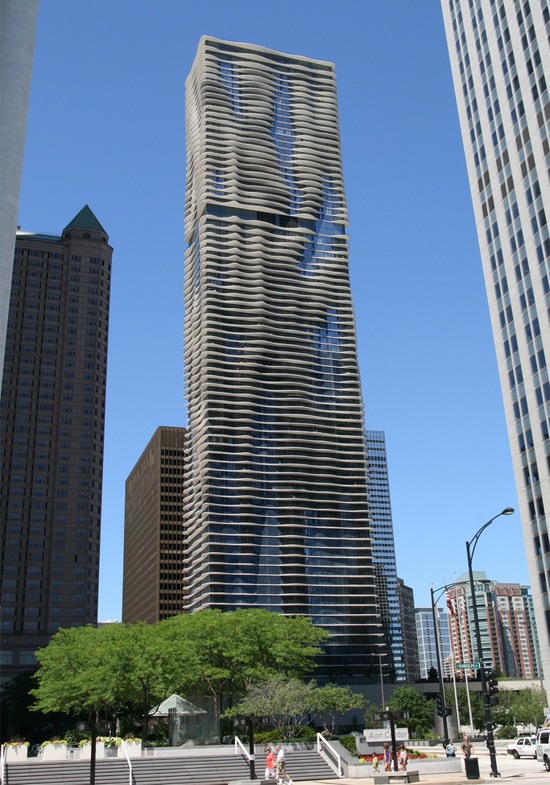
    <p>I thought of a huge skyscraper with restaurants, retail stores, offices, gyms, and residential spaces — a large self-contained, compact community all by itself.</p>
    <p></p>
    <p><img src="http://cdn.sixrevisions.com/0344-03_skyscraper.jpg" width="550" height="785" style="max-width: 100%; height: auto;"><span>Source: <a href="http://www.flickr.com/photos/brostad/4751870052/sizes/l/in/photostream/" rel="nofollow external" class="bo">Bernt Rostad</a></span></p>
    <p>No one would ever start the construction process of a skyscraper like that until everything is properly planned and drawn out.</p>
    <p><img src="http://cdn.sixrevisions.com/0344-02_construction_skyscraper.jpg" width="423" height="600" style="max-width: 100%; height: auto;"><span>Source: <a href="http://www.flickr.com/photos/18588282@N00/2297077517/sizes/z/in/photostream/" rel="nofollow external" class="bo">Steve Newfield</a></span></p>
    <p>I’m not a building architect or construction contractor, but I can still see the innumerable requirements you need to draw out before proceeding to construction. Room planning details, sourcing of good construction materials, managing the different teams involved in the building’s construction, zoning permits, funding allocation, natural disaster planning in case of earthquakes, the list goes on.</p>
    <p>Everybody considers design as an important component of things; whether it’s the design of a skyscraper or the tires of your car.</p>
    <p>Design is about not only bringing convenience, innovation, and comfort into people’s lives, but also in many cases such as skyscrapers and your car tires, people’s lives and safety becomes dependent on it.</p>
    <p>I’m not an architect.</p>
    <p>I’m an IT person. I’m a <em>concept designer</em> to be more exact.</p>
    <p>For years, I’ve been designing strategies and conducting research for very large, ambitious website projects.</p>
    <p>Concept design is the foundation of a robust website architecture. Like in the construction of a skyscraper, you need to have a sound blueprint for building large-scale websites.</p>
    <p>In this article, I’ll share our company’s process for architecting large websites.</p>
    <h3>The Website Architect</h3>
    <p>Let’s first figure out whose role it is to do this thing called <a href="http://en.wikipedia.org/wiki/Website_architecture" rel="nofollow external" class="bo">website architecture</a>.</p>
    <p>To me, this job is carried out by a <strong>website architect.</strong></p>
    <p>I deliberately avoid mentioning UI/UX designers and the IA guys here because website architecture goes beyond — or rather <em>encompasses</em> — the user interface, user experience, and information architecture of the site.</p>
    <p>The website architect needs to have a solid understanding of usability, in-depth knowledge of web development tools, online marketing technologies, and everything else involved in the construction and maintenance of a website.</p>
    <p>Just like an architect of a skyscraper or a residential home, she must be well-versed with the tools, materials, and processes of construction in order to plan the product efficiently and effectively.</p>
    <p>This person, our website architect, should possess strong logical thinking, has an analytical mind, is smart with commercial aspects of websites, and be attentive to details.</p>
    <p>Of course, for a guaranteed quality product, the architect can/should consult other specialists: designers, developers, etc.</p>
    <p>As you see, the ideal web architect in my mind should be a broad specialist, because, as you’ll soon see below, there’s no getting away from that.</p>
    <h3>Overview of the Website Architecture Process</h3>
    <p>I’ll give you just a general overview of my company’s website architecture process.</p>
    <p><img src="http://cdn.sixrevisions.com/0344-23_website_architecture_process_flowchart.jpg" width="550" height="930" style="max-width: 100%; height: auto;"></p>
    <p>The process is divided into these 11 stages:</p>
    <ol>
    <li>Project Brief</li>
    <li>Website Goal Definition</li>
    <li>Define the Target Audience</li>
    <li>Competitor Analysis</li>
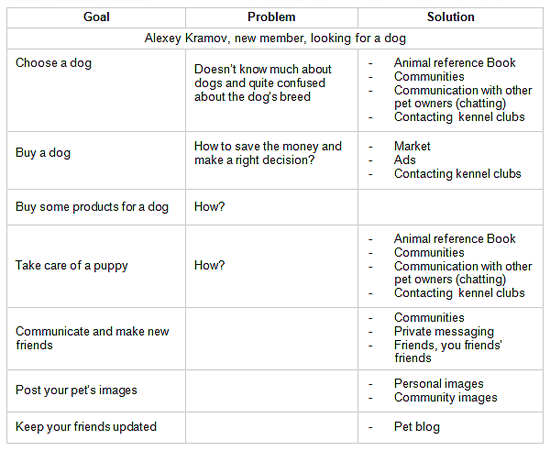
    <li>User Goal-Problem-Solution</li>
    <li>Scenario Mapping</li>
    <li>Mind Mapping</li>
    <li>Information Architecture</li>
    <li>Prototyping</li>
    <li>Prototype Usability Testing</li>
    <li>Project Specification</li>
    </ol>
    <p>As you can see, all these stages are related to each other, and we’ve organized it in a sequential manner.</p>
    <p>Let’s discuss each stage.</p>
    <h3>Stage 1: Project Brief</h3>
    <p>Gathering the needed data from the client and your team can usually take 2 days. Though you should be as thorough as possible, also keep in mind that there’s always room for elaboration and additional data-gathering in the other stages of the website architecture process, so don’t get too off-track if some pieces of information haven’t been transmitted to you.</p>
    <h4>Determine Goals and Expected Outcomes</h4>
    <p>What is the client’s goals and expected outcomes of this project, and how does she envision the end result of the project?</p>
    <p>You should be clear about the evaluation criteria of these goals and expected outcomes to make sure you’re both on the same page.</p>
    <p>You have to be as specific as possible; goals and outcomes should be quantifiable and measurable.</p>
    <h4>Brainstorm with the Client</h4>
    <p>Ask the client to tell you everything he has on his mind. Listen to what he says patiently and thoughtfully. Take notes. Focus on what they’re saying and resist the urge to chime in. Your ideas and remarks can wait.</p>
    <p>If the client is passionate about his ideas for the project, he can spend hours talking about it, which is completely normal.</p>
    <p>When the client is really into the project, he’s a great help and pleasure to work with.</p>
    <h4>Client Idea Summary</h4>
    <p>At the end of your brainstorming session, you should ask the client to sum everything up — if he succeeds in boiling his idea down to one sentence, then the idea is clear. If not, you will need better clarity and focus.</p>
    <h4>Determine the Target Audience</h4>
    <p>Who is the client’s target audience? Who’s going to use this site, and how might they benefit from the site?</p>
    <p>The client should have a clear idea of who the end user is, so that we can produce a website for them. Otherwise, it’s like playing darts with your eyes closed: You know where the target is, but it’s going to be nearly impossible to hit it.</p>
    <p>You can also start discussing what the client already knows about their target demographic: gender, age, location, etc.</p>
    <h4>Determine Competitors</h4>
    <p>Who are the website’s direct and indirect competitors? The client and the website architect should be aware of the existing competitive environment.</p>
    <p>There are always competitors. Even if the website’s idea is completely unique, there are at least indirect competitors.</p>
    <h4>Meet the Decision Makers</h4>
    <p>Meet with the people who make decisions. Discuss the deadlines, the budget limit, resource availabilities, and so forth.</p>
    <p>Organizational matters, matter.</p>
    <h4>Results and Deliverables</h4>
    <p>Some of your other questions will need to wait to be answered later on in the website architecture process. What you get out of the project briefing stage will be basic data and just to get a general feel of what your client already knows about his project.</p>
    <p>It’s crucial to understand the client’s needs and expectations at this early stage, and to choose the right direction for the project right at the starting line. The price you pay for not giving enough time to this simple but critical first stage exponentially grows as the web architecture process and website production progresses.</p>
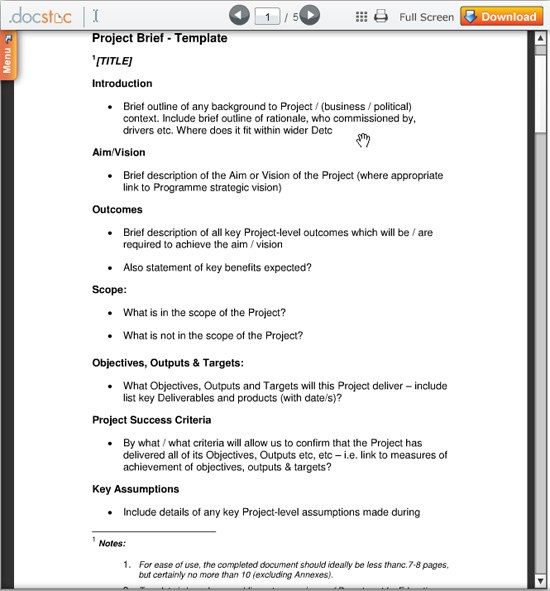
    <p><img src="http://cdn.sixrevisions.com/0344-20_docstoc_template.jpg" width="550" height="591" style="max-width: 100%; height: auto;"><span>A project brief template. Source: <a href="http://www.docstoc.com/docs/2628263/Project-Brief-Template-Project-Brief-project-management-Business-Case-Project-Initiation-Document-Project-Planning-Crown-copyright-Project-Manager-Project-Scope-proposed-project" rel="nofollow external" class="bo">docstoc.com</a></span></p>
    <p>The deliverable of the briefing stage is a written document with detailed information given to you by the client and the decision-makers. This document should be approved and verified by the client. It can be in the form of a <a href="http://designinstruct.com/articles/project-management/client-design-brief-questions/" rel="nofollow external" class="bo">design brief</a>.</p>
    <h3>Stage 2: Website Goal Definition</h3>
    <p>A website needs goals. The client’s goals might be these: to monetize the site, to increase the offline market share through online marketing, to better engage customers online, and so forth.</p>
    <p>The goals define the direction of the entire <a href="http://sixrevisions.com/web-development/a-6-step-general-process-for-producing-a-website/" title="A 6-Step General Process for Producing a Website" rel="nofollow external" class="bo">website production process</a>.</p>
    <p>Besides determining the website’s goals, you also need to define <strong>success criteria</strong> according to the client.</p>
    <p>A good way to establish goals is by using the <a href="http://en.wikipedia.org/wiki/SMART_criteria" rel="nofollow external" class="bo">SMART criteria.</a> That is, each goal should be:</p>
    <ul>
    <li>Specific</li>
    <li>Measurable</li>
    <li>Attainable</li>
    <li>Relevant</li>
    <li>Time-bound</li>
    </ul>
    <p>For example:</p>
    <ul>
    <li>Generate $50,000 income within 5 years through ads, information products like e-books and paid subscription plans</li>
    <li>Assist users in making a choice of what pet to own</li>
    <li>Provide users with advice on pet issues</li>
    <li>Create a marketing platform for pet products</li>
    </ul>
    <h4>Results and Deliverables</h4>
    <p>As a result, you will have a document containing 2 lists:</p>
    <ul>
    <li>A list of project goals</li>
    <li>A list of the client’s goals</li>
    </ul>
    <p>This document needs sign-off by the client/decision-makers.</p>
    <h3>Stage 3: Define the Target Audience</h3>
    <p>This stage involves researching the target audience. We need to identify what types of users will go to the site, and also define the needs of each group.</p>
    <h4>Gather Characteristics Data</h4>
    <p>We need to create a common persona for each group. The user interface design depends greatly on the results of this stage. To get started with this, we first need to define what our audiences’ common characteristics are.</p>
    <p><strong>Define Socio-Demographic Characteristics: </strong>We should figure out the sex, age, education level, and occupation of our target audience. Targeting teenagers (15-18) is going to differ from a site meant for people over 60.</p>
    <p><strong>Define Psychological Characteristics: </strong>We should determine the lifestyle, personality, temperament, motivation, value system, philosophies, etc. of our target audience. This information is even more important than socio-demographic characteristics in terms of user interface design. If, for example, our users are early adopters, the user interface and <a href="http://sixrevisions.com/web-development/10-simple-tips-for-launching-a-website/" title="10 Simple Tips for Launching a Website" rel="nofollow external" class="bo">pre-launch strategy</a> will be different than other websites.</p>
    <p><strong>Define Wants/Needs Characteristics</strong>: We should figure out why our user would want to sign up to our website, what problems they’re looking to solve with our site, etc. We define their <a href="../Content/Nikita_Semenov_Architecture_Largescale_Sites/The%20Secret%20to%20Entrepreneurial%20Success:%20A%20Monetizable%20Pain" rel="nofollow external" class="bo">pain points</a> and aim to solve it with our website.</p>
    <p>This information is vital, though it’s hard to find. If you’re working on a <a href="http://sixrevisions.com/web_design/an-exploration-of-website-redesigns-tips-and-examples/" title="An Exploration of Website Redesigns: Tips and Examples" rel="nofollow external" class="bo">website redesign</a> project, the client may already have this information if they have <a href="http://sixrevisions.com/tools/10-excellent-feedback-tools-for-web-designers/" title="10 Excellent Feedback Tools for Web Designers" rel="nofollow external" class="bo">user feedback tools</a> in place.</p>
    <p>Sometimes the competitor can have it (but good luck getting them to share it with you). In this case, you need to perform <a href="http://sixrevisions.com/usabilityaccessibility/10-usability-tips-based-on-research-studies/" title="10 Usability Tips Based on Research Studies" rel="nofollow external" class="bo">user research studies</a> and conduct surveys.</p>
    <p><strong>Geographic Location Characteristics: </strong>Country, city, region, continent — these are all helpful information. Being online does not completely eliminate the location factor.</p>
    <p>Sometimes <a href="http://en.wikipedia.org/wiki/Geotargeting" rel="nofollow external" class="bo">geotargeting</a> is the first thing to think of when creating a national site, government website, or any location-dependent website.</p>
    <p>Moreover, website content and <a href="http://sixrevisions.com/content-strategy/is-web-copy-ruining-your-design/" title="Is Web Copy Ruining Your Design?" rel="nofollow external" class="bo">website copywriting</a> is heavily determined by the audience’s location.</p>
    <p>You will need this when you’re in the <a href="http://sixrevisions.com/usabilityaccessibility/information-architecture-101-techniques-and-best-practices/" rel="nofollow external" class="bo">information architecture (IA)</a> stage.</p>
    <h4>Create User Personas</h4>
    <p>When the target audience portrait is well-defined, we can then create <a href="http://en.wikipedia.org/wiki/Persona_(user_experience)" rel="nofollow external" class="bo">personas</a>.</p>
    <p><img src="http://cdn.sixrevisions.com/0344-04_persona_user_experience.jpg" width="550" height="851" style="max-width: 100%; height: auto;"><span>Example of a persona. Source: <a href="http://uxmag.com/articles/personas-the-foundation-of-a-great-user-experience" rel="nofollow external" class="bo">uxmag.com</a></span></p>
    <p>The main goal of the web architect here is to determine all the possible groups of users, starting from the largest (core) group, and ending with the smallest one.</p>
    <p>Then we create a persona for each group.</p>
    <p>Each of the personas you develop should have a:</p>
    <ul>
    <li>First and Last name (Don’t use the names of real people to avoid distortion of the story)</li>
    <li>Photo</li>
    <li>Age</li>
    <li>Location</li>
    <li>Occupation</li>
    <li>Marital status</li>
    <li>Hobby</li>
    <li>Skills</li>
    <li>Problems they need to solve</li>
    <li>Personal and professional experience</li>
    </ul>
    <p>To get a better image of your target audience you can interview potential users. This is about marketing research at this point.</p>
    <h4>Results and Deliverables</h4>
    <p>After finishing this stage, you should now have two things:</p>
    <ul>
    <li>A document presenting the general characteristics of the target audience</li>
    <li>Personas</li>
    </ul>
    <p><img src="http://cdn.sixrevisions.com/0344-05_persona_example_user_experience.jpg" width="550" height="280" style="max-width: 100%; height: auto;"></p>
    <h3>Stage 4: Competitor Analysis</h3>
    <p>To ensure the success of the project, you need to know your competitors and have good ideas on how to get ahead of them. You should discover their strong points and weak points.</p>
    <p>There are several methodologies involved in conducting <a href="http://en.wikipedia.org/wiki/Competitor_analysis" rel="nofollow external" class="bo">competitor analysis</a> research, including market participant polling, and Internet and print media research.</p>
    <p>If you’re creating a local website, don’t limit yourself only to your country. Look through international websites that are doing similar things. Most likely, there are similar or analogous projects up and running somewhere in the world. Some of these projects can be rather inspiring.</p>
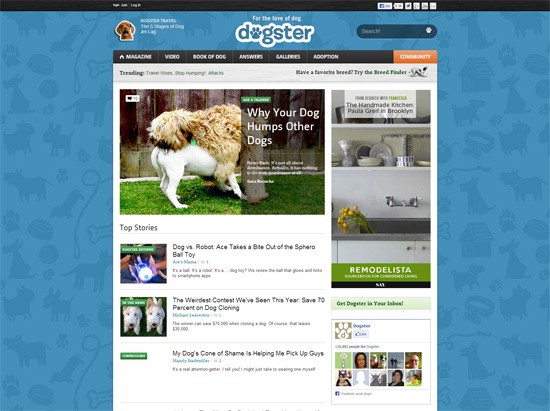
    <p>For example, we’ve been working on a social networking site for pet lovers for a client in Russia. We didn’t find direct competitors in the local market. However, there are several foreign sites and indirect local competitors. They are:</p>
    <table width="550" border="0">
    <tbody>
    <tr>
    <th>Competitor</th>
    <th>Characteristics</th>
    </tr>
    <tr>
    <td><a href="http://www.dogster.com">www.dogster.com</a></td>
    <td>international, popular, quality</td>
    </tr>
    <tr>
    <td><a href="http://www.dogster.ru">www.dogster.ru</a></td>
    <td>Russian project, quite popular, satisfying quality</td>
    </tr>
    <tr>
    <td><a href="http://www.catster.com">www.catster.com</a></td>
    <td>international, popular, quality</td>
    </tr>
    </tbody>
    </table>
    <p><img src="http://cdn.sixrevisions.com/0344-06_competitor_analysis_foreign_site.jpg" alt="" width="550" height="411" style="max-width: 100%; height: auto;"></p>
    <p>Your website’s competitors can be direct competitors or indirect competitors.</p>
    <ul>
    <li>
    <strong>Direct competitors</strong> can be defined as any website operating for the same user base and who offer analogous products. For example, a direct competitor of Microsoft Windows is Apple Mac OS.</li>
    <li>
    <strong>Indirect competitors</strong> are competitors who offer similar products, but only partially satisfy the target audience’s needs.</li>
    </ul>
    <h4>SWOT Analysis</h4>
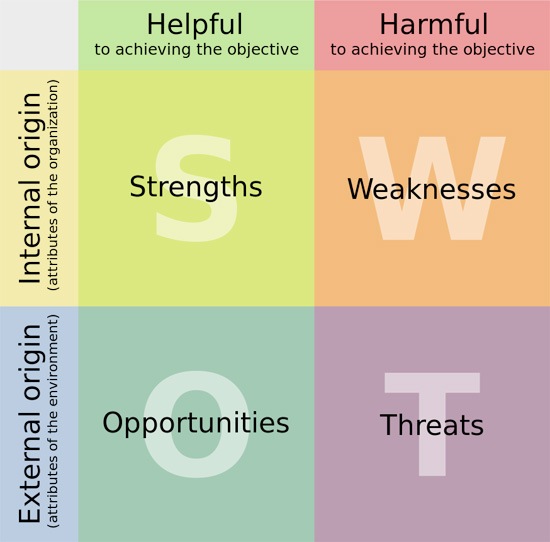
    <p>There are different approaches towards competitor identification and analysis. I like <a href="http://en.wikipedia.org/wiki/SWOT_analysis" rel="nofollow external" class="bo">SWOT analysis</a> the best.</p>
    <p>SWOT — which stands for <strong>S</strong>trengths, <strong>W</strong>eaknesses, <strong>O</strong>pportunities, and <strong>T</strong>hreats — helps indicate the strong points and weak points of your competitors, and more importantly, aids you in figuring out project opportunities.</p>
    <p><img src="http://cdn.sixrevisions.com/0344-07_swot_analysis_matrix.jpg" width="550" height="542" style="max-width: 100%; height: auto;"><span>SWOT matrix. Source: <a href="http://en.wikipedia.org/wiki/File:SWOT_en.svg" rel="nofollow external" class="bo">wikipedia.org</a></span></p>
    <p>While analyzing competitors, you can discover useful site features and ideas worth adapting onto your own website — general, universal site features like commenting systems, web forms, etc. There’s no need to reinvent the wheel in these cases.</p>
    <p>All good ideas you end up with during the competitor analysis stage will be needed for the mind mapping stage (which we’ll discuss later on).</p>
    <h4>Results and Deliverables</h4>
    <p>You should now have:</p>
    <ul>
    <li>A list of direct and indirect competitors</li>
    <li>A SWOT analysis for each competitor</li>
    <li>Research summaries (ideas generated, market opportunities, etc.)</li>
    </ul>
    <h3>Stage 5: User Goal-Problem-Solution</h3>
    <p>Proceeding from the personas we’ve developed, we can start working on goal-problem-solution.</p>
    <h4>User Goals</h4>
    <p>Every person has short-term and long-term goals.</p>
    <p>There can also be sub-goals. For example, a person might desire to improve his career, but first he needs to find a job. The sub-goal is finding a job to reach the goal of improving his career. </p>
    <p>For our website project, we identify a person’s goals, problems, and we look towards providing solutions for them.</p>
    <p>All goals should be designed well. Fuzzy goals won’t help, as it’s impossible to solve all problems within one site. Focus on primary goals and keep the list of goals short.</p>
    <p>Some clients think if users listen to music online, their site should also provide such a service, even if their website isn’t looking to solve this problem. The more features we add, the more diluted our core objectives become.</p>
    <h4>User Problems</h4>
    <p>When we have a list of concrete goals, we can determine concrete problems.</p>
    <p>For example, a user goal on our website might be to find a contractor that can build his construction project. That goal is more complex than it seems: How do we locate the right contractor for the user’s specific construction project? Is it important that the contractor is located close to where the construction project is? How do we allow them to quickly evaluate many candidates? Due to questions like these, you’ll generate ideas easily.</p>
    <h4>Our Solutions</h4>
    <p>When we’re done identifying goals and problems, it’s time to design and develop solutions for them.</p>
    <p>This process brings great fulfillment to the website architect because she’s looking to solve pain points that her users have.</p>
    <h4>Results and Deliverables</h4>
    <p>As the result, we’ll have a goal-problem-solution matrix designed for each persona we’ve developed for our website.</p>
    <p><img src="http://cdn.sixrevisions.com/0344-08_goal_problem_solution_matrix.png" width="550" height="451" style="max-width: 100%; height: auto;"></p>
    <h3>Stage 6: Scenario Mapping</h3>
    <p><a href="http://www.uxforthemasses.com/scenario-mapping/" rel="nofollow external" class="bo">Scenario mapping</a> is the stage dedicated to revealing possible user flows.</p>
    <p><img src="http://cdn.sixrevisions.com/0344-09_scenario_mapping.jpg" width="550" height="617" style="max-width: 100%; height: auto;"><span>User experience mapping. Source: <a href="http://adaptivepath.com/ideas/the-anatomy-of-an-experience-map" rel="nofollow external" class="bo">adaptivepath.com</a></span></p>
    <p>Once again, we need to think like an end user and create probable scenarios of his actions on our website.</p>
    <p>Every goal of every persona has his/her own set of scenario maps.</p>
    <p>These scenarios help reveal weak points in our existing ideas and knowledge. Scenarios also help the website architect develop good user flows later on.</p>
    <h4>Results and Deliverables</h4>
    <p>We should have scenarios mapped out for critical site goals that we’ve established in the previous stage.</p>
    <p>Here’s an example of a scenario:</p>
    <p><strong>User Goal:</strong></p>
    <p>Choose a dog</p>
    <p><strong>Scenario:</strong></p>
    <ol>
    <li>Go to main page</li>
    <li>Go to "Zoopedia" section of the site</li>
    <li>In "Zoopedia" section, find topics and discussions about dog breeds</li>
    <li>Read topics and discussions of interest</li>
    <li>Go to the Read Also section, located at the end of the topic because there’s more information there</li>
    <li>Choose 3 preferred dog breeds</li>
    <li>Return to "Zoopedia" top-level web page</li>
    <li>Read some more</li>
    <li>Find links to people selling dogs of these breeds</li>
    <li>Make an informed, final decision</li>
    <li>Go to a pet store to purchase a pet</li>
    </ol>
    <p>When we wrote out this scenario, we ended up adding these site features:</p>
    <ul>
    <li>"Zoopedia" rubricator</li>
    <li>"Read Also" widgets</li>
    <li>Links to pet stores and dog sellers on the breed information pages</li>
    </ul>
    <p>As you can see, scenarios help us find opportunities for improvement.</p>
    <h4>See Also:</h4>
    <ul>
    <li><a href="http://sixrevisions.com/user-experience-ux/customer-journey-maps/" rel="nofollow external" class="bo">Customer Journey Maps</a></li>
    </ul>
    <h3>Stage 7: Mind Mapping</h3>
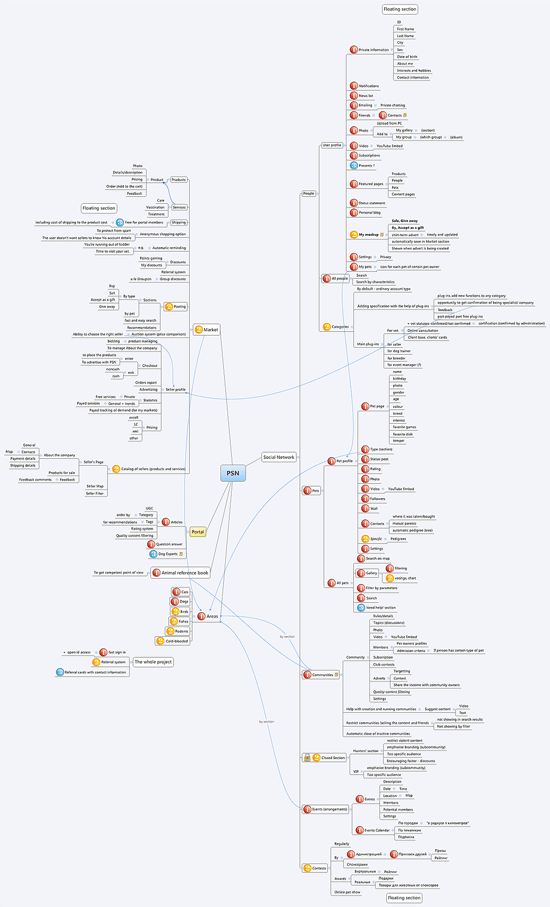
    <p>When we have a bunch of ideas, it becomes helpful when we start visualizing and interconnecting them.</p>
    <p>The <a href="https://en.wikipedia.org/wiki/Mind_map" rel="nofollow external" class="bo">mind mapping</a> stage is dedicated to creating a solid system of logically connected ideas and also helps us cut out unnecessary things. It’s a popular design conceptualization tool.</p>
    <p>To create mind maps, we should use <a href="http://www.xmind.net/" rel="nofollow external" class="bo">Xmind</a>.</p>
    <p><img src="http://cdn.sixrevisions.com/0344-10_xmind_mind_map.png" width="570" height="410" style="max-width: 100%; height: auto;"></p>
    <p>Find your list of ideas and divide them into logical categories. For example, let’s say we’re working on a real estate website. The real estate website’s sections might be:</p>
    <ul>
    <li>Property Catalog</li>
    <li>Community Forums</li>
    <li>Articles/News</li>
    <li>Information Center</li>
    </ul>
    <p>Map all of your ideas into one of these categories.</p>
    <p>If an idea fits in more than one category, choose the best fit for it.</p>
    <p>Brainstorming will help sift out the useless and unneeded features, web pages, etc.</p>
    <p>Each website section should be planned logically. Don’t forget about section-dependent features (such as the user being able to rate each property, in our example). Mark this connection with an arrow to remember the dependence (in our example, it would go to the Property Catalog).</p>
    <p>You can design your own symbols to indicate different functional sections. If the web architect, for example, is undecided in terms of which section a certain site feature belongs to, she can mark it with a question mark. These symbols are really important if the project is large.</p>
    <h4>Results and Deliverables</h4>
    <p>As a result, we have a bird’s-eye view of the interconnections of site features and sections.</p>
    <p><img src="http://cdn.sixrevisions.com/0344-11_mind_mapping_website_sections.png" width="550" height="907" style="max-width: 100%; height: auto;"></p>
    <h3>Stage 8: Information Architecture</h3>
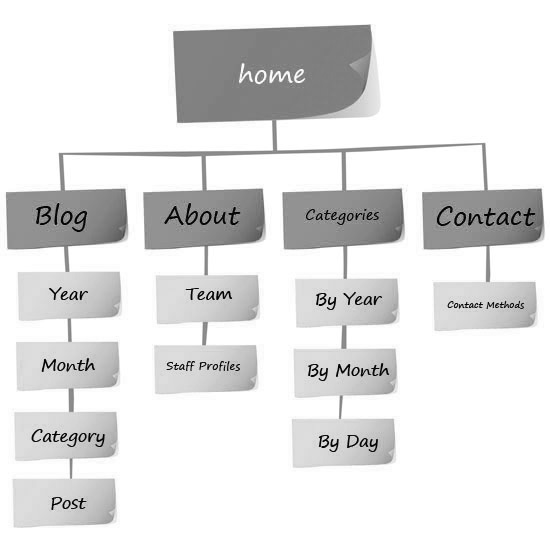
    <p>Now that we have a detailed mind map of our website, we can start working on the website’s information structure, which will be the foundation of the website’s prototype.</p>
    <p><img src="http://cdn.sixrevisions.com/0344-12_sitemap_information_architecture.jpg" width="550" height="550" style="max-width: 100%; height: auto;"></p>
    <p>The website’s IA can be created with the help of flowcharting software like <a href="http://office.microsoft.com/en-us/visio/" rel="nofollow external" class="bo">Visio</a>.</p>
    <p><img src="http://cdn.sixrevisions.com/0344-13_visio_example.jpg" width="550" height="308" style="max-width: 100%; height: auto;"></p>
    <h4>Results and Deliverables</h4>
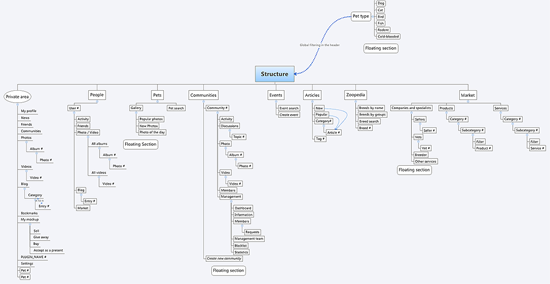
    <p>You should end up with an information architecture (IA) design after this stage.</p>
    <p><img src="http://cdn.sixrevisions.com/0344-14_website_structure.png" width="550" height="284" style="max-width: 100%; height: auto;"></p>
    <h4>See Also:</h4>
    <ul>
    <li><a href="http://sixrevisions.com/usabilityaccessibility/information-architecture-101-techniques-and-best-practices/" rel="nofollow external" class="bo">Information Architecture 101: Techniques and Best Practices</a></li>
    <li><a href="http://sixrevisions.com/content-strategy/content-mapping/" rel="nofollow external" class="bo">How to Create Content Maps for Planning Your Website’s Content</a></li>
    </ul>
    <h3>Stage 9: Prototyping/Wireframing</h3>
    <p>You will need prototyping software for this stage. I recommend <a href="http://www.axure.com/" rel="nofollow external" class="bo">Axure</a>, though there are a number of other similar programs.</p>
    <p><img src="http://cdn.sixrevisions.com/0344-15_axure_example.jpg" width="550" height="309" style="max-width: 100%; height: auto;"></p>
    <p>The home page prototype doesn’t necessary have to be prototyped first. For example, in the case of an online shop or a blog, the product page or blog post page should come first, because these are critical pages, and will typically be the landing pages of most users on the site.</p>
    <p>The website architect is going to lean on the mind map and information architecture diagrams to develop this prototype.</p>
    <p>When creating each web page prototype, you should focus on how the user can achieve his/her goals. Before prototyping, you should refresh your knowledge of your target audience using the previous stages in the website architecture process.</p>
    <h4>Prototype the Primary Navigation Menu</h4>
    <p>The primary navigation menu is the first to create. We need to figure out the number of menu items and the number of drop-down menus.</p>
    <h4>Prototype the Header Section</h4>
    <p>Then we design the <a href="http://sixrevisions.com/web_design/five-types-of-effective-headers-in-web-design/" title="Five Types of Effective Headers in Web Design" rel="nofollow external" class="bo">header section</a> that typically contains these items:</p>
    <ul>
    <li>The primary navigation menu</li>
    <li>Search form</li>
    <li>Contact information</li>
    <li>Website logo</li>
    </ul>
    <h4>Prototype Contextual Areas</h4>
    <p>Now we start designing contextual areas, which will differ depending on the web page you’re prototyping. We will make content blocks, some of which are constant for every page, some of which won’t.</p>
    <h4>Prototype the Website Footer</h4>
    <p>The footer typically stays the same on each web page. Usually, the footer duplicates the main menu. It also contains auxiliary information such as the website’s privacy policy, links to social networks, contact information, copyright information, and so forth.</p>
    <h4>Client Feedback</h4>
    <p>The first web page prototype should be shown to decision-makers, and the reason for the layout should be explained to them. The client might revise and suggest some adjustments. That’s OK, because having this done on a low-fidelity prototype is much easier than if we had a higher-fidelity prototype.</p>
    <p>After the first page is approved, we can move to the next prototypes. All the ideas represented in our mind map should be found in these prototypes. It’s crucial not to forget about the smallest detail, as it can turn to hell in the long run if you do.</p>
    <h4>Test the Prototypes Against Scenario Maps</h4>
    <p>Our scenarios will help test the mockups to ensure the logical order of every action.</p>
    <p>This is the most time-consuming component of this stage and requires a lot of patience and attentiveness. In the case of large websites, there could be over 100 unique interface prototypes.</p>
    <h4>Results and Deliverables</h4>
    <p>The deliverables after this stage are low-fidelity prototypes/wireframes of all web page types.</p>
    <p>Examples:</p>
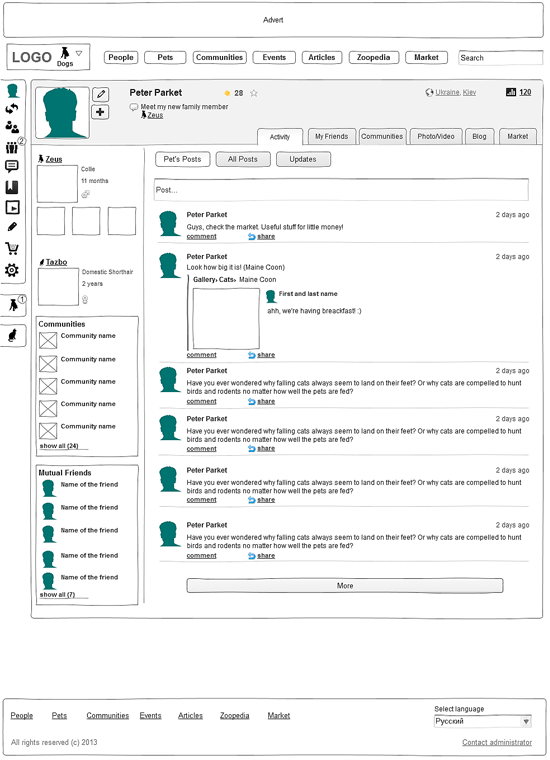
    <p><img src="http://cdn.sixrevisions.com/0344-16_prototype_example01.png" width="550" height="760" style="max-width: 100%; height: auto;"></p>
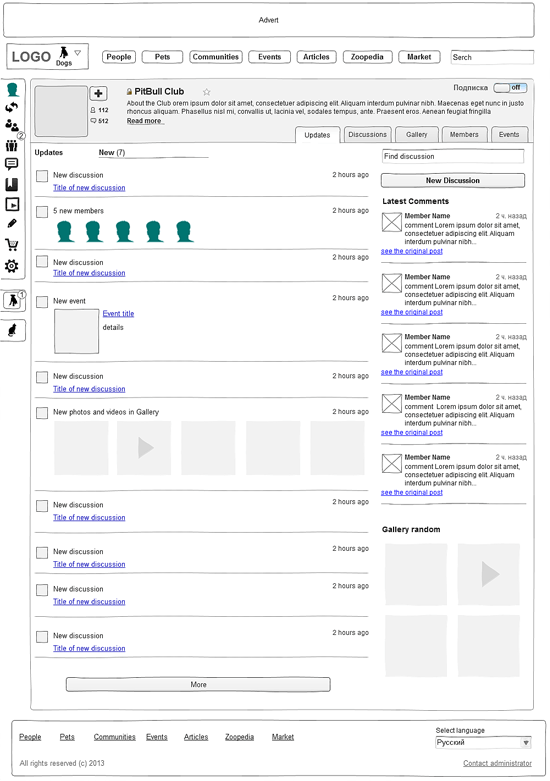
    <p><img src="http://cdn.sixrevisions.com/0344-17_prototype_example02.png" width="550" height="781" style="max-width: 100%; height: auto;"></p>
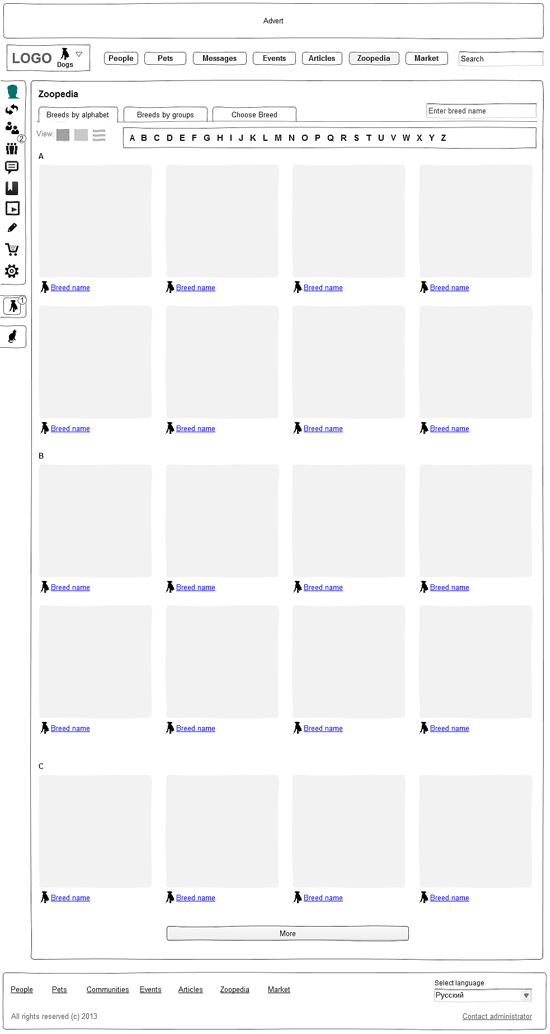
    <p><img src="http://cdn.sixrevisions.com/0344-18_prototype_example03.png" width="550" height="1034" style="max-width: 100%; height: auto;"></p>
    <p>There are 90 some such prototypes for the example project above. As you can see, each prototype was broken down in detail. This way, no questions and uncertainty arose during the design of the functional prototypes and finished web designs.</p>
    <h3>Stage 10: Prototype Usability Testing</h3>
    <p>This is one of the best ways to quickly validate the effectiveness of the website architecture and make changes before things progress further.</p>
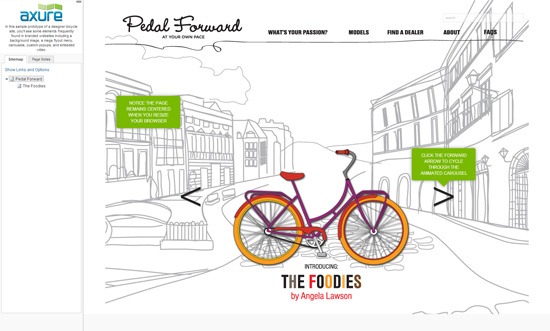
    <p>Axure generates HTML from prototypes, which make them interactive and ready to test on users.</p>
    <p><img src="http://cdn.sixrevisions.com/0344-19_usability_test_prototypes.jpg" width="550" height="331" style="max-width: 100%; height: auto;"></p>
    <p>Usability testing at this stage will help you notice gaps and flaws in the architecture.</p>
    <p>For testing purpose, we invite some representatives of target audience and observe how they manage to reach certain pages and results within the site.</p>
    <p>Then, the users can be interviewed regarding the site in general.</p>
    <p>After usability testing we make final corrections.</p>
    <h4>Results and Deliverables</h4>
    <p>As the result, we will have validated and improved the user-friendliness of our web page prototypes and we get a better picture of how users would be interacting with the site.</p>
    <h3>Stage 11: Project Specification</h3>
    <p>The final stage of the website architecture process is to create the <a href="http://en.wikipedia.org/wiki/Specification_(technical_standard)" rel="nofollow external" class="bo">project specification</a> document. This should contain a detailed description of each stage of the website architecture process.</p>
    <p>The project specification is the result of all the stages you’ve gone through. It typically will contain a detailed description of each prototype, user flows, and so forth.</p>
    <p>The specs should be full and unequivocal. Be detailed and thorough, but also keep it as succinct and as concise as possible.</p>
    <p>The project specification should contain all the information regarding software and web technologies required for the website.</p>
    <p>Design requirements should be clear.</p>
    <p>Once the project specification is approved, website development starts.</p>
    <p><img src="http://cdn.sixrevisions.com/0344-21_final01.png" width="550" height="466" style="max-width: 100%; height: auto;"></p>
    <p><img src="http://cdn.sixrevisions.com/0344-22_final02.png" width="550" height="768" style="max-width: 100%; height: auto;"></p>
    <h3>Related Content</h3>
    <ul>
    <li><a href="http://sixrevisions.com/web-development/planning-your-e-commerce-website/" rel="nofollow external" class="bo">Planning your E-Commerce Website</a></li>
    <li><a href="http://sixrevisions.com/web-development/agile/" rel="nofollow external" class="bo">Agile Web Development That Works</a></li>
    <li><a href="http://sixrevisions.com/content-strategy/web-design-process/" rel="nofollow external" class="bo">How to Bake Content Strategy into Your Web Design Process</a></li>
    <li>
    <em>Related categories</em>: <a href="http://sixrevisions.com/category/project-management/" rel="nofollow external" class="bo">Project Management</a> and <a href="http://sixrevisions.com/category/user-experience-ux/" rel="nofollow external" class="bo">UX</a>
    </li>
    </ul>
    <h3>About the Author</h3>
    <p><img src="http://cdn.sixrevisions.com/authors/nikita_semenov_small.jpg" alt="" width="80" height="80" style="max-width: 100%; height: auto;"><span><strong>Nikita Semenov</strong> is the founder and CEO at <a href="http://seclgroup.com/" rel="nofollow external" class="bo">SECL Group Ltd</a>. Web development has been his life’s work since 2003. Contact him via the company website <a href="http://seclgroup.com/kontakty.html" rel="nofollow external" class="bo">contact page</a> or on <a href="http://www.facebook.com/semenov.nikita.andreevich" rel="nofollow external" class="bo">Facebook</a>.</span></p>
    <p>The post <a href="http://sixrevisions.com/project-management/website-architecture/" rel="nofollow external" class="bo">The Secret to Building Large Websites: Website Architecture</a> appeared first on <a href="http://sixrevisions.com" rel="nofollow external" class="bo">Six Revisions</a>.</p>
    </div>
]]>
</Body>
<Summary>When I started writing this, the idea of a skyscraper construction project came to mind.   I thought of a huge skyscraper with restaurants, retail stores, offices, gyms, and residential spaces — a...</Summary>
<Website>http://feedproxy.google.com/~r/SixRevisions/~3/8QuvOq3fKaI/</Website>
<TrackingUrl>https://my3.my.umbc.edu/api/v0/pixel/news/30831/guest@my.umbc.edu/dcd5323cb9291a2a49f13faa5785ee36/api/pixel</TrackingUrl>
<Tag>css</Tag>
<Tag>database</Tag>
<Tag>design</Tag>
<Tag>development</Tag>
<Tag>html</Tag>
<Tag>javascript</Tag>
<Tag>mysql</Tag>
<Tag>project-management</Tag>
<Tag>sql</Tag>
<Tag>web</Tag>
<Group token="retired-583">Web Developer - Build Group</Group>
<GroupUrl>https://my3.my.umbc.edu/groups/retired-583</GroupUrl>
<AvatarUrl>https://assets3-my.umbc.edu/system/shared/avatars/groups/000/000/583/fc60f5d7abc2e080599bb6dc465db54d/xsmall.png?1363101197</AvatarUrl>
<AvatarUrl size="original">https://assets4-my.umbc.edu/system/shared/avatars/groups/000/000/583/fc60f5d7abc2e080599bb6dc465db54d/original.jpg?1363101197</AvatarUrl>
<AvatarUrl size="xxlarge">https://assets4-my.umbc.edu/system/shared/avatars/groups/000/000/583/fc60f5d7abc2e080599bb6dc465db54d/xxlarge.png?1363101197</AvatarUrl>
<AvatarUrl size="xlarge">https://assets4-my.umbc.edu/system/shared/avatars/groups/000/000/583/fc60f5d7abc2e080599bb6dc465db54d/xlarge.png?1363101197</AvatarUrl>
<AvatarUrl size="large">https://assets3-my.umbc.edu/system/shared/avatars/groups/000/000/583/fc60f5d7abc2e080599bb6dc465db54d/large.png?1363101197</AvatarUrl>
<AvatarUrl size="medium">https://assets3-my.umbc.edu/system/shared/avatars/groups/000/000/583/fc60f5d7abc2e080599bb6dc465db54d/medium.png?1363101197</AvatarUrl>
<AvatarUrl size="small">https://assets4-my.umbc.edu/system/shared/avatars/groups/000/000/583/fc60f5d7abc2e080599bb6dc465db54d/small.png?1363101197</AvatarUrl>
<AvatarUrl size="xsmall">https://assets3-my.umbc.edu/system/shared/avatars/groups/000/000/583/fc60f5d7abc2e080599bb6dc465db54d/xsmall.png?1363101197</AvatarUrl>
<AvatarUrl size="xxsmall">https://assets4-my.umbc.edu/system/shared/avatars/groups/000/000/583/fc60f5d7abc2e080599bb6dc465db54d/xxsmall.png?1363101197</AvatarUrl>
<Sponsor>Web Developer - Build Group</Sponsor>
<PawCount>0</PawCount>
<CommentCount>0</CommentCount>
<CommentsAllowed>true</CommentsAllowed>
<PostedAt>Wed, 05 Jun 2013 06:00:12 -0400</PostedAt>
<EditAt>Wed, 05 Jun 2013 06:00:12 -0400</EditAt>
</NewsItem>

<NewsItem contentIssues="true" id="30832" important="false" status="posted" url="https://my3.my.umbc.edu/posts/30832">
<Title>Embracing escrow</Title>
<Body>
<![CDATA[
    <div class="html-content">Phil Greenwood explains how using a source code repository could save a business marriage<div><table border="0"><tbody><tr><td>
    <a href="http://share.feedsportal.com/share/twitter/?u=http%3A%2F%2Fwww.netmagazine.com%2Fopinions%2Fembracing-escrow&amp;t=Embracing+escrow" rel="nofollow external" class="bo"><img src="http://res3.feedsportal.com/social/twitter.png" style="max-width: 100%; height: auto;"></a> <a href="http://share.feedsportal.com/share/facebook/?u=http%3A%2F%2Fwww.netmagazine.com%2Fopinions%2Fembracing-escrow&amp;t=Embracing+escrow" rel="nofollow external" class="bo"><img src="http://res3.feedsportal.com/social/facebook.png" style="max-width: 100%; height: auto;"></a> <a href="http://share.feedsportal.com/share/linkedin/?u=http%3A%2F%2Fwww.netmagazine.com%2Fopinions%2Fembracing-escrow&amp;t=Embracing+escrow" rel="nofollow external" class="bo"><img src="http://res3.feedsportal.com/social/linkedin.png" style="max-width: 100%; height: auto;"></a> <a href="http://share.feedsportal.com/share/gplus/?u=http%3A%2F%2Fwww.netmagazine.com%2Fopinions%2Fembracing-escrow&amp;t=Embracing+escrow" rel="nofollow external" class="bo"><img src="http://res3.feedsportal.com/social/googleplus.png" style="max-width: 100%; height: auto;"></a> <a href="http://share.feedsportal.com/share/email/?u=http%3A%2F%2Fwww.netmagazine.com%2Fopinions%2Fembracing-escrow&amp;t=Embracing+escrow" rel="nofollow external" class="bo"><img src="http://res3.feedsportal.com/social/email.png" style="max-width: 100%; height: auto;"></a>
    </td></tr></tbody></table></div>
    <br><br><a href="http://da.feedsportal.com/r/165665760411/u/49/f/502346/c/32632/s/2cdeb194/a2.htm" rel="nofollow external" class="bo"><img src="http://da.feedsportal.com/r/165665760411/u/49/f/502346/c/32632/s/2cdeb194/a2.img" style="max-width: 100%; height: auto;"></a>
    </div>
]]>
</Body>
<Summary>Phil Greenwood explains how using a source code repository could save a business marriage     </Summary>
<Website>http://feedproxy.google.com/~r/net/topstories/~3/EUxzfmoCjok/story01.htm</Website>
<TrackingUrl>https://my3.my.umbc.edu/api/v0/pixel/news/30832/guest@my.umbc.edu/bbc9e0a9c56122fd8491a3606927798b/api/pixel</TrackingUrl>
<Tag>css</Tag>
<Tag>development</Tag>
<Tag>html</Tag>
<Tag>javascript</Tag>
<Tag>mysql</Tag>
<Tag>net</Tag>
<Tag>php</Tag>
<Tag>sql</Tag>
<Tag>web</Tag>
<Group token="retired-583">Web Developer - Build Group</Group>
<GroupUrl>https://my3.my.umbc.edu/groups/retired-583</GroupUrl>
<AvatarUrl>https://assets3-my.umbc.edu/system/shared/avatars/groups/000/000/583/fc60f5d7abc2e080599bb6dc465db54d/xsmall.png?1363101197</AvatarUrl>
<AvatarUrl size="original">https://assets4-my.umbc.edu/system/shared/avatars/groups/000/000/583/fc60f5d7abc2e080599bb6dc465db54d/original.jpg?1363101197</AvatarUrl>
<AvatarUrl size="xxlarge">https://assets4-my.umbc.edu/system/shared/avatars/groups/000/000/583/fc60f5d7abc2e080599bb6dc465db54d/xxlarge.png?1363101197</AvatarUrl>
<AvatarUrl size="xlarge">https://assets4-my.umbc.edu/system/shared/avatars/groups/000/000/583/fc60f5d7abc2e080599bb6dc465db54d/xlarge.png?1363101197</AvatarUrl>
<AvatarUrl size="large">https://assets3-my.umbc.edu/system/shared/avatars/groups/000/000/583/fc60f5d7abc2e080599bb6dc465db54d/large.png?1363101197</AvatarUrl>
<AvatarUrl size="medium">https://assets3-my.umbc.edu/system/shared/avatars/groups/000/000/583/fc60f5d7abc2e080599bb6dc465db54d/medium.png?1363101197</AvatarUrl>
<AvatarUrl size="small">https://assets4-my.umbc.edu/system/shared/avatars/groups/000/000/583/fc60f5d7abc2e080599bb6dc465db54d/small.png?1363101197</AvatarUrl>
<AvatarUrl size="xsmall">https://assets3-my.umbc.edu/system/shared/avatars/groups/000/000/583/fc60f5d7abc2e080599bb6dc465db54d/xsmall.png?1363101197</AvatarUrl>
<AvatarUrl size="xxsmall">https://assets4-my.umbc.edu/system/shared/avatars/groups/000/000/583/fc60f5d7abc2e080599bb6dc465db54d/xxsmall.png?1363101197</AvatarUrl>
<Sponsor>Web Developer - Build Group</Sponsor>
<PawCount>0</PawCount>
<CommentCount>0</CommentCount>
<CommentsAllowed>true</CommentsAllowed>
<PostedAt>Wed, 05 Jun 2013 06:00:10 -0400</PostedAt>
</NewsItem>

<NewsItem contentIssues="true" id="30830" important="false" status="posted" url="https://my3.my.umbc.edu/posts/30830">
<Title>Were you an art student with &#8220;it&#8221;?</Title>
<Body>
<![CDATA[
    <div class="html-content">
    <p><img alt="" src="http://netdna.webdesignerdepot.com/uploads/2013/04/with.it_.thumbnail.jpg" width="200" height="160" style="max-width: 100%; height: auto;"></p>
    <p>There’s always that one big problem in art school, where you spot a few fellow students that you know “have it!” They don’t need to learn anything because they came into school with “it.”  Still, they sit there and continue to have their brilliance illuminate the mediocrity that surrounds them. You knew they were destined for greatness. The rest of us hated them.</p>
    <p></p>
    <p><a href="http://chrisreedstudio.com" rel="nofollow external" class="bo">Chris Reed</a> was one of those guys. He was actually a designer and illustrator, which just doubles my jealous rage, although he’s still a damn humble, nice guy. Apply one-point-two-one gigawatts, Marty and we go back to those days: it was a cartooning class taught by Harvey Kurtzman. So, Chris walks in, with a small pad of paper and his damn pouch of magic pens. Oh, he’d pull out one of his rapidograph pens of power and BANG! He had drawn a brilliant cartoon within a few minutes.</p>
    <p><a href="http://netdna.webdesignerdepot.com/uploads/2013/04/creed.sva_.1.jpg" rel="nofollow external" class="bo"><img src="http://netdna.webdesignerdepot.com/uploads/2013/04/creed.sva_.1.jpg" width="650" alt="Were you an art student with it?" style="max-width: 100%; height: auto;"></a></p>
    <p><em>One of Chris’ art school drawings. As you see examples of his past and current work, you will notice a style in his approach to layout and spacial relationships.</em></p>
    <p>I don’t remember why the rest of us let him live, but he does live, so I asked him a few questions and he graciously answered them all.</p>
    <p>In art school, I was always impressed that you were so comfortable with your drawing style. While other students were trying to find a “look” that defined them, you obviously had it down and have continued with more or less the same look to your art. When did you first start drawing with the simple line style and look you had back then?</p>
    <blockquote>
    <p>I started drawing with a simple line style when I got my first rapidograph in 8th grade. I was fascinated by the tiny illustrations in the margins of Mad magazine by cartoonist Sergio Aragones. I naively thought that they were drawn at that tiny size so I tried to keep my drawings simple in order to draw as small as possible. As I started drawing larger and adding color, I began using heavier weight lines to help contain the watercolor wash or marker color inside the lines.</p>
    </blockquote>
    <p>Yes, I see that now. Your smaller pieces were great. They were simplicity at it’s best. I always loved the line a Rapidograph would give your work. I tried Rapidographs, too. Loved the line but the teachers kept insisting it was a drafting tool and beating me for not being “attractive.”</p>
    <p><a href="http://netdna.webdesignerdepot.com/uploads/2013/04/creed.aftersva.jpg" rel="nofollow external" class="bo"><img src="http://netdna.webdesignerdepot.com/uploads/2013/04/creed.aftersva.jpg" width="650" alt="Were you an art student with it?" style="max-width: 100%; height: auto;"></a></p>
    <p><a href="http://netdna.webdesignerdepot.com/uploads/2013/04/creed.after_.sva_.2.jpg" rel="nofollow external" class="bo"><img src="http://netdna.webdesignerdepot.com/uploads/2013/04/creed.after_.sva_.2.jpg" width="650" alt="Were you an art student with it?" style="max-width: 100%; height: auto;"></a></p>
    <p>Your work has gotten a bit slicker, if that’s a good descriptor. Are you using the same drawing tools or have you switched to the computer? How has that affected your work and do you prefer it? Are you comfortable with it?</p>
    <blockquote>
    <p>These days I use a pretty bold line when inking in my pencil sketches. I scan the drawing into the computer and apply my color in Adobe Illustrator. I will also trace my pencil sketches with the pen tool in Illustrator for a tighter, more graphic look. I love creating art on the computer, it’s a forgiving medium and gives you a lot of flexibility.</p>
    </blockquote>
    <p>I don’t want to remember the days before Adobe CS! How soon after art school before your first professional project… or were you still in school when you did one?</p>
    <blockquote>
    <p>I was getting a little bit of work while I was in school, but it was obviously odd, low profile stuff. I had an ongoing gig with a handbag showroom doing line drawings of women’s purses for their sell sheets. Not very portfolio worthy, but it was good money for a student. I sold my first cartoon to Playboy while I was still in school which was exciting for me.</p>
    </blockquote>
    <p>Well, you see — it’s rare for a student to have an illustration job AND sell a cartoon to Playboy, which was considered the top of the market at that time, along with the New Yorker at the other end of the two top publications with cartoons… and MAD Magazine somewhere in there but I don’t want to try to consider how far left or right it is to one of the other magazines. Would you show pieces from art school in your portfolio or do you feel they are not good representations of what you do now?</p>
    <blockquote>
    <p>I had student pieces in my portfolio for a number of years, but they gradually gave way to real jobs that I could put in my portfolio as tear sheets. We actually sat down with art directors back then while they thumbed through our books, so it was important to show that we had actual experience and a narrative on how we worked.</p>
    </blockquote>
    <p>Did you have confidence in your abilities in art school and knew you were destine to be a great illustrator or did you have doubts that your drawing style would be acceptable to clients at that time?</p>
    <blockquote>
    <p>Coming out of art school, I had confidence in my abilities, but I didn’t really know if I could pull off a career in illustration. I had majored in graphic design, so that was available fall back position and I had part time job as a production artist that was paying my bills. Having a small income gave me enough of a cushion to keep plugging away until I had enough work coming in to go with freelance illustration 100%. It took me almost 2 years before I felt confident enough to take the leap.</p>
    </blockquote>
    <p><a href="http://netdna.webdesignerdepot.com/uploads/2013/04/creed.current.5.jpg" rel="nofollow external" class="bo"><img src="http://netdna.webdesignerdepot.com/uploads/2013/04/creed.current.5.jpg" width="650" alt="Were you an art student with it?" style="max-width: 100%; height: auto;"></a></p>
    <p><a href="http://netdna.webdesignerdepot.com/uploads/2013/04/creed.current.3..jpg" rel="nofollow external" class="bo"><img src="http://netdna.webdesignerdepot.com/uploads/2013/04/creed.current.3..jpg" width="650" alt="Were you an art student with it?" style="max-width: 100%; height: auto;"></a></p>
    <p>Still, that was then. Two years to strict freelance wasn’t bad at all. Freelancing in illustration is almost impossible these days except for the lucky few. Do you feel your work stays fresh? Are you still comfortable with your drawing style or have you ever thought that you’d like to explore another medium or tools for your drawing?</p>
    <blockquote>
    <p>I’m very comfortable with my drawing style, but I do try to tweak it here and there to keep it looking fresh. My core drawing tools have remained the same, pencils and pens, and the computer allows me to add a little variety to my look. Working digitally has brought me full circle back to graphic design, which has been fun. When I create art for product applications, I get to design the look of a product and provide the illustration.</p>
    </blockquote>
    <p>The concept of “style” is confusing to most illustration students. What advice would you give students seeking to find a “look” that defines them and how they can find it within themselves?</p>
    <blockquote>
    <p>Acquiring a style is something that often evolves slowly. You draw or paint a lot, you sample other artist’s styles whose work you admire, it all gets churned up in the mix, and hopefully something new and marketable comes out. My advice to finding a look is to crank out a lot of art with different mediums and tools. Something will click, and hopefully you’ll keep gravitating to it until you get to the point where you feel you own it.</p>
    </blockquote>
    <p><a href="http://netdna.webdesignerdepot.com/uploads/2013/04/creed.current.jpg" rel="nofollow external" class="bo"><img src="http://netdna.webdesignerdepot.com/uploads/2013/04/creed.current.jpg" width="650" alt="Were you an art student with it?" style="max-width: 100%; height: auto;"></a></p>
    <p><a href="http://netdna.webdesignerdepot.com/uploads/2013/04/creed.current2.jpg" rel="nofollow external" class="bo"><img src="http://netdna.webdesignerdepot.com/uploads/2013/04/creed.current2.jpg" width="650" alt="Were you an art student with it?" style="max-width: 100%; height: auto;"></a></p>
    <p><a href="http://netdna.webdesignerdepot.com/uploads/2013/04/creed.current.4.jpg" rel="nofollow external" class="bo"><img src="http://netdna.webdesignerdepot.com/uploads/2013/04/creed.current.4.jpg" width="650" alt="Were you an art student with it?" style="max-width: 100%; height: auto;"></a></p>
    <p>Yeah, but you were IN art school by the time the experimentation part of creative development was over. Did teachers encourage you to continue with the tools you used back then or try to convince you to explore other mediums and tools? If yes, what were your thoughts at the time?</p>
    <blockquote>
    <p>I was a design major, so I only took a limited number of illustration classes in art school. Those classes were cartoon oriented, as a result I didn’t have instructors pushing me in new directions. My cartoon style was already pretty solid, it was legible, and moderately funny.</p>
    </blockquote>
    <p>Well, those few classes had some heavy hitters in the illustration/cartooning world. Who were the illustrators that inspired you back then? Who inspires you now and why?</p>
    <blockquote>
    <p>Artists that inspired me back then were guys like Lou Brooks, Elwood Smith, Kurt Vargo, Seymour Chwast, Moebius, Herge… lots of guys. Lou and Kurt were both teachers of mine at SVA and encouraged me to go out and give illustration a shot. Some of my favorite these days are Jean Tuttle, Robert Saunders, Chris Gash, Sean Kelly, Dave Klug… too many to mention. I admire anybody who consistently pairs a beautiful style with smart concepts.</p>
    </blockquote>
    <p>It wasn’t, however, just Chris’ talent that propelled him forward as an illustrator. It was hard work to get that talent in front of the right people. He had drive and confidence and a purpose that he obviously felt at a very young age and most of us had to catch up once the lessons of art school sunk into our heads. It takes some longer than others but, as with Chris, when it hits you, it sticks.</p>
    <p>Another interesting consideration is Chris’ study of design and illustration. When I think about it, the best illustrators I’ve ever known were also talented designers and the most talented designers I ever knew were talented illustrators. Some of them were also talented photographers and musicians. God… how I hate them all!</p>
    <p><em><strong>Did you know someone like this in art school? Did know they were going to make it in the industry without a doubt or did they end up in the gutter, where you walked by and laughed? Did this example make you think about your career and moving it forward? Let us know in the comments.<br></strong></em></p>
    <p><br><br>
    </p>
    <table width="100%">
    <tbody>
    <tr>
    <td>
          <a href="http://www.mightydeals.com/deal/micropersonas.html?ref=inwidget" rel="nofollow external" class="bo"><strong>Improve Designer Communication with MicroPersonas – only $17!</strong></a>
        </td>
    <td>
          <a href="http://www.mightydeals.com/?ref=inwidget" rel="nofollow external" class="bo"><br>
            <img src="http://mightydeals.com/web/images/widget-logo.png" height="40" width="90" alt="Were you an art student with it?" style="max-width: 100%; height: auto;"><br>
          </a>
        </td>
    </tr>
    </tbody>
    </table>
    <p><br> </p>
    <a href="http://www.webdesignerdepot.com/2013/06/were-you-an-art-student-with-it/" rel="nofollow external" class="bo">Source</a>
    </div>
]]>
</Body>
<Summary>There’s always that one big problem in art school, where you spot a few fellow students that you know “have it!” They don’t need to learn anything because they came into school with “it.”  Still,...</Summary>
<Website>http://www.webdesignerdepot.com/2013/06/were-you-an-art-student-with-it/</Website>
<TrackingUrl>https://my3.my.umbc.edu/api/v0/pixel/news/30830/guest@my.umbc.edu/6f0173128ada0b82c974b2d22b527cb9/api/pixel</TrackingUrl>
<Tag>art</Tag>
<Tag>art-school</Tag>
<Tag>art-student-staudent-work</Tag>
<Tag>art-style</Tag>
<Tag>career</Tag>
<Tag>cartooning</Tag>
<Tag>comics</Tag>
<Tag>css</Tag>
<Tag>design</Tag>
<Tag>development</Tag>
<Tag>freelancing</Tag>
<Tag>funny</Tag>
<Tag>harvey-kurtzman</Tag>
<Tag>html</Tag>
<Tag>html5</Tag>
<Tag>humor</Tag>
<Tag>illustration</Tag>
<Tag>illustrations</Tag>
<Tag>illustrator</Tag>
<Tag>inspiration</Tag>
<Tag>javascript</Tag>
<Tag>mysql</Tag>
<Tag>oracle</Tag>
<Tag>photoshop</Tag>
<Tag>php</Tag>
<Tag>sql</Tag>
<Group token="retired-583">Web Developer - Build Group</Group>
<GroupUrl>https://my3.my.umbc.edu/groups/retired-583</GroupUrl>
<AvatarUrl>https://assets3-my.umbc.edu/system/shared/avatars/groups/000/000/583/fc60f5d7abc2e080599bb6dc465db54d/xsmall.png?1363101197</AvatarUrl>
<AvatarUrl size="original">https://assets4-my.umbc.edu/system/shared/avatars/groups/000/000/583/fc60f5d7abc2e080599bb6dc465db54d/original.jpg?1363101197</AvatarUrl>
<AvatarUrl size="xxlarge">https://assets4-my.umbc.edu/system/shared/avatars/groups/000/000/583/fc60f5d7abc2e080599bb6dc465db54d/xxlarge.png?1363101197</AvatarUrl>
<AvatarUrl size="xlarge">https://assets4-my.umbc.edu/system/shared/avatars/groups/000/000/583/fc60f5d7abc2e080599bb6dc465db54d/xlarge.png?1363101197</AvatarUrl>
<AvatarUrl size="large">https://assets3-my.umbc.edu/system/shared/avatars/groups/000/000/583/fc60f5d7abc2e080599bb6dc465db54d/large.png?1363101197</AvatarUrl>
<AvatarUrl size="medium">https://assets3-my.umbc.edu/system/shared/avatars/groups/000/000/583/fc60f5d7abc2e080599bb6dc465db54d/medium.png?1363101197</AvatarUrl>
<AvatarUrl size="small">https://assets4-my.umbc.edu/system/shared/avatars/groups/000/000/583/fc60f5d7abc2e080599bb6dc465db54d/small.png?1363101197</AvatarUrl>
<AvatarUrl size="xsmall">https://assets3-my.umbc.edu/system/shared/avatars/groups/000/000/583/fc60f5d7abc2e080599bb6dc465db54d/xsmall.png?1363101197</AvatarUrl>
<AvatarUrl size="xxsmall">https://assets4-my.umbc.edu/system/shared/avatars/groups/000/000/583/fc60f5d7abc2e080599bb6dc465db54d/xxsmall.png?1363101197</AvatarUrl>
<Sponsor>Web Developer - Build Group</Sponsor>
<PawCount>0</PawCount>
<CommentCount>0</CommentCount>
<CommentsAllowed>true</CommentsAllowed>
<PostedAt>Wed, 05 Jun 2013 05:15:03 -0400</PostedAt>
<EditAt>Wed, 05 Jun 2013 05:15:03 -0400</EditAt>
</NewsItem>

<NewsItem contentIssues="true" id="31121" important="false" status="posted" url="https://my3.my.umbc.edu/posts/31121">
<Title>Were you an art student with &#8220;it&#8221;?</Title>
<Body>
<![CDATA[
    <div class="html-content">
    <p><img alt="" src="http://netdna.webdesignerdepot.com/uploads/2013/04/with.it_.thumbnail.jpg" width="200" height="160" style="max-width: 100%; height: auto;"></p> <p>There’s always that one big problem in art school, where you spot a few fellow students that you know “have it!” They don’t need to learn anything because they came into school with “it.”  Still, they sit there and continue to have their brilliance illuminate the mediocrity that surrounds them. You knew they were destined for greatness. The rest of us hated them.</p> <p></p> <p><a href="http://chrisreedstudio.com" rel="nofollow external" class="bo">Chris Reed</a> was one of those guys. He was actually a designer and illustrator, which just doubles my jealous rage, although he’s still a damn humble, nice guy. Apply one-point-two-one gigawatts, Marty and we go back to those days: it was a cartooning class taught by Harvey Kurtzman. So, Chris walks in, with a small pad of paper and his damn pouch of magic pens. Oh, he’d pull out one of his rapidograph pens of power and BANG! He had drawn a brilliant cartoon within a few minutes.</p> <p><a href="http://netdna.webdesignerdepot.com/uploads/2013/04/creed.sva_.1.jpg" rel="nofollow external" class="bo"><img src="http://netdna.webdesignerdepot.com/uploads/2013/04/creed.sva_.1.jpg" width="650" alt="Were you an art student with it?" style="max-width: 100%; height: auto;"></a></p> <p><em>One of Chris’ art school drawings. As you see examples of his past and current work, you will notice a style in his approach to layout and spacial relationships.</em></p> <p>I don’t remember why the rest of us let him live, but he does live, so I asked him a few questions and he graciously answered them all.</p> <p>In art school, I was always impressed that you were so comfortable with your drawing style. While other students were trying to find a “look” that defined them, you obviously had it down and have continued with more or less the same look to your art. When did you first start drawing with the simple line style and look you had back then?</p> <blockquote> <p>I started drawing with a simple line style when I got my first rapidograph in 8th grade. I was fascinated by the tiny illustrations in the margins of Mad magazine by cartoonist Sergio Aragones. I naively thought that they were drawn at that tiny size so I tried to keep my drawings simple in order to draw as small as possible. As I started drawing larger and adding color, I began using heavier weight lines to help contain the watercolor wash or marker color inside the lines.</p> </blockquote> <p>Yes, I see that now. Your smaller pieces were great. They were simplicity at it’s best. I always loved the line a Rapidograph would give your work. I tried Rapidographs, too. Loved the line but the teachers kept insisting it was a drafting tool and beating me for not being “attractive.”</p> <p><a href="http://netdna.webdesignerdepot.com/uploads/2013/04/creed.aftersva.jpg" rel="nofollow external" class="bo"><img src="http://netdna.webdesignerdepot.com/uploads/2013/04/creed.aftersva.jpg" width="650" alt="Were you an art student with it?" style="max-width: 100%; height: auto;"></a></p> <p><a href="http://netdna.webdesignerdepot.com/uploads/2013/04/creed.after_.sva_.2.jpg" rel="nofollow external" class="bo"><img src="http://netdna.webdesignerdepot.com/uploads/2013/04/creed.after_.sva_.2.jpg" width="650" alt="Were you an art student with it?" style="max-width: 100%; height: auto;"></a></p> <p>Your work has gotten a bit slicker, if that’s a good descriptor. Are you using the same drawing tools or have you switched to the computer? How has that affected your work and do you prefer it? Are you comfortable with it?</p> <blockquote> <p>These days I use a pretty bold line when inking in my pencil sketches. I scan the drawing into the computer and apply my color in Adobe Illustrator. I will also trace my pencil sketches with the pen tool in Illustrator for a tighter, more graphic look. I love creating art on the computer, it’s a forgiving medium and gives you a lot of flexibility.</p> </blockquote> <p>I don’t want to remember the days before Adobe CS! How soon after art school before your first professional project… or were you still in school when you did one?</p> <blockquote> <p>I was getting a little bit of work while I was in school, but it was obviously odd, low profile stuff. I had an ongoing gig with a handbag showroom doing line drawings of women’s purses for their sell sheets. Not very portfolio worthy, but it was good money for a student. I sold my first cartoon to Playboy while I was still in school which was exciting for me.</p> </blockquote> <p>Well, you see — it’s rare for a student to have an illustration job AND sell a cartoon to Playboy, which was considered the top of the market at that time, along with the New Yorker at the other end of the two top publications with cartoons… and MAD Magazine somewhere in there but I don’t want to try to consider how far left or right it is to one of the other magazines. Would you show pieces from art school in your portfolio or do you feel they are not good representations of what you do now?</p> <blockquote> <p>I had student pieces in my portfolio for a number of years, but they gradually gave way to real jobs that I could put in my portfolio as tear sheets. We actually sat down with art directors back then while they thumbed through our books, so it was important to show that we had actual experience and a narrative on how we worked.</p> </blockquote> <p>Did you have confidence in your abilities in art school and knew you were destine to be a great illustrator or did you have doubts that your drawing style would be acceptable to clients at that time?</p> <blockquote> <p>Coming out of art school, I had confidence in my abilities, but I didn’t really know if I could pull off a career in illustration. I had majored in graphic design, so that was available fall back position and I had part time job as a production artist that was paying my bills. Having a small income gave me enough of a cushion to keep plugging away until I had enough work coming in to go with freelance illustration 100%. It took me almost 2 years before I felt confident enough to take the leap.</p> </blockquote> <p><a href="http://netdna.webdesignerdepot.com/uploads/2013/04/creed.current.5.jpg" rel="nofollow external" class="bo"><img src="http://netdna.webdesignerdepot.com/uploads/2013/04/creed.current.5.jpg" width="650" alt="Were you an art student with it?" style="max-width: 100%; height: auto;"></a></p> <p><a href="http://netdna.webdesignerdepot.com/uploads/2013/04/creed.current.3..jpg" rel="nofollow external" class="bo"><img src="http://netdna.webdesignerdepot.com/uploads/2013/04/creed.current.3..jpg" width="650" alt="Were you an art student with it?" style="max-width: 100%; height: auto;"></a></p> <p>Still, that was then. Two years to strict freelance wasn’t bad at all. Freelancing in illustration is almost impossible these days except for the lucky few. Do you feel your work stays fresh? Are you still comfortable with your drawing style or have you ever thought that you’d like to explore another medium or tools for your drawing?</p> <blockquote> <p>I’m very comfortable with my drawing style, but I do try to tweak it here and there to keep it looking fresh. My core drawing tools have remained the same, pencils and pens, and the computer allows me to add a little variety to my look. Working digitally has brought me full circle back to graphic design, which has been fun. When I create art for product applications, I get to design the look of a product and provide the illustration.</p> </blockquote> <p>The concept of “style” is confusing to most illustration students. What advice would you give students seeking to find a “look” that defines them and how they can find it within themselves?</p> <blockquote> <p>Acquiring a style is something that often evolves slowly. You draw or paint a lot, you sample other artist’s styles whose work you admire, it all gets churned up in the mix, and hopefully something new and marketable comes out. My advice to finding a look is to crank out a lot of art with different mediums and tools. Something will click, and hopefully you’ll keep gravitating to it until you get to the point where you feel you own it.</p> </blockquote> <p><a href="http://netdna.webdesignerdepot.com/uploads/2013/04/creed.current.jpg" rel="nofollow external" class="bo"><img src="http://netdna.webdesignerdepot.com/uploads/2013/04/creed.current.jpg" width="650" alt="Were you an art student with it?" style="max-width: 100%; height: auto;"></a></p> <p><a href="http://netdna.webdesignerdepot.com/uploads/2013/04/creed.current2.jpg" rel="nofollow external" class="bo"><img src="http://netdna.webdesignerdepot.com/uploads/2013/04/creed.current2.jpg" width="650" alt="Were you an art student with it?" style="max-width: 100%; height: auto;"></a></p> <p><a href="http://netdna.webdesignerdepot.com/uploads/2013/04/creed.current.4.jpg" rel="nofollow external" class="bo"><img src="http://netdna.webdesignerdepot.com/uploads/2013/04/creed.current.4.jpg" width="650" alt="Were you an art student with it?" style="max-width: 100%; height: auto;"></a></p> <p>Yeah, but you were IN art school by the time the experimentation part of creative development was over. Did teachers encourage you to continue with the tools you used back then or try to convince you to explore other mediums and tools? If yes, what were your thoughts at the time?</p> <blockquote> <p>I was a design major, so I only took a limited number of illustration classes in art school. Those classes were cartoon oriented, as a result I didn’t have instructors pushing me in new directions. My cartoon style was already pretty solid, it was legible, and moderately funny.</p> </blockquote> <p>Well, those few classes had some heavy hitters in the illustration/cartooning world. Who were the illustrators that inspired you back then? Who inspires you now and why?</p> <blockquote> <p>Artists that inspired me back then were guys like Lou Brooks, Elwood Smith, Kurt Vargo, Seymour Chwast, Moebius, Herge… lots of guys. Lou and Kurt were both teachers of mine at SVA and encouraged me to go out and give illustration a shot. Some of my favorite these days are Jean Tuttle, Robert Saunders, Chris Gash, Sean Kelly, Dave Klug… too many to mention. I admire anybody who consistently pairs a beautiful style with smart concepts.</p> </blockquote> <p>It wasn’t, however, just Chris’ talent that propelled him forward as an illustrator. It was hard work to get that talent in front of the right people. He had drive and confidence and a purpose that he obviously felt at a very young age and most of us had to catch up once the lessons of art school sunk into our heads. It takes some longer than others but, as with Chris, when it hits you, it sticks.</p> <p>Another interesting consideration is Chris’ study of design and illustration. When I think about it, the best illustrators I’ve ever known were also talented designers and the most talented designers I ever knew were talented illustrators. Some of them were also talented photographers and musicians. God… how I hate them all!</p> <p><em><strong>Did you know someone like this in art school? Did know they were going to make it in the industry without a doubt or did they end up in the gutter, where you walked by and laughed? Did this example make you think about your career and moving it forward? Let us know in the comments.<br></strong></em></p> <p><br><br> </p>
    <table width="100%"> <tbody>
    <tr> <td> <a href="http://www.mightydeals.com/deal/micropersonas.html?ref=inwidget" rel="nofollow external" class="bo"><strong>Improve Designer Communication with MicroPersonas – only $17!</strong></a> </td> <td> <a href="http://www.mightydeals.com/?ref=inwidget" rel="nofollow external" class="bo"><br> <img src="http://mightydeals.com/web/images/widget-logo.png" height="40" width="90" alt="Were you an art student with it?" style="max-width: 100%; height: auto;"><br> </a> </td> </tr> </tbody>
    </table> <p><br> </p> <a href="http://www.webdesignerdepot.com/2013/06/were-you-an-art-student-with-it/" rel="nofollow external" class="bo">Source</a> <br><br><a href="http://da.feedsportal.com/r/165664767964/u/49/f/661066/c/35285/s/2cdd8f6b/a2.htm" rel="nofollow external" class="bo"><img src="http://da.feedsportal.com/r/165664767964/u/49/f/661066/c/35285/s/2cdd8f6b/a2.img" style="max-width: 100%; height: auto;"></a>
    </div>
]]>
</Body>
<Summary>There’s always that one big problem in art school, where you spot a few fellow students that you know “have it!” They don’t need to learn anything because they came into school with “it.”  Still,...</Summary>
<Website>http://rss.feedsportal.com/c/35285/f/661066/s/2cdd8f6b/l/0L0Swebdesignerdepot0N0C20A130C0A60Cwere0Eyou0Ean0Eart0Estudent0Ewith0Eit0C/story01.htm</Website>
<TrackingUrl>https://my3.my.umbc.edu/api/v0/pixel/news/31121/guest@my.umbc.edu/69fe4a201fa42762002649c679cd07ae/api/pixel</TrackingUrl>
<Tag>art</Tag>
<Tag>art-school</Tag>
<Tag>art-student-staudent-work</Tag>
<Tag>art-style</Tag>
<Tag>career</Tag>
<Tag>cartooning</Tag>
<Tag>comics</Tag>
<Tag>css</Tag>
<Tag>design</Tag>
<Tag>development</Tag>
<Tag>freelancing</Tag>
<Tag>funny</Tag>
<Tag>harvey-kurtzman</Tag>
<Tag>html</Tag>
<Tag>html5</Tag>
<Tag>humor</Tag>
<Tag>illustration</Tag>
<Tag>illustrations</Tag>
<Tag>illustrator</Tag>
<Tag>inspiration</Tag>
<Tag>javascript</Tag>
<Tag>mysql</Tag>
<Tag>oracle</Tag>
<Tag>photoshop</Tag>
<Tag>php</Tag>
<Tag>sql</Tag>
<Group token="retired-583">Web Developer - Build Group</Group>
<GroupUrl>https://my3.my.umbc.edu/groups/retired-583</GroupUrl>
<AvatarUrl>https://assets3-my.umbc.edu/system/shared/avatars/groups/000/000/583/fc60f5d7abc2e080599bb6dc465db54d/xsmall.png?1363101197</AvatarUrl>
<AvatarUrl size="original">https://assets4-my.umbc.edu/system/shared/avatars/groups/000/000/583/fc60f5d7abc2e080599bb6dc465db54d/original.jpg?1363101197</AvatarUrl>
<AvatarUrl size="xxlarge">https://assets4-my.umbc.edu/system/shared/avatars/groups/000/000/583/fc60f5d7abc2e080599bb6dc465db54d/xxlarge.png?1363101197</AvatarUrl>
<AvatarUrl size="xlarge">https://assets4-my.umbc.edu/system/shared/avatars/groups/000/000/583/fc60f5d7abc2e080599bb6dc465db54d/xlarge.png?1363101197</AvatarUrl>
<AvatarUrl size="large">https://assets3-my.umbc.edu/system/shared/avatars/groups/000/000/583/fc60f5d7abc2e080599bb6dc465db54d/large.png?1363101197</AvatarUrl>
<AvatarUrl size="medium">https://assets3-my.umbc.edu/system/shared/avatars/groups/000/000/583/fc60f5d7abc2e080599bb6dc465db54d/medium.png?1363101197</AvatarUrl>
<AvatarUrl size="small">https://assets4-my.umbc.edu/system/shared/avatars/groups/000/000/583/fc60f5d7abc2e080599bb6dc465db54d/small.png?1363101197</AvatarUrl>
<AvatarUrl size="xsmall">https://assets3-my.umbc.edu/system/shared/avatars/groups/000/000/583/fc60f5d7abc2e080599bb6dc465db54d/xsmall.png?1363101197</AvatarUrl>
<AvatarUrl size="xxsmall">https://assets4-my.umbc.edu/system/shared/avatars/groups/000/000/583/fc60f5d7abc2e080599bb6dc465db54d/xxsmall.png?1363101197</AvatarUrl>
<Sponsor>Web Developer - Build Group</Sponsor>
<PawCount>0</PawCount>
<CommentCount>0</CommentCount>
<CommentsAllowed>true</CommentsAllowed>
<PostedAt>Wed, 05 Jun 2013 05:15:03 -0400</PostedAt>
</NewsItem>

</News>