<?xml version="1.0"?>
<News hasArchived="true" page="9045" pageCount="10794" pageSize="10" timestamp="Mon, 07 Sep 2026 15:45:21 -0400" url="https://my3.my.umbc.edu/posts.xml?mode=activity&amp;page=9045&amp;range=30">
<NewsItem contentIssues="false" id="25764" important="false" status="posted" url="https://my3.my.umbc.edu/posts/25764">
<Title>HTML Image Description Extension Draft Published</Title>
<Body>
<![CDATA[
    <div class="html-content"><p>The <a href="http://www.w3.org/html/wg/" rel="nofollow external" class="bo">HTML Working Group</a> today published <a href="http://www.w3.org/TR/2013/WD-html-longdesc-20130312/" rel="nofollow external" class="bo">HTML Image Description Extension</a> as  First Public Working Draft. This specification ("HTML-longdesc") enables  web authors to provide longer text descriptions for complex images. It defines the "longdesc" attribute to link descriptions with images in HTML5 content. HTML-longdesc is an extension specification that is part of the HTML5 family of specifications, which enables it to evolve independently and be finalized more rapidly. It is developed by the <a href="http://www.w3.org/WAI/PF/html-accessibility-tf.html" rel="nofollow external" class="bo">HTML Accessibility Task Force</a> in coordination with the HTML WG and the <a href="http://www.w3.org/WAI/" rel="nofollow external" class="bo">WAI</a> Protocols and Formats Working Group (<a href="http://www.w3.org/WAI/PF/" rel="nofollow external" class="bo">PFWG</a>). HTML-longdesc is part of W3C's work to ensure that the Open Web Platform is <a href="http://www.w3.org/standards/webdesign/accessibility" rel="nofollow external" class="bo">accessible to people with disabilities</a>. Please see important additional information in the <a href="http://lists.w3.org/Archives/Public/w3c-wai-ig/2013JanMar/0148.html" rel="nofollow external" class="bo">call for review e-mail</a>. Learn more about the <a href="http://www.w3.org/MarkUp/Activity" rel="nofollow external" class="bo">HTML Activity</a> and the <a href="http://www.w3.org/WAI/" rel="nofollow external" class="bo">Web Accessibility Initiative (WAI)</a>.</p></div>
]]>
</Body>
<Summary>The HTML Working Group today published HTML Image Description Extension as  First Public Working Draft. This specification ("HTML-longdesc") enables  web authors to provide longer text...</Summary>
<Website>http://www.w3.org/News/2013.html#entry-9756</Website>
<TrackingUrl>https://my3.my.umbc.edu/api/v0/pixel/news/25764/guest@my.umbc.edu/6b6650e550817e6ec96a0dab62da3f83/api/pixel</TrackingUrl>
<Tag>home-page-stories</Tag>
<Tag>html</Tag>
<Tag>publication</Tag>
<Tag>w3</Tag>
<Tag>web-design-and-applications</Tag>
<Group token="retired-583">Web Developer - Build Group</Group>
<GroupUrl>https://my3.my.umbc.edu/groups/retired-583</GroupUrl>
<AvatarUrl>https://assets3-my.umbc.edu/system/shared/avatars/groups/000/000/583/fc60f5d7abc2e080599bb6dc465db54d/xsmall.png?1363101197</AvatarUrl>
<AvatarUrl size="original">https://assets4-my.umbc.edu/system/shared/avatars/groups/000/000/583/fc60f5d7abc2e080599bb6dc465db54d/original.jpg?1363101197</AvatarUrl>
<AvatarUrl size="xxlarge">https://assets4-my.umbc.edu/system/shared/avatars/groups/000/000/583/fc60f5d7abc2e080599bb6dc465db54d/xxlarge.png?1363101197</AvatarUrl>
<AvatarUrl size="xlarge">https://assets4-my.umbc.edu/system/shared/avatars/groups/000/000/583/fc60f5d7abc2e080599bb6dc465db54d/xlarge.png?1363101197</AvatarUrl>
<AvatarUrl size="large">https://assets3-my.umbc.edu/system/shared/avatars/groups/000/000/583/fc60f5d7abc2e080599bb6dc465db54d/large.png?1363101197</AvatarUrl>
<AvatarUrl size="medium">https://assets3-my.umbc.edu/system/shared/avatars/groups/000/000/583/fc60f5d7abc2e080599bb6dc465db54d/medium.png?1363101197</AvatarUrl>
<AvatarUrl size="small">https://assets4-my.umbc.edu/system/shared/avatars/groups/000/000/583/fc60f5d7abc2e080599bb6dc465db54d/small.png?1363101197</AvatarUrl>
<AvatarUrl size="xsmall">https://assets3-my.umbc.edu/system/shared/avatars/groups/000/000/583/fc60f5d7abc2e080599bb6dc465db54d/xsmall.png?1363101197</AvatarUrl>
<AvatarUrl size="xxsmall">https://assets4-my.umbc.edu/system/shared/avatars/groups/000/000/583/fc60f5d7abc2e080599bb6dc465db54d/xxsmall.png?1363101197</AvatarUrl>
<Sponsor>Web Developer - Build Group</Sponsor>
<PawCount>0</PawCount>
<CommentCount>0</CommentCount>
<CommentsAllowed>true</CommentsAllowed>
<PostedAt>Tue, 12 Mar 2013 09:18:03 -0400</PostedAt>
</NewsItem>

<NewsItem contentIssues="true" id="26007" important="false" status="posted" url="https://my3.my.umbc.edu/posts/26007">
<Title>UX Strategy: Designing For The Multifaceted User</Title>
<Body>
<![CDATA[
    <div class="html-content">
    <table width="650">
    <tbody>
    <tr>
    <td>
    <div>
    <img src="http://statisches.auslieferung.commindo-media-ressourcen.de/advertisement.gif" alt="" style="max-width: 100%; height: auto;"><br><a href="http://auslieferung.commindo-media-ressourcen.de/random.php?mode=target&amp;collection=smashing-rss&amp;position=1" rel="nofollow external" class="bo"><img src="http://auslieferung.commindo-media-ressourcen.de/random.php?mode=image&amp;collection=smashing-rss&amp;position=1" alt="" style="max-width: 100%; height: auto;"></a> <a href="http://auslieferung.commindo-media-ressourcen.de/random.php?mode=target&amp;collection=smashing-rss&amp;position=2" rel="nofollow external" class="bo"><img src="http://auslieferung.commindo-media-ressourcen.de/random.php?mode=image&amp;collection=smashing-rss&amp;position=2" alt="" style="max-width: 100%; height: auto;"></a> <a href="http://auslieferung.commindo-media-ressourcen.de/random.php?mode=target&amp;collection=smashing-rss&amp;position=3" rel="nofollow external" class="bo"><img src="http://auslieferung.commindo-media-ressourcen.de/random.php?mode=image&amp;collection=smashing-rss&amp;position=3" alt="" style="max-width: 100%; height: auto;"></a>
    </div>
    </td>
    </tr>
    </tbody>
    </table>
    <p>Designing with users in mind is a tricky thing. Not only does it require of us a sound understanding of who our users are, but the actual act of translating what we know about them into a well-designed product is not always an obvious or easy path.</p>
    <p>Currently, <strong>our user experience tools tend to focus on “who” users are</strong>. I believe this is a hangover from how we traditionally approached marketing and market research. A couple of years ago, I stumbled across a somewhat different method, which has proven useful in a few of my own projects. It has been particularly handy for building value propositions and for clarifying assumptions we make about our users’ behaviours. Most of all, I like how it helps with prioritizing product design decisions.</p>
    <p>So, first, let me explain where I think our current toolset falls short, and then I’ll walk you through an example that uses this newer technique. By the end of this article, you should be ready to give it a try yourself.</p>
    <h3>We Are Multifaceted</h3>
    <p>Put yourself in the shoes of a user for a moment. Imagine that a friend has introduced you to a new Facebook group about a subject you both like. If you are the shy sort, like me, you would lurk around for a little while. Once you became more familiar with the group’s dynamics, you might gradually become bold enough to post a comment or share an appropriate link.</p>
    <p>Imagine also, then, that you’ve stumbled upon a blog post on a topic that you care strongly about. Someone has posted a comment that you completely disagree with — I’ll wager that, <strong>if you’re fired up</strong>, you would post almost immediately, rather than take the time to absorb previous posts. You remain the same person, yet your reaction to something will depend on what it is and what is happening at the time. This is normal.</p>
    <p><a href="http://media.smashingmagazine.com/wp-content/uploads/2013/03/SGreenier_EmotionWheel-11.png" rel="nofollow external" class="bo"><img src="http://media.smashingmagazine.com/wp-content/uploads/2013/03/SGreenier_EmotionWheel-111.png" alt="SGreenier_EmotionWheel-11" width="500" height="311" style="max-width: 100%; height: auto;"></a><br><em>Acting differently according to circumstance and context is natural. <a href="http://uxdesign.smashingmagazine.com/2011/05/19/optimizing-emotional-engagement-in-web-design-through-metrics/" rel="nofollow external" class="bo">Image source</a>.</em></p>
    <p>What does this mean for us as designers? For me, it means that our deliverables right now are probably too prescriptive in their details about who the user is. We would probably do better to work towards a clearer understanding of the user’s varying contexts — contexts that would yield different behaviors and decisions.</p>
    <p>In short, <strong>our current tools tend to focus on the person</strong>, not on predicting their reactions and, therefore, what we should effectively be designing for.</p>
    <h3>Personas, User Journeys, Mental Models?</h3>
    <p>Personas, when created properly based on research, distill what we know about a few key user profiles. They have many advantages, particularly in enabling a common language among stakeholders about who our users are. User journeys and experience maps show a potential path that a user can take through an application or website. They are great for understanding flows and for mapping user needs to functionality.</p>
    <p>However, both of these tools, and others similarly derived, take on a depth-wise view of the user. User journeys can map out specifically what a user may do, too, but not take into account why they make certain decisions. With personas, you garner some degree of knowledge about users’ background contexts and activities, but they might contain more detail about particular user profiles than what you need to design app-wide features.</p>
    <p>Consider what is actually involved in your typical design process. At any stage, your design needs to cater to different activity flows. As designers, we often have to collapse a <strong>complex range of user behaviors</strong> into quantifiable feature sets that could feasibly fit a product management schedule.</p>
    <p>Between personas and user journeys, it would get unwieldy to explore and map these complex ranges of behavior in a way that wouldn’t give us a headache. The closest tool we have at our disposal is the mental model, with which you map out a user’s intentions and tasks. However, a generic use of mental models doesn’t always take different contexts into account at a glance.</p>
    <p>The question remains, how can we better position a product or design an interface that maps onto users’ decision patterns when their behaviors and motivations span a spectrum?</p>
    <h3>Modelling User Groups</h3>
    <p>I finally found a semblance of the method I’d been looking for while gate-crashing a guest lecture by a friend and colleague, <a href="http://www.designtangible.com/wp/" rel="nofollow external" class="bo">David Rollert</a>, a designer with extensive experience.</p>
    <p>Holding a roomful of smart design-engineering students at his attention, David showcased a number of user experience tools that day, including a way to model groups of users. Using a dating website as an example, he explained how we can define key “dimensions” of customer groups (figures 1 and 2 below). This first step is not dissimilar to what we often already do when creating personas. The following diagrams are quoted from David’s slide deck, with his blessing.</p>
    <p><a href="http://media.smashingmagazine.com/wp-content/uploads/2013/03/fig1-rollert-key-dimensions-500.png" rel="nofollow external" class="bo"><img src="http://media.smashingmagazine.com/wp-content/uploads/2013/03/fig1-rollert-key-dimensions-500.png" width="500" height="274" alt="Demographic dimensions for a dating service" style="max-width: 100%; height: auto;"></a><br>
    <em>Figure 1. Demographic dimensions for a dating service.</em></p>
    <p><a href="http://media.smashingmagazine.com/wp-content/uploads/2013/03/fig2-rollert-key-dimensions2-500.png" rel="nofollow external" class="bo"><img src="http://media.smashingmagazine.com/wp-content/uploads/2013/03/fig2-rollert-key-dimensions2-500.png" width="500" height="310" alt="Psychographic dimensions for a dating service" style="max-width: 100%; height: auto;"></a><br>
    <em>Figure 2. Psychographic dimensions for a dating service.</em></p>
    <p>This next step is where we start to look for patterns. Then, picking two of these dimensions, he showed an example of a 3 × 3 matrix where you could map someone’s immediate goal relative to the role they preferred to play (figure 3). In order to fill in the matrix, David asked the question, <strong>“What does each group need?”</strong></p>
    <p><a href="http://media.smashingmagazine.com/wp-content/uploads/2013/03/fig3-rollert-mapping-target-customers-500.png" rel="nofollow external" class="bo"><img src="http://media.smashingmagazine.com/wp-content/uploads/2013/03/fig3-rollert-mapping-target-customers-500.png" width="500" height="454" alt="Mapping target customers: what does each group need?" style="max-width: 100%; height: auto;"></a><br>
    <em>Figure 3. Mapping target customers: What does each group need?</em></p>
    <p>A similar technique of user modelling is mentioned in <a href="http://www.amazon.com/Project-Guide-Design-experience-designers/dp/0321815386" rel="nofollow external" class="bo">A Project Guide to UX Design</a> by Russ Unger and Carolyn Chandler (chapter 6, page 90), but it barely spans a page. While emphasizing the need for real user research, this reference still aligns with what we’ve always done — grouping users according to who they are, rather than what the users want to do or what drives them.</p>
    <p>I thought it was fascinating. Rather than asking the question of “who” these customer groups are, what if we were to ask different questions? Such as, “What do these groups of users want to do?” or “What do they need to know?” Over my next few projects, I started incorporating this technique into my own work with clients, and it has turned out to be a useful tool on many occasions.</p>
    <p>Before getting much further, I want to point out that <strong>this method is not a deliverable</strong>. It is not something you just draw up and send over to your client or product manager for sign-off. It is a technique that is most effectively used in a workshop format with all stakeholders in the same room.</p>
    <h3>Exploring Our Assumptions About Users</h3>
    <p>“User” has become such a loaded word. We pile all our beliefs, interpretations and emotional baggage onto the word “user” and on what they would want. Having been on many teams, I’ve started to realize that it’s <strong>a common problem</strong> that not all stakeholders and team members understand the word “user” in the same way. This is why having a set of personas internally can help iron out the issue of language.</p>
    <p>However, the problem with personas is that they place a particular user on a map discretely, but they are not necessarily the best high-level tool for looking at continuous spectrums of user contexts.</p>
    <p>The <strong>matrix technique</strong> explores what we know and what we don’t know about our users by looking through the lens of contexts for their behaviors and motivations.</p>
    <p>I’ve used this method to do the following:</p>
    <ul>
    <li>to establish key audiences;</li>
    <li>to understand or validate value propositions;</li>
    <li>to help prioritize research areas and product features — to identify what we already know and where we lack data;</li>
    <li>to pinpoint which features are vital.</li>
    </ul>
    <p>It is essentially a structured brainstorming tool to make sense of user patterns. Best of all, it can be an easy way to unpack assumptions that each stakeholder is making about their users.</p>
    <h3>Step 1: Draw Your Matrix</h3>
    <p>In the many times I’ve since done this little thinking process with clients or workshop attendees, a 3 × 3 grid has worked best for me. This is probably because it gives enough variation without being too precise — thereby keeping us from getting analysis-paralysis.</p>
    <p><a href="http://media.smashingmagazine.com/wp-content/uploads/2013/03/fig4-blankmatrix-500.png" rel="nofollow external" class="bo"><img src="http://media.smashingmagazine.com/wp-content/uploads/2013/03/fig4-blankmatrix-500.png" width="500" height="434" alt="A blank matrix." style="max-width: 100%; height: auto;"></a><br>
    <em>Figure 4. A blank matrix.</em></p>
    <h3>Step 2: Identify Important Axes</h3>
    <p>The next step is to identify how many of these different “selves” of our users can exist in this system we are designing for.</p>
    <p>Let’s talk about the example of a potential <strong>social app for runners</strong>. It’s a straightforward offering with which local runners can post routes and visiting runners can find routes. We could imagine virtual competitive elements; a runner might have previously posted a time that you are trying to beat on the same route. Or you might just want a scenic run as a way to explore a new city’s environments.</p>
    <p>What kinds of behavioural attributes can we come up with for runners who would likely use this app? I tend to think in terms of “opposing” attributes. You might end up with a list looking like this and the corresponding user stories:</p>
    <ul>
    <li>
    <strong>explorative</strong><br>
    “I want a new way to experience this city through running.”</li>
    <li>
    <strong>competitive</strong><br>
    “I like to race against someone else, or against myself.”</li>
    <li>
    <strong>frequent</strong><br>
    “I run a lot, several times a week to every day.”</li>
    <li>
    <strong>occasional</strong><br>
    “I run once a week or less.”</li>
    </ul>
    <p>Your axes might then look like this:</p>
    <table>
    <tbody>
    <tr>
    <td>curious</td>
    <td>↔</td>
    <td>engaged</td>
    </tr>
    <tr>
    <td>social</td>
    <td>↔</td>
    <td>individual</td>
    </tr>
    <tr>
    <td>explorative</td>
    <td>↔</td>
    <td>competitive</td>
    </tr>
    <tr>
    <td>frequent</td>
    <td>↔</td>
    <td>occasional</td>
    </tr>
    <tr>
    <td>visitor</td>
    <td>↔</td>
    <td>local</td>
    </tr>
    </tbody>
    </table>
    <p>Depending on the project you are working on, <strong>you may or may not know something about the users</strong> you are talking about. The team with which we explored the idea of this social app belonged to a sports shoe company and consisted entirely of runners who travel fairly frequently to run marathons. They had also done studies previously and gotten some ideas of the spectrum of novice runners to advanced runners, and some insight into the kinds of people who use an existing Web app that they produced.</p>
    <p>As you go through this exercise, <strong>keep in mind</strong> what you know about your users and what you are presuming. From the list above, choose two axes that most interest you or that you think are worth exploring. Choosing might be difficult if you are just starting with this method; in which case, the best thing to do is to dive in and see what happens. If it doesn’t work or if ideas don’t seem to flow, change your axes and keep going.</p>
    <p><a href="http://media.smashingmagazine.com/wp-content/uploads/2013/03/fig5-axes-500.png" rel="nofollow external" class="bo"><img src="http://media.smashingmagazine.com/wp-content/uploads/2013/03/fig5-axes-500.png" width="500" height="459" alt="A blank matrix with a pair of key axes." style="max-width: 100%; height: auto;"></a><br>
    <em>Figure 5. A blank matrix with a pair of key axes.</em></p>
    <h3>Step 3: Identify Key Questions</h3>
    <p>I liken this step to a “magic 8 ball” process. Ask a question! I generally like, “What would these users want to do?” Or, even more simply, “What do they want?” The latter question would cover what users want to know and what they would want to do. You could also ask questions like, “How would they feel?” as a kind of emphatic exercise.</p>
    <p>As you think up questions, keep a list handy. You’ll need it later.</p>
    <p>In this example, let’s stick with “What can they do?” Or, from a user’s perspective, “What can I do with this app?”</p>
    <p><a href="http://media.smashingmagazine.com/wp-content/uploads/2013/03/fig6-question-500.png" rel="nofollow external" class="bo"><img src="http://media.smashingmagazine.com/wp-content/uploads/2013/03/fig6-question-500.png" width="500" height="512" alt="A blank matrix with axes and question." style="max-width: 100%; height: auto;"></a><br>
    <em>Figure 6. A blank matrix with axes and a question.</em></p>
    <h3>Step 4: Fill It Up</h3>
    <p>Fill in the matrix as best you can. If you already have some insights from research, then mark which things you know for certain, as opposed to things you believe to be true but have nothing yet to back it up.</p>
    <p>Generally, by the time you’ve filled the first matrix, you’ll have a fairly good idea of what information you already know about your users and what further research might be required.</p>
    <p><a href="http://media.smashingmagazine.com/wp-content/uploads/2013/03/fig7-fill-500.png" rel="nofollow external" class="bo"><img src="http://media.smashingmagazine.com/wp-content/uploads/2013/03/fig7-fill-500.png" width="500" height="451" alt="Filling in a matrix." style="max-width: 100%; height: auto;"></a><br>
    <em>Figure 7. Filling in a matrix.</em></p>
    <h3>Step 5: Iterate</h3>
    <p>Once you are done with the first matrix, set that aside, and <strong>draw another blank grid</strong>.</p>
    <p>You can do one of two things:</p>
    <ol>
    <li>Pick another question from your list, “What do these users need from us?”; or</li>
    <li>Switch one of your axes to something different, but stick to the same question.</li>
    </ol>
    <p>Start filling in the matrix again from the top. Remember, this is a brainstorming process. Putting down ideas that you can refine later is more important, so <strong>try to move rapidly</strong> through each iteration.</p>
    <p>When you have done as much as you can with this iteration of the matrix, do the dance again: pick another question, or switch another axis.</p>
    <p>It’s best when your team collectively chooses which questions and spectrums to think about.</p>
    <p>Rinse and repeat. You’ll likely find that you can generate a lot of matrices in the space of just an hour, even if it may be a slow start at first.</p>
    <h3>Analysis And Key Insights</h3>
    <p>Once you have done a few of these, it is time to sit back and look for patterns. Let’s look at a few things that could emerge.</p>
    <h4>Assumptions vs. Knowledge</h4>
    <p>One important thing to remember — I cannot emphasize this enough — is when you and your team sit down and write this all out, what you have is merely a summary of a complex set of assumptions. As you manage your discussions around any insights, keep in mind that you are discussing various degrees of potential truth. This is an handy tactic to avoid getting into fights about too much detail!</p>
    <p>With your matrices in hand, now is a very good time to see which set of users we already know about, and how confident we are in stating their needs. Obviously, it is also a very good time to identify which users we know nothing about. Have we already done any research on any of these user groups? Do we have any case studies that back up any of the answers we have listed in the matrices? In short, <strong>what do we know, and what don’t we know?</strong></p>
    <p>If we don’t have any evidence at hand to back up some of these user needs we have written down, then these are merely assumptions that we need to test. Assumptions are great because they serve as perfect design hypotheses. With this set of matrices, we can now identify what kind of user research we need to undertake to validate our assumptions.</p>
    <h4>Common Factors</h4>
    <p>Quite often you’ll notice that some questions generate similar results all the way down one column or one row. For example, in figure 7, we assumed that all “exploring” users would likely be interested in finding new routes regardless of whether they are locals or visitors and, similarly, that all “competitive” users would likely be interested in time-keeping.</p>
    <p>Nothing is wrong with this; it just means that when we come to test for these needs, we will have some parameters to decide what kind of users we need to talk to. And when we come to design for these scenarios, these features will likely represent the “baseline” functionality to include in our app.</p>
    <h4>Priority and Dependencies</h4>
    <p>Sometimes, when you are trying to prioritize features, the practice of generating these user matrices can help you unpack some clear dependencies. In the case of our app, it became clear very quickly that the type of users who would populate the routes in a meaningful way would be locals — before being used by visitors. This means we needed to make the app attractive to local runners first, from all standpoints: in our feature set, in our communications and in our marketing.</p>
    <h4>Core Value Proposition</h4>
    <p>“Value proposition” is just a fancy way of describing the promise of the value you will be providing to customers. When you work through a set of matrices, you might find that you have a clearer view of what you are really promising users by addressing the ranges of users’ needs and contexts.</p>
    <p>As for our little example, we had done a handful of matrices in less than an hour. Suddenly, one of the team members shouted excitedly, “<strong>‘I wish I knew where to run!’</strong> That is the question we need to answer!”</p>
    <p>I handed her the pen, and she scribbled the figure below (8) at the bottom of our last matrix. We knew then that, for this app to succeed, we would have to be able to answer this question, no matter what the user’s context — and that would be our core value proposition at its rawest. With this, we now had an excellent focus on the reasoning behind the design, and we’d just given ourselves a clear fundamental principle through some <strong>bottom-up thinking</strong>.</p>
    <p><a href="http://media.smashingmagazine.com/wp-content/uploads/2013/03/fig8-matrix1-bw-500.jpg" rel="nofollow external" class="bo"><img src="http://media.smashingmagazine.com/wp-content/uploads/2013/03/fig8-matrix1-bw-500.jpg" width="500" height="421" alt="Value proposition." style="max-width: 100%; height: auto;"></a><br>
    <em>Figure 8. Value proposition.</em></p>
    <h3>Taking It Further</h3>
    <p>So, we have a set of matrices on our hands and some high-level analysis and insight. What next?</p>
    <p>First, as with many workshop tools that encourage structured brainstorming, the process is as important as the result itself, possibly more so. As I stated in the beginning, this process doesn’t generate a pretty formatted deliverable — rather, it clarifies how we really think about our users.</p>
    <p>Having gone through the process of generating these matrices and analyzing them, you should find that you can take on subsequent challenges with more clarity:</p>
    <ul>
    <li>Decide which user groups require more research, from which you can generate personas, mental models and user journeys for more detailed tasks, if required.</li>
    <li>Establish a product road map based on having identified which needs should be met across user groups, so that you can decide which features to design and build together.</li>
    </ul>
    <p>One happy little byproduct of expressing user needs through such matrices is that you can delineate each of them into a <strong>corresponding user story</strong>, which fits nicely into an agile methodology. Using our app again as an example, we can create a user story like, “As a local runner, I want to find new routes to run.” You could then decide whether that user story is a validated user need; if so, you could transfer it into a design-then-build process.</p>
    <h3>When Does It Work Best?</h3>
    <p>I’ve successfully used this method in conjunction with others when I help startups figure out how to approach their user base, and also what they ought to build first. It fits neatly into methodologies such as the Lean Startup because it creates a structured basis for generating hypotheses. I’ve found it to be excellent both as a preliminary thinking tool to facilitate design decisions and as a synthesizing tool in the process of user research.</p>
    <p>No doubt, as you explore this method, you may find other ways it works for you, or not at all. You could say that there is the right tool for every job, but <strong>sometimes the best tool is the one that gets the job done</strong> in the simplest and quickest way.</p>
    <p>In this case, we have a very simple way to enable us to think about the ranges of user behaviors and motivations — while keeping their contexts in mind.</p>
    <h4>Further Reading</h4>
    <ul>
    <li>
    <a href="http://rosenfeldmedia.com/books/mental-models/" rel="nofollow external" class="bo"><em>Mental Models: Aligning Design Strategy With Human Behavior</em></a>, Indy Young</li>
    <li>
    <a href="http://projectuxd.com/" rel="nofollow external" class="bo"><em>A Project Guide to UX Design</em></a>, Russ Unger and Carolyn Chandler</li>
    <li>“<a href="http://johnnyholland.org/2009/08/user-stories-a-strategic-design-tool/" rel="nofollow external" class="bo">User Stories: A Strategic Design Tool</a>,” Penny Hagen and Michelle Gilmore</li>
    <li>
    <a href="http://www.userstories.com/book" rel="nofollow external" class="bo"><em>User Stories Applied for Agile Software Development</em></a>, Mike Cohn</li>
    <li>
    <a href="http://theleanstartup.com/book" rel="nofollow external" class="bo"><em>The Lean Startup</em></a>, Eric Ries</li>
    </ul>
    <h4>Acknowledgements</h4>
    <p>Many thanks to David Rollert, who sparked the idea for the approach described in this article, and who I hold wholly responsible for opening my eyes to better ways to achieve great user experiences.</p>
    <p><em>(al)</em></p>
    <hr>
    <p><small>© Stephanie Troeth for <a href="http://www.smashingmagazine.com" rel="nofollow external" class="bo">Smashing Magazine</a>, 2013.</small></p>
    </div>
]]>
</Body>
<Summary>        Designing with users in mind is a tricky thing. Not only does it require of us a sound understanding of who our users are, but the actual act of translating what we know about them into a...</Summary>
<Website>http://www.smashingmagazine.com/2013/03/12/designing-for-the-multifaceted-user/</Website>
<TrackingUrl>https://my3.my.umbc.edu/api/v0/pixel/news/26007/guest@my.umbc.edu/b213c80cc6a2382f5a89862dd0cca22a/api/pixel</TrackingUrl>
<Tag>css</Tag>
<Tag>design</Tag>
<Tag>development</Tag>
<Tag>html</Tag>
<Tag>javascript</Tag>
<Tag>mysql</Tag>
<Tag>php</Tag>
<Tag>sql</Tag>
<Tag>ux-design</Tag>
<Tag>web</Tag>
<Group token="retired-583">Web Developer - Build Group</Group>
<GroupUrl>https://my3.my.umbc.edu/groups/retired-583</GroupUrl>
<AvatarUrl>https://assets3-my.umbc.edu/system/shared/avatars/groups/000/000/583/fc60f5d7abc2e080599bb6dc465db54d/xsmall.png?1363101197</AvatarUrl>
<AvatarUrl size="original">https://assets4-my.umbc.edu/system/shared/avatars/groups/000/000/583/fc60f5d7abc2e080599bb6dc465db54d/original.jpg?1363101197</AvatarUrl>
<AvatarUrl size="xxlarge">https://assets4-my.umbc.edu/system/shared/avatars/groups/000/000/583/fc60f5d7abc2e080599bb6dc465db54d/xxlarge.png?1363101197</AvatarUrl>
<AvatarUrl size="xlarge">https://assets4-my.umbc.edu/system/shared/avatars/groups/000/000/583/fc60f5d7abc2e080599bb6dc465db54d/xlarge.png?1363101197</AvatarUrl>
<AvatarUrl size="large">https://assets3-my.umbc.edu/system/shared/avatars/groups/000/000/583/fc60f5d7abc2e080599bb6dc465db54d/large.png?1363101197</AvatarUrl>
<AvatarUrl size="medium">https://assets3-my.umbc.edu/system/shared/avatars/groups/000/000/583/fc60f5d7abc2e080599bb6dc465db54d/medium.png?1363101197</AvatarUrl>
<AvatarUrl size="small">https://assets4-my.umbc.edu/system/shared/avatars/groups/000/000/583/fc60f5d7abc2e080599bb6dc465db54d/small.png?1363101197</AvatarUrl>
<AvatarUrl size="xsmall">https://assets3-my.umbc.edu/system/shared/avatars/groups/000/000/583/fc60f5d7abc2e080599bb6dc465db54d/xsmall.png?1363101197</AvatarUrl>
<AvatarUrl size="xxsmall">https://assets4-my.umbc.edu/system/shared/avatars/groups/000/000/583/fc60f5d7abc2e080599bb6dc465db54d/xxsmall.png?1363101197</AvatarUrl>
<Sponsor>Web Developer - Build Group</Sponsor>
<PawCount>0</PawCount>
<CommentCount>0</CommentCount>
<CommentsAllowed>true</CommentsAllowed>
<PostedAt>Tue, 12 Mar 2013 08:58:00 -0400</PostedAt>
</NewsItem>

<NewsItem contentIssues="false" id="30100" important="false" status="posted" url="https://my3.my.umbc.edu/posts/30100">
<Title>Gadget Gets Under the Hood to Bring Analytics to Driving</Title>
<Body>
<![CDATA[
    <div class="html-content">
    <p>A $70 device will tell you how efficiently you’re driving, and can even call 911 for help in the event of an accident.</p>
    <p>You probably have a rough idea of how much you spend on gas each week, but chances are you don’t calculate the cost of each trip down to the penny. Unless you’re Ljuba Miljkovic, that is, who knows that in a recent week he spent $7.50 to drive over 47 miles.</p>
    </div>
]]>
</Body>
<Summary>A $70 device will tell you how efficiently you’re driving, and can even call 911 for help in the event of an accident.  You probably have a rough idea of how much you spend on gas each week, but...</Summary>
<Website>http://www.technologyreview.com/news/512211/gadget-gets-under-the-hood-to-bring-analytics-to-driving/</Website>
<TrackingUrl>https://my3.my.umbc.edu/api/v0/pixel/news/30100/guest@my.umbc.edu/d59845dfdc55453ffe35f0ea26351d43/api/pixel</TrackingUrl>
<Tag>development</Tag>
<Tag>internet</Tag>
<Tag>mit</Tag>
<Tag>technology</Tag>
<Tag>web</Tag>
<Group token="retired-583">Web Developer - Build Group</Group>
<GroupUrl>https://my3.my.umbc.edu/groups/retired-583</GroupUrl>
<AvatarUrl>https://assets3-my.umbc.edu/system/shared/avatars/groups/000/000/583/fc60f5d7abc2e080599bb6dc465db54d/xsmall.png?1363101197</AvatarUrl>
<AvatarUrl size="original">https://assets4-my.umbc.edu/system/shared/avatars/groups/000/000/583/fc60f5d7abc2e080599bb6dc465db54d/original.jpg?1363101197</AvatarUrl>
<AvatarUrl size="xxlarge">https://assets4-my.umbc.edu/system/shared/avatars/groups/000/000/583/fc60f5d7abc2e080599bb6dc465db54d/xxlarge.png?1363101197</AvatarUrl>
<AvatarUrl size="xlarge">https://assets4-my.umbc.edu/system/shared/avatars/groups/000/000/583/fc60f5d7abc2e080599bb6dc465db54d/xlarge.png?1363101197</AvatarUrl>
<AvatarUrl size="large">https://assets3-my.umbc.edu/system/shared/avatars/groups/000/000/583/fc60f5d7abc2e080599bb6dc465db54d/large.png?1363101197</AvatarUrl>
<AvatarUrl size="medium">https://assets3-my.umbc.edu/system/shared/avatars/groups/000/000/583/fc60f5d7abc2e080599bb6dc465db54d/medium.png?1363101197</AvatarUrl>
<AvatarUrl size="small">https://assets4-my.umbc.edu/system/shared/avatars/groups/000/000/583/fc60f5d7abc2e080599bb6dc465db54d/small.png?1363101197</AvatarUrl>
<AvatarUrl size="xsmall">https://assets3-my.umbc.edu/system/shared/avatars/groups/000/000/583/fc60f5d7abc2e080599bb6dc465db54d/xsmall.png?1363101197</AvatarUrl>
<AvatarUrl size="xxsmall">https://assets4-my.umbc.edu/system/shared/avatars/groups/000/000/583/fc60f5d7abc2e080599bb6dc465db54d/xxsmall.png?1363101197</AvatarUrl>
<Sponsor>Web Developer - Build Group</Sponsor>
<PawCount>0</PawCount>
<CommentCount>0</CommentCount>
<CommentsAllowed>true</CommentsAllowed>
<PostedAt>Tue, 12 Mar 2013 08:00:00 -0400</PostedAt>
</NewsItem>

<NewsItem contentIssues="true" id="25987" important="false" status="posted" url="https://my3.my.umbc.edu/posts/25987">
<Title>Eva-Lotta Lamm on the value of sketching</Title>
<Body>
<![CDATA[
    <div class="html-content">Interaction designer, illustrator and artist Eva Lotta-Lamm tells Martin Cooper about how she uses sketching both as a tool for communication and for personal pleasure<div><table border="0"><tbody><tr>
    <td><a href="http://share.feedsportal.com/viral/sendEmail.cfm?lang=en&amp;title=Eva-Lotta+Lamm+on+the+value+of+sketching&amp;link=http%3A%2F%2Fwww.netmagazine.com%2Finterviews%2Feva-lotta-lamm-value-sketching" rel="nofollow external" class="bo"><img src="http://res3.feedsportal.com/images/emailthis2.gif" style="max-width: 100%; height: auto;"></a></td>
    <td><a href="http://res.feedsportal.com/viral/bookmark.cfm?title=Eva-Lotta+Lamm+on+the+value+of+sketching&amp;link=http%3A%2F%2Fwww.netmagazine.com%2Finterviews%2Feva-lotta-lamm-value-sketching" rel="nofollow external" class="bo"><img src="http://res3.feedsportal.com/images/bookmark.gif" style="max-width: 100%; height: auto;"></a></td>
    </tr></tbody></table></div>
    <br><br><a href="http://da.feedsportal.com/r/159490754926/u/49/f/502346/c/32632/s/29798de4/a2.htm" rel="nofollow external" class="bo"><img src="http://da.feedsportal.com/r/159490754926/u/49/f/502346/c/32632/s/29798de4/a2.img" style="max-width: 100%; height: auto;"></a>
    </div>
]]>
</Body>
<Summary>Interaction designer, illustrator and artist Eva Lotta-Lamm tells Martin Cooper about how she uses sketching both as a tool for communication and for personal pleasure</Summary>
<Website>http://feedproxy.google.com/~r/net/topstories/~3/Ha2ypA3oe4I/story01.htm</Website>
<TrackingUrl>https://my3.my.umbc.edu/api/v0/pixel/news/25987/guest@my.umbc.edu/dc0911f1349bd692b6df76e3d6e990ed/api/pixel</TrackingUrl>
<Tag>css</Tag>
<Tag>development</Tag>
<Tag>html</Tag>
<Tag>javascript</Tag>
<Tag>mysql</Tag>
<Tag>net</Tag>
<Tag>php</Tag>
<Tag>sql</Tag>
<Tag>web</Tag>
<Group token="retired-583">Web Developer - Build Group</Group>
<GroupUrl>https://my3.my.umbc.edu/groups/retired-583</GroupUrl>
<AvatarUrl>https://assets3-my.umbc.edu/system/shared/avatars/groups/000/000/583/fc60f5d7abc2e080599bb6dc465db54d/xsmall.png?1363101197</AvatarUrl>
<AvatarUrl size="original">https://assets4-my.umbc.edu/system/shared/avatars/groups/000/000/583/fc60f5d7abc2e080599bb6dc465db54d/original.jpg?1363101197</AvatarUrl>
<AvatarUrl size="xxlarge">https://assets4-my.umbc.edu/system/shared/avatars/groups/000/000/583/fc60f5d7abc2e080599bb6dc465db54d/xxlarge.png?1363101197</AvatarUrl>
<AvatarUrl size="xlarge">https://assets4-my.umbc.edu/system/shared/avatars/groups/000/000/583/fc60f5d7abc2e080599bb6dc465db54d/xlarge.png?1363101197</AvatarUrl>
<AvatarUrl size="large">https://assets3-my.umbc.edu/system/shared/avatars/groups/000/000/583/fc60f5d7abc2e080599bb6dc465db54d/large.png?1363101197</AvatarUrl>
<AvatarUrl size="medium">https://assets3-my.umbc.edu/system/shared/avatars/groups/000/000/583/fc60f5d7abc2e080599bb6dc465db54d/medium.png?1363101197</AvatarUrl>
<AvatarUrl size="small">https://assets4-my.umbc.edu/system/shared/avatars/groups/000/000/583/fc60f5d7abc2e080599bb6dc465db54d/small.png?1363101197</AvatarUrl>
<AvatarUrl size="xsmall">https://assets3-my.umbc.edu/system/shared/avatars/groups/000/000/583/fc60f5d7abc2e080599bb6dc465db54d/xsmall.png?1363101197</AvatarUrl>
<AvatarUrl size="xxsmall">https://assets4-my.umbc.edu/system/shared/avatars/groups/000/000/583/fc60f5d7abc2e080599bb6dc465db54d/xxsmall.png?1363101197</AvatarUrl>
<Sponsor>Web Developer - Build Group</Sponsor>
<PawCount>0</PawCount>
<CommentCount>0</CommentCount>
<CommentsAllowed>true</CommentsAllowed>
<PostedAt>Tue, 12 Mar 2013 06:24:02 -0400</PostedAt>
</NewsItem>

<NewsItem contentIssues="true" id="26025" important="false" status="posted" url="https://my3.my.umbc.edu/posts/26025">
<Title>Giveaway: 5-Year Subscriptions to TeamLab Office Cloud Apps</Title>
<Body>
<![CDATA[
    <div class="html-content">
    <a href="http://rss.buysellads.com/click.php?z=1259902&amp;k=6989dd4b5220d0b14530453de7387991&amp;a=6755&amp;c=1127728951" rel="nofollow external" class="bo"><img src="http://rss.buysellads.com/img.php?z=1259902&amp;k=6989dd4b5220d0b14530453de7387991&amp;a=6755&amp;c=1127728951" alt="" style="max-width: 100%; height: auto;"></a><p><a href="http://buysellads.com/buy/sitedetails/pubkey/6989dd4b5220d0b14530453de7387991/zone/1259902" rel="nofollow external" class="bo">Advertise here with BSA</a></p>
    <br><p><a title="Click here to open TeamLab home page in a new browser window/tab." href="http://www.teamlab.com/" rel="nofollow external" class="bo"><img src="http://cdn.sixrevisions.com/0324-08_01_giveaway_teamlab_march2013_v2.jpg" width="550" height="200" alt="Click here to open TeamLab home page in a new browser window/tab." style="max-width: 100%; height: auto;"></a></p>
    <p><a href="http://www.teamlab.com/" rel="nofollow external" class="bo">TeamLab</a>, a suite of cloud computing business web applications, is giving away five accounts that will give the winners a half-decade subscription to their <em>1-5 active users/5GB storage per user</em> subscription plan. Each of these subsciption plans is worth <strong>$250.</strong> Read on to learn how to win a 5-year subscription to this awesome cloud-computing suite of business web applications.</p>
    <p></p>
    <h3>Giveaway Period Has Ended</h3>
    <h3>About TeamLab</h3>
    <p><a href="http://www.teamlab.com/" rel="nofollow external" class="bo"><img src="http://cdn.sixrevisions.com/0324-09_02_teamlab_homepage_v2.jpg" width="550" height="468" style="max-width: 100%; height: auto;"></a></p>
    <p><a href="http://www.teamlab.com/" rel="nofollow external" class="bo"><img src="http://cdn.sixrevisions.com/0324-01_giveaway_teamlab_march2013.jpg" alt="" width="550" height="200" style="max-width: 100%; height: auto;"></a></p>
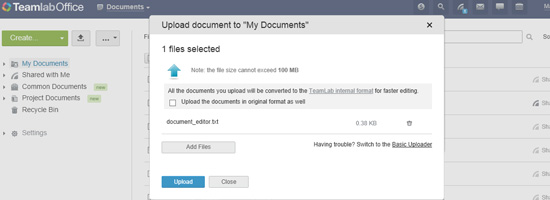
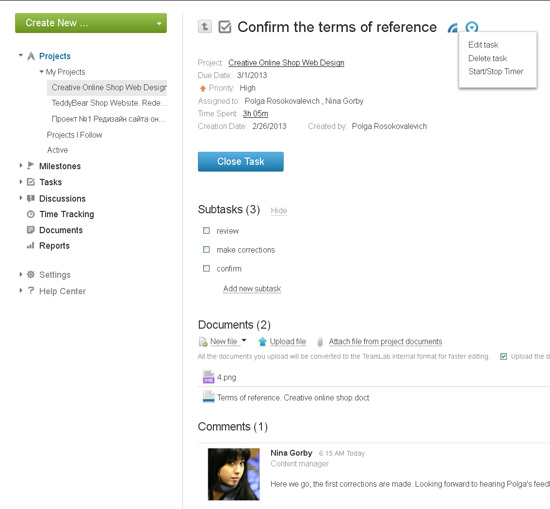
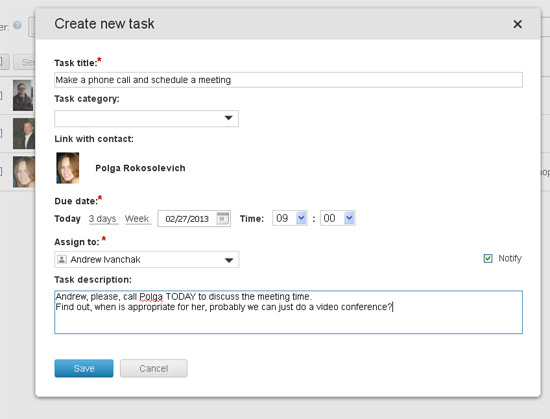
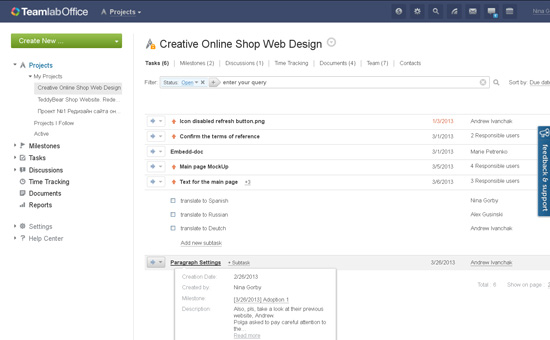
    <p><a href="http://www.teamlab.com/" rel="nofollow external" class="bo">TeamLab</a> is a universal cloud office for small- and medium-sized teams working on projects online. It enables you to manage documents, projects, team and customer relations in one place.</p>
    <p>In other words, you don’t need to switch back and forth between multiple applications to perform different tasks. Here you obtain the single multi-featured system to organize every step of your work, improving your productivity and optimizing your efforts for success.</p>
    <p><img src="http://cdn.sixrevisions.com/0324-06_task_inside_teamlab.jpg" alt="" width="550" height="509" style="max-width: 100%; height: auto;"></p>
    <p><img src="http://cdn.sixrevisions.com/0324-07_05crm_v2.jpg" width="550" height="419" style="max-width: 100%; height: auto;"></p>
    <p><img src="http://cdn.sixrevisions.com/0324-04_tasks.jpg" width="550" height="340" style="max-width: 100%; height: auto;"></p>
    <p>TeamLab offers 2 deployment models: SaaS and <a href="https://mail.google.com/mail/u/0/#inbox/13c67433b777e0e7" rel="nofollow external" class="bo">Hybrid version</a>.</p>
    <h3>Try TeamLab for Free!</h3>
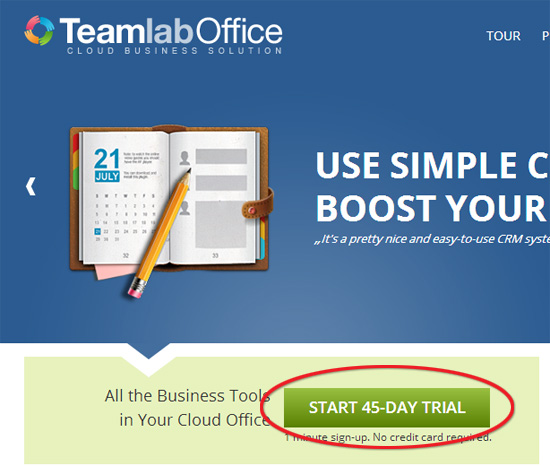
    <p>You can start a 45-day unlimited <strong>free trial</strong> of TeamLab, which will give you the chance to fully evaluate it for your business.</p>
    <p>To start your free trial today, simply <a href="http://www.teamlab.com/" rel="nofollow external" class="bo">go to their home page</a> and click on the "Start 45-day Trial" button on their home page.</p>
    <p><a href="http://www.teamlab.com/" rel="nofollow external" class="bo"><img src="http://cdn.sixrevisions.com/0324-03_teamlab_free_trial.jpg" width="550" height="466" style="max-width: 100%; height: auto;"></a></p>
    <h3>20% Discount – Exclusive to Six Revisions Readers</h3>
    <p>You can use the  coupon code below to receive a 20% discount if you buy a 1-year subscription to TeamLab.</p>
    <p>This coupon code is valid for 1-year subscriptions only and from <strong>March 12 – May 1, 2013</strong>.</p>
    <pre>Sixrevisions20%AnyYearly1203201301052013</pre>
    <h3>Giveaway Period Has Ended</h3>
    <h3>How to Win</h3>
    <p>For a chance to win a free 5-year subscription to TeamLab, answer the following question in the comments of this post:</p>
    <blockquote><p>How would a <a href="http://www.teamlab.com/highlights.aspx" title="Tour of TeamLab" rel="nofollow external" class="bo">subscription to TeamLab</a> be useful to your business?</p></blockquote>
    <h3>Giveaway Details</h3>
    <p>This giveaway ends on <em>Tuesday, March 19, 2013</em> after which the comments section on this post will be closed and you will no longer be able to leave a comment. Please leave a valid email address when filling out the comment form so that we can contact you if you’ve won. Please only comment once. The winners will be randomly selected using the same method as previous Six Revisions giveaways. The winners will be announced on a separate post and you’re advised to <a href="http://feeds2.feedburner.com/SixRevisions" rel="nofollow external" class="bo">subscribe to our RSS feed</a> so that you can be quickly notified when the winners announcement post has been published. Please note that comments are moderated and so your comment may not show up right away. Please also note that comments that do not follow the instructions on how to participate (described above) may not be published, or may be removed later on.</p>
    <h3>Related Content</h3>
    <ul>
    <li><a href="http://sixrevisions.com/project-management/ways-more-productive-web-developer/" rel="nofollow external" class="bo">10 Ways to Be a More Productive Web Developer</a></li>
    <li><a href="http://sixrevisions.com/project-management/tips-client-demands/" rel="nofollow external" class="bo">6 Tips for Effectively Dealing with Client Demands</a></li>
    <li><a href="http://sixrevisions.com/project-management/ways-more-referrals-web-design-business/" rel="nofollow external" class="bo">7 Ways to Get More Referrals for Your Web Design Business</a></li>
    <li>
    <em>Related categories</em>: <a href="http://sixrevisions.com/category/tools/" rel="nofollow external" class="bo">Tools</a> and <a href="http://sixrevisions.com/category/project-management/" rel="nofollow external" class="bo">Project Management</a>
    </li>
    </ul>
    <h3>About the Author</h3>
    <p><img src="http://images.sixrevisions.com/authors/jacob_gube_small.jpg" alt="" width="80" height="80" style="max-width: 100%; height: auto;"><span><strong>Jacob Gube</strong> is the Founder and Chief Editor of <strong><a href="http://sixrevisions.com/" rel="nofollow external" class="bo">Six Revisions</a></strong>. He’s also a web developer/designer who specializes in front-end development (JavaScript, HTML, CSS) and also a <a href="http://www.amazon.com/gp/product/1847194583?ie=UTF8&amp;tag=sixrevi-20&amp;linkCode=as2&amp;camp=1789&amp;creative=390957&amp;creativeASIN=1847194583" rel="nofollow external" class="bo"><strong>book author</strong></a>. If you’d like to connect with him, head on over to the <a href="http://sixrevisions.com/contact/" rel="nofollow external" class="bo"><strong>contact page</strong></a> and follow him on Twitter: <strong>@<a href="http://twitter.com/sixrevisions" rel="nofollow external" class="bo">sixrevisions</a></strong>.</span></p>
    </div>
]]>
</Body>
<Summary>Advertise here with BSA      TeamLab, a suite of cloud computing business web applications, is giving away five accounts that will give the winners a half-decade subscription to their 1-5 active...</Summary>
<Website>http://feedproxy.google.com/~r/SixRevisions/~3/M7l4NwGOf8s/</Website>
<TrackingUrl>https://my3.my.umbc.edu/api/v0/pixel/news/26025/guest@my.umbc.edu/758738a1021dc688e79fa6aa12749422/api/pixel</TrackingUrl>
<Tag>contests</Tag>
<Tag>css</Tag>
<Tag>database</Tag>
<Tag>design</Tag>
<Tag>development</Tag>
<Tag>html</Tag>
<Tag>javascript</Tag>
<Tag>mysql</Tag>
<Tag>sql</Tag>
<Tag>web</Tag>
<Group token="retired-583">Web Developer - Build Group</Group>
<GroupUrl>https://my3.my.umbc.edu/groups/retired-583</GroupUrl>
<AvatarUrl>https://assets3-my.umbc.edu/system/shared/avatars/groups/000/000/583/fc60f5d7abc2e080599bb6dc465db54d/xsmall.png?1363101197</AvatarUrl>
<AvatarUrl size="original">https://assets4-my.umbc.edu/system/shared/avatars/groups/000/000/583/fc60f5d7abc2e080599bb6dc465db54d/original.jpg?1363101197</AvatarUrl>
<AvatarUrl size="xxlarge">https://assets4-my.umbc.edu/system/shared/avatars/groups/000/000/583/fc60f5d7abc2e080599bb6dc465db54d/xxlarge.png?1363101197</AvatarUrl>
<AvatarUrl size="xlarge">https://assets4-my.umbc.edu/system/shared/avatars/groups/000/000/583/fc60f5d7abc2e080599bb6dc465db54d/xlarge.png?1363101197</AvatarUrl>
<AvatarUrl size="large">https://assets3-my.umbc.edu/system/shared/avatars/groups/000/000/583/fc60f5d7abc2e080599bb6dc465db54d/large.png?1363101197</AvatarUrl>
<AvatarUrl size="medium">https://assets3-my.umbc.edu/system/shared/avatars/groups/000/000/583/fc60f5d7abc2e080599bb6dc465db54d/medium.png?1363101197</AvatarUrl>
<AvatarUrl size="small">https://assets4-my.umbc.edu/system/shared/avatars/groups/000/000/583/fc60f5d7abc2e080599bb6dc465db54d/small.png?1363101197</AvatarUrl>
<AvatarUrl size="xsmall">https://assets3-my.umbc.edu/system/shared/avatars/groups/000/000/583/fc60f5d7abc2e080599bb6dc465db54d/xsmall.png?1363101197</AvatarUrl>
<AvatarUrl size="xxsmall">https://assets4-my.umbc.edu/system/shared/avatars/groups/000/000/583/fc60f5d7abc2e080599bb6dc465db54d/xxsmall.png?1363101197</AvatarUrl>
<Sponsor>Web Developer - Build Group</Sponsor>
<PawCount>0</PawCount>
<CommentCount>0</CommentCount>
<CommentsAllowed>true</CommentsAllowed>
<PostedAt>Tue, 12 Mar 2013 06:00:43 -0400</PostedAt>
<EditAt>Tue, 12 Mar 2013 06:00:43 -0400</EditAt>
</NewsItem>

<NewsItem contentIssues="true" id="25663" important="false" status="posted" url="https://my3.my.umbc.edu/posts/25663">
<Title>Movement Entrepreneurs: How Today&#8217;s Social Activists Crush the Status Quo</Title>
<Body>
<![CDATA[
    <div class="html-content">If amassing a huge following is the first priority of startups these days, modern social activists have some key lessons for you.</div>
]]>
</Body>
<Summary>If amassing a huge following is the first priority of startups these days, modern social activists have some key lessons for you.</Summary>
<Website>http://feedproxy.google.com/~r/YoungentrepreneurcomBlog/~3/1-t8uGgp0w8/</Website>
<TrackingUrl>https://my3.my.umbc.edu/api/v0/pixel/news/25663/guest@my.umbc.edu/6544df8d64afbf3ab36ce77d914ccc3a/api/pixel</TrackingUrl>
<Tag>community-building</Tag>
<Tag>marketing-strategies</Tag>
<Tag>profiles</Tag>
<Tag>social-entrepreneurs</Tag>
<Tag>social-entrepreneurship</Tag>
<Tag>social-media</Tag>
<Tag>startup-business-ideas</Tag>
<Group token="entrepreneurship">Alex. Brown Center for Entrepreneurship</Group>
<GroupUrl>https://my3.my.umbc.edu/groups/entrepreneurship</GroupUrl>
<AvatarUrl>https://assets2-my.umbc.edu/system/shared/avatars/groups/000/000/092/53c03b106bdc6e19e4bf0a41b5a37add/xsmall.png?1771000363</AvatarUrl>
<AvatarUrl size="original">https://assets3-my.umbc.edu/system/shared/avatars/groups/000/000/092/53c03b106bdc6e19e4bf0a41b5a37add/original.jpg?1771000363</AvatarUrl>
<AvatarUrl size="xxlarge">https://assets2-my.umbc.edu/system/shared/avatars/groups/000/000/092/53c03b106bdc6e19e4bf0a41b5a37add/xxlarge.png?1771000363</AvatarUrl>
<AvatarUrl size="xlarge">https://assets1-my.umbc.edu/system/shared/avatars/groups/000/000/092/53c03b106bdc6e19e4bf0a41b5a37add/xlarge.png?1771000363</AvatarUrl>
<AvatarUrl size="large">https://assets4-my.umbc.edu/system/shared/avatars/groups/000/000/092/53c03b106bdc6e19e4bf0a41b5a37add/large.png?1771000363</AvatarUrl>
<AvatarUrl size="medium">https://assets1-my.umbc.edu/system/shared/avatars/groups/000/000/092/53c03b106bdc6e19e4bf0a41b5a37add/medium.png?1771000363</AvatarUrl>
<AvatarUrl size="small">https://assets3-my.umbc.edu/system/shared/avatars/groups/000/000/092/53c03b106bdc6e19e4bf0a41b5a37add/small.png?1771000363</AvatarUrl>
<AvatarUrl size="xsmall">https://assets2-my.umbc.edu/system/shared/avatars/groups/000/000/092/53c03b106bdc6e19e4bf0a41b5a37add/xsmall.png?1771000363</AvatarUrl>
<AvatarUrl size="xxsmall">https://assets3-my.umbc.edu/system/shared/avatars/groups/000/000/092/53c03b106bdc6e19e4bf0a41b5a37add/xxsmall.png?1771000363</AvatarUrl>
<Sponsor>The Alex. Brown Center for Entrepreneurship</Sponsor>
<PawCount>0</PawCount>
<CommentCount>0</CommentCount>
<CommentsAllowed>true</CommentsAllowed>
<PostedAt>Tue, 12 Mar 2013 06:00:40 -0400</PostedAt>
</NewsItem>

<NewsItem contentIssues="true" id="25662" important="false" status="posted" url="https://my3.my.umbc.edu/posts/25662">
<Title>The Case for Investing in Campus Sustainability</Title>
<Body>
<![CDATA[
    <div class="html-content">
    <p>By Mark Orlowski<br>
    Founder &amp; Executive Director<br>
    Sustainable Endowments Institute</p>
    <p>Whether your college is striving to reach its carbon-reduction goals or is considering divesting from fossil fuel companies, green revolving funds (GRFs) offer a compelling investment opportunity. With a median annual return (ROI) of 28 percent, GRFs are transforming campus energy efficiency improvements from perceived expenses to high-return investments. One of many GRF examples documented in <a href="http://greenbillion.org/resources/#reports" rel="nofollow external" class="bo">Greening the Bottom Line 2012</a> is a project at George Washington University. GW is generating $100,000 per year in savings since investing $141,000 in 2010 to upgrade the lighting in their academic center. This project has already more than paid for itself and, over its projected eight-year lifespan, the original $141,000 investment will realize at least $800,000 in total savings (even more, if energy prices rise).</p>
    <p>With more secure benefits than a volatile stock market, GRF investments provide your school’s trustees with a new sustainable path for fiduciary responsibility. In addition, many other sources of funding--ranging from cash reserves to utility rebates to alumni donations--offer additional options for capitalizing your GRF.</p>
    <p>Green revolving funds are not only investing in energy efficiency projects, but also in renewable energy installations and waste reduction programs. To access information on 84 green revolving loan funds at 80 institutions containing more than $118 million, see AASHE's <a href="http://www.aashe.org/resources/campus-sustainability-revolving-loan-funds/" rel="nofollow external" class="bo">Campus Sustainability Revolving Loans Fund Database</a>. While the GRF size, structure and project priorities vary considerably, by connecting the dots, we see that these investments not only advance sustainability, but also have financial benefits and educational advantages.</p>
    <p><strong>Financial Benefits</strong><br>
    As reported in Greening the Bottom Line 2012, schools are using a variety of creative approaches to invest in and benefit from green revolving funds. Examples include:</p>
    <ul>
    <li>
    <p><strong>Innovative Endowment Investment:</strong> California Institute of Technology (Caltech) reports a 24 percent return on investment (excluding utility incentives) on their green revolving fund, the Caltech Energy Conservation Investment Program. The GRF capitalization was structured as an endowment investment, not as a payout from the endowment. This enables Caltech to avoid any issues related to donor restrictions on endowment gifts.</p>
    </li>
    <li>
    <p><strong>Higher ROI on Cash Reserves:</strong> Financial payoff and functional flexibility are encouraging new commitments such as the University of Vermont’s board of trustees creating the Energy Revolving Fund with $13 million invested from the university’s cash reserves. With a 5 percent interest rate, the UVM revolving fund currently generates <em>double</em> the return on investment of other existing cash reserve investments. In addition, by investing in campus energy efficiency projects, the university is helping to generate on-site jobs that have a multiplier effect in the local economy.</p>
    </li>
    <li>
    <p><strong>New Fundraising Opportunities:</strong> Agnes Scott College is in the forefront of showing how GRFs can offer a winning fundraising strategy. President Elizabeth Kiss and her development team at the Georgia college, raised over $400,000 in seed capital from both alumni and foundation donors within a few months. The successful method emphasized their fund’s strong ROI and its potential to turn the campus into a living laboratory for sustainability. “For me, it was critical that our GRF linked up with these broader themes of what kind of college and learning community we aspire to be,” said Elizabeth Kiss, President of Agnes Scott College. “The most powerful teaching you do is by being a role model.”</p>
    </li>
    </ul>
    <p><strong>Educational Advantages</strong><br>
    By connecting the dots, we can see how green revolving funds engage members of the campus community by advancing not only budget and climate goals, but also offering exciting educational opportunities. Examples include different dimensions of experiential education:</p>
    <ul>
    <li>
    <p><strong>Social Entrepreneurship:</strong> Just as business entrepreneurs identify opportunities to create for-profit ventures, social entrepreneurs envision and implement innovative approaches to meeting social and environmental needs. For example, in a class at Dartmouth College, students researched and developed a proposal for the Dartmouth Revolving Green Fund. After submitting the proposal to the administration, they received feedback. In response, two students working as independent consultants spent the summer improving the proposal to address the administrators’ concerns. The final version was favorably received and the students' efforts resulted in Dartmouth establishing a $1 million green revolving fund. Along with the academic benefits, students gained valuable skills to apply to future jobs or to starting their own organizations.</p>
    </li>
    <li>
    <p><strong>Job Skills:</strong> In some cases, green revolving funds offer job skill opportunities by having students actually undertake the work to install the needed improvements with supervision by professors and/or facilities managers. For example, at Whitman College in Washington State, students spearheaded, and did the hands-on work, to create a rooftop garden funded by a loan from the college’s Sustainability Revolving Loan Fund. The loan was paid back in less than a year by selling the garden crops to Bon Appétit, which provides food service at the college.</p>
    </li>
    <li>
    <p><strong>Leadership Opportunities:</strong> At many schools, students are invited to submit project proposals for consideration and selection by a GRF committee. Students even serve on the decision-making committee that selects and prioritizes project investments. In some cases, students can play even a larger leadership role in selecting projects for GRF funding. For example, at Bethany College in Kansas, six students join with the director of facilities, the vice president for finance and operations, a professor, a campus pastor and a local business owner to form the GRF Committee. Serving on the committee offers students a unique voice in setting sustainability priorities and allocating investment of limited financial resources.</p>
    </li>
    </ul>
    <p><strong>What’s Next?</strong><br>
    If you want to make the case to connect the dots and put green revolving funds to work at your school, two resources are already available and two upcoming events are planned to expand access and learn from GRF leaders and experts.</p>
    <p>Co-published by the Sustainable Endowments Institute (SEI) and AASHE, <em><a href="http://www.aashe.org/resources/aashe-partnered-publications" rel="nofollow external" class="bo">Green Revolving Funds: An Introductory Guide to Implementation and Management</a></em> provides practical guidance for designing, implementing, and managing a college or university GRF. Based on interviews with presidents, facility managers, sustainability directors, and chief financial officers, the 27-page publication features a 10-step road map for a successful fund, a section on the "anatomy" of a GRF, solutions to common obstacles and resources available through the Billion Dollar Green Challenge.</p>
    <p>Once established, GRFs can benefit from the <a href="http://greenbillion.org/GRITS/" rel="nofollow external" class="bo">Green Revolving Investment Tracking System (GRITS)</a> developed by the Sustainable Endowments Institute. This secure, account-based web tool is designed to manage every aspect of an institution’s green revolving fund including aggregate and project-specific energy, financial, and carbon data. The GRITS project library allows institutions to view completed GRF projects from other colleges, inspiring staff, students and administrators to both share best practices and adapt relevant projects for their own campus.</p>
    <p>In order to extend access to green revolving fund benefits, the Sustainable Endowments Institute is convening a gathering in April at the Pocantico Center of the Rockefeller Brothers Fund. Inspirational leaders from the nonprofit, government and foundation communities will develop collaborative strategies to provide low-cost capital for under-resourced institutions (such as community colleges and minority-serving institutions) to seed their own green revolving funds.</p>
    <p>On April 17, the Sustainable Endowments Institute in partnership with AASHE is hosting the <a href="http://greenbillion.org/conference/" rel="nofollow external" class="bo">Financing the Future of Energy Efficiency Summit</a> at the University of San Diego. Featuring a keynote address by Rip Rapson, President of the Kresge Foundation, the Summit will bring together leaders in financing sustainability with presidents, trustees, and senior officials in finance, facilities and sustainability at colleges, universities, foundations and other nonprofit institutions. Breakout sessions will meet needs of institutions just starting to consider their options as well as advanced strategies for those already leading GRF initiatives. We welcome your participation!</p>
    </div>
]]>
</Body>
<Summary>By Mark Orlowski  Founder &amp; Executive Director  Sustainable Endowments Institute   Whether your college is striving to reach its carbon-reduction goals or is considering divesting from fossil...</Summary>
<Website>http://feedproxy.google.com/~r/CampusSustainabilityPerspectives/~3/SChfZPTx_Ns/case-investing-campus-sustainability</Website>
<TrackingUrl>https://my3.my.umbc.edu/api/v0/pixel/news/25662/guest@my.umbc.edu/bc15b58cddc623295ddc2915fdd3cc95/api/pixel</TrackingUrl>
<Tag>connecting-the-dots</Tag>
<Group token="sustainability">Sustainability Matters at UMBC</Group>
<GroupUrl>https://my3.my.umbc.edu/groups/sustainability</GroupUrl>
<AvatarUrl>https://assets1-my.umbc.edu/system/shared/avatars/groups/000/000/086/91091ac32f525d88daa6d6b721420ac1/xsmall.png?1586269437</AvatarUrl>
<AvatarUrl size="original">https://assets3-my.umbc.edu/system/shared/avatars/groups/000/000/086/91091ac32f525d88daa6d6b721420ac1/original.png?1586269437</AvatarUrl>
<AvatarUrl size="xxlarge">https://assets4-my.umbc.edu/system/shared/avatars/groups/000/000/086/91091ac32f525d88daa6d6b721420ac1/xxlarge.png?1586269437</AvatarUrl>
<AvatarUrl size="xlarge">https://assets2-my.umbc.edu/system/shared/avatars/groups/000/000/086/91091ac32f525d88daa6d6b721420ac1/xlarge.png?1586269437</AvatarUrl>
<AvatarUrl size="large">https://assets2-my.umbc.edu/system/shared/avatars/groups/000/000/086/91091ac32f525d88daa6d6b721420ac1/large.png?1586269437</AvatarUrl>
<AvatarUrl size="medium">https://assets4-my.umbc.edu/system/shared/avatars/groups/000/000/086/91091ac32f525d88daa6d6b721420ac1/medium.png?1586269437</AvatarUrl>
<AvatarUrl size="small">https://assets4-my.umbc.edu/system/shared/avatars/groups/000/000/086/91091ac32f525d88daa6d6b721420ac1/small.png?1586269437</AvatarUrl>
<AvatarUrl size="xsmall">https://assets1-my.umbc.edu/system/shared/avatars/groups/000/000/086/91091ac32f525d88daa6d6b721420ac1/xsmall.png?1586269437</AvatarUrl>
<AvatarUrl size="xxsmall">https://assets3-my.umbc.edu/system/shared/avatars/groups/000/000/086/91091ac32f525d88daa6d6b721420ac1/xxsmall.png?1586269437</AvatarUrl>
<Sponsor>UMBC SUSTAINABILITY</Sponsor>
<PawCount>0</PawCount>
<CommentCount>0</CommentCount>
<CommentsAllowed>false</CommentsAllowed>
<PostedAt>Tue, 12 Mar 2013 02:52:01 -0400</PostedAt>
</NewsItem>

<NewsItem contentIssues="true" id="25659" important="false" status="posted" url="https://my3.my.umbc.edu/posts/25659">
<Title>Popefully, They&#8217;ll Make the Right Decision</Title>
<Body>
<![CDATA[
    <div class="html-content">
    <p><a href="http://usdemocrazy.net/wp-content/uploads/2013/03/url-11.jpeg" rel="nofollow external" class="bo"><img alt="" src="http://usdemocrazy.net/wp-content/uploads/2013/03/url-11.jpeg" width="654" height="336" style="max-width: 100%; height: auto;"></a></p>
    <p>It is the most wonderful time of the century, the time when a group of old, European men (not the Republican Party) chooses another old, European man to head a church that has a membership of over a billion people, with of over <a href="http://www.prb.org/Articles/2005/TheChangingDemographicsofRomanCatholics.aspx" rel="nofollow external" class="bo">40 percent living in Latin America</a>.</p>
    <p>After eight years of his papacy, <a href="http://www.cnn.com/2013/02/11/world/europe/pope-resignation-q-and-a" rel="nofollow external" class="bo">Pope Benedict XVI resigned</a>, being the first pope to resign in over six centuries. It is now up the conclave, to elect a pope among them…which seems rather like US senators, choosing one of their own to be President.</p>
    <p>The Catholic Church has been plagued with controversy over the past decade. It has weathered numerous <a href="http://www.guardian.co.uk/world/2013/mar/08/scotland-catholic-priest-abuse-claims" rel="nofollow external" class="bo">child sex abuse scandals involving priests</a>. Then there’s its unwavering opposition to homosexuality and contraception, even as a way to prevent the spread of HIV. The image of the Catholic Church may not be healed over night, but the healing process could start with a new pope.</p>
    <p><a href="http://www.cbsnews.com/2300-202_162-10016013.html" rel="nofollow external" class="bo">The list of contenders</a> reflects what the Catholics of the world look like and who they will be in the decades to come. Some include cardinals and bishops from the Philippines, Mexico, Brazil, Guinea and Ghana.</p>
    <p>The influence of the Catholic Church is not as overbearing as it was when voters thought that a <a href="http://www.youtube.com/watch?v=538zuQmdpGo" rel="nofollow external" class="bo">certain Catholic presidential candidate</a>, if elected, would take orders from Rome. The influence has waned because of the Church’s outdated views and unwillingness to modify and articulate its beliefs to promote tolerance and equality.</p>
    <p>So, it is now up to a group of cardinals to decide which direction its church will go. Though there is no certainty who the next pontiff will be, what is certain is the next pontiff will face the specter of dwindling power of this ancient institution.</p>
    </div>
]]>
</Body>
<Summary>It is the most wonderful time of the century, the time when a group of old, European men (not the Republican Party) chooses another old, European man to head a church that has a membership of over...</Summary>
<Website>http://usdemocrazy.net/popefully-theyll-make-the-right-decision/</Website>
<TrackingUrl>https://my3.my.umbc.edu/api/v0/pixel/news/25659/guest@my.umbc.edu/f0d93b04542c0998b70a2d70da5a5e6e/api/pixel</TrackingUrl>
<Tag>democracy</Tag>
<Tag>irc</Tag>
<Tag>news</Tag>
<Tag>politics</Tag>
<Tag>umbc</Tag>
<Tag>usdemocrazy</Tag>
<Group token="retired-12">USDemocrazy</Group>
<GroupUrl>https://my3.my.umbc.edu/groups/retired-12</GroupUrl>
<AvatarUrl>https://assets1-my.umbc.edu/system/shared/avatars/groups/000/000/012/f0935e4cd5920aa6c7c996a5ee53a70f/xsmall.png?1279120129</AvatarUrl>
<AvatarUrl size="original">https://assets4-my.umbc.edu/system/shared/avatars/groups/000/000/012/f0935e4cd5920aa6c7c996a5ee53a70f/original.jpg?1279120129</AvatarUrl>
<AvatarUrl size="xxlarge">https://assets3-my.umbc.edu/system/shared/avatars/groups/000/000/012/f0935e4cd5920aa6c7c996a5ee53a70f/xxlarge.png?1279120129</AvatarUrl>
<AvatarUrl size="xlarge">https://assets4-my.umbc.edu/system/shared/avatars/groups/000/000/012/f0935e4cd5920aa6c7c996a5ee53a70f/xlarge.png?1279120129</AvatarUrl>
<AvatarUrl size="large">https://assets4-my.umbc.edu/system/shared/avatars/groups/000/000/012/f0935e4cd5920aa6c7c996a5ee53a70f/large.png?1279120129</AvatarUrl>
<AvatarUrl size="medium">https://assets1-my.umbc.edu/system/shared/avatars/groups/000/000/012/f0935e4cd5920aa6c7c996a5ee53a70f/medium.png?1279120129</AvatarUrl>
<AvatarUrl size="small">https://assets2-my.umbc.edu/system/shared/avatars/groups/000/000/012/f0935e4cd5920aa6c7c996a5ee53a70f/small.png?1279120129</AvatarUrl>
<AvatarUrl size="xsmall">https://assets1-my.umbc.edu/system/shared/avatars/groups/000/000/012/f0935e4cd5920aa6c7c996a5ee53a70f/xsmall.png?1279120129</AvatarUrl>
<AvatarUrl size="xxsmall">https://assets1-my.umbc.edu/system/shared/avatars/groups/000/000/012/f0935e4cd5920aa6c7c996a5ee53a70f/xxsmall.png?1279120129</AvatarUrl>
<Sponsor>USDemocrazy</Sponsor>
<PawCount>13</PawCount>
<CommentCount>1</CommentCount>
<CommentsAllowed>true</CommentsAllowed>
<PostedAt>Tue, 12 Mar 2013 01:09:38 -0400</PostedAt>
</NewsItem>

<NewsItem contentIssues="false" id="25722" important="false" status="posted" url="https://my3.my.umbc.edu/posts/25722">
<Title>Baseball Set to Take on Georgetown in Mid-Week Clash on Wednesday</Title>
<Body>
<![CDATA[
    <div class="html-content">BALTIMORE � After a weekend home-and-home sweep of in-state rival Mount St. Mary's, the UMBC baseball team hits the road again to take on Georgetown, Wednesday afternoon at Shirley Povich Field.  First pitch from Bethesda, Md. is set for 3:00 p.m.</div>
]]>
</Body>
<Summary>BALTIMORE � After a weekend home-and-home sweep of in-state rival Mount St. Mary's, the UMBC baseball team hits the road again to take on Georgetown, Wednesday afternoon at Shirley Povich Field....</Summary>
<Website>http://www.umbcretrievers.com/release.asp?RELEASE_ID=7766</Website>
<TrackingUrl>https://my3.my.umbc.edu/api/v0/pixel/news/25722/guest@my.umbc.edu/541327d2287176bf90161959e042c57f/api/pixel</TrackingUrl>
<Group token="athletics">UMBC Athletics</Group>
<GroupUrl>https://my3.my.umbc.edu/groups/athletics</GroupUrl>
<AvatarUrl>https://assets2-my.umbc.edu/system/shared/avatars/groups/000/000/009/69595c9b99f609d75fbb8232d9bd73d3/xsmall.png?1709304849</AvatarUrl>
<AvatarUrl size="original">https://assets4-my.umbc.edu/system/shared/avatars/groups/000/000/009/69595c9b99f609d75fbb8232d9bd73d3/original.jpg?1709304849</AvatarUrl>
<AvatarUrl size="xxlarge">https://assets3-my.umbc.edu/system/shared/avatars/groups/000/000/009/69595c9b99f609d75fbb8232d9bd73d3/xxlarge.png?1709304849</AvatarUrl>
<AvatarUrl size="xlarge">https://assets3-my.umbc.edu/system/shared/avatars/groups/000/000/009/69595c9b99f609d75fbb8232d9bd73d3/xlarge.png?1709304849</AvatarUrl>
<AvatarUrl size="large">https://assets4-my.umbc.edu/system/shared/avatars/groups/000/000/009/69595c9b99f609d75fbb8232d9bd73d3/large.png?1709304849</AvatarUrl>
<AvatarUrl size="medium">https://assets4-my.umbc.edu/system/shared/avatars/groups/000/000/009/69595c9b99f609d75fbb8232d9bd73d3/medium.png?1709304849</AvatarUrl>
<AvatarUrl size="small">https://assets1-my.umbc.edu/system/shared/avatars/groups/000/000/009/69595c9b99f609d75fbb8232d9bd73d3/small.png?1709304849</AvatarUrl>
<AvatarUrl size="xsmall">https://assets2-my.umbc.edu/system/shared/avatars/groups/000/000/009/69595c9b99f609d75fbb8232d9bd73d3/xsmall.png?1709304849</AvatarUrl>
<AvatarUrl size="xxsmall">https://assets3-my.umbc.edu/system/shared/avatars/groups/000/000/009/69595c9b99f609d75fbb8232d9bd73d3/xxsmall.png?1709304849</AvatarUrl>
<Sponsor>UMBC Athletics</Sponsor>
<PawCount>0</PawCount>
<CommentCount>0</CommentCount>
<CommentsAllowed>true</CommentsAllowed>
<PostedAt>Tue, 12 Mar 2013 01:00:00 -0400</PostedAt>
</NewsItem>

<NewsItem contentIssues="false" id="25706" important="false" status="posted" url="https://my3.my.umbc.edu/posts/25706">
<Title>Jackson Named Second-Team USTFCCCA All-American in 60m Dash</Title>
<Body>
<![CDATA[
    <div class="html-content">NEW ORLEANS � UMBC sophomore sprinter Mercedes Jackson has been named a Second-Team All-American by the U.S. Track &amp; Field and Cross County Coaches Association (USTFCCCA), the organization announced on Monday evening.</div>
]]>
</Body>
<Summary>NEW ORLEANS � UMBC sophomore sprinter Mercedes Jackson has been named a Second-Team All-American by the U.S. Track &amp; Field and Cross County Coaches Association (USTFCCCA), the organization...</Summary>
<Website>http://www.umbcretrievers.com/release.asp?RELEASE_ID=7765</Website>
<TrackingUrl>https://my3.my.umbc.edu/api/v0/pixel/news/25706/guest@my.umbc.edu/f19812733b74c7ddb16b770b5825e4fa/api/pixel</TrackingUrl>
<Group token="athletics">UMBC Athletics</Group>
<GroupUrl>https://my3.my.umbc.edu/groups/athletics</GroupUrl>
<AvatarUrl>https://assets2-my.umbc.edu/system/shared/avatars/groups/000/000/009/69595c9b99f609d75fbb8232d9bd73d3/xsmall.png?1709304849</AvatarUrl>
<AvatarUrl size="original">https://assets4-my.umbc.edu/system/shared/avatars/groups/000/000/009/69595c9b99f609d75fbb8232d9bd73d3/original.jpg?1709304849</AvatarUrl>
<AvatarUrl size="xxlarge">https://assets3-my.umbc.edu/system/shared/avatars/groups/000/000/009/69595c9b99f609d75fbb8232d9bd73d3/xxlarge.png?1709304849</AvatarUrl>
<AvatarUrl size="xlarge">https://assets3-my.umbc.edu/system/shared/avatars/groups/000/000/009/69595c9b99f609d75fbb8232d9bd73d3/xlarge.png?1709304849</AvatarUrl>
<AvatarUrl size="large">https://assets4-my.umbc.edu/system/shared/avatars/groups/000/000/009/69595c9b99f609d75fbb8232d9bd73d3/large.png?1709304849</AvatarUrl>
<AvatarUrl size="medium">https://assets4-my.umbc.edu/system/shared/avatars/groups/000/000/009/69595c9b99f609d75fbb8232d9bd73d3/medium.png?1709304849</AvatarUrl>
<AvatarUrl size="small">https://assets1-my.umbc.edu/system/shared/avatars/groups/000/000/009/69595c9b99f609d75fbb8232d9bd73d3/small.png?1709304849</AvatarUrl>
<AvatarUrl size="xsmall">https://assets2-my.umbc.edu/system/shared/avatars/groups/000/000/009/69595c9b99f609d75fbb8232d9bd73d3/xsmall.png?1709304849</AvatarUrl>
<AvatarUrl size="xxsmall">https://assets3-my.umbc.edu/system/shared/avatars/groups/000/000/009/69595c9b99f609d75fbb8232d9bd73d3/xxsmall.png?1709304849</AvatarUrl>
<Sponsor>UMBC Athletics</Sponsor>
<PawCount>0</PawCount>
<CommentCount>0</CommentCount>
<CommentsAllowed>true</CommentsAllowed>
<PostedAt>Tue, 12 Mar 2013 01:00:00 -0400</PostedAt>
<EditAt>Tue, 12 Mar 2013 01:00:00 -0400</EditAt>
</NewsItem>

</News>