<?xml version="1.0"?>
<News hasArchived="true" page="9175" pageCount="10747" pageSize="10" timestamp="Wed, 12 Aug 2026 16:03:49 -0400" url="https://my3.my.umbc.edu/posts.xml?mode=activity&amp;page=9175">
<NewsItem contentIssues="false" id="29639" important="false" status="posted" url="https://my3.my.umbc.edu/posts/29639">
<Title>All you need to know about CSS Transitions</Title>
<Body>
<![CDATA[
    <div class="html-content">
    <p>CSS3 transitions bring simple and elegant animations to web applications, but there’s a lot more to the spec than first meets the eye.</p>
    
    <p>In this post I’m going to delve into some of the more complicated parts of CSS transitions, from chaining and events to hardware acceleration and animation functions. </p>
    
    <p>Letting the browser control animations sequences allows it to optimize performance and efficiency by altering the frame rate, minimizing paints and offloading some of the work to the GPU.</p>
    
    <h2>Browser support</h2>
    
    <p><a href="https://developer.mozilla.org/en-US/docs/CSS/Tutorials/Using_CSS_transitions" rel="nofollow external" class="bo">CSS transitions</a> are supported in practically every version of Firefox, Safari and Chrome. They’re supported in IE 10 and onwards. If CSS animations aren’t supported in a given browser, than the properties will be applied instantly, gracefully degrading.</p>
    
    <p>Webkit based browsers (Safari and Chrome), still require <code>-webkit</code> prefixes for animations and gradients, but these are soon being <a href="https://bugs.webkit.org/show_bug.cgi?id=93136" rel="nofollow external" class="bo">removed</a>.</p>
    
    <h2>Applying transitions</h2>
    
    <p>A simple way of applying transitions is with CSS pseudo-classes, such as <code>:hover</code>. Notice we’re specifying the property name, the length of transition, and one of the default timing functions, <code>linear</code> [<a href="http://jsfiddle.net/maccman/Vvscq/" rel="nofollow external" class="bo">demo</a>].</p>
    
    <pre><code>.element {&#x000A;      height: 100px;&#x000A;      transition: height 2s linear;&#x000A;    }&#x000A;    &#x000A;    .element:hover {&#x000A;      height: 200px;&#x000A;    }&#x000A;    </code></pre>
    
    <p>When the <code>:hover</code> pseudo-class is activated, the height will be transitioned linearly from <code>100px</code> to <code>200px</code> over a period of 2 seconds.</p>
    
    <p><code>duration</code> is the only required item in the transition shorthand. The browser defaults to a timing function of <code>ease</code>, and a property of <code>all</code>, unless these are provided.</p>
    
    <p>We don’t want to be restricted to using psuedo-classes when it comes to activating transitions - clearly that’s not very flexible. The solution is to programmatically add and remove classes [<a href="http://jsfiddle.net/maccman/E9cnL/" rel="nofollow external" class="bo">demo</a>].</p>
    
    <pre><code>/* CSS */&#x000A;    .element {&#x000A;      opacity: 0.0;&#x000A;      transform: scale(0.95) translate3d(0,100%,0);&#x000A;      transition: transform 400ms ease, opacity 400ms ease;&#x000A;    }&#x000A;    &#x000A;    .element.active {&#x000A;      opacity: 1.0;&#x000A;      transform: scale(1.0) translate3d(0,0,0);&#x000A;    }&#x000A;    &#x000A;    .element.inactive {&#x000A;      opacity: 0.0;&#x000A;      transform: scale(1) translate3d(0,0,0);&#x000A;    }&#x000A;    &#x000A;    // JS with jQuery&#x000A;    var active = function(){&#x000A;      $('.element').removeClass('inactive').addClass('active');&#x000A;    };&#x000A;    &#x000A;    var inactive = function(){&#x000A;      $('.element').removeClass('active').addClass('inactive');&#x000A;    };&#x000A;    </code></pre>
    
    <p>In the example above, we’ve got two different transitions, the element slides up when activated, and fades out when deactivated. All the JavaScript does is toggle the two classes <code>active</code> and <code>inactive</code>.</p>
    
    <h2>Transitioning gradients</h2>
    
    <p>Not every CSS property can be transitioned, and the basic rule is that you can only transition through absolute values. For example, you can’t transition between a <code>height</code> of <code>0px</code> to <code>auto</code>. The browser can’t calculate the intermediate transition values, so the property change is instant. Oli Studholme has conveniently provided <a href="http://oli.jp/2010/css-animatable-properties/" rel="nofollow external" class="bo">a full list of transition support properties</a>.</p>
    
    <p>The other major property that can’t be transitioned between is background gradients (although pure colors are supported). There’s no technical reason behind this limitation, it’s just taking a while for the browsers to implement support. </p>
    
    <p>In the mean time, there are a few good workarounds. The first involves adding a transparency to the gradient, and then transitioning between background colors. For example [<a href="http://jsfiddle.net/maccman/az2Xz/" rel="nofollow external" class="bo">demo</a>]:</p>
    
    <pre><code>.panel {&#x000A;      background-color: #000;&#x000A;      background-image: linear-gradient(rgba(255, 255, 0, 0.4), #FAFAFA);&#x000A;      transition: background-color 400ms ease;&#x000A;    }&#x000A;    &#x000A;    .panel:hover {&#x000A;      background-color: #DDD;&#x000A;    }&#x000A;    </code></pre>
    
    <p>If the gradient is continuous, you can transition the <code>background-position</code> as <a href="http://sapphion.com/2011/10/css3-gradient-transition-with-background-position/" rel="nofollow external" class="bo">documented here</a>. Otherwise, your last resort is to create two elements, one overlaid on top of the other, and transition their opacity [<a href="http://jsfiddle.net/maccman/qaQyB/" rel="nofollow external" class="bo">demo</a>].</p>
    
    <pre><code>.element {  &#x000A;      width: 100px;  &#x000A;      height: 100px;  &#x000A;      position: relative;&#x000A;      background: linear-gradient(#C7D3DC,#5B798E);    &#x000A;    }  &#x000A;    &#x000A;    .element .inner { &#x000A;      content: '';&#x000A;      position: absolute;&#x000A;      left: 0; top: 0; right: 0; bottom: 0;&#x000A;      background: linear-gradient(#DDD, #FAFAFA);          &#x000A;      opacity: 0;&#x000A;      transition: opacity 1s linear;&#x000A;    }&#x000A;    &#x000A;    .element:hover .inner {&#x000A;      opacity: 1;&#x000A;    }&#x000A;    </code></pre>
    
    <p>The caveats to the latter approach are that it does require extra markup, and the inner div can catch pointer events. Pseudo elements, such as <code>:before</code> and <code>:after</code> would be an ideal use-case here, but unfortunately only Firefox supports pseudo element transitions. Eliott Sprehn is working on support for Webkit, which is <a href="https://bugs.webkit.org/show_bug.cgi?id=92591" rel="nofollow external" class="bo">coming soon</a>.</p>
    
    <h2>Hardware acceleration</h2>
    
    <p>Transitioning certain properties, such as <code>left</code> and <code>margin</code> causes the browser to  <em>recalculating styles</em> every frame. This is fairly expensive, and can lead to unnecessary re-paints, especially if you have a lot of elements on the screen. This is especially noticeable in less powerful devices, such as mobiles.</p>
    
    <p>This solution is to offload the rendering to the GPU using CSS transformations. In simple terms, this turns the element into an image during the transition, avoiding any style recalculations which greatly increases performance. A simple way of forcing the browser to hardware render an element is to set the transformation’s z axis, which you can do with <code>translate3d</code>:</p>
    
    <pre><code>transform: translate3d(0,0,0);&#x000A;    </code></pre>
    
    <p>Now, this isn’t a magic cure to performance problems, and comes with lots of issues of its own. You should only use hardware acceleration when it’s required, and certainly not enable it on every element. </p>
    
    <p>For example, hardware acceleration can cause subtle font issues, such as a font appearing to lose its weight. This is due to a bug where subpixel anti-aliasing isn’t supported when an element is being hardware accelerated. You can see a clear difference between the two rendering modes:</p>
    
    <p><img src="https://d23f6h5jpj26xu.cloudfront.net/inline_maccman_24418277747802_raw.png" alt="antialiasing.png" style="max-width: 100%; height: auto;"></p>
    
    <p>The short-term fix, <a href="http://news.ycombinator.com/item?id=4954482" rel="nofollow external" class="bo">albeit</a> <a href="http://www.usabilitypost.com/2010/08/26/font-smoothing/" rel="nofollow external" class="bo">controversial</a>, is to disable subpixel anti-aliasing completely. However, be sure to understand the <a href="http://lists.w3.org/Archives/Public/www-style/2012Oct/0014.html" rel="nofollow external" class="bo">caveats in doing so</a>.</p>
    
    <pre><code>  font-smoothing: antialiased;&#x000A;    </code></pre>
    
    <p>In addition, different browsers use different hardware acceleration libraries, which can cause cross-browser problems. For example, whilst Chrome and Safari are both built on WebKit, Chrome uses Skia for graphics rendering while Safari uses CoreGraphics. The differences between the two are subtle, but real. </p>
    
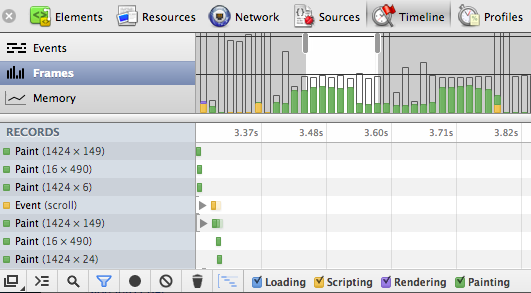
    <p>You can use Chrome’s Inspector to Profile the page, showing all the repaints. Additionally you can show <em>paint triangles</em> in the Inspector’s options, and even turn on Composited Render Layer Borders in about:flags to see which layers are operating on the GPU. The key is to reduce paints by batch updating the DOM, and move as much as possible to the GPU.</p>
    
    <p><img src="https://d23f6h5jpj26xu.cloudfront.net/inline_maccman_24424148470284_raw.png" alt="Painting" style="max-width: 100%; height: auto;"></p>
    
    <p>If you’re having display issues between browsers with hardware acceleration, such as flickering or juddering, make sure you’re not nestling elements with the <code>transform3d()</code> CSS property set. As a last resort, try having browser specific transformations.</p>
    
    <p>It’s worth noting that the <code>translate3d</code> hack is becoming less relevant. In fact recent builds of Chrome automatically use the GPU for opacity and 2d transitions. iOS6 Safari has explicitly disabled this trick, and requires <a href="http://indiegamr.com/ios6-html-hardware-acceleration-changes-and-how-to-fix-them/" rel="nofollow external" class="bo">yet more workarounds</a>.</p>
    
    <h2>Clipping</h2>
    
    <p>To take advantage of GPU rendering, you’ll need to avoid style recalculations by using CSS transformations rather than properties like <code>width</code>. What do you do though if you <em>do</em> need to animate an element’s width? The solution is clipping.</p>
    
    <p>In the example below, you can see a search box with two transition states. The second expanded state is hidden by a clipping element. </p>

    
    <p><img src="https://d23f6h5jpj26xu.cloudfront.net/inline_maccman_24418694845836_raw.png" alt="Clipping" style="max-width: 100%; height: auto;"></p>
    
    <p>To transition to the expanded width, all we need to is translate the X axis left. The key thing here is that we’re using <code>translate3d</code> rather than altering the element’s width [<a href="http://jsfiddle.net/maccman/tqNaM/" rel="nofollow external" class="bo">demo</a>].</p>
    
    <pre><code>.clipped {&#x000A;      overflow: hidden;&#x000A;      position: relative;&#x000A;    }&#x000A;    &#x000A;    .clipped .clip {&#x000A;      right: 0px;&#x000A;      width: 45px;&#x000A;      height: 45px;&#x000A;      background: url(/images/clip.png) no-repeat&#x000A;    }&#x000A;    &#x000A;    input:focus {&#x000A;      -webkit-transform: translate3d(-50px, 0, 0);&#x000A;    }&#x000A;    </code></pre>
    
    <p>By ensuring that we’re not recalculating the element’s width every frame, the transition will a whole lot smoother and performant.</p>
    
    <h2>Timing functions</h2>
    
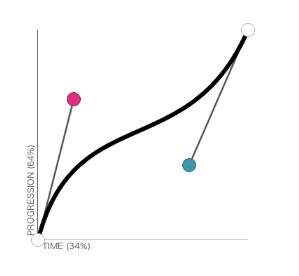
    <p>So far we’ve been using some of the browser’s pre-defined timing functions: <code>linear</code>, <code>ease</code>, <code>ease-in</code>, <code>ease-out</code> and <code>ease-in-out</code>. For more complex timing functions we’re going to have to write our own timing function by specifying four points along a cubic-bezier curve.</p>
    
    <pre><code>transition: -webkit-transform 1s cubic-bezier(.17,.67,.69,1.33);&#x000A;    </code></pre>
    
    <p>Rather than guessing at values, it’s often easier to either use a bunch of <a href="http://easings.net/" rel="nofollow external" class="bo">pre-defined curves</a>, or play around with a <a href="http://cubic-bezier.com" rel="nofollow external" class="bo">graphing tool</a>.</p>
    
    <p><img src="https://d23f6h5jpj26xu.cloudfront.net/inline_maccman_24418729821816_raw.png" alt="Cubic-bezier" style="max-width: 100%; height: auto;"></p>
    
    <p>Notice you can drag the values out of bounds and produce a bouncing transition, for example:</p>
    
    <pre><code>transition: all 600ms cubic‑bezier(0.175, 0.885, 0.32, 1.275);&#x000A;    </code></pre>
    
    <h2>Programmatic transitions</h2>
    
    <p>Writing transitions in CSS is all very well, but sometimes you need a bit more control, especially when it comes to chaining transitions. Luckily we can not only invoke transitions from JavaScript, but also define them.</p>
    
    <p>CSS transitions take a magical <code>all</code> property which ensures that any property changes are transitioned. Let’s see how to use this in practice [<a href="http://jsfiddle.net/maccman/5QdSf/" rel="nofollow external" class="bo">demo</a>].</p>
    
    <pre><code>var defaults = {&#x000A;      duration: 400,&#x000A;      easing: ''&#x000A;    };&#x000A;    &#x000A;    $.fn.transition = function (properties, options) {&#x000A;      options = $.extend({}, defaults, options);&#x000A;      properties['webkitTransition'] = 'all ' + options.duration + 'ms ' + options.easing;&#x000A;      $(this).css(properties);&#x000A;    };&#x000A;    </code></pre>
    
    <p>Now we have this jQuery function <code>$.fn.transition</code>, which we can use to programmatically invoke transitions.</p>
    
    <pre><code>$('.element').transition({background: 'red'});&#x000A;    </code></pre>
    
    <h2>Transition callback</h2>
    
    <p>The next step to chaining transitions is having transition end callbacks. You can achieve this in Webkit, by listening to the <code>webkitTransitionEnd</code> event. For other browsers, you’ll need to do a <a href="https://gist.github.com/4414792" rel="nofollow external" class="bo">bit of sniffing</a> to find the right event name.</p>
    
    <pre><code>  var callback = function () {&#x000A;        // ...&#x000A;      }&#x000A;    &#x000A;      $(this).one('webkitTransitionEnd', callback)&#x000A;      $(this).css(properties);&#x000A;    </code></pre>
    
    <p>Be aware that sometimes this event doesn’t fire, usually in the case when properties don’t change or a paint isn’t triggered. To ensure we always get a callback, let’s set a timeout that’ll trigger the event manually. </p>
    
    <pre><code>$.fn.emulateTransitionEnd = function(duration) {&#x000A;      var called = false, $el = this;&#x000A;      $(this).one('webkitTransitionEnd', function() { called = true; });&#x000A;      var callback = function() { if (!called) $($el).trigger('webkitTransitionEnd'); };&#x000A;      setTimeout(callback, duration);&#x000A;    };&#x000A;    </code></pre>
    
    <p>Now we can invoke <code>$.fn.emulateTransitionEnd()</code> before we set the element’s CSS to ensure our transition end callback is triggered [<a href="http://jsfiddle.net/maccman/YUuQU/" rel="nofollow external" class="bo">demo</a>].</p>
    
    <pre><code>$(this).one('webkitTransitionEnd', callback);&#x000A;    $(this).emulateTransitionEnd(options.duration + 50);&#x000A;    $(this).css(properties);&#x000A;    </code></pre>
    
    <h2>Chaining transitions</h2>
    
    <p>So now we can programmatically apply transitions, getting callbacks when they finish, we can start queuing transitions. We could write our own queue to do this, but as we’re using jQuery we might as well tap into the library’s existing functionality.</p>
    
    <p>jQuery provides two main functions to communicate with its queuing API, <code>$.fn.queue(callback)</code> and <code>$.fn.dequeue()</code>. The former adds a callback to the queue, while the latter executes the next item on the queue.</p>
    
    <p>In other words we need to set our CSS transition inside a <code>$.fn.queue</code> callback, and then make sure we invoke <code>$.fn.dequeue</code> when the transition is complete [<a href="http://jsfiddle.net/maccman/ZB3Gb/" rel="nofollow external" class="bo">demo</a>].</p>
    
    <pre><code>var $el = $(this);&#x000A;    $el.queue(function(){&#x000A;      $el.one('webkitTransitionEnd', function(){&#x000A;        $el.dequeue();&#x000A;      });&#x000A;      $el.css(properties);&#x000A;    });&#x000A;    </code></pre>
    
    <p>That’s example is fairly simple, but it lets us build up complex chained animations, and even use jQuery’s delay() function; for example:</p>
    
    <pre><code>$('.element').transition({left: '20px'})&#x000A;                 .delay(200)&#x000A;                 .transition({background: 'red'});&#x000A;    </code></pre>
    
    <h2>Redrawing</h2>
    
    <p>Often when transitioning, you’ll have two sets of CSS properties. The initial properties that the animation should start at, and the final set of properties the transition should end on.</p>
    
    <pre><code>$('.element').css({left: '10px'})&#x000A;                 .transition({left: '20px'});&#x000A;    </code></pre>
    
    <p>However, you’ll find that if you apply both sets of properties, one immediately after the other, then the browser tries to optimize the property changes, ignoring your initial properties and preventing a transition. Behind the scenes, browsers batch up property changes before painting which, while usually speeding up rendering, can sometimes have adverse affects.</p>
    
    <p>The solution is to force a redraw between applying the two sets of properties. A simple method of doing this is just by accessing a DOM element’s <code>offsetHeight</code> property, like so [<a href="http://jsfiddle.net/maccman/3uuWf/" rel="nofollow external" class="bo">demo</a>]:</p>
    
    <pre><code>$.fn.redraw = function(){&#x000A;      $(this).each(function(){&#x000A;        var redraw = this.offsetHeight;&#x000A;      });&#x000A;    };&#x000A;    </code></pre>
    
    <p>This will work in most browsers, but I’ve had occasions in Android where this hasn’t been enough. The alternative is to either use timeouts, or by toggling a class name.</p>
    
    <pre><code>$('.element').css({left: '10px'})&#x000A;                 .redraw()&#x000A;                 .transition({left: '20px'});&#x000A;    </code></pre>
    
    <h2>The future</h2>
    
    <p>Transitions are being actively worked on, and the <a href="https://dvcs.w3.org/hg/FXTF/raw-file/tip/web-anim/index.html" rel="nofollow external" class="bo">next spec</a> looks really promising. The proposals include a new JavaScript API focussing on addressing some of the existing limitations to transitions, and giving developers much more flexibility. </p>
    
    <p>In fact, you can find a <a href="https://github.com/web-animations/web-animations-js" rel="nofollow external" class="bo">shim on the new API on GitHub</a>. It involves instantiating a <code>Animation</code> constructor, passing in an element to animate, the properties to animate to, and various other options such as a delay.</p>
    
    <pre><code>var anim = new Animation(elem, { left: '100px' }, 3);&#x000A;    anim.play();&#x000A;    </code></pre>
    
    <p>With this new API you can synchronize animations, provide custom timing functions, and get completion callbacks. This is truly exciting stuff!</p>
    
    <h2>Transitions</h2>
    
    <p>By now, you hopefully have a deeper understanding of CSS transitions, and how a simple API can be combined to produce complex and rich effects. </p>
    
    <p>Most of the JavaScript examples come straight out of the source of <a href="https://github.com/maccman/gfx" rel="nofollow external" class="bo">GFX</a>, a jQuery CSS transition library. As well as the <a href="https://github.com/maccman/gfx/blob/master/src/gfx.coffee" rel="nofollow external" class="bo">core library</a>, I’ve included a number of <a href="https://github.com/maccman/gfx/blob/master/src/gfx.effects.coffee" rel="nofollow external" class="bo">additional effects</a>, such as slide in/out, explode in/out and 3d flipping.</p>
    
    <hr>
    
    <p><em>Thanks to <a href="http://paulirish.com/" rel="nofollow external" class="bo">Paul Irish</a> for reviewing this article.</em></p>
    
    <p><em>Incidentally, I’ve been turning the contents of this post into a talk. If you know or organize a conference that would be suitable for this material, please do get in touch! Over the last year I spoke at six conferences, and I’m keen to do even more in 2013.</em></p>
    </div>
]]>
</Body>
<Summary>CSS3 transitions bring simple and elegant animations to web applications, but there’s a lot more to the spec than first meets the eye.    In this post I’m going to delve into some of the more...</Summary>
<Website>http://blog.alexmaccaw.com/css-transitions</Website>
<TrackingUrl>https://my3.my.umbc.edu/api/v0/pixel/news/29639/guest@my.umbc.edu/e632bdb640e1c6b42edc55f7ee5a8934/api/pixel</TrackingUrl>
<Group token="retired-583">Web Developer - Build Group</Group>
<GroupUrl>https://my3.my.umbc.edu/groups/retired-583</GroupUrl>
<AvatarUrl>https://assets3-my.umbc.edu/system/shared/avatars/groups/000/000/583/fc60f5d7abc2e080599bb6dc465db54d/xsmall.png?1363101197</AvatarUrl>
<AvatarUrl size="original">https://assets4-my.umbc.edu/system/shared/avatars/groups/000/000/583/fc60f5d7abc2e080599bb6dc465db54d/original.jpg?1363101197</AvatarUrl>
<AvatarUrl size="xxlarge">https://assets4-my.umbc.edu/system/shared/avatars/groups/000/000/583/fc60f5d7abc2e080599bb6dc465db54d/xxlarge.png?1363101197</AvatarUrl>
<AvatarUrl size="xlarge">https://assets4-my.umbc.edu/system/shared/avatars/groups/000/000/583/fc60f5d7abc2e080599bb6dc465db54d/xlarge.png?1363101197</AvatarUrl>
<AvatarUrl size="large">https://assets3-my.umbc.edu/system/shared/avatars/groups/000/000/583/fc60f5d7abc2e080599bb6dc465db54d/large.png?1363101197</AvatarUrl>
<AvatarUrl size="medium">https://assets3-my.umbc.edu/system/shared/avatars/groups/000/000/583/fc60f5d7abc2e080599bb6dc465db54d/medium.png?1363101197</AvatarUrl>
<AvatarUrl size="small">https://assets4-my.umbc.edu/system/shared/avatars/groups/000/000/583/fc60f5d7abc2e080599bb6dc465db54d/small.png?1363101197</AvatarUrl>
<AvatarUrl size="xsmall">https://assets3-my.umbc.edu/system/shared/avatars/groups/000/000/583/fc60f5d7abc2e080599bb6dc465db54d/xsmall.png?1363101197</AvatarUrl>
<AvatarUrl size="xxsmall">https://assets4-my.umbc.edu/system/shared/avatars/groups/000/000/583/fc60f5d7abc2e080599bb6dc465db54d/xxsmall.png?1363101197</AvatarUrl>
<Sponsor>Web Developer - Build Group</Sponsor>
<PawCount>0</PawCount>
<CommentCount>0</CommentCount>
<CommentsAllowed>true</CommentsAllowed>
<PostedAt>Thu, 03 Jan 2013 13:00:00 -0500</PostedAt>
<EditAt>Thu, 03 Jan 2013 13:00:00 -0500</EditAt>
</NewsItem>

<NewsItem contentIssues="false" id="110327" important="false" status="posted" url="https://my3.my.umbc.edu/posts/110327">
<Title>Thomas Schaller, Political Science, in the Baltimore Sun and NYT</Title>
<Body>
<![CDATA[
    <div class="html-content">In the last week of December, UMBC political science professor Thomas Schaller published a year-in-review in the Baltimore Sun, highlighting Maryland’s legalization of same-sex marriage, the rise of Gov. Martin O’Malley on the national stage, decreasing rates of violent crime and property crime in Maryland, and improvements in Maryland students’ performance on national education tests. He then recognized the achievements of UMBC President Freeman Hrabowski, who in 2012 received the Heinz Award for Human Condition and was appointed by President Obama to the new Advisory Commission on Educational Excellence for African Americans. Schaller also appeared in a New York Times blog post …</div>
]]>
</Body>
<Summary>In the last week of December, UMBC political science professor Thomas Schaller published a year-in-review in the Baltimore Sun, highlighting Maryland’s legalization of same-sex marriage, the rise...</Summary>
<Website>https://news.umbc.edu/thomas-schaller-political-science-in-the-baltimore-sun-and-nyt/</Website>
<TrackingUrl>https://my3.my.umbc.edu/api/v0/pixel/news/110327/guest@my.umbc.edu/cde2d4403a4d03ce39babd91aeab0c04/api/pixel</TrackingUrl>
<Tag>cahss</Tag>
<Tag>hrabowski</Tag>
<Tag>policy-and-society</Tag>
<Tag>politicalscience</Tag>
<Group token="umbc-news">UMBC News</Group>
<GroupUrl>https://my3.my.umbc.edu/groups/umbc-news</GroupUrl>
<AvatarUrl>https://assets2-my.umbc.edu/system/shared/avatars/groups/000/001/944/2c79aeea85b1abb37f8cf9fbcdc382b0/xsmall.png?1632921809</AvatarUrl>
<AvatarUrl size="original">https://assets4-my.umbc.edu/system/shared/avatars/groups/000/001/944/2c79aeea85b1abb37f8cf9fbcdc382b0/original.png?1632921809</AvatarUrl>
<AvatarUrl size="xxlarge">https://assets4-my.umbc.edu/system/shared/avatars/groups/000/001/944/2c79aeea85b1abb37f8cf9fbcdc382b0/xxlarge.png?1632921809</AvatarUrl>
<AvatarUrl size="xlarge">https://assets1-my.umbc.edu/system/shared/avatars/groups/000/001/944/2c79aeea85b1abb37f8cf9fbcdc382b0/xlarge.png?1632921809</AvatarUrl>
<AvatarUrl size="large">https://assets1-my.umbc.edu/system/shared/avatars/groups/000/001/944/2c79aeea85b1abb37f8cf9fbcdc382b0/large.png?1632921809</AvatarUrl>
<AvatarUrl size="medium">https://assets1-my.umbc.edu/system/shared/avatars/groups/000/001/944/2c79aeea85b1abb37f8cf9fbcdc382b0/medium.png?1632921809</AvatarUrl>
<AvatarUrl size="small">https://assets4-my.umbc.edu/system/shared/avatars/groups/000/001/944/2c79aeea85b1abb37f8cf9fbcdc382b0/small.png?1632921809</AvatarUrl>
<AvatarUrl size="xsmall">https://assets2-my.umbc.edu/system/shared/avatars/groups/000/001/944/2c79aeea85b1abb37f8cf9fbcdc382b0/xsmall.png?1632921809</AvatarUrl>
<AvatarUrl size="xxsmall">https://assets4-my.umbc.edu/system/shared/avatars/groups/000/001/944/2c79aeea85b1abb37f8cf9fbcdc382b0/xxsmall.png?1632921809</AvatarUrl>
<Sponsor>UMBC News</Sponsor>
<PawCount>0</PawCount>
<CommentCount>0</CommentCount>
<CommentsAllowed>false</CommentsAllowed>
<PostedAt>Thu, 03 Jan 2013 11:51:00 -0500</PostedAt>
</NewsItem>

<NewsItem contentIssues="false" id="21753" important="false" status="posted" url="https://my3.my.umbc.edu/posts/21753">
<Title>iBioMagazine video</Title>
<Tagline>with President Hrabowski and HHMI Investigator Mike Summers</Tagline>
<Body>
<![CDATA[
    <div class="html-content"><a href="http://www.ibiomagazine.org/issues/december-2012-issue/summers-a-hrabowski.html" rel="nofollow external" class="bo">President Hrabowski and HHMI Investigator Mike Summers in iBioMagazine video</a></div>
]]>
</Body>
<Summary>President Hrabowski and HHMI Investigator Mike Summers in iBioMagazine video</Summary>
<Website>http://www.ibiomagazine.org/issues/december-2012-issue/summers-a-hrabowski.html</Website>
<TrackingUrl>https://my3.my.umbc.edu/api/v0/pixel/news/21753/guest@my.umbc.edu/fc8d5baa7710063db9e0385963e245b7/api/pixel</TrackingUrl>
<Group token="retired-426">President's Office What's New</Group>
<GroupUrl>https://my3.my.umbc.edu/groups/retired-426</GroupUrl>
<AvatarUrl>https://assets1-my.umbc.edu/images/avatars/group/11/xsmall.png?1786447729</AvatarUrl>
<AvatarUrl size="original">https://assets1-my.umbc.edu/images/avatars/group/11/original.png?1786447729</AvatarUrl>
<AvatarUrl size="xxlarge">https://assets3-my.umbc.edu/images/avatars/group/11/xxlarge.png?1786447729</AvatarUrl>
<AvatarUrl size="xlarge">https://assets2-my.umbc.edu/images/avatars/group/11/xlarge.png?1786447729</AvatarUrl>
<AvatarUrl size="large">https://assets2-my.umbc.edu/images/avatars/group/11/large.png?1786447729</AvatarUrl>
<AvatarUrl size="medium">https://assets4-my.umbc.edu/images/avatars/group/11/medium.png?1786447729</AvatarUrl>
<AvatarUrl size="small">https://assets4-my.umbc.edu/images/avatars/group/11/small.png?1786447729</AvatarUrl>
<AvatarUrl size="xsmall">https://assets1-my.umbc.edu/images/avatars/group/11/xsmall.png?1786447729</AvatarUrl>
<AvatarUrl size="xxsmall">https://assets2-my.umbc.edu/images/avatars/group/11/xxsmall.png?1786447729</AvatarUrl>
<Sponsor>President's Office What's New</Sponsor>
<PawCount>0</PawCount>
<CommentCount>0</CommentCount>
<CommentsAllowed>true</CommentsAllowed>
<PostedAt>Thu, 03 Jan 2013 11:16:42 -0500</PostedAt>
</NewsItem>

<NewsItem contentIssues="true" id="21752" important="false" status="posted" url="https://my3.my.umbc.edu/posts/21752">
<Title>Career Q&amp;A: Dr. Melanie D. Harrison &#8217;11, Ph.D., MEES</Title>
<Body>
<![CDATA[
    <div class="html-content">Every so often, we’ll chat with an alum about what they do and how they got there. Today, we’re talking with Dr. Melanie D. Harrison ’11, Ph.D., Marine and Estuarine Environmental Science, who works as a water quality specialist with … <a href="http://umbcalumni.wordpress.com/2013/01/03/career-qa-dr-melanie-d-harrison-11-ph-d-mees/" rel="nofollow external" class="bo">Continue reading <span>→</span></a>
    </div>
]]>
</Body>
<Summary>Every so often, we’ll chat with an alum about what they do and how they got there. Today, we’re talking with Dr. Melanie D. Harrison ’11, Ph.D., Marine and Estuarine Environmental Science, who...</Summary>
<Website>http://umbcalumni.wordpress.com/2013/01/03/career-qa-dr-melanie-d-harrison-11-ph-d-mees/</Website>
<TrackingUrl>https://my3.my.umbc.edu/api/v0/pixel/news/21752/guest@my.umbc.edu/2cebf5e86ec24a27f660bd9f8e597066/api/pixel</TrackingUrl>
<Tag>10s-alums</Tag>
<Tag>math-and-sciences</Tag>
<Group token="retired-20">UMBC Alumni</Group>
<GroupUrl>https://my3.my.umbc.edu/groups/retired-20</GroupUrl>
<AvatarUrl>https://assets4-my.umbc.edu/system/shared/avatars/groups/000/000/020/08fe2621d8e716b02ec0da35256a998d/xsmall.png?1280681147</AvatarUrl>
<AvatarUrl size="original">https://assets4-my.umbc.edu/system/shared/avatars/groups/000/000/020/08fe2621d8e716b02ec0da35256a998d/original.png?1280681147</AvatarUrl>
<AvatarUrl size="xxlarge">https://assets4-my.umbc.edu/system/shared/avatars/groups/000/000/020/08fe2621d8e716b02ec0da35256a998d/xxlarge.png?1280681147</AvatarUrl>
<AvatarUrl size="xlarge">https://assets4-my.umbc.edu/system/shared/avatars/groups/000/000/020/08fe2621d8e716b02ec0da35256a998d/xlarge.png?1280681147</AvatarUrl>
<AvatarUrl size="large">https://assets1-my.umbc.edu/system/shared/avatars/groups/000/000/020/08fe2621d8e716b02ec0da35256a998d/large.png?1280681147</AvatarUrl>
<AvatarUrl size="medium">https://assets4-my.umbc.edu/system/shared/avatars/groups/000/000/020/08fe2621d8e716b02ec0da35256a998d/medium.png?1280681147</AvatarUrl>
<AvatarUrl size="small">https://assets4-my.umbc.edu/system/shared/avatars/groups/000/000/020/08fe2621d8e716b02ec0da35256a998d/small.png?1280681147</AvatarUrl>
<AvatarUrl size="xsmall">https://assets4-my.umbc.edu/system/shared/avatars/groups/000/000/020/08fe2621d8e716b02ec0da35256a998d/xsmall.png?1280681147</AvatarUrl>
<AvatarUrl size="xxsmall">https://assets4-my.umbc.edu/system/shared/avatars/groups/000/000/020/08fe2621d8e716b02ec0da35256a998d/xxsmall.png?1280681147</AvatarUrl>
<Sponsor>UMBC Alumni</Sponsor>
<PawCount>0</PawCount>
<CommentCount>0</CommentCount>
<CommentsAllowed>false</CommentsAllowed>
<PostedAt>Thu, 03 Jan 2013 10:58:17 -0500</PostedAt>
<EditAt>Thu, 03 Jan 2013 10:58:17 -0500</EditAt>
</NewsItem>

<NewsItem contentIssues="true" id="21830" important="false" status="posted" url="https://my3.my.umbc.edu/posts/21830">
<Title>Career Q&amp;A: Dr. Melanie D. Harrison &#8217;11, Ph.D., MEES</Title>
<Body>
<![CDATA[
    <div class="html-content">Every so often, we’ll chat with an alum about what they do and how they got there. Today, we’re talking with Dr. Melanie D. Harrison ’11, Ph.D., Marine and Estuarine Environmental Science, who works as a water quality specialist with … <a href="https://umbcalumni.wordpress.com/2013/01/03/career-qa-dr-melanie-d-harrison-11-ph-d-mees/" rel="nofollow external" class="bo">Continue reading <span>→</span></a>
    </div>
]]>
</Body>
<Summary>Every so often, we’ll chat with an alum about what they do and how they got there. Today, we’re talking with Dr. Melanie D. Harrison ’11, Ph.D., Marine and Estuarine Environmental Science, who...</Summary>
<Website>https://umbcalumni.wordpress.com/2013/01/03/career-qa-dr-melanie-d-harrison-11-ph-d-mees/</Website>
<TrackingUrl>https://my3.my.umbc.edu/api/v0/pixel/news/21830/guest@my.umbc.edu/dfb977d41a96ce084353076911153e72/api/pixel</TrackingUrl>
<Tag>10s-alums</Tag>
<Tag>math-and-sciences</Tag>
<Group token="retired-20">UMBC Alumni</Group>
<GroupUrl>https://my3.my.umbc.edu/groups/retired-20</GroupUrl>
<AvatarUrl>https://assets4-my.umbc.edu/system/shared/avatars/groups/000/000/020/08fe2621d8e716b02ec0da35256a998d/xsmall.png?1280681147</AvatarUrl>
<AvatarUrl size="original">https://assets4-my.umbc.edu/system/shared/avatars/groups/000/000/020/08fe2621d8e716b02ec0da35256a998d/original.png?1280681147</AvatarUrl>
<AvatarUrl size="xxlarge">https://assets4-my.umbc.edu/system/shared/avatars/groups/000/000/020/08fe2621d8e716b02ec0da35256a998d/xxlarge.png?1280681147</AvatarUrl>
<AvatarUrl size="xlarge">https://assets4-my.umbc.edu/system/shared/avatars/groups/000/000/020/08fe2621d8e716b02ec0da35256a998d/xlarge.png?1280681147</AvatarUrl>
<AvatarUrl size="large">https://assets1-my.umbc.edu/system/shared/avatars/groups/000/000/020/08fe2621d8e716b02ec0da35256a998d/large.png?1280681147</AvatarUrl>
<AvatarUrl size="medium">https://assets4-my.umbc.edu/system/shared/avatars/groups/000/000/020/08fe2621d8e716b02ec0da35256a998d/medium.png?1280681147</AvatarUrl>
<AvatarUrl size="small">https://assets4-my.umbc.edu/system/shared/avatars/groups/000/000/020/08fe2621d8e716b02ec0da35256a998d/small.png?1280681147</AvatarUrl>
<AvatarUrl size="xsmall">https://assets4-my.umbc.edu/system/shared/avatars/groups/000/000/020/08fe2621d8e716b02ec0da35256a998d/xsmall.png?1280681147</AvatarUrl>
<AvatarUrl size="xxsmall">https://assets4-my.umbc.edu/system/shared/avatars/groups/000/000/020/08fe2621d8e716b02ec0da35256a998d/xxsmall.png?1280681147</AvatarUrl>
<Sponsor>UMBC Alumni</Sponsor>
<PawCount>0</PawCount>
<CommentCount>0</CommentCount>
<CommentsAllowed>false</CommentsAllowed>
<PostedAt>Thu, 03 Jan 2013 10:58:17 -0500</PostedAt>
</NewsItem>

<NewsItem contentIssues="false" id="107088" important="false" status="posted" url="https://my3.my.umbc.edu/posts/107088">
<Title>Career Q&amp;A: Dr. Melanie D. Harrison &#8217;11, Ph.D., MEES</Title>
<Body>
<![CDATA[
    <div class="html-content">Every so often, we’ll chat with an alum about what they do and how they got there. Today, we’re talking …</div>
]]>
</Body>
<Summary>Every so often, we’ll chat with an alum about what they do and how they got there. Today, we’re talking …</Summary>
<Website>https://magazine.umbc.edu/career-qa-dr-melanie-d-harrison-11-ph-d-mees/</Website>
<TrackingUrl>https://my3.my.umbc.edu/api/v0/pixel/news/107088/guest@my.umbc.edu/bc0d72af660d263ea839ab9ed8b3f4e5/api/pixel</TrackingUrl>
<Tag>alumni</Tag>
<Group token="retired-1945">UMBC Magazine</Group>
<GroupUrl>https://my3.my.umbc.edu/groups/retired-1945</GroupUrl>
<AvatarUrl>https://assets1-my.umbc.edu/images/avatars/group/8/xsmall.png?1786447729</AvatarUrl>
<AvatarUrl size="original">https://assets3-my.umbc.edu/images/avatars/group/8/original.png?1786447729</AvatarUrl>
<AvatarUrl size="xxlarge">https://assets2-my.umbc.edu/images/avatars/group/8/xxlarge.png?1786447729</AvatarUrl>
<AvatarUrl size="xlarge">https://assets4-my.umbc.edu/images/avatars/group/8/xlarge.png?1786447729</AvatarUrl>
<AvatarUrl size="large">https://assets4-my.umbc.edu/images/avatars/group/8/large.png?1786447729</AvatarUrl>
<AvatarUrl size="medium">https://assets3-my.umbc.edu/images/avatars/group/8/medium.png?1786447729</AvatarUrl>
<AvatarUrl size="small">https://assets1-my.umbc.edu/images/avatars/group/8/small.png?1786447729</AvatarUrl>
<AvatarUrl size="xsmall">https://assets1-my.umbc.edu/images/avatars/group/8/xsmall.png?1786447729</AvatarUrl>
<AvatarUrl size="xxsmall">https://assets3-my.umbc.edu/images/avatars/group/8/xxsmall.png?1786447729</AvatarUrl>
<Sponsor>UMBC Magazine</Sponsor>
<PawCount>0</PawCount>
<CommentCount>0</CommentCount>
<CommentsAllowed>false</CommentsAllowed>
<PostedAt>Thu, 03 Jan 2013 10:58:17 -0500</PostedAt>
</NewsItem>

<NewsItem contentIssues="false" id="110328" important="false" status="posted" url="https://my3.my.umbc.edu/posts/110328">
<Title>Kimberly Moffitt, American Studies, on the Marc Steiner Show</Title>
<Body>
<![CDATA[
    <div class="html-content">Kimberly Moffitt, assistant professor of American Studies, was a guest on the “Marc Stenier Show” on Wednesday, January 2, where she looked back at the year in politics and discussed the fiscal cliff.  She was joined by Bob Somerby, editor of the Daily Howler, Richard Vatz, professor in the Department of Mass Communication and Communication Studies at Towson University, Lenny McAllister, conservative media personality, public speaker and writer, and Cheri Honkala, co-founder of the Kensington Welfare Rights Union and co-founder and former vice presidential candidate for the Green Party. “From a media critic perspective, I’ve just been irritated by the …</div>
]]>
</Body>
<Summary>Kimberly Moffitt, assistant professor of American Studies, was a guest on the “Marc Stenier Show” on Wednesday, January 2, where she looked back at the year in politics and discussed the fiscal...</Summary>
<Website>https://news.umbc.edu/kimberly-moffitt-american-studies-on-the-marc-steiner-show-2/</Website>
<TrackingUrl>https://my3.my.umbc.edu/api/v0/pixel/news/110328/guest@my.umbc.edu/64439cf4f4abf009a29f994d29f75b6a/api/pixel</TrackingUrl>
<Tag>americanstudies</Tag>
<Tag>cahss</Tag>
<Tag>policy-and-society</Tag>
<Group token="umbc-news">UMBC News</Group>
<GroupUrl>https://my3.my.umbc.edu/groups/umbc-news</GroupUrl>
<AvatarUrl>https://assets2-my.umbc.edu/system/shared/avatars/groups/000/001/944/2c79aeea85b1abb37f8cf9fbcdc382b0/xsmall.png?1632921809</AvatarUrl>
<AvatarUrl size="original">https://assets4-my.umbc.edu/system/shared/avatars/groups/000/001/944/2c79aeea85b1abb37f8cf9fbcdc382b0/original.png?1632921809</AvatarUrl>
<AvatarUrl size="xxlarge">https://assets4-my.umbc.edu/system/shared/avatars/groups/000/001/944/2c79aeea85b1abb37f8cf9fbcdc382b0/xxlarge.png?1632921809</AvatarUrl>
<AvatarUrl size="xlarge">https://assets1-my.umbc.edu/system/shared/avatars/groups/000/001/944/2c79aeea85b1abb37f8cf9fbcdc382b0/xlarge.png?1632921809</AvatarUrl>
<AvatarUrl size="large">https://assets1-my.umbc.edu/system/shared/avatars/groups/000/001/944/2c79aeea85b1abb37f8cf9fbcdc382b0/large.png?1632921809</AvatarUrl>
<AvatarUrl size="medium">https://assets1-my.umbc.edu/system/shared/avatars/groups/000/001/944/2c79aeea85b1abb37f8cf9fbcdc382b0/medium.png?1632921809</AvatarUrl>
<AvatarUrl size="small">https://assets4-my.umbc.edu/system/shared/avatars/groups/000/001/944/2c79aeea85b1abb37f8cf9fbcdc382b0/small.png?1632921809</AvatarUrl>
<AvatarUrl size="xsmall">https://assets2-my.umbc.edu/system/shared/avatars/groups/000/001/944/2c79aeea85b1abb37f8cf9fbcdc382b0/xsmall.png?1632921809</AvatarUrl>
<AvatarUrl size="xxsmall">https://assets4-my.umbc.edu/system/shared/avatars/groups/000/001/944/2c79aeea85b1abb37f8cf9fbcdc382b0/xxsmall.png?1632921809</AvatarUrl>
<Sponsor>UMBC News</Sponsor>
<PawCount>0</PawCount>
<CommentCount>0</CommentCount>
<CommentsAllowed>false</CommentsAllowed>
<PostedAt>Thu, 03 Jan 2013 10:16:26 -0500</PostedAt>
</NewsItem>

<NewsItem contentIssues="false" id="123575" important="false" status="posted" url="https://my3.my.umbc.edu/posts/123575">
<Title>Roy T. Meyers, Political Science, Writes Baltimore Sun Op-Ed</Title>
<Body>
<![CDATA[
    <div class="html-content">
    <p><a href="http://umbcinsights.wordpress.com/2012/09/25/roy-meyers-political-science-on-wypr-2/roy-meyers-umbc/" rel="nofollow external" class="bo"><img alt="Roy Meyers (UMBC)" src="/wp-content/uploads/2012/09/roy-meyers-umbc.jpg" width="191" height="131" style="max-width: 100%; height: auto;"></a>Rather than voting for or against a debt ceiling increase, lawmakers should vote to eliminate the debt ceiling entirely, suggest UMBC political science professor Roy T. Meyers and colleague Philip G. Joyce in a recent <a href="http://www.baltimoresun.com/news/opinion/oped/bs-ed-debt-ceiling-20121219,0,4895673.story" rel="nofollow external" class="bo"><em>Baltimore Sun</em> op-ed</a>.</p>
    <p>The scholars call the debt ceiling “an anachronism that causes more harm than good” and “a distraction from any reasonable debate on taxes and spending.” They suggest Congress should vote to repeal it, set reasonable targets for debt reduction over a multiyear period, and then use performance data to identify which government programs do and don’t work. Such data could inform arguments for cutting, sustaining or boosting spending for different programs.</p>
    </div>
]]>
</Body>
<Summary>Rather than voting for or against a debt ceiling increase, lawmakers should vote to eliminate the debt ceiling entirely, suggest UMBC political science professor Roy T. Meyers and colleague Philip...</Summary>
<Website>https://umbc.edu/stories/roy-t-meyers-political-science-writes-baltimore-sun-op-ed/</Website>
<TrackingUrl>https://my3.my.umbc.edu/api/v0/pixel/news/123575/guest@my.umbc.edu/d3443a2a820fba8ed93ef0deccfc8f0c/api/pixel</TrackingUrl>
<Tag>cahss</Tag>
<Tag>policy-and-society</Tag>
<Tag>politicalscience</Tag>
<Group token="umbc-news-magazine">UMBC News &amp;amp; Magazine</Group>
<GroupUrl>https://my3.my.umbc.edu/groups/umbc-news-magazine</GroupUrl>
<AvatarUrl>https://assets1-my.umbc.edu/system/shared/avatars/groups/000/001/943/24435aa6207c452e7bc15cc74b42c7bb/xsmall.png?1748556657</AvatarUrl>
<AvatarUrl size="original">https://assets1-my.umbc.edu/system/shared/avatars/groups/000/001/943/24435aa6207c452e7bc15cc74b42c7bb/original.png?1748556657</AvatarUrl>
<AvatarUrl size="xxlarge">https://assets2-my.umbc.edu/system/shared/avatars/groups/000/001/943/24435aa6207c452e7bc15cc74b42c7bb/xxlarge.png?1748556657</AvatarUrl>
<AvatarUrl size="xlarge">https://assets2-my.umbc.edu/system/shared/avatars/groups/000/001/943/24435aa6207c452e7bc15cc74b42c7bb/xlarge.png?1748556657</AvatarUrl>
<AvatarUrl size="large">https://assets3-my.umbc.edu/system/shared/avatars/groups/000/001/943/24435aa6207c452e7bc15cc74b42c7bb/large.png?1748556657</AvatarUrl>
<AvatarUrl size="medium">https://assets1-my.umbc.edu/system/shared/avatars/groups/000/001/943/24435aa6207c452e7bc15cc74b42c7bb/medium.png?1748556657</AvatarUrl>
<AvatarUrl size="small">https://assets2-my.umbc.edu/system/shared/avatars/groups/000/001/943/24435aa6207c452e7bc15cc74b42c7bb/small.png?1748556657</AvatarUrl>
<AvatarUrl size="xsmall">https://assets1-my.umbc.edu/system/shared/avatars/groups/000/001/943/24435aa6207c452e7bc15cc74b42c7bb/xsmall.png?1748556657</AvatarUrl>
<AvatarUrl size="xxsmall">https://assets2-my.umbc.edu/system/shared/avatars/groups/000/001/943/24435aa6207c452e7bc15cc74b42c7bb/xxsmall.png?1748556657</AvatarUrl>
<Sponsor>UMBC News &amp; Magazine</Sponsor>
<PawCount>0</PawCount>
<CommentCount>0</CommentCount>
<CommentsAllowed>false</CommentsAllowed>
<PostedAt>Wed, 02 Jan 2013 21:52:51 -0500</PostedAt>
</NewsItem>

<NewsItem contentIssues="false" id="123576" important="false" status="posted" url="https://my3.my.umbc.edu/posts/123576">
<Title>Dennis Coates, Economics, in Bloomberg Businessweek</Title>
<Body>
<![CDATA[
    <div class="html-content">
    <p>A new <a href="http://www.businessweek.com/news/2012-12-18/americans-providing-154-million-for-college-football-in-seattle#p1" rel="nofollow external" class="bo"><em>Bloomberg Businessweek</em> article </a>sheds light on tax subsidies that benefit college athletic programs, including hundreds of millions in funding for stadium construction and sports departments’ exemptions from taxes on ticket, television and other income generated by their stadiums.</p>
    <p>UMBC’s Dennis Coates, professor of economics, argues that college sports may not be the best use of tax exemptions. “When one thinks of charity, they don’t think of charity flowing to the head football coach of a big state university.” Questioning municipal  financing for stadiums Coates notes, “Using the borrowing power of the state and tax-exempt interest to build stadiums for sporting events isn’t the real purpose of the university, either.”</p>
    </div>
]]>
</Body>
<Summary>A new Bloomberg Businessweek article sheds light on tax subsidies that benefit college athletic programs, including hundreds of millions in funding for stadium construction and sports departments’...</Summary>
<Website>https://umbc.edu/stories/dennis-coates-economics-in-bloomberg-businessweek/</Website>
<TrackingUrl>https://my3.my.umbc.edu/api/v0/pixel/news/123576/guest@my.umbc.edu/4b6480bdceedeaf53eecb08b787a4e0f/api/pixel</TrackingUrl>
<Tag>cahss</Tag>
<Tag>economics</Tag>
<Tag>policy-and-society</Tag>
<Group token="umbc-news-magazine">UMBC News &amp;amp; Magazine</Group>
<GroupUrl>https://my3.my.umbc.edu/groups/umbc-news-magazine</GroupUrl>
<AvatarUrl>https://assets1-my.umbc.edu/system/shared/avatars/groups/000/001/943/24435aa6207c452e7bc15cc74b42c7bb/xsmall.png?1748556657</AvatarUrl>
<AvatarUrl size="original">https://assets1-my.umbc.edu/system/shared/avatars/groups/000/001/943/24435aa6207c452e7bc15cc74b42c7bb/original.png?1748556657</AvatarUrl>
<AvatarUrl size="xxlarge">https://assets2-my.umbc.edu/system/shared/avatars/groups/000/001/943/24435aa6207c452e7bc15cc74b42c7bb/xxlarge.png?1748556657</AvatarUrl>
<AvatarUrl size="xlarge">https://assets2-my.umbc.edu/system/shared/avatars/groups/000/001/943/24435aa6207c452e7bc15cc74b42c7bb/xlarge.png?1748556657</AvatarUrl>
<AvatarUrl size="large">https://assets3-my.umbc.edu/system/shared/avatars/groups/000/001/943/24435aa6207c452e7bc15cc74b42c7bb/large.png?1748556657</AvatarUrl>
<AvatarUrl size="medium">https://assets1-my.umbc.edu/system/shared/avatars/groups/000/001/943/24435aa6207c452e7bc15cc74b42c7bb/medium.png?1748556657</AvatarUrl>
<AvatarUrl size="small">https://assets2-my.umbc.edu/system/shared/avatars/groups/000/001/943/24435aa6207c452e7bc15cc74b42c7bb/small.png?1748556657</AvatarUrl>
<AvatarUrl size="xsmall">https://assets1-my.umbc.edu/system/shared/avatars/groups/000/001/943/24435aa6207c452e7bc15cc74b42c7bb/xsmall.png?1748556657</AvatarUrl>
<AvatarUrl size="xxsmall">https://assets2-my.umbc.edu/system/shared/avatars/groups/000/001/943/24435aa6207c452e7bc15cc74b42c7bb/xxsmall.png?1748556657</AvatarUrl>
<Sponsor>UMBC News &amp; Magazine</Sponsor>
<PawCount>0</PawCount>
<CommentCount>0</CommentCount>
<CommentsAllowed>false</CommentsAllowed>
<PostedAt>Wed, 02 Jan 2013 21:11:57 -0500</PostedAt>
</NewsItem>

<NewsItem contentIssues="false" id="123577" important="false" status="posted" url="https://my3.my.umbc.edu/posts/123577">
<Title>Donald F. Norris, Public Policy, in Capital News Service Article</Title>
<Body>
<![CDATA[
    <div class="html-content">
    <p><a href="http://umbcinsights.wordpress.com/2012/09/04/donald-norris-public-policy-in-the-baltimore-sun-9/donald-norris-umbc/" rel="nofollow external" class="bo"><img alt="Donald Norris UMBC" src="/wp-content/uploads/2012/09/donald-norris-umbc.jpg" width="149" height="135" style="max-width: 100%; height: auto;"></a>In the wake of Maryland’s recent vote to expand gambling locations and allow table games, Capital News Service asked Donald F. Norris, professor and chairman of UMBC’s Department of Public Policy, if sports gambling is in the state’s future. “It’s always possible that somebody could pursue it,” Norris said, “I just can’t foresee that happening.”</p>
    <p>Norris further commented, “I’m willing to guess that the current governor is so fed up with the gambling issue that I’m sure he will not support anything.” To move sports betting forward, he suggests, there would have to be more active support for such legislation across the state. The full article is in the <a href="http://www.afro.com/sections/news/afro_briefs/story.htm?storyid=77031" rel="nofollow external" class="bo"><em>Afro</em></a>, <a href="http://www.washingtontimes.com/news/2012/dec/25/adding-sports-wagering-at-maryland-casinos-a-bad-b/?page=all" rel="nofollow external" class="bo"><em>Washington Times</em> </a>and other local papers.</p>
    </div>
]]>
</Body>
<Summary>In the wake of Maryland’s recent vote to expand gambling locations and allow table games, Capital News Service asked Donald F. Norris, professor and chairman of UMBC’s Department of Public Policy,...</Summary>
<Website>https://umbc.edu/stories/donald-f-norris-public-policy-in-capital-news-service-article/</Website>
<TrackingUrl>https://my3.my.umbc.edu/api/v0/pixel/news/123577/guest@my.umbc.edu/f71a3d111682184524d66660496703c7/api/pixel</TrackingUrl>
<Tag>cahss</Tag>
<Tag>policy-and-society</Tag>
<Tag>publicpolicy</Tag>
<Group token="umbc-news-magazine">UMBC News &amp;amp; Magazine</Group>
<GroupUrl>https://my3.my.umbc.edu/groups/umbc-news-magazine</GroupUrl>
<AvatarUrl>https://assets1-my.umbc.edu/system/shared/avatars/groups/000/001/943/24435aa6207c452e7bc15cc74b42c7bb/xsmall.png?1748556657</AvatarUrl>
<AvatarUrl size="original">https://assets1-my.umbc.edu/system/shared/avatars/groups/000/001/943/24435aa6207c452e7bc15cc74b42c7bb/original.png?1748556657</AvatarUrl>
<AvatarUrl size="xxlarge">https://assets2-my.umbc.edu/system/shared/avatars/groups/000/001/943/24435aa6207c452e7bc15cc74b42c7bb/xxlarge.png?1748556657</AvatarUrl>
<AvatarUrl size="xlarge">https://assets2-my.umbc.edu/system/shared/avatars/groups/000/001/943/24435aa6207c452e7bc15cc74b42c7bb/xlarge.png?1748556657</AvatarUrl>
<AvatarUrl size="large">https://assets3-my.umbc.edu/system/shared/avatars/groups/000/001/943/24435aa6207c452e7bc15cc74b42c7bb/large.png?1748556657</AvatarUrl>
<AvatarUrl size="medium">https://assets1-my.umbc.edu/system/shared/avatars/groups/000/001/943/24435aa6207c452e7bc15cc74b42c7bb/medium.png?1748556657</AvatarUrl>
<AvatarUrl size="small">https://assets2-my.umbc.edu/system/shared/avatars/groups/000/001/943/24435aa6207c452e7bc15cc74b42c7bb/small.png?1748556657</AvatarUrl>
<AvatarUrl size="xsmall">https://assets1-my.umbc.edu/system/shared/avatars/groups/000/001/943/24435aa6207c452e7bc15cc74b42c7bb/xsmall.png?1748556657</AvatarUrl>
<AvatarUrl size="xxsmall">https://assets2-my.umbc.edu/system/shared/avatars/groups/000/001/943/24435aa6207c452e7bc15cc74b42c7bb/xxsmall.png?1748556657</AvatarUrl>
<Sponsor>UMBC News &amp; Magazine</Sponsor>
<PawCount>0</PawCount>
<CommentCount>0</CommentCount>
<CommentsAllowed>false</CommentsAllowed>
<PostedAt>Wed, 02 Jan 2013 20:49:40 -0500</PostedAt>
</NewsItem>

</News>