Talk: FT-PrivacyScore: Personalized Privacy Scoring for Machine Learning Participation
1-2 pm EDT Friday, November 1, 2024, online
FT-PrivacyScore: Personalized Privacy Scoring for Machine Learning Participation
Dr. Keke Chen, UMBC
1-2 pm EDT Friday, Nov. 1, 2024, online
Joint work with PhD students Ethan Gu and Jiajie He
I will briefly discuss our demo system recently accepted by
CCS 2024 that estimates privacy risks of participating in a machine learning task. As many AI models depend on sensitive training data (e.g., identifiable images and text conversations), privacy has increasingly been a major concern in the AI era. Methods like differential privacy allow users to quantify the acceptable privacy loss, which may also lead to significant utility loss. As a result, controlled data access is still the mainstream method for protecting data privacy or controlling privacy leakage in industrial and research settings. However, there is no quantitative measure for individual data contributors to tell their privacy risks before participating in a machine learning task. We developed the demo prototype FT-PrivacyScore to efficiently and quantitatively estimate the privacy risk of participating in a model fine-tuning task. With FT-PrivacyScore, participants and data consumers can prepare proactively to ensure better protected privacy.
Dr. Keke Chen is an associate professor in the CSEE Department at UMBC. His recent research focuses on privacy and security issues with AI model training and deployment. He earned his Ph.D. in computer science from Georgia Tech in 2006. Before joining UMBC, he was a Northwestern Mutual associate professor of computer science at Marquette University. Email:
kekechen@umbc.edu
Host: Alan T. Sherman,
sherman@umbc.edu. Support for this event was provided in part by the NSF under SFS grant DGE-1753681. The
UMBC Cyber Defense Lab meets biweekly Fridays 12-1pm. All meetings are open to the public. Upcoming CDL meetings: Nov. 15, Houbing Song (IS, UMBC) Dec. 6, Zhiuan Chen (IS, UMBC)
UMBC Center for AI
]]>
UMBC Cyber Defense Lab presents FT-PrivacyScore: Personalized Privacy Scoring for Machine Learning Participation Dr. Keke Chen, UMBC 1-2 pm EDT Friday, Nov. 1, 2024, online Joint...
https://my3.my.umbc.edu/api/v0/pixel/news/145125/guest@my.umbc.edu/280ec814a1197bcc5983421fa246bd35/api/pixel
ai
data
fine-tuning
machine-learning
privacy
UMBC AI
https://my3.my.umbc.edu/groups/umbc-ai
https://assets4-my.umbc.edu/system/shared/avatars/groups/000/002/081/cfb27ebe008c2636486089a759ea5c36/xsmall.png?1691095779
https://assets2-my.umbc.edu/system/shared/avatars/groups/000/002/081/cfb27ebe008c2636486089a759ea5c36/original.png?1691095779
https://assets1-my.umbc.edu/system/shared/avatars/groups/000/002/081/cfb27ebe008c2636486089a759ea5c36/xxlarge.png?1691095779
https://assets1-my.umbc.edu/system/shared/avatars/groups/000/002/081/cfb27ebe008c2636486089a759ea5c36/xlarge.png?1691095779
https://assets1-my.umbc.edu/system/shared/avatars/groups/000/002/081/cfb27ebe008c2636486089a759ea5c36/large.png?1691095779
https://assets3-my.umbc.edu/system/shared/avatars/groups/000/002/081/cfb27ebe008c2636486089a759ea5c36/medium.png?1691095779
https://assets3-my.umbc.edu/system/shared/avatars/groups/000/002/081/cfb27ebe008c2636486089a759ea5c36/small.png?1691095779
https://assets4-my.umbc.edu/system/shared/avatars/groups/000/002/081/cfb27ebe008c2636486089a759ea5c36/xsmall.png?1691095779
https://assets1-my.umbc.edu/system/shared/avatars/groups/000/002/081/cfb27ebe008c2636486089a759ea5c36/xxsmall.png?1691095779
UMBC Cyber Defense Lab
https://assets4-my.umbc.edu/system/shared/thumbnails/news/000/145/125/1f5e6cdd1f8a283604707fba363996c2/xxlarge.jpg?1730128727
https://assets3-my.umbc.edu/system/shared/thumbnails/news/000/145/125/1f5e6cdd1f8a283604707fba363996c2/xlarge.jpg?1730128727
https://assets3-my.umbc.edu/system/shared/thumbnails/news/000/145/125/1f5e6cdd1f8a283604707fba363996c2/large.jpg?1730128727
https://assets1-my.umbc.edu/system/shared/thumbnails/news/000/145/125/1f5e6cdd1f8a283604707fba363996c2/medium.jpg?1730128727
https://assets2-my.umbc.edu/system/shared/thumbnails/news/000/145/125/1f5e6cdd1f8a283604707fba363996c2/small.jpg?1730128727
https://assets2-my.umbc.edu/system/shared/thumbnails/news/000/145/125/1f5e6cdd1f8a283604707fba363996c2/xsmall.jpg?1730128727
https://assets1-my.umbc.edu/system/shared/thumbnails/news/000/145/125/1f5e6cdd1f8a283604707fba363996c2/xxsmall.jpg?1730128727
0
0
true
Mon, 28 Oct 2024 11:23:07 -0400
National IT Survey Highlights Teaching and Learning Trends
Please complete the survey if you’re selected this year
Since 2006, EDUCAUSE, the professional association for IT in higher education, has conducted an annual survey of students about their technology usage and preferences and, beginning in 2014, a survey of faculty on similar topics. In 2023, nearly 2,000 students from across 10 U.S. institutions participated in the study.
With the exception of 2014, UMBC has participated every year in this ongoing research. The resulting longitudinal data have helped us benchmark trends, such as the increasing ubiquity of smart devices. These insights have, in turn, led to advancements, including the adoption of phone-based responseware.
As with previous administrations of these surveys, this year we will randomly select 25% of UMBC students and faculty to participate. If you are among those selected, you will receive an invitation later this week. Please complete the survey to help us better understand and support your needs. Your feedback is invaluable in helping us enhance technology services and support.
Reflecting on the insights gained from previous years’ participation, the results of the 2023 surveys offer valuable perspectives on student and faculty preferences.
The 2023 Student and Faculty surveys were deployed beginning last September. The results revealed student preference shifting toward online and hybrid instructional options. On a Likert scale ranging from strongly agree to strongly disagree, 30% of respondents expressed a preference for online learning, 40% disagreed with this sentiment, and the remaining 30% were neutral. Furthermore, 88% of respondents either agreed or strongly agreed that students should have the autonomy to choose the instructional modality that best suits them.
Figure 1: Every student should be able to participate in course activities in whatever ways work best for them (Students)

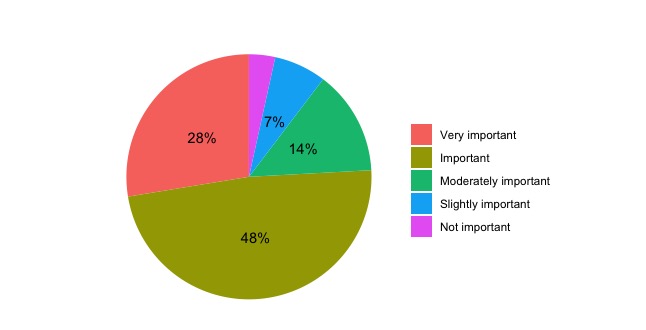
Students often choose alternatives to traditional face-to-face instruction due to various external factors, such as family and work commitments or accessibility limitations with campus-based instruction. For these individuals, the absence of alternative formats can pose an insurmountable barrier to accessing higher education opportunities, both generally and, more specifically, at UMBC. Our faculty respondents acknowledge this individual preference for instructional format, with 76% identifying flexibility in teaching modality as either “Important” or “Very Important”.
Figure 2: How important is policy supporting flexibility in teaching modality? (Faculty)
Flexibility in instructional modality was also a principal theme highlighted by EDUCAUSE when providing their survey reflections and next steps.
Image by Freepik
]]>
Since 2006, EDUCAUSE, the professional association for IT in higher education, has conducted an annual survey of students about their technology usage and preferences and, beginning in 2014, a...
https://doit.umbc.edu/post/145116/
https://my3.my.umbc.edu/api/v0/pixel/news/145116/guest@my.umbc.edu/68a3d481b212ab759eb657f3dea35bd7/api/pixel
doit
ecar
educause
survey
Instructional Technology
https://my3.my.umbc.edu/groups/instructional-technology
https://assets2-my.umbc.edu/system/shared/avatars/groups/000/001/164/dec3b026b81ee6d890a8f82f75c94a2e/xsmall.png?1446126703
https://assets1-my.umbc.edu/system/shared/avatars/groups/000/001/164/dec3b026b81ee6d890a8f82f75c94a2e/original.png?1446126703
https://assets2-my.umbc.edu/system/shared/avatars/groups/000/001/164/dec3b026b81ee6d890a8f82f75c94a2e/xxlarge.png?1446126703
https://assets1-my.umbc.edu/system/shared/avatars/groups/000/001/164/dec3b026b81ee6d890a8f82f75c94a2e/xlarge.png?1446126703
https://assets1-my.umbc.edu/system/shared/avatars/groups/000/001/164/dec3b026b81ee6d890a8f82f75c94a2e/large.png?1446126703
https://assets4-my.umbc.edu/system/shared/avatars/groups/000/001/164/dec3b026b81ee6d890a8f82f75c94a2e/medium.png?1446126703
https://assets3-my.umbc.edu/system/shared/avatars/groups/000/001/164/dec3b026b81ee6d890a8f82f75c94a2e/small.png?1446126703
https://assets2-my.umbc.edu/system/shared/avatars/groups/000/001/164/dec3b026b81ee6d890a8f82f75c94a2e/xsmall.png?1446126703
https://assets3-my.umbc.edu/system/shared/avatars/groups/000/001/164/dec3b026b81ee6d890a8f82f75c94a2e/xxsmall.png?1446126703
Instructional Technology
https://assets3-my.umbc.edu/system/shared/thumbnails/news/000/145/116/5ecfe17c34d737ec6000dab0ecc1768b/xxlarge.jpg?1730125856
https://assets4-my.umbc.edu/system/shared/thumbnails/news/000/145/116/5ecfe17c34d737ec6000dab0ecc1768b/xlarge.jpg?1730125856
https://assets2-my.umbc.edu/system/shared/thumbnails/news/000/145/116/5ecfe17c34d737ec6000dab0ecc1768b/large.jpg?1730125856
https://assets2-my.umbc.edu/system/shared/thumbnails/news/000/145/116/5ecfe17c34d737ec6000dab0ecc1768b/medium.jpg?1730125856
https://assets4-my.umbc.edu/system/shared/thumbnails/news/000/145/116/5ecfe17c34d737ec6000dab0ecc1768b/small.jpg?1730125856
https://assets4-my.umbc.edu/system/shared/thumbnails/news/000/145/116/5ecfe17c34d737ec6000dab0ecc1768b/xsmall.jpg?1730125856
https://assets2-my.umbc.edu/system/shared/thumbnails/news/000/145/116/5ecfe17c34d737ec6000dab0ecc1768b/xxsmall.jpg?1730125856
7
0
true
Mon, 28 Oct 2024 11:19:02 -0400
Mon, 28 Oct 2024 11:49:45 -0400
Reminder: Advising Appointments
Happy Monday!
If you haven't already, please select an advising time so that you can choose your Spring 2025 classes. Click
HERE!
]]>
Happy Monday! If you haven't already, please select an advising time so that you can choose your Spring 2025 classes. Click HERE! Can't find a time that works? Email dicuirci@umbc.edu for...
https://my3.my.umbc.edu/api/v0/pixel/news/145120/guest@my.umbc.edu/06accb1b01fea1044cba967cea2c2e0f/api/pixel
Texts, Technologies, and Literature (TTL)
https://my3.my.umbc.edu/groups/ttl
https://assets2-my.umbc.edu/system/shared/avatars/groups/000/002/153/11aa628a9142189e3b2cb56587518b49/xsmall.png?1727361785
https://assets1-my.umbc.edu/system/shared/avatars/groups/000/002/153/11aa628a9142189e3b2cb56587518b49/original.jpg?1727361785
https://assets4-my.umbc.edu/system/shared/avatars/groups/000/002/153/11aa628a9142189e3b2cb56587518b49/xxlarge.png?1727361785
https://assets2-my.umbc.edu/system/shared/avatars/groups/000/002/153/11aa628a9142189e3b2cb56587518b49/xlarge.png?1727361785
https://assets4-my.umbc.edu/system/shared/avatars/groups/000/002/153/11aa628a9142189e3b2cb56587518b49/large.png?1727361785
https://assets2-my.umbc.edu/system/shared/avatars/groups/000/002/153/11aa628a9142189e3b2cb56587518b49/medium.png?1727361785
https://assets1-my.umbc.edu/system/shared/avatars/groups/000/002/153/11aa628a9142189e3b2cb56587518b49/small.png?1727361785
https://assets2-my.umbc.edu/system/shared/avatars/groups/000/002/153/11aa628a9142189e3b2cb56587518b49/xsmall.png?1727361785
https://assets4-my.umbc.edu/system/shared/avatars/groups/000/002/153/11aa628a9142189e3b2cb56587518b49/xxsmall.png?1727361785
Texts, Technologies, and Literature (TTL)
0
0
true
Mon, 28 Oct 2024 10:44:58 -0400
Men's Week November 4- November 8
Join us as we engage, eat and enjoy being men together
This November Student Affairs Success Initiatives partnering with various departments will be hosting a Men's week to celebrate the experience of men, engage in important conversations around healthy relationships, rebuilding manhood, peer to peer conversations, opportunities to be in community together and great meals!
** While it is named Men's week we welcome all UMBC Student Staff and Faculty interested in supporting the experience of the UMBC male identifying students to engage in the events we have planned this week**
You don't want to miss out on this grab a friend and head to as many of the events that you can next week! For more information please contact Amery Thompson-
ameryqt@umbc.edu for any questions.
]]>
This November Student Affairs Success Initiatives partnering with various departments will be hosting a Men's week to celebrate the experience of men, engage in important conversations around...
Image
https://assets3-my.umbc.edu/system/shared/attachments/793019f074accb92fa2309adb8494458/6a7359f3/news/000/145/117/ef69b82482511dc346f934848b5c837e/1.png?1730127567
https://my3.my.umbc.edu/api/v0/pixel/news/145117/guest@my.umbc.edu/c8aca018f0a3f34e40035b582a2d7113/api/pixel
Commuter Connections
https://my3.my.umbc.edu/groups/ocss
https://assets4-my.umbc.edu/system/shared/avatars/groups/000/000/369/e9220286d22558b24422af119b418d0c/xsmall.png?1770828767
https://assets2-my.umbc.edu/system/shared/avatars/groups/000/000/369/e9220286d22558b24422af119b418d0c/original.png?1770828767
https://assets3-my.umbc.edu/system/shared/avatars/groups/000/000/369/e9220286d22558b24422af119b418d0c/xxlarge.png?1770828767
https://assets4-my.umbc.edu/system/shared/avatars/groups/000/000/369/e9220286d22558b24422af119b418d0c/xlarge.png?1770828767
https://assets1-my.umbc.edu/system/shared/avatars/groups/000/000/369/e9220286d22558b24422af119b418d0c/large.png?1770828767
https://assets1-my.umbc.edu/system/shared/avatars/groups/000/000/369/e9220286d22558b24422af119b418d0c/medium.png?1770828767
https://assets3-my.umbc.edu/system/shared/avatars/groups/000/000/369/e9220286d22558b24422af119b418d0c/small.png?1770828767
https://assets4-my.umbc.edu/system/shared/avatars/groups/000/000/369/e9220286d22558b24422af119b418d0c/xsmall.png?1770828767
https://assets4-my.umbc.edu/system/shared/avatars/groups/000/000/369/e9220286d22558b24422af119b418d0c/xxsmall.png?1770828767
Student Affairs Success Initiatives
https://assets2-my.umbc.edu/system/shared/thumbnails/news/000/145/117/0458163dff514ed38e3f0a46204509f2/xxlarge.jpg?1730127591
https://assets2-my.umbc.edu/system/shared/thumbnails/news/000/145/117/0458163dff514ed38e3f0a46204509f2/xlarge.jpg?1730127591
https://assets2-my.umbc.edu/system/shared/thumbnails/news/000/145/117/0458163dff514ed38e3f0a46204509f2/large.jpg?1730127591
https://assets3-my.umbc.edu/system/shared/thumbnails/news/000/145/117/0458163dff514ed38e3f0a46204509f2/medium.jpg?1730127591
https://assets1-my.umbc.edu/system/shared/thumbnails/news/000/145/117/0458163dff514ed38e3f0a46204509f2/small.jpg?1730127591
https://assets4-my.umbc.edu/system/shared/thumbnails/news/000/145/117/0458163dff514ed38e3f0a46204509f2/xsmall.jpg?1730127591
https://assets2-my.umbc.edu/system/shared/thumbnails/news/000/145/117/0458163dff514ed38e3f0a46204509f2/xxsmall.jpg?1730127591
0
0
true
Mon, 28 Oct 2024 10:40:10 -0400
Mon, 28 Oct 2024 10:59:59 -0400
Intern of the Week: Abhishikta Bandyopadhyay
Check out Abhishikta's internship!
Name: Abhishikta Bandyopadhyay
Pronouns: She/Her
Semester of Internship: Summer 2024
Major: CSEE
Current Class Level:Doctoral Student
This semester I completed a(n):Internship
Internship, Co-op, or Research Site (Company/Organization Name):Microsoft
Location of the Organization (City, State): Redmond, WA
Title of Position: Applied and Data Scientist
Tell us about your internship, co-op, or research opportunity, including your day-to-day responsibilities:
This summer, I had the opportunity to intern at Microsoft, where I worked on an exciting project focused on developing and enhancing Small Language Models (SLMs) for Windows Event Summarization. My day-to-day responsibilities involved working closely with data, conducting research on language model optimization, and experimenting with model architectures to improve the accuracy and efficiency of event summarization tasks. I collaborated with cross-functional teams, participated in daily stand-ups, and delivered key updates on the model's progress. Additionally, I was responsible for coding and testing model prototypes, analyzing their performance, and refining them based on feedback and evaluation metrics. The experience gave me hands-on exposure to advanced machine learning techniques, as well as the opportunity to present my work to senior engineers and stakeholders at Microsoft.
Describe the process of obtaining your position. When did you hear of the position and submit your application?
I first learned about the opportunity to intern at Microsoft through their university recruiting program, which I had been following closely. I submitted my application in the fall of 2022, during the early recruitment cycle for their summer internships. After submitting my resume and project portfolio, I went through a series of technical interviews, including coding challenges and problem-solving tasks, which tested my knowledge in machine learning, data science, and software development. The interviews were challenging yet rewarding, as they allowed me to showcase my skills while also providing insight into Microsoft’s innovative projects. Following the interview rounds, I was thrilled to receive an offer for the internship, which I eagerly accepted for Summer 2023. This summer I returned to Microsoft for my second internship.
What resources did you use to find your current experience?
Handshake
What have you enjoyed the most about your position and organization?
What I enjoyed most about my position was the opportunity to meet people from various schools like Princeton, UPenn, Howard etc. Learning about their diverse college experiences was really interesting and gave me new perspectives. I also loved talking to teenagers during the interviews. Since I was once a teenager myself, I found many of the topics we discussed relatable, which made the conversations more engaging. Additionally, I really appreciated the chance to shadow my PI, who is a pediatrician. It gave me valuable insight into the field of pediatrics, which is my passion.
How do you believe you have made an impact through your work?
I made an impact by creating a more engaging and comfortable environment for the teens during interviews, making it easier for them to open up and express themselves. As someone young who could relate to their experiences, I helped them feel understood and safe. In the specific lab I worked at, most researchers were young adults who weren’t very active on social media, so I was able to bridge the gap and bring a fresh perspective to our discussions about adolescent relationships and social media.
What advice would you give to another student who is seeking an internship or similar experience?
My advice for another student seeking an internship is to start early, be proactive, and make your application show how excited you are about the opportunity. After applying on the organization’s website, send a follow-up email to show your passion for the position. Use resources like Handshake to find internships, and don’t worry if you don’t meet every requirement, focus on your strengths and what makes you a good fit. Also, talk to mentors or professors for advice and take advantage of networking to learn from others.
Most importantly, don’t give up. Keep applying, and if you face rejection, recognize what you can improve in your application. Remember, rejection is just redirection.
Please provide a short reflection or quote about what you liked most about your position / earning internship credit / working with the Career Center.
“What I enjoyed most about my position at Microsoft was the opportunity to work on innovative machine learning projects that had a real-world impact, while being part of a collaborative and supportive team. The Career Center was instrumental in my success, offering guidance on refining my resume, preparing for interviews, and connecting me with internship opportunities that aligned with my career goals.”
]]>
Name: Abhishikta Bandyopadhyay Pronouns: She/Her Semester of Internship: Summer 2024 Major: CSEE Current Class Level:Doctoral Student This semester I completed a(n):Internship Internship,...
https://my3.my.umbc.edu/api/v0/pixel/news/145115/guest@my.umbc.edu/1d8bad45406f0e0a8d91bdfd043f3822/api/pixel
intern
intern-of-the-week
internoftheweek
internship
iotw
of
the
week
Career Center
https://my3.my.umbc.edu/groups/careers
https://assets2-my.umbc.edu/system/shared/avatars/groups/000/000/018/729f2c7eeeab66f50f4ab3677539a585/xsmall.png?1411655278
https://assets4-my.umbc.edu/system/shared/avatars/groups/000/000/018/729f2c7eeeab66f50f4ab3677539a585/original.jpg?1411655278
https://assets2-my.umbc.edu/system/shared/avatars/groups/000/000/018/729f2c7eeeab66f50f4ab3677539a585/xxlarge.png?1411655278
https://assets1-my.umbc.edu/system/shared/avatars/groups/000/000/018/729f2c7eeeab66f50f4ab3677539a585/xlarge.png?1411655278
https://assets2-my.umbc.edu/system/shared/avatars/groups/000/000/018/729f2c7eeeab66f50f4ab3677539a585/large.png?1411655278
https://assets3-my.umbc.edu/system/shared/avatars/groups/000/000/018/729f2c7eeeab66f50f4ab3677539a585/medium.png?1411655278
https://assets3-my.umbc.edu/system/shared/avatars/groups/000/000/018/729f2c7eeeab66f50f4ab3677539a585/small.png?1411655278
https://assets2-my.umbc.edu/system/shared/avatars/groups/000/000/018/729f2c7eeeab66f50f4ab3677539a585/xsmall.png?1411655278
https://assets2-my.umbc.edu/system/shared/avatars/groups/000/000/018/729f2c7eeeab66f50f4ab3677539a585/xxsmall.png?1411655278
Career Center
https://assets3-my.umbc.edu/system/shared/thumbnails/news/000/145/115/c224679290a94e052b786c91e98681f2/xxlarge.jpg?1730125292
https://assets2-my.umbc.edu/system/shared/thumbnails/news/000/145/115/c224679290a94e052b786c91e98681f2/xlarge.jpg?1730125292
https://assets4-my.umbc.edu/system/shared/thumbnails/news/000/145/115/c224679290a94e052b786c91e98681f2/large.jpg?1730125292
https://assets2-my.umbc.edu/system/shared/thumbnails/news/000/145/115/c224679290a94e052b786c91e98681f2/medium.jpg?1730125292
https://assets3-my.umbc.edu/system/shared/thumbnails/news/000/145/115/c224679290a94e052b786c91e98681f2/small.jpg?1730125292
https://assets4-my.umbc.edu/system/shared/thumbnails/news/000/145/115/c224679290a94e052b786c91e98681f2/xsmall.jpg?1730125292
https://assets3-my.umbc.edu/system/shared/thumbnails/news/000/145/115/c224679290a94e052b786c91e98681f2/xxsmall.jpg?1730125292
7
0
true
Mon, 28 Oct 2024 10:23:31 -0400
Fri, 31 Jan 2025 09:33:31 -0500
PhD Dissertation Defense - Linfeng (Jon) Lyu
Thursday, Oct. 31, 3pm
Dear M.E. Community,
You are invited to attend the PhD Dissertation Defense of Linfeng Lyu on Thursday, October 31, beginning at 3pm, in the Mechanical Engineering Office Conference Room (ENGR210-I). You may also wish to join remotely,
using this Webex link.
Advisor: Dr. Weidong Zhu
Title: Novel Image-based Tracking Continuously Scanning Laser Doppler Vibrometer Systems for Vibration Measurement of Rotating Wind Turbine Blades
Abstract:
The objective of the proposed research is to develop efficient vibration monitoring and structural health monitoring (SHM) methods for a horizontal-axis rotating wind turbine blade using a novel image-based tracking continuous scanning laser Doppler vibrometer (CSLDV) and new signal processing methods associated with tracking continuous scanning laser vibrometry. The image-based tracking CSLDV consists of a camera, a scanner with a set of orthogonal mirrors, and a single-point laser head. Currently, there are no suitable non-contact in-situ vibration monitoring and SHM methods for rotating wind turbine blades, and vibration monitoring and SHM of wind turbine blades are mainly accomplished by visual inspection of stationary blades or by using a limited number of embedded sensors. The image-based tracking CSLDV is capable of rapidly obtaining spatially dense vibration shapes (VSs), such as mode shapes and operating deflection shapes (ODSs) of a rotating structure under random excitation, by continuously sweeping its laser spot over the structure surface. VSs measured by the image-based tracking CSLDV can have more measurement points than those by a commercial scanning laser Doppler vibrometer in a point-by-point manner, and the former needs much less measurement time. Different image processing methods are developed for the image-based tracking CSLDV to extract the rotating structure from its background in captured images of the camera. One image processing method is to determine the difference between two neighboring frames captured by the camera to find the position of the rotating structure. The other image processing method is to average multiple captured images of the camera to obtain the background of the rotating structure and subtract the averaged image from captured images of the camera to determine the position of the rotating structure. Edge detection algorithms can be applied to processed images by the two methods to determine positions of the rotating structure.
Estimated real-time positions of the rotating structure can be used for estimating its rotation speed. When the distance between the image-based tracking CSLDV and the rotating structure is long enough, rotation angles of mirrors of the scanner in the image-based tracking CSLDV are small and the position of the laser spot is basically linearly related to rotation angles of mirrors of the scanner. Pixel coordinates of the laser spot in captured images of the camera are linearly related to the position of the laser spot when the camera is close to the scanner; thus pixel coordinates of the laser spot in captured images are basically linearly related to rotation angles of mirrors of the scanner. Once the position of the rotating structure is determined in captured images, a scan path can be generated on it and rotation angles of mirrors of the scanner can be controlled so that the laser spot of the image-based tracking CSLDV can be swept along the path. One-dimensional and two-dimensional scan schemes are developed for the image-based tracking CSLDV to generate straight and zigzag scan paths on the rotating structure, respectively. New operational modal analysis (OMA) methods are developed based on rigorous rotating beam and plate theories, which can estimate modal parameters, such as damped natural frequencies, modal damping ratios, undamped mode shapes, and ODSs, of the rotating structure under random excitation. One OMA method is the lifting method that can convert a measured response of the rotating structure into responses on multiple virtual measurement points on the scan path. Correlation functions among converted responses can be calculated and used for determining modal parameters of the rotating structure. The other OMA method is the improved demodulation method that filters a measured response by a band-pass filter that only contains one damped natural frequency of the rotating structure. The filtered response is multiplied by a sinusoidal signal whose frequency is the damped natural frequency and a low-pass filter is applied to the resulting response to obtain undamped mode shapes of the rotating structure. A novel demodulation method with a reference signal is developed to identify positions of damages in a beam without its base-line information. A cross-correlation function between a measurement of a CSLDV and a measurement of a single-point laser Doppler vibrometer is calculated and processed by the demodulation method to estimate its undamped mode shapes. Curvatures of estimated undamped mode shapes are calculated to obtain curvature damage indices and determine the position of a damage in the beam. Prototypes of an image-based short-range tracking CSLDV and an image-based long-range tracking CSLDV are developed for experimental validation of the proposed methods. Rotation speeds and modal parameters of rotating blades with different speeds that are excited by air flow that is considered as random excitation are estimated. Both undamped mode shapes of rotating blades on a straight scan path and their full-field undamped mode shapes are estimated and compared with each other. The proposed methods can address major challenges to monitor the vibration of a rotating horizontal-axis wind turbine blade and detect its potential damage in operational conditions.
]]>
Dear M.E. Community, You are invited to attend the PhD Dissertation Defense of Linfeng Lyu on Thursday, October 31, beginning at 3pm, in the Mechanical Engineering Office Conference Room...
https://my3.my.umbc.edu/api/v0/pixel/news/145074/guest@my.umbc.edu/b98dad946c2ab559254a8fc9e419774f/api/pixel
Mechanical Engineering
https://my3.my.umbc.edu/groups/me
https://assets3-my.umbc.edu/system/shared/avatars/groups/000/000/096/f53891bd1b141a18c1dbc498e1eda286/xsmall.png?1359683367
https://assets1-my.umbc.edu/system/shared/avatars/groups/000/000/096/f53891bd1b141a18c1dbc498e1eda286/original.jpg?1359683367
https://assets4-my.umbc.edu/system/shared/avatars/groups/000/000/096/f53891bd1b141a18c1dbc498e1eda286/xxlarge.png?1359683367
https://assets3-my.umbc.edu/system/shared/avatars/groups/000/000/096/f53891bd1b141a18c1dbc498e1eda286/xlarge.png?1359683367
https://assets1-my.umbc.edu/system/shared/avatars/groups/000/000/096/f53891bd1b141a18c1dbc498e1eda286/large.png?1359683367
https://assets3-my.umbc.edu/system/shared/avatars/groups/000/000/096/f53891bd1b141a18c1dbc498e1eda286/medium.png?1359683367
https://assets1-my.umbc.edu/system/shared/avatars/groups/000/000/096/f53891bd1b141a18c1dbc498e1eda286/small.png?1359683367
https://assets3-my.umbc.edu/system/shared/avatars/groups/000/000/096/f53891bd1b141a18c1dbc498e1eda286/xsmall.png?1359683367
https://assets3-my.umbc.edu/system/shared/avatars/groups/000/000/096/f53891bd1b141a18c1dbc498e1eda286/xxsmall.png?1359683367
Mechanical Engineering
0
0
true
Mon, 28 Oct 2024 10:15:19 -0400
Alumna introduces horseshoe crabs to K-12 classrooms to raise these scientifically useful arthropods
Most people wouldn’t guess horseshoe crabs—ancient arthropods with hard, round carapaces and long, spiky tails—when asked what animals you might find in a K-12 classroom. But Jessica Baniak ’23, biological sciences, is collaborating with the Maryland Department of Natural Resources (DNR) to shift kids’ perspectives of the alien-looking critters and create opportunities for inquiry-based learning.
Today, Baniak is a student in the ICARE program, an environmental science master’s program led by UMBC biology professor Tamra Mendelson. ICARE students study local environmental issues and include community partners on their master’s thesis committees.
Horseshoe crabs congregate on Maryland and Delaware beaches to mate each spring, and the last two years Baniak has collected some of their eggs with a research permit from the Maryland DNR. Each female can produce upwards of 20,000 eggs. Baniak takes the eggs back to a lab at the Institute of Marine and Environmental Technology (IMET), a multi-institution research facility on Baltimore’s Inner Harbor, and raises them until they’re about a centimeter across.
Then Baniak delivers the baby crabs to elementary, middle, and high school classrooms in Howard, Carroll, and Baltimore counties. This year, 10 schools received crabs. Some teachers use the crabs in their curriculum, and some crabs are tended by student environmental clubs. Students run basic experiments that develop their science reasoning skills, like comparing growth rates in different hatchery setups.
Finding the sweet spot
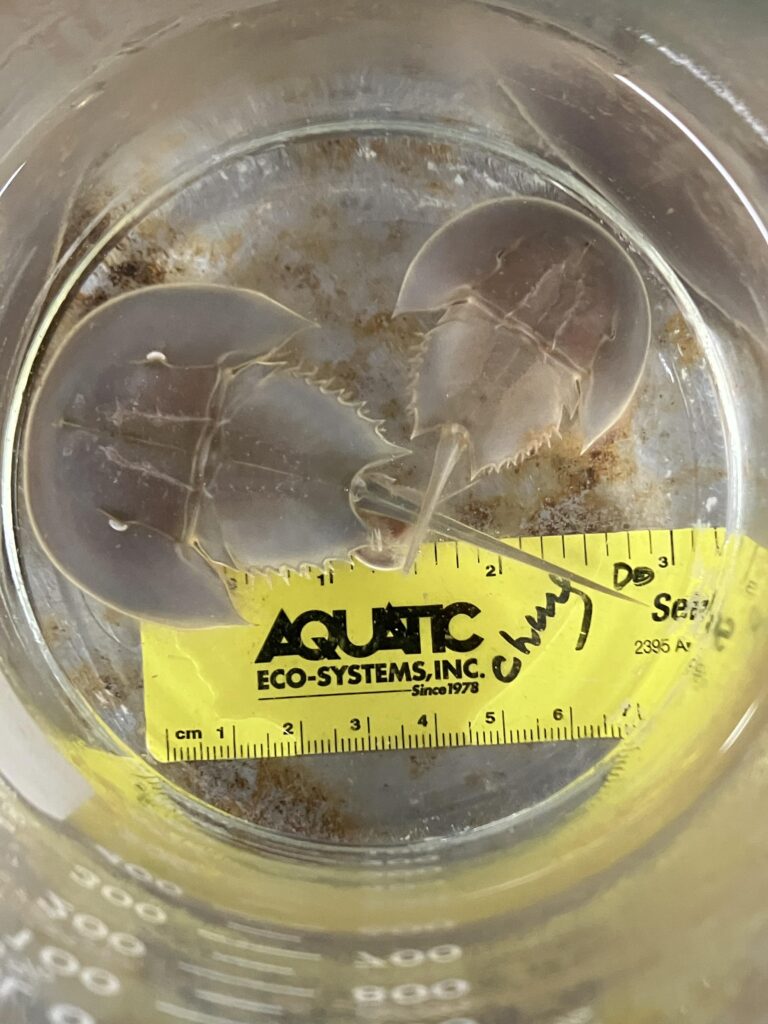 These baby crabs are about six months old, and Baniak grew them at the highest temperature in her study—so they are a little larger than average. (Courtesy of Baniak)
It’s tricky to successfully raise the crabs to adulthood. Baniak visits each classroom a couple of times a year and makes suggestions to improve the crab habitats. Factors like feed, temperature, salinity, and more play a role in their survival. For her master’s research, Baniak is working out the ideal setup for successful crab-rearing with a focus on temperature. Higher temperatures produce faster growth, but some baby crabs perish in the heat. Cooler temps cut the mortality rate, but slow growth.
Baniak’s goal is to find the sweet spot that produces the most healthy crabs in a short amount of time. Why does efficiency matter? Because eager students aren’t the only ones interested in raising crabs.
Companies extract a compound from horseshoe crab blood that is used to detect bacterial contamination in pharmaceuticals. The blood can’t be harvested until the crabs are about 10 years old, Baniak explains, so raising them in captivity isn’t economical (it’s also challenging). Instead, reintroducing young crabs to their natural habitat is “a way that companies can help mitigate how much they’ve taken out of the wild,” Baniak says. Baniak’s work will help optimize these reintroduction programs for the industry—and at the same time, give kids a unique learning opportunity.
‘Everything all at once’
As a child, the National Aquarium in Baltimore—directly across the pier from IMET—inspired Baniak to pursue marine biology. Today her experiences range well beyond horseshoe crabs. As an undergraduate, she had a summer internship at an oyster hatchery. “During the breeding season—that’s when you work really long hours,” she says. “You have to do everything all at once.”
Counting surviving oysters, mating specific oyster pairs, and cleaning tanks—all while squeezing in work on experiments running at the hatchery—filled her days. One project involved developing a protocol to anesthetize oysters, which made it possible to collect tissue samples without killing the oyster. Baniak also assisted with the hatchery’s softshell clam initiative.
For another internship, she worked at the Maryland Pesticide Education Network, which promotes safer alternatives to harmful pesticides. During the academic year, she found time to participate in UMBC’s tae-kwon do club and play club volleyball.
Sharing the joy in science
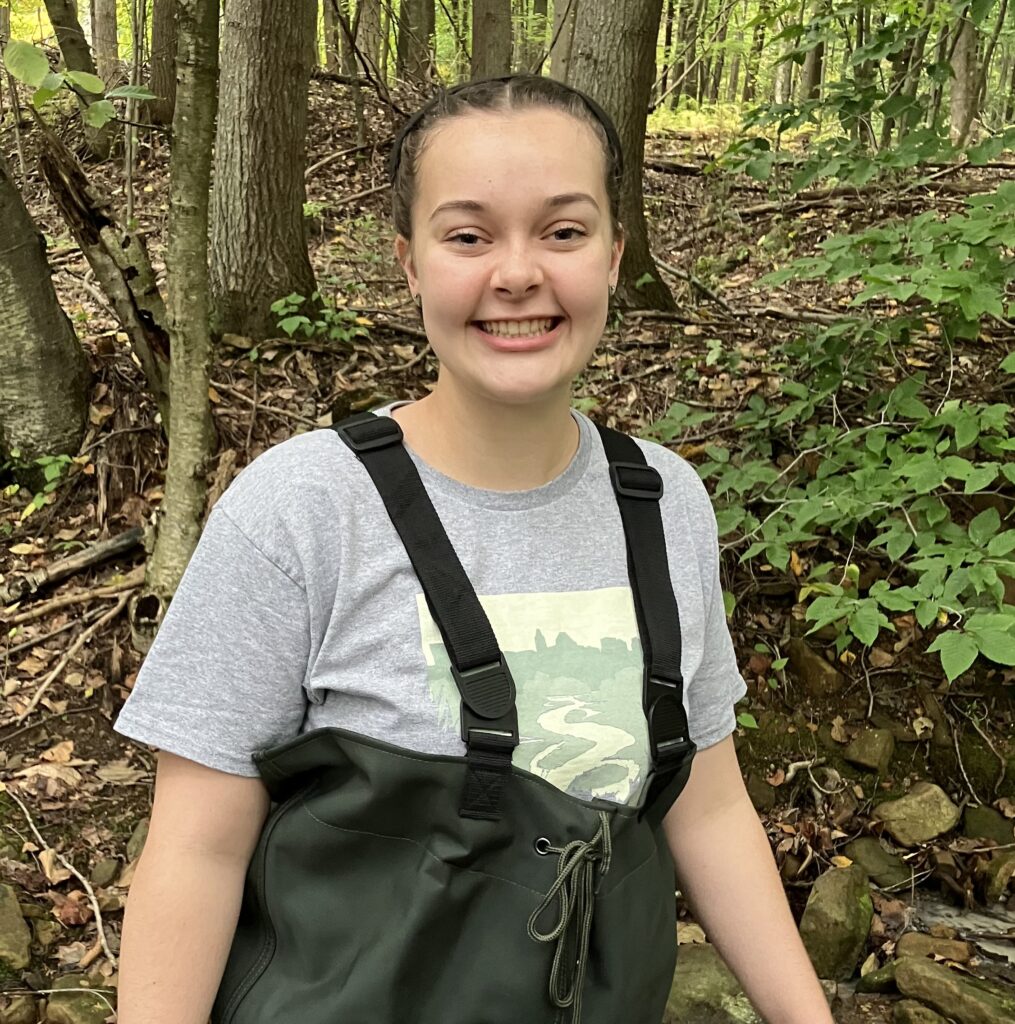 Jessica Baniak ’23 (Courtesy of Baniak)
After she graduates with her master’s next spring, Baniak hopes to move on to a role in a federal agency like the U.S. Fish and Wildlife Service. She wants to continue to contribute to outreach programs like the horseshoe crab project.
“That’s my motivation for continuing in science, because I want to make more programs like that,” Baniak says. “I like ICARE because you’re working with other people in the community and not just researching a really niche subject.”
After she transferred to UMBC during the pandemic to be closer to home, UMBC faculty members helped her stay committed to her biological sciences degree. Maggie Holland, professor of geography and environmental systems, “brought back the joy into science after returning from online learning,” Baniak says. “She seemed to genuinely care about me as a student and about the subject she was teaching.”
Mendelson, too, made an impact. “She’s put a lot of effort into the ICARE program and wants to see all of us succeed,” Baniak says.
At the end of the school year, Baniak will travel with the students to release their horseshoe crabs at Sandy Point State Park and watch them wriggle across the sand and swim into the Chesapeake Bay, heading for life’s next phase.
]]>
Most people wouldn’t guess horseshoe crabs—ancient arthropods with hard, round carapaces and long, spiky tails—when asked what animals you might find in a K-12 classroom. But Jessica Baniak ’23,...
https://umbc.edu/stories/alumna-introduces-horseshoe-crabs-to-k-12-classrooms-to-raise-these-scientifically-useful-arthropods/
https://my3.my.umbc.edu/api/v0/pixel/news/145114/guest@my.umbc.edu/740ef73058e1b1c2c43f965fda03acb2/api/pixel
alumni
alumni-profile
biology
cahss
cnms
fall-2024
ges
icare
imet
magazine
story
UMBC News & Magazine
https://my3.my.umbc.edu/groups/umbc-news-magazine
https://assets1-my.umbc.edu/system/shared/avatars/groups/000/001/943/24435aa6207c452e7bc15cc74b42c7bb/xsmall.png?1748556657
https://assets1-my.umbc.edu/system/shared/avatars/groups/000/001/943/24435aa6207c452e7bc15cc74b42c7bb/original.png?1748556657
https://assets2-my.umbc.edu/system/shared/avatars/groups/000/001/943/24435aa6207c452e7bc15cc74b42c7bb/xxlarge.png?1748556657
https://assets2-my.umbc.edu/system/shared/avatars/groups/000/001/943/24435aa6207c452e7bc15cc74b42c7bb/xlarge.png?1748556657
https://assets3-my.umbc.edu/system/shared/avatars/groups/000/001/943/24435aa6207c452e7bc15cc74b42c7bb/large.png?1748556657
https://assets1-my.umbc.edu/system/shared/avatars/groups/000/001/943/24435aa6207c452e7bc15cc74b42c7bb/medium.png?1748556657
https://assets2-my.umbc.edu/system/shared/avatars/groups/000/001/943/24435aa6207c452e7bc15cc74b42c7bb/small.png?1748556657
https://assets1-my.umbc.edu/system/shared/avatars/groups/000/001/943/24435aa6207c452e7bc15cc74b42c7bb/xsmall.png?1748556657
https://assets2-my.umbc.edu/system/shared/avatars/groups/000/001/943/24435aa6207c452e7bc15cc74b42c7bb/xxsmall.png?1748556657
UMBC News & Magazine
0
0
false
Mon, 28 Oct 2024 10:14:45 -0400
Alumna introduces horseshoe crabs to K-12 classrooms to raise these scientifically useful arthropods
Most people wouldn’t guess horseshoe crabs—ancient arthropods with hard, round carapaces and long, spiky tails—when asked what animals you might find in a K-12 classroom. But Jessica Baniak ’23, biological sciences, is collaborating with the Maryland Department of Natural Resources (DNR) to shift kids’ perspectives of the alien-looking critters and create opportunities for inquiry-based learning.
Today, Baniak is a student in the ICARE program, an environmental science master’s program led by UMBC biology professor Tamra Mendelson. ICARE students study local environmental issues and include community partners on their master’s thesis committees.
Horseshoe crabs congregate on Maryland and Delaware beaches to mate each spring, and the last two years Baniak has collected some of their eggs with a research permit from the Maryland DNR. Each female can produce upwards of 20,000 eggs. Baniak takes the eggs back to a lab at the Institute of Marine and Environmental Technology (IMET), a multi-institution research facility on Baltimore’s Inner Harbor, and raises them until they’re about a centimeter across.
Then Baniak delivers the baby crabs to elementary, middle, and high school classrooms in Howard, Carroll, and Baltimore counties. This year, 10 schools received crabs. Some teachers use the crabs in their curriculum, and some crabs are tended by student environmental clubs. Students run basic experiments that develop their science reasoning skills, like comparing growth rates in different hatchery setups.
Finding the sweet spot
These baby crabs are about six months old, and Baniak grew them at the highest temperature in her study—so they are a little larger than average. (Courtesy of Baniak)
It’s tricky to successfully raise the crabs to adulthood. Baniak visits each classroom a couple of times a year and makes suggestions to improve the crab habitats. Factors like feed, temperature, salinity, and more play a role in their survival. For her master’s research, Baniak is working out the ideal setup for successful crab-rearing with a focus on temperature. Higher temperatures produce faster growth, but some baby crabs perish in the heat. Cooler temps cut the mortality rate, but slow growth.
Baniak’s goal is to find the sweet spot that produces the most healthy crabs in a short amount of time. Why does efficiency matter? Because eager students aren’t the only ones interested in raising crabs.
Companies extract a compound from horseshoe crab blood that is used to detect bacterial contamination in pharmaceuticals. The blood can’t be harvested until the crabs are about 10 years old, Baniak explains, so raising them in captivity isn’t economical (it’s also challenging). Instead, reintroducing young crabs to their natural habitat is “a way that companies can help mitigate how much they’ve taken out of the wild,” Baniak says. Baniak’s work will help optimize these reintroduction programs for the industry—and at the same time, give kids a unique learning opportunity.
‘Everything all at once’
As a child, the National Aquarium in Baltimore—directly across the pier from IMET—inspired Baniak to pursue marine biology. Today her experiences range well beyond horseshoe crabs. As an undergraduate, she had a summer internship at an oyster hatchery. “During the breeding season—that’s when you work really long hours,” she says. “You have to do everything all at once.”
Counting surviving oysters, mating specific oyster pairs, and cleaning tanks—all while squeezing in work on experiments running at the hatchery—filled her days. One project involved developing a protocol to anesthetize oysters, which made it possible to collect tissue samples without killing the oyster. Baniak also assisted with the hatchery’s softshell clam initiative.
For another internship, she worked at the Maryland Pesticide Education Network, which promotes safer alternatives to harmful pesticides. During the academic year, she found time to participate in UMBC’s tae-kwon do club and play club volleyball.
Sharing the joy in science
Jessica Baniak ’23 (Courtesy of Baniak)
After she graduates with her master’s next spring, Baniak hopes to move on to a role in a federal agency like the U.S. Fish and Wildlife Service. She wants to continue to contribute to outreach programs like the horseshoe crab project.
“That’s my motivation for continuing in science, because I want to make more programs like that,” Baniak says. “I like ICARE because you’re working with other people in the community and not just researching a really niche subject.”
After she transferred to UMBC during the pandemic to be closer to home, UMBC faculty members helped her stay committed to her biological sciences degree. Maggie Holland, professor of geography and environmental systems, “brought back the joy into science after returning from online learning,” Baniak says. “She seemed to genuinely care about me as a student and about the subject she was teaching.”
Mendelson, too, made an impact. “She’s put a lot of effort into the ICARE program and wants to see all of us succeed,” Baniak says.
At the end of the school year, Baniak will travel with the students to release their horseshoe crabs at Sandy Point State Park and watch them wriggle across the sand and swim into the Chesapeake Bay, heading for life’s next phase.
]]>
Most people wouldn’t guess horseshoe crabs—ancient arthropods with hard, round carapaces and long, spiky tails—when asked what animals you might find in a K-12 classroom. But Jessica Baniak ’23,...
https://umbc.edu/stories/horseshoe-crabs-in-the-classroom/
https://my3.my.umbc.edu/api/v0/pixel/news/145121/guest@my.umbc.edu/bed35689905753f7e8e4a73a2ba71d5f/api/pixel
alumni
alumni-profile
biology
cahss
cnms
fall-2024
ges
icare
imet
magazine
story
UMBC News & Magazine
https://my3.my.umbc.edu/groups/umbc-news-magazine
https://assets1-my.umbc.edu/system/shared/avatars/groups/000/001/943/24435aa6207c452e7bc15cc74b42c7bb/xsmall.png?1748556657
https://assets1-my.umbc.edu/system/shared/avatars/groups/000/001/943/24435aa6207c452e7bc15cc74b42c7bb/original.png?1748556657
https://assets2-my.umbc.edu/system/shared/avatars/groups/000/001/943/24435aa6207c452e7bc15cc74b42c7bb/xxlarge.png?1748556657
https://assets2-my.umbc.edu/system/shared/avatars/groups/000/001/943/24435aa6207c452e7bc15cc74b42c7bb/xlarge.png?1748556657
https://assets3-my.umbc.edu/system/shared/avatars/groups/000/001/943/24435aa6207c452e7bc15cc74b42c7bb/large.png?1748556657
https://assets1-my.umbc.edu/system/shared/avatars/groups/000/001/943/24435aa6207c452e7bc15cc74b42c7bb/medium.png?1748556657
https://assets2-my.umbc.edu/system/shared/avatars/groups/000/001/943/24435aa6207c452e7bc15cc74b42c7bb/small.png?1748556657
https://assets1-my.umbc.edu/system/shared/avatars/groups/000/001/943/24435aa6207c452e7bc15cc74b42c7bb/xsmall.png?1748556657
https://assets2-my.umbc.edu/system/shared/avatars/groups/000/001/943/24435aa6207c452e7bc15cc74b42c7bb/xxsmall.png?1748556657
UMBC News & Magazine
0
0
false
Mon, 28 Oct 2024 10:14:45 -0400
Mon, 28 Oct 2024 10:14:45 -0400
Coffee, Chai, Hot Chocolate In Commons 308
Come get your Monday boost with OGSL!
I'm cold, you're cold, we're all cold! What better way to warm up than with chai, hot chocolate, and freshly brewed coffee? Stop by the Office of Graduate Student Life today for a chance to make your day a little warmer!
]]>
I'm cold, you're cold, we're all cold! What better way to warm up than with chai, hot chocolate, and freshly brewed coffee? Stop by the Office of Graduate Student Life today for a chance to make...
https://my3.my.umbc.edu/api/v0/pixel/news/145113/guest@my.umbc.edu/2f0f087d5ea6dae562fe7c7769e837c8/api/pixel
UMBC Graduate Student Association
https://my3.my.umbc.edu/groups/gsa
https://assets1-my.umbc.edu/system/shared/avatars/groups/000/000/141/6944ed1afb7c0b0557d52a5e61a6d9c9/xsmall.png?1688588974
https://assets1-my.umbc.edu/system/shared/avatars/groups/000/000/141/6944ed1afb7c0b0557d52a5e61a6d9c9/original.png?1688588974
https://assets2-my.umbc.edu/system/shared/avatars/groups/000/000/141/6944ed1afb7c0b0557d52a5e61a6d9c9/xxlarge.png?1688588974
https://assets3-my.umbc.edu/system/shared/avatars/groups/000/000/141/6944ed1afb7c0b0557d52a5e61a6d9c9/xlarge.png?1688588974
https://assets1-my.umbc.edu/system/shared/avatars/groups/000/000/141/6944ed1afb7c0b0557d52a5e61a6d9c9/large.png?1688588974
https://assets1-my.umbc.edu/system/shared/avatars/groups/000/000/141/6944ed1afb7c0b0557d52a5e61a6d9c9/medium.png?1688588974
https://assets2-my.umbc.edu/system/shared/avatars/groups/000/000/141/6944ed1afb7c0b0557d52a5e61a6d9c9/small.png?1688588974
https://assets1-my.umbc.edu/system/shared/avatars/groups/000/000/141/6944ed1afb7c0b0557d52a5e61a6d9c9/xsmall.png?1688588974
https://assets1-my.umbc.edu/system/shared/avatars/groups/000/000/141/6944ed1afb7c0b0557d52a5e61a6d9c9/xxsmall.png?1688588974
UMBC Graduate Student Association
0
0
true
Mon, 28 Oct 2024 10:11:15 -0400
UMBC Interdisciplinary CoLab, Call for Projects
UMBC Interdisciplinary CoLab, Call for Projects
Proposals Due, Monday December 2nd (by end of day)
UMBC Interdisciplinary CoLab is a Summer Internship program in Interdisciplinary Narrative-Based Research, where students from different intellectual disciplines collaborate in teams of three to create outward facing products for faculty and community partners.
UMBC Interdisciplinary CoLab supports narrative-based research projects to provide undergraduate students with an innovative, team-based applied learning opportunity through a three-credit (4-week, 30-hours per week) paid internship.
Ideal projects:
Are designed for 3 students with a UMBC faculty or staff member as the Project Leader
Have a strong focus that can be explored effectively over a four week period
Utilize diverse research methods and humanities modes of analysis
Produce public-facing final projects created for a specific audience and purpose.
For example, projects could engage with archived texts and images to develop websites, build podcasts from oral history or ethnographic interviews, or work with communities on documentary videos and digital stories.
The goal is to give students an interdisciplinary research experience while developing collaborative skills, telling effective stories, and amplifying voices to the general public.
Projects can be proposed by faculty or staff members, alone or in collaboration with outside community partners.
CoLab will run from June 2nd through Jun 27th, 2024.
]]>
UMBC Interdisciplinary CoLab, Call for Projects Proposals Due, Monday December 2nd (by end of day) UMBC Interdisciplinary CoLab is a Summer Internship program in Interdisciplinary...
https://my3.my.umbc.edu/api/v0/pixel/news/145111/guest@my.umbc.edu/d12acd40aa239f867fd945d562e2d1b2/api/pixel
Faculty Senate
https://my3.my.umbc.edu/groups/fs
https://assets3-my.umbc.edu/system/shared/avatars/groups/000/001/497/ba5964a1284ac16d4277991e7225699c/xsmall.png?1748556614
https://assets1-my.umbc.edu/system/shared/avatars/groups/000/001/497/ba5964a1284ac16d4277991e7225699c/original.png?1748556614
https://assets4-my.umbc.edu/system/shared/avatars/groups/000/001/497/ba5964a1284ac16d4277991e7225699c/xxlarge.png?1748556614
https://assets3-my.umbc.edu/system/shared/avatars/groups/000/001/497/ba5964a1284ac16d4277991e7225699c/xlarge.png?1748556614
https://assets4-my.umbc.edu/system/shared/avatars/groups/000/001/497/ba5964a1284ac16d4277991e7225699c/large.png?1748556614
https://assets3-my.umbc.edu/system/shared/avatars/groups/000/001/497/ba5964a1284ac16d4277991e7225699c/medium.png?1748556614
https://assets4-my.umbc.edu/system/shared/avatars/groups/000/001/497/ba5964a1284ac16d4277991e7225699c/small.png?1748556614
https://assets3-my.umbc.edu/system/shared/avatars/groups/000/001/497/ba5964a1284ac16d4277991e7225699c/xsmall.png?1748556614
https://assets3-my.umbc.edu/system/shared/avatars/groups/000/001/497/ba5964a1284ac16d4277991e7225699c/xxsmall.png?1748556614
Faculty Senate
1
0
true
Mon, 28 Oct 2024 09:47:44 -0400
