<?xml version="1.0"?>
<News hasArchived="true" page="1575" pageCount="10793" pageSize="10" timestamp="Sat, 05 Sep 2026 10:17:21 -0400" url="https://my3.my.umbc.edu/posts.xml?mode=recent&amp;page=1575">
<NewsItem contentIssues="true" id="139063" important="false" status="posted" url="https://my3.my.umbc.edu/posts/139063">
<Title>UMBC News publishes HARP2 and PACE feature</Title>
<Body>
<![CDATA[
    <div class="html-content">The UMBC News article <a href="https://umbc.edu/stories/harp2-launches-on-nasa-pace-mission/" rel="nofollow external" class="bo">"UMBC scientists and engineers celebrate launch of HARP2 instrument on NASA's PACE mission"</a> covers the journey and excitement of arriving at the PACE launch, with the HARP2 polarimeter onboard the spacecraft. HARP2 was built by UMBC's <a href="https://esi.umbc.edu/" rel="nofollow external" class="bo">Earth and Space Institute</a>, led by <a href="https://esi.umbc.edu/home-2-2/" rel="nofollow external" class="bo">Vanderlei Martins</a>. Several of ESI's team members contribute to the piece, as well as UMBC graduate students, alumna, and ESRA's Director <a href="https://gestar2.umbc.edu/leadership/#Young" rel="nofollow external" class="bo">Margo Young</a>. Additionally, many <a href="https://gestar2.umbc.edu/" rel="nofollow external" class="bo">GESTAR II</a> researchers with NASA Goddard's Ocean Ecology Laboratory (Code 616) are credited for their involvement with the <a href="https://pace.oceansciences.org/mission.htm" rel="nofollow external" class="bo">PACE</a> mission.<div>(Photo Credit: NASA GSFC, Maniac Talk 2017)</div>
    </div>
]]>
</Body>
<Summary>The UMBC News article "UMBC scientists and engineers celebrate launch of HARP2 instrument on NASA's PACE mission" covers the journey and excitement of arriving at the PACE launch, with the HARP2...</Summary>
<TrackingUrl>https://my3.my.umbc.edu/api/v0/pixel/news/139063/guest@my.umbc.edu/296e22cfb49b218873dc08100c4fecd0/api/pixel</TrackingUrl>
<Tag>gestar2</Tag>
<Group token="gestar2">Goddard Earth Sciences Technology and Research II</Group>
<GroupUrl>https://my3.my.umbc.edu/groups/gestar2</GroupUrl>
<AvatarUrl>https://assets3-my.umbc.edu/system/shared/avatars/groups/000/001/988/1dcee2628d726541e45f1ba8c31afe98/xsmall.png?1645477833</AvatarUrl>
<AvatarUrl size="original">https://assets1-my.umbc.edu/system/shared/avatars/groups/000/001/988/1dcee2628d726541e45f1ba8c31afe98/original.png?1645477833</AvatarUrl>
<AvatarUrl size="xxlarge">https://assets1-my.umbc.edu/system/shared/avatars/groups/000/001/988/1dcee2628d726541e45f1ba8c31afe98/xxlarge.png?1645477833</AvatarUrl>
<AvatarUrl size="xlarge">https://assets4-my.umbc.edu/system/shared/avatars/groups/000/001/988/1dcee2628d726541e45f1ba8c31afe98/xlarge.png?1645477833</AvatarUrl>
<AvatarUrl size="large">https://assets2-my.umbc.edu/system/shared/avatars/groups/000/001/988/1dcee2628d726541e45f1ba8c31afe98/large.png?1645477833</AvatarUrl>
<AvatarUrl size="medium">https://assets4-my.umbc.edu/system/shared/avatars/groups/000/001/988/1dcee2628d726541e45f1ba8c31afe98/medium.png?1645477833</AvatarUrl>
<AvatarUrl size="small">https://assets1-my.umbc.edu/system/shared/avatars/groups/000/001/988/1dcee2628d726541e45f1ba8c31afe98/small.png?1645477833</AvatarUrl>
<AvatarUrl size="xsmall">https://assets3-my.umbc.edu/system/shared/avatars/groups/000/001/988/1dcee2628d726541e45f1ba8c31afe98/xsmall.png?1645477833</AvatarUrl>
<AvatarUrl size="xxsmall">https://assets3-my.umbc.edu/system/shared/avatars/groups/000/001/988/1dcee2628d726541e45f1ba8c31afe98/xxsmall.png?1645477833</AvatarUrl>
<Sponsor>Goddard Earth Sciences Technology and Research II</Sponsor>
<ThumbnailUrl size="xxlarge">https://assets4-my.umbc.edu/system/shared/thumbnails/news/000/139/063/4e82960fb069fe4140e1bd0430b8ccbe/xxlarge.jpg?1708114880</ThumbnailUrl>
<ThumbnailUrl size="xlarge">https://assets4-my.umbc.edu/system/shared/thumbnails/news/000/139/063/4e82960fb069fe4140e1bd0430b8ccbe/xlarge.jpg?1708114880</ThumbnailUrl>
<ThumbnailUrl size="large">https://assets3-my.umbc.edu/system/shared/thumbnails/news/000/139/063/4e82960fb069fe4140e1bd0430b8ccbe/large.jpg?1708114880</ThumbnailUrl>
<ThumbnailUrl size="medium">https://assets3-my.umbc.edu/system/shared/thumbnails/news/000/139/063/4e82960fb069fe4140e1bd0430b8ccbe/medium.jpg?1708114880</ThumbnailUrl>
<ThumbnailUrl size="small">https://assets1-my.umbc.edu/system/shared/thumbnails/news/000/139/063/4e82960fb069fe4140e1bd0430b8ccbe/small.jpg?1708114880</ThumbnailUrl>
<ThumbnailUrl size="xsmall">https://assets1-my.umbc.edu/system/shared/thumbnails/news/000/139/063/4e82960fb069fe4140e1bd0430b8ccbe/xsmall.jpg?1708114880</ThumbnailUrl>
<ThumbnailUrl size="xxsmall">https://assets3-my.umbc.edu/system/shared/thumbnails/news/000/139/063/4e82960fb069fe4140e1bd0430b8ccbe/xxsmall.jpg?1708114880</ThumbnailUrl>
<PawCount>0</PawCount>
<CommentCount>0</CommentCount>
<CommentsAllowed>false</CommentsAllowed>
<PostedAt>Fri, 16 Feb 2024 15:26:11 -0500</PostedAt>
<EditAt>Fri, 23 Feb 2024 15:38:11 -0500</EditAt>
</NewsItem>

<NewsItem contentIssues="false" id="139066" important="false" status="posted" url="https://my3.my.umbc.edu/posts/139066">
<Title>Professor Curtis Menyuk honored for pioneering work that helped transform global telecommunications</Title>
<Body>
<![CDATA[
    <div class="html-content">
    <img width="150" height="150" src="https://umbc.edu/wp-content/uploads/2024/02/Centavr-Lab23-0884-resized-150x150.jpg" alt="Man stands in front of brick building, smiles at camera" style="max-width: 100%; height: auto;">
    <p><a href="https://www.csee.umbc.edu/people/faculty/curtis-r-menyuk/" rel="nofollow external" class="bo">Curtis Menyuk</a>, professor of computer science and electrical engineering at UMBC, has won the 2024 SPIE G.G. Stokes Award in Optical Polarization. The award honors Menyuk’s pioneering work in the 1980’s developing equations to describe how light propagates through optical fibers, as well as his ongoing contributions to the fields of optics and photonics.</p>


    <p>The fast and reliable internet we enjoy today would not be possible without the fundamental work that Menyuk and his colleagues performed decades ago. Modern global telecommunication systems are built on backbones of optical fiber, and the rate of information flow through the fibers is limited by physical phenomena that affect the way light spreads. Over time and distance, these phenomena can turn a crisp signal into indecipherable garbage, and so optical communication system engineers must account for them in their designs. </p>


    <p>Menyuk developed equations that allow engineers to effectively model optical communication, most importantly by being the first equations to incorporate the effects of a property of light called its polarization. (Light travels as an oscillating electric field coupled to an oscillating magnetic field, and the direction of the electric field determines the polarization.) </p>


    <p>One consequence of the equations was the realization that spinning optical fiber can minimize signal distortion. </p>


    <p>“Curtis is a renowned pioneer in the field of optical communications, and over the years I witnessed the tremendous impact of his group’s work on the telecom industry, photonic technologies, and the field of optics in general,” says DEVCOM Army Research Laboratory physicist Michael Brodsky in a <a href="https://spie.org/news/curtis-r-menyuk-the-2024-spie-gg-stokes-award-in-optical-polarization#_=_" rel="nofollow external" class="bo">news story from SPIE</a> announcing the award. </p>


    <p>For his part, Menyuk credits much of the impact of his work to his successful collaborations with colleagues and students. “It’s what comes from working with good people,” he says.</p>
    </div>
]]>
</Body>
<Summary>Curtis Menyuk, professor of computer science and electrical engineering at UMBC, has won the 2024 SPIE G.G. Stokes Award in Optical Polarization. The award honors Menyuk’s pioneering work in the...</Summary>
<Website>https://umbc.edu/quick-posts/curtis-menyuk-honored-for-global-telecom-work/</Website>
<TrackingUrl>https://my3.my.umbc.edu/api/v0/pixel/news/139066/guest@my.umbc.edu/246e3af984aa78b930490d8213b9a976/api/pixel</TrackingUrl>
<Tag>coeit</Tag>
<Tag>csee</Tag>
<Tag>news</Tag>
<Tag>quick-post</Tag>
<Tag>quick-posts</Tag>
<Tag>science-and-tech</Tag>
<Group token="umbc-news-magazine">UMBC News &amp;amp; Magazine</Group>
<GroupUrl>https://my3.my.umbc.edu/groups/umbc-news-magazine</GroupUrl>
<AvatarUrl>https://assets1-my.umbc.edu/system/shared/avatars/groups/000/001/943/24435aa6207c452e7bc15cc74b42c7bb/xsmall.png?1748556657</AvatarUrl>
<AvatarUrl size="original">https://assets1-my.umbc.edu/system/shared/avatars/groups/000/001/943/24435aa6207c452e7bc15cc74b42c7bb/original.png?1748556657</AvatarUrl>
<AvatarUrl size="xxlarge">https://assets2-my.umbc.edu/system/shared/avatars/groups/000/001/943/24435aa6207c452e7bc15cc74b42c7bb/xxlarge.png?1748556657</AvatarUrl>
<AvatarUrl size="xlarge">https://assets2-my.umbc.edu/system/shared/avatars/groups/000/001/943/24435aa6207c452e7bc15cc74b42c7bb/xlarge.png?1748556657</AvatarUrl>
<AvatarUrl size="large">https://assets3-my.umbc.edu/system/shared/avatars/groups/000/001/943/24435aa6207c452e7bc15cc74b42c7bb/large.png?1748556657</AvatarUrl>
<AvatarUrl size="medium">https://assets1-my.umbc.edu/system/shared/avatars/groups/000/001/943/24435aa6207c452e7bc15cc74b42c7bb/medium.png?1748556657</AvatarUrl>
<AvatarUrl size="small">https://assets2-my.umbc.edu/system/shared/avatars/groups/000/001/943/24435aa6207c452e7bc15cc74b42c7bb/small.png?1748556657</AvatarUrl>
<AvatarUrl size="xsmall">https://assets1-my.umbc.edu/system/shared/avatars/groups/000/001/943/24435aa6207c452e7bc15cc74b42c7bb/xsmall.png?1748556657</AvatarUrl>
<AvatarUrl size="xxsmall">https://assets2-my.umbc.edu/system/shared/avatars/groups/000/001/943/24435aa6207c452e7bc15cc74b42c7bb/xxsmall.png?1748556657</AvatarUrl>
<Sponsor>UMBC News &amp; Magazine</Sponsor>
<PawCount>1</PawCount>
<CommentCount>0</CommentCount>
<CommentsAllowed>false</CommentsAllowed>
<PostedAt>Fri, 16 Feb 2024 15:14:05 -0500</PostedAt>
</NewsItem>

<NewsItem contentIssues="true" id="139062" important="false" status="posted" url="https://my3.my.umbc.edu/posts/139062">
<Title>Colosseum of Warlords: Frontiers in the Age of Civil Wars</Title>
<Tagline>Tuesday, February 20, 2024, PAHB 441</Tagline>
<Body>
<![CDATA[
    <div class="html-content">Dr. Ganghao Poh will lecture on, "The Colosseum of Warlords: Frontiers in the Age of Civil Wars," a comparative analysis of the centrality of frontiers in recruitment of soldiers in times of internecine strife during the Han Dynasty and the Late Roman Empire.<div><br></div>
    <div>The lecture will take place in PAHB 441 from 5:00 to 6:00 PM on Tuesday, February 20, 2024.</div>
    <div><br></div>
    <div>All are welcome to join us for the event.<br><div><br></div>
    <div>Please see the attached flier.</div>
    </div>
    <div><br></div>
    <div>We look forward to seeing you there!</div>
    <div><br></div>
    <div><br></div>
    <div><br></div>
    <div>The UMBC Ancient Studies Department</div>
    </div>
]]>
</Body>
<Summary>Dr. Ganghao Poh will lecture on, "The Colosseum of Warlords: Frontiers in the Age of Civil Wars," a comparative analysis of the centrality of frontiers in recruitment of soldiers in times of...</Summary>
<AttachmentKind>Flyer</AttachmentKind>
<AttachmentUrl>https://assets3-my.umbc.edu/system/shared/attachments/e7da9a047bffce842825108eb56a1055/6a9c2471/news/000/139/062/790a9e1f84f938c0a9b1068490cc4d83/Ganghao Poh.pdf?1708113487</AttachmentUrl>
<Attachments>
<Attachment kind="Flyer" url="https://my3.my.umbc.edu/posts/139062/attachments/50589"></Attachment>
</Attachments>
<TrackingUrl>https://my3.my.umbc.edu/api/v0/pixel/news/139062/guest@my.umbc.edu/c903bce4ef7080a12335a9f824daf2d7/api/pixel</TrackingUrl>
<Group token="ancientstudies">Ancient Studies at UMBC</Group>
<GroupUrl>https://my3.my.umbc.edu/groups/ancientstudies</GroupUrl>
<AvatarUrl>https://assets2-my.umbc.edu/system/shared/avatars/groups/000/000/349/f32fe8b226a4303632d2c749bb9304cc/xsmall.png?1455895540</AvatarUrl>
<AvatarUrl size="original">https://assets3-my.umbc.edu/system/shared/avatars/groups/000/000/349/f32fe8b226a4303632d2c749bb9304cc/original.jpg?1455895540</AvatarUrl>
<AvatarUrl size="xxlarge">https://assets3-my.umbc.edu/system/shared/avatars/groups/000/000/349/f32fe8b226a4303632d2c749bb9304cc/xxlarge.png?1455895540</AvatarUrl>
<AvatarUrl size="xlarge">https://assets4-my.umbc.edu/system/shared/avatars/groups/000/000/349/f32fe8b226a4303632d2c749bb9304cc/xlarge.png?1455895540</AvatarUrl>
<AvatarUrl size="large">https://assets4-my.umbc.edu/system/shared/avatars/groups/000/000/349/f32fe8b226a4303632d2c749bb9304cc/large.png?1455895540</AvatarUrl>
<AvatarUrl size="medium">https://assets3-my.umbc.edu/system/shared/avatars/groups/000/000/349/f32fe8b226a4303632d2c749bb9304cc/medium.png?1455895540</AvatarUrl>
<AvatarUrl size="small">https://assets4-my.umbc.edu/system/shared/avatars/groups/000/000/349/f32fe8b226a4303632d2c749bb9304cc/small.png?1455895540</AvatarUrl>
<AvatarUrl size="xsmall">https://assets2-my.umbc.edu/system/shared/avatars/groups/000/000/349/f32fe8b226a4303632d2c749bb9304cc/xsmall.png?1455895540</AvatarUrl>
<AvatarUrl size="xxsmall">https://assets4-my.umbc.edu/system/shared/avatars/groups/000/000/349/f32fe8b226a4303632d2c749bb9304cc/xxsmall.png?1455895540</AvatarUrl>
<Sponsor>Ancient Studies at UMBC</Sponsor>
<ThumbnailUrl size="xxlarge">https://assets2-my.umbc.edu/system/shared/thumbnails/news/000/139/062/a4c4e71069c5a32b75f4eebfa6dba0f6/xxlarge.jpg?1708113573</ThumbnailUrl>
<ThumbnailUrl size="xlarge">https://assets2-my.umbc.edu/system/shared/thumbnails/news/000/139/062/a4c4e71069c5a32b75f4eebfa6dba0f6/xlarge.jpg?1708113573</ThumbnailUrl>
<ThumbnailUrl size="large">https://assets1-my.umbc.edu/system/shared/thumbnails/news/000/139/062/a4c4e71069c5a32b75f4eebfa6dba0f6/large.jpg?1708113573</ThumbnailUrl>
<ThumbnailUrl size="medium">https://assets2-my.umbc.edu/system/shared/thumbnails/news/000/139/062/a4c4e71069c5a32b75f4eebfa6dba0f6/medium.jpg?1708113573</ThumbnailUrl>
<ThumbnailUrl size="small">https://assets2-my.umbc.edu/system/shared/thumbnails/news/000/139/062/a4c4e71069c5a32b75f4eebfa6dba0f6/small.jpg?1708113573</ThumbnailUrl>
<ThumbnailUrl size="xsmall">https://assets1-my.umbc.edu/system/shared/thumbnails/news/000/139/062/a4c4e71069c5a32b75f4eebfa6dba0f6/xsmall.jpg?1708113573</ThumbnailUrl>
<ThumbnailUrl size="xxsmall">https://assets4-my.umbc.edu/system/shared/thumbnails/news/000/139/062/a4c4e71069c5a32b75f4eebfa6dba0f6/xxsmall.jpg?1708113573</ThumbnailUrl>
<PawCount>0</PawCount>
<CommentCount>0</CommentCount>
<CommentsAllowed>true</CommentsAllowed>
<PostedAt>Fri, 16 Feb 2024 15:03:01 -0500</PostedAt>
<EditAt>Sat, 17 Feb 2024 11:40:40 -0500</EditAt>
</NewsItem>

<NewsItem contentIssues="true" id="139036" important="false" status="posted" url="https://my3.my.umbc.edu/posts/139036">
<Title>SABAS First GBM: Introductions!</Title>
<Body>
<![CDATA[
    <div class="html-content">
    <p>Hey SABAS members!<span> </span></p>
    <p><span><br></span></p>
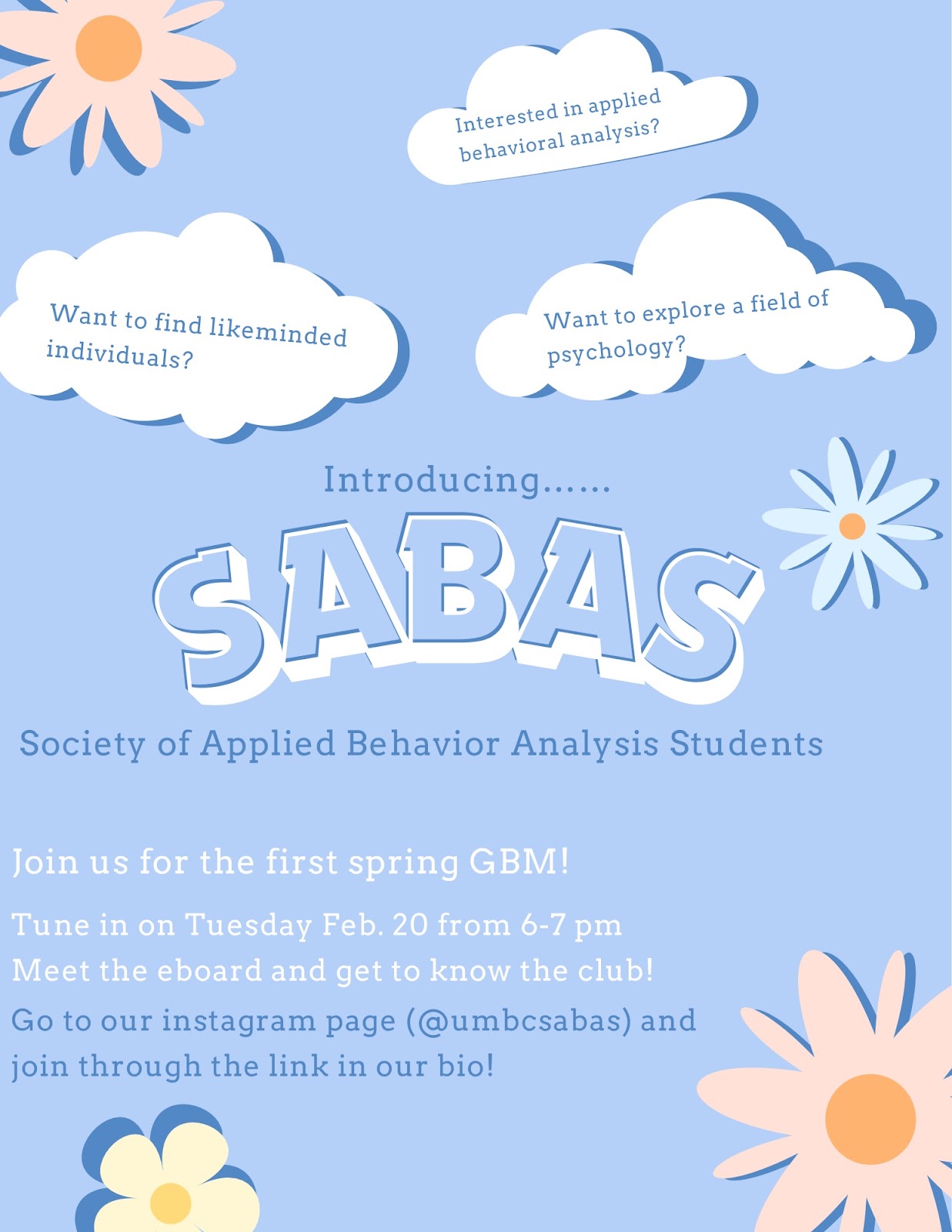
    <p>We have our first GBM on <strong>Tuesday, February 20th from 6-7 pm</strong> via Google Meet! We will introduce our E-board, give an overview of the club, and discuss the exciting events we have planned over the semester. If you have any questions or concerns, please feel free to reach out to us. We can't wait to meet you all!</p>
    <p>Link to meeting: <a href="https://meet.google.com/jxj-uuta-crq">https://meet.google.com/jxj-uuta-crq</a></p>
    <p><br></p>
    <p><span><span><span><img src="https://lh7-us.googleusercontent.com/xyKe7u1djMSxJknoXGgZl17Herw5gNuEKU7zfd9G_JqPnbeWGAsJd2-4YRKN98kydnCJaypF6tM-v4eDZyaBYptRW4mifvFqA1r4MWQRlO25UvKL6H5yEli2HgTWT_g3siAbB5LEMd5Ve75mDCU94Dc" width="443" height="573" style="max-width: 100%; height: auto;"></span></span></span></p>
    </div>
]]>
</Body>
<Summary>Hey SABAS members!      We have our first GBM on Tuesday, February 20th from 6-7 pm via Google Meet! We will introduce our E-board, give an overview of the club, and discuss the exciting events we...</Summary>
<TrackingUrl>https://my3.my.umbc.edu/api/v0/pixel/news/139036/guest@my.umbc.edu/62ff76ee4e066cd65ff9192ecb9269b1/api/pixel</TrackingUrl>
<Group token="sabas">Students of Applied Behavior Analysis Society</Group>
<GroupUrl>https://my3.my.umbc.edu/groups/sabas</GroupUrl>
<AvatarUrl>https://assets1-my.umbc.edu/system/shared/avatars/groups/000/001/884/d3f1f30209683fa5951da5d68bfc18fe/xsmall.png?1611629517</AvatarUrl>
<AvatarUrl size="original">https://assets1-my.umbc.edu/system/shared/avatars/groups/000/001/884/d3f1f30209683fa5951da5d68bfc18fe/original.jpg?1611629517</AvatarUrl>
<AvatarUrl size="xxlarge">https://assets1-my.umbc.edu/system/shared/avatars/groups/000/001/884/d3f1f30209683fa5951da5d68bfc18fe/xxlarge.png?1611629517</AvatarUrl>
<AvatarUrl size="xlarge">https://assets2-my.umbc.edu/system/shared/avatars/groups/000/001/884/d3f1f30209683fa5951da5d68bfc18fe/xlarge.png?1611629517</AvatarUrl>
<AvatarUrl size="large">https://assets3-my.umbc.edu/system/shared/avatars/groups/000/001/884/d3f1f30209683fa5951da5d68bfc18fe/large.png?1611629517</AvatarUrl>
<AvatarUrl size="medium">https://assets2-my.umbc.edu/system/shared/avatars/groups/000/001/884/d3f1f30209683fa5951da5d68bfc18fe/medium.png?1611629517</AvatarUrl>
<AvatarUrl size="small">https://assets4-my.umbc.edu/system/shared/avatars/groups/000/001/884/d3f1f30209683fa5951da5d68bfc18fe/small.png?1611629517</AvatarUrl>
<AvatarUrl size="xsmall">https://assets1-my.umbc.edu/system/shared/avatars/groups/000/001/884/d3f1f30209683fa5951da5d68bfc18fe/xsmall.png?1611629517</AvatarUrl>
<AvatarUrl size="xxsmall">https://assets1-my.umbc.edu/system/shared/avatars/groups/000/001/884/d3f1f30209683fa5951da5d68bfc18fe/xxsmall.png?1611629517</AvatarUrl>
<Sponsor>Students of Applied Behavior Analysis Society (SABAS)</Sponsor>
<PawCount>0</PawCount>
<CommentCount>0</CommentCount>
<CommentsAllowed>true</CommentsAllowed>
<PostedAt>Fri, 16 Feb 2024 13:48:40 -0500</PostedAt>
<EditAt>Tue, 08 Oct 2024 10:33:47 -0400</EditAt>
</NewsItem>

<NewsItem contentIssues="true" id="139058" important="false" status="posted" url="https://my3.my.umbc.edu/posts/139058">
<Title>Work Your Core (Competencies) Workshop MONDAY</Title>
<Tagline>Exercises to Become a Strong Pre-Health Applicant</Tagline>
<Body>
<![CDATA[
    <div class="html-content">
    <p><span>Being an effective healthcare provider takes more than a robust knowledge base and clinical skills. Health professions programs use the <a href="https://students-residents.aamc.org/real-stories-demonstrating-premed-competencies/premed-competencies-entering-medical-students" rel="nofollow external" class="bo">AAMC Core Competencies</a> in the application process to ensure that the applicants that they select are more than just an impressive GPA.</span></p>
    <p><span>A little bit guided reflection, a little bit goal-setting practice, this workshop is a must for anyone who aspires to become a healthcare provider. You'll leave with tools that you can use throughout your preparation for health professional school that you can revisit again and again.</span></p>
    <p>In this workshop you'll exercise the following competencies:</p>
    <ul>
    <li>Written communication</li>
    <li>Critical thinking</li>
    <li>Oral communication</li>
    <li>Commitment to learning and growth</li>
    </ul>
    <div><br></div>
    <div>This event will take place on <strong>Monday, 2/19 from 3-4 PM in UC115.</strong> See you there!</div>
    </div>
]]>
</Body>
<Summary>Being an effective healthcare provider takes more than a robust knowledge base and clinical skills. Health professions programs use the AAMC Core Competencies in the application process to ensure...</Summary>
<Website>https://cnmsadvising.umbc.edu/student-success-workshop-series/</Website>
<TrackingUrl>https://my3.my.umbc.edu/api/v0/pixel/news/139058/guest@my.umbc.edu/c3ce36651d463ace12569b69df171c6e/api/pixel</TrackingUrl>
<Group token="cnmsadvising">College of Natural and Mathematical Sciences Advising</Group>
<GroupUrl>https://my3.my.umbc.edu/groups/cnmsadvising</GroupUrl>
<AvatarUrl>https://assets4-my.umbc.edu/system/shared/avatars/groups/000/000/475/61f5727176d8301926b7c19064396eb6/xsmall.png?1654873031</AvatarUrl>
<AvatarUrl size="original">https://assets1-my.umbc.edu/system/shared/avatars/groups/000/000/475/61f5727176d8301926b7c19064396eb6/original.png?1654873031</AvatarUrl>
<AvatarUrl size="xxlarge">https://assets4-my.umbc.edu/system/shared/avatars/groups/000/000/475/61f5727176d8301926b7c19064396eb6/xxlarge.png?1654873031</AvatarUrl>
<AvatarUrl size="xlarge">https://assets1-my.umbc.edu/system/shared/avatars/groups/000/000/475/61f5727176d8301926b7c19064396eb6/xlarge.png?1654873031</AvatarUrl>
<AvatarUrl size="large">https://assets3-my.umbc.edu/system/shared/avatars/groups/000/000/475/61f5727176d8301926b7c19064396eb6/large.png?1654873031</AvatarUrl>
<AvatarUrl size="medium">https://assets3-my.umbc.edu/system/shared/avatars/groups/000/000/475/61f5727176d8301926b7c19064396eb6/medium.png?1654873031</AvatarUrl>
<AvatarUrl size="small">https://assets3-my.umbc.edu/system/shared/avatars/groups/000/000/475/61f5727176d8301926b7c19064396eb6/small.png?1654873031</AvatarUrl>
<AvatarUrl size="xsmall">https://assets4-my.umbc.edu/system/shared/avatars/groups/000/000/475/61f5727176d8301926b7c19064396eb6/xsmall.png?1654873031</AvatarUrl>
<AvatarUrl size="xxsmall">https://assets2-my.umbc.edu/system/shared/avatars/groups/000/000/475/61f5727176d8301926b7c19064396eb6/xxsmall.png?1654873031</AvatarUrl>
<Sponsor>College of Natural and Mathematical Sciences Advising</Sponsor>
<ThumbnailUrl size="xxlarge">https://assets4-my.umbc.edu/system/shared/thumbnails/news/000/139/058/16be0e6c82bc12ca0ee718e7c2db6a9a/xxlarge.jpg?1708107339</ThumbnailUrl>
<ThumbnailUrl size="xlarge">https://assets4-my.umbc.edu/system/shared/thumbnails/news/000/139/058/16be0e6c82bc12ca0ee718e7c2db6a9a/xlarge.jpg?1708107339</ThumbnailUrl>
<ThumbnailUrl size="large">https://assets2-my.umbc.edu/system/shared/thumbnails/news/000/139/058/16be0e6c82bc12ca0ee718e7c2db6a9a/large.jpg?1708107339</ThumbnailUrl>
<ThumbnailUrl size="medium">https://assets2-my.umbc.edu/system/shared/thumbnails/news/000/139/058/16be0e6c82bc12ca0ee718e7c2db6a9a/medium.jpg?1708107339</ThumbnailUrl>
<ThumbnailUrl size="small">https://assets3-my.umbc.edu/system/shared/thumbnails/news/000/139/058/16be0e6c82bc12ca0ee718e7c2db6a9a/small.jpg?1708107339</ThumbnailUrl>
<ThumbnailUrl size="xsmall">https://assets1-my.umbc.edu/system/shared/thumbnails/news/000/139/058/16be0e6c82bc12ca0ee718e7c2db6a9a/xsmall.jpg?1708107339</ThumbnailUrl>
<ThumbnailUrl size="xxsmall">https://assets4-my.umbc.edu/system/shared/thumbnails/news/000/139/058/16be0e6c82bc12ca0ee718e7c2db6a9a/xxsmall.jpg?1708107339</ThumbnailUrl>
<PawCount>0</PawCount>
<CommentCount>0</CommentCount>
<CommentsAllowed>true</CommentsAllowed>
<PostedAt>Fri, 16 Feb 2024 13:16:39 -0500</PostedAt>
</NewsItem>

<NewsItem contentIssues="false" id="139056" important="false" status="posted" url="https://my3.my.umbc.edu/posts/139056">
<Title>New Library System Coming in Summer 2024</Title>
<Body>
<![CDATA[
    <div class="html-content">
    <p><strong><span>UMBC and all USMAI Libraries to migrate to Ex Libris' Alma and Primo systems over Spring 2024</span></strong></p>
    <p><span>This spring, UMBC along with the 17 libraries across the University System of Maryland and Affiliated Institutions (USMAI) will be implementing a new integrated library system (ILS), Alma, that will go live on May 23, 2024. Throughout the spring, our migration task force will be working to replace the current system, which has been in place for over 20 years.</span></p>
    <br><p><span>An integrated library system manages the basic functions of a library, such as checking library materials in and out, keeping track of orders and subscriptions, and providing the infrastructure that allows library users to search and access library materials. This system migration is a huge step forward, and will help modernize UMBC's current functionality and usability, increasing cooperation with other systems across our campus and with other academic institutions across the state. </span></p>
    <br><p><span>A new discovery service will power the AOK OneSearch, and it will streamline search functions and your access to local resources and scholarly research. You will notice more features that will allow you to more easily manage your loans, requests, and citations. Keep an eye out for a preview of the search interface in the coming months. </span></p>
    <br><p><span>We will be providing updates as the project continues throughout the spring especially with information on any temporary service changes or suspensions as the new system is prepared. If you have any questions please reach out to <a href="mailto:aok@umbc.edu">aok@umbc.edu</a></span></p>
    </div>
]]>
</Body>
<Summary>UMBC and all USMAI Libraries to migrate to Ex Libris' Alma and Primo systems over Spring 2024  This spring, UMBC along with the 17 libraries across the University System of Maryland and Affiliated...</Summary>
<TrackingUrl>https://my3.my.umbc.edu/api/v0/pixel/news/139056/guest@my.umbc.edu/00361386cc00d2480bb1a50bf62b8d6c/api/pixel</TrackingUrl>
<Group token="library">Albin O. Kuhn Library &amp;amp; Gallery</Group>
<GroupUrl>https://my3.my.umbc.edu/groups/library</GroupUrl>
<AvatarUrl>https://assets1-my.umbc.edu/system/shared/avatars/groups/000/000/016/854d6fae5ee42911677c739ee1734486/xsmall.png?1279120404</AvatarUrl>
<AvatarUrl size="original">https://assets2-my.umbc.edu/system/shared/avatars/groups/000/000/016/854d6fae5ee42911677c739ee1734486/original.png?1279120404</AvatarUrl>
<AvatarUrl size="xxlarge">https://assets2-my.umbc.edu/system/shared/avatars/groups/000/000/016/854d6fae5ee42911677c739ee1734486/xxlarge.png?1279120404</AvatarUrl>
<AvatarUrl size="xlarge">https://assets4-my.umbc.edu/system/shared/avatars/groups/000/000/016/854d6fae5ee42911677c739ee1734486/xlarge.png?1279120404</AvatarUrl>
<AvatarUrl size="large">https://assets2-my.umbc.edu/system/shared/avatars/groups/000/000/016/854d6fae5ee42911677c739ee1734486/large.png?1279120404</AvatarUrl>
<AvatarUrl size="medium">https://assets1-my.umbc.edu/system/shared/avatars/groups/000/000/016/854d6fae5ee42911677c739ee1734486/medium.png?1279120404</AvatarUrl>
<AvatarUrl size="small">https://assets2-my.umbc.edu/system/shared/avatars/groups/000/000/016/854d6fae5ee42911677c739ee1734486/small.png?1279120404</AvatarUrl>
<AvatarUrl size="xsmall">https://assets1-my.umbc.edu/system/shared/avatars/groups/000/000/016/854d6fae5ee42911677c739ee1734486/xsmall.png?1279120404</AvatarUrl>
<AvatarUrl size="xxsmall">https://assets1-my.umbc.edu/system/shared/avatars/groups/000/000/016/854d6fae5ee42911677c739ee1734486/xxsmall.png?1279120404</AvatarUrl>
<Sponsor>Albin O. Kuhn Library &amp; Gallery</Sponsor>
<PawCount>13</PawCount>
<CommentCount>0</CommentCount>
<CommentsAllowed>true</CommentsAllowed>
<PostedAt>Fri, 16 Feb 2024 13:15:48 -0500</PostedAt>
<EditAt>Thu, 22 Aug 2024 14:23:01 -0400</EditAt>
</NewsItem>

<NewsItem contentIssues="false" id="139055" important="false" status="posted" url="https://my3.my.umbc.edu/posts/139055">
<Title>Research &amp; Publication Workshop: CAHSS Faculty Perspective</Title>
<Tagline>A workshop especially for graduate students</Tagline>
<Body>
<![CDATA[
    <div class="html-content">
    <div>Sponsor: Albin O. Kuhn Library &amp; Gallery</div>Date: Monday, March 4, 2024<div>Time: 3:00 - 4:00 pm</div>
    <div><br></div>
    <div>Publishing your work is considered one of the primary pillars of a research project. Graduate students can feel pressure to publish as part of their graduate experience. Some use their publications as part of their thesis or dissertation and some programs even require students to be a first author in order to be considered for graduation from a Ph.D. program. </div>
    <div><br></div>
    <div>How do you even start the process of writing a publication? What are impact factors and how do you decide if your data is impactful enough to be submitted to a particular publication or journal? We have invited a panel of productive and avid publishing faculty at UMBC from our CAHSS college to talk about this and other topics related to publication. The intent of this event is to demystify the publishing hardship, learn how to overcome perfectionism (when is my paper ready to be submitted for publication?), learn how to process criticism, how to manage your time to maximize productivity (when am I supposed to find the time to sit down and write?), how to overcome writers' block, and more. </div>
    <div><br></div>
    <div>Join Online Event on WebEx: </div>
    <div>
    <a href="https://umbc.webex.com/wbxmjs/joinservice/sites/umbc/meeting/download/c927fc07fd974e6a8a8663f6df22cd37?siteurl=umbc&amp;MTID=m932ec3b864595f0edb3ff5fb463ef67e" rel="nofollow external" class="bo">https://umbc.webex.com/wbxmjs/joinservice/sites/umbc/meeting/download/c927fc07fd974e6a8a8663f6df22cd37?siteurl=umbc&amp;MTID=m932ec3b864595f0edb3ff5fb463ef67e</a><br>
    </div>
    </div>
]]>
</Body>
<Summary>Sponsor: Albin O. Kuhn Library &amp; Gallery Date: Monday, March 4, 2024 Time: 3:00 - 4:00 pm     Publishing your work is considered one of the primary pillars of a research project. Graduate...</Summary>
<TrackingUrl>https://my3.my.umbc.edu/api/v0/pixel/news/139055/guest@my.umbc.edu/0fa78d336e69dddad7cae96293786e44/api/pixel</TrackingUrl>
<Tag>experience</Tag>
<Tag>graduate</Tag>
<Tag>journal</Tag>
<Tag>publication</Tag>
<Tag>research</Tag>
<Tag>students</Tag>
<Group token="esasgradgroup">Erickson School of Aging Studies Graduate &amp;amp; PBC Students</Group>
<GroupUrl>https://my3.my.umbc.edu/groups/esasgradgroup</GroupUrl>
<AvatarUrl>https://assets1-my.umbc.edu/images/avatars/group/1/xsmall.png?1787842820</AvatarUrl>
<AvatarUrl size="original">https://assets4-my.umbc.edu/images/avatars/group/1/original.png?1787842820</AvatarUrl>
<AvatarUrl size="xxlarge">https://assets3-my.umbc.edu/images/avatars/group/1/xxlarge.png?1787842820</AvatarUrl>
<AvatarUrl size="xlarge">https://assets4-my.umbc.edu/images/avatars/group/1/xlarge.png?1787842820</AvatarUrl>
<AvatarUrl size="large">https://assets3-my.umbc.edu/images/avatars/group/1/large.png?1787842820</AvatarUrl>
<AvatarUrl size="medium">https://assets2-my.umbc.edu/images/avatars/group/1/medium.png?1787842820</AvatarUrl>
<AvatarUrl size="small">https://assets4-my.umbc.edu/images/avatars/group/1/small.png?1787842820</AvatarUrl>
<AvatarUrl size="xsmall">https://assets1-my.umbc.edu/images/avatars/group/1/xsmall.png?1787842820</AvatarUrl>
<AvatarUrl size="xxsmall">https://assets2-my.umbc.edu/images/avatars/group/1/xxsmall.png?1787842820</AvatarUrl>
<Sponsor>Erickson School of Aging Studies Graduate &amp; PBC Students</Sponsor>
<PawCount>1</PawCount>
<CommentCount>0</CommentCount>
<CommentsAllowed>true</CommentsAllowed>
<PostedAt>Fri, 16 Feb 2024 11:44:46 -0500</PostedAt>
</NewsItem>

<NewsItem contentIssues="false" id="138928" important="true" status="posted" url="https://my3.my.umbc.edu/posts/138928">
<Title>Pathways to the Legal Profession Virtual Conference on 3/2</Title>
<Tagline>Hosted by Northwestern University Pritzker School of Law</Tagline>
<Body>
<![CDATA[
    <div class="html-content">
    <strong>Northwestern Pritzker School of Law's Office of Diversity, Equity &amp; Inclusion invites prospective law students to attend the 9th Annual Pathways to the Legal Profession Conference. </strong><div><strong><br></strong></div>
    <div><strong>This event will take place virtually on Saturday, March 2nd from 11:00AM-2:00PM CST (12:00 PM-3:00 PM EST).</strong></div>
    <div><strong><br></strong></div>
    <div><strong>Register by Thursday, February 29th to reserve your spot!</strong></div>
    <div><br></div>
    <div>
    <div>Pathways to the Legal Profession is a virtual conference designed for prospective law school applicants who do not have a familial relationship to the legal profession or who come from backgrounds that are underrepresented in the field of law. </div>
    <div><br></div>
    <div>Over the course of the Conference, participants will learn about the myriad pathways to becoming a lawyer from current students, receive tips and tricks for mastering the LSAT from a professional LSAT instructor, and hear about the various opportunities available to law students within Northwestern's Bluhm Legal Clinic. </div>
    <div><br></div>
    <div>Participants also will receive a comprehensive overview of the law school application process.</div>
    <div> </div>
    <div>Launched in 2016, the Pathways Conference is an annual event founded by students at Northwestern Pritzker School of Law. The 2024 Pathways Conference is hosted in partnership between the Office of Diversity, Equity &amp; Inclusion, and the Office of Admissions &amp; Financial Aid.</div>
    </div>
    <div><br></div>
    <div><strong>Register <a href="https://forms.office.com/pages/responsepage.aspx?id=YdN2fXeCCEekd2ToNmzRvGoMaotTbNJFm5iC3lXisZ9UQUlTTVNCTjREUEpBRVdLNU5VQzVSUE5VUC4u" rel="nofollow external" class="bo">here</a>.</strong></div>
    <div><strong><br></strong></div>
    <div>
    <div><strong>Event:  9th Annual Pathways to the Legal Profession Conference</strong></div>
    <div><strong>Date: Saturday, March 2, 2024</strong></div>
    <div><strong>Time: 12:00 PM-3:00 PM EST)</strong></div>
    <div><strong>Location: Virtual (Zoom) </strong></div>
    </div>
    </div>
]]>
</Body>
<Summary>Northwestern Pritzker School of Law's Office of Diversity, Equity &amp; Inclusion invites prospective law students to attend the 9th Annual Pathways to the Legal Profession Conference.     This...</Summary>
<Website>https://forms.office.com/pages/responsepage.aspx?id=YdN2fXeCCEekd2ToNmzRvGoMaotTbNJFm5iC3lXisZ9UQUlTTVNCTjREUEpBRVdLNU5VQzVSUE5VUC4u</Website>
<TrackingUrl>https://my3.my.umbc.edu/api/v0/pixel/news/138928/guest@my.umbc.edu/568b0d8cd7ba38b1f22905975184e7d1/api/pixel</TrackingUrl>
<Group token="prelawadvising">Pre-Law Advising </Group>
<GroupUrl>https://my3.my.umbc.edu/groups/prelawadvising</GroupUrl>
<AvatarUrl>https://assets1-my.umbc.edu/system/shared/avatars/groups/000/002/015/12041675483f3390dbf6dcab7542729b/xsmall.png?1661452013</AvatarUrl>
<AvatarUrl size="original">https://assets4-my.umbc.edu/system/shared/avatars/groups/000/002/015/12041675483f3390dbf6dcab7542729b/original.png?1661452013</AvatarUrl>
<AvatarUrl size="xxlarge">https://assets3-my.umbc.edu/system/shared/avatars/groups/000/002/015/12041675483f3390dbf6dcab7542729b/xxlarge.png?1661452013</AvatarUrl>
<AvatarUrl size="xlarge">https://assets1-my.umbc.edu/system/shared/avatars/groups/000/002/015/12041675483f3390dbf6dcab7542729b/xlarge.png?1661452013</AvatarUrl>
<AvatarUrl size="large">https://assets2-my.umbc.edu/system/shared/avatars/groups/000/002/015/12041675483f3390dbf6dcab7542729b/large.png?1661452013</AvatarUrl>
<AvatarUrl size="medium">https://assets4-my.umbc.edu/system/shared/avatars/groups/000/002/015/12041675483f3390dbf6dcab7542729b/medium.png?1661452013</AvatarUrl>
<AvatarUrl size="small">https://assets2-my.umbc.edu/system/shared/avatars/groups/000/002/015/12041675483f3390dbf6dcab7542729b/small.png?1661452013</AvatarUrl>
<AvatarUrl size="xsmall">https://assets1-my.umbc.edu/system/shared/avatars/groups/000/002/015/12041675483f3390dbf6dcab7542729b/xsmall.png?1661452013</AvatarUrl>
<AvatarUrl size="xxsmall">https://assets2-my.umbc.edu/system/shared/avatars/groups/000/002/015/12041675483f3390dbf6dcab7542729b/xxsmall.png?1661452013</AvatarUrl>
<Sponsor>Pre-Law Advising</Sponsor>
<PawCount>0</PawCount>
<CommentCount>0</CommentCount>
<CommentsAllowed>true</CommentsAllowed>
<PostedAt>Fri, 16 Feb 2024 10:51:09 -0500</PostedAt>
</NewsItem>

<NewsItem contentIssues="false" id="139053" important="false" status="posted" url="https://my3.my.umbc.edu/posts/139053">
<Title>UMBC scientists and engineers celebrate launch of HARP2 instrument on NASA&#8217;s PACE mission</Title>
<Body>
<![CDATA[
    <div class="html-content">
    <img width="150" height="150" src="https://umbc.edu/wp-content/uploads/2024/02/pace-nasa-mission-ht-lv-240206-2_1707255450360_hpEmbed_3x2-150x150.jpg" alt='large vertical white cylinder inside a large white room, labeled with "PACE," "NASA," "UMBC" and "SRON/Airbus NL"' style="max-width: 100%; height: auto;">
    <p><em>By Anne Wainscott-Sargent</em></p>


    <p>The third time’s the charm. Against a calm and crisp dark night sky on Florida’s Cape Canaveral last Thursday, February 8, just after 1:30 a.m., the Plankton, Aerosol, Cloud, Ocean Ecosystem (PACE) spacecraft rocketed to orbit carrying on board Hyper-Angular Rainbow Polarimeter (HARP2)―UMBC’s wide-angle imaging polarimeter.  The launch marked the first time NASA deployed a university payload on a large operational Earth science space mission.</p>


    <p>Following two scrubbed night launches on Tuesday and Wednesday due to strong winds, Thursday’s successful takeoff was well worth the wait for the core team of <a href="https://esi.umbc.edu/" rel="nofollow external" class="bo">UMBC Earth and Space Institute</a> researchers, graduate students, and their family and friends who journeyed from Baltimore to watch the historic launch.</p>


    <p>Arriving by bus a little before midnight to the Banana Creek Launch Viewing Area at Kennedy Space Center, just over six miles from Space Launch Complex-40, the close-knit UMBC entourage huddled together waiting for the final countdown.</p>


    <p>When it came, they—along with hundreds of other space launch watchers—held their breath and then yelled and clapped as SpaceX’s Falcon 9 rocket blasted off and propelled PACE 400 miles above Earth into sun-synchronous orbit. Minutes later the Falcon 9’s first stage—SpaceX’s reusable rocket booster—successfully landed at Landing Zone 1. The crowd gasped audibly at the sonic boom, caused when the spacecraft broke the sound barrier.</p>


    <div>
    <div><div class="embed-container"><iframe src="https://www.youtube.com/embed/TONpBd6Z6lE?feature=oembed" frameborder="0" webkitallowfullscreen="webkitAllowFullScreen" mozallowfullscreen="mozallowfullscreen" allowfullscreen="allowFullScreen">[Video]</iframe></div></div>
    </div>


    <p>“It still doesn’t quite feel real,” said <strong>Noah Christian Sienkiewicz</strong>, a calibration scientist who earned his master’s degree in atmospheric physics from UMBC in 2019 and expects to complete his physics doctorate this summer. “I grew up watching Carl Sagan and dreamed of going into astrophysics. I never thought I’d be the person making the instruments that will go up and do the measurements.”</p>


    <p>“It’s so exciting—I’m going to cry,” uttered <strong>Margo Young</strong> from the upper bleacher. “I don’t always see the pieces and parts put together, so this is really historic.” </p>


    <p>Young serves as UMBC’s HARP program administrator, where she has overseen procurement and other back-end support for HARP since the program’s inception in 2013. “I get to see students come full circle—working in the lab and then graduating and becoming civil servants where they continue to be involved because it’s such an amazing project,” she explained.     </p>


    <h4><strong>On the path to PACE</strong></h4>


    <p>The UMBC HARP team’s remarkable journey from idea to mission reality spanned over 15 years, and involved countless hours of design, modeling, testing, and validation. Earlier iterations of HARP flew first on private aircraft over the Maryland countryside and then <a href="https://esto.nasa.gov/25years/harp/#:~:text=In%202020%2C%20the%203%2Dunit,Institute%20of%20Aeronautics%20and%20Astronautics." rel="nofollow external" class="bo">an award-winning “cubesat”</a> version launched into orbit from the International Space Station (ISS), all stepping stones on the path to PACE.</p>


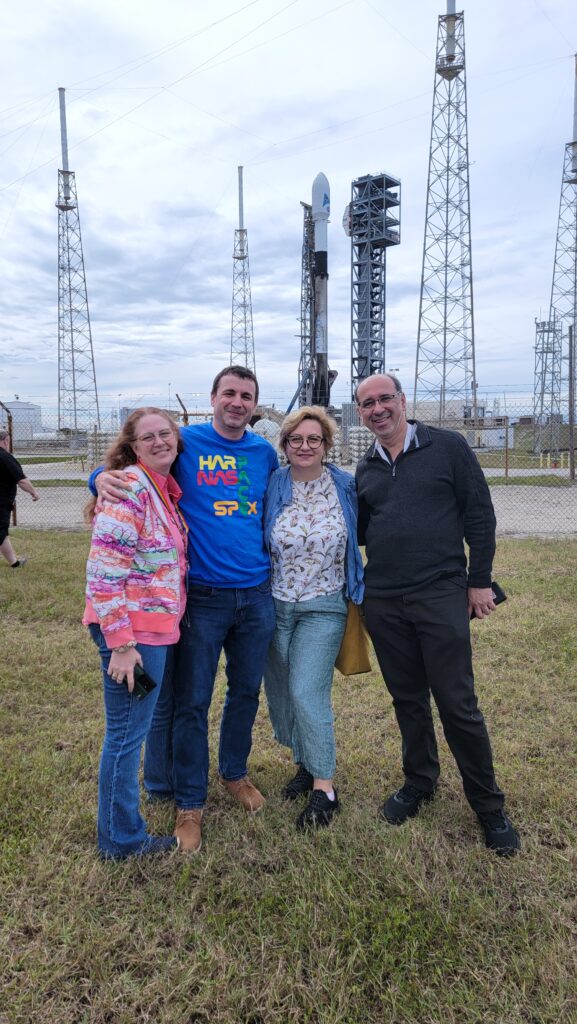
    <img width="577" height="1024" src="https://umbc.edu/wp-content/uploads/2024/02/Dominik-20240205_134247-577x1024.jpg" alt="four people stand in front of a launch area" style="max-width: 100%; height: auto;">Left to right: Margo Young, Dominik Cieslak, Magdalena Kuzmicz-Cieslak, and Vanderlei Martins stand in front of the PACE spacecraft the day before its launch. (Image courtesy of Margo Young)


    <p>For the three multidisciplinary HARP2 physics, optics, and research engineering leads, <strong>Vanderlei Martins</strong>, <strong>Roberto Borda,</strong> and <strong>Dominik Cieslak</strong>, HARP2’s launch represents a career-defining moment that at times seemed against all odds for a mid-size public university. UMBC’s strong partnerships with NASA, such as the <a href="https://gestar2.umbc.edu/" rel="nofollow external" class="bo">Goddard Earth Science Technology and Research (GESTAR) Center II</a> that supports Borda’s and Cieslak’s roles, help enable milestones like this.  </p>


    <p>“I feel like I’m still dreaming,” said a visibly emotional Cieslak, research engineer, who captured the launch on his long-range camera. </p>


    <p>Transfixed by the sight of live satellite footage of the PACE spacecraft heading to orbit, he added, “This is the last time we will physically see it [HARP2],” before hugging his long-time colleague, Borda. </p>


    <p>“We’re very proud to have UMBC in space,” added Martins, professor of physics, who watched the big moment from a VIP viewing area three miles from the launch site. “We dreamed big from the beginning. The team persevered and just kept going.” </p>


    <p>“I never despaired of having HARP2 on the PACE satellite,” admitted UMBC’s HARP2 manager, <strong>Lorraine Remer</strong>, research professor in the Joint Center for Earth Systems Technology. Her bigger worry wasn’t HARP2’s viability, but whether PACE would ever launch. “PACE was canceled four times and reinstated four times,” she recalled, noting that the program “survived a lengthy government shutdown and a global pandemic that destroyed our supply chains.” </p>


    <p>Immediately after launch, Remer had to return to Maryland and the Goddard Space Flight Center to oversee HARP2 being turned on within 36 hours of launch. “It would be nice to bask in the successful launch, but I haven’t had much time to contemplate the success. There is just more work to do all the time,” she said.</p>


    <h4><strong>An international effort</strong></h4>


    <p>NASA’s PACE mission clears the path for revolutionary new measurements of Earth’s oceans and atmosphere. HARP2 measures aerosol particles and clouds, as well as properties of land and water surfaces. By analyzing particles like dust, wildfire smoke, or urban pollution, the science community gains deeper insights into air quality as well as global warming and its impacts. Scientists will be able see through things like sun glint to ascertain patterns never before possible.</p>


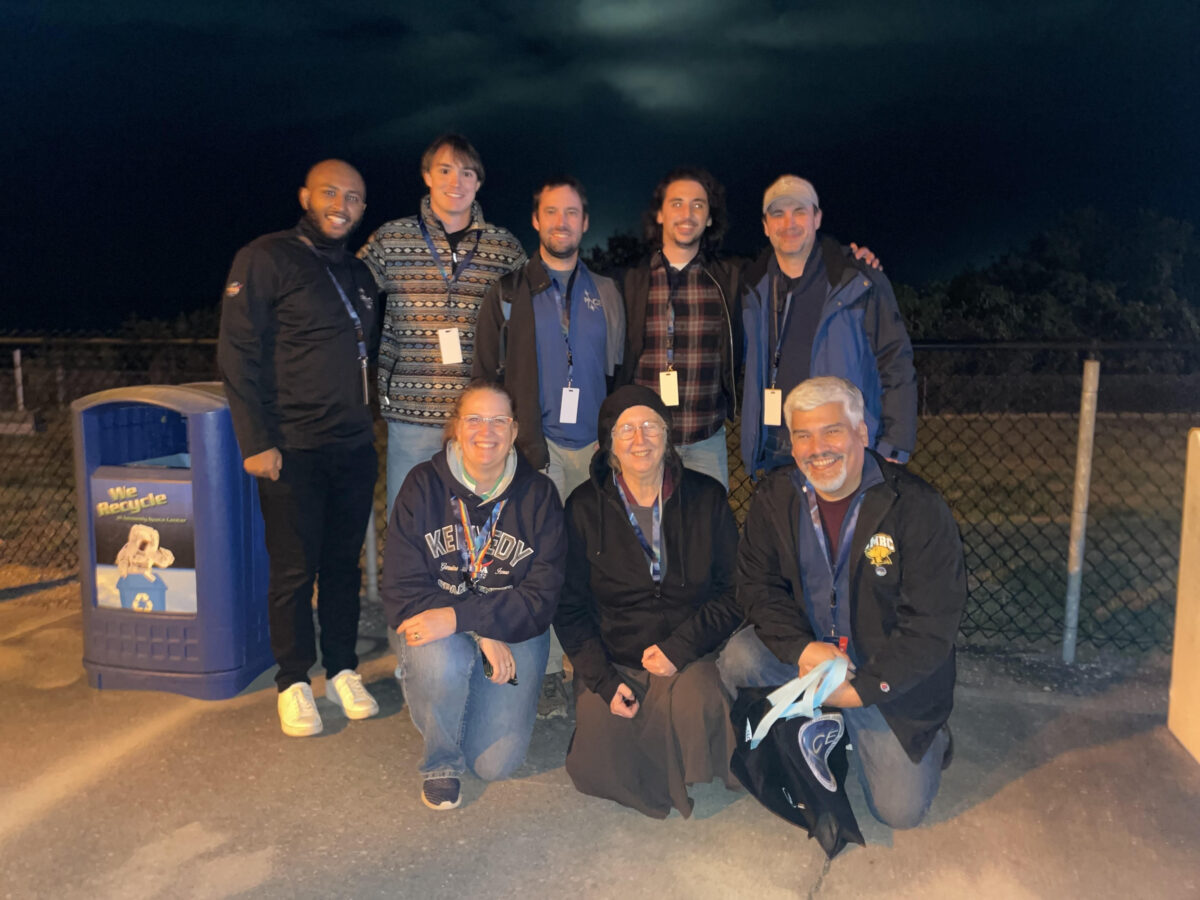
    <img width="1200" height="900" src="https://umbc.edu/wp-content/uploads/2024/02/Anne-WS-6-1200x900.jpeg" alt="outdoor group photo of eight people, dark night sky in background" style="max-width: 100%; height: auto;">Members of the HARP team eagerly await the PACE launch at Kennedy Space Center’s Banana Creek Launch Viewing Area before the final countdown. Top, left to right: Yomiyu Fekadu, Ian Decker, Ben Cramer, Noah Sienkiewicz, Dominik Cieslak. Bottom, left to right: Margo Young, Lorraine Remer, Roberto Borda. (Image by Anne Wainscott-Sargent)


    <p>A second polarimeter on PACE, the Spectro-polarimeter for Planetary Exploration (SPEXone), developed through a Dutch consortium consisting of SRON Netherlands Institute for Space Research and Airbus Defence and Space Netherlands, will measure sunlight reflected from Earth’s atmosphere, land surface and ocean.</p>


    <p>These two companion polarimeter instruments are important because the interaction between aerosols and clouds is the biggest unknown factor in atmospheric temperature change, according to reports from the <a href="https://www.ipcc.ch/report/ar6/wg1/" rel="nofollow external" class="bo">U.N.’s Intergovernmental Panel on Climate Change.</a> </p>


    <p>“I have watched Dr. Martins and his team work toward this moment for about a decade, and have been aware of the trials and tribulations along the way. Seeing the smiles on their faces in the control station after the launch made it all worthwhile,” shared UMBC Vice President for Research<strong> Karl V. Steiner</strong>. “The HARP2 mission as an integral part of PACE is making all of us proud here on the UMBC campus. We cannot wait to see the science that will come from this engineering masterpiece conceptualized and created right here in Maryland.”</p>


    <h4><strong>Waiting game</strong></h4>


    <p>In the days leading up to the PACE launch, the HARP2 team knew there might be delays because of the weather so they rented a large Airbnb in neighboring Cocoa Beach for the full week. Earlier in the week, over grilled food at the shared house, the team reflected on their journey.</p>


    <p>According to Martins, a key strategy was bringing together engineering and physics students, who typically don’t communicate well across disciplines.  </p>
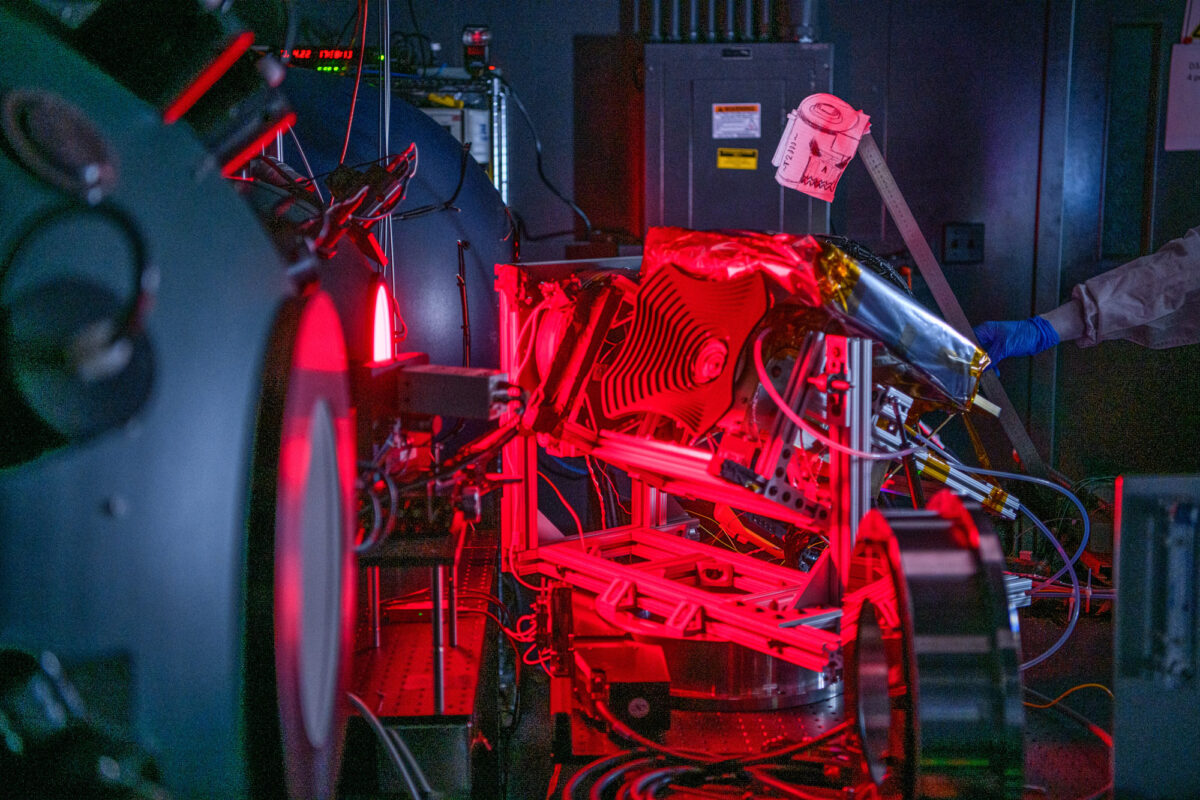


    <img width="1200" height="800" src="https://umbc.edu/wp-content/uploads/2024/02/Testing-1200x800.jpg" alt="image of a technical instrument flooded in red light during a test" style="max-width: 100%; height: auto;">The HARP2 instrument undergoes calibration testing with red light. (Image by NASA)


    <p>“We introduced engineering students to the physics students and made them work together very quickly so they spoke the same language,” he said, crediting this multidisciplinary collaboration to the team’s ability to rapidly iterate and problem solve.</p>


    <p>Borda, senior research engineer overseeing HARP2’s optical design, said a key technical challenge was determining how to best compensate for the effects of polarized light waves inside the instrument.</p>


    <p>“It’s continuous work and you cannot do it alone. We needed a fantastic team with not only the staff but also students working at different levels,” Borda said. “There are undergraduate students and Ph.D.s integrated into the team who put in a lot of effort to make this real. We’re really thankful for the environment at this university—we’re able to work with students who find a career in this industry and field of research.”</p>


    <h4><strong>Nurturing future career scientists</strong></h4>


    <p>Martins echoed Borda’s pride in the broad level of participation in the HARP program, from high school students to senior scientists.</p>


    <p>“We’ve had people from our team who now work in all levels of industry—at NASA, at NOAA, or in private industry. We’ve even had some students start their own company.”</p>


    <p>Young, the program administrator, estimates that the cooperative agreements between UMBC and NASA have resulted in 20 UMBC graduates finding roles with NASA.</p>


    <div>
    	<blockquote>
    		
    		<div>	
    			<div>
    				<div>“</div>
    			</div>
    
    			<div>
    				<p>“It was everything I could have asked for. No other place would have let me be involved in the entire process, including making parts for HARP2 in the machine shop. Not only did I get to do hands-on stuff, but I also was part of the design and saw it all come together on a NASA mission.”</p>


    									<div>
    						
    	
    						<div>
    				
    				<p>Yomiyu Fekadu ’20, mechanical engineering, M.S. ’23, engineering management</p>
    										
    											</div>
    					</div> 
    								</div>
    
    		</div>		
    	</blockquote>
    </div>


    <p>UMBC alumna <strong>Elissa Ogburn</strong> is one such graduate. She began working on HARP2 as a computer science major, tasked with creating a database that supported ground communications so researchers could communicate with the instrument when it was in space.</p>


    <p>After graduating from UMBC in 2021, Ogburn joined NASA on the PACE project as a test conductor (TC)―responsible for integrating and testing the instruments onto the PACE spacecraft. During launch, she was one of five TCs in the PACE Control Room in Titusville, Florida, who powered up the spacecraft for the last time and configured it for launch. </p>


    <p>“I never imagined having a job at NASA or working with people who were this smart, helpful, and kind. Every single person I’ve worked with was so fun. It’s also cool to have seen the whole process beginning as a student at UMBC. PACE is my first mission, so I’m learning everything as I go,” Ogburn said.</p>


    <h4><strong>Close collaboration</strong></h4>


    <p>The partnership between NASA and UMBC goes back over two decades. NASA Goddard Space Flight Center and UMBC are located just up the road from one another.</p>


    <p>Jeremy Werdell, PACE project scientist at Goddard, recalled how initial calls to industry and academia for a polarimetry instrument for PACE were not promising due to cost and other factors.</p>


    <p>However, Martins immediately suggested to Werdell that his lab develop a polarimeter, given his team’s experience with airborne instruments and the HARP cubesat, and the rest is history. In the end, NASA selected two polarimeters—HARP2 and SPEXone. </p>
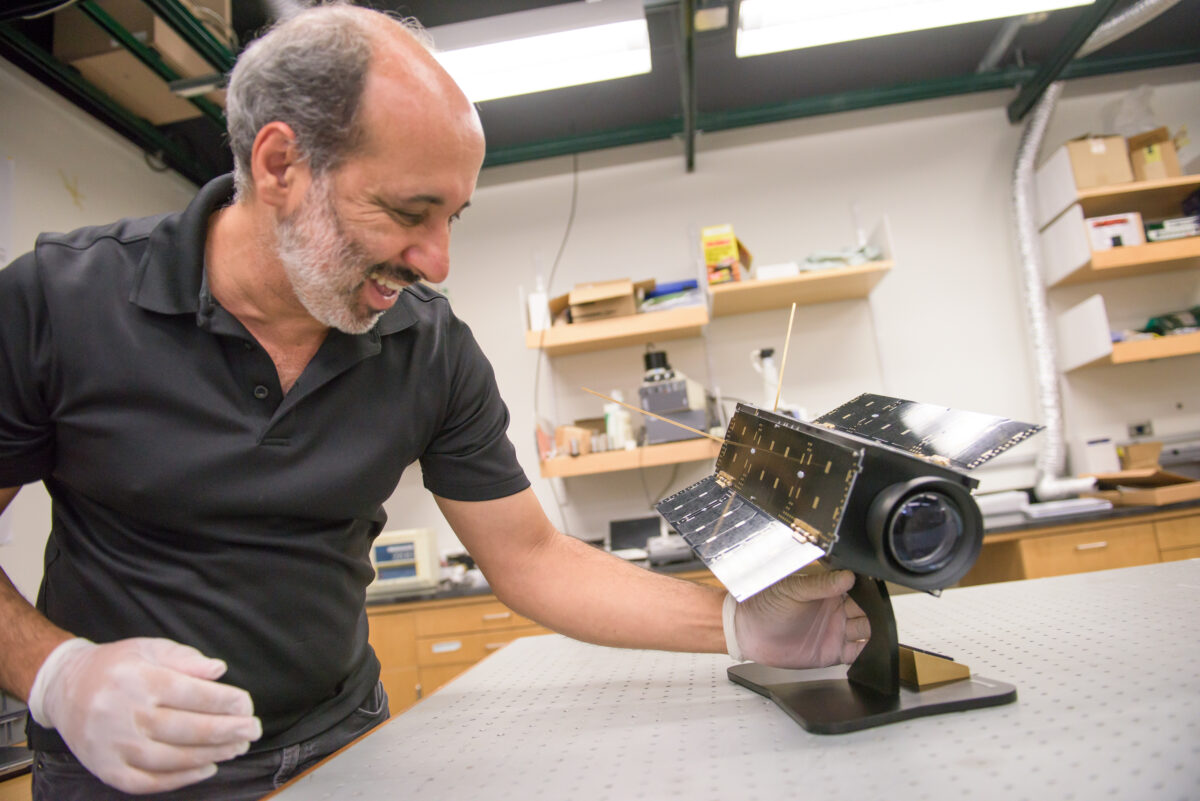


    <img width="1200" height="801" src="https://umbc.edu/wp-content/uploads/2024/02/Vanderlei-Satellite-7884-1200x801.jpg" alt="a man smiles with a small cubesat instrument" style="max-width: 100%; height: auto;">Vanderlei Martins inspects the HARP cubesat, which launched in 2019. (Image by Marlayna Demond ’11/UMBC)


    <p>Each instrument measures polarization differently: HARP2 is multispectral (measuring only four wavelengths of light) and  hyperangular, so it looks at the same piece of real estate multiple times from dozens of different viewing directions. Its wide swath coverage means HARP2 will cover the globe every two days. SPEXone, on the other hand, is hyperspectral (measuring a continuous spectrum of light from the ultraviolet to near-infrared) but only views Earth at five angles. It has a narrower swath, meaning it will take almost a month to cover the globe. </p>


    <p>“They’re small and mighty and miraculously complement each other very, very well,” said Werdell. “Having multi-band, multi-angle polarimetry is going to open up a lot of really interesting opportunities for discovery, because we can see clouds and aerosols in very different ways.”</p>


    <p>HARP2 provides daily views that will help scientists understand how aerosols and clouds interact and their role in warming and cooling in the atmosphere. </p>
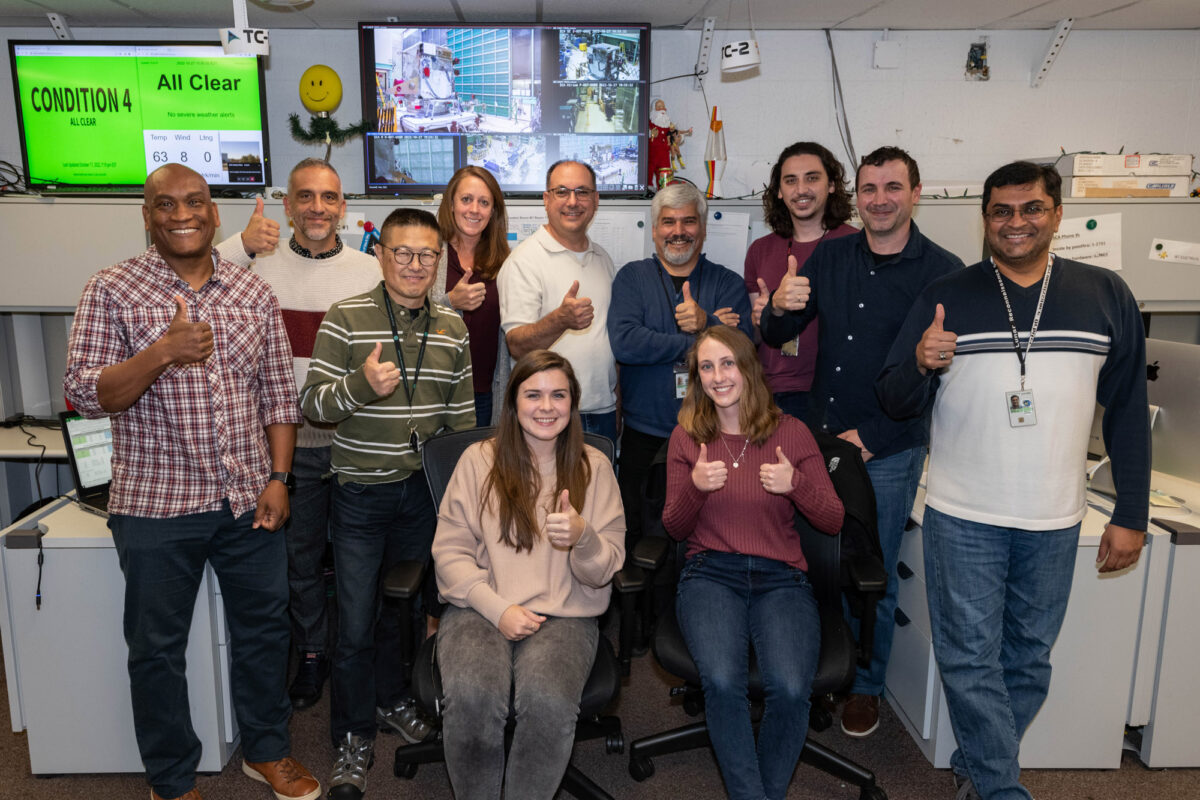


    <img width="1200" height="800" src="https://umbc.edu/wp-content/uploads/2024/02/GSFC_20221027_PACE_076428_2000w-1200x800.jpg" alt='group photo, everyone giving a thumbs up. Several webcam scenes of the spacecraft on a screen behind the group; also a bright green screen that reads "All Clear"' style="max-width: 100%; height: auto;">Some members of the HARP2 team successfully test HARP2’s electrical Integration to the  Spacecraft. (Image by NASA)


    <p>“Understanding where aerosols are, how they’re transported, how they interact with clouds, and whether they absorb or reflect radiation is important to everybody because those characteristics are what drive warming of the atmosphere.” Werdell said.</p>


    <h4><strong>Better air quality models </strong></h4>


    <p>Onsite at the Cape for the first launch attempts, <strong>Nirandi Jayasinghe </strong>and <strong>Rachel Smith</strong>, both physics graduate research assistants at UMBC, shared their excitement for the PACE mission and HARP2’s potential to help modelers predict air quality, rain, or if the atmosphere is warming or cooling. </p>
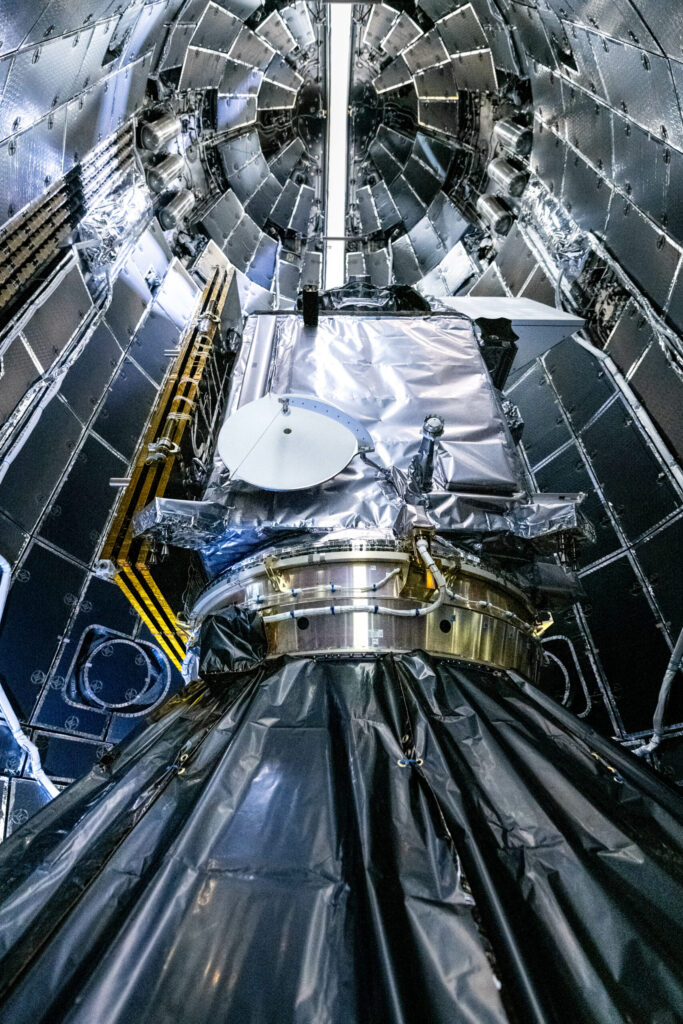


    <img width="683" height="1024" src="https://umbc.edu/wp-content/uploads/2024/02/payload-inside-fairing_NASA-683x1024.jpg" alt="Roughly box-shaped silver object sits atop a black cone-shaped object inside a large metal dome, with various attachments coming out all sides of the box." style="max-width: 100%; height: auto;">NASA and SpaceX technicians safely encapsulated NASA’s PACE spacecraft in SpaceX’s Falcon 9 payload fairings–a protective shell for the instruments on PACE during launch. (Image by NASA)


    <p>Jayasinghe is a data modeler who comes up with different methods to retrieve information from HARP2. Originally from Sri Lanka, Jayasinghe notes that her hometown used to be one of her country’s cleanest cities, and now due to development in Sri Lanka’s dominant neighbor, India, the air quality is extremely bad. She said HARP2 can help close the gap that exists in understanding the twilight zone—where a cloud starts and where it stops—by providing more accurate measurements. </p>


    <p>Smith adds that this will go a long way in understanding cloud formation processes, weather patterns, forecasting, and climate modeling—information important for agriculture, transportation, disaster preparedness, and infrastructure planning. </p>


    <p>“Even simple things like weather forecasting are impacted by how much dust is in the air,” said Smith, a 2026 doctoral candidate who earned her M.S. in atmospheric physics from UMBC in 2023. HARP2 will help address whether clouds have a net cooling effect or a net warming effect, which will allow for more accurate models of where Earth’s climate is headed. Smith notes that during events like the Canadian wildfires in 2023 no one could accurately predict rainfall, because the forecasting models were not accounting for the number of airborne aerosols.</p>


    <p>“I’m really excited to see what new science questions come out of the instruments that we’re putting up in space,” she concluded.</p>


    <h4><strong>Bouncing back from disaster </strong></h4>


    <p>The HARP2 team has come a long way from initial concept to PACE. What impresses Werdell the most is the UMBC team’s resilience in the face of setbacks.</p>


    <p>The most devastating moment came in February 2022, one month before the team was set to deliver HARP2 to NASA for integration on the spacecraft. As the instrument was in the last few seconds of vibration tests, the bonding on one of the prisms loosened and shattered. </p>


    <p>“It tactically put us to point zero,” recalled Cieslak, who was shocked and humbled when so many NASA scientists volunteered their time and expertise to help the HARP2 team get back on track. </p>


    <p>“We got an extension, and within two months we had built a new engineering model and were able to prove the new solution worked. By September, we were back to where we were before the incident,” he added.</p>


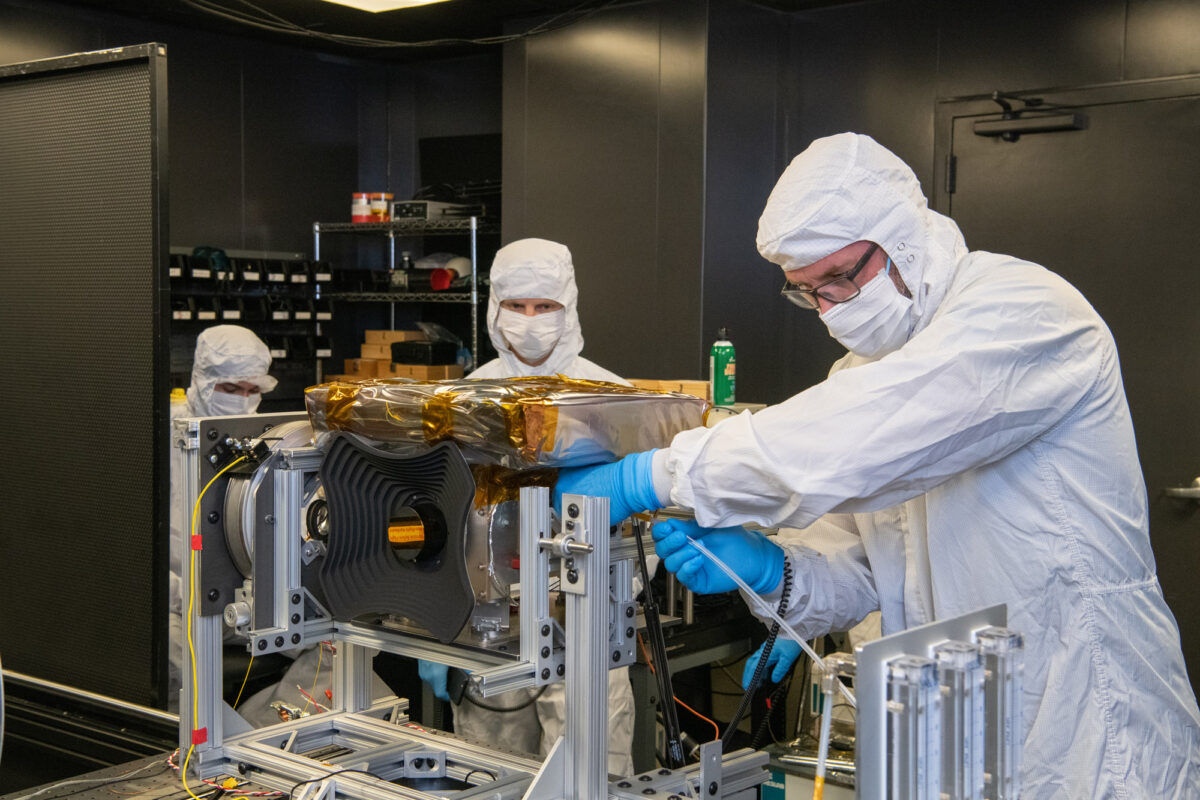
    <img width="1200" height="800" src="https://umbc.edu/wp-content/uploads/2024/02/GSFC_20220921_PACE_071380_2000w-1200x800.jpg" alt='two technicians in clean room "bunny suits" and blue gloves inspect the HARP instrument.' style="max-width: 100%; height: auto;">HARP2 calibration testing at Goddard Space Flight Center in Maryland, before the instrument was delivered to NASA. (Image by NASA)


    <p>First-time NASA launch attendee <strong>Yomiyu Fekadu </strong>’20, mechanical engineering, M.S. ’23, engineering management, recalled that time well, as he helped assemble HARP2 as an intern under <strong>Benjamin Cramer</strong> ’17, M.S. ’20, mechanical engineer on the program.  </p>


    <p>“Especially after the failure, and the review board assessment, I helped put everything back together and do the test plans for construction and other documentation so NASA could give us the go-ahead to move on,” Fekadu said. </p>


    <p>The experience was pivotal to his career. “It was everything I could have asked for,” said Fekado, now a systems engineer at Northrop Grumman. “No other place would have let me be involved in the entire process, including making parts for HARP2 in the machine shop. Not only did I get to do hands-on stuff, but I also was part of the design and saw it all come together on a NASA mission.”</p>


    <p>As the HARP2 group left the viewing platform to line up for bus rides back to the Space Center, the smiles and easy camaraderie conveyed a collective sense of pride, relief, and excitement. </p>


    <p>“I‘m now just anxious to see the first bytes of data,” said Cieslak, echoing the feeling of his colleagues.</p>


    <hr>


    <p><em>In addition to the HARP team, several additional GESTAR II scientists and engineers were instrumental in their contributions  to the overall PACE mission, including </em><strong><em>Ivona Cetinić</em></strong><em>, </em><strong><em>Andrew Sayer</em></strong><em>, </em><strong><em>Violeta Sanjuan Calzado</em></strong><em>, </em><strong><em>Bridget Seegers</em></strong><em>, </em><strong><em>Susanne Craig</em></strong><em>, </em><strong><em>Dirk Aurin</em></strong><em>, </em><strong><em>Meng Gao</em></strong><em>, <strong>Inia Soto Ramos</strong></em>, <em>and </em><strong><em>Ian Carroll</em></strong><em>.</em></p>


    <p><em>Update: On February 10, HARP2 successfully connected with instrumentation on the ground and all of its systems appear to be working as intended. </em></p>


    <p><a href="https://esi.umbc.edu/harp2-project/" rel="nofollow external" class="bo"><em>Follow along</em></a><em> with what’s learned from the HARP2 project.</em></p>
    </div>
]]>
</Body>
<Summary>By Anne Wainscott-Sargent      The third time’s the charm. Against a calm and crisp dark night sky on Florida’s Cape Canaveral last Thursday, February 8, just after 1:30 a.m., the Plankton,...</Summary>
<Website>https://umbc.edu/stories/harp2-launches-on-nasa-pace-mission/</Website>
<TrackingUrl>https://my3.my.umbc.edu/api/v0/pixel/news/139053/guest@my.umbc.edu/e0dbaea402ea1a164a7f168d63631a1e/api/pixel</TrackingUrl>
<Tag>cnms</Tag>
<Tag>coeit</Tag>
<Tag>compsci</Tag>
<Tag>engineering-management</Tag>
<Tag>esi</Tag>
<Tag>feature</Tag>
<Tag>gestar</Tag>
<Tag>gestar2</Tag>
<Tag>meche</Tag>
<Tag>news</Tag>
<Tag>physics</Tag>
<Tag>rca</Tag>
<Tag>research</Tag>
<Tag>science-and-tech</Tag>
<Tag>story</Tag>
<Group token="umbc-news-magazine">UMBC News &amp;amp; Magazine</Group>
<GroupUrl>https://my3.my.umbc.edu/groups/umbc-news-magazine</GroupUrl>
<AvatarUrl>https://assets1-my.umbc.edu/system/shared/avatars/groups/000/001/943/24435aa6207c452e7bc15cc74b42c7bb/xsmall.png?1748556657</AvatarUrl>
<AvatarUrl size="original">https://assets1-my.umbc.edu/system/shared/avatars/groups/000/001/943/24435aa6207c452e7bc15cc74b42c7bb/original.png?1748556657</AvatarUrl>
<AvatarUrl size="xxlarge">https://assets2-my.umbc.edu/system/shared/avatars/groups/000/001/943/24435aa6207c452e7bc15cc74b42c7bb/xxlarge.png?1748556657</AvatarUrl>
<AvatarUrl size="xlarge">https://assets2-my.umbc.edu/system/shared/avatars/groups/000/001/943/24435aa6207c452e7bc15cc74b42c7bb/xlarge.png?1748556657</AvatarUrl>
<AvatarUrl size="large">https://assets3-my.umbc.edu/system/shared/avatars/groups/000/001/943/24435aa6207c452e7bc15cc74b42c7bb/large.png?1748556657</AvatarUrl>
<AvatarUrl size="medium">https://assets1-my.umbc.edu/system/shared/avatars/groups/000/001/943/24435aa6207c452e7bc15cc74b42c7bb/medium.png?1748556657</AvatarUrl>
<AvatarUrl size="small">https://assets2-my.umbc.edu/system/shared/avatars/groups/000/001/943/24435aa6207c452e7bc15cc74b42c7bb/small.png?1748556657</AvatarUrl>
<AvatarUrl size="xsmall">https://assets1-my.umbc.edu/system/shared/avatars/groups/000/001/943/24435aa6207c452e7bc15cc74b42c7bb/xsmall.png?1748556657</AvatarUrl>
<AvatarUrl size="xxsmall">https://assets2-my.umbc.edu/system/shared/avatars/groups/000/001/943/24435aa6207c452e7bc15cc74b42c7bb/xxsmall.png?1748556657</AvatarUrl>
<Sponsor>UMBC News &amp; Magazine</Sponsor>
<PawCount>4</PawCount>
<CommentCount>0</CommentCount>
<CommentsAllowed>false</CommentsAllowed>
<PostedAt>Fri, 16 Feb 2024 10:36:17 -0500</PostedAt>
<EditAt>Fri, 16 Feb 2024 10:36:17 -0500</EditAt>
</NewsItem>

<NewsItem contentIssues="false" id="139051" important="false" status="posted" url="https://my3.my.umbc.edu/posts/139051">
<Title>UMBC Interdisciplinary CoLab: Paid Internship</Title>
<Tagline>Dr. Lindsay DiCuirci among leaders of Summer 2024 Program</Tagline>
<Body>
<![CDATA[
    <div class="html-content">
    <p>The UMBC Interdisciplinary CoLab is a 4-week <span><strong>paid</strong></span>
     summer narrative-based research internship for UMBC undergraduates. 
    Student interns will work on interdisciplinary project teams to conduct 
    research, create effective narratives, and develop public-facing final 
    products that support the goals of on and off campus community 
    organizations and scholars. <br></p>
    <p><strong>Participants receive a $3000 stipend and a tuition scholarship for a 3-credit internship course.</strong></p>
    <p><strong>The English department is proud to announce the leadership of Dr. Lindsay DiCuirci among this summer's project directors. Her project<a href="https://summer.umbc.edu/summer-at-umbc/beyond-the-classroom/colab/#3.-ghosts-in-the-stacks:-exploring-spiritualism-in-the-umbc-special-collections-library" rel="nofollow external" class="bo"> "Ghosts in the Stacks: Exploring Spiritualism in the UMBC Special Collections Library"</a></strong> will provide students with the opportunity to work with the UMBC Special Collections and their recently acquired Eileen J. Garrett 
    Parapsychology Foundation Collection to create a digital exhibition 
    featuring some of their thousands of rare items. Ranging in date from 
    the 16th century to the present, this collection is a rich, multimedia 
    archive of parapsychological history covering subjects like mediumship, 
    hauntings, out-of-body experiences, and precognition. The project team 
    will research individual collection items, develop curatorial guidelines
     for organizing the exhibition, and build an informative and interactive
     website for use by experts and curiosity seekers alike. The exhibition 
    will be permanently hosted on the UMBC Special Collections website, and 
    team members will also share their work in a public Library Gallery 
    forum in Fall 2024.</p>
    <p><strong>The full list of summer projects includes:<br></strong></p>
    <div>
    <a href="https://summer.umbc.edu/summer-at-umbc/beyond-the-classroom/colab/#1.-entering-tola%E2%80%99s-room:-archiving-puerto-rican-presence-in-baltimore" rel="nofollow external" class="bo">1.  Entering Tola’s Room: Archiving Puerto Rican Presence in Baltimore</a>. Project Leader: Dr. María Célleri, Gender, Women’s, + Sexuality Studies</div>
    <div><br></div>
    <div>
    <a href="https://summer.umbc.edu/summer-at-umbc/beyond-the-classroom/colab/#2.-findingblackgirlhood:-a-digital-archive" rel="nofollow external" class="bo">2.  FindingBlackGirlhood: A Digital Archive</a>. Project Leader: Courtney Cook, Gender, Women’s, + Sexuality Studies</div>
    <div><strong><br></strong></div>
    <div>
    <a href="https://summer.umbc.edu/summer-at-umbc/beyond-the-classroom/colab/#3.-ghosts-in-the-stacks:-exploring-spiritualism-in-the-umbc-special-collections-library" rel="nofollow external" class="bo">3.  Ghosts in the Stacks: Exploring Spiritualism in the UMBC Special Collections Library</a>. Project Leader: Dr. Lindsay DiCuirci, English</div>
    <div><strong><br></strong></div>
    <div>
    <a href="https://summer.umbc.edu/summer-at-umbc/beyond-the-classroom/colab/#4.-the-history-of-the-choice-program-at-umbc,-a-mentoring-and-diversion-program" rel="nofollow external" class="bo">4.  The History of The Choice Program at UMBC, A Mentoring and Diversion Program</a>. Project Leader: Dr. Kelly Quinn, The Shriver Center</div>
    <div><strong><br></strong></div>
    <div>
    <a href="https://summer.umbc.edu/summer-at-umbc/beyond-the-classroom/colab/#5.-picturing-mobility:-photographs-of-black-tourism-and-leisure-during-the-jim-crow-era" rel="nofollow external" class="bo">5.  Picturing Mobility: Photographs of Black Tourism and Leisure during the Jim Crow Era</a>.Project Leaders: Dr. Liz Patton, Media and Communication Studies, Dr. Beth Saunders, Special Collections and Gallery, Albin O. Kuhn Library</div>
    <div><strong><br></strong></div>
    <div>
    <a href="https://summer.umbc.edu/summer-at-umbc/beyond-the-classroom/colab/#6.-podcasting-baltimore%E2%80%99s-lgbtq+-baltimore-history" rel="nofollow external" class="bo">6.  Podcasting Baltimore’s LGBTQ+ Baltimore History</a>. Project Leader: Dr. Kate Drabinski, Gender, Women’s, + Sexuality Studies</div>
    <div><strong><br></strong></div>
    <div>
    <a href="https://summer.umbc.edu/summer-at-umbc/beyond-the-classroom/colab/#7.-the-history-and-impact-of-the-umbc-center-for-women-in-technology-(cwit)" rel="nofollow external" class="bo">7.  The History and Impact of the UMBC Center for Women in Technology (CWIT)</a>. Project Leader: Kristen Anchor, Media &amp; Communication Studies</div>
    <div><br></div>
    <div>
    <strong>Program Dates</strong><br>
    CoLab 2024 will be held during Summer Session One and meets in-person from <strong>Monday, June 3rd through Friday, June 28th</strong>.
     PLEASE NOTE: During these dates, student interns are required to 
    dedicate Monday through Friday from 9:30 am – 4:00 pm to the in-person 
    internship.</div>
    <div><br></div>
    <div>For more information, please visit: <a href="https://summer.umbc.edu/summer-at-umbc/beyond-the-classroom/colab/">https://summer.umbc.edu/summer-at-umbc/beyond-the-classroom/colab/</a><br>
    </div>
    </div>
]]>
</Body>
<Summary>The UMBC Interdisciplinary CoLab is a 4-week paid  summer narrative-based research internship for UMBC undergraduates.  Student interns will work on interdisciplinary project teams to conduct...</Summary>
<TrackingUrl>https://my3.my.umbc.edu/api/v0/pixel/news/139051/guest@my.umbc.edu/a67798aad2a59833d808fae53e864228/api/pixel</TrackingUrl>
<Group token="english">English</Group>
<GroupUrl>https://my3.my.umbc.edu/groups/english</GroupUrl>
<AvatarUrl>https://assets1-my.umbc.edu/system/shared/avatars/groups/000/000/404/4c129b9e5b64787aeb234edaf8d17e11/xsmall.png?1787344797</AvatarUrl>
<AvatarUrl size="original">https://assets2-my.umbc.edu/system/shared/avatars/groups/000/000/404/4c129b9e5b64787aeb234edaf8d17e11/original.jpg?1787344797</AvatarUrl>
<AvatarUrl size="xxlarge">https://assets4-my.umbc.edu/system/shared/avatars/groups/000/000/404/4c129b9e5b64787aeb234edaf8d17e11/xxlarge.png?1787344797</AvatarUrl>
<AvatarUrl size="xlarge">https://assets1-my.umbc.edu/system/shared/avatars/groups/000/000/404/4c129b9e5b64787aeb234edaf8d17e11/xlarge.png?1787344797</AvatarUrl>
<AvatarUrl size="large">https://assets4-my.umbc.edu/system/shared/avatars/groups/000/000/404/4c129b9e5b64787aeb234edaf8d17e11/large.png?1787344797</AvatarUrl>
<AvatarUrl size="medium">https://assets4-my.umbc.edu/system/shared/avatars/groups/000/000/404/4c129b9e5b64787aeb234edaf8d17e11/medium.png?1787344797</AvatarUrl>
<AvatarUrl size="small">https://assets2-my.umbc.edu/system/shared/avatars/groups/000/000/404/4c129b9e5b64787aeb234edaf8d17e11/small.png?1787344797</AvatarUrl>
<AvatarUrl size="xsmall">https://assets1-my.umbc.edu/system/shared/avatars/groups/000/000/404/4c129b9e5b64787aeb234edaf8d17e11/xsmall.png?1787344797</AvatarUrl>
<AvatarUrl size="xxsmall">https://assets2-my.umbc.edu/system/shared/avatars/groups/000/000/404/4c129b9e5b64787aeb234edaf8d17e11/xxsmall.png?1787344797</AvatarUrl>
<Sponsor>English</Sponsor>
<PawCount>0</PawCount>
<CommentCount>0</CommentCount>
<CommentsAllowed>true</CommentsAllowed>
<PostedAt>Fri, 16 Feb 2024 10:31:02 -0500</PostedAt>
</NewsItem>

</News>