<?xml version="1.0"?>
<News hasArchived="true" page="2104" pageCount="10860" pageSize="10" timestamp="Wed, 07 Oct 2026 08:20:55 -0400" url="https://my3.my.umbc.edu/posts.xml?mode=recent&amp;page=2104">
<NewsItem contentIssues="true" id="132271" important="false" status="posted" url="https://my3.my.umbc.edu/posts/132271">
<Title>PSS and CUSS Info Session - Tomorrow</Title>
<Tagline>Learn about running for a position in shared governance!</Tagline>
<Body>
<![CDATA[
    <div class="html-content">
    <span>Applications for the Professional Staff Senate (PSS) and Council of University System Staff (CUSS) are now being solicited. Meet folks from across campus and make a difference at UMBC for yourself and your colleagues!</span><div><br></div>
    <div>Nominees must be exempt staff employees employed at UMBC for at least one year (hired on or before 4/20/2022). Nominations are open through Monday, April 17.</div>
    <div><br></div>
    <h5><a href="https://docs.google.com/forms/d/e/1FAIpQLSeKyydKD3FefcHqhU3S8m_rHyrfFPxSr_95aNQrA7yajyJRxg/viewform" rel="nofollow external" class="bo">SUBMIT YOUR NOMINATION HERE!</a></h5>
    <div><br></div>
    <div><strong>Join us for one of our <span>PSS Info Session</span>s to learn more:</strong></div>
    <div><ul>
    <li>TOMORROW - <a href="https://my3.my.umbc.edu/groups/pss/events/116571" rel="nofollow external" class="bo">Friday, April 7, 12:00 - 1:00 PM</a><span>  </span>
    </li>
    <li><a href="https://my3.my.umbc.edu/groups/pss/events/116704" rel="nofollow external" class="bo">Wednesday, April 12, 10:00 - 11:00 AM</a></li>
    <li><a href="https://my3.my.umbc.edu/groups/pss/events/116705" rel="nofollow external" class="bo">Wednesday, April 12, 3:00 - 4:00 PM</a></li>
    </ul></div>
    </div>
]]>
</Body>
<Summary>Applications for the Professional Staff Senate (PSS) and Council of University System Staff (CUSS) are now being solicited. Meet folks from across campus and make a difference at UMBC for yourself...</Summary>
<TrackingUrl>https://my3.my.umbc.edu/api/v0/pixel/news/132271/guest@my.umbc.edu/4c67c17dc5d674fdee4917e2c1b5fb94/api/pixel</TrackingUrl>
<Group token="ess">Exempt Staff Senate</Group>
<GroupUrl>https://my3.my.umbc.edu/groups/ess</GroupUrl>
<AvatarUrl>https://assets2-my.umbc.edu/system/shared/avatars/groups/000/000/133/54882d064e3d41653605a1b3fbb3bdb4/xsmall.png?1718385156</AvatarUrl>
<AvatarUrl size="original">https://assets1-my.umbc.edu/system/shared/avatars/groups/000/000/133/54882d064e3d41653605a1b3fbb3bdb4/original.png?1718385156</AvatarUrl>
<AvatarUrl size="xxlarge">https://assets1-my.umbc.edu/system/shared/avatars/groups/000/000/133/54882d064e3d41653605a1b3fbb3bdb4/xxlarge.png?1718385156</AvatarUrl>
<AvatarUrl size="xlarge">https://assets3-my.umbc.edu/system/shared/avatars/groups/000/000/133/54882d064e3d41653605a1b3fbb3bdb4/xlarge.png?1718385156</AvatarUrl>
<AvatarUrl size="large">https://assets4-my.umbc.edu/system/shared/avatars/groups/000/000/133/54882d064e3d41653605a1b3fbb3bdb4/large.png?1718385156</AvatarUrl>
<AvatarUrl size="medium">https://assets4-my.umbc.edu/system/shared/avatars/groups/000/000/133/54882d064e3d41653605a1b3fbb3bdb4/medium.png?1718385156</AvatarUrl>
<AvatarUrl size="small">https://assets4-my.umbc.edu/system/shared/avatars/groups/000/000/133/54882d064e3d41653605a1b3fbb3bdb4/small.png?1718385156</AvatarUrl>
<AvatarUrl size="xsmall">https://assets2-my.umbc.edu/system/shared/avatars/groups/000/000/133/54882d064e3d41653605a1b3fbb3bdb4/xsmall.png?1718385156</AvatarUrl>
<AvatarUrl size="xxsmall">https://assets4-my.umbc.edu/system/shared/avatars/groups/000/000/133/54882d064e3d41653605a1b3fbb3bdb4/xxsmall.png?1718385156</AvatarUrl>
<Sponsor>Professional Staff Senate</Sponsor>
<ThumbnailUrl size="xxlarge">https://assets4-my.umbc.edu/system/shared/thumbnails/news/000/132/271/196da3194e72f0cf60040ed2fcf90b32/xxlarge.jpg?1680637816</ThumbnailUrl>
<ThumbnailUrl size="xlarge">https://assets1-my.umbc.edu/system/shared/thumbnails/news/000/132/271/196da3194e72f0cf60040ed2fcf90b32/xlarge.jpg?1680637816</ThumbnailUrl>
<ThumbnailUrl size="large">https://assets1-my.umbc.edu/system/shared/thumbnails/news/000/132/271/196da3194e72f0cf60040ed2fcf90b32/large.jpg?1680637816</ThumbnailUrl>
<ThumbnailUrl size="medium">https://assets1-my.umbc.edu/system/shared/thumbnails/news/000/132/271/196da3194e72f0cf60040ed2fcf90b32/medium.jpg?1680637816</ThumbnailUrl>
<ThumbnailUrl size="small">https://assets2-my.umbc.edu/system/shared/thumbnails/news/000/132/271/196da3194e72f0cf60040ed2fcf90b32/small.jpg?1680637816</ThumbnailUrl>
<ThumbnailUrl size="xsmall">https://assets2-my.umbc.edu/system/shared/thumbnails/news/000/132/271/196da3194e72f0cf60040ed2fcf90b32/xsmall.jpg?1680637816</ThumbnailUrl>
<ThumbnailUrl size="xxsmall">https://assets4-my.umbc.edu/system/shared/thumbnails/news/000/132/271/196da3194e72f0cf60040ed2fcf90b32/xxsmall.jpg?1680637816</ThumbnailUrl>
<PawCount>0</PawCount>
<CommentCount>0</CommentCount>
<CommentsAllowed>true</CommentsAllowed>
<PostedAt>Thu, 06 Apr 2023 13:33:10 -0400</PostedAt>
</NewsItem>

<NewsItem contentIssues="false" id="132364" important="false" status="posted" url="https://my3.my.umbc.edu/posts/132364">
<Title>New Music USA Seeks Part-time Program Coordinator</Title>
<Body>
<![CDATA[
    <div class="html-content"><p><strong>Start date</strong>: May 2023<br><strong>Completion date:</strong> October 31, 2024<br><strong>Commitment: </strong>approximately 155 hours or equivalent 1.2 days per month over 18 months with time allocated as necessary in accordance with the scheduling of key program activities.</p></div>
]]>
</Body>
<Summary>Start date: May 2023 Completion date: October 31, 2024 Commitment: approximately 155 hours or equivalent 1.2 days per month over 18 months with time allocated as necessary in accordance with the...</Summary>
<Website>https://www.baltimoreculture.org/programs/jobsplus/33217</Website>
<TrackingUrl>https://my3.my.umbc.edu/api/v0/pixel/news/132364/guest@my.umbc.edu/99531c4f373065eef356357ac0625486/api/pixel</TrackingUrl>
<Tag>alliance</Tag>
<Tag>arts</Tag>
<Tag>baltimore</Tag>
<Tag>cultural</Tag>
<Tag>culture</Tag>
<Tag>greater</Tag>
<Tag>jobs</Tag>
<Tag>museum</Tag>
<Tag>nonprofit</Tag>
<Tag>opportunities</Tag>
<Tag>organizations</Tag>
<Tag>positions</Tag>
<Tag>studies</Tag>
<Group token="museumpractice">Museum Practice</Group>
<GroupUrl>https://my3.my.umbc.edu/groups/museumpractice</GroupUrl>
<AvatarUrl>https://assets2-my.umbc.edu/system/shared/avatars/groups/000/000/780/ec390e445f99f5d8c57a847f02552fbc/xsmall.png?1384380461</AvatarUrl>
<AvatarUrl size="original">https://assets3-my.umbc.edu/system/shared/avatars/groups/000/000/780/ec390e445f99f5d8c57a847f02552fbc/original.png?1384380461</AvatarUrl>
<AvatarUrl size="xxlarge">https://assets1-my.umbc.edu/system/shared/avatars/groups/000/000/780/ec390e445f99f5d8c57a847f02552fbc/xxlarge.png?1384380461</AvatarUrl>
<AvatarUrl size="xlarge">https://assets4-my.umbc.edu/system/shared/avatars/groups/000/000/780/ec390e445f99f5d8c57a847f02552fbc/xlarge.png?1384380461</AvatarUrl>
<AvatarUrl size="large">https://assets2-my.umbc.edu/system/shared/avatars/groups/000/000/780/ec390e445f99f5d8c57a847f02552fbc/large.png?1384380461</AvatarUrl>
<AvatarUrl size="medium">https://assets3-my.umbc.edu/system/shared/avatars/groups/000/000/780/ec390e445f99f5d8c57a847f02552fbc/medium.png?1384380461</AvatarUrl>
<AvatarUrl size="small">https://assets2-my.umbc.edu/system/shared/avatars/groups/000/000/780/ec390e445f99f5d8c57a847f02552fbc/small.png?1384380461</AvatarUrl>
<AvatarUrl size="xsmall">https://assets2-my.umbc.edu/system/shared/avatars/groups/000/000/780/ec390e445f99f5d8c57a847f02552fbc/xsmall.png?1384380461</AvatarUrl>
<AvatarUrl size="xxsmall">https://assets1-my.umbc.edu/system/shared/avatars/groups/000/000/780/ec390e445f99f5d8c57a847f02552fbc/xxsmall.png?1384380461</AvatarUrl>
<Sponsor>Museum Practice</Sponsor>
<PawCount>0</PawCount>
<CommentCount>0</CommentCount>
<CommentsAllowed>true</CommentsAllowed>
<PostedAt>Thu, 06 Apr 2023 13:30:09 -0400</PostedAt>
<EditAt>Thu, 06 Apr 2023 13:30:09 -0400</EditAt>
</NewsItem>

<NewsItem contentIssues="false" id="132363" important="false" status="posted" url="https://my3.my.umbc.edu/posts/132363">
<Title>Looking for Spanish tutor</Title>
<Tagline>To meet weekly, or more</Tagline>
<Body>
<![CDATA[
    <div class="html-content">Hello,<div><br></div>
    <div>I am looking for jobs and planning to move to Santiago, Chile. However, my.Spanish is fairly basic so I am lookingn for a Spanish tutor that can help me practice possibly twice a week. </div>
    <div><br></div>
    <div>I have some experience with Spanish but not enough to he considered fluent, I am looking for some that can help me with sentence structure, congegations and optaining the ability to better speak and understand Spanish</div>
    <div><br></div>
    <div>Please respond with your qualifications and I we can speak in more detail. </div>
    <div><br></div>
    <div><br></div>
    <div> Saludos cordiales,</div>
    <div><br></div>
    <div>Ethan Post</div>
    <div>
    <a href="mailto:Epost1@umbc.edu">Epost1@umbc.edu</a> </div>
    <div><br></div>
    <div><br></div>
    <div><br></div>
    </div>
]]>
</Body>
<Summary>Hello,    I am looking for jobs and planning to move to Santiago, Chile. However, my.Spanish is fairly basic so I am lookingn for a Spanish tutor that can help me practice possibly twice a week. ...</Summary>
<TrackingUrl>https://my3.my.umbc.edu/api/v0/pixel/news/132363/guest@my.umbc.edu/ba408b2d7e169e578175b8e53399f511/api/pixel</TrackingUrl>
<Group token="classifieds">Classifieds</Group>
<GroupUrl>https://my3.my.umbc.edu/groups/classifieds</GroupUrl>
<AvatarUrl>https://assets4-my.umbc.edu/system/shared/avatars/groups/000/001/081/27816fed47150f6fda5f96e75013749f/xsmall.png?1434550723</AvatarUrl>
<AvatarUrl size="original">https://assets2-my.umbc.edu/system/shared/avatars/groups/000/001/081/27816fed47150f6fda5f96e75013749f/original.png?1434550723</AvatarUrl>
<AvatarUrl size="xxlarge">https://assets1-my.umbc.edu/system/shared/avatars/groups/000/001/081/27816fed47150f6fda5f96e75013749f/xxlarge.png?1434550723</AvatarUrl>
<AvatarUrl size="xlarge">https://assets1-my.umbc.edu/system/shared/avatars/groups/000/001/081/27816fed47150f6fda5f96e75013749f/xlarge.png?1434550723</AvatarUrl>
<AvatarUrl size="large">https://assets3-my.umbc.edu/system/shared/avatars/groups/000/001/081/27816fed47150f6fda5f96e75013749f/large.png?1434550723</AvatarUrl>
<AvatarUrl size="medium">https://assets3-my.umbc.edu/system/shared/avatars/groups/000/001/081/27816fed47150f6fda5f96e75013749f/medium.png?1434550723</AvatarUrl>
<AvatarUrl size="small">https://assets3-my.umbc.edu/system/shared/avatars/groups/000/001/081/27816fed47150f6fda5f96e75013749f/small.png?1434550723</AvatarUrl>
<AvatarUrl size="xsmall">https://assets4-my.umbc.edu/system/shared/avatars/groups/000/001/081/27816fed47150f6fda5f96e75013749f/xsmall.png?1434550723</AvatarUrl>
<AvatarUrl size="xxsmall">https://assets3-my.umbc.edu/system/shared/avatars/groups/000/001/081/27816fed47150f6fda5f96e75013749f/xxsmall.png?1434550723</AvatarUrl>
<Sponsor>Classifieds</Sponsor>
<PawCount>0</PawCount>
<CommentCount>0</CommentCount>
<CommentsAllowed>true</CommentsAllowed>
<PostedAt>Thu, 06 Apr 2023 13:27:59 -0400</PostedAt>
</NewsItem>

<NewsItem contentIssues="true" id="132362" important="false" status="posted" url="https://my3.my.umbc.edu/posts/132362">
<Title>Computer Science &amp; Electrical Engineering URCAD Presenters</Title>
<Tagline>See Them Live on Wednesday, April 12!</Tagline>
<Body>
<![CDATA[
    <div class="html-content"><div><div><div><div>
    <div>
    <div><p><span><span>Matthew Brown, Matthew Zheng, Jacob Delaney, </span><span>Oluwagbemiga</span><span> Ayeni, Thomas </span><span>Tchaou</span><span>, Jocelyn Truong | </span></span><span>Trials of Time </span><span><span>| Prof. Michael </span><span>Satzinger</span><span> | Computer Science and Electrical Engineering</span></span><span> </span></p></div>
    <div><p><span></span><span> </span></p></div>
    <div><p><span>Robert Emmet, Alana Reyes | </span><span>SADNET: A New Paradigm for Undergraduate Research in Computer Science </span><span>| Dr. Geoff Weiss | Computer Science and Electrical Engineering</span><span> </span></p></div>
    <div><p><span></span><span> </span></p></div>
    <div><p><span>Edward Humes | </span><span>Optimizing Deep Neural Network Architectures for Low-Power Autonomous Tiny UAV Navigation </span><span><span>| Dr. </span><span>Tinoosh</span><span>Mohsenin</span><span> | Computer Science and Electrical Engineering</span></span><span> </span></p></div>
    <div><p><span></span><span> </span></p></div>
    <div><p><span>Isabella Lopez | </span><span>Changing Who We Design For: Examining Inclusion and Accessibility in XR Experiences </span><span>| Dr. Regine Gilbert | Computer Science and Electrical Engineering</span><span> </span></p></div>
    <div><p><span></span><span> </span></p></div>
    <div><p><span><span>Jacob Schoenberger, Wei Yan, </span><span>Timinye</span><span> Willis, </span><span>Myunghoon</span><span> Cha, Patch Hartley, </span><span>Iriejah</span><span> Allen | </span></span><span>Patchwork </span><span><span>| Prof. Michael </span><span>Satzinger</span><span> | Computer Science and Electrical Engineering</span></span><span> </span></p></div>
    <div><p><span></span><span> </span></p></div>
    <div><p><span><span>Scott Serafin, Sarah Chen, Evan McRae, Sydnee </span><span>Conigland</span><span> | </span></span><span>Super Palette Swapper </span><span>| Dr. Marc Olano | Computer Science and Electrical Engineering</span><span> </span></p></div>
    <div><p><span></span><span> </span></p></div>
    <div><p><span><span>Tartela</span><span> Tabassum, Luke Zimmerman, </span><span>Ruhshana</span><span>Bobojonova</span><span>, Joshua Cheeks | </span></span><span>Analyzing Privacy and Utility Tradeoffs in Smart Homes </span><span>| Dr. Roberto Yus | Computer Science and Electrical Engineering</span><span> </span></p></div>
    </div>
    <div><p><span></span><span> </span></p></div>
    </div></div></div></div></div>
]]>
</Body>
<Summary>Matthew Brown, Matthew Zheng, Jacob Delaney, Oluwagbemiga Ayeni, Thomas Tchaou, Jocelyn Truong | Trials of Time | Prof. Michael Satzinger | Computer Science and Electrical Engineering      ...</Summary>
<Website>https://urcad.umbc.edu/</Website>
<TrackingUrl>https://my3.my.umbc.edu/api/v0/pixel/news/132362/guest@my.umbc.edu/d912342aa7ed25de3b7385f4a05f90dd/api/pixel</TrackingUrl>
<Tag>csee</Tag>
<Tag>umbc</Tag>
<Tag>urcad</Tag>
<Group token="undergradresearch">Undergraduate Research</Group>
<GroupUrl>https://my3.my.umbc.edu/groups/undergradresearch</GroupUrl>
<AvatarUrl>https://assets2-my.umbc.edu/system/shared/avatars/groups/000/000/006/875606ced2b629148af4caa1a4e8dd3c/xsmall.png?1600355057</AvatarUrl>
<AvatarUrl size="original">https://assets3-my.umbc.edu/system/shared/avatars/groups/000/000/006/875606ced2b629148af4caa1a4e8dd3c/original.jpg?1600355057</AvatarUrl>
<AvatarUrl size="xxlarge">https://assets4-my.umbc.edu/system/shared/avatars/groups/000/000/006/875606ced2b629148af4caa1a4e8dd3c/xxlarge.png?1600355057</AvatarUrl>
<AvatarUrl size="xlarge">https://assets1-my.umbc.edu/system/shared/avatars/groups/000/000/006/875606ced2b629148af4caa1a4e8dd3c/xlarge.png?1600355057</AvatarUrl>
<AvatarUrl size="large">https://assets2-my.umbc.edu/system/shared/avatars/groups/000/000/006/875606ced2b629148af4caa1a4e8dd3c/large.png?1600355057</AvatarUrl>
<AvatarUrl size="medium">https://assets2-my.umbc.edu/system/shared/avatars/groups/000/000/006/875606ced2b629148af4caa1a4e8dd3c/medium.png?1600355057</AvatarUrl>
<AvatarUrl size="small">https://assets4-my.umbc.edu/system/shared/avatars/groups/000/000/006/875606ced2b629148af4caa1a4e8dd3c/small.png?1600355057</AvatarUrl>
<AvatarUrl size="xsmall">https://assets2-my.umbc.edu/system/shared/avatars/groups/000/000/006/875606ced2b629148af4caa1a4e8dd3c/xsmall.png?1600355057</AvatarUrl>
<AvatarUrl size="xxsmall">https://assets4-my.umbc.edu/system/shared/avatars/groups/000/000/006/875606ced2b629148af4caa1a4e8dd3c/xxsmall.png?1600355057</AvatarUrl>
<Sponsor>Undergraduate Research</Sponsor>
<ThumbnailUrl size="xxlarge">https://assets3-my.umbc.edu/system/shared/thumbnails/news/000/132/362/de7e2278eb71fb35864eda0bd1f90e60/xxlarge.jpg?1680801843</ThumbnailUrl>
<ThumbnailUrl size="xlarge">https://assets1-my.umbc.edu/system/shared/thumbnails/news/000/132/362/de7e2278eb71fb35864eda0bd1f90e60/xlarge.jpg?1680801843</ThumbnailUrl>
<ThumbnailUrl size="large">https://assets3-my.umbc.edu/system/shared/thumbnails/news/000/132/362/de7e2278eb71fb35864eda0bd1f90e60/large.jpg?1680801843</ThumbnailUrl>
<ThumbnailUrl size="medium">https://assets4-my.umbc.edu/system/shared/thumbnails/news/000/132/362/de7e2278eb71fb35864eda0bd1f90e60/medium.jpg?1680801843</ThumbnailUrl>
<ThumbnailUrl size="small">https://assets3-my.umbc.edu/system/shared/thumbnails/news/000/132/362/de7e2278eb71fb35864eda0bd1f90e60/small.jpg?1680801843</ThumbnailUrl>
<ThumbnailUrl size="xsmall">https://assets3-my.umbc.edu/system/shared/thumbnails/news/000/132/362/de7e2278eb71fb35864eda0bd1f90e60/xsmall.jpg?1680801843</ThumbnailUrl>
<ThumbnailUrl size="xxsmall">https://assets1-my.umbc.edu/system/shared/thumbnails/news/000/132/362/de7e2278eb71fb35864eda0bd1f90e60/xxsmall.jpg?1680801843</ThumbnailUrl>
<PawCount>2</PawCount>
<CommentCount>0</CommentCount>
<CommentsAllowed>true</CommentsAllowed>
<PostedAt>Thu, 06 Apr 2023 13:24:19 -0400</PostedAt>
</NewsItem>

<NewsItem contentIssues="true" id="132360" important="false" status="posted" url="https://my3.my.umbc.edu/posts/132360">
<Title>Chemistry and Biochemistry URCAD Presenters</Title>
<Tagline>See Them Live on Wednesday, April 12!</Tagline>
<Body>
<![CDATA[
    <div class="html-content"><div><div><div><div>
    <div><p><span>Gabrielle Amalthea | </span><span><span>First-Principles Calculations as a Noninvasive Probe of Vermilion and </span><span>CinnabarSurfaces</span><span> in Art Conservation Science </span></span><span>| Dr. Joseph Bennett | Chemistry and Biochemistry </span><span> </span></p></div>
    <div><p><span></span><span> </span></p></div>
    <div><p><span><span>Yassin El </span><span>Alamy</span><span> |</span></span><span> EXPRESSION TESTING OF FEOD, A NOVEL SINGLE-PASS TRANSMEMBRANE PROTEIN OF THE FEO SYSTEM </span><span>| Dr. Aaron Smith | Chemistry and Biochemistry</span><span> </span></p></div>
    <div><p><span></span><span> </span></p></div>
    <div><p><span><span>Joshua </span><span>Birenzvige</span><span> | </span></span><span><span>Phosphochalcogenides</span><span> as Tunable </span><span>Ferroics</span></span><span>| Dr. Joseph Bennett | Chemistry and Biochemistry</span><span> </span></p></div>
    <div><p><span></span><span> </span></p></div>
    <div><p><span><span>Senali</span><span>Dansou</span><span> | </span></span><span><span>Crystallization and Structure Determination of Fluorogenic RNA Aptamer </span><span>RhoBAST</span></span><span>| Dr. Deepak Koirala | </span><span>Chemistry and Biochemistry</span><span> </span></p></div>
    <div><p><span></span><span> </span></p></div>
    <div><p><span>Ryan Hoffman | </span><span>Nanoparticle-Based Sensor for the Detection of Lead Ions in Tap Water</span><span><span> | Dr. Marie-Christine Daniel | C</span><span>hemistry</span><span> and Biochemistry</span></span><span> </span></p></div>
    <div><p><span></span><span> </span></p></div>
    <div><p><span><span>Chioma </span><span>Iheacho</span><span> | </span></span><span><span>Biophysical Characterization of </span><span>BqsS</span><span>, Part of the Pseudomonas Aeruginosa </span><span>BqsR</span><span>/S Two-Component System </span></span><span>| Dr. Aaron Smith | </span><span>Chemistry and Biochemistry</span><span> </span></p></div>
    <div><p><span></span><span> </span></p></div>
    <div><p><span>Lillian Kidd and Brooke Nelson | </span><span>TARGETING INFLUENZA BY INHIBITING PALMITOYLATION </span><span>| Dr. Paul Smith | </span><span>Chemistry and Biochemistry</span><span> </span></p></div>
    <div><p><span></span><span> </span></p></div>
    <div><p><span>Caela Phillips | </span><span>Structural Assessment of a Ternary HIV-1 Complex: Gag Polyprotein, Cyclophilin A, and Genomic RNA Complex </span><span>| Dr. Michael Summers | Chemistry and Biochemistry</span><span> </span></p></div>
    <div><p><span></span><span> </span></p></div>
    <div><p><span><span>Grayson</span><span> Pipher | </span></span><span><span>Design and Synthesis of Telbivudine and Zidovudine </span><span>Fleximer</span><span> Analogues </span></span><span>| Dr. Katherine Seley-Radtke | Chemistry and Biochemistry</span><span> </span></p></div>
    <div><p><span></span><span> </span></p></div>
    <div><p><span>Sukhvir Singh | </span><span>Spectral Analysis of MOFs for Decontamination of Chemical Warfare Agents </span><span>| Dr. Lisa Kelly | Chemistry and Biochemistry</span><span> </span></p></div>
    <div><p><span></span><span> </span></p></div>
    <div><p><span>Viviana Smart | </span><span><span>Synthesis and Evaluation of Flex AT-527 </span><span>Nucleos</span><span>(t)ide Analogue as a Potential Antiviral Therapeutic | </span></span><span>Dr. Katherine Seley-Radtke | Chemistry and Biochemistry</span><span> </span></p></div>
    <div><p><span></span><span> </span></p></div>
    <div><p><span><span>Aria </span><span>Tauraso</span><span> | </span></span><span>Adsorption Reactivity and Electronic Band Structure Analysis of Vermilion Surfaces in Art Conservation Science </span><span>| Dr. Joseph Bennett | Chemistry and Biochemistry</span><span> </span></p></div>
    <div><p><span></span><span> </span></p></div>
    <div><p><span>Taylor Thorsen | </span><span><span>Preparation and Characterization of the Efficiency of Cisplatin-Loaded Gold </span><span>Nanorattles</span></span><span>| Dr. Marie Christine Daniel | Chemistry and Biochemistry</span><span> </span></p></div>
    <div><p><span></span><span> </span></p></div>
    <div><p><span></span><span> </span></p></div>
    </div></div></div></div></div>
]]>
</Body>
<Summary>Gabrielle Amalthea | First-Principles Calculations as a Noninvasive Probe of Vermilion and CinnabarSurfaces in Art Conservation Science | Dr. Joseph Bennett | Chemistry and Biochemistry       ...</Summary>
<Website>https://urcad.umbc.edu/</Website>
<TrackingUrl>https://my3.my.umbc.edu/api/v0/pixel/news/132360/guest@my.umbc.edu/bada67998e23c76c4f431f8b1b31a9f4/api/pixel</TrackingUrl>
<Tag>biochemistry</Tag>
<Tag>chemistry</Tag>
<Tag>umbc</Tag>
<Tag>urcad</Tag>
<Group token="undergradresearch">Undergraduate Research</Group>
<GroupUrl>https://my3.my.umbc.edu/groups/undergradresearch</GroupUrl>
<AvatarUrl>https://assets2-my.umbc.edu/system/shared/avatars/groups/000/000/006/875606ced2b629148af4caa1a4e8dd3c/xsmall.png?1600355057</AvatarUrl>
<AvatarUrl size="original">https://assets3-my.umbc.edu/system/shared/avatars/groups/000/000/006/875606ced2b629148af4caa1a4e8dd3c/original.jpg?1600355057</AvatarUrl>
<AvatarUrl size="xxlarge">https://assets4-my.umbc.edu/system/shared/avatars/groups/000/000/006/875606ced2b629148af4caa1a4e8dd3c/xxlarge.png?1600355057</AvatarUrl>
<AvatarUrl size="xlarge">https://assets1-my.umbc.edu/system/shared/avatars/groups/000/000/006/875606ced2b629148af4caa1a4e8dd3c/xlarge.png?1600355057</AvatarUrl>
<AvatarUrl size="large">https://assets2-my.umbc.edu/system/shared/avatars/groups/000/000/006/875606ced2b629148af4caa1a4e8dd3c/large.png?1600355057</AvatarUrl>
<AvatarUrl size="medium">https://assets2-my.umbc.edu/system/shared/avatars/groups/000/000/006/875606ced2b629148af4caa1a4e8dd3c/medium.png?1600355057</AvatarUrl>
<AvatarUrl size="small">https://assets4-my.umbc.edu/system/shared/avatars/groups/000/000/006/875606ced2b629148af4caa1a4e8dd3c/small.png?1600355057</AvatarUrl>
<AvatarUrl size="xsmall">https://assets2-my.umbc.edu/system/shared/avatars/groups/000/000/006/875606ced2b629148af4caa1a4e8dd3c/xsmall.png?1600355057</AvatarUrl>
<AvatarUrl size="xxsmall">https://assets4-my.umbc.edu/system/shared/avatars/groups/000/000/006/875606ced2b629148af4caa1a4e8dd3c/xxsmall.png?1600355057</AvatarUrl>
<Sponsor>Undergraduate Research</Sponsor>
<ThumbnailUrl size="xxlarge">https://assets3-my.umbc.edu/system/shared/thumbnails/news/000/132/360/4ba701336896b35caac3a4be9d582c13/xxlarge.jpg?1680801498</ThumbnailUrl>
<ThumbnailUrl size="xlarge">https://assets1-my.umbc.edu/system/shared/thumbnails/news/000/132/360/4ba701336896b35caac3a4be9d582c13/xlarge.jpg?1680801498</ThumbnailUrl>
<ThumbnailUrl size="large">https://assets2-my.umbc.edu/system/shared/thumbnails/news/000/132/360/4ba701336896b35caac3a4be9d582c13/large.jpg?1680801498</ThumbnailUrl>
<ThumbnailUrl size="medium">https://assets3-my.umbc.edu/system/shared/thumbnails/news/000/132/360/4ba701336896b35caac3a4be9d582c13/medium.jpg?1680801498</ThumbnailUrl>
<ThumbnailUrl size="small">https://assets4-my.umbc.edu/system/shared/thumbnails/news/000/132/360/4ba701336896b35caac3a4be9d582c13/small.jpg?1680801498</ThumbnailUrl>
<ThumbnailUrl size="xsmall">https://assets3-my.umbc.edu/system/shared/thumbnails/news/000/132/360/4ba701336896b35caac3a4be9d582c13/xsmall.jpg?1680801498</ThumbnailUrl>
<ThumbnailUrl size="xxsmall">https://assets1-my.umbc.edu/system/shared/thumbnails/news/000/132/360/4ba701336896b35caac3a4be9d582c13/xxsmall.jpg?1680801498</ThumbnailUrl>
<PawCount>2</PawCount>
<CommentCount>0</CommentCount>
<CommentsAllowed>true</CommentsAllowed>
<PostedAt>Thu, 06 Apr 2023 13:18:38 -0400</PostedAt>
</NewsItem>

<NewsItem contentIssues="false" id="132365" important="false" status="posted" url="https://my3.my.umbc.edu/posts/132365">
<Title>Dance &amp; Bmore Seeks Costume Designer</Title>
<Body>
<![CDATA[
    <div class="html-content">
    <p>Dance &amp; Bmore seeks a Costume Designer to design costumes for upcoming Bmore Broadway Live productions. The Costume Designer will use clothing to communicate time, place, and character, collaborating with the Director, Set Designer, and Costume Designer to tell the story of the piece. </p>
    <p><strong>Role Responsibilities</strong><strong>:</strong></p>
    </div>
]]>
</Body>
<Summary>Dance &amp; Bmore seeks a Costume Designer to design costumes for upcoming Bmore Broadway Live productions. The Costume Designer will use clothing to communicate time, place, and character,...</Summary>
<Website>https://www.baltimoreculture.org/programs/jobsplus/33216</Website>
<TrackingUrl>https://my3.my.umbc.edu/api/v0/pixel/news/132365/guest@my.umbc.edu/7fa122addf69a66d49c5885fc942eefb/api/pixel</TrackingUrl>
<Tag>alliance</Tag>
<Tag>arts</Tag>
<Tag>baltimore</Tag>
<Tag>cultural</Tag>
<Tag>culture</Tag>
<Tag>design</Tag>
<Tag>greater</Tag>
<Tag>jobs</Tag>
<Tag>museum</Tag>
<Tag>nonprofit</Tag>
<Tag>opportunities</Tag>
<Tag>organizations</Tag>
<Tag>part-time</Tag>
<Tag>positions</Tag>
<Tag>production</Tag>
<Tag>seasonal</Tag>
<Tag>studies</Tag>
<Tag>theater</Tag>
<Group token="museumpractice">Museum Practice</Group>
<GroupUrl>https://my3.my.umbc.edu/groups/museumpractice</GroupUrl>
<AvatarUrl>https://assets2-my.umbc.edu/system/shared/avatars/groups/000/000/780/ec390e445f99f5d8c57a847f02552fbc/xsmall.png?1384380461</AvatarUrl>
<AvatarUrl size="original">https://assets3-my.umbc.edu/system/shared/avatars/groups/000/000/780/ec390e445f99f5d8c57a847f02552fbc/original.png?1384380461</AvatarUrl>
<AvatarUrl size="xxlarge">https://assets1-my.umbc.edu/system/shared/avatars/groups/000/000/780/ec390e445f99f5d8c57a847f02552fbc/xxlarge.png?1384380461</AvatarUrl>
<AvatarUrl size="xlarge">https://assets4-my.umbc.edu/system/shared/avatars/groups/000/000/780/ec390e445f99f5d8c57a847f02552fbc/xlarge.png?1384380461</AvatarUrl>
<AvatarUrl size="large">https://assets2-my.umbc.edu/system/shared/avatars/groups/000/000/780/ec390e445f99f5d8c57a847f02552fbc/large.png?1384380461</AvatarUrl>
<AvatarUrl size="medium">https://assets3-my.umbc.edu/system/shared/avatars/groups/000/000/780/ec390e445f99f5d8c57a847f02552fbc/medium.png?1384380461</AvatarUrl>
<AvatarUrl size="small">https://assets2-my.umbc.edu/system/shared/avatars/groups/000/000/780/ec390e445f99f5d8c57a847f02552fbc/small.png?1384380461</AvatarUrl>
<AvatarUrl size="xsmall">https://assets2-my.umbc.edu/system/shared/avatars/groups/000/000/780/ec390e445f99f5d8c57a847f02552fbc/xsmall.png?1384380461</AvatarUrl>
<AvatarUrl size="xxsmall">https://assets1-my.umbc.edu/system/shared/avatars/groups/000/000/780/ec390e445f99f5d8c57a847f02552fbc/xxsmall.png?1384380461</AvatarUrl>
<Sponsor>Museum Practice</Sponsor>
<PawCount>0</PawCount>
<CommentCount>0</CommentCount>
<CommentsAllowed>true</CommentsAllowed>
<PostedAt>Thu, 06 Apr 2023 13:06:41 -0400</PostedAt>
<EditAt>Thu, 06 Apr 2023 13:06:41 -0400</EditAt>
</NewsItem>

<NewsItem contentIssues="false" id="132359" important="false" status="posted" url="https://my3.my.umbc.edu/posts/132359">
<Title>Science Magazine Story</Title>
<Body>
<![CDATA[
    <div class="html-content">
    <img src="https://www.science.org/pb-assets/images/styleguide/logo-1672180580750.svg" alt="Science" style="max-width: 100%; height: auto;"><div><br></div>
    <div>
    <div><div><div>
    <div><div><ul>
    <li><a href="https://www.science.org/news" rel="nofollow external" class="bo">News Home</a></li>
    <li><a href="https://www.science.org/news/all-news" rel="nofollow external" class="bo">All News</a></li>
    <li><a href="https://www.science.org/news/scienceinsider" rel="nofollow external" class="bo">ScienceInsider</a></li>
    <li><a href="https://www.science.org/news/features" rel="nofollow external" class="bo">News Features</a></li>
    </ul></div></div>
    <a href="https://www.science.org/action/showPreferences?menuTab=Alerts" rel="nofollow external" class="bo">GET OUR E-ALERTS</a>
    </div></div></div> <div>
    <div><img src="https://www.science.org/do/10.1126/science.adh0766/full/_20230208_fea_rethinking_aquaculture_salmon_lede.jpg" alt="Many salmon swimming together in tank" style="max-width: 100%; height: auto;"></div>
    <div><div>
    <div>
    <h1>OCEANS AWAY</h1>
    <h2>Is raising salmon on land the next big thing in farming fish?</h2>
    </div>
    <ul>
    <li><span>9 FEB 2023</span></li>
    <li>
    <span>BY</span><a href="https://www.science.org/content/author/erik-stokstad" title="Erik Stokstad" rel="nofollow external" class="bo">ERIK STOKSTAD</a>
    </li>
    </ul>
    <a href="https://www.science.org/content/article/oceans-away-raising-salmon-land-next-big-thing-farming-fish#" rel="nofollow external" class="bo"><span>Go to content</span></a>
    </div></div>
    </div>
    <div><span><span>Life in a tank can help salmon grow faster, and with a lower risk of disease, by providing optimal conditions.</span> <span>NARAYAN MAHON</span></span></div> <div><div><div><div>
    <div> <div>
    <div><span>SHARE:</span></div>
    <div><ul>
    <li><a title="Twitter" href="https://www.science.org/content/article/oceans-away-raising-salmon-land-next-big-thing-farming-fish#" rel="nofollow external" class="bo"><span>Twitter</span></a></li>
    <li><a title="Linked In" href="https://www.science.org/content/article/oceans-away-raising-salmon-land-next-big-thing-farming-fish#" rel="nofollow external" class="bo"><span>Linked In</span></a></li>
    <li><a title="Facebook" href="https://www.science.org/content/article/oceans-away-raising-salmon-land-next-big-thing-farming-fish#" rel="nofollow external" class="bo"><span>Facebook</span></a></li>
    <li><a title="Reddit" href="https://www.science.org/content/article/oceans-away-raising-salmon-land-next-big-thing-farming-fish#" rel="nofollow external" class="bo"><span>Reddit</span></a></li>
    <li><a title="Wechat" href="https://www.science.org/content/article/oceans-away-raising-salmon-land-next-big-thing-farming-fish#" rel="nofollow external" class="bo"><span>Wechat</span></a></li>
    <li><a title="Email" href="https://v1.addthis.com/live/redirect/?url=mailto%3A%3Fbody%3Dhttps%253A%252F%252Fwww.science.org%252Fcontent%252Farticle%252Foceans-away-raising-salmon-land-next-big-thing-farming-fish%2523.ZC74ApkmtI8.mailto%26subject%3DOceans%2520away%253A%2520Is%2520raising%2520salmon%2520on%2520land%2520the%2520next%2520big%2520thing%2520in%2520farming%2520fish%253F&amp;uid=620d119af9298bdd&amp;pub=ra-56f2f91059d6f875&amp;rev=v8.28.8-wp&amp;per=undefined&amp;pco=tbx-300&amp;adobe_mc=MCMID%3D73198775387825509173913056661431648034%7CMCORGID%3D242B6472541199F70A4C98A6%2540AdobeOrg%7CTS%3D1680799746" rel="nofollow external" class="bo"><span>Email</span></a></li>
    </ul></div>
    </div>  <div>
    <div><div>
    <div>
    <img src="https://www.science.org/cms/asset/f47f68e9-89e4-4202-86e6-23d5383d2225/science.2023.379.issue-6632.cover.gif" alt="issue cover image" style="max-width: 100%; height: auto;"><div><a href="https://www.science.org/toc/science/379/6632" rel="nofollow external" class="bo">Table of contents</a></div>
    </div>
    <div><div>
    <span>A version of this story appeared in Science, Vol 379, Issue 6632.</span><a href="https://www.science.org/doi/epdf/10.1126/science.adh0385" title="" rel="nofollow external" class="bo"><span>Download PDF</span></a>
    </div></div>
    </div></div>
    <p><span>NORTHFIELD, WISCONSIN—</span>When drivers on Highway 94 pass this tiny town, some are struck by a mysterious nocturnal glow. Pink light emanates from the world’s largest aquaponic greenhouse, which can produce up to 2 million kilograms of salad greens each year. Less obvious, but also unique at this scale, is the source of the nutrients used to fertilize the crops: wastewater flowing from huge nearby tanks teeming with Atlantic salmon. The silvery fish grow indoors, far from the ocean where wild salmon normally spend the bulk of their lives.</p>
    <p>On a recent winter day, the surrounding farmland blanketed in snow, Steve Summerfelt opened the door to the fish house. Hundreds of meter-long fish swam vigorously in each house-size tank, while an overhead crane delivered a 1-ton sack of feed into an automated dispenser. Rumbling pumps and tanks filled with sand, separated from the fish tanks by a soundproof wall, treated wastewater that had been stripped of fish poop. Nitrogen and phosphorus were diverted to the vast greenhouse while cleansed water recirculated to the salmon. “Sometimes the water is so clean it looks like the fish are swimming in air,” says Summerfelt, an engineer who is head of R&amp;D at the company, called Superior Fresh.</p>
    <p>The sprawling facility is just one of dozens of indoor salmon farms that have sprung up around the world in recent years, as investors have pumped money into what many see as the next big thing in farmed fish. Over the past decade, global sales of pink-fleshed farmed salmon have nearly doubled to $12 billion, and demand is expected to keep growing. Traditionally, that bounty has been raised in large floating cages, called net pens, located in coastal waters. But environmental concerns and limited room for expansion have prompted companies to explore moving operations ashore.</p>
    <p>“Industry is realizing that this is a way to expand,” says Chris Good, head of research at the Conservation Fund’s Freshwater Institute, a nonprofit research institute that supports sustainable aquaculture. Firms are fine-tuning technologies they hope will ultimately enable them to raise huge numbers of salmon in land-based facilities. These cold-water fish can already be found in some improbable places, including semitropical Florida and the arid Gobi Desert.</p>
    <div>
    <div><img src="https://www.science.org/do/10.1126/science.adh0766/files/_20230208_fea_rethinking_aquaculture_summerfelt.jpg" alt="Steve Summerfelt" style="max-width: 100%; height: auto;"></div>
    <span>Steve Summerfelt, now at Superior Fresh, has helped enable farming of Atlantic salmon entirely on land. <span>NARAYAN MAHON</span></span>
    </div>
    <p>For salmon farming to flourish on land—and compete with existing sources—firms will have to overcome some formidable challenges, including dealing with the fish waste and developing salmon variants that thrive in tanks. Growing salmon, says Karl Øystein Øyehaug, chief financial officer of Atlantic Sapphire, another land-based farming firm, “is much, much more complicated” than farming other seafood species. The challenges are driving vigorous research efforts at universities and government laboratories.</p>
    <p>Here in rural Wisconsin, Summerfelt—who spent 26 years conducting aquaculture research at the Freshwater Institute—has helped launch a salmon ranch that is putting innovative solutions into practice. These fish, unlike those at most salmon farms, never touch a drop of saltwater. The filters that purify the water use cheap sand instead of the costlier materials often found elsewhere. And instead of simply dumping its waste, Superior Fresh recycles it as fertilizer for the crops in that huge glowing greenhouse.</p>
    <div>
    <h4>ADVERTISEMENT</h4>
    <div><div></div></div>
    </div>
    <p>Summerfelt believes such approaches are key to making land-based salmon farms both economically viable and environmentally sound. They’ve also made him something of a maverick in the industry. Still, Summerfelt “has had a huge influence,” says Bendik Fyhn Terjesen, a fish physiologist with the Cermaq Group in Norway, a leading producer of farmed salmon. “All people in industry know him and his work.”</p>
    <p><span>ALTHOUGH SALMON</span> is considered seafood, wild salmon are no strangers to land. The hatchlings begin their lives in coastal streams, where females lay thousands of eggs each. The new generation heads downstream to the ocean as hand-size smolts. Adult fish typically wander the high seas for several years before returning to their home streams to spawn.</p>
    <p>In the 1730s, a German naturalist began taking salmon eggs from streams and trying to hatch them. Less than a century later, Europeans were building hatcheries to mass raise fish to supplement declining wild stocks. These efforts didn’t have much success, but in the 1960s they fueled the emergence of the salmon farming industry. Norwegian farmers began to use cages floating in fjords to raise Atlantic salmon, fattened on special feed. The cold, clean water was just what the fish were used to, and they were protected from predators. Today, fish raised in net pens, particularly off Norway and Chile, account for 70% of the 3.7 million tons of salmon eaten worldwide each year.</p>
    <p>Even as the industry has boomed—and consumer demand shows no signs of slackening—it has begun to face constraints. Prime nearshore areas are often already filled with pens, and some coastal communities have resisted new farms, concerned about their impact on views, recreational boating, and commercial fishing. Researchers, regulators, and environmental groups have raised alarms about the pollution produced by tightly packed fish, as well as the parasitic lice and diseases that can spread from farmed to wild salmon. They also note that escapees can breed with wild fish, potentially weakening the genetic makeup of native stocks. Such concerns have led some areas, including British Columbia and Washington state, to consider barring or restricting new coastal fish farms.</p>
    <h4>SIGN UP FOR NEWS FROM SCIENCE DAILY HEADLINES</h4>
    <div>
    <span>Get more great content like this delivered right to you!</span><div><a href="https://www.science.org/action/clickThrough?id=501030&amp;url=%2Faction%2FsubscribeNewsletterAlert%3FnewsAlert%3D35%2520Science%2520Latest%2520News%2520and%2520Headlines%26consentsOrigin%3DSPINTNEW&amp;loc=%2Fcontent%2Farticle%2Foceans-away-raising-salmon-land-next-big-thing-farming-fish&amp;pubId=41974741&amp;placeholderId=501022&amp;productId=501030" rel="nofollow external" class="bo"><span>SIGN UP</span></a></div>
    </div>
    <p>These developments have catalyzed efforts to grow salmon entirely on land using what is known as a recirculating aquaculture system. The approach offers several advantages, researchers say. Land-based facilities can help managers control environmental conditions and reduce disease risks, and they don’t face the same space limits as ocean farms. Production can also be moved closer to markets, and in principle growing salmon on land could contain the risks of pollution.</p>
    <div><img src="https://www.science.org/do/10.1126/science.adh0766/files/_20230208_fea_rethinking_aquaculture_harvest.jpg" alt="a gloved hand harvesting a salmon" style="max-width: 100%; height: auto;"></div>
    <span>While transferring salmon between tanks, workers check them for deformities, injuries, or inadequate growth.<span>NARAYAN MAHON</span></span><p>AquaBounty, a firm with corporate headquarters in Maynard, Massachusetts, has long anticipated growing salmon in tanks. In 1991, the company began to commercialize a strain of Atlantic salmon genetically engineered for faster and more efficient growth. When U.S. and Canadian regulators finally approved the fish for sale years later, they required that the salmon be raised entirely on land to prevent interbreeding with wild fish. The company is now raising up to 1450 tons at two farms, in Indiana and on Prince Edward Island, and building a third in Ohio.</p>
    <p>Over the past decade, investors have poured billions of dollars into new land-based salmon farms. Atlantic Sapphire has some of the largest ambitions, aiming to grow 220,000 tons a year by 2031. The company’s Norwegian founders wanted to raise and sell salmon near North American markets to avoid the need for expensive and carbon-intensive air freight from Norway. “We refer to it as the insanity of the salmon market,” Øyehaug says.</p>
    <p>The company decided to set up shop in Florida, near the Everglades. It might seem like an unlikely location, but executives say the site has some hidden advantages: They can pump freshwater for newborn salmon from one aquifer, pump saltwater from a different aquifer for the smolts that normally move to the ocean, and then inject the wastewater into a separate cavern. “What we’re doing involves micromanaging a huge number of different water quality parameters that all need to be perfect,” Øyehaug says. Getting it right can be tricky. In 2021, about 500,000 salmon died at the Florida facility after a clogged drain increased turbidity that may have generated deadly gases. The company’s output that year was just 2400 tons, far short of its long-range target. (Superior Fresh sells about 680 tons of salmon per year.)</p>
    <p>Other companies have faced protests over plans to build salmon farms in Maine and California. Some communities fear the farms will deplete precious groundwater, or pollute aquifers or surface waters with their waste. In Maryland, one firm canceled plans to build a farm after scientists said its wastewater could harm endangered sturgeon.</p>
    <p><span>NOW 59, SUMMERFELT</span> eats salmon at least 4 days a week. When he had his blood tested, his levels of omega-3 fatty acids, healthful compounds found in oily fish, were “off the chart,” he says. He has spent decades thinking about how to farm fish in a more sustainable way. In the late 1980s, after studying chemical engineering, he was looking for a doctoral project. His father, a fish biologist, suggested looking at the feasibility of converting abandoned wastewater treatment plants into aquaculture farms. “That sounds fun,” he remembers thinking. After wrapping up the project, his first job was at the Freshwater Institute.</p>
    <p>Summerfelt eventually became director of aquaculture research at the institute and helped develop a demonstration unit, the largest at that time, for growing Atlantic salmon commercially. In 2013, he was contacted by Brandon Gottsacker, a recent graduate of the University of Wisconsin, Stevens Point, who was interested in setting up a fish farm. Gottsacker spent a year studying at the Freshwater Institute, and then he and Summerfelt drew up the plans for Superior Fresh, which is backed by Karen Wanek and her husband Todd Wanek, owner and CEO of Ashley Furniture, the world’s largest furniture manufacturer.</p>
    <p>The firm began to raise salmon in a pilot-scale plant in 2016. Two years later, Summerfelt left the Freshwater Institute to join Superior Fresh full time. “I finally said, ‘I want to jump in,’ because I couldn’t see anyone else in the industry doing it right.” The plant has since expanded 10-fold; now, a dozen tanks each hold up to 50,000 kilograms of fish at harvest.</p>
    <p>Designing Superior Fresh gave Summerfelt a chance to realize some of his unorthodox ideas. One involved dealing with waste, a problem facing all factory farms with confined animals. In net-pen aquaculture, up to 80% of the phosphorus and 60% of nitrogen in the feed is wasted as some drifts away uneaten and the fish excrete unused nutrients. The leftover nutrients can fuel harmful algal blooms and acidification of coastal water.</p>
    <p>On land, salmon farmers have other options. Atlantic Sapphire, for example, landfills solid waste and pumps liquid waste underground. Other companies convert their wastes to biogas, which is burned for energy. To extract as much value as possible from the nutrients, Superior Fresh uses them to grow greenhouse crops sold in about 2000 supermarkets and convenience stores. They also restore soil nutrients in nearby fields.</p>
    <h3>Salmon and salad</h3>
    <p>New land-based salmon farms have environmental advantages over marine production. But they face the challenge of dealing with the waste from the many salmon in tanks. One company, Superior Fresh, recycles the water and converts fish waste into fertilizer for an adjacent greenhouse. The rest is added to fields.</p>1 Indoor facilityTight biosecurity lowers the risk of disease introduction. Isolation from wild salmon means farmed fish can’t spread parasites or viruses.2 Fish tanksOptimal growing conditions mean high growth rates and year-round production. Welfare is easier to monitor.6 GroundwaterRecycling water means minimal well water is needed. Facility releases almost no wastewater.4 Aquaponic greenhouseSalad greens grow in pallets that float in water from the fish tanks. Plants take up nutrients and provide extra revenue.3 Water treatment filters Microbes convert toxic ammonia to nutrients for plants. Managers can adjust conditions for fish health, for example, by adding oxygen.5 Local efficiencyLand farms use more power than sea pens, but can be closer to markets. Shipping fish by truck rather than air boosts overall energy efficiency.7 CompostingFish waste and plant matter are composted, then applied to soil to enrich crops and native plants.WaterSolid wasteLiquid waste5762134<span><span>V. ALTOUNIAN/<cite>SCIENCE</cite></span></span><p>Microbes in the indoor tanks can transform the toxic ammonia in wastewater into nitrate, a form of nitrogen that can be used by plants. Most land-based salmon farms rely on a technology called a moving bed bioreactor to purify the water. It uses countless small plastic chips that swirl in bubbling water, providing a substrate for the microbial communities. Summerfelt, however, had long studied a different approach: using biofilters containing sand grains, which provide a much greater surface area for microbes to colonize. Sand is also cheap and readily available.</p>
    <p>Inside Superior Fresh’s fish house, Summerfelt’s 6-meter-tall sand biofilters tower over a sump the size of a swimming pool. Large pumps constantly push water up through the grains. “The whole technology is based on injecting the water underneath it to lift it continuously, so the sand bed doesn’t ever collapse,” Summerfelt says. Superior Fresh keeps other aspects of the filtration system confidential and prohibits photographs.</p>
    <p>Unlike at most other farms, the salmon at Superior Fresh spend their entire lives in freshwater. Everything is simpler without salt, Summerfelt says. Freshwater means less corrosion of metal pumps and pipes, and less risk in using ozone to purify the water; in saltwater, ozone can cause the buildup of toxic bromine. The absence of salt also makes dealing with waste easier, because biosolids can be composted and liquids diverted to nearby farm fields—a nonstarter if they were contaminated with salt.</p>
    <p>Other firms don’t share Summerfelt’s enthusiasm for either approach. They suggest that although freshwater might be simpler, it’s not necessarily optimal for the fish. Young salmon get a growth spurt when they first encounter salinity, and brackish water is optimal for salmon’s regulation of water and ions. In freshwater, they must expend more energy keeping the right balance, potentially slowing their growth. Brackish water can also inhibit bacterial diseases. And some producers feel saltwater improves the taste.</p>
    <p>Using sand as a filter can be problematic as well, researchers say. “When operating properly, it’s great,” says animal health specialist Deborah Bouchard, who directs the Aquaculture Research Institute at the University of Maine, Orono. But if a disease outbreak strikes, sand can be much more difficult to disinfect. Terjesen adds another concern: “If sand gets out of your biofilter then you are in big, big trouble with your pumps, which will break down immediately.”</p>
    <p><span>TANKS FULL OF SALMON</span> in another unlikely location—a basement in downtown Baltimore—are a testing ground for other approaches to raising healthy fish efficiently on land. There, fish reproductive physiologist Yonathan Zohar of the University System of Maryland’s Institute of Marine and Environmental Technology (IMET) recently tossed a handful of brown pellets into a 4-meter-wide tank. “Be careful, the fish—they splash,” he said as several hundred large salmon lunged for the food. The scene is part of a $10 million <a href="https://umbc.edu/stories/umbcs-yonathan-zohar-to-lead-10-million-partnership-to-scale-land-based-salmon-aquaculture/" rel="nofollow external" class="bo">consortium</a>, funded by the U.S. Department of Agriculture in September 2021. Led by Zohar, who specializes in aquaculture, the partners are working on a range of biological and engineering challenges.</p>
    <p>One is water quality. The tank was surrounded by a humming, bubbling, and frothing tangle of filtration pipes and equipment. Zohar and his colleagues are studying the microbes that live inside these filters, ultimately hoping to develop bacterial communities that are tailored to the specific fish strains, feed, and conditions used in land-based farms, which could make it easier to maintain water quality. “With optimal microbes the process becomes faster and more efficient,” says Keiko Saito, a microbiologist at IMET. “It’s balanced like an ecosystem in nature.”</p>
    <div>
    <div><img src="https://www.science.org/do/10.1126/science.adh0766/files/_20230208_fea_rethinking_aquaculture_greenhouse.jpg" alt="a greenhouse connected to salmon tanks bathed in pink light" style="max-width: 100%; height: auto;"></div>
    <span>Pink lights help Superior Fresh’s leafy greens grow through the night in the world’s largest aquaponic greenhouse.<span>SUPERIOR FRESH</span></span>
    </div>
    <p>Nearby, Ph.D. student Matthew Stromberg, an avid angler and tinkerer, fiddled with the controls of a purification chamber, a shoulder-height blue metal tank. He is testing a system that relies on ultraviolet (UV) light and a titanium catalyst to break down the water-borne chemicals that can give land-reared salmon a muddy flavor. Bacteria that grow in biofilms produce these metabolites, geosmin and 2-methylisoborneol, and they can be eliminated by purging salmon in separate tanks with clean, untreated water. But this step adds time and cost. Summerfelt is also testing the UV system at Superior Fresh. Last year, he and others <a href="https://www.sciencedirect.com/science/article/abs/pii/S0144860922000164" rel="nofollow external" class="bo">reported</a> in <em>Aquacultural Engineering</em> that the system, manufactured by Exciton Clean, efficiently reduces the unwanted molecules.</p>
    <p>In a separate room, Zohar and his colleagues are working to optimize salmon for spending their entire lives in captivity. Here, trays containing thousands of translucent orange salmon eggs, each the size of a pea, sit in refrigerated chambers. The eggs come from adult salmon in nearby tanks, which were bred by research partners in Maine. As part of ongoing trials, Zohar and his IMET colleague Ten-Tsao Wong will immerse some of the unfertilized eggs in a bath containing antisense RNA, to disrupt the development of the gonads.</p>
    <p>The goal is to prevent a salmon’s sexual maturation, so that the fish instead continue to invest their energy in muscle growth, ensuring large fillets. The researchers note that sexually immature fish are also less sensitive to stress, which can make their flesh less appealing. Ultimately, antisense might be used in commercial operations to prevent maturation without genetically modifying the fish.</p>
    <p><span>FOR OCEANGOING FISH</span> confined to tanks, stress is a constant risk, especially when they are handled. “When the fish don’t want to be moved, they can really hurt themselves,” says Åsa Maria Espmark, an aquaculture researcher with Nofima, the Norwegian food research institute.</p>
    <div><img src="https://www.science.org/do/10.1126/science.adh0766/files/_20230208_fea_rethinking_aquaculture_aerial.jpg" alt="aerial view of Superior Fresh plant" style="max-width: 100%; height: auto;"></div>
    <span>In rural Wisconsin, the world<span>’</span>s largest aquaponic greenhouse gets its nitrogen fertilizer from effluent piped out of an adjoining salmon farm (the distant building with green walls).<span>SUPERIOR FRESH</span></span><p>Summerfelt and his colleagues are keenly interested in keeping their fish calm. The biggest challenge comes when the growing fish must be moved to the largest tanks, which requires a large centrifugal pump. The somersaulting journey can leave some fish bruised and unwilling to eat for days.</p>
    <p>When it is time to harvest Superior Fresh’s salmon, workers in waterproof clothing use a long-handled net to carefully lift the fish onto a portable sluiceway. Within seconds, they land in a machine that stuns them. Within a day, the cleaned fish are being trucked to market, where they can fetch well over $10 per kilogram.</p>
    <p>That’s about twice the price of the cheapest pen-raised salmon. And analysts say it will likely be difficult for land-based farms to compete on cost. But Superior Fresh and other firms have found buyers by offering a locally produced and sometimes higher quality fish. Superior Fresh, for example, claims the feed it uses—which contains more fish oil—gives the company’s salmon twice as much of the healthful omega-3 fatty acids as other farmed salmon. The firm is also betting that, by integrating its salmon farm with its greenhouses, it can become a model for a profitable and environmentally sensitive business.</p>
    <p>Superior Fresh already has plans to expand, with new farms on the East and West coasts. And Summerfelt is once again thinking about how to improve aquaculture practices. He envisions using even bigger tanks, for example, with each holding 3 million liters of water—and some 67,500 shimmering salmon. “It is about economy of scale,” he says. And there is plenty of room for fish on land.</p>
    </div> </div>
    <div><div>
    <h2>ABOUT THE AUTHOR</h2>
    <div>
    <img src="https://www.science.org/do/10.1126/author.10080/authorSummary/stokstad_0.jpg" alt="Erik Stokstad" style="max-width: 100%; height: auto;"><div>
    <div>
    <h4><a href="https://www.science.org/content/author/erik-stokstad" rel="nofollow external" class="bo">Erik Stokstad</a></h4>
    <div>
    <a href="mailto:estokstad@aaas.org?adobe_mc=MCMID%3D73198775387825509173913056661431648034%7CMCORGID%3D242B6472541199F70A4C98A6%2540AdobeOrg%7CTS%3D1680799746" title="mail" rel="nofollow external" class="bo"><span>mail</span></a><a href="https://www.twitter.com/@erikstokstad" rel="nofollow external" class="bo"><span>Twitter</span></a>
    </div>
    </div>
    <h5>Author</h5>
    <div><p>Erik Stokstad is a reporter at <em>Science</em>, covering environmental issues. </p></div>
    </div>
    </div>
    <hr>
    <span>doi: 10.1126/science.adh0766</span>
    </div></div>
    </div></div></div></div>
    <div></div>  <div><div><div>
    <a href="https://www.science.org/content/article/oceans-away-raising-salmon-land-next-big-thing-farming-fish#afterSlideshow-j3n" rel="nofollow external" class="bo">Skip slideshow</a><div><div>
    <div><a href="https://www.science.org/journal/science" title="Science Journal Logo" rel="nofollow external" class="bo"></a></div>
    <div><a href="https://www.science.org/journal/sciadv" title="Science Advances Journal Logo" rel="nofollow external" class="bo"></a></div>
    <div><a href="https://www.science.org/journal/sciimmunol" title="Science Immunology Journal Logo" rel="nofollow external" class="bo"></a></div>
    <div><a href="https://www.science.org/journal/scirobotics" title="Science Robotics Journal Logo" rel="nofollow external" class="bo"></a></div>
    <div><a href="https://www.science.org/journal/signaling" title="Science Signaling Journal Logo" rel="nofollow external" class="bo"></a></div>
    <div><a href="https://www.science.org/journal/stm" title="Science Translational Medicine Journal Logo" rel="nofollow external" class="bo"></a></div>
    </div></div>
    </div></div></div>  <div><div><div><div> <ul><br></ul> </div></div></div></div>  </div>
    </div>
]]>
</Body>
<Summary>News Home  All News  ScienceInsider  News Features    GET OUR E-ALERTS           OCEANS AWAY  Is raising salmon on land the next big thing in farming fish?    9 FEB 2023  BYERIK STOKSTAD  Go to...</Summary>
<TrackingUrl>https://my3.my.umbc.edu/api/v0/pixel/news/132359/guest@my.umbc.edu/a4a34cefdd14e361b4d0e44c02489ebd/api/pixel</TrackingUrl>
<Group token="marinebiotechnology">Marine Biotechnology</Group>
<GroupUrl>https://my3.my.umbc.edu/groups/marinebiotechnology</GroupUrl>
<AvatarUrl>https://assets4-my.umbc.edu/system/shared/avatars/groups/000/000/761/ea407c6c8898c300a60b1f84d8f15d80/xsmall.png?1596561611</AvatarUrl>
<AvatarUrl size="original">https://assets3-my.umbc.edu/system/shared/avatars/groups/000/000/761/ea407c6c8898c300a60b1f84d8f15d80/original.jpg?1596561611</AvatarUrl>
<AvatarUrl size="xxlarge">https://assets1-my.umbc.edu/system/shared/avatars/groups/000/000/761/ea407c6c8898c300a60b1f84d8f15d80/xxlarge.png?1596561611</AvatarUrl>
<AvatarUrl size="xlarge">https://assets4-my.umbc.edu/system/shared/avatars/groups/000/000/761/ea407c6c8898c300a60b1f84d8f15d80/xlarge.png?1596561611</AvatarUrl>
<AvatarUrl size="large">https://assets1-my.umbc.edu/system/shared/avatars/groups/000/000/761/ea407c6c8898c300a60b1f84d8f15d80/large.png?1596561611</AvatarUrl>
<AvatarUrl size="medium">https://assets4-my.umbc.edu/system/shared/avatars/groups/000/000/761/ea407c6c8898c300a60b1f84d8f15d80/medium.png?1596561611</AvatarUrl>
<AvatarUrl size="small">https://assets2-my.umbc.edu/system/shared/avatars/groups/000/000/761/ea407c6c8898c300a60b1f84d8f15d80/small.png?1596561611</AvatarUrl>
<AvatarUrl size="xsmall">https://assets4-my.umbc.edu/system/shared/avatars/groups/000/000/761/ea407c6c8898c300a60b1f84d8f15d80/xsmall.png?1596561611</AvatarUrl>
<AvatarUrl size="xxsmall">https://assets3-my.umbc.edu/system/shared/avatars/groups/000/000/761/ea407c6c8898c300a60b1f84d8f15d80/xxsmall.png?1596561611</AvatarUrl>
<Sponsor>Marine Biotechnology</Sponsor>
<PawCount>0</PawCount>
<CommentCount>0</CommentCount>
<CommentsAllowed>true</CommentsAllowed>
<PostedAt>Thu, 06 Apr 2023 12:53:14 -0400</PostedAt>
</NewsItem>

<NewsItem contentIssues="false" id="132358" important="false" status="posted" url="https://my3.my.umbc.edu/posts/132358">
<Title>GBM Today!</Title>
<Tagline>Join us for a fun GBM at 2PM</Tagline>
<Body>
<![CDATA[
    <div class="html-content">Hey everyone, <div><br></div>
    <div>Just a reminder that we are meeting at 2PM today in Sondheim 207. </div>
    <div><br></div>
    <div>Can't wait to see you there!</div>
    <div>-EWB E-Board</div>
    </div>
]]>
</Body>
<Summary>Hey everyone,     Just a reminder that we are meeting at 2PM today in Sondheim 207.      Can't wait to see you there!  -EWB E-Board</Summary>
<TrackingUrl>https://my3.my.umbc.edu/api/v0/pixel/news/132358/guest@my.umbc.edu/cc4e3e09203750ce1e2341e26d46ad04/api/pixel</TrackingUrl>
<Group token="ewb-umbc">Engineers Without Borders</Group>
<GroupUrl>https://my3.my.umbc.edu/groups/ewb-umbc</GroupUrl>
<AvatarUrl>https://assets3-my.umbc.edu/system/shared/avatars/groups/000/000/782/bd47dc58209bc820d555f935bf055e40/xsmall.png?1516293783</AvatarUrl>
<AvatarUrl size="original">https://assets3-my.umbc.edu/system/shared/avatars/groups/000/000/782/bd47dc58209bc820d555f935bf055e40/original.jpg?1516293783</AvatarUrl>
<AvatarUrl size="xxlarge">https://assets3-my.umbc.edu/system/shared/avatars/groups/000/000/782/bd47dc58209bc820d555f935bf055e40/xxlarge.png?1516293783</AvatarUrl>
<AvatarUrl size="xlarge">https://assets3-my.umbc.edu/system/shared/avatars/groups/000/000/782/bd47dc58209bc820d555f935bf055e40/xlarge.png?1516293783</AvatarUrl>
<AvatarUrl size="large">https://assets2-my.umbc.edu/system/shared/avatars/groups/000/000/782/bd47dc58209bc820d555f935bf055e40/large.png?1516293783</AvatarUrl>
<AvatarUrl size="medium">https://assets4-my.umbc.edu/system/shared/avatars/groups/000/000/782/bd47dc58209bc820d555f935bf055e40/medium.png?1516293783</AvatarUrl>
<AvatarUrl size="small">https://assets4-my.umbc.edu/system/shared/avatars/groups/000/000/782/bd47dc58209bc820d555f935bf055e40/small.png?1516293783</AvatarUrl>
<AvatarUrl size="xsmall">https://assets3-my.umbc.edu/system/shared/avatars/groups/000/000/782/bd47dc58209bc820d555f935bf055e40/xsmall.png?1516293783</AvatarUrl>
<AvatarUrl size="xxsmall">https://assets4-my.umbc.edu/system/shared/avatars/groups/000/000/782/bd47dc58209bc820d555f935bf055e40/xxsmall.png?1516293783</AvatarUrl>
<Sponsor>Engineers Without Borders</Sponsor>
<PawCount>0</PawCount>
<CommentCount>0</CommentCount>
<CommentsAllowed>true</CommentsAllowed>
<PostedAt>Thu, 06 Apr 2023 12:52:56 -0400</PostedAt>
</NewsItem>

<NewsItem contentIssues="true" id="132357" important="false" status="posted" url="https://my3.my.umbc.edu/posts/132357">
<Title>What You Need To Need Know: TBTN &amp; Why We March</Title>
<Body>
<![CDATA[
    <div class="html-content">
    <p>Posted and Written on March 26, 2019 by sambam226</p>
    
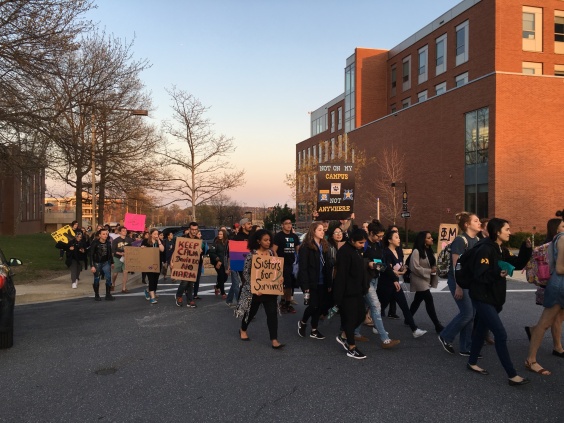
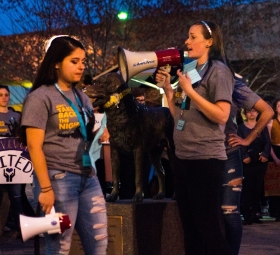
    <p>April is Sexual Assault Awareness Month, and the Women's Center is hosting its 7th Take Back the Night on Thursday, April 13th. Over the years, we've had a lot of questions about what Take Back the Night exactly is, why it looks the way it does, and how students can get involved. To help get those questions answered we started the 'What You Need to Know" series focused on TBTN from 2019 and are continuing on the tradition, so stay tuned for more posts over the next couple of weeks. This blog focuses on the evening's campus march against sexual violence.</p>
    <img src="https://womenscenteratumbc.files.wordpress.com/2018/03/credit-jaedon-huie38.jpg?w=739&amp;h=493" style="max-width: 100%; height: auto;"><div>
    <br><p>1,2,3,4 WE WON'T TAKE IT ANYMORE</p>
    
    <p>5,6,7,8 NO MORE VIOLENCE! NO MORE HATE!</p>
    
    <p>As a survivor of sexual assault, the Take Back The Night march reminds me that I'm not alone.</p>
    
    <p>Mariana De Matos Medeiros, '16, and former student staff member at the Women's Center, said "To me, having the opportunity to speak and march at TBTN last year reminded me that I am not alone and that I can stand in my power to speak about my experience. It took me 3 years to finally speak about my assault and one of the very first times was at TBTN last year. Seeing so many gathered to support allowed me to speak and speaking has allowed me to heal."</p>
    
    <p>It can be easy to blame yourself, isolate yourself, and feel like you're the only person struggling with your healing; However, the march lets you connect with people who support you and believe you.</p>
    
    <p>Sarah Lilly, a 2016 and 2017 Take Back The Night student leader says "Marching is us showing that solidarity is a verb, and it brings me great pride to feel so supported by my local UMBC community and to see the unconditional support for everyone else in our community."</p>
    
    <p>In an open letter in her school's newspaper, survivor and student activist, Angie Epifano, recounted the aftermath of her sexual assault, namely her experience with institutional betrayal. She ended the letter with, "Silence has the rusty taste of shame." Due to rape culture, victim blaming, a lack of support for survivors, and more, it is understandable that many survivors do not disclose their experience and sexual assault is rarely spoke of in public.</p>
    
    <p>Much like the Baltimore-based Monument Quilt is creating and demanding public space for survivors to heal, Take Back the Night demands for space in which we will not be shamed into silence. Activists like Angie, the Monument Quilt creators, and YOU during the march are creating a new culture where survivors are publicly supported, rather than publicly shamed. </p>
    
    <img src="https://womenscenteratumbc.files.wordpress.com/2017/03/1-8.jpg?w=564&amp;h=423" alt="1-8.jpg" style="max-width: 100%; height: auto;"><p><br></p>
    <p>Here's some helpful information about the campus march against sexual violence to those attending Take Back the Night at UMBC:</p>
    
    <ul>
    <li>The survivor speak-out is intended to center the voices and experience of survivors (of all identities) of sexual violence. The speak-out is for allies to listen and survivors to break their silence but <strong>the march is for EVERYONE to GET LOUD!</strong>
    </li>
    
    <li>We encourage individuals and groups to <strong>make rally signs</strong> ahead of time. Signs are a great way to show your solidarity and support while also representing your student orgs, res hall communities, and frats/sororities.</li>
    
    <li>
    <strong>We'll line everyone up in the march in waves.</strong> Survivors wanting to march up front with other survivors are invited to line up first along with other community members needed to take an <strong>accessible route march</strong>. Everyone else will then line up as survivors begin to march towards the south exit of The Commons.</li>
    
    <li>As we march, <strong>walk slowly and stay together</strong>. Try to avoid large gaps in the line.</li>
    
    <li>This year we're bringing back the <strong>Survivor Circle</strong>. As we make out way through the route we will stop midway through the march and hold our Survivor Circle.</li>
    <ul>
    <li>The Survivor Circle is a chance for survivors who may or may not have shared their story during the speak out to be recognized, come together, and be surrounded in support and healing by those attending the march. This is an opportunity for those who identify as survivors to come together without having to speak out or share their story if they do not wish to do so.</li>
    </ul>
    </ul>
    
    <img src="https://womenscenteratumbc.files.wordpress.com/2019/03/dsc_0989-e1553635918608.jpg?w=280&amp;h=256" alt="dsc_0989.jpg" style="max-width: 100%; height: auto;">
    </div>
    <div>
    <br>
    
    <ul>
    <li>The march will end back on Main Street where the space will be ready for the evening's resource fair and craftivism. As you're heading back into The Commons, come all the way into Main Street so everyone else behind you can get into the space as well.</li>
    
    <li>There will be one more chance to share your experience as a survivor post-march at a survivor discussion group led by the student organization We Believe You in the Women's Center. (This event will be private and for survivors only).</li>
    
    <li>Counselors-On-Call will be available throughout the evening. Any one needing additional support or simply needs to take a break are invited to visit the self-care station that will be set up in the Commuter Lounge.</li>
    </ul>
    
    <img src="https://womenscenteratumbc.files.wordpress.com/2018/03/credit-jaedon-huie42.jpg?w=739&amp;h=493" style="max-width: 100%; height: auto;">
    </div>
    <div><br></div>
    <div>For more information about UMBC's TBTN (check out Facebook, Instagram, and Twitter too by searching the hashtag #UMBCTBTN):
    
    <ul>
    <li>Stop by the Women's Center the week leading up to TBTN to make a rally sign for the march on April 17th</li>
    
    <li>A blog post about UMBC's 2005 TBTN march written by alum, Dr. Grollman.</li>
    
    <li>Speak: Knowing a Survivor Without Knowing Their Story - a blog post on cultivating a survivor-responsive campus.</li>
    
    <li>Register for and attend an upcoming Supporting Survivors of Sexual Violence workshop. Click here for more details on the students workshop.</li>
    
    <li>The Women's Center 2018 TBTN roundup</li>
    </ul>
    
    <p>Stay tuned for the next installment of what you need to know about TBTN 2019!</p>
    </div>
    </div>
]]>
</Body>
<Summary>Posted and Written on March 26, 2019 by sambam226    April is Sexual Assault Awareness Month, and the Women's Center is hosting its 7th Take Back the Night on Thursday, April 13th. Over the years,...</Summary>
<TrackingUrl>https://my3.my.umbc.edu/api/v0/pixel/news/132357/guest@my.umbc.edu/d7b5466f928e2e22fd2e03ef2dc712ea/api/pixel</TrackingUrl>
<Tag>activism</Tag>
<Tag>feminism</Tag>
<Tag>programs</Tag>
<Tag>saam</Tag>
<Tag>sexual-assault</Tag>
<Tag>sexual-assault-awareness-month</Tag>
<Tag>survivors</Tag>
<Tag>survivors-of-sexual-violence</Tag>
<Tag>tbtn</Tag>
<Tag>umbc</Tag>
<Tag>what-you-need-to-know-tbtn</Tag>
<Group token="womenscenter">Women's, Gender, &amp;amp; Equity Center</Group>
<GroupUrl>https://my3.my.umbc.edu/groups/womenscenter</GroupUrl>
<AvatarUrl>https://assets2-my.umbc.edu/system/shared/avatars/groups/000/000/125/78272a4842689b30dbf74672182b78f8/xsmall.png?1750974263</AvatarUrl>
<AvatarUrl size="original">https://assets1-my.umbc.edu/system/shared/avatars/groups/000/000/125/78272a4842689b30dbf74672182b78f8/original.png?1750974263</AvatarUrl>
<AvatarUrl size="xxlarge">https://assets1-my.umbc.edu/system/shared/avatars/groups/000/000/125/78272a4842689b30dbf74672182b78f8/xxlarge.png?1750974263</AvatarUrl>
<AvatarUrl size="xlarge">https://assets1-my.umbc.edu/system/shared/avatars/groups/000/000/125/78272a4842689b30dbf74672182b78f8/xlarge.png?1750974263</AvatarUrl>
<AvatarUrl size="large">https://assets1-my.umbc.edu/system/shared/avatars/groups/000/000/125/78272a4842689b30dbf74672182b78f8/large.png?1750974263</AvatarUrl>
<AvatarUrl size="medium">https://assets2-my.umbc.edu/system/shared/avatars/groups/000/000/125/78272a4842689b30dbf74672182b78f8/medium.png?1750974263</AvatarUrl>
<AvatarUrl size="small">https://assets1-my.umbc.edu/system/shared/avatars/groups/000/000/125/78272a4842689b30dbf74672182b78f8/small.png?1750974263</AvatarUrl>
<AvatarUrl size="xsmall">https://assets2-my.umbc.edu/system/shared/avatars/groups/000/000/125/78272a4842689b30dbf74672182b78f8/xsmall.png?1750974263</AvatarUrl>
<AvatarUrl size="xxsmall">https://assets3-my.umbc.edu/system/shared/avatars/groups/000/000/125/78272a4842689b30dbf74672182b78f8/xxsmall.png?1750974263</AvatarUrl>
<Sponsor>Women's Center</Sponsor>
<ThumbnailUrl size="xxlarge">https://assets3-my.umbc.edu/system/shared/thumbnails/news/000/132/357/28616ace1124f8e84ca84627160a09ef/xxlarge.jpg?1680799167</ThumbnailUrl>
<ThumbnailUrl size="xlarge">https://assets3-my.umbc.edu/system/shared/thumbnails/news/000/132/357/28616ace1124f8e84ca84627160a09ef/xlarge.jpg?1680799167</ThumbnailUrl>
<ThumbnailUrl size="large">https://assets3-my.umbc.edu/system/shared/thumbnails/news/000/132/357/28616ace1124f8e84ca84627160a09ef/large.jpg?1680799167</ThumbnailUrl>
<ThumbnailUrl size="medium">https://assets1-my.umbc.edu/system/shared/thumbnails/news/000/132/357/28616ace1124f8e84ca84627160a09ef/medium.jpg?1680799167</ThumbnailUrl>
<ThumbnailUrl size="small">https://assets4-my.umbc.edu/system/shared/thumbnails/news/000/132/357/28616ace1124f8e84ca84627160a09ef/small.jpg?1680799167</ThumbnailUrl>
<ThumbnailUrl size="xsmall">https://assets3-my.umbc.edu/system/shared/thumbnails/news/000/132/357/28616ace1124f8e84ca84627160a09ef/xsmall.jpg?1680799167</ThumbnailUrl>
<ThumbnailUrl size="xxsmall">https://assets2-my.umbc.edu/system/shared/thumbnails/news/000/132/357/28616ace1124f8e84ca84627160a09ef/xxsmall.jpg?1680799167</ThumbnailUrl>
<PawCount>0</PawCount>
<CommentCount>0</CommentCount>
<CommentsAllowed>false</CommentsAllowed>
<PostedAt>Thu, 06 Apr 2023 12:49:09 -0400</PostedAt>
<EditAt>Fri, 11 Aug 2023 09:47:08 -0400</EditAt>
</NewsItem>

<NewsItem contentIssues="true" id="132356" important="false" status="posted" url="https://my3.my.umbc.edu/posts/132356">
<Title>CBEE URCAD Presenters</Title>
<Tagline>See Them Live on Wednesday, April 12!</Tagline>
<Body>
<![CDATA[
    <div class="html-content"><div><div><div><div>
    <div><p><span><span>Nelanne</span><span> Bolima | </span></span><span>Engineering Fungal Growth Conditions to Create Mycelial-Materials </span><span>| Dr. Mark Marten | C</span><span><span>hemical</span><span>, Biochemical, and Environmental Engineering</span></span><span> </span></p></div>
    <div><p><span></span><span> </span></p></div>
    <div><p><span>Tamia Bowers | </span><span>Energy Application of Low-Temperature 2D Films Employed in Space-Based Energy Harvesting Systems </span><span><span>| Dr. </span><span>Swapril</span><span>Ambade</span><span> | Chemical, Biochemical, and Environmental Engineering</span></span><span> </span></p></div>
    <div><p><span></span><span> </span></p></div>
    <div><p><span>Casey Douglas | </span><span><span>Characterization of an Aspergillus </span><span>Nidulans</span><span>MpkA</span><span>, </span><span>HogA</span><span> Double-Deletion Strain </span></span><span>| Dr. Mark Marten | </span><span>Chemical, Biochemical, and Environmental Engineering</span><span> </span></p></div>
    <div><p><span></span><span> </span></p></div>
    <div><p><span>Garrett Hill | </span><span>Phenotypic Characterization of </span><span><span>Aspergillus </span><span>Nidulans</span></span><span><span> Protein Kinase </span><span>PrkA</span></span><span>| Dr. Mark Marten | Chemical, Biochemical, and Environmental Engineering</span><span> </span></p></div>
    <div><p><span></span><span> </span></p></div>
    <div><p><span>Raey Hunde | </span><span>Developing a 3D Colon Model </span><span>| Dr. Erin Lavik | Chemical, Biochemical, and Environmental Engineering</span><span> </span></p></div>
    <div><p><span></span><span> </span></p></div>
    <div><p><span>Mary Nolan | </span><span>Photolysis of Fluorescent Dissolved Organic Matter and Contaminants of Emerging Concern in Wastewater-Impacted Streams </span><span>| Dr. Lee Blaney | Chemical, Biochemical, and Environmental Engineering</span><span> </span></p></div>
    <div><p><span></span><span> </span></p></div>
    <div><p><span>Brandon Onochie | </span><span>Polymer Microemulsions for Delivery of Poorly-Soluble Drugs to Human Pancreatic Cancer Cells </span><span>| Dr. Chun Wang | University of Minnesota</span><span> </span></p></div>
    <div><p><span></span><span> </span></p></div>
    <div><p><span><span>Anita </span><span>Osoh</span><span> | </span></span><span>Understanding the Link Between Blood Flow Dynamics and Atherosclerosis </span><span>| Dr. Guillermo Garcia-Cardena | Harvard Medical School</span><span> </span></p></div>
    <div><p><span></span><span> </span></p></div>
    <div><p><span><span>Wanwei</span><span> Pan | </span></span><span><span>Aspergillus </span><span>Nidulans</span><span>mpkA</span><span> Deletion Strain Mycelium Material </span></span><span>| Dr. Mark Marten | Chemical, Biochemical, and Environmental Engineering</span><span> </span></p></div>
    <div><p><span></span><span> </span></p></div>
    <div><p><span>Tatiana Perez | </span><span><span>Characterization of the Growth Rate and Mycelial Cell Size for Aspergillus </span><span>Nidulans</span><span> ΔmpkAΔnrc2 </span></span><span>| Dr. Mark Marten | Chemical, Biochemical, and Environmental Engineering</span><span> </span></p></div>
    <div><p><span></span><span> </span></p></div>
    <div><p><span>Mitchell Richards | </span><span>Characterization of Hydraulic Conductivity of Soil and Saprolite Cores in Dead Run Watershed, Baltimore County, Maryland </span><span>| Dr. Claire Welty | Chemical, Biochemical, and Environmental Engineering</span><span> </span></p></div>
    <div><p><span></span><span> </span></p></div>
    <div><p><span>Andrea Sequeira | </span><span><span>Characterization of ΔmpkAΔsnf1 Double Deletion Strain in Aspergillus </span><span>Nidulans</span></span><span>| Dr. Mark Marten | Chemical, Biochemical, and Environmental Engineering</span><span> </span></p></div>
    <div><p><span></span><span> </span></p></div>
    <div><p><span><span>Ayeoritse</span><span>Tuedon</span><span> | </span></span><span><span>Using </span><span>Nanocapsules</span><span> that Decrease Blood Loss in Traumatic Injuries as an Extended Drug Delivery System </span></span><span>| Dr. Erin Lavik | Chemical, Biochemical, and Environmental Engineering</span><span> </span></p></div>
    <div><p><span></span><span> </span></p></div>
    <div><p><span><span>Diego </span><span>Igelsias</span><span> Vega | </span></span><span>Fluorescence-based Multilinear Regression Models to Assess the Presence of Wastewater in Baltimore Watersheds </span><span>| Dr. Lee Blaney | Chemical, Biochemical, and Environmental Engineering</span><span> </span></p></div>
    <div><p><span></span><span> </span></p></div>
    <div><p><span>Sarah-Fatime Yoda | </span><span>Development and Optimization of a Novel, Multi-material Scaffold Manufacturing Process </span><span>| Dr. Yonghui Ding | Northwestern University</span><span> </span></p></div>
    </div></div></div></div></div>
]]>
</Body>
<Summary>Nelanne Bolima | Engineering Fungal Growth Conditions to Create Mycelial-Materials | Dr. Mark Marten | Chemical, Biochemical, and Environmental Engineering          Tamia Bowers | Energy...</Summary>
<Website>https://urcad.umbc.edu/</Website>
<TrackingUrl>https://my3.my.umbc.edu/api/v0/pixel/news/132356/guest@my.umbc.edu/e8e209130c5e29c133d3940ad731025c/api/pixel</TrackingUrl>
<Tag>cbee</Tag>
<Tag>umbc</Tag>
<Tag>urcad</Tag>
<Group token="undergradresearch">Undergraduate Research</Group>
<GroupUrl>https://my3.my.umbc.edu/groups/undergradresearch</GroupUrl>
<AvatarUrl>https://assets2-my.umbc.edu/system/shared/avatars/groups/000/000/006/875606ced2b629148af4caa1a4e8dd3c/xsmall.png?1600355057</AvatarUrl>
<AvatarUrl size="original">https://assets3-my.umbc.edu/system/shared/avatars/groups/000/000/006/875606ced2b629148af4caa1a4e8dd3c/original.jpg?1600355057</AvatarUrl>
<AvatarUrl size="xxlarge">https://assets4-my.umbc.edu/system/shared/avatars/groups/000/000/006/875606ced2b629148af4caa1a4e8dd3c/xxlarge.png?1600355057</AvatarUrl>
<AvatarUrl size="xlarge">https://assets1-my.umbc.edu/system/shared/avatars/groups/000/000/006/875606ced2b629148af4caa1a4e8dd3c/xlarge.png?1600355057</AvatarUrl>
<AvatarUrl size="large">https://assets2-my.umbc.edu/system/shared/avatars/groups/000/000/006/875606ced2b629148af4caa1a4e8dd3c/large.png?1600355057</AvatarUrl>
<AvatarUrl size="medium">https://assets2-my.umbc.edu/system/shared/avatars/groups/000/000/006/875606ced2b629148af4caa1a4e8dd3c/medium.png?1600355057</AvatarUrl>
<AvatarUrl size="small">https://assets4-my.umbc.edu/system/shared/avatars/groups/000/000/006/875606ced2b629148af4caa1a4e8dd3c/small.png?1600355057</AvatarUrl>
<AvatarUrl size="xsmall">https://assets2-my.umbc.edu/system/shared/avatars/groups/000/000/006/875606ced2b629148af4caa1a4e8dd3c/xsmall.png?1600355057</AvatarUrl>
<AvatarUrl size="xxsmall">https://assets4-my.umbc.edu/system/shared/avatars/groups/000/000/006/875606ced2b629148af4caa1a4e8dd3c/xxsmall.png?1600355057</AvatarUrl>
<Sponsor>Undergraduate Research</Sponsor>
<ThumbnailUrl size="xxlarge">https://assets3-my.umbc.edu/system/shared/thumbnails/news/000/132/356/160c305b78f1145997c53bfee906fca7/xxlarge.jpg?1680797172</ThumbnailUrl>
<ThumbnailUrl size="xlarge">https://assets3-my.umbc.edu/system/shared/thumbnails/news/000/132/356/160c305b78f1145997c53bfee906fca7/xlarge.jpg?1680797172</ThumbnailUrl>
<ThumbnailUrl size="large">https://assets4-my.umbc.edu/system/shared/thumbnails/news/000/132/356/160c305b78f1145997c53bfee906fca7/large.jpg?1680797172</ThumbnailUrl>
<ThumbnailUrl size="medium">https://assets1-my.umbc.edu/system/shared/thumbnails/news/000/132/356/160c305b78f1145997c53bfee906fca7/medium.jpg?1680797172</ThumbnailUrl>
<ThumbnailUrl size="small">https://assets1-my.umbc.edu/system/shared/thumbnails/news/000/132/356/160c305b78f1145997c53bfee906fca7/small.jpg?1680797172</ThumbnailUrl>
<ThumbnailUrl size="xsmall">https://assets4-my.umbc.edu/system/shared/thumbnails/news/000/132/356/160c305b78f1145997c53bfee906fca7/xsmall.jpg?1680797172</ThumbnailUrl>
<ThumbnailUrl size="xxsmall">https://assets1-my.umbc.edu/system/shared/thumbnails/news/000/132/356/160c305b78f1145997c53bfee906fca7/xxsmall.jpg?1680797172</ThumbnailUrl>
<PawCount>3</PawCount>
<CommentCount>0</CommentCount>
<CommentsAllowed>true</CommentsAllowed>
<PostedAt>Thu, 06 Apr 2023 12:06:37 -0400</PostedAt>
</NewsItem>

</News>