DoIT Blocks Email Sent from Foreign Countries by UMBC Account Holders Not on Gmail
Clarification: VPN does NOT need to be used for email access via Webmail at webmail.umbc.edu.
Starting Friday, June 8th if you have not migrated your email to Gmail@UMBC, and are sending email from outside of the United States, you will first need to login to our virtual private network (VPN) vpn.umbc.edu. Once you have successfully logged into the VPN you will be able to connect to our Simple Mail Transfer Protocol (SMTP) servers from your email client and send your messages.
NOTE: If you don’t login to the VPN while outside the United States you will NOT be able to send any emails. If you have already migrated to Gmail@UMBC you don’t need to worry about using the VPN, just login like you normally would at gmail.umbc.edu
Why is this being done?
UMBC will begin blocking access to our SMTP servers from outside the United States. We are implementing this solution to address the recent attacks by spammers that have caused issues with email delivery over the past two weekends.
How do I migrate my email to Gmail@UMBC?
Migrating to Gmail@UMBC is easy. Please see our knowledge base article on how to migrate:
https://wiki.umbc.edu/x/EgfSAQ
]]>
Clarification: VPN does NOT need to be used for email access via Webmail at webmail.umbc.edu. Starting Friday, June 8th if you have not migrated your email to Gmail@UMBC, and are sending email...
http://www.umbc.edu/blogs/oit-news/archives/2012/06/doit_blocks_ema.html
https://my3.my.umbc.edu/api/v0/pixel/news/15242/guest@my.umbc.edu/a33c17118d83e017e3d1cebd4975f498/api/pixel
Division of Information Technology (DoIT)
https://my3.my.umbc.edu/groups/doit
https://assets2-my.umbc.edu/system/shared/avatars/groups/000/000/021/d27760c5de12c74b73faec8d0e631acf/xsmall.png?1727453227
https://assets2-my.umbc.edu/system/shared/avatars/groups/000/000/021/d27760c5de12c74b73faec8d0e631acf/original.JPG?1727453227
https://assets1-my.umbc.edu/system/shared/avatars/groups/000/000/021/d27760c5de12c74b73faec8d0e631acf/xxlarge.png?1727453227
https://assets3-my.umbc.edu/system/shared/avatars/groups/000/000/021/d27760c5de12c74b73faec8d0e631acf/xlarge.png?1727453227
https://assets2-my.umbc.edu/system/shared/avatars/groups/000/000/021/d27760c5de12c74b73faec8d0e631acf/large.png?1727453227
https://assets2-my.umbc.edu/system/shared/avatars/groups/000/000/021/d27760c5de12c74b73faec8d0e631acf/medium.png?1727453227
https://assets2-my.umbc.edu/system/shared/avatars/groups/000/000/021/d27760c5de12c74b73faec8d0e631acf/small.png?1727453227
https://assets2-my.umbc.edu/system/shared/avatars/groups/000/000/021/d27760c5de12c74b73faec8d0e631acf/xsmall.png?1727453227
https://assets4-my.umbc.edu/system/shared/avatars/groups/000/000/021/d27760c5de12c74b73faec8d0e631acf/xxsmall.png?1727453227
Division of Information Technology
4
0
false
Fri, 08 Jun 2012 15:21:13 -0400
Fri, 08 Jun 2012 15:21:13 -0400
New made to order salad restaurant coming to the Commons to replace gelato in th...
New made to order salad restaurant coming to the Commons to replace gelato in the fall! #TOOEXCITED #GonnaBeSoGood
See more Tweets about #TOOEXCITED
twitter.com/search?q=%23TOOEXCITED
#TOOEXCITED is a hashtag on Twitter. Follow this topic and join the conversation.
]]>
New made to order salad restaurant coming to the Commons to replace gelato in the fall! #TOOEXCITED #GonnaBeSoGood See more Tweets about #TOOEXCITED twitter.com/search?q=%23TOOEXCITED...
http://www.facebook.com/umbcseb/posts/10151774556220538
https://my3.my.umbc.edu/api/v0/pixel/news/15241/guest@my.umbc.edu/00dda3a7de9f6cf703c237c6ee49e064/api/pixel
facebook
seb
student-events-board
umbcseb
(seb) Student Events Board
https://my3.my.umbc.edu/groups/seb
https://assets1-my.umbc.edu/system/shared/avatars/groups/000/000/007/86dacb82bfa5fc1f7fc85d6b63e1e9c8/xsmall.png?1779905170
https://assets2-my.umbc.edu/system/shared/avatars/groups/000/000/007/86dacb82bfa5fc1f7fc85d6b63e1e9c8/original.png?1779905170
https://assets4-my.umbc.edu/system/shared/avatars/groups/000/000/007/86dacb82bfa5fc1f7fc85d6b63e1e9c8/xxlarge.png?1779905170
https://assets4-my.umbc.edu/system/shared/avatars/groups/000/000/007/86dacb82bfa5fc1f7fc85d6b63e1e9c8/xlarge.png?1779905170
https://assets2-my.umbc.edu/system/shared/avatars/groups/000/000/007/86dacb82bfa5fc1f7fc85d6b63e1e9c8/large.png?1779905170
https://assets2-my.umbc.edu/system/shared/avatars/groups/000/000/007/86dacb82bfa5fc1f7fc85d6b63e1e9c8/medium.png?1779905170
https://assets3-my.umbc.edu/system/shared/avatars/groups/000/000/007/86dacb82bfa5fc1f7fc85d6b63e1e9c8/small.png?1779905170
https://assets1-my.umbc.edu/system/shared/avatars/groups/000/000/007/86dacb82bfa5fc1f7fc85d6b63e1e9c8/xsmall.png?1779905170
https://assets3-my.umbc.edu/system/shared/avatars/groups/000/000/007/86dacb82bfa5fc1f7fc85d6b63e1e9c8/xxsmall.png?1779905170
(seb) Student Events Board
71
15
true
Fri, 08 Jun 2012 12:40:55 -0400
Fri, 08 Jun 2012 12:40:55 -0400
Urgent Need: Intern for Community Summer Camp!
Do you love kids? Looking for a full-time summer job?
The Walden Circle Community Center is a community-based
youth outreach program located in the nearby Woodlawn neighborhood and is a
longstanding partner of the Shriver Center at UMBC. The Service-Learning Intern will serve as a youth supervisor
with some leadership, programmatic, and planning responsibilities during the
Community Center’s 6-week summer camp.
More specifically, the intern is expected to:
·
Supervise daily activities with the children
helping with group activities, snacks, lunch, occasional field trips, etc.
·
Manage high school volunteer counselors to
ensure professionalism and smooth operation of the camp.
·
Help in creating the daily programming for the
summer camp.
Position Commitment:
The internship will consists of 7 hours per day from 9am-4pm
Monday through Friday beginning June 25th and ending August 3rd
(July 4-6 will be a holiday).
Compensation:
A stipend of $2,000 is provided for the Service-Learning
Intern in this position.
Additionally, the Service-Learning Intern will be enrolled in the 096
Practicum, enabling this student to receive a “Service-Learning Leadership”
notation on her/his transcript.
Important Contact
Information:
Clare Greene, Service-Learning Program Coordinator at
Shriver Center, UMBC
410.455.2493 office
clare6@umbc.edu email
]]>
The Walden Circle Community Center is a community-based youth outreach program located in the nearby Woodlawn neighborhood and is a longstanding partner of the Shriver Center at UMBC. The...
https://my3.my.umbc.edu/api/v0/pixel/news/15240/guest@my.umbc.edu/4f20dc71918c68fb6d06a7c27f89bfb5/api/pixel
The Shriver Center
https://my3.my.umbc.edu/groups/shriver
https://assets2-my.umbc.edu/system/shared/avatars/groups/000/000/008/0bfad113286cf6b1bc6dedbdbfc7e5ef/xsmall.png?1441293069
https://assets1-my.umbc.edu/system/shared/avatars/groups/000/000/008/0bfad113286cf6b1bc6dedbdbfc7e5ef/original.jpg?1441293069
https://assets3-my.umbc.edu/system/shared/avatars/groups/000/000/008/0bfad113286cf6b1bc6dedbdbfc7e5ef/xxlarge.png?1441293069
https://assets2-my.umbc.edu/system/shared/avatars/groups/000/000/008/0bfad113286cf6b1bc6dedbdbfc7e5ef/xlarge.png?1441293069
https://assets1-my.umbc.edu/system/shared/avatars/groups/000/000/008/0bfad113286cf6b1bc6dedbdbfc7e5ef/large.png?1441293069
https://assets1-my.umbc.edu/system/shared/avatars/groups/000/000/008/0bfad113286cf6b1bc6dedbdbfc7e5ef/medium.png?1441293069
https://assets4-my.umbc.edu/system/shared/avatars/groups/000/000/008/0bfad113286cf6b1bc6dedbdbfc7e5ef/small.png?1441293069
https://assets2-my.umbc.edu/system/shared/avatars/groups/000/000/008/0bfad113286cf6b1bc6dedbdbfc7e5ef/xsmall.png?1441293069
https://assets3-my.umbc.edu/system/shared/avatars/groups/000/000/008/0bfad113286cf6b1bc6dedbdbfc7e5ef/xxsmall.png?1441293069
Shriver Center:Intern, Co-op, Research & Service-Learning
0
1
true
Fri, 08 Jun 2012 11:06:44 -0400
How LinkedIn should have protected your password

Coulda, Woulda, Shoulda.
If you have a LinkedIn account, you probably noticed the news that 6.5 million of their passwords were leaked. While the passwords were encrypted, it's still a major problem for all LinkedIn users. In his column in the latest issue of ACM Queue, LinkedIn Password Leak: Salt Their Hide, security expert Poul-Henning Kamp, explains the flaws in LinkedIn's password management process and the simple steps that can make it much more secure.
Of course, this is more than just about LinkedIn. Similar password leaks from eHarmoney and last.fm were reported this week. If you use any of these popular Web services, you probably should change your password, especially if you use the same password on other Internet sites and services.
If you find this interesting, you should check out the monthly ACM Queue magazine. It is a good resource for people interested in computing and software engineering. Here's how it describes its mission.
"Queue is the ACM's magazine for practicing software engineers. Written by engineers for engineers, Queue focuses on the technical problems and challenges that loom ahead, helping readers to sharpen their own thinking and pursue innovative solutions. Queue does not focus on either industry news or the latest "solutions." Rather, Queue takes a critical look at current and emerging technologies, highlighting problems that are likely to arise and posing questions that software engineers should be thinking about."
Update 6/9: The League of Legends reports that their password database was compromised. It’s not clear how they were storing the passwords.
]]>
Coulda, Woulda, Shoulda. If you have a LinkedIn account, you probably noticed the news that 6.5 million of their passwords were leaked. While the passwords were encrypted, it's still a major...
http://www.csee.umbc.edu/2012/06/how-linkedin-should-have-protected-your-password/
https://my3.my.umbc.edu/api/v0/pixel/news/15239/guest@my.umbc.edu/5a3db1abd4276ea2a64e2486de743e18/api/pixel
computer-science
cybersecurity
news
students
Computer Science and Electrical Engineering
https://my3.my.umbc.edu/groups/csee
https://assets3-my.umbc.edu/system/shared/avatars/groups/000/000/099/d117dca133c64bf78a4b7696dd007189/xsmall.png?1314043393
https://assets1-my.umbc.edu/system/shared/avatars/groups/000/000/099/d117dca133c64bf78a4b7696dd007189/original.png?1314043393
https://assets1-my.umbc.edu/system/shared/avatars/groups/000/000/099/d117dca133c64bf78a4b7696dd007189/xxlarge.png?1314043393
https://assets4-my.umbc.edu/system/shared/avatars/groups/000/000/099/d117dca133c64bf78a4b7696dd007189/xlarge.png?1314043393
https://assets3-my.umbc.edu/system/shared/avatars/groups/000/000/099/d117dca133c64bf78a4b7696dd007189/large.png?1314043393
https://assets1-my.umbc.edu/system/shared/avatars/groups/000/000/099/d117dca133c64bf78a4b7696dd007189/medium.png?1314043393
https://assets2-my.umbc.edu/system/shared/avatars/groups/000/000/099/d117dca133c64bf78a4b7696dd007189/small.png?1314043393
https://assets3-my.umbc.edu/system/shared/avatars/groups/000/000/099/d117dca133c64bf78a4b7696dd007189/xsmall.png?1314043393
https://assets3-my.umbc.edu/system/shared/avatars/groups/000/000/099/d117dca133c64bf78a4b7696dd007189/xxsmall.png?1314043393
Computer Science and Electrical Engineering
7
0
true
Fri, 08 Jun 2012 09:20:24 -0400
Fri, 08 Jun 2012 09:20:24 -0400
Day Five - Active Love for One Another
Romans 12:3-13 (NIV)
3 For by the grace given me I say to every one of you: Do not think of yourself more highly than you ought, but rather think of yourself with sober judgment, in accordance with the faith God has distributed to each of you. 4 For just as each of us has one body with many members, and these members do not all have the same function, 5 so in Christ we, though many, form one body, and each member belongs to all the others. 6 We have different gifts, according to the grace given to each of us. If your gift is prophesying, then prophesy in accordance with you faith; 7 if it is serving, then serve; if it is teaching, then teach; 8 if it is to encourage, then give encouragement; if it is giving, then give generously; if it is to lead, do it diligently; if it is to show mercy, do it cheerfully.
9 Love must be sincere. Hate what is evil; cling to what is good. 10 Be devoted to one another in love. Honor one another above yourselves. 11 Never be lacking in zeal, but keep your spiritual fervor, serving the Lord. 12 Be joyful in hope, patient in affliction, faithful in prayer. 13 Share with the Lord’s people who are in need. Practice hospitality.
Reflection:
In this Passage we see that there must be some kind of “good” or action that we actively do towards one another. Walter A. Elwell writes, “Love is a transitive reality—that is, it requires an object. In the Bible, love is described as personal (between persons) and selfless (desiring the best for others). Christians see God’s love in sending his Son to die on the cross to save sinners (Rom. 5:8; John 3:16; 1 John 4:10). Christians are to be known by the fact that they love God and others (John (13:34–35). Their love is not to be like the love the world has (Luke 6:32, 35). Love is best seen in actions and in most cases is to be identified with what we do—in our compassion and commitment to those around us, regardless of the object’s virtue (1 John 4:19). Our loving attitudes and behavior are to reflect God’s love.”
Jesus said that only two commands are needed to direct our lives: To love God and to love our neighbors. If such love is demonstrated, all the law and prophets are fulfilled. Just like the famous Nike slogan, “just do it,” we are to actively live out these commands to love others through our outward actions, and as we do this, we invite God’s love to flourish in our hearts.
Response:
As Christians, we are defined by the simple fact that God has loved us, that we love God and we love others (John 13:34-35). Think of practical ways to go out and demonstrate some kind of “good” or action towards someone in your ministry and those around you. Spend some time in prayer asking the Lord to reveal and fill our hearts with more of His heart to love others.
]]>
Romans 12:3-13 (NIV) 3 For by the grace given me I say to every one of you: Do not think of yourself more highly than you ought, but rather think of yourself with sober judgment, in accordance...
http://www.agape-churches.org/missioncontrol/?p=2262
https://my3.my.umbc.edu/api/v0/pixel/news/15238/guest@my.umbc.edu/2f3406f3080e6c765bcd5b870f0dad03/api/pixel
living-as-a-new-people
sweeter-the-journey
Agape Campus Christian Fellowship
https://my3.my.umbc.edu/groups/agapeumbc
https://assets1-my.umbc.edu/system/shared/avatars/groups/000/000/223/3fb22546e0a13fb8b5d7345218eef2a5/xsmall.png?1755319577
https://assets1-my.umbc.edu/system/shared/avatars/groups/000/000/223/3fb22546e0a13fb8b5d7345218eef2a5/original.png?1755319577
https://assets4-my.umbc.edu/system/shared/avatars/groups/000/000/223/3fb22546e0a13fb8b5d7345218eef2a5/xxlarge.png?1755319577
https://assets1-my.umbc.edu/system/shared/avatars/groups/000/000/223/3fb22546e0a13fb8b5d7345218eef2a5/xlarge.png?1755319577
https://assets2-my.umbc.edu/system/shared/avatars/groups/000/000/223/3fb22546e0a13fb8b5d7345218eef2a5/large.png?1755319577
https://assets2-my.umbc.edu/system/shared/avatars/groups/000/000/223/3fb22546e0a13fb8b5d7345218eef2a5/medium.png?1755319577
https://assets4-my.umbc.edu/system/shared/avatars/groups/000/000/223/3fb22546e0a13fb8b5d7345218eef2a5/small.png?1755319577
https://assets1-my.umbc.edu/system/shared/avatars/groups/000/000/223/3fb22546e0a13fb8b5d7345218eef2a5/xsmall.png?1755319577
https://assets1-my.umbc.edu/system/shared/avatars/groups/000/000/223/3fb22546e0a13fb8b5d7345218eef2a5/xxsmall.png?1755319577
Agape Campus Christian Fellowship
0
0
false
Fri, 08 Jun 2012 01:00:16 -0400
A SIRI-ous Mind
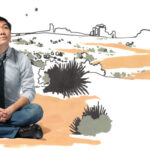

British writer and scientist Arthur C. Clarke once wrote that “any sufficiently advanced technology is indistinguishable from magic.”
And for many of us, that’s exactly how the beeps and pings and connecting dings that keep our schedules, steer our cars to the right destination, and even maintain our bonds with family and friends over great distances seem to work. Like magic.
But to the humans behind the technologies – including Silicon Valley-based UMBC alumni at Apple and Google – it’s anything but abracadabra. It’s a combination of hard work, entrepreneurial drive and visionary imagination at its geekish best.
Let’s meet some of the minds behind the magic of our technologies.
by Jenny O’Grady
Photos by Timothy Archibald. Illustrations by Meredith Nelson.
* * * *
 Just about anything can inspire an idea. It’s up to engineers like Chen to bring them to life.
How a UMBC alumnus found more than (voice) recognition for his work on the iPhone’s enigmatic Siri technology.
Sometimes, Harry Chen needs to get away. Far away.
When he’s surrounded by the sands of Death Valley, California, even the GPS can’t find him. He can’t check his email, or video chat with his parents in Hong Kong, or stream music from his favorite Pandora station. And he likes that solitude.
“Sometimes you’ve got to go to the desert,” says Chen, a UMBC computer science alumnus (B.A. ’98, M.S. ’00, Ph.D. ’04) who helped develop Siri, the voiceresponsive “personal assistant” found inside the latest Apple iPhones.
“You stay out there, and when you come back, you see such a big contrast of civilization,” he continues. “And it makes you appreciate life a lot more. Everything we created – one way or another – is kind of superficial, but also kind of essential.”
In a world where computing has left the desktop and lives in the clouds, Chen is a bit of a tech superstar. The work that he and his colleagues have done makes it easy for everyone from tweeners to grandfolks to whisper wishes into the palms of their hands to find the closest pizza, send an email or solve a math problem.
Reflecting on his short-yet-impressive career, the energetic 35-year-old software engineer is quick to note the importance of the nearly ten years he spent at UMBC. He says that the people and the environment of discovery at the university helped shaped him into the kind of thinker capable of seeing models and years ahead to the next cool thing.
Building The Basics
Like many blossoming tech geeks in the early 1990s, Chen first contemplated the inner workings of computers as a teenager, sitting at home in Hong Kong, his thumbs occupied by the bright red buttons of that era’s ubiquitous Nintendo controller.
“While I was playing, I’d get so curious. How did all those characters come about? I started thinking about how some games would make very predictable moves, and why some are not predictable at all,” he says. “Later on, my dad bought me a computer…and the games on that were sort of like the ones with a snake going in different directions. It made me very interested in understanding more about computer instructions.”
When Chen left home for Towson University in 1994, the world of web-based computing was just beginning to blossom. At the urging of his parents, he began a course of study in pharmacy, but a job opening at the campus library allowed Chen to help customers with computers. He started building simple websites with his friends. After taking a few classes, Chen discovered he had an aptitude for programming.
Suddenly, the future – including a transfer to UMBC – seemed obvious to him. It didn’t take Chen long to make himself at home in the university’s computer science department, where he turned artificial intelligence algorithms into Java code for computer science research projects, won highly-sought internships at Hewlett-Packard, and generally wowed his peers.
“One thing we always liked so much about Harry is that he liked to charge into things,” says Dr. Tim Finin, a professor of computer science and electrical engineering who specializes in artificial intelligence and who served as Chen’s Ph.D. advisor. “He was not afraid to just drop in and start working on something.”
At the time, many of UMBC’s computer science researchers focused on pervasive computing – which aims to unobtrusively connect and share data between the many devices in our lives. Chen took to it like a teen to texting, and reveled in collaborating with fellow students to test new ideas.
“Harry was, and probably still is, very good at that level. He could very effortlessly turn ideas into working prototypes,” says Finin. “It’s a really significant skill to be able to have an idea and then very quickly test it out…to be able to implement enough of it to get some feedback to know whether it’s a brilliant idea, whether it’s something that will pan out.”
The Smartest Room in the Building
 Many computer science students at UMBC take jobs right after they finish undergraduate studies. But an iffy job market in the late 1990s and then the dot.com bubble’s burst a few years later kept Chen in school.
Chen’s decision to wait to test the market turned out to be a good one. He used that time to develop a concept that helped shape his future research.
Imagine a room that answers your questions, or anticipates your needs and then fulfills them. Chen imagined that room – and then figured out how it might be brought to life.
“The graduate student’s life is really about exploration and to be free to identify your interests,” he says. “It’s almost like an accident when you find something you really like to work on and you just know it.”
Chen had spent some time interning at the Hewlett-Packard Labs, which were – at the time – at the forefront of mobile computing research and development. So when Chen returned to UMBC, he figured out what he wanted to design: a conference room broker. This system would retrieve and translate data from the devices within the room itself to solve problems for occupants while also considering user-privacy issues.
“So you walk into a meeting room,” Chen explains, “and the room understands how many people are in that room, what those people do…so the room says, ‘Oh, there’s a projector,’ and the projector would say, ‘I want to show a PowerPoint presentation. I can do that.’”
The smart room would also locate the presentation on Chen’s phone, download it, and show it – after automatically darkening the room. It might know that one of the meeting attendees wants a copy of the PowerPoint, and then simply download it to their phone. The room might even detect that an attendee’s hotel room is several miles away – and offer to call them a taxi.
“The idea is that people will use technology without thinking about it, which is just like you pick up chopsticks or a utensil and you just use it, you don’t think about it,” he says. “So that’s an idea, to try to encourage people to build technology for everyday people, to solve everyday problems.”
Imagining this room would help Chen shape his later work.
Taking Chances – and Detours
Following graduation from UMBC, both Chen and his wife Gigi Yim, who earned a bachelor’s and a master’s degree in information systems from UMBC in 2004 and 2007, pursued jobs in the Baltimore area. They even bought a house.
But the lure of Silicon Valley – and the fast-paced, creative life it offered – called to Chen.
“At one point, I thought: life is too short. I woke up one morning and I wrote my wife an essay and I said these are the reasons why we should just move to the West Coast,” he says, smiling. “Kind of like writing a paper: these are my reasons. I sent the email in the morning, and in the evening, I come home, and she says, ‘OK. Let’s do it.’”
Within days, they were looking for new jobs and making plans to move west. Yim took a job at Netflix, and Chen wound up at a vaguely-named startup working on a secret project involving voice recognition. (This startup – Siri – would later be bought by Apple.)
Right away, Chen felt confident they had made the right choice.“There’s a mentality here among a lot of people…a sort of hunger drive to make something” in Silicon Valley. “I always feel like you capture people’s smartness in thin air here,” he adds. “Somehow, you just breathe in people’s knowledge.”
“Harry, from day one, was pretty clear. Silicon Valley was where he wanted to end up,” says Dr. Anupam Joshi, a professor of computer science and another of Chen’s graduate school advisors. He observes that some students simply crave the risk and reward of the Silicon Valley environment.
“Some of it could be – for all we know – genetic hard wiring,” Joshi says. “That is why some people become race car drivers and others, like me, drive five miles below the posted speed limit.”
Valley Life: 101
Drive down Route 101 from San Francisco, and you see signs of our burgeoning tech civilization everywhere.
Billboards touting the latest cloud software. Silver-sided buildings in seemingly endless business parks that are home to startup upon startup. Even the street names themselves – like Apple’s famous Infinite Loop, or the punningly named Disk Drive in San Jose – conjure images of innovation and dreams.
Strolling around the manicured Apple campus in Cupertino, California, Chen speaks quickly. Excitedly. He says Silicon Valley is a place where ideas can be imagined without fear, where innovation is rewarded.
“People here have a passion for technology and innovation,” he says. “They want to change the world. They take risks. Most of the time they fail, but sometimes they succeed. So they step out, dream up some crazy idea and say ‘If I fail, fine. I’ll dream another one.’”
Even so, Chen acknowledges that nothing happens overnight. If you think about the gadgets that have occupied your pockets over the last 10 years, the technology required to power them crawled more than it leapt. The palm-held organizers of the mid-’90s, for example, were little more than tiny personal computers; today’s equivalent relies on web networking and interaction with other devices. Who knows what tomorrow’s devices will look like?
“Especially in the [artificial intelligence] research field, you can’t just jump to the dream right away,” Chen says. “You kind of have to think about yourself climbing a mountain. You have to do the work to get up there…you can’t just shoot straight up because that’s impossible. And once in a while you will have to make a detour, and because certain technology or culture has changed, you have to adapt to that.”
Back at UMBC, Joshi acknowledges that Chen’s metaphor is rooted in the reality of how creativity works. “That’s part of the fascination of this field, I think, going back to the creative process,” he says. “So much is yet not done. So much power is available through the computational process…we just have to channel it. We’ve barely scratched the surface.”
For Chen, it’s often enough just to see these products in use by the people he loves. When he was an undergraduate student, he communicated with his parents in Hong Kong by hand-written letter; today, he uses FaceTime to video chat with them whenever he wants.
Chen isn’t able to discuss what he’s working on now at Apple – a company known for keeping a tight leash on its ideas and products until they are introduced. But when you ask Siri a question on your new iPhone and get an answer, consider yourself at the doorway of Chen’s smart room, engaging with his work.
“It feels surreal,” Chen concludes, “because the things I talked about four or five years ago seem like a dream, and today, it doesn’t seem like a dream anymore.”
Read about UMBC alumni working at Google here.
]]>
British writer and scientist Arthur C. Clarke once wrote that “any sufficiently advanced technology is indistinguishable from magic.” And for many of us, that’s exactly how the beeps and pings...
https://umbc.edu/stories/siri-ousmind/
https://my3.my.umbc.edu/api/v0/pixel/news/123986/guest@my.umbc.edu/db77157043a2ef790840d10a9c490faf/api/pixel
stories
UMBC News & Magazine
https://my3.my.umbc.edu/groups/umbc-news-magazine
https://assets1-my.umbc.edu/system/shared/avatars/groups/000/001/943/24435aa6207c452e7bc15cc74b42c7bb/xsmall.png?1748556657
https://assets1-my.umbc.edu/system/shared/avatars/groups/000/001/943/24435aa6207c452e7bc15cc74b42c7bb/original.png?1748556657
https://assets2-my.umbc.edu/system/shared/avatars/groups/000/001/943/24435aa6207c452e7bc15cc74b42c7bb/xxlarge.png?1748556657
https://assets2-my.umbc.edu/system/shared/avatars/groups/000/001/943/24435aa6207c452e7bc15cc74b42c7bb/xlarge.png?1748556657
https://assets3-my.umbc.edu/system/shared/avatars/groups/000/001/943/24435aa6207c452e7bc15cc74b42c7bb/large.png?1748556657
https://assets1-my.umbc.edu/system/shared/avatars/groups/000/001/943/24435aa6207c452e7bc15cc74b42c7bb/medium.png?1748556657
https://assets2-my.umbc.edu/system/shared/avatars/groups/000/001/943/24435aa6207c452e7bc15cc74b42c7bb/small.png?1748556657
https://assets1-my.umbc.edu/system/shared/avatars/groups/000/001/943/24435aa6207c452e7bc15cc74b42c7bb/xsmall.png?1748556657
https://assets2-my.umbc.edu/system/shared/avatars/groups/000/001/943/24435aa6207c452e7bc15cc74b42c7bb/xxsmall.png?1748556657
UMBC News & Magazine
0
0
false
Fri, 08 Jun 2012 00:07:34 -0400
Gray New World

Students in the Erickson School’s Project 2061 class have high expectations for technology and its power to meet human needs. Working across disciplines, they’ve created new possibilities for the future of senior care.
By Dinah Winnick
 Ashley Johnson ’12, MAgS (left), helped her team imagine the needs of “Ashley,” a 111-year-old former psychologist who loves to garden but struggles with dementia, diabetes and hearing loss. Abdulla Aljneibi ’12, mechanical engineering (right), inspired his classmates to design for “Abdulla,” an imagined 90-year-old man determined to live independently despite impairments from a stroke.
It’s hard to imagine ourselves five years into the future, let alone 50. But one group of UMBC students has confronted this challenge head-on in search of inspiration for new designs to improve the lives of older adults.
Their course, “Project 2061” was spearheaded by the Erickson School, UMBC’s newest college. Founded in 2004, the school offers undergraduate and graduate curricula that combine the studies of aging, public policy and management.
The Erickson School created Project 2061 after being invited to showcase UMBC student research at a conference on the future of aging. The project quickly attracted faculty and students from engineering, information systems, design, management of aging services (MAgS) and interdisciplinary studies (INDS) to collaboratively develop new technologies for older adults living in the year 2061.
As it turns out, the endeavor’s success hinged on something simple and personal: students’ reflections on their own imagined future needs and desires. The class created three avatars based on students’ life experiences – “Abdulla,” “Ashley,” and “Spencer” – to help them explore both the problems aging can bring and how design can meet those challenges.
“Abdulla,” for instance, was based on Project 2061 participant Abdulla Aljneibi ’12, mechanical engineering. His avatar is 90 years old and recovering from a stroke that has left him struggling with memory, speech and motor impairments. Yet he is determined to live independently and enjoy activities such as cooking, daily prayer and going to the theater.
For Judah Ronch, dean of the Erickson School, creating personas like “Abdulla” proved the key to making Project 2061 click.
“This is always the challenge in teaching about aging,” says Ronch, “Until you make it about us it’s very removed. If it’s always about them, it’s highly abstract, it’s not very real, and there is not a sense of urgency about it because [typical students] are 25 or 20 and we’re talking about 60 years down the road.”
Everything changes, Ronch observes, “once you start talking about yourself and [asking], ‘How will this affect me?’”
BUILDING A TEAM
 Assistant professors Amy Hurst and Catherine Neylan explore data visualization with Meyerhoff Scholar Jasmine Jones ’12, computer science and interdisciplinary studies (left to right).
In May 2011, LeadingAge — a research and advocacy group focused on the lives of older adults — asked the Erickson School to create an exhibit on the future of aging.
LeadingAge planned a celebration of its 50th anniversary in October 2011 with a conference that would bring 8,000 participants to Washington, D.C. The group wanted to highlight dramatic changes in senior living from 1961 to the present, and also articulate a bold vision for the next 50 years.
Ronch says the exhibit “was an opportunity we couldn’t pass up.” So he recruited faculty and students from across UMBC to create the school’s presentation as part of a new, boundary-breaking course in the Erickson School.
To teach the class, Ronch enlisted Tim Topoleski, a professor of mechanical engineering who studies mobility and the mechanics of joint replacements. Catherine Neylan, assistant professor of design, and Amy Hurst, assistant professor of information systems, followed, attracted to the course by their shared interest in design for people with disabilities.
These faculty recruited students from a range of majors. Neylan observes that technology and social problems are now so complex that “we need collective intelligence to build the things that we build.”
Eventually, 19 UMBC students joined the effort. Early in the process, MAgS major Joe Yoon proposed that the class should create specific design personas based on students in the course and then craft flexible technologies to meet those avatars’ specific needs. His idea was a game-changer.
“In all of our scenarios of how this would be used,” recalls Hurst, “we never said, ‘How would grandma use this?’ We said, ‘How would I use it in 50 years.’ I think that fundamentally changed a lot of the designs [and] helped the students be more creative and engaged.”
Yoon’s proposal also forced students to ponder uncomfortable possibilities. As Steven Hall, a junior majoring in graphic design, observes: “I don’t think anybody’s going to want to think, ‘What’s my life going to be like in 50 years? I’m going to have cataracts and be overweight. I’m going to have my foot amputated from diabetes.’”
The students had to deal with uncertainties about their lives and the world in 50 years. “You can’t take the current older adult population and simply throw them 50 years into the future,” argues Colleen Bennett, a gerontology Ph.D. student and Project 2061 teaching assistant. The project depended on young people confronting their own fears and desires for later life.
“Every generation is different, and then they age,” says Hurst. “Traditionally, people are very bad at abstracting and predicting what they would want in the future, but they can tell you what they want now and how they feel about things.”
REALIZING A VISION
The three personas gave Project 2061 students a concrete foundation to build on.
“Once we had a starting point,” says Aljneibi, “the ideas started flowing.”
The class worked quickly to conceptualize, research, and render designs for technologies to meet functional needs: eating, sleeping, hygiene, and entertainment/social engagement. Living environments in the future might be quite different, they reasoned, but basic human needs will remain the same.
Occasionally, there were hiccups. The blurred lines of interdisciplinary work and the indefinite nature of the problems that the project aimed to address frustrated some of the students, especially early in the process.
“You would think design and engineering would be closer, but they both want to have a product and their process is so different,” observes Meyerhoff Scholar Jasmine Jones ’12, computer science and INDS. At times, she adds, students misinterpreted their failure to communicate across a disciplinary “language barrier” as actual disagreement over ideas.
“They are beginning to learn that the real world is not as clear-cut as their well-designed classes,” says Hurst.
In four weeks, however, a dozen designs took shape, all of them informed by contemporary technologies and targeted to meet users’ specific needs.
One group devised a “Smart Closet” that reminds users with memory and other cognitive impairments when and how garments need to be cleaned. It also lets users know when they last wore a favorite dress or tie, and even what clothing is appropriate for particular activities or occasions.
Another design team emerged with a “Lavish Lavatory”—which auto-adjusts toilet and rail height to account for changes in strength and balance over time. The design’s flexibility means it can help communal facilities better meet the needs of diverse individuals. It also discreetly and unobtrusively monitors waste and automatically sends relevant health data to each user’s physician.
Eating properly is important at any age, so another group designed a “FoodPro,” that monitors the refrigerator and pantry, keeping track of grocery inventory, expiration dates and nutritional content. It also helps users prepare meals that meet their particular dietary needs, taking into account health conditions, lifestyle choices and food preferences.
These projects formed the core of the Erickson School’s LeadingAge exhibit— “My Surroundings, My Well-Being”— which centered on personal experiences with technology.
The student designers took the exhibit opportunity as a chance to demonstrate how individuals would use their products in home environments. They acted as docents to the conference exhibit, explaining to visitors how each invention would serve “Ashley,” “Abdulla” and “Spencer” in their future lives.
Helping people connect with the exhibit in a personal way was a priority for Aljneibi—and not simply because he lent his identity to the design process. He also belongs to a close-knit multigenerational family with a grandmother facing mobility problems.
“When she goes into the shower,” he says, “it’s always in our heads: ‘What if she slips? What if she falls?’” For his family, respecting her boundaries means resisting the impulse to help her in the shower. In what ways could his team’s designs enable her, and people like her, to more safely bathe by themselves?
Though he approached the course from a neuroscience background, Talmo Pereira, an INDS major and Meyerhoff Scholar, took the tenets of user-centered design to heart.
“Considering that the environment should adapt to the user,” he suggests, “the mutability of the environment is one of the things that will most compensate for differences in culture and preferences, and certainly limitations.”
The exhibit received an enthusiastic response from vendors, senior care professionals, and LeadingAge organizers, who immediately invited the students back for 2012.
FULL SPEED AHEAD
Creating an exhibit with an October deadline left everyone involved in Project 2061 with the question of how to best make use of the rest of the semester. Focus on prototyping the exhibit designs or generate new concepts? Continue team projects or pursue independent research? The answer was different for each participant.
Aljneibi chose to continue his team project on bath designs. “When I came to the States I wasn’t fine with communal bathing, especially in the gym,” he reflects. “I used the handicapped one because I needed my privacy.” For him, this experience— uncomfortable though it felt—was an inspiration. After all, if the United States continues to grow increasingly diverse, certainly consumers would appreciate flexible bathing technologies.
Steven Hall ’11 and Pavlo Yankovetz ’11, both in graphic design, explored how visualizing health data in particular ways may offer older adults a sense of self-awareness and empowerment. They argue that information can motivate or stifle health-seeking behaviors, depending on how it is conveyed. “If you’re just giving someone numbers, that’s not helpful or useful. We want those numbers to mean something,” says Hall.
Meyerhoff Scholar Deanna Easley ’12, mechanical engineering, worked to develop safer flooring for older adults, who are often injured in falls. Having broken her own wrist in a fall, Easley understood the mental and physical traumas of injury and lengthy recovery.
“People told me, ‘At least you didn’t break the hand you write with,’” recalls Easley. “But I’m a pianist. I need both hands.” With a deep understanding of how injury can wreak havoc on one’s sense of self, plus input from MAgS students, Easley designed flooring that would not only enhance safety, but also offer aesthetic appeal and emotional comfort to potential consumers.
INNOVATION STARTS AT HOME
Academic leaders at UMBC applaud the new class, arguing that it breaks new ground at a university already known for its commitment to promoting undergraduate success through active learning.
“Project 2061 represents a striking example of UMBC’s ability to create innovative and multi-disciplinary approaches to teaching and learning that address significant future challenges,” says Provost Philip Rous.
“In the process of researching real problems, our students not only gain knowledge, they also co-create knowledge and contribute to the field,” says Diane Lee, Vice Provost and Dean of Undergraduate Education.
Connecting research to reality and realizing its potential for lasting impact isn’t simply a hypothetical draw to students. For Meyerhoff Scholar Jasmine Jones, Project 2061 is about “actually making a difference right now” rather than just “writing up a piece of code and turning it in.”
Ashley Johnson ’12, MAgS, who helped her classmates understand the needs of “Ashley,” a 111-year-old former psychologist who loves to garden and meditate in the year 2061 but struggles with dementia, diabetes and hearing loss, agrees: “I’m never asking, ‘Will I use this in the future?’ I know I will.”
Students aren’t the only beneficiaries of this work. As Don Engel, Assistant Vice President for Research, articulates: “Universities support research both to expand human knowledge and to engage students in the forefront of their disciplines. Project 2061 demonstrates how interdisciplinarity and a focus on real-world challenges produce compelling results and provide a valuable education to students and faculty alike.”
Part of Project 2061’s success, it turns out, was also rooted in participants’ refusal to play it safe. Not only did they take risks with ideas, but students and the faculty broke out of their intellectual comfort zones when they crossed disciplinary boundaries.
When you predict the future, says Ronch, “you have to be prepared to be wrong.” This kind of risk-taking requires what he calls “a special kind of iconoclasm: looking at a blank space and seeing what could fill it.”
]]>
Students in the Erickson School’s Project 2061 class have high expectations for technology and its power to meet human needs. Working across disciplines, they’ve created new possibilities for the...
https://umbc.edu/stories/gray-new-world/
https://my3.my.umbc.edu/api/v0/pixel/news/123987/guest@my.umbc.edu/0e06047d220ce81f5b36c337e2e752c5/api/pixel
discovery
fall-2012
UMBC News & Magazine
https://my3.my.umbc.edu/groups/umbc-news-magazine
https://assets1-my.umbc.edu/system/shared/avatars/groups/000/001/943/24435aa6207c452e7bc15cc74b42c7bb/xsmall.png?1748556657
https://assets1-my.umbc.edu/system/shared/avatars/groups/000/001/943/24435aa6207c452e7bc15cc74b42c7bb/original.png?1748556657
https://assets2-my.umbc.edu/system/shared/avatars/groups/000/001/943/24435aa6207c452e7bc15cc74b42c7bb/xxlarge.png?1748556657
https://assets2-my.umbc.edu/system/shared/avatars/groups/000/001/943/24435aa6207c452e7bc15cc74b42c7bb/xlarge.png?1748556657
https://assets3-my.umbc.edu/system/shared/avatars/groups/000/001/943/24435aa6207c452e7bc15cc74b42c7bb/large.png?1748556657
https://assets1-my.umbc.edu/system/shared/avatars/groups/000/001/943/24435aa6207c452e7bc15cc74b42c7bb/medium.png?1748556657
https://assets2-my.umbc.edu/system/shared/avatars/groups/000/001/943/24435aa6207c452e7bc15cc74b42c7bb/small.png?1748556657
https://assets1-my.umbc.edu/system/shared/avatars/groups/000/001/943/24435aa6207c452e7bc15cc74b42c7bb/xsmall.png?1748556657
https://assets2-my.umbc.edu/system/shared/avatars/groups/000/001/943/24435aa6207c452e7bc15cc74b42c7bb/xxsmall.png?1748556657
UMBC News & Magazine
0
0
false
Thu, 07 Jun 2012 20:27:46 -0400
Erle Ellis, Geography and Environmental Systems, in Greenwire
In a June 6 piece for E&E Publishing’s daily environmental news website Greenwire, associate professor Earl Ellis, geography and environmental systems, spoke with reporter Paul Voosen in regards to the U.N.’s release of its fifth Global Environmental Outlook (GEO-5) ahead of this month’s “Rio+20: United Nations Conference on Sustainable Development” to be held in Rio De Janeiro.
The article focused on GEO-5’s emphasis on “planetary boundaries” as an important aspect of future environmental policy, which “are roughly based on the limits estimated during the past 10,000 years of human activity, and… have been seized upon by policymakers seeking a guide to the future of life on Earth”, wrote Voosen. Ellis, a co-author of the paper “Planetary Opportunities: A Social Contract for Global Change Science to Contribute to a Sustainable Future” for BioScience with a number of other scientists which calls for a middle path that “increase[s] the probability of achieving societal benefits while reducing negative outcomes for Earth systems”, told Voosen that the “physical boundaries” concept remains questionable on a number of issues ranging from its scientific weaknesses to its overemphasis in the media, concluding that “many [scientists] are convinced that focusing on the [boundaries] approach will weaken, rather than strengthen, the role of science in informing society in environmental decision making.”
The original article “Rio+20: Ahead of summit, U.N. report embraces ‘boundaries'” can be read at Greenwire‘s website here.
]]>
In a June 6 piece for E&E Publishing’s daily environmental news website Greenwire, associate professor Earl Ellis, geography and environmental systems, spoke with reporter Paul Voosen in...
https://umbc.edu/stories/erle-ellis-geography-and-environmental-systems-in-greenwire/
https://my3.my.umbc.edu/api/v0/pixel/news/123988/guest@my.umbc.edu/534a7ff3eb4dd04cc9c3f146cdff88f8/api/pixel
cahss
cnms
ges
policy-and-society
UMBC News & Magazine
https://my3.my.umbc.edu/groups/umbc-news-magazine
https://assets1-my.umbc.edu/system/shared/avatars/groups/000/001/943/24435aa6207c452e7bc15cc74b42c7bb/xsmall.png?1748556657
https://assets1-my.umbc.edu/system/shared/avatars/groups/000/001/943/24435aa6207c452e7bc15cc74b42c7bb/original.png?1748556657
https://assets2-my.umbc.edu/system/shared/avatars/groups/000/001/943/24435aa6207c452e7bc15cc74b42c7bb/xxlarge.png?1748556657
https://assets2-my.umbc.edu/system/shared/avatars/groups/000/001/943/24435aa6207c452e7bc15cc74b42c7bb/xlarge.png?1748556657
https://assets3-my.umbc.edu/system/shared/avatars/groups/000/001/943/24435aa6207c452e7bc15cc74b42c7bb/large.png?1748556657
https://assets1-my.umbc.edu/system/shared/avatars/groups/000/001/943/24435aa6207c452e7bc15cc74b42c7bb/medium.png?1748556657
https://assets2-my.umbc.edu/system/shared/avatars/groups/000/001/943/24435aa6207c452e7bc15cc74b42c7bb/small.png?1748556657
https://assets1-my.umbc.edu/system/shared/avatars/groups/000/001/943/24435aa6207c452e7bc15cc74b42c7bb/xsmall.png?1748556657
https://assets2-my.umbc.edu/system/shared/avatars/groups/000/001/943/24435aa6207c452e7bc15cc74b42c7bb/xxsmall.png?1748556657
UMBC News & Magazine
0
0
false
Thu, 07 Jun 2012 17:27:23 -0400
She’s All That

Info graphic courtesy of 4th Estate.
As the 2012 election hype continues, we here at U.S. Democrazy would like to take a moment to take a look at some numbers on the participation of half of the population in both the election lead-up and the aftermath. The lovely infographic above does a wonderful job of speaking all on its own, but we’ll hit you with some fast fun female facts:
One final fun female fact: according to the Reuters Center for American Women and Politics, more female voters than male voters have turned out in every Presidential election since 1980. Food for thought for our Presidential hopefuls? We think yes.
]]>
Info graphic courtesy of 4th Estate. As the 2012 election hype continues, we here at U.S. Democrazy would like to take a moment to take a look at some numbers on the participation of half of the...
http://www.usdemocrazy.net/2012/06/07/shes-all-that/
https://my3.my.umbc.edu/api/v0/pixel/news/15237/guest@my.umbc.edu/051c1c510db8274563eda8b2d0bc08d0/api/pixel
congress
coverage
democracy
election-2012
female
gender-gap
irc
news
politics
umbc
usdemocrazy
vote
USDemocrazy
https://my3.my.umbc.edu/groups/retired-12
https://assets1-my.umbc.edu/system/shared/avatars/groups/000/000/012/f0935e4cd5920aa6c7c996a5ee53a70f/xsmall.png?1279120129
https://assets4-my.umbc.edu/system/shared/avatars/groups/000/000/012/f0935e4cd5920aa6c7c996a5ee53a70f/original.jpg?1279120129
https://assets3-my.umbc.edu/system/shared/avatars/groups/000/000/012/f0935e4cd5920aa6c7c996a5ee53a70f/xxlarge.png?1279120129
https://assets4-my.umbc.edu/system/shared/avatars/groups/000/000/012/f0935e4cd5920aa6c7c996a5ee53a70f/xlarge.png?1279120129
https://assets4-my.umbc.edu/system/shared/avatars/groups/000/000/012/f0935e4cd5920aa6c7c996a5ee53a70f/large.png?1279120129
https://assets1-my.umbc.edu/system/shared/avatars/groups/000/000/012/f0935e4cd5920aa6c7c996a5ee53a70f/medium.png?1279120129
https://assets2-my.umbc.edu/system/shared/avatars/groups/000/000/012/f0935e4cd5920aa6c7c996a5ee53a70f/small.png?1279120129
https://assets1-my.umbc.edu/system/shared/avatars/groups/000/000/012/f0935e4cd5920aa6c7c996a5ee53a70f/xsmall.png?1279120129
https://assets1-my.umbc.edu/system/shared/avatars/groups/000/000/012/f0935e4cd5920aa6c7c996a5ee53a70f/xxsmall.png?1279120129
USDemocrazy
16
45
true
Thu, 07 Jun 2012 16:52:47 -0400
Thu, 07 Jun 2012 16:54:47 -0400
Gray New World
Students in the Erickson School’s Project 2061 class have high expectations for technology and its power to meet human needs. …
]]>
Students in the Erickson School’s Project 2061 class have high expectations for technology and its power to meet human needs. …
https://magazine.umbc.edu/gray-new-world/
https://my3.my.umbc.edu/api/v0/pixel/news/107219/guest@my.umbc.edu/c4ccca4a68174a8bef57dbe5909ee702/api/pixel
discovery
fall-2012
UMBC Magazine
https://my3.my.umbc.edu/groups/retired-1945
https://assets2-my.umbc.edu/images/avatars/group/8/xsmall.png?1787577581
https://assets4-my.umbc.edu/images/avatars/group/8/original.png?1787577581
https://assets2-my.umbc.edu/images/avatars/group/8/xxlarge.png?1787577581
https://assets3-my.umbc.edu/images/avatars/group/8/xlarge.png?1787577581
https://assets4-my.umbc.edu/images/avatars/group/8/large.png?1787577581
https://assets2-my.umbc.edu/images/avatars/group/8/medium.png?1787577581
https://assets4-my.umbc.edu/images/avatars/group/8/small.png?1787577581
https://assets2-my.umbc.edu/images/avatars/group/8/xsmall.png?1787577581
https://assets1-my.umbc.edu/images/avatars/group/8/xxsmall.png?1787577581
UMBC Magazine
0
0
false
Thu, 07 Jun 2012 16:27:46 -0400