Update on Title IX Training Stipend
Most stipends to be paid in April paychecks
For at least CAHSS, April 19 is targeted for payment of the $250 stipend. Your school and department may vary.
The delay is attributed to collecting attendance info and aligning it payroll processing timelines. If you are signed up for a May session, you will get your stipend after attending that training.
]]>
For at least CAHSS, April 19 is targeted for payment of the $250 stipend. Your school and department may vary. The delay is attributed to collecting attendance info and aligning it payroll...
https://my3.my.umbc.edu/api/v0/pixel/news/82448/guest@my.umbc.edu/cdac7d34568fdba19fe3b11f8839a8dd/api/pixel
Adjunct Faculty Advisory Committee (AFAC)
https://my3.my.umbc.edu/groups/adjuncts
https://assets3-my.umbc.edu/system/shared/avatars/groups/000/001/054/39aca26227b4762cf59f50e09159ca84/xsmall.png?1447723806
https://assets3-my.umbc.edu/system/shared/avatars/groups/000/001/054/39aca26227b4762cf59f50e09159ca84/original.jpg?1447723806
https://assets1-my.umbc.edu/system/shared/avatars/groups/000/001/054/39aca26227b4762cf59f50e09159ca84/xxlarge.png?1447723806
https://assets3-my.umbc.edu/system/shared/avatars/groups/000/001/054/39aca26227b4762cf59f50e09159ca84/xlarge.png?1447723806
https://assets2-my.umbc.edu/system/shared/avatars/groups/000/001/054/39aca26227b4762cf59f50e09159ca84/large.png?1447723806
https://assets3-my.umbc.edu/system/shared/avatars/groups/000/001/054/39aca26227b4762cf59f50e09159ca84/medium.png?1447723806
https://assets3-my.umbc.edu/system/shared/avatars/groups/000/001/054/39aca26227b4762cf59f50e09159ca84/small.png?1447723806
https://assets3-my.umbc.edu/system/shared/avatars/groups/000/001/054/39aca26227b4762cf59f50e09159ca84/xsmall.png?1447723806
https://assets3-my.umbc.edu/system/shared/avatars/groups/000/001/054/39aca26227b4762cf59f50e09159ca84/xxsmall.png?1447723806
Adjunct Faculty Advisory Committee (AFAC)
0
6
true
Wed, 27 Feb 2019 16:52:13 -0500
Fri, 26 Jun 2020 15:29:54 -0400
The Lego Movie 2: awesome again
Like the typical big bin of Lego blocks found in your childhood home, “The Lego Movie 2: The Second Part” pieces together a film of various plot points and narrative beats to form a colorful story fit for a child. Following the success of “The Lego Movie,” a whole slew of similarly Lego-styled animated films were slated. The newly released film is a direct sequel to the 2014 original, following the established plot just moments after the ending. The next phase of the story takes our protagonists five years into the future.
This year’s sequel first and foremost successfully serves as a fun and entertaining film for the family. Just as visually appealing as the other films in the series, “The Lego Movie 2: The Second Part” continues the specific animation style that is both nostalgic for those who grew up on Legos and eye-opening for those who still can.
This specific entry delivers on the promise of action and humor almost too much. Action is spread throughout the film hitting bigger and bigger strides than the first film. Like the original, this movie does not short on its comedic fair. In its fully realized form, the movie cranks out jokes about anything ranging from silly, kid friendly jokes to self-aware references.
Continuing the success of the first film’s original soundtrack which received an Oscar nomination for best-original song for “Everything is Awesome,” this year’s sequel is filled with music numbers that fit into the current pop music landscape. The addictive emphatic rhythms and repetitive shouting of “Catchy Song (This Song’s Gonna Get Stuck Inside Your Head)” ring in the ears of audience members longer than they would like.
The plot, carried over from the first film, plays in a realm dedicated to a child’s imagination. It also develops in maturity with the characters themselves. Finn, the real-world creator of the Lego-world, transitions Bricksburg into a post-apocalyptic hellscape following the invasion of the Duplo from the last film. This post-apocalyptic landscape, dubbed Apocalypseberg, is similar to the worlds of “The Walking Dead” and “Mad Max,” showing properties a boy like Finn may have discovered in the five year gap from the last film.
Our main protagonist Emmet Brickowski has not changed much within the five year time jump. On the quest to save his friends, supposedly kidnapped by Queen Watevra Wa’Nabi, Emmet encounters the daring Rex Dangervest, a heroic macho-man with curiously familiar traits. Rex’s familiar voice, also voiced by Chris Pratt, reveals to the attentive audience that Rex is a future timeline version of Emmet with bad intentions. This sci-fi plot point, though somewhat out of context to the greater narrative, is perfectly fitted as part of the charm of the film.
As later revealed in the film, the Duplo invaders are creations of Finn’s younger sister Bianca who merely wants to create peace between their two worlds. The violent and destructive notions Rex demands counters the loving and connecting themes the Duplo leader Queen Watevra Wa’Nabi and General Sweet Mayhem pose. The two opposing themes are literalized when Finn and Bianca clash between each other for playtime with the Legos, leading to the true villain: Armamageddon.
Just as the first film sees Finn and Bianca’s father as the film’s antagonist, the sequel sees their mother as the threat they must both combine powers to defeat. Through the Lego story within, Emmet must overcome the darkness of Rex and embrace the love of the Duplo to avoid Armamageddon. In the real-life story, Finn and Bianca must learn to share and enjoy the Legos together rather than fight over them.
The story ends itself in a nicely wrapped bow with the metaphorical and literal struggle solved and crisis averted. Though overt, the film does a good job in having a good time with both the audience and itself. The bigger story is what we can relate to, the Lego story is what we get to enjoy and it is all awesome.
]]>
Like the typical big bin of Lego blocks found in your childhood home, “The Lego Movie 2: The Second Part” pieces together a film of various plot points and narrative beats to form a colorful story...
https://retriever.umbc.edu/2019/02/lego-movie-2-awesome-again/
https://my3.my.umbc.edu/api/v0/pixel/news/82451/guest@my.umbc.edu/1982141d14534f7048aa00b0548dc4c3/api/pixel
arts-and-culture
retriever
The Retriever
https://my3.my.umbc.edu/groups/retriever
https://assets1-my.umbc.edu/system/shared/avatars/groups/000/000/961/a4bec01b91ae747ba7a6d93ed7db9687/xsmall.png?1580494471
https://assets1-my.umbc.edu/system/shared/avatars/groups/000/000/961/a4bec01b91ae747ba7a6d93ed7db9687/original.jpg?1580494471
https://assets1-my.umbc.edu/system/shared/avatars/groups/000/000/961/a4bec01b91ae747ba7a6d93ed7db9687/xxlarge.png?1580494471
https://assets1-my.umbc.edu/system/shared/avatars/groups/000/000/961/a4bec01b91ae747ba7a6d93ed7db9687/xlarge.png?1580494471
https://assets4-my.umbc.edu/system/shared/avatars/groups/000/000/961/a4bec01b91ae747ba7a6d93ed7db9687/large.png?1580494471
https://assets2-my.umbc.edu/system/shared/avatars/groups/000/000/961/a4bec01b91ae747ba7a6d93ed7db9687/medium.png?1580494471
https://assets2-my.umbc.edu/system/shared/avatars/groups/000/000/961/a4bec01b91ae747ba7a6d93ed7db9687/small.png?1580494471
https://assets1-my.umbc.edu/system/shared/avatars/groups/000/000/961/a4bec01b91ae747ba7a6d93ed7db9687/xsmall.png?1580494471
https://assets1-my.umbc.edu/system/shared/avatars/groups/000/000/961/a4bec01b91ae747ba7a6d93ed7db9687/xxsmall.png?1580494471
The Retriever
4
0
true
Wed, 27 Feb 2019 16:50:03 -0500
Senior’s capstone project focuses on understanding human trafficking through dance
When one thinks about raising awareness for sex trafficking victims, symposiums or academic papers usually come to mind. However, senior interdisciplinary studies major Alexia Petasis wants to address important social justice issues through a different forum: dance. Petasis has been interested in dance since she was young, but it was in college that her interest in advocating for social equity and women’s issues began. She decided to use her individualized studies major (with a concentration in choreography) to merge these two passions and is dedicating her senior capstone project to raising awareness of human trafficking in the United States with a dance performance that she choreographed.
Petasis, a dance minor, recruited four fellow dancers for this project, and their rehearsal began during this past winter break. She has been working on this capstone for a year, though the idea for the project began two years ago when she was volunteering with The Samaritan Women — a Baltimore City organization that serves victims of domestic human trafficking. Through this volunteer work, Petasis learned that the majority of women being trafficked were from the United States, which inspired her project.
As for her choice to use dance on this project, she felt that dance is perfect for portraying the victims and survivors of trafficking in a sympathetic way, saying that “dance can create and portray stories that are sometimes really nuanced and complex to an audience and to build that empathy with communities that the audience may or may not identify with.” Petasis adds that “dance has the ability to create a community,” and she explains that the dancers and the audience are all equally invested in the story on stage and that the role of the audience is to listen.
Jess Myers, the Director of the Women’s Center and an advisor on Petasis’s project, personally experienced this phenomenon last year, when she saw Petasis’s choreographed dance based around the experiences of a sexual assault survivor. She was moved by a particular scene where the perpetrator turns their back to the victim. “For me, having done so much work around sexual violence and supporting survivors, it’s not often where I feel emotional about the work anymore,” Myers says. “But it was the first time I felt emotion about it in a long time … It felt very compelling and important.”
Petasis hopes this project can not only show why we need to be compassionate to the victims but push for compassionate laws. “Not being a dancer myself, it has been really cool to be on this journey with her to learn about different skill sets and just the strengths people can use to do social justice work,” Myers emphasized, “So everybody should come!”
“Becoming Survivor: Understanding Human Trafficking Through Dance” will be performed on March 1 at 5:15 p.m. in Room 337 of the Performing Arts Building. There will be a panel featuring Petasis and several prominent members of the community afterward: Kay Chernush, President and Director of ArtWorks for Freedom, an organization that promotes art to raise awareness about modern-day slavery and human trafficking; Barbara Amaya, an author, survivor and advocate; and Mia Rickenbach, a UMBC student that uses art for social justice causes. This event is being sponsored by the Women’s Center as part of their Women’s History Month program calendar beginning on March 1. In the end, though, Petasis only wants one thing for anyone that comes to see her piece: “Now that we have all [become] aware of this [issue] we all have the duty to see what each of us as individuals can do moving forward.”
]]>
When one thinks about raising awareness for sex trafficking victims, symposiums or academic papers usually come to mind. However, senior interdisciplinary studies major Alexia Petasis wants to...
https://retriever.umbc.edu/2019/02/seniors-capstone-project-focuses-on-understanding-human-trafficking-through-dance/
https://my3.my.umbc.edu/api/v0/pixel/news/82446/guest@my.umbc.edu/1f9d5fa1a4bf5f175ec584035dce5bba/api/pixel
retriever
student-life
The Retriever
https://my3.my.umbc.edu/groups/retriever
https://assets1-my.umbc.edu/system/shared/avatars/groups/000/000/961/a4bec01b91ae747ba7a6d93ed7db9687/xsmall.png?1580494471
https://assets1-my.umbc.edu/system/shared/avatars/groups/000/000/961/a4bec01b91ae747ba7a6d93ed7db9687/original.jpg?1580494471
https://assets1-my.umbc.edu/system/shared/avatars/groups/000/000/961/a4bec01b91ae747ba7a6d93ed7db9687/xxlarge.png?1580494471
https://assets1-my.umbc.edu/system/shared/avatars/groups/000/000/961/a4bec01b91ae747ba7a6d93ed7db9687/xlarge.png?1580494471
https://assets4-my.umbc.edu/system/shared/avatars/groups/000/000/961/a4bec01b91ae747ba7a6d93ed7db9687/large.png?1580494471
https://assets2-my.umbc.edu/system/shared/avatars/groups/000/000/961/a4bec01b91ae747ba7a6d93ed7db9687/medium.png?1580494471
https://assets2-my.umbc.edu/system/shared/avatars/groups/000/000/961/a4bec01b91ae747ba7a6d93ed7db9687/small.png?1580494471
https://assets1-my.umbc.edu/system/shared/avatars/groups/000/000/961/a4bec01b91ae747ba7a6d93ed7db9687/xsmall.png?1580494471
https://assets1-my.umbc.edu/system/shared/avatars/groups/000/000/961/a4bec01b91ae747ba7a6d93ed7db9687/xxsmall.png?1580494471
The Retriever
2
0
true
Wed, 27 Feb 2019 16:40:27 -0500
Sound like a broken record? the Retrievers are the America East Champions
UMBC Swimming & Diving has always been a powerhouse in the America East Conference. The women’s team has won three of the last four championships, falling last season to New Hampshire. The men’s team has also been quite successful, winning 10 of the last 11 championships, including the last two back-to-back. These teams have proved to be conference powerhouses, and last week they traveled to Worcester, Massachussetts to try again for glory.
The Retrievers looked to set the tone early. By the first day, the men had taken first place with 130 points as Connor Ganley, Luka Zuric, Garrett Wlochowski and Satori Dobbie earned gold in the 800 free relay and Elijah Wright placed first in the 1-meter dive. The women found themselves in second place, but were only down to rival New Hampshire by 18 points and they were closing in as Laura Massicotte, Natalija Marin, Kelly Lajoie and Hania Moro won gold in the 800 relay. Emily Vance, Maddy Popalis, Sotiria Neofytou and Haylee Committe took care of business in the 200 relay, earning gold as well.
On day two of the championships, Wright took his second gold, winning the men’s 3-meter dive. Wlochowski placed first in the 500 free with his two teammates Kai Wisner and Matt Bennici placing second and third respectively. Alexander Gliese won the 200 individual medley and his teammate Luis Galvan followed in second.
Despite the women lagging behind by 13.5 points, they made a huge impact. Massicotte earned silver in the 200 individual medley, and in the 500 free, Tonia Papapertrou took bronze and her teammate Popalis followed in fourth.
What really marked day two, however, was the four records the Retrievers shattered. Ilia Rattsev won the 50 free in a time of 19.91, breaking his own meet record of 20.0 that he set the year before. In the men’s 200 free relay, UMBC took gold as Rattsev broke another UMBC record, the America East record and the Worcester Polytechnic Institute pool record as he split 19.85 as the lead-off leg. Moro broke a 14-year-old UMBC record in the 500 free, placing second with a time of 4:49.26. The women’s 200 free relay team composed of Committe, Papapertrou, Popalis and Massicotte, broke an eight-year-old UMBC record as they took silver with a time of 1:33.52.
Records continued to drop as the Retrievers entered day three of the championships. Marin finished first as she tied a record set in 2016 in the 100 fly. Gliese broke the five-year-old UMBC record and six-year-old America East record during the prelims for the 100 back, swimming in 47.26. When he returned in the finals, Gliese swam it in 47.16, breaking the records again by 0.1 seconds and taking home gold. The 400 medley relay of Gliese, Ganley, Dobbie and Rattsev set an America East and Worcester Polytechnic Institute pool record in 3:14.68, beating their previous personal best by 1.02 seconds.
The Retrievers continued to earn medals in all events, propelling both teams into first place. Massicotte brought the Retrievers a bronze in the women’s 400 individual medley while her teammates Britt Driscoll and Lajoie followed in fourth and fifth. In the men’s, Wisner took his second gold and teammate Jimmy Dwyer earned bronze.
The Retrievers dominated the 100 fly. For the women, on top of Marin’s record-setting first place finish, Neofytou placed second. The men swept the top five for the event, Jack Carlisle placing first, followed by Bennici in second, Jethro Ssengonzi in third, Mac Hoskins in fourth and Tiago Asakawa in fifth.
In the women’s 200 free, Moro earned silver and Marin earned bronze. For the men, Rattsev took his fourth gold medal of the championships. His teammate Zuric followed in second.
In the women’s 100 breast, Popalis took gold and Committe took bronze. Ganley and Galvan took first and second in the men’s, with only 0.04 separating them.
The Retrievers had a strong showing in the 100 back as the men had Wlochowski, Zuric and Dobbi place second, third, and fourth respectively. Vance placed second for the women.
On top of the men’s 400 medley relay breaking records, the women’s team of Vance, Popalis, Marin and Committe won silver.
Both teams were prominently in first entering the final day of the championships and the Retrievers were not stopping their shattering of records. Moro broke UMBC’s 1650 free record as she took first in 16:39.98. Gliese broke his second set of records of the championship, taking down the UMBC and America East records in the 200 back prelims, swimming it in 1:42.56. In the finals, he earned gold in a time of 1:44.56.
With these record-setting performances on top of other scoring performances, the Retrievers dominated the final day’s events and did not let the other teams catch up. Vanessa Esposito followed Moro’s record-breaking win as she placed second in the 1650. In the men’s 1650, Wisner, Haythem Abdelkhalek and Bennici took first, second and third.
The women went one and two in the 200 back, only 0.43 seconds separating Caroline Sargent in first and Lajoie in second. In the men’s, the Retrievers swept top three.
Committe and Papapertrou placed second and third respectively in the women’s 100 free. In the men’s, Rattsev earned in his fifth gold and his teammate Asakawa took bronze.
Holly Driscoll brought the Retrievers a bronze in the women’s 200 breast. The men’s 200 breast saw Galvan and Ganley take first and second. Marin placed second in the women’s 200 fly. In the men’s, Carlisle brought home the gold and Hoskins earned silver.
The men and women finished the championships with a bang as both 400 free relays, the men’s composed of Rattsev, Gliese, Asakawa, and Ganley and the women’s made of Committe, Popalis, Papapertrou and Massicotte brought home the gold.
In the end, both teams’ impressive performances ended in glory. As the final day came to the end, the Retrievers men’s and women’s teams both sat alone on top. UMBC’s finest were once again America East Champions.
]]>
UMBC Swimming & Diving has always been a powerhouse in the America East Conference. The women’s team has won three of the last four championships, falling last season to New Hampshire. The...
https://retriever.umbc.edu/2019/02/sound-like-a-broken-record-the-retrievers-are-the-america-east-champions/
https://my3.my.umbc.edu/api/v0/pixel/news/82447/guest@my.umbc.edu/579a3989fca503545dce8f44576876ec/api/pixel
retriever
sports
The Retriever
https://my3.my.umbc.edu/groups/retriever
https://assets1-my.umbc.edu/system/shared/avatars/groups/000/000/961/a4bec01b91ae747ba7a6d93ed7db9687/xsmall.png?1580494471
https://assets1-my.umbc.edu/system/shared/avatars/groups/000/000/961/a4bec01b91ae747ba7a6d93ed7db9687/original.jpg?1580494471
https://assets1-my.umbc.edu/system/shared/avatars/groups/000/000/961/a4bec01b91ae747ba7a6d93ed7db9687/xxlarge.png?1580494471
https://assets1-my.umbc.edu/system/shared/avatars/groups/000/000/961/a4bec01b91ae747ba7a6d93ed7db9687/xlarge.png?1580494471
https://assets4-my.umbc.edu/system/shared/avatars/groups/000/000/961/a4bec01b91ae747ba7a6d93ed7db9687/large.png?1580494471
https://assets2-my.umbc.edu/system/shared/avatars/groups/000/000/961/a4bec01b91ae747ba7a6d93ed7db9687/medium.png?1580494471
https://assets2-my.umbc.edu/system/shared/avatars/groups/000/000/961/a4bec01b91ae747ba7a6d93ed7db9687/small.png?1580494471
https://assets1-my.umbc.edu/system/shared/avatars/groups/000/000/961/a4bec01b91ae747ba7a6d93ed7db9687/xsmall.png?1580494471
https://assets1-my.umbc.edu/system/shared/avatars/groups/000/000/961/a4bec01b91ae747ba7a6d93ed7db9687/xxsmall.png?1580494471
The Retriever
1
0
true
Wed, 27 Feb 2019 16:15:27 -0500
DNA: Backstreet Boys’ newest album
The Backstreet Boys’ latest album “DNA” is an attempt to launch the group’s name back into the limelight, keeping in line with the recent trend of big names of the past making headlines years after their peak. This album is a big project for the group. It is supposed to symbolize each individual member of the group’s “DNA,” while simultaneously meant to express the collective talent of the group.
And so the question is raised: Does this album mark a resurgence for the once-illustrious boy band or is it a forgettable album that serves as a grim reminder of why this talented group ultimately fell off the grid? To be completely honest, it is a bit of a hit and miss.
While the effort is certainly on display, none of the songs really jump out as much as they should. Nor will any become huge radio hits. Although at times catchy and enjoyable, the album is not consistently entertaining and it dips into bland and corny territory multiple times. To be fair, the Backstreet Boys were just a standard R&B group, mostly acknowledged for their smash hit: “I Want It That Way.” They are not exactly known for experimenting.
However, looking back at some of their old projects, this newest album shows growth, which is perhaps the most impressive part of “DNA.” Listeners should be pleasantly surprised when the late ’90s, early 2000s mushy lovey-dovey tone is replaced with a more mature one that still has pieces of the old romantic charm sprinkled on top.
Songs like “Don’t Go Breaking My Heart” and “Nobody Else” appeal to the die-hard fans of the group as well as to more contemporary listeners. This is the strength of this album. These two songs do not use a tired format. Listeners can actually feel the group’s desire to make something new, but nostalgic.
Unfortunately for some songs, this comes across as the musical equivalent of sitting on the fence. While the aforementioned songs and the single on the album “Chances” are enjoyable songs, and probably the best songs on the album, songs like “Chateau” and “Just Like You Like It” are middle-of-the-road songs that have nothing new to say and lack the risky, intrepid nature that many wanted to hear from the entire album.
Aside from the standouts, the rest of the album plays like the same prepackaged pop we are all used to hearing on the radio, although more recently artists have begun including hints of modern vocal twists. The saddest part is that the best songs on the album really did use the blend of old and new to their advantage. If the band could have done this to all of their songs, “DNA” could have been their best album yet.
In the end, “DNA” will be an enjoyable ride for most lifelong fans with a slightly new twist to their sound, but for others, it will simply be another creatively deprived labor of love that just falls flat.
]]>
The Backstreet Boys’ latest album “DNA” is an attempt to launch the group’s name back into the limelight, keeping in line with the recent trend of big names of the past making headlines years...
https://retriever.umbc.edu/2019/02/dna-backstreet-boys-newest-album/
https://my3.my.umbc.edu/api/v0/pixel/news/82445/guest@my.umbc.edu/55e8573057bcfa2ef018e507dc05711d/api/pixel
arts-and-culture
retriever
The Retriever
https://my3.my.umbc.edu/groups/retriever
https://assets1-my.umbc.edu/system/shared/avatars/groups/000/000/961/a4bec01b91ae747ba7a6d93ed7db9687/xsmall.png?1580494471
https://assets1-my.umbc.edu/system/shared/avatars/groups/000/000/961/a4bec01b91ae747ba7a6d93ed7db9687/original.jpg?1580494471
https://assets1-my.umbc.edu/system/shared/avatars/groups/000/000/961/a4bec01b91ae747ba7a6d93ed7db9687/xxlarge.png?1580494471
https://assets1-my.umbc.edu/system/shared/avatars/groups/000/000/961/a4bec01b91ae747ba7a6d93ed7db9687/xlarge.png?1580494471
https://assets4-my.umbc.edu/system/shared/avatars/groups/000/000/961/a4bec01b91ae747ba7a6d93ed7db9687/large.png?1580494471
https://assets2-my.umbc.edu/system/shared/avatars/groups/000/000/961/a4bec01b91ae747ba7a6d93ed7db9687/medium.png?1580494471
https://assets2-my.umbc.edu/system/shared/avatars/groups/000/000/961/a4bec01b91ae747ba7a6d93ed7db9687/small.png?1580494471
https://assets1-my.umbc.edu/system/shared/avatars/groups/000/000/961/a4bec01b91ae747ba7a6d93ed7db9687/xsmall.png?1580494471
https://assets1-my.umbc.edu/system/shared/avatars/groups/000/000/961/a4bec01b91ae747ba7a6d93ed7db9687/xxsmall.png?1580494471
The Retriever
1
0
true
Wed, 27 Feb 2019 15:50:49 -0500
Science engagement and dialogue with faith communities
A panel discussion open to the public -- Join us!
Public Panel Discussion: Science engagement and dialogue with faith communities
March 25, 5:30 – 7 p.m., University Center Ballroom
Reception to follow
Come hear from four esteemed panelists with a range of experiences at the intersection of science and faith. The panelists will each speak and then answer questions. The panel is open to the public.
Panelists:
Rabbi Geoff Mitelman
Rabbi Mitelman founded Sinai and Synapses, an organization with expertise in constructive discourse on science and society topics with religious communities. He was ordained by the Hebrew Union College-Jewish Institute of Religion and graduated from Princeton University with a degree in Religion and Jewish studies. Rabbi Mitelman led the congregation of Temple Beth El of Northern Westchester for seven years, and his writing on the intersection of religion and science has appeared widely.
Dr. Pamela Payne-Foster
Dr. Payne-Foster is a preventive medicine/public health physician who is an associate professor in the Department of Community and Rural Medicine and deputy director of the Institute for Rural Health Research at The University of Alabama, Tuscaloosa Regional Campus. She has expertise in community health partnerships with churches and other faith communities.
Dr. Altaf Saadi
Dr. Saadi is a neurologist and fellow at the National Clinical Scholars Program at the University of California, Los Angeles, where she focuses on promoting healthcare leadership in health policy, health services, and community-partnered research. Dr. Saadi is a scientist of faith, and she is active in social justice and science-informed advocacy in the public sphere.
Dr. Caitlin Shrein
Dr. Shrein is strategic communications editor at the Howard Hughes Medical Institute and a science communicator specializing in anthropology and evolution. Her doctoral research examined the relationship between human evolution education and students’ interest in science and their decision-making about social issues with a scientific basis, such as climate change. She particularly focused on life sciences pedagogy that is sensitive to students’ culture, faith, and worldview.
The panel will be moderated by Steve Freeland, director of UMBC's Individualized Study Program.
Other Engaging Scientists events can be found here on the CNMS website (more to be added), and you can learn more about the project in this UMBC News story. We hope to see you there!
]]>
Public Panel Discussion: Science engagement and dialogue with faith communities March 25, 5:30 – 7 p.m., University Center Ballroom Reception to follow Register here Come hear from four...
https://my3.my.umbc.edu/api/v0/pixel/news/82444/guest@my.umbc.edu/cb67ae7afe6695800795cd032a5beca5/api/pixel
College of Natural and Mathematical Sciences (CNMS)
https://my3.my.umbc.edu/groups/cnms
https://assets1-my.umbc.edu/system/shared/avatars/groups/000/000/920/3478a1d3a06a8e6de7d8f7dcba944a8e/xsmall.png?1405968513
https://assets3-my.umbc.edu/system/shared/avatars/groups/000/000/920/3478a1d3a06a8e6de7d8f7dcba944a8e/original.jpg?1405968513
https://assets3-my.umbc.edu/system/shared/avatars/groups/000/000/920/3478a1d3a06a8e6de7d8f7dcba944a8e/xxlarge.png?1405968513
https://assets1-my.umbc.edu/system/shared/avatars/groups/000/000/920/3478a1d3a06a8e6de7d8f7dcba944a8e/xlarge.png?1405968513
https://assets4-my.umbc.edu/system/shared/avatars/groups/000/000/920/3478a1d3a06a8e6de7d8f7dcba944a8e/large.png?1405968513
https://assets2-my.umbc.edu/system/shared/avatars/groups/000/000/920/3478a1d3a06a8e6de7d8f7dcba944a8e/medium.png?1405968513
https://assets4-my.umbc.edu/system/shared/avatars/groups/000/000/920/3478a1d3a06a8e6de7d8f7dcba944a8e/small.png?1405968513
https://assets1-my.umbc.edu/system/shared/avatars/groups/000/000/920/3478a1d3a06a8e6de7d8f7dcba944a8e/xsmall.png?1405968513
https://assets3-my.umbc.edu/system/shared/avatars/groups/000/000/920/3478a1d3a06a8e6de7d8f7dcba944a8e/xxsmall.png?1405968513
College of Natural and Mathematical Sciences (CNMS)
4
0
true
Wed, 27 Feb 2019 15:47:04 -0500
Wed, 27 Feb 2019 15:48:45 -0500
Congratulations to Dr. Trevor Needham!
Congratulations to Trevor Needham for successfully defending his doctoral dissertation on February 22, 2019. Trevor will be working at the US Geological Survey, MD, DE, DC Water Science Center.
Dr. Trevor Needham (center) with his faculty advisor, Dr. Upal Ghosh, (left) and mentor, Dr. Kevin Sowers (right)
]]>
Congratulations to Trevor Needham for successfully defending his doctoral dissertation on February 22, 2019. Trevor will be working at the US Geological Survey, MD, DE, DC Water Science Center. ...
https://my3.my.umbc.edu/api/v0/pixel/news/82442/guest@my.umbc.edu/e73a8759d1719a11875f8782c0300c56/api/pixel
Chemical, Biochemical and Environmental Engineering
https://my3.my.umbc.edu/groups/cbee
https://assets4-my.umbc.edu/system/shared/avatars/groups/000/000/771/b5e579e81b2e3624611890fa3ca2716a/xsmall.png?1746794587
https://assets2-my.umbc.edu/system/shared/avatars/groups/000/000/771/b5e579e81b2e3624611890fa3ca2716a/original.png?1746794587
https://assets1-my.umbc.edu/system/shared/avatars/groups/000/000/771/b5e579e81b2e3624611890fa3ca2716a/xxlarge.png?1746794587
https://assets2-my.umbc.edu/system/shared/avatars/groups/000/000/771/b5e579e81b2e3624611890fa3ca2716a/xlarge.png?1746794587
https://assets2-my.umbc.edu/system/shared/avatars/groups/000/000/771/b5e579e81b2e3624611890fa3ca2716a/large.png?1746794587
https://assets4-my.umbc.edu/system/shared/avatars/groups/000/000/771/b5e579e81b2e3624611890fa3ca2716a/medium.png?1746794587
https://assets1-my.umbc.edu/system/shared/avatars/groups/000/000/771/b5e579e81b2e3624611890fa3ca2716a/small.png?1746794587
https://assets4-my.umbc.edu/system/shared/avatars/groups/000/000/771/b5e579e81b2e3624611890fa3ca2716a/xsmall.png?1746794587
https://assets1-my.umbc.edu/system/shared/avatars/groups/000/000/771/b5e579e81b2e3624611890fa3ca2716a/xxsmall.png?1746794587
Chemical, Biochemical and Environmental Engineering
0
0
true
Wed, 27 Feb 2019 15:37:19 -0500
Tue, 29 Jun 2021 15:40:52 -0400
Workshop: Science communication with religious communities
Run by the AAAS Dialogue on Science, Ethics, and Religion
Workshop: Science communication and engagement with religious publics
March 25, 1 - 4
p.m., Library 7th Floor
Lunch for registrants is available at noon
Open to UMBC STEM researchers at the graduate student level and above
Register here
UMBC STEM
researchers are invited to participate in a workshop led by staff from the AAAS
Dialogue on Science, Ethics and Religion as part of the Engaging Scientists in
the Science and Religion Dialogue Project. The workshop offers scientists from any background evidence-based strategies and resources for engaging with people of diverse backgrounds, with a special focus on religious communities.
Please consider
carving out the time to attend this unusual training opportunity, and RSVP here as soon as possible.
Other Engaging Scientists events
can be found here on the CNMS website (more to be added), and you
can learn more about the project in this UMBC News story. We hope to see you
in March!
Contact Sarah
Hansen, hansen.sarah@umbc.edu, with
any questions.
]]>
Workshop: Science communication and engagement with religious publics March 25, 1 - 4 p.m., Library 7th Floor Lunch for registrants is available at noon Open to UMBC STEM researchers at the...
https://my3.my.umbc.edu/api/v0/pixel/news/82441/guest@my.umbc.edu/f106d4ea082d508a71149a313fdf28d0/api/pixel
College of Natural and Mathematical Sciences (CNMS)
https://my3.my.umbc.edu/groups/cnms
https://assets1-my.umbc.edu/system/shared/avatars/groups/000/000/920/3478a1d3a06a8e6de7d8f7dcba944a8e/xsmall.png?1405968513
https://assets3-my.umbc.edu/system/shared/avatars/groups/000/000/920/3478a1d3a06a8e6de7d8f7dcba944a8e/original.jpg?1405968513
https://assets3-my.umbc.edu/system/shared/avatars/groups/000/000/920/3478a1d3a06a8e6de7d8f7dcba944a8e/xxlarge.png?1405968513
https://assets1-my.umbc.edu/system/shared/avatars/groups/000/000/920/3478a1d3a06a8e6de7d8f7dcba944a8e/xlarge.png?1405968513
https://assets4-my.umbc.edu/system/shared/avatars/groups/000/000/920/3478a1d3a06a8e6de7d8f7dcba944a8e/large.png?1405968513
https://assets2-my.umbc.edu/system/shared/avatars/groups/000/000/920/3478a1d3a06a8e6de7d8f7dcba944a8e/medium.png?1405968513
https://assets4-my.umbc.edu/system/shared/avatars/groups/000/000/920/3478a1d3a06a8e6de7d8f7dcba944a8e/small.png?1405968513
https://assets1-my.umbc.edu/system/shared/avatars/groups/000/000/920/3478a1d3a06a8e6de7d8f7dcba944a8e/xsmall.png?1405968513
https://assets3-my.umbc.edu/system/shared/avatars/groups/000/000/920/3478a1d3a06a8e6de7d8f7dcba944a8e/xxsmall.png?1405968513
College of Natural and Mathematical Sciences (CNMS)
0
0
true
Wed, 27 Feb 2019 15:34:18 -0500
Wed, 27 Feb 2019 15:47:50 -0500
UMBC’s Chris Swan contributes to landmark global stream ecology study
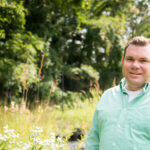
A single leaf dropping into a stream has just a tiny impact, but, together, the billions of leaves that drop into waterways every year help keep global ecosystems going. How this works and why it’s so important are two questions addressed in a massive, new study in Science Advances co-authored by UMBC’s Chris Swan and over 150 researchers across all seven continents.
Leaves are mostly made of carbon, a primary building block for all living things. As leaves fall, organisms that live in or near rivers and streams are “supported by this pulse of carbon,” either directly or indirectly, says Swan, professor of geography and environmental systems.
“At any one point in time there’s not a lot of carbon there,” Swan explains, “but rivers serve as the plumbing system of the planet when it comes to how much carbon flows through.” So what factors drive how all that carbon is processed?
The new landmark study reveals how environmental factors drive the flow of carbon through the world’s waterways. “The study looked across the globe to learn what drives the rate of carbon decay in rivers and streams,” Swan says. “How is it transformed into energy as it travels up through the food web or transported downstream?”
Shifting patterns
The researchers first determined the overall carbon flow in waterways “across all continents and across a serious range of latitudes,” Swan says. They found that temperature was the biggest driver of carbon flow.
“That’s important because of climate change,” Swan says. “This study suggests that if temperature goes up, the rate at which carbon degrades will also go up.” This means that temperature change could reshape how carbon flows “either up the food chain or downstream.”
For example, bacteria, fungi, and aquatic invertebrates (like crayfish) are all responsible for breaking down some of the carbon in rivers. With climate change, “Bacteria and fungi that consume carbon are probably going to be more responsible for degrading it than invertebrates, because invertebrates aren’t able to evolve as fast” to adapt to the changing temperature, Swan explains. As some species succeed and others struggle, that could eventually lead to shifts in the makeup of aquatic ecosystems.
 Chris Swan checks on plants at the UMBC greenhouses for use in restoration projects. Photo by Marlayna Demond ’11 for UMBC.
Development and dead zones
Increasing human development near waterways may also play an important role in carbon flow. Development “snips off” the smallest streams, but it’s at those abundant small streams where there’s an “intimate connection between streams and the forest,” Swan says. Those small streams are “part of the water purification process,” he explains.
Without as many small streams to break down the carbon, it ends up on pavement and runs off into larger streams and rivers. That creates higher than normal carbon concentrations, which can lead to low-oxygen “dead zones” in those larger waterways that are dangerous, even lethal, to aquatic life.
The value of partnership
The results of this study provide an important baseline for research on carbon flow in waterways moving forward. The experimental design at each site was simple, “but to manage and deploy it across the globe to all seven continents was a Herculean task that could only be done with a network of colleagues,” says Swan. “The key here is true partnerships and global coverage.”
To come to their conclusions, the scientists all used the same protocol: They each placed identical cotton squares provided by the lead author, Scott Tiegs at Oakland University, in a nearby stream. Then they carefully measured variables like the temperature, chemical makeup, flow rate, and width of the stream, plus the percentage canopy cover (how shaded the stream is). Everyone sent their cotton squares back to Tiegs, and he measured the cotton’s integrity at the end of the experiment.
Leaf chemistry can play a significant role in how quickly leaves decay—oak leaves are very slow, and ash leaves are fast, for example. But by using the cotton squares instead of real leaves, “we held all of that leaf chemistry constant and just looked at the environmental drivers,” Swan says.
“What I’m most proud about is being part of a group that was able to document the patterns on such a large scale using a consistent approach,” Swan says. Because of its extensive scope and scale, Swan expects the paper to be used in classrooms for a long time to come. As a benchmark study, it could teach generations of ecology students the fundamentals of carbon processing in waterways.
“The study is a lesson in stream ecology,” Swan says, “but the bigger lesson is that if you have partnerships you can do big things, and come up with big patterns.”
Image: Chris Swan. Photos by Marlayna Demond ’11 for UMBC.
]]>
A single leaf dropping into a stream has just a tiny impact, but, together, the billions of leaves that drop into waterways every year help keep global ecosystems going. How this works and why...
https://umbc.edu/stories/umbcs-chris-swan-contributes-to-landmark-global-stream-ecology-study/
https://my3.my.umbc.edu/api/v0/pixel/news/120202/guest@my.umbc.edu/a6df6252adc84cd63ac4a22a1d0bdb64/api/pixel
cahss
ges
page1
research
science-and-technology
UMBC News & Magazine
https://my3.my.umbc.edu/groups/umbc-news-magazine
https://assets1-my.umbc.edu/system/shared/avatars/groups/000/001/943/24435aa6207c452e7bc15cc74b42c7bb/xsmall.png?1748556657
https://assets1-my.umbc.edu/system/shared/avatars/groups/000/001/943/24435aa6207c452e7bc15cc74b42c7bb/original.png?1748556657
https://assets2-my.umbc.edu/system/shared/avatars/groups/000/001/943/24435aa6207c452e7bc15cc74b42c7bb/xxlarge.png?1748556657
https://assets2-my.umbc.edu/system/shared/avatars/groups/000/001/943/24435aa6207c452e7bc15cc74b42c7bb/xlarge.png?1748556657
https://assets3-my.umbc.edu/system/shared/avatars/groups/000/001/943/24435aa6207c452e7bc15cc74b42c7bb/large.png?1748556657
https://assets1-my.umbc.edu/system/shared/avatars/groups/000/001/943/24435aa6207c452e7bc15cc74b42c7bb/medium.png?1748556657
https://assets2-my.umbc.edu/system/shared/avatars/groups/000/001/943/24435aa6207c452e7bc15cc74b42c7bb/small.png?1748556657
https://assets1-my.umbc.edu/system/shared/avatars/groups/000/001/943/24435aa6207c452e7bc15cc74b42c7bb/xsmall.png?1748556657
https://assets2-my.umbc.edu/system/shared/avatars/groups/000/001/943/24435aa6207c452e7bc15cc74b42c7bb/xxsmall.png?1748556657
UMBC News & Magazine
0
0
false
Wed, 27 Feb 2019 15:19:49 -0500
Hot and Cold: Men’s basketball struggles with quick turnaround
There is a reason why sports are not decided on paper. One would imagine that the Vermont Catamounts, playing at full strength with their best player Anthony Lamb, would be a tough task for UMBC and that the UAlbany Great Danes would be a breeze. But this week shaped out much differently than match-up predictors imagined.
On Thursday, the Retrievers men’s basketball team hosted the Catamounts for a nationally televised game. It was the second game between the two teams so far on the year. In January, the Retrievers bested the Catamounts in Burlington, VT in the first rematch of last years America East championship game. At that time, Vermont was without their leading scorer, Anthony Lamb due to a concussion. Still, the Catamounts entered the game heavily favored to beat the Retrievers.
But, the Retrievers played tough defense throughout the contest, and they were seemingly too tough for Vermont to handle. Junior-guard KJ Jackson and Junior-forward Arkel Lamar led the charge as the Retrievers outplayed the Catamounts on both sides of the ball. Jackson scored 18 points with 4 rebounds, 3 assists and 2 steals. Lamar scored 15 points with 5 rebounds and 3 steals. UMBC led the game for all but about 30 seconds of the contest, dominating the team that they had lost 23 consecutive games against.
On Saturday, the Retrievers traveled to Albany, where they looked to continue their hot-streak. After the win against Vermont, the team had won 9 of their last 10 contests. But, Albany’s offense was too much for UMBC on the evening. Aside from making the first field-goal of the evening, UMBC would not lead in the contest. They would fall to Albany 84-75. The Great Danes scored more points than any other conference opponent has against UMBC all season.
Despite the setback against Albany, the Retrievers will look to finish their season strong. On Wednesday, they have the opportunity to take second place from Stony Brook, as they play the Sea Wolves on the road in New York. They will finish the regular season on Saturday at home against New Hampshire.
UMBC will host a first-round playoff game at the Event Center on March 9. If they secure second place in the conference, they would also host a second-round game on March 12.
]]>
There is a reason why sports are not decided on paper. One would imagine that the Vermont Catamounts, playing at full strength with their best player Anthony Lamb, would be a tough task for UMBC...
https://retriever.umbc.edu/2019/02/hot-and-cold-mens-basketball-struggles-with-quick-turnaround/
https://my3.my.umbc.edu/api/v0/pixel/news/82443/guest@my.umbc.edu/d04fb77318d9e3e587c6268a5ea23b5a/api/pixel
retriever
sports
The Retriever
https://my3.my.umbc.edu/groups/retriever
https://assets1-my.umbc.edu/system/shared/avatars/groups/000/000/961/a4bec01b91ae747ba7a6d93ed7db9687/xsmall.png?1580494471
https://assets1-my.umbc.edu/system/shared/avatars/groups/000/000/961/a4bec01b91ae747ba7a6d93ed7db9687/original.jpg?1580494471
https://assets1-my.umbc.edu/system/shared/avatars/groups/000/000/961/a4bec01b91ae747ba7a6d93ed7db9687/xxlarge.png?1580494471
https://assets1-my.umbc.edu/system/shared/avatars/groups/000/000/961/a4bec01b91ae747ba7a6d93ed7db9687/xlarge.png?1580494471
https://assets4-my.umbc.edu/system/shared/avatars/groups/000/000/961/a4bec01b91ae747ba7a6d93ed7db9687/large.png?1580494471
https://assets2-my.umbc.edu/system/shared/avatars/groups/000/000/961/a4bec01b91ae747ba7a6d93ed7db9687/medium.png?1580494471
https://assets2-my.umbc.edu/system/shared/avatars/groups/000/000/961/a4bec01b91ae747ba7a6d93ed7db9687/small.png?1580494471
https://assets1-my.umbc.edu/system/shared/avatars/groups/000/000/961/a4bec01b91ae747ba7a6d93ed7db9687/xsmall.png?1580494471
https://assets1-my.umbc.edu/system/shared/avatars/groups/000/000/961/a4bec01b91ae747ba7a6d93ed7db9687/xxsmall.png?1580494471
The Retriever
1
0
true
Wed, 27 Feb 2019 15:15:29 -0500
 Chris Swan checks on plants at the UMBC greenhouses for use in restoration projects. Photo by Marlayna Demond ’11 for UMBC.