<?xml version="1.0"?>
<News hasArchived="true" page="5656" pageCount="10947" pageSize="10" timestamp="Sat, 14 Nov 2026 09:26:14 -0500" url="https://my3.my.umbc.edu/posts.xml?page=5656">
<NewsItem contentIssues="true" id="69769" important="false" status="posted" url="https://my3.my.umbc.edu/posts/69769">
<Title>UMBC announces largest-ever group of Postdoctoral Fellows</Title>
<Tagline>Faculty Diversity improving</Tagline>
<Body>
<![CDATA[
    <div class="html-content">
    <em>This article was originally written <a href="http://news.umbc.edu/umbcs-announces-largest-ever-group-of-postdoctoral-fellows-for-faculty-diversity/" rel="nofollow external" class="bo">here</a> by Megan Hanks on June 22, 2017.</em><div><br></div>
    <div>


    <p><span>UMBC’s newest Postdoctoral Fellows for Faculty Diversity will soon begin a two-year experience focused on growing their research and refining their teaching skills through professional development opportunities and working closely with faculty mentors, in preparation for possible tenure-track faculty positions at UMBC.</span></p>
    <p><span>The fourth cohort of fellows—the largest in program history—includes <strong>Lisa Cassell</strong>, philosophy; <strong>René Esparza</strong>, American studies; <strong>Christine Hawn</strong>, geography and environmental systems; <strong>Erika Fountain</strong>, psychology; <strong>Adanna Jones</strong>, dance; <strong>Camee Maddox-Wingfield</strong>, sociology and anthropology; and <strong>Noor Zaidi</strong>, history.</span></p>
    <p><span>“UMBC is fortunate to have been able to attract a group of such outstanding young scholars whom we now welcome as members of our community,” says <strong>Philip Rous</strong>, provost and senior vice president for academic affairs. “These fellows represent the best of UMBC and our commitment to attracting scholars from diverse backgrounds and perspectives to further advance our shared values of inclusive excellence through world-class scholarship and a distinctive educational experience for all of our students.”</span></p>
    <p><span>As a Maryland native who earned her Ph.D. at the University of Florida, Maddox-Wingfield knew that she wanted to return to the University System of Maryland for the next step in her career. “This postdoctoral fellowship opportunity will mark a major milestone in my career trajectory,” she shares. “It is my goal to complete a book manuscript based on my dissertation field research, and gain pedagogical skills that will make me a more effective instructor and mentor to students.”</span></p>
    <p><span>Fountain explained that UMBC’s commitment to diversity is a reason why she chose to join the program for 2017 – 19. “I believe being part of a community that embraces different perspectives is essential to producing top quality research. I look forward to working with the outstanding mentors at UMBC and furthering my research on issues related to juvenile justice,” she said.</span></p>
    <p><span>Esparza shared in Fountain’s excitement to develop his research in a supportive community that values diversity. “I am enthusiastic about sharing my passion for teaching and commitment to community engaged scholarship through the Postdoctoral Fellowship for Faculty Diversity Program, in hopes of fulfilling UMBC’s mission to prepare students for a multicultural, global society,” he reflected.</span></p>
    <p><span><br></span></p>
    <p><span><img src="https://my3.my.umbc.edu/system/shared/attachments/news/000/069/769/32e0740fc318fc059523a2f830a5b248/Christine-Hawn.png" style="max-width: 100%; height: auto;"></span></p>
    <p><span>Christine Hawn. Photo by Marilu Lopez Fretts.</span></p>
    <p><span>Hawn agrees, noting, “I’m looking forward to having the time, mentorship, and resources necessary to build my own research program. Because this fellowship is centered around diversity, I’m taking the opportunity to develop sound ecological research that is informed by my identities.”</span></p>
    <p><span>In addition to continuing to publish and present her research, Cassel is particularly interested in the teaching opportunities the fellowship provides. She says, “I’m looking forward to developing new courses for the philosophy department—courses that I’ve always wanted to teach, and that I’ll finally have the opportunity to teach, at UMBC.”</span></p>
    <p><span>


    </span></p>
    <p><span>Jones is looking forward to working with her two mentors <strong>Carol Hess</strong>, dance, and <strong>Kimberly Moffitt</strong>, American studies. “Ultimately, this fellowship offers me the time to complete my book proposal, as well as get critical feedback on my research-based choreography,” she says.</span></p>
    <p><span><br></span></p>
    <p><span><img src="https://my3.my.umbc.edu/system/shared/attachments/news/000/069/769/38a647f544eaa16673a5d33b77f942fe/Adanna-Jones-960x540.jpg" style="max-width: 100%; height: auto;"></span></p>
    <p><span>Adanna Jones. Photo courtesy of Adanna Jones.</span></p>
    <p><span>This year, UMBC’s College of Natural and Mathematical Sciences also launched a program designed to fulfill the same needs as the university-wide Postdoctoral Fellows for Faculty Diversity program, but with a specific focus on career trajectories in the natural sciences.</span></p>
    <p><span>UMBC’s new Natural Sciences Pre-professoriate Fellowship program offers fellows an appointment of up to two years, during which scaffolding is in place to prepare the pre-professoriate fellows for tenure-track assistant professor positions at UMBC. In addition to being strong scholars, the program stipulates that applicants must be committed to diversity in the academy. Fellows receive research and teaching guidance from a faculty mentor, work on a collaborative research project, teach one class per semester, mentor students in the <span><a href="http://stembuild.umbc.edu" rel="nofollow external" class="bo">STEM BUILD</a></span> program, and participate in the <span><a href="http://fdc.umbc.edu/active-learning-inquiry-teaching-certificate-program/" rel="nofollow external" class="bo">Active Learning, Inquiry Teaching Certificate</a></span> program.</span></p>
    <p><span>The first two scholars to accept appointments through the program, <strong>Fernando Vonhoff</strong> and <strong>Mercedes Burns</strong>, will join UMBC’s biological sciences department this fall. Vonhoff is currently a postdoctoral research associate in molecular, cellular and developmental biology at Yale University, and Burns is a National Science Foundation postdoctoral fellow in biology at San Diego State University.</span></p>
    <p><span><strong>Phil Farabaugh</strong>, professor and chair of biological sciences, is tremendously excited about the high quality of fellowship applications received. He explained that in addition to having strong research credentials, the dozens of candidates who applied have demonstrated a longstanding commitment to diversity in the sciences, including “a lot of work with undergraduates and younger kids in reaching out to underrepresented populations,” work the department hopes the selected fellows will extend at UMBC.</span></p>
    <p><span>These initiatives are part of a broader effort by UMBC to build and steward a faculty that reflects and effectively meets the needs of the university’s highly diverse student body. Also included in this effort is the successful <span><a href="http://advance.umbc.edu" rel="nofollow external" class="bo">ADVANCE</a></span> program to increase the number of women faculty members.</span></p>
    <p><span><a href="http://facultydiversity.umbc.edu/postdocs/" rel="nofollow external" class="bo">Read more</a></span><span> about the Postdoctoral Fellows for Faculty Diversity program, including information about previous cohorts.</span></p>
    <p><span>


    </span></p>
    <p><span><em>Banner image: Camee Maddox-Wingfield. Photo by Marlayna Demond ’11 for UMBC.</em></span></p>
    </div>
    </div>
]]>
</Body>
<Summary>This article was originally written here by Megan Hanks on June 22, 2017.             UMBC’s newest Postdoctoral Fellows for Faculty Diversity will soon begin a two-year experience focused on...</Summary>
<AttachmentKind>Image</AttachmentKind>
<AttachmentUrl>https://assets4-my.umbc.edu/system/shared/attachments/e86870a1a53dfee25606f76550ab6a32/6af86f86/news/000/069/769/32e0740fc318fc059523a2f830a5b248/Christine-Hawn.png?1504116273</AttachmentUrl>
<Attachments>
<Attachment kind="Image" url="https://my3.my.umbc.edu/posts/69769/attachments/24882"></Attachment>
<Attachment kind="Image" url="https://my3.my.umbc.edu/posts/69769/attachments/24883"></Attachment>
</Attachments>
<TrackingUrl>https://my3.my.umbc.edu/api/v0/pixel/news/69769/guest@my.umbc.edu/5d11d1fc384b7c730cdd6f87865f1e4d/api/pixel</TrackingUrl>
<Tag>ovpr-news-2017</Tag>
<Group token="research">Archived RCA News</Group>
<GroupUrl>https://my3.my.umbc.edu/groups/research</GroupUrl>
<AvatarUrl>https://assets4-my.umbc.edu/system/shared/avatars/groups/000/000/794/4bca2aa331eb7e472d63d97e0798b600/xsmall.png?1743706368</AvatarUrl>
<AvatarUrl size="original">https://assets2-my.umbc.edu/system/shared/avatars/groups/000/000/794/4bca2aa331eb7e472d63d97e0798b600/original.jpg?1743706368</AvatarUrl>
<AvatarUrl size="xxlarge">https://assets3-my.umbc.edu/system/shared/avatars/groups/000/000/794/4bca2aa331eb7e472d63d97e0798b600/xxlarge.png?1743706368</AvatarUrl>
<AvatarUrl size="xlarge">https://assets4-my.umbc.edu/system/shared/avatars/groups/000/000/794/4bca2aa331eb7e472d63d97e0798b600/xlarge.png?1743706368</AvatarUrl>
<AvatarUrl size="large">https://assets2-my.umbc.edu/system/shared/avatars/groups/000/000/794/4bca2aa331eb7e472d63d97e0798b600/large.png?1743706368</AvatarUrl>
<AvatarUrl size="medium">https://assets4-my.umbc.edu/system/shared/avatars/groups/000/000/794/4bca2aa331eb7e472d63d97e0798b600/medium.png?1743706368</AvatarUrl>
<AvatarUrl size="small">https://assets4-my.umbc.edu/system/shared/avatars/groups/000/000/794/4bca2aa331eb7e472d63d97e0798b600/small.png?1743706368</AvatarUrl>
<AvatarUrl size="xsmall">https://assets4-my.umbc.edu/system/shared/avatars/groups/000/000/794/4bca2aa331eb7e472d63d97e0798b600/xsmall.png?1743706368</AvatarUrl>
<AvatarUrl size="xxsmall">https://assets3-my.umbc.edu/system/shared/avatars/groups/000/000/794/4bca2aa331eb7e472d63d97e0798b600/xxsmall.png?1743706368</AvatarUrl>
<Sponsor>Office of the Vice President for Research</Sponsor>
<ThumbnailUrl size="xxlarge">https://assets1-my.umbc.edu/system/shared/thumbnails/news/000/069/769/d194a7e6d2c70a859787f993d1fe3a94/xxlarge.jpg?1504116203</ThumbnailUrl>
<ThumbnailUrl size="xlarge">https://assets1-my.umbc.edu/system/shared/thumbnails/news/000/069/769/d194a7e6d2c70a859787f993d1fe3a94/xlarge.jpg?1504116203</ThumbnailUrl>
<ThumbnailUrl size="large">https://assets1-my.umbc.edu/system/shared/thumbnails/news/000/069/769/d194a7e6d2c70a859787f993d1fe3a94/large.jpg?1504116203</ThumbnailUrl>
<ThumbnailUrl size="medium">https://assets1-my.umbc.edu/system/shared/thumbnails/news/000/069/769/d194a7e6d2c70a859787f993d1fe3a94/medium.jpg?1504116203</ThumbnailUrl>
<ThumbnailUrl size="small">https://assets1-my.umbc.edu/system/shared/thumbnails/news/000/069/769/d194a7e6d2c70a859787f993d1fe3a94/small.jpg?1504116203</ThumbnailUrl>
<ThumbnailUrl size="xsmall">https://assets4-my.umbc.edu/system/shared/thumbnails/news/000/069/769/d194a7e6d2c70a859787f993d1fe3a94/xsmall.jpg?1504116203</ThumbnailUrl>
<ThumbnailUrl size="xxsmall">https://assets1-my.umbc.edu/system/shared/thumbnails/news/000/069/769/d194a7e6d2c70a859787f993d1fe3a94/xxsmall.jpg?1504116203</ThumbnailUrl>
<PawCount>0</PawCount>
<CommentCount>0</CommentCount>
<CommentsAllowed>true</CommentsAllowed>
<PostedAt>Wed, 30 Aug 2017 14:16:46 -0400</PostedAt>
</NewsItem>

<NewsItem contentIssues="false" id="69770" important="false" status="posted" url="https://my3.my.umbc.edu/posts/69770">
<Title>US Researchers Ramp-up Bluefin Research</Title>
<Body>
<![CDATA[
    <div class="html-content">
    <img src="http://hatcheryinternational.com/downloads/950/download/Tuna%20Tanks%202.JPG?cb=6428c45cb8176c8f0c793975e44d3a39&amp;w=640" alt="Tuna Tanks 2.JPG" style="max-width: 100%; height: auto;"><div>
    <div>
    <h1><br></h1>
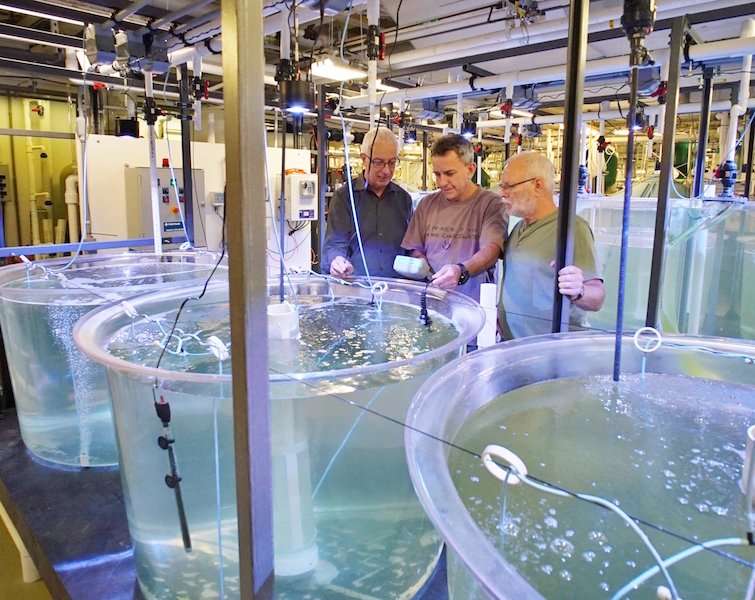
    <div><span>Dr. Yonathan Zohar, with aquaculture biologists, Jorge Gomezjurado and Odi Zmora, next to the tuna larval rearing tanks</span></div>
    </div>
    <div>
    <p>by <a href="http://hatcheryinternational.com/topics/erich-luening/" rel="nofollow external" class="bo">Erich Luening</a></p>
    <p>May 30, 2017</p>
    <p>There’s a lot of research going into rearing bluefin tuna in European countries along the Mediterranean coast, and in Australia and Japan but now researchers in the U.S. state of Maryland are cranking up investigation into this highly valued species.</p>
    <p>         Located on Baltimore’s inner harbor on the Chesapeake Bay the University of Maryland Baltimore County's Aquaculture Research Center (ARC) has been studying the bluefin tuna (BFT) life-cycle from egg, larvae and fingerling stage for a number of years while also researching similar life stages of European sea bream and sea bass.</p>
    <p>         Professor Yonathan Zohar is chair of the Department of Marine Biotechnology and head of the team at the marine recirculation aquaculture facility: "ARC is a totally contained, fully recirculating, bio-secure marine aquaculture operation. It is fully computer-controlled to allow a wide range of environmental conditions - salinity: 0-to-full seawater, temperature:12-28 degrees C and photoperiod control over individual tanks with simulating sunrise and sunset," conditions, he explained.</p>
    <p><strong>Generic facility</strong></p>
    <p>         Under Zohar's design, the facility is also very simple in its approach to rearing marine fish and shellfish in a recirculating system.</p>
    <p>         "It is a generic facility that can accommodate any fish/shellfish species, tailoring the conditions to allow optimal performance," he says. "We start with city water, run it through activated carbon filters and then make our artificial seawater fully simulating the composition of the marine environment."</p>
    <p>         The facility uses unique nitrification and denitrification biofilters to treat the dissolved waste and it also biologically converts the organic/solid waste/sludge to fuel grade methane (natural gas).</p>
    <p>         "Therefore, while biologically removing our waste, we generate bio-energy to offset some of the energy costs of the operation," said Zohar. "ARC’s main objectives are to enable our scientists to carry out their aquaculture R&amp;D program on their species of interest in optimal conditions as well as study in a prototype of a fully contained, zero discharge marine aquaculture operation."</p>
    <p><strong>Applied research</strong></p>
    <p>          Research programs at ARC cover a broad range of topics, including broodstock management and year-round spawning, larval rearing and hatchery technology, food chain and live feeds, reproduction (spawning induction as well as reproductive sterility), growth, environmentally responsible feeds, pathobiology and understanding and overcoming disease.</p>
    <p>         There's also a major focus on developing and optimizing environmentally sustainable and economically feasible, bio-secure marine recirculating systems for both hatchery and grow-out production.</p>
    <p>         "We work with commercially important finfish such as gilthead sea bream, European sea bass, striped bass, bluefin tuna, Atlantic salmon, rainbow trout, cobia, amberjack and tilapia as well as with blue crab and oysters," Zohar explained. "We run several industry-funded projects to address major challenges in the aquaculture industry, such as closing life cycles of new species, year-round spawning, larval rearing, producing reproductively sterile fish, and improving land-based mariculture."</p>
    <p><br></p>
    </div>
    </div>
    <div><div>
    <h1><br></h1>
    <div><br></div>
    </div></div>
    </div>
]]>
</Body>
<Summary>Dr. Yonathan Zohar, with aquaculture biologists, Jorge Gomezjurado and Odi Zmora, next to the tuna larval rearing tanks    by Erich Luening  May 30, 2017  There’s a lot of research going into...</Summary>
<TrackingUrl>https://my3.my.umbc.edu/api/v0/pixel/news/69770/guest@my.umbc.edu/d14889e164be87413324f03cd3622460/api/pixel</TrackingUrl>
<Group token="marinebiotechnology">Marine Biotechnology</Group>
<GroupUrl>https://my3.my.umbc.edu/groups/marinebiotechnology</GroupUrl>
<AvatarUrl>https://assets1-my.umbc.edu/system/shared/avatars/groups/000/000/761/9a14ec361fce610fe377f9ddac34d238/xsmall.png?1794502438</AvatarUrl>
<AvatarUrl size="original">https://assets4-my.umbc.edu/system/shared/avatars/groups/000/000/761/9a14ec361fce610fe377f9ddac34d238/original.png?1794502438</AvatarUrl>
<AvatarUrl size="xxlarge">https://assets3-my.umbc.edu/system/shared/avatars/groups/000/000/761/9a14ec361fce610fe377f9ddac34d238/xxlarge.png?1794502438</AvatarUrl>
<AvatarUrl size="xlarge">https://assets4-my.umbc.edu/system/shared/avatars/groups/000/000/761/9a14ec361fce610fe377f9ddac34d238/xlarge.png?1794502438</AvatarUrl>
<AvatarUrl size="large">https://assets2-my.umbc.edu/system/shared/avatars/groups/000/000/761/9a14ec361fce610fe377f9ddac34d238/large.png?1794502438</AvatarUrl>
<AvatarUrl size="medium">https://assets2-my.umbc.edu/system/shared/avatars/groups/000/000/761/9a14ec361fce610fe377f9ddac34d238/medium.png?1794502438</AvatarUrl>
<AvatarUrl size="small">https://assets1-my.umbc.edu/system/shared/avatars/groups/000/000/761/9a14ec361fce610fe377f9ddac34d238/small.png?1794502438</AvatarUrl>
<AvatarUrl size="xsmall">https://assets1-my.umbc.edu/system/shared/avatars/groups/000/000/761/9a14ec361fce610fe377f9ddac34d238/xsmall.png?1794502438</AvatarUrl>
<AvatarUrl size="xxsmall">https://assets2-my.umbc.edu/system/shared/avatars/groups/000/000/761/9a14ec361fce610fe377f9ddac34d238/xxsmall.png?1794502438</AvatarUrl>
<Sponsor>Marine Biotechnology</Sponsor>
<PawCount>0</PawCount>
<CommentCount>0</CommentCount>
<CommentsAllowed>true</CommentsAllowed>
<PostedAt>Wed, 30 Aug 2017 14:12:00 -0400</PostedAt>
<EditAt>Wed, 30 Aug 2017 17:10:38 -0400</EditAt>
</NewsItem>

<NewsItem contentIssues="true" id="69767" important="false" status="posted" url="https://my3.my.umbc.edu/posts/69767">
<Title>UMBC computer scientists explain how AI can help users</Title>
<Tagline>Translating Legalese before online users click "agree"</Tagline>
<Body>
<![CDATA[
    <div class="html-content">
    <em>This article was originally written <a href="http://news.umbc.edu/umbc-computer-scientists-explain-how-ai-can-help-translate-legalese-before-online-users-click-agree/" rel="nofollow external" class="bo">here</a> by Megan Hanks on June 30, 2017.</em><div><br></div>
    <div>


    <p><span>Every day, people interact with large amounts of text online, including legal documents they might quickly skim and sign without full, careful review. In an article recently published in <span><em><a href="https://theconversation.com/teaching-machines-to-understand-and-summarize-text-78236?sa=pg2&amp;sq=finin&amp;sr=1" rel="nofollow external" class="bo">The Conversation</a></em></span>, <strong>Karuna Joshi</strong>, research associate professor of computer science and electrical engineering, and <strong>Tim Finin</strong>, professor of computer science and electrical engineering, explain how artificial intelligence (AI) is helping to summarize lengthy and complex legalese  so people can more easily understand terms of service and similar agreements before they click “accept” to access a new app or online service.</span></p>
    <p><span>The legal documents that Joshi and Finin are working to summarize—terms of service, privacy policies, and user agreements—often accompany new online services, contests, apps, and subscriptions. “As computer science researchers, we are working on ways artificial intelligence algorithms could digest these massive texts and extract their meaning, presenting it in terms regular people can understand,” they explain.</span></p>
    <p><span>Through their research, Joshi and Finin ask computers to break down the terms and conditions that regular users “agree” to or “accept.” To process the text, Joshi and Finin employ a range of AI technologies, including machine learning, knowledge representation, speech recognition, and human language comprehension.</span></p>
    <p><span>Joshi and Finin have found that in many of the privacy policies people are prompted to review and accept online, there are sections that do not actually apply to the consumer or service provider. These sections of the agreements might, for example,  “include rules for third parties…that people might not even know are involved in data storage or retrieval,” they note.</span></p>
    <p><span><br></span></p>
    <p><span><img src="https://my3.my.umbc.edu/system/shared/attachments/news/000/069/767/d0a194dc29ee00d2f22ef573f2d7097f/Tim-Finin_2-e1498828676257.jpg" style="max-width: 100%; height: auto;"></span></p>
    <p><span>Tim Finin. Photo from CSEE website.</span></p>
    <p><span><br></span></p>
    <p><span>After examining these documents, the software Joshi and Finin have developed pinpoints specific items that people should be aware of when they are granting their consent or agreement—what they describe as “key information specifying the legal rights, obligations and prohibitions identified in the document.” In other words, the software takes in all that complex legal language, and then  then presents just the most essential information in “clear, direct, human-readable statements,” making it much more feasible for users to understand what they are consenting to before they click “agree.”</span></p>
    <p><span>Read “<span><a href="https://theconversation.com/teaching-machines-to-understand-and-summarize-text-78236?sa=pg2&amp;sq=finin&amp;sr=1" rel="nofollow external" class="bo">Teaching machines to understand — and summarize — text</a></span>” in <em>The Conversation </em>to learn more about Joshi and Finan’s approach to making online legal documents more accessible through AI.</span></p>
    <p><span>


    </span></p>
    <p><span><em>Banner image: Karuna Joshi. Photo by Marlayna Demond ’11 for UMBC. </em></span></p>
    </div>
    </div>
]]>
</Body>
<Summary>This article was originally written here by Megan Hanks on June 30, 2017.             Every day, people interact with large amounts of text online, including legal documents they might quickly...</Summary>
<AttachmentKind>Image</AttachmentKind>
<AttachmentUrl>https://assets3-my.umbc.edu/system/shared/attachments/86d64907334796baf7664bc1519d07c5/6af86f86/news/000/069/767/d0a194dc29ee00d2f22ef573f2d7097f/Tim-Finin_2-e1498828676257.jpg?1504115744</AttachmentUrl>
<Attachments>
<Attachment kind="Image" url="https://my3.my.umbc.edu/posts/69767/attachments/24881"></Attachment>
</Attachments>
<TrackingUrl>https://my3.my.umbc.edu/api/v0/pixel/news/69767/guest@my.umbc.edu/8b50e237c07364ec74159e20894c363f/api/pixel</TrackingUrl>
<Tag>ovpr-news-2017</Tag>
<Group token="research">Archived RCA News</Group>
<GroupUrl>https://my3.my.umbc.edu/groups/research</GroupUrl>
<AvatarUrl>https://assets4-my.umbc.edu/system/shared/avatars/groups/000/000/794/4bca2aa331eb7e472d63d97e0798b600/xsmall.png?1743706368</AvatarUrl>
<AvatarUrl size="original">https://assets2-my.umbc.edu/system/shared/avatars/groups/000/000/794/4bca2aa331eb7e472d63d97e0798b600/original.jpg?1743706368</AvatarUrl>
<AvatarUrl size="xxlarge">https://assets3-my.umbc.edu/system/shared/avatars/groups/000/000/794/4bca2aa331eb7e472d63d97e0798b600/xxlarge.png?1743706368</AvatarUrl>
<AvatarUrl size="xlarge">https://assets4-my.umbc.edu/system/shared/avatars/groups/000/000/794/4bca2aa331eb7e472d63d97e0798b600/xlarge.png?1743706368</AvatarUrl>
<AvatarUrl size="large">https://assets2-my.umbc.edu/system/shared/avatars/groups/000/000/794/4bca2aa331eb7e472d63d97e0798b600/large.png?1743706368</AvatarUrl>
<AvatarUrl size="medium">https://assets4-my.umbc.edu/system/shared/avatars/groups/000/000/794/4bca2aa331eb7e472d63d97e0798b600/medium.png?1743706368</AvatarUrl>
<AvatarUrl size="small">https://assets4-my.umbc.edu/system/shared/avatars/groups/000/000/794/4bca2aa331eb7e472d63d97e0798b600/small.png?1743706368</AvatarUrl>
<AvatarUrl size="xsmall">https://assets4-my.umbc.edu/system/shared/avatars/groups/000/000/794/4bca2aa331eb7e472d63d97e0798b600/xsmall.png?1743706368</AvatarUrl>
<AvatarUrl size="xxsmall">https://assets3-my.umbc.edu/system/shared/avatars/groups/000/000/794/4bca2aa331eb7e472d63d97e0798b600/xxsmall.png?1743706368</AvatarUrl>
<Sponsor>Office of the Vice President for Research</Sponsor>
<ThumbnailUrl size="xxlarge">https://assets3-my.umbc.edu/system/shared/thumbnails/news/000/069/767/017d234dccfcf4da102cd2293c248457/xxlarge.jpg?1504115836</ThumbnailUrl>
<ThumbnailUrl size="xlarge">https://assets1-my.umbc.edu/system/shared/thumbnails/news/000/069/767/017d234dccfcf4da102cd2293c248457/xlarge.jpg?1504115836</ThumbnailUrl>
<ThumbnailUrl size="large">https://assets4-my.umbc.edu/system/shared/thumbnails/news/000/069/767/017d234dccfcf4da102cd2293c248457/large.jpg?1504115836</ThumbnailUrl>
<ThumbnailUrl size="medium">https://assets2-my.umbc.edu/system/shared/thumbnails/news/000/069/767/017d234dccfcf4da102cd2293c248457/medium.jpg?1504115836</ThumbnailUrl>
<ThumbnailUrl size="small">https://assets3-my.umbc.edu/system/shared/thumbnails/news/000/069/767/017d234dccfcf4da102cd2293c248457/small.jpg?1504115836</ThumbnailUrl>
<ThumbnailUrl size="xsmall">https://assets3-my.umbc.edu/system/shared/thumbnails/news/000/069/767/017d234dccfcf4da102cd2293c248457/xsmall.jpg?1504115836</ThumbnailUrl>
<ThumbnailUrl size="xxsmall">https://assets1-my.umbc.edu/system/shared/thumbnails/news/000/069/767/017d234dccfcf4da102cd2293c248457/xxsmall.jpg?1504115836</ThumbnailUrl>
<PawCount>1</PawCount>
<CommentCount>0</CommentCount>
<CommentsAllowed>true</CommentsAllowed>
<PostedAt>Wed, 30 Aug 2017 14:02:30 -0400</PostedAt>
</NewsItem>

<NewsItem contentIssues="true" id="69766" important="false" status="posted" url="https://my3.my.umbc.edu/posts/69766">
<Title>UMBC researchers address diverse factors</Title>
<Tagline>Impacting US Schooling</Tagline>
<Body>
<![CDATA[
    <div class="html-content">
    <em>This article was written <a href="http://news.umbc.edu/umbc-researchers-address-diverse-factors-impacting-u-s-schooling/" rel="nofollow external" class="bo">here</a> by Sarah Hansen on July 10, 2017.</em><div>
    <br><div>


    <p><span>UMBC researchers from across the humanities and social sciences recently earned press coverage for their work exploring factors that shape K–12 education in the United States. From inclusive language in classrooms to math pedagogy, each offers insights to spur change and further research to improve children’s educational experiences.</span></p>
    <p><span><strong>Christine Mallinson</strong>, professor of language, literacy, and culture, writes in <span><strong><em><a href="https://theconversation.com/the-sound-of-inclusion-why-teachers-words-matter-74019?sa=pg1&amp;sq=mallinson&amp;sr=1" rel="nofollow external" class="bo">The Conversation</a></em></strong></span> about how language differences among students can affect student outcomes. “Studies have found that at all levels of education, instructors often favor students who sound like themselves and can be biased against those who don’t,” writes Mallinson. Compounding the problem, “As the U.S. student population continues to rapidly diversify along cultural and linguistic lines, the demographics of the teacher population remain stable at roughly 82 percent white and predominantly female,” meaning non-white students experience negative bias more often.</span></p>
    <p><span>Mallinson explains that students who are repeatedly told their way of speaking is wrong internalize that message, which may result in students speaking up less often in class. To help educators take on this challenge, Mallinson and colleagues developed a series of webinars, a podcast, and <span><strong><a href="http://news.umbc.edu/new-app-valuable-voices-builds-awareness-of-linguistic-and-cultural-diversity-in-the-classroom/" rel="nofollow external" class="bo">an app called “Valuable Voices”</a></strong></span> replete with classroom exercises to help students and educators understand and value linguistic diversity.</span></p>
    <p><span>“Ensuring that students, peers and teachers from diverse backgrounds understand and communicate respectfully with each other is often just as important as helping students understand the material in their textbooks,” writes Mallinson. “Language matters—not just for fostering mutual respect, but for making sure that every student has an equal opportunity to succeed.”</span></p>
    <p><span>Prior to Hurricane Katrina, the New Orleans Public School System bucked the trend in teacher demographics that Mallinson notes, with a teacher workforce that identified as 71 percent African American serving a predominantly African American student body. However, immediately following Katrina, substantial school system restructuring deeply impacted the teacher workforce, and by 2014, fewer than 50 percent of city teachers were black.</span></p>
    <p><span><strong>Jane Arnold Lincove</strong>, associate professor of public policy, detailed how teacher demographics changed in New Orleans after Katrina in a new study featured in <span><strong><em><a href="http://hechingerreport.org/happened-city-full-teachers-black-fired/" rel="nofollow external" class="bo">The Hechinger Report</a></em></strong></span>. The study, published by the <span><strong><a href="https://educationresearchalliancenola.org/publications/did-the-teachers-dismissed-after-hurricane-katrina-return-to-public-education" rel="nofollow external" class="bo">Education Research Alliance for New Orleans at Tulane University</a></strong></span>, noted that 4,300 fired teachers “were replaced with teachers who were paid less, had less experience, and were more likely to be white and from out of state.” The restructured school district also no longer offers pensions.</span></p>
    <p><span>These changes have the potential to negatively affect the city’s student body, including having a disproportionately negative impact on black students, given “a bevy of research showing that black kids benefit from having black teachers,” achieving higher referral rates to advanced classes and higher graduation rates, the<em> Report </em>notes. Lincove’s study data only extended to 2013, so it’s unclear what effect a push after that to hire more local teachers may have had.</span></p>
    <p><span><strong>Christopher Rakes</strong>, assistant professor of education, argues in <span><strong><em><a href="https://theconversation.com/challenging-the-status-quo-in-mathematics-teaching-for-understanding-78660?sa=pg1&amp;sq=rakes&amp;sr=1" rel="nofollow external" class="bo">The Conversation</a></em></strong></span> that a “culture of over-testing” in the last two decades is another factor that’s shaped teaching. Specifically, Rakes believes testing has contributed to the persistence of math lessons based on rote memorization of procedures to solve specific problem types. These methods are “so common that [they’re] seldom even questioned,” although there is evidence to suggest that concentrating on teaching conceptual understanding is more effective, Rakes says.</span></p>
    <p><span>With rote learning, Rakes writes, “Children can become dependent on tricks and rules that don’t hold true in all situations, making it harder to adapt their knowledge to new situations,” but with a more conceptual framework, “less information has to be memorized, and students can translate their knowledge to new situations more easily.”</span></p>
    <p><span>Rakes acknowledges that teaching conceptually “may require additional time commitments both in and outside the classroom,” but, “research has provided evidence that teaching conceptually has benefits not offered by traditional teaching. And students who learn conceptually typically do as well or better on achievement tests.” That means even if testing continues to be the norm to gauge learning, switching to a more concept-focused math curriculum would benefit student success.</span></p>
    <p><span>More important than any test, “Teaching [conceptually] is a critical first step if students are to begin recognizing mathematics as meaningful,” writes Rakes. “Conceptual understanding is a key ingredient to helping people think mathematically and use mathematics outside of a classroom.”</span></p>
    <p><span>The article has generated substantial public interest and discussion, and has so far been read over 17,000 times worldwide.</span></p>
    <p><span><em>Image: Christine Mallinson, third from right, meets with graduate students. Photo by Marlayna Demond ’11 for UMBC.</em></span></p>
    </div>
    </div>
    </div>
]]>
</Body>
<Summary>This article was written here by Sarah Hansen on July 10, 2017.            UMBC researchers from across the humanities and social sciences recently earned press coverage for their work exploring...</Summary>
<TrackingUrl>https://my3.my.umbc.edu/api/v0/pixel/news/69766/guest@my.umbc.edu/523acf454d4fb3f6e76c4878c3952c5d/api/pixel</TrackingUrl>
<Tag>ovpr-news-2017</Tag>
<Group token="research">Archived RCA News</Group>
<GroupUrl>https://my3.my.umbc.edu/groups/research</GroupUrl>
<AvatarUrl>https://assets4-my.umbc.edu/system/shared/avatars/groups/000/000/794/4bca2aa331eb7e472d63d97e0798b600/xsmall.png?1743706368</AvatarUrl>
<AvatarUrl size="original">https://assets2-my.umbc.edu/system/shared/avatars/groups/000/000/794/4bca2aa331eb7e472d63d97e0798b600/original.jpg?1743706368</AvatarUrl>
<AvatarUrl size="xxlarge">https://assets3-my.umbc.edu/system/shared/avatars/groups/000/000/794/4bca2aa331eb7e472d63d97e0798b600/xxlarge.png?1743706368</AvatarUrl>
<AvatarUrl size="xlarge">https://assets4-my.umbc.edu/system/shared/avatars/groups/000/000/794/4bca2aa331eb7e472d63d97e0798b600/xlarge.png?1743706368</AvatarUrl>
<AvatarUrl size="large">https://assets2-my.umbc.edu/system/shared/avatars/groups/000/000/794/4bca2aa331eb7e472d63d97e0798b600/large.png?1743706368</AvatarUrl>
<AvatarUrl size="medium">https://assets4-my.umbc.edu/system/shared/avatars/groups/000/000/794/4bca2aa331eb7e472d63d97e0798b600/medium.png?1743706368</AvatarUrl>
<AvatarUrl size="small">https://assets4-my.umbc.edu/system/shared/avatars/groups/000/000/794/4bca2aa331eb7e472d63d97e0798b600/small.png?1743706368</AvatarUrl>
<AvatarUrl size="xsmall">https://assets4-my.umbc.edu/system/shared/avatars/groups/000/000/794/4bca2aa331eb7e472d63d97e0798b600/xsmall.png?1743706368</AvatarUrl>
<AvatarUrl size="xxsmall">https://assets3-my.umbc.edu/system/shared/avatars/groups/000/000/794/4bca2aa331eb7e472d63d97e0798b600/xxsmall.png?1743706368</AvatarUrl>
<Sponsor>Office of the Vice President for Research</Sponsor>
<ThumbnailUrl size="xxlarge">https://assets3-my.umbc.edu/system/shared/thumbnails/news/000/069/766/b075f38fffcf4988fc1b2074cc41178a/xxlarge.jpg?1504115574</ThumbnailUrl>
<ThumbnailUrl size="xlarge">https://assets3-my.umbc.edu/system/shared/thumbnails/news/000/069/766/b075f38fffcf4988fc1b2074cc41178a/xlarge.jpg?1504115574</ThumbnailUrl>
<ThumbnailUrl size="large">https://assets3-my.umbc.edu/system/shared/thumbnails/news/000/069/766/b075f38fffcf4988fc1b2074cc41178a/large.jpg?1504115574</ThumbnailUrl>
<ThumbnailUrl size="medium">https://assets4-my.umbc.edu/system/shared/thumbnails/news/000/069/766/b075f38fffcf4988fc1b2074cc41178a/medium.jpg?1504115574</ThumbnailUrl>
<ThumbnailUrl size="small">https://assets1-my.umbc.edu/system/shared/thumbnails/news/000/069/766/b075f38fffcf4988fc1b2074cc41178a/small.jpg?1504115574</ThumbnailUrl>
<ThumbnailUrl size="xsmall">https://assets2-my.umbc.edu/system/shared/thumbnails/news/000/069/766/b075f38fffcf4988fc1b2074cc41178a/xsmall.jpg?1504115574</ThumbnailUrl>
<ThumbnailUrl size="xxsmall">https://assets2-my.umbc.edu/system/shared/thumbnails/news/000/069/766/b075f38fffcf4988fc1b2074cc41178a/xxsmall.jpg?1504115574</ThumbnailUrl>
<PawCount>0</PawCount>
<CommentCount>0</CommentCount>
<CommentsAllowed>true</CommentsAllowed>
<PostedAt>Wed, 30 Aug 2017 13:54:09 -0400</PostedAt>
</NewsItem>

<NewsItem contentIssues="true" id="69764" important="false" status="posted" url="https://my3.my.umbc.edu/posts/69764">
<Title>UMBC's Bob Provine answers "Why do we yawn?" on NPR</Title>
<Tagline>Yawning, a common, but mysterious behavior</Tagline>
<Body>
<![CDATA[
    <div class="html-content">
    <em>This article was originally written <a href="http://news.umbc.edu/why-do-we-yawn-umbcs-bob-provine-dives-into-a-common-but-still-mysterious-behavior-on-npr/" rel="nofollow external" class="bo">here</a> by Sarah Hansen on July 10, 2017.</em><div><br></div>
    <div>


    <p><span>Yawning may have the dubious distinction of being the least understood common human behavior,” UMBC’s Bob Provine told <span><strong><a href="http://www.npr.org/sections/health-shots/2017/05/15/527106576/yawning-may-promote-social-bonding-even-between-dogs-and-humans" rel="nofollow external" class="bo">NPR’s <em>Morning Edition</em></a></strong></span> this spring. Yawns can be triggered by boredom, fatigue, hunger, or stress. Although multiple theories attempt to define yawning’s purpose, researchers have yet to settle on a unified explanation of why we yawn.</span></p>
    <p><span>Provine, professor emeritus of psychology at UMBC, says, “[Yawning] stirs up our physiology, and it plays an important role in shifting from one state to another.” Another study cited by NPR supports the changing-state theory, finding “that yawning has a similar impact on the brain as a dose of caffeine.” Provine mentions that athletes about to compete, musicians about to perform, and military about to enter combat also yawn at higher rates than expected.</span></p>
    <p><span>However, other studies have not found yawning to have an arousing effect. Rather, their results suggest yawning is important for social bonding. That theory is strengthened by the fact that yawning is contagious—and not only among humans.</span></p>
    <p><span>“Until the last few years, the feeling was that contagious yawning was unique to humans,” Provine told NPR, but recent studies have found that dogs and chimpanzees also yawn contagiously. Dogs even yawned more often when humans around them yawned, potentially contributing to the emotional bonds people form with their canine companions.</span></p>
    <p><span>Provine has also been consulted recently for his expertise on another primal vocalization: laughter. In <span><strong><em><a href="https://www.thetrumpet.com/15958-a-good-laugh" rel="nofollow external" class="bo">The Trumpet</a></em></strong></span><em>, </em>he shared that his research has found laughter to be most common in “situations of emotional warmth and in groups,” suggesting laughter, like yawning, may contribute to social bonding.</span></p>
    <p><span>In <span><strong><em><a href="https://www.theatlantic.com/technology/archive/2017/06/solving-the-mystery-of-whose-laughter-is-on-the-golden-record/532197/" rel="nofollow external" class="bo">The Atlantic</a></em></strong></span>, Provine commented on how appropriate it was to include laughter on the “Golden Record,” which was launched into space in 1977 intended for discovery by alien life. “Laughing, like crying, is a human instinct. It’s not under conscious control,” he told <em>The Atlantic</em>. “Whereas crying is a solicitation of caregiving, laughter is the signal of play. It is the sound of play, literally.”</span></p>
    <p><span>Prior to the most recent <em>Atlantic </em>piece, Provine discussed his two decades of laugher research in depth for a popular video produced by the publication, “Why We Laugh.”</span></p>
    <p><span><br></span></p>
    <p><span><a href="https://www.youtube.com/watch?v=9WzVMZunzaM" rel="nofollow external" class="bo">Why do we laugh?</a></span></p>
    <p><span><br></span></p>
    <p><span>Read more of Provine’s recent media on yawning and laughter:</span></p>
    <p><span><strong><a href="http://www.npr.org/sections/health-shots/2017/05/15/527106576/yawning-may-promote-social-bonding-even-between-dogs-and-humans" rel="nofollow external" class="bo">Yawning may promote social bonding even between dogs and humans</a></strong></span><span> (<em>NPR</em>)</span></p>
    <p><span><strong><a href="http://mentalfloss.com/article/64654/why-are-yawns-contagious" rel="nofollow external" class="bo">Why is yawning contagious?</a></strong></span><span> (<em>Mental Floss</em>)</span></p>
    <p><span><strong><a href="https://www.thetrumpet.com/15958-a-good-laugh" rel="nofollow external" class="bo">A good laugh</a></strong></span><span> (<em>The Trumpet</em>)</span></p>
    <p><span><strong><a href="https://www.theatlantic.com/technology/archive/2017/06/solving-the-mystery-of-whose-laughter-is-on-the-golden-record/532197/" rel="nofollow external" class="bo">Solving the mystery of whose laughter is on the golden record</a></strong></span><span> (<em>The Atlantic</em>)</span></p>
    <p><span>


    </span></p>
    <p><span><em> Image: Dog yawning. Photo by Nate Steiner, via Flickr, public domain.</em></span></p>
    </div>
    </div>
]]>
</Body>
<Summary>This article was originally written here by Sarah Hansen on July 10, 2017.             Yawning may have the dubious distinction of being the least understood common human behavior,” UMBC’s Bob...</Summary>
<TrackingUrl>https://my3.my.umbc.edu/api/v0/pixel/news/69764/guest@my.umbc.edu/dbef4f0199b7dbca97776f51db9d880c/api/pixel</TrackingUrl>
<Tag>ovpr-news-2017</Tag>
<Group token="research">Archived RCA News</Group>
<GroupUrl>https://my3.my.umbc.edu/groups/research</GroupUrl>
<AvatarUrl>https://assets4-my.umbc.edu/system/shared/avatars/groups/000/000/794/4bca2aa331eb7e472d63d97e0798b600/xsmall.png?1743706368</AvatarUrl>
<AvatarUrl size="original">https://assets2-my.umbc.edu/system/shared/avatars/groups/000/000/794/4bca2aa331eb7e472d63d97e0798b600/original.jpg?1743706368</AvatarUrl>
<AvatarUrl size="xxlarge">https://assets3-my.umbc.edu/system/shared/avatars/groups/000/000/794/4bca2aa331eb7e472d63d97e0798b600/xxlarge.png?1743706368</AvatarUrl>
<AvatarUrl size="xlarge">https://assets4-my.umbc.edu/system/shared/avatars/groups/000/000/794/4bca2aa331eb7e472d63d97e0798b600/xlarge.png?1743706368</AvatarUrl>
<AvatarUrl size="large">https://assets2-my.umbc.edu/system/shared/avatars/groups/000/000/794/4bca2aa331eb7e472d63d97e0798b600/large.png?1743706368</AvatarUrl>
<AvatarUrl size="medium">https://assets4-my.umbc.edu/system/shared/avatars/groups/000/000/794/4bca2aa331eb7e472d63d97e0798b600/medium.png?1743706368</AvatarUrl>
<AvatarUrl size="small">https://assets4-my.umbc.edu/system/shared/avatars/groups/000/000/794/4bca2aa331eb7e472d63d97e0798b600/small.png?1743706368</AvatarUrl>
<AvatarUrl size="xsmall">https://assets4-my.umbc.edu/system/shared/avatars/groups/000/000/794/4bca2aa331eb7e472d63d97e0798b600/xsmall.png?1743706368</AvatarUrl>
<AvatarUrl size="xxsmall">https://assets3-my.umbc.edu/system/shared/avatars/groups/000/000/794/4bca2aa331eb7e472d63d97e0798b600/xxsmall.png?1743706368</AvatarUrl>
<Sponsor>Office of the Vice President for Research</Sponsor>
<ThumbnailUrl size="xxlarge">https://assets1-my.umbc.edu/system/shared/thumbnails/news/000/069/764/665b67a3332b80836e68da98789991fe/xxlarge.jpg?1504114946</ThumbnailUrl>
<ThumbnailUrl size="xlarge">https://assets1-my.umbc.edu/system/shared/thumbnails/news/000/069/764/665b67a3332b80836e68da98789991fe/xlarge.jpg?1504114946</ThumbnailUrl>
<ThumbnailUrl size="large">https://assets4-my.umbc.edu/system/shared/thumbnails/news/000/069/764/665b67a3332b80836e68da98789991fe/large.jpg?1504114946</ThumbnailUrl>
<ThumbnailUrl size="medium">https://assets2-my.umbc.edu/system/shared/thumbnails/news/000/069/764/665b67a3332b80836e68da98789991fe/medium.jpg?1504114946</ThumbnailUrl>
<ThumbnailUrl size="small">https://assets4-my.umbc.edu/system/shared/thumbnails/news/000/069/764/665b67a3332b80836e68da98789991fe/small.jpg?1504114946</ThumbnailUrl>
<ThumbnailUrl size="xsmall">https://assets1-my.umbc.edu/system/shared/thumbnails/news/000/069/764/665b67a3332b80836e68da98789991fe/xsmall.jpg?1504114946</ThumbnailUrl>
<ThumbnailUrl size="xxsmall">https://assets3-my.umbc.edu/system/shared/thumbnails/news/000/069/764/665b67a3332b80836e68da98789991fe/xxsmall.jpg?1504114946</ThumbnailUrl>
<PawCount>0</PawCount>
<CommentCount>0</CommentCount>
<CommentsAllowed>true</CommentsAllowed>
<PostedAt>Wed, 30 Aug 2017 13:48:13 -0400</PostedAt>
</NewsItem>

<NewsItem contentIssues="true" id="69765" important="false" status="posted" url="https://my3.my.umbc.edu/posts/69765">
<Title>New Fish Sterilization Method Ready for Trials</Title>
<Tagline>A new technology that sterilizes farmed salmon</Tagline>
<Body>
<![CDATA[
    <div class="html-content">
    <img src="http://www.fishfarmingexpert.com/wp-content/uploads/2017/08/laks_crop-750x275.jpg" style="max-width: 100%; height: auto;"><div><br></div>
    <div>
    <h1>New fish Sterilization method ready for trials</h1>
    <div>A new technology that sterilizes farmed salmon by temporarily switching off a gene at early-life stage is ready for large-scale trials.</div>
    <div>Author: <a href="mailto:" title="" rel="nofollow external" class="bo"> Linn Therese Skår Hosteland</a>
    </div>
    <div>
    <p>“We envisage that the technology we work with will be able to become a form of treatment for all fish transferred to sea in the future, said Mariann Dønnum, chief executive of Oslo-based ACD Pharma.</p>
    <p>Dønnum told kyst.no that in ACD Pharma has been working on the development of the technology for more than five years.</p>
    <div>
    <img src="http://www.fishfarmingexpert.com/wp-content/uploads/2017/08/MD_small.jpg" alt="" width="166" height="200" style="max-width: 100%; height: auto;"><p>Mariann Dønnum from ACD Pharma says their technology can work on all species of farmed fish. Photo: ACD Pharma.</p>
    </div>
    <p>“We have conducted numerous small-scale tank experiments where a number of parameters such as dose response have been evaluated. Based on the documentation that ACD Pharma together with partners in Baltimore have gathered, we hope to start clinical field trials, to look at the growth / feed conversion rate / fish welfare and more, during the year.”</p>
    <p><span><span>Drug approval</span></span></p>
    <p>These trials must be conducted to gather enough evidence for authorities to provide a drug approval.</p>
    <p><em>Is this technology being used on fish that are being farmed today?</em></p>
    <p>“No. The company is working on the development of a totally new concept for the production of sterile Atlantic salmon for an environmentally conscious Norwegian aquaculture industry. Our goal is to develop a method to produce sterile fish that only involves minimal intervention, and which only affects the development of reproductive organs. This avoids gender maturation with the problems it causes for both sexually mature fish and the rest of the cage.”</p>
    <p>ACD Pharma has collaborated with Dr Ten-Tsao Wong and Professor Yonathan Zohar at the University of Maryland Baltimore County (UMBC) to develop a “silencing” technology for bath treatment of eggs for the production of sterile fish.</p>
    <p><span><span>Fish develops normally</span></span></p>
    <p>“The strategy is to use a compound that, for a short period of time very early in the development, blocks a gene necessary to develop genital cells. Once the fish has developed and the link that blocks the genetic cell development gene is broken down, the gene is again functional for the fish.”</p>
    <p>Dønnum says that in the short-term experiments in both zebrafish and salmon have shown that if you block this gene gametes are prevented from finding their way to the genitals / gonads.</p>
    <p>“The fish develops quite normally and has normal genitals, but it has also no germ cells and therefore cannot reproduce. The consequence is that a fish is sterile without other physiological processes being affected,” she explains.</p>
    <p>She states that the method does not involves making changes in the DNA of salmon, which would otherwise be regarded as genetic modification (GMO).</p>
    <p><span><span>Easily integrated</span></span></p>
    <p>“We have a strategy where we only specifically “turn off” the gene for a short period of time, very early in the salmon development. This means that the treatment can be done as early as the unfertilised egg. This is the first time a non-GMO silencing technology, which can be easily integrated into the production process of eyed eggs, has shown good results,” she says.</p>
    <p>She says that maturation in farmed fish is a global problem.</p>
    <p>“Both in Tasmania, Chile and the east and west coasts of North America the proportion of sexually mature salmon in the latter part of the production cycle is generally greater than in Norway. This may be due to a combination of inferior breeding stock and less use of light.</p>
    <p>“The need for sterile fish is thus as great in other salmon producing countries as in Norway. The method is not limited to salmon, either. The technology could be adapted to other farmed species both nationally and internationally. These are markets we want to enter when the technology is established on salmon.”</p>
    <p><em>How far would you say you have come in relation to the commercialisation of the product / technology?</em></p>
    <p>“We are working on getting large-scale field trials started, and obtaining the documentation required by the authorities. We see for ourselves that the technology we are working on could be a form of treatment for all fish that is put into the sea in the future, desired by both authorities, environmental organisations and not least the breeders themselves. We consider the potential for this form of treatment is significant.”</p>
    <p><span><span>Industry’s reputation</span></span></p>
    <p>Dønnum says an introduction and use of sterile fish in aquaculture, is the wish of both the industry itself, river owners, central government and various environmental organisations.</p>
    <p>“For the aquaculture industry, the work of this method to prevent gender maturation will be important for the industry’s reputation,” she says.</p>
    <p>She notes that several methods of sterilisation have been tested, including trials of triploid fish, which have an extra set of chromosomes.</p>
    <p>“Until now, unfortunately, none of these methods have shown satisfactory results either in terms of animal welfare or performance characteristics, despite many years of active research.”</p>
    <p>The technology will also help to increase the quality of the fish.</p>
    <p>“Norwegian salmon farming is still experiencing a very costly downgrading of approximately 4.3 per cent due to maturation. This despite the fact that late maturation has been one of the most expressed breeding objectives for many years. For egg producers sterile fish be a welcome opportunity to protect their distinctive roe bloodlines.”</p>
    </div>
    <div><p>Published: 07/08/2017 at 10:37 am</p></div>
    </div>
    </div>
]]>
</Body>
<Summary>New fish Sterilization method ready for trials  A new technology that sterilizes farmed salmon by temporarily switching off a gene at early-life stage is ready for large-scale trials....</Summary>
<Website>http://www.fishfarmingexpert.com/news/new-fish-sterilisation-method-ready-for-trials/</Website>
<TrackingUrl>https://my3.my.umbc.edu/api/v0/pixel/news/69765/guest@my.umbc.edu/8f6654a323a9220431090f2378703aa1/api/pixel</TrackingUrl>
<Group token="marinebiotechnology">Marine Biotechnology</Group>
<GroupUrl>https://my3.my.umbc.edu/groups/marinebiotechnology</GroupUrl>
<AvatarUrl>https://assets1-my.umbc.edu/system/shared/avatars/groups/000/000/761/9a14ec361fce610fe377f9ddac34d238/xsmall.png?1794502438</AvatarUrl>
<AvatarUrl size="original">https://assets4-my.umbc.edu/system/shared/avatars/groups/000/000/761/9a14ec361fce610fe377f9ddac34d238/original.png?1794502438</AvatarUrl>
<AvatarUrl size="xxlarge">https://assets3-my.umbc.edu/system/shared/avatars/groups/000/000/761/9a14ec361fce610fe377f9ddac34d238/xxlarge.png?1794502438</AvatarUrl>
<AvatarUrl size="xlarge">https://assets4-my.umbc.edu/system/shared/avatars/groups/000/000/761/9a14ec361fce610fe377f9ddac34d238/xlarge.png?1794502438</AvatarUrl>
<AvatarUrl size="large">https://assets2-my.umbc.edu/system/shared/avatars/groups/000/000/761/9a14ec361fce610fe377f9ddac34d238/large.png?1794502438</AvatarUrl>
<AvatarUrl size="medium">https://assets2-my.umbc.edu/system/shared/avatars/groups/000/000/761/9a14ec361fce610fe377f9ddac34d238/medium.png?1794502438</AvatarUrl>
<AvatarUrl size="small">https://assets1-my.umbc.edu/system/shared/avatars/groups/000/000/761/9a14ec361fce610fe377f9ddac34d238/small.png?1794502438</AvatarUrl>
<AvatarUrl size="xsmall">https://assets1-my.umbc.edu/system/shared/avatars/groups/000/000/761/9a14ec361fce610fe377f9ddac34d238/xsmall.png?1794502438</AvatarUrl>
<AvatarUrl size="xxsmall">https://assets2-my.umbc.edu/system/shared/avatars/groups/000/000/761/9a14ec361fce610fe377f9ddac34d238/xxsmall.png?1794502438</AvatarUrl>
<Sponsor>Marine Biotechnology</Sponsor>
<PawCount>0</PawCount>
<CommentCount>0</CommentCount>
<CommentsAllowed>true</CommentsAllowed>
<PostedAt>Wed, 30 Aug 2017 13:42:43 -0400</PostedAt>
<EditAt>Wed, 30 Aug 2017 13:46:03 -0400</EditAt>
</NewsItem>

<NewsItem contentIssues="true" id="69768" important="false" status="posted" url="https://my3.my.umbc.edu/posts/69768">
<Title>UMBC researchers develop AI system to design clothing for your personal fashion style</Title>
<Body>
<![CDATA[
    <div class="html-content">
    <p><img src="https://www.csee.umbc.edu/wp-content/uploads/2017/08/fashion2.png" style="max-width: 100%; height: auto;"></p>
    <p> </p>
    <h1><strong>AI system designs clothing for your personal fashion style</strong></h1>
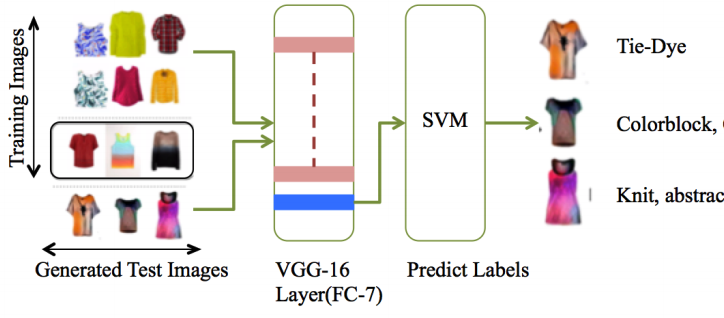
    <p>Everyone knows that more and more data is being collected about our everyday activities, like where we go online and in the physical world. Much of that data is being used for personalization. Recent UMBC CSEE Masters student Prutha Date explored a novel kind of personalization – creating clothing that matches your personal style.</p>
    <p>Date developed a system that takes as input pictures of clothing in your closet, extracts a digitial representation of your style preferences, and then applies that style to new articles of clothing, like a picture pair of pants or a dress you find online. This work meshes well with recent efforts by Amazon to manufacture clothing on demand. Imagine being able to click on an article of clothing available online, personalize it to your style, and then have it made and shipped right to your door!</p>
    <p>This innovative research was cited in a recent article in MIT Technology Review, <a href="https://www.technologyreview.com/s/608668/amazon-has-developed-an-ai-fashion-designer/" rel="nofollow external" class="bo">Amazon Has Developed an AI Fashion Designer.</a></p>
    <blockquote>
    <p><a href="https://www.csee.umbc.edu/people/faculty/tim-oates/" rel="nofollow external" class="bo">Tim Oates</a>, a professor at the University of Maryland in Baltimore County, presented details of a system for transferring a particular style from one garment to another. He suggests that this approach might be used to conjure up new items of clothing from scratch. “You could train [an algorithm] on your closet, and then you could say here’s a jacket or a pair of pants, and I’d like to adapt it to my style,” Oates says.</p>
    <p>Fashion designers probably shouldn’t fret just yet, though. Oates and other point out that it may be a long time before a machine can invent a fashion trend. “People innovate in areas like music, fashion, and cinema,” he says. “What we haven’t seen is a genuinely new music or fashion style that was generated by a computer and really resonated with people.”</p>
    </blockquote>
    <p>You can read more about the work in a recent paper by Prutha Date, Ashwinkumar Ganesan and Tim Oates, <a href="https://arxiv.org/abs/1707.09899" rel="nofollow external" class="bo">Fashioning with Networks: Neural Style Transfer to Design Clothes</a>. The paper describes how convolutional neural networks were used to personalize and generate new custom clothes based on a person’s preference and by learning their fashion choices from a limited set of clothes from their closet.</p>
    <p>The post <a href="https://www.csee.umbc.edu/2017/08/umbc-researchers-develop-ai-system-design-clothing-personal-fashion-style/" rel="nofollow external" class="bo">UMBC researchers develop AI system to design clothing for your personal fashion style</a> appeared first on <a href="https://www.csee.umbc.edu" rel="nofollow external" class="bo">Department of Computer Science and Electrical Engineering</a>.</p>
    </div>
]]>
</Body>
<Summary>    AI system designs clothing for your personal fashion style   Everyone knows that more and more data is being collected about our everyday activities, like where we go online and in the...</Summary>
<Website>https://www.csee.umbc.edu/2017/08/umbc-researchers-develop-ai-system-design-clothing-personal-fashion-style/</Website>
<TrackingUrl>https://my3.my.umbc.edu/api/v0/pixel/news/69768/guest@my.umbc.edu/98f3723f099c49ec5d7d36c2c2924425/api/pixel</TrackingUrl>
<Tag>ai</Tag>
<Tag>computer-science</Tag>
<Tag>data-science</Tag>
<Tag>faculty-and-staff</Tag>
<Tag>graduate</Tag>
<Tag>news</Tag>
<Tag>students</Tag>
<Group token="csee">Computer Science and Electrical Engineering</Group>
<GroupUrl>https://my3.my.umbc.edu/groups/csee</GroupUrl>
<AvatarUrl>https://assets3-my.umbc.edu/system/shared/avatars/groups/000/000/099/d117dca133c64bf78a4b7696dd007189/xsmall.png?1314043393</AvatarUrl>
<AvatarUrl size="original">https://assets1-my.umbc.edu/system/shared/avatars/groups/000/000/099/d117dca133c64bf78a4b7696dd007189/original.png?1314043393</AvatarUrl>
<AvatarUrl size="xxlarge">https://assets1-my.umbc.edu/system/shared/avatars/groups/000/000/099/d117dca133c64bf78a4b7696dd007189/xxlarge.png?1314043393</AvatarUrl>
<AvatarUrl size="xlarge">https://assets4-my.umbc.edu/system/shared/avatars/groups/000/000/099/d117dca133c64bf78a4b7696dd007189/xlarge.png?1314043393</AvatarUrl>
<AvatarUrl size="large">https://assets3-my.umbc.edu/system/shared/avatars/groups/000/000/099/d117dca133c64bf78a4b7696dd007189/large.png?1314043393</AvatarUrl>
<AvatarUrl size="medium">https://assets1-my.umbc.edu/system/shared/avatars/groups/000/000/099/d117dca133c64bf78a4b7696dd007189/medium.png?1314043393</AvatarUrl>
<AvatarUrl size="small">https://assets2-my.umbc.edu/system/shared/avatars/groups/000/000/099/d117dca133c64bf78a4b7696dd007189/small.png?1314043393</AvatarUrl>
<AvatarUrl size="xsmall">https://assets3-my.umbc.edu/system/shared/avatars/groups/000/000/099/d117dca133c64bf78a4b7696dd007189/xsmall.png?1314043393</AvatarUrl>
<AvatarUrl size="xxsmall">https://assets3-my.umbc.edu/system/shared/avatars/groups/000/000/099/d117dca133c64bf78a4b7696dd007189/xxsmall.png?1314043393</AvatarUrl>
<Sponsor>Computer Science and Electrical Engineering</Sponsor>
<PawCount>9</PawCount>
<CommentCount>0</CommentCount>
<CommentsAllowed>true</CommentsAllowed>
<PostedAt>Wed, 30 Aug 2017 13:39:30 -0400</PostedAt>
</NewsItem>

<NewsItem contentIssues="true" id="69762" important="false" status="posted" url="https://my3.my.umbc.edu/posts/69762">
<Title>UMBC&#8217;s Don Engel selected for inaugural cohort</Title>
<Tagline>APLU Research Fellows</Tagline>
<Body>
<![CDATA[
    <div class="html-content">
    <div><em>This article was originally written <a href="http://news.umbc.edu/umbcs-don-engel-selected-for-inaugural-cohort-of-aplu-research-leader-fellows/" rel="nofollow external" class="bo">here</a> by Sarah Hansen on July 18, 2017.</em></div>
    <div><br></div>
    <div>


    <p><span>Don Engel, UMBC’s assistant vice president for research, has been selected as one of just eight participants nationwide in the new <span><strong><a href="http://www.aplu.org/members/councils/research/cor-fellowship/index.html" rel="nofollow external" class="bo">Research Leader Fellows</a></strong></span> program sponsored by the Council on Research within the <span><strong><a href="http://www.aplu.org" rel="nofollow external" class="bo">Association of Public and Land-grant Universities</a></strong></span> (APLU). The 18-month program focuses on helping emerging research leaders to develop knowledge and skills in new areas related to supporting university research today and into the future. Participants attend conferences, participate in facilitated meetings as a group, and receive direct mentorship from experienced higher education research leaders.</span></p>
    <p><span>“I think the most valuable thing about this program will be that it will expose me to things that we can do that haven’t been on our horizon, because we haven’t yet thought to look creatively in those directions,” says Engel.</span></p>
    <p><span>In his fellowship proposal, Engel outlined plans for two projects in which he’s already deeply invested. First, Engel is working with the UMBC community to develop makerspaces on campus. While many makerspaces in academic settings create opportunities for students to “learn about tech through tinkering,” Engel says, he would also like to see these spaces “conceived as…tools to advance faculty-led research.” That research could be in any field that “depends on rapid fabrication and prototyping,” such as robotics, or into fabrication techniques themselves, he explains.</span></p>
    <p><span><br></span></p>
    <p><span><img src="https://my3.my.umbc.edu/system/shared/attachments/news/000/069/762/592f69eb8605faf19bb15d0b370cfac8/IMG_1607-e1500412072271-768x434.jpg" style="max-width: 100%; height: auto;"></span></p>
    <p><span>


    </span></p>
    <p><span><br></span></p>
    <p><span>Don Engel (third from right) with the inaugural cohort of APLU Research Leader Fellows. Photo by Sarah Rovito.</span></p>
    <p><span><br></span></p>
    <p><span>During the fellowship, Engel will attend the <span><strong><a href="https://www.eventbrite.com/e/the-international-symposium-on-academic-makerspaces-isam-2017-registration-33438280798" rel="nofollow external" class="bo">International Symposium of Academic Makerspaces</a></strong></span> at Case Western Reserve University. Case Western is the site of the <span><strong><a href="http://thinkbox.case.edu" rel="nofollow external" class="bo">world’s largest academic makerspace</a></strong></span>, and Engel intends to take advantage of the symposium’s location to learn how the university developed and now manages the facility. Engel will also travel to the 2018 World Maker Faire in California. Both trips, along with conversations with other academic institutions that house makerspaces, will inform ideas about best practices for building impactful, sustainable makerspaces at UMBC that serve a wide range of people across the university.</span></p>
    <p><span>Engel also intends to expand his current work with the <span><strong><a href="https://www.mitre.org/news/press-releases/mitre-partners-with-university-system-of-maryland-to-operate-new-cybersecurity" rel="nofollow external" class="bo">National Cybersecurity FFRDC</a></strong></span> (Federally Funded Research and Development Center) during the fellowship. UMBC is a founding partner of the center with the MITRE Corporation and the University of Maryland, College Park. “All parties have been navigating uncharted territory in determining how to leverage each other’s strengths and resources toward the critical cybersecurity of our national commercial sector,” Engel says, and one of his goals is to explore “what the university system can do to better enhance academic engagement in the FFRDC.”</span></p>
    <p><span>His trip to California will facilitate visits with University of California schools—especially useful because they operate similarly to the University System of Maryland and already sustain robust relationships with several national laboratories, a subset of FFRDCs. In the case of both makerspaces and the FFRDC, Engel says, “My time as a fellow will allow me to leverage immediate questions facing UMBC as an opportunity to deeply explore what other institutions have done in the face of similar opportunities.”</span></p>
    <p><span>Broadly, Engel hopes to gain skills that will serve him and UMBC long into the future. He sees the Research Leader Fellows program as an opportunity to learn more about the expansive, cross-disciplinary areas that research leaders are expected to supervise, from research compliance to extramural partnerships. He also anticipates the program will help him, and his fellow participants, develop skills to facilitate campus-wide conversations on research issues across disciplines.</span></p>
    <p><span>“I’m very interested in finding ways to use this as an opportunity to take on new challenges and to think of ways to discover new partnerships or other sorts of resources that will allow us to do things we haven’t done before,” he says. “I want to get people excited to work together on interesting, ambitious projects that will advance human knowledge and education, at UMBC and in collaboration with other universities.”</span></p>
    <p><span>


    </span></p>
    <p><span><em>Image: Don Engel speaks at a UMBC research event. Photo by Marlayna Demond ’11 for UMBC.</em></span></p>
    </div>
    </div>
]]>
</Body>
<Summary>This article was originally written here by Sarah Hansen on July 18, 2017.              Don Engel, UMBC’s assistant vice president for research, has been selected as one of just eight participants...</Summary>
<AttachmentKind>Image</AttachmentKind>
<AttachmentUrl>https://assets2-my.umbc.edu/system/shared/attachments/6124d19ed57b5a4c14ff9947fa5e80b4/6af86f87/news/000/069/762/592f69eb8605faf19bb15d0b370cfac8/IMG_1607-e1500412072271-768x434.jpg?1504114613</AttachmentUrl>
<Attachments>
<Attachment kind="Image" url="https://my3.my.umbc.edu/posts/69762/attachments/24880"></Attachment>
</Attachments>
<TrackingUrl>https://my3.my.umbc.edu/api/v0/pixel/news/69762/guest@my.umbc.edu/3bc9b9e9f01658b8cf1d9ff146c47995/api/pixel</TrackingUrl>
<Tag>ovpr-news-2017</Tag>
<Group token="research">Archived RCA News</Group>
<GroupUrl>https://my3.my.umbc.edu/groups/research</GroupUrl>
<AvatarUrl>https://assets4-my.umbc.edu/system/shared/avatars/groups/000/000/794/4bca2aa331eb7e472d63d97e0798b600/xsmall.png?1743706368</AvatarUrl>
<AvatarUrl size="original">https://assets2-my.umbc.edu/system/shared/avatars/groups/000/000/794/4bca2aa331eb7e472d63d97e0798b600/original.jpg?1743706368</AvatarUrl>
<AvatarUrl size="xxlarge">https://assets3-my.umbc.edu/system/shared/avatars/groups/000/000/794/4bca2aa331eb7e472d63d97e0798b600/xxlarge.png?1743706368</AvatarUrl>
<AvatarUrl size="xlarge">https://assets4-my.umbc.edu/system/shared/avatars/groups/000/000/794/4bca2aa331eb7e472d63d97e0798b600/xlarge.png?1743706368</AvatarUrl>
<AvatarUrl size="large">https://assets2-my.umbc.edu/system/shared/avatars/groups/000/000/794/4bca2aa331eb7e472d63d97e0798b600/large.png?1743706368</AvatarUrl>
<AvatarUrl size="medium">https://assets4-my.umbc.edu/system/shared/avatars/groups/000/000/794/4bca2aa331eb7e472d63d97e0798b600/medium.png?1743706368</AvatarUrl>
<AvatarUrl size="small">https://assets4-my.umbc.edu/system/shared/avatars/groups/000/000/794/4bca2aa331eb7e472d63d97e0798b600/small.png?1743706368</AvatarUrl>
<AvatarUrl size="xsmall">https://assets4-my.umbc.edu/system/shared/avatars/groups/000/000/794/4bca2aa331eb7e472d63d97e0798b600/xsmall.png?1743706368</AvatarUrl>
<AvatarUrl size="xxsmall">https://assets3-my.umbc.edu/system/shared/avatars/groups/000/000/794/4bca2aa331eb7e472d63d97e0798b600/xxsmall.png?1743706368</AvatarUrl>
<Sponsor>Office of the Vice President for Research</Sponsor>
<ThumbnailUrl size="xxlarge">https://assets3-my.umbc.edu/system/shared/thumbnails/news/000/069/762/d93f00fb65719aefe1d729a308bb8f74/xxlarge.jpg?1504114540</ThumbnailUrl>
<ThumbnailUrl size="xlarge">https://assets3-my.umbc.edu/system/shared/thumbnails/news/000/069/762/d93f00fb65719aefe1d729a308bb8f74/xlarge.jpg?1504114540</ThumbnailUrl>
<ThumbnailUrl size="large">https://assets2-my.umbc.edu/system/shared/thumbnails/news/000/069/762/d93f00fb65719aefe1d729a308bb8f74/large.jpg?1504114540</ThumbnailUrl>
<ThumbnailUrl size="medium">https://assets1-my.umbc.edu/system/shared/thumbnails/news/000/069/762/d93f00fb65719aefe1d729a308bb8f74/medium.jpg?1504114540</ThumbnailUrl>
<ThumbnailUrl size="small">https://assets4-my.umbc.edu/system/shared/thumbnails/news/000/069/762/d93f00fb65719aefe1d729a308bb8f74/small.jpg?1504114540</ThumbnailUrl>
<ThumbnailUrl size="xsmall">https://assets2-my.umbc.edu/system/shared/thumbnails/news/000/069/762/d93f00fb65719aefe1d729a308bb8f74/xsmall.jpg?1504114540</ThumbnailUrl>
<ThumbnailUrl size="xxsmall">https://assets4-my.umbc.edu/system/shared/thumbnails/news/000/069/762/d93f00fb65719aefe1d729a308bb8f74/xxsmall.jpg?1504114540</ThumbnailUrl>
<PawCount>2</PawCount>
<CommentCount>1</CommentCount>
<CommentsAllowed>true</CommentsAllowed>
<PostedAt>Wed, 30 Aug 2017 13:39:09 -0400</PostedAt>
</NewsItem>

<NewsItem contentIssues="true" id="69761" important="false" status="posted" url="https://my3.my.umbc.edu/posts/69761">
<Title>Kavita Krishnaswamy, CSEE Ph.D. student</Title>
<Tagline>One of 25 women in robotics you need to know about</Tagline>
<Body>
<![CDATA[
    <div class="html-content">
    <em>This article was originally written <a href="http://news.umbc.edu/umbc-ph-d-candidate-kavita-krishnaswamy-receives-highly-competitive-google-and-microsoft-awards-for-robotics-research/" rel="nofollow external" class="bo">here</a> by Megan Hanks on July 26, 2017.</em><div><br></div>
    <div>


    <p><span><strong>Kavita Krishnaswamy</strong> ’07, computer science and mathematics, Ph.D. ’18, computer science, has been named both a 2017 Microsoft Fellow and recipient of the Google Lime Scholarship. These prestigious honors recognize emerging scholars in computing who are dedicated to increasing diversity in the field, and Krishnawamy’s awards will support her Ph.D. research on “Smart Algorithms via Knowledge Management of Safe Physical Human-Robotic Care.”</span></p>
    <p><span>“I am very humbled, honored, and grateful to Google Lime and Microsoft for providing me with this enriching experience and lifetime opportunity to serve society by advancing the field of human-robot interaction,” Krishnaswamy says.</span></p>
    <p><span>The Google Lime Scholarship seeks to promote greater access to knowledge for people with visible and invisible disabilities. It was established through a partnership between Google and Lime Connect, a nonprofit focused on breaking stereotypes about disability and encouraging companies to recognize the importance and value of employing people with disabilities.</span></p>
    <p><span><br></span></p>
    <p><span><br></span></p>
    <p><span><img src="https://my3.my.umbc.edu/system/shared/attachments/news/000/069/761/52b8bc3917542528942a2d02a624d123/Kavita_1-1024x976.jpg" style="max-width: 100%; height: auto;"></span></p>
    <p><span>Kavita Krishnaswamy. Photo by Sarah Safir for Google</span></p>
    <p><span><br></span></p>
    <p><span>The program encourages students with disabilities to pursue their passions in computing and technology, and to become leaders in those fields. As part of the fellowship program, Krishnaswamy will receive scholarship funding and will participate in the 2017 Google Scholars’ Retreat.</span></p>
    <p><span>Through the Microsoft Fellowship, Krishnaswamy will receive funding to support her Ph.D. research and will participate in the Microsoft Research workshop held in fall 2017. Her research currently focuses on building a teleoperated mobile robotic prototype, in addition to creating an accessible robotic interface, that seniors and people with disabilities will be able to control by repositioning their arms and legs. <strong>Tim Oates</strong>, professor of computer science and electrical engineering, is Krishnaswamy’s Ph.D. advisor.</span></p>
    <p><span>“Our goal is to explore the intersection between providing physical care and robotics, and how it is possible to translate safe patient handling and mobility guidelines into smart human-robotic interaction algorithms,” Krishnaswamy explains. “As assistive robotics become more mainstream, these best practices can improve safety in direct physical care in the process of repositioning the human body with a mobile robotic arm.”</span></p>
    <p><span>Krishnaswamy is excited about the possible new directions her research can now explore, thanks to support from these awards. “The resources will provide me with a solid and steady foundation to cultivate new technical expertise and professional skills to successfully continue my dissertation research in robotics, and to broaden my knowledge in the field,” she says.</span></p>
    <p><span>Krishnaswamy has been recognized internationally as an emerging leader in robotics and accessibility design throughout her graduate studies. She is a former Ford Foundation Predoctoral Fellow, and a National Science Foundation Graduate Research Fellow. In 2015, she was named to Robohub’s “<span><a href="http://news.umbc.edu/kavita-krishnaswamy-csee-ph-d-student-named-an-emerging-leader-in-robotics-3/" rel="nofollow external" class="bo">25 Women in Robotics You Need to Know About</a></span>” list.</span></p>
    <p><span>


    </span></p>
    <p><span><em>Banner image: Photo of Kavita Krishnaswamy, exploring UMBC via robot, by Britney Clause ’11.</em></span></p>
    </div>
    </div>
]]>
</Body>
<Summary>This article was originally written here by Megan Hanks on July 26, 2017.             Kavita Krishnaswamy ’07, computer science and mathematics, Ph.D. ’18, computer science, has been named both a...</Summary>
<AttachmentKind>Photo</AttachmentKind>
<AttachmentUrl>https://assets4-my.umbc.edu/system/shared/attachments/25f045fa6c80ecc7cb1e6a9be3042054/6af86f87/news/000/069/761/52b8bc3917542528942a2d02a624d123/Kavita_1-1024x976.jpg?1504114101</AttachmentUrl>
<Attachments>
<Attachment kind="Photo" url="https://my3.my.umbc.edu/posts/69761/attachments/24879"></Attachment>
</Attachments>
<TrackingUrl>https://my3.my.umbc.edu/api/v0/pixel/news/69761/guest@my.umbc.edu/9fc74c32a904b0bff91890a186d0580a/api/pixel</TrackingUrl>
<Tag>ovpr-news-2017</Tag>
<Group token="research">Archived RCA News</Group>
<GroupUrl>https://my3.my.umbc.edu/groups/research</GroupUrl>
<AvatarUrl>https://assets4-my.umbc.edu/system/shared/avatars/groups/000/000/794/4bca2aa331eb7e472d63d97e0798b600/xsmall.png?1743706368</AvatarUrl>
<AvatarUrl size="original">https://assets2-my.umbc.edu/system/shared/avatars/groups/000/000/794/4bca2aa331eb7e472d63d97e0798b600/original.jpg?1743706368</AvatarUrl>
<AvatarUrl size="xxlarge">https://assets3-my.umbc.edu/system/shared/avatars/groups/000/000/794/4bca2aa331eb7e472d63d97e0798b600/xxlarge.png?1743706368</AvatarUrl>
<AvatarUrl size="xlarge">https://assets4-my.umbc.edu/system/shared/avatars/groups/000/000/794/4bca2aa331eb7e472d63d97e0798b600/xlarge.png?1743706368</AvatarUrl>
<AvatarUrl size="large">https://assets2-my.umbc.edu/system/shared/avatars/groups/000/000/794/4bca2aa331eb7e472d63d97e0798b600/large.png?1743706368</AvatarUrl>
<AvatarUrl size="medium">https://assets4-my.umbc.edu/system/shared/avatars/groups/000/000/794/4bca2aa331eb7e472d63d97e0798b600/medium.png?1743706368</AvatarUrl>
<AvatarUrl size="small">https://assets4-my.umbc.edu/system/shared/avatars/groups/000/000/794/4bca2aa331eb7e472d63d97e0798b600/small.png?1743706368</AvatarUrl>
<AvatarUrl size="xsmall">https://assets4-my.umbc.edu/system/shared/avatars/groups/000/000/794/4bca2aa331eb7e472d63d97e0798b600/xsmall.png?1743706368</AvatarUrl>
<AvatarUrl size="xxsmall">https://assets3-my.umbc.edu/system/shared/avatars/groups/000/000/794/4bca2aa331eb7e472d63d97e0798b600/xxsmall.png?1743706368</AvatarUrl>
<Sponsor>Office of the Vice President for Research</Sponsor>
<ThumbnailUrl size="xxlarge">https://assets1-my.umbc.edu/system/shared/thumbnails/news/000/069/761/2653e29e469272f31b3cbd4ee8414868/xxlarge.jpg?1504114190</ThumbnailUrl>
<ThumbnailUrl size="xlarge">https://assets1-my.umbc.edu/system/shared/thumbnails/news/000/069/761/2653e29e469272f31b3cbd4ee8414868/xlarge.jpg?1504114190</ThumbnailUrl>
<ThumbnailUrl size="large">https://assets4-my.umbc.edu/system/shared/thumbnails/news/000/069/761/2653e29e469272f31b3cbd4ee8414868/large.jpg?1504114190</ThumbnailUrl>
<ThumbnailUrl size="medium">https://assets4-my.umbc.edu/system/shared/thumbnails/news/000/069/761/2653e29e469272f31b3cbd4ee8414868/medium.jpg?1504114190</ThumbnailUrl>
<ThumbnailUrl size="small">https://assets3-my.umbc.edu/system/shared/thumbnails/news/000/069/761/2653e29e469272f31b3cbd4ee8414868/small.jpg?1504114190</ThumbnailUrl>
<ThumbnailUrl size="xsmall">https://assets1-my.umbc.edu/system/shared/thumbnails/news/000/069/761/2653e29e469272f31b3cbd4ee8414868/xsmall.jpg?1504114190</ThumbnailUrl>
<ThumbnailUrl size="xxsmall">https://assets4-my.umbc.edu/system/shared/thumbnails/news/000/069/761/2653e29e469272f31b3cbd4ee8414868/xxsmall.jpg?1504114190</ThumbnailUrl>
<PawCount>1</PawCount>
<CommentCount>0</CommentCount>
<CommentsAllowed>true</CommentsAllowed>
<PostedAt>Wed, 30 Aug 2017 13:31:36 -0400</PostedAt>
<EditAt>Wed, 30 Aug 2017 13:31:50 -0400</EditAt>
</NewsItem>

<NewsItem contentIssues="true" id="69760" important="false" status="posted" url="https://my3.my.umbc.edu/posts/69760">
<Title>UMBC&#8217;s Erin Green receives nearly $1 million NIH grant</Title>
<Tagline>Cutting Edge Genetics Research</Tagline>
<Body>
<![CDATA[
    <div class="html-content">
    <em>This article was originally written <a href="http://news.umbc.edu/umbcs-erin-green-receives-nearly-1-million-nih-grant-for-cutting-edge-epigenetics-research/" rel="nofollow external" class="bo">here</a> on July 28,2017 by Sarah Hansen.</em><div><br></div>
    <div>


    <p><span>UMBC biologist <strong>Erin Green</strong> has received a five-year, nearly $1 million grant from the National institutes of Health to examine how cells respond to environmental signals at the molecular level. Her work could provide clues to understanding processes as broad as how cancers take hold, the causes of autism, and aging.</span></p>
    <p><span>“Any cell, in any species, is constantly bombarded with different signals from its environment,” says Green, assistant professor of biological sciences. Those signals, she explains, “have consequences for how the cell grows, whether it lives or dies, or if it stays as it is or turns into something else, like a cancer cell.”</span></p>
    <p><span>Green studies epigenetic modifications—changes to DNA that do not involve a change in the sequence of bases (A, T, G, and C). Inside cells, long strands of DNA are wound tightly around proteins called histones. The modifications Green studies involve adding or removing small groups of atoms to the histones, influencing which sections of DNA are “unwound” and eventually translated into protein.</span></p>
    <p><span><br></span></p>
    <p><img src="https://my3.my.umbc.edu/system/shared/attachments/news/000/069/760/8f4131479defde8dc2f27d096c15d72f/Erin-Green-0769.jpg" style="max-width: 100%; height: auto;"></p>
    <p><span>Erin Green conducts an experiment in her lab.</span></p>
    <p><span><br></span></p>
    <p><span>Epigenetic modifications can impact how genes are expressed within minutes, making them one of the fastest ways a cell can respond to environmental signals. “One challenge in the field, though, is directly linking specific modifications to environmental changes,” Green notes. There are many studies that correlate certain epigenetic changes with diseases or environmental conditions—from air pollution to <em>in utero </em>alcohol exposure—but figuring out exactly how the changes lead to complex health conditions has been much trickier.</span></p>
    <p><span>Green’s work will explore the mechanism of a particular enzyme that adds methyl groups to histones, one of the most common epigenetic changes, using budding yeast as a model organism. Her enzyme is within a class of proteins that is also found in humans, and so far, she says, “many of the things that we know about them in humans started out in yeast research.” The human version of the enzyme Green is studying, a gene called MLL5, is already known to be expressed differently in some cancers, mutated in some cases of autism, and required for male fertility.</span></p>
    <p><span>Why use yeast in her research? With yeast, Green explains, “we can test many conditions and look at the direct biochemical and molecular outcomes, which is much harder to do in other systems.” She’ll start by looking at how exposure to certain toxic oxygen compounds, a situation known as oxidative stress, affects the enzyme’s activity.</span></p>
    <p><span><a href="http://news.umbc.edu/wp-content/uploads/2017/07/Erin-Green-0811.jpg" rel="nofollow external" class="bo"></a></span><br></p>
    <p><img src="https://my3.my.umbc.edu/system/shared/attachments/news/000/069/760/519fab1c21e011cb83230c17046b5cf2/Erin-Green-0811.jpg" style="max-width: 100%; height: auto;"></p>
    <p><span>Erin Green and graduate student Khoa Tran work in Green’s lab.</span></p>
    <p><span><br></span></p>
    <p><span>Green’s earlier work, supported by a <span><strong><a href="http://news.umbc.edu/start-funding-enables-umbc-faculty-to-advance-their-research-in-new-directions/" rel="nofollow external" class="bo">UMBC START award</a></strong></span>, looked much more narrowly at a specific enzyme activity, but this new grant will allow her lab to paint with a broader brush. “We’ve been looking in a very targeted way,” she says. “By doing this bigger, more open-ended experiment we might uncover other things that would be good to look at. Are there other stress response pathways that this enzyme might be controlling?”</span></p>
    <p><span>“I think having a system where we can directly answer these questions in a more controlled and easily manipulated environment is really powerful,” Green says. “If we’re able to…learn more about the function of this enzyme in yeast, that’s likely to give us a handle on what it might be doing in humans.”</span></p>
    <p><span><em>Banner image: Erin Green. All photos by Marlayna Demond ’11 for UMBC.</em></span></p>
    </div>
    </div>
]]>
</Body>
<Summary>This article was originally written here on July 28,2017 by Sarah Hansen.             UMBC biologist Erin Green has received a five-year, nearly $1 million grant from the National institutes of...</Summary>
<AttachmentKind>Image</AttachmentKind>
<AttachmentUrl>https://assets1-my.umbc.edu/system/shared/attachments/4b7c884e338884f95b651246916f5f71/6af86f87/news/000/069/760/8f4131479defde8dc2f27d096c15d72f/Erin-Green-0769.jpg?1504113820</AttachmentUrl>
<Attachments>
<Attachment kind="Image" url="https://my3.my.umbc.edu/posts/69760/attachments/24877"></Attachment>
<Attachment kind="Image" url="https://my3.my.umbc.edu/posts/69760/attachments/24878"></Attachment>
</Attachments>
<TrackingUrl>https://my3.my.umbc.edu/api/v0/pixel/news/69760/guest@my.umbc.edu/cba5904bd7769926ba132de0e20abc6a/api/pixel</TrackingUrl>
<Tag>ovpr-news-2017</Tag>
<Group token="research">Archived RCA News</Group>
<GroupUrl>https://my3.my.umbc.edu/groups/research</GroupUrl>
<AvatarUrl>https://assets4-my.umbc.edu/system/shared/avatars/groups/000/000/794/4bca2aa331eb7e472d63d97e0798b600/xsmall.png?1743706368</AvatarUrl>
<AvatarUrl size="original">https://assets2-my.umbc.edu/system/shared/avatars/groups/000/000/794/4bca2aa331eb7e472d63d97e0798b600/original.jpg?1743706368</AvatarUrl>
<AvatarUrl size="xxlarge">https://assets3-my.umbc.edu/system/shared/avatars/groups/000/000/794/4bca2aa331eb7e472d63d97e0798b600/xxlarge.png?1743706368</AvatarUrl>
<AvatarUrl size="xlarge">https://assets4-my.umbc.edu/system/shared/avatars/groups/000/000/794/4bca2aa331eb7e472d63d97e0798b600/xlarge.png?1743706368</AvatarUrl>
<AvatarUrl size="large">https://assets2-my.umbc.edu/system/shared/avatars/groups/000/000/794/4bca2aa331eb7e472d63d97e0798b600/large.png?1743706368</AvatarUrl>
<AvatarUrl size="medium">https://assets4-my.umbc.edu/system/shared/avatars/groups/000/000/794/4bca2aa331eb7e472d63d97e0798b600/medium.png?1743706368</AvatarUrl>
<AvatarUrl size="small">https://assets4-my.umbc.edu/system/shared/avatars/groups/000/000/794/4bca2aa331eb7e472d63d97e0798b600/small.png?1743706368</AvatarUrl>
<AvatarUrl size="xsmall">https://assets4-my.umbc.edu/system/shared/avatars/groups/000/000/794/4bca2aa331eb7e472d63d97e0798b600/xsmall.png?1743706368</AvatarUrl>
<AvatarUrl size="xxsmall">https://assets3-my.umbc.edu/system/shared/avatars/groups/000/000/794/4bca2aa331eb7e472d63d97e0798b600/xxsmall.png?1743706368</AvatarUrl>
<Sponsor>Office of the Vice President for Research</Sponsor>
<ThumbnailUrl size="xxlarge">https://assets1-my.umbc.edu/system/shared/thumbnails/news/000/069/760/bfb19e4ff777faf703be10e2221177bc/xxlarge.jpg?1504114355</ThumbnailUrl>
<ThumbnailUrl size="xlarge">https://assets3-my.umbc.edu/system/shared/thumbnails/news/000/069/760/bfb19e4ff777faf703be10e2221177bc/xlarge.jpg?1504114355</ThumbnailUrl>
<ThumbnailUrl size="large">https://assets4-my.umbc.edu/system/shared/thumbnails/news/000/069/760/bfb19e4ff777faf703be10e2221177bc/large.jpg?1504114355</ThumbnailUrl>
<ThumbnailUrl size="medium">https://assets1-my.umbc.edu/system/shared/thumbnails/news/000/069/760/bfb19e4ff777faf703be10e2221177bc/medium.jpg?1504114355</ThumbnailUrl>
<ThumbnailUrl size="small">https://assets2-my.umbc.edu/system/shared/thumbnails/news/000/069/760/bfb19e4ff777faf703be10e2221177bc/small.jpg?1504114355</ThumbnailUrl>
<ThumbnailUrl size="xsmall">https://assets2-my.umbc.edu/system/shared/thumbnails/news/000/069/760/bfb19e4ff777faf703be10e2221177bc/xsmall.jpg?1504114355</ThumbnailUrl>
<ThumbnailUrl size="xxsmall">https://assets1-my.umbc.edu/system/shared/thumbnails/news/000/069/760/bfb19e4ff777faf703be10e2221177bc/xxsmall.jpg?1504114355</ThumbnailUrl>
<PawCount>0</PawCount>
<CommentCount>0</CommentCount>
<CommentsAllowed>true</CommentsAllowed>
<PostedAt>Wed, 30 Aug 2017 13:25:59 -0400</PostedAt>
<EditAt>Wed, 30 Aug 2017 13:32:53 -0400</EditAt>
</NewsItem>

</News>