Review: Sencha Animator for CSS3 Animations
Today we look at Sencha Animator, a program which allows you to create CSS3 animations. These animations are designed to have a similar look and feel as Flash, but with CSS3 and HTML5.
]]>
Today we look at Sencha Animator, a program which allows you to create CSS3 animations. These animations are designed to have a similar look and feel as Flash, but with CSS3 and HTML5.
http://www.htmlgoodies.com/HTML5/review-sencha-animator-for-css3-animations.html
https://my3.my.umbc.edu/api/v0/pixel/news/31424/guest@my.umbc.edu/dbebfd773b0801ae49177c5308baff64/api/pixel
html
htmlgoodies
learning
Web Developer - Build Group
https://my3.my.umbc.edu/groups/retired-583
https://assets3-my.umbc.edu/system/shared/avatars/groups/000/000/583/fc60f5d7abc2e080599bb6dc465db54d/xsmall.png?1363101197
https://assets4-my.umbc.edu/system/shared/avatars/groups/000/000/583/fc60f5d7abc2e080599bb6dc465db54d/original.jpg?1363101197
https://assets4-my.umbc.edu/system/shared/avatars/groups/000/000/583/fc60f5d7abc2e080599bb6dc465db54d/xxlarge.png?1363101197
https://assets4-my.umbc.edu/system/shared/avatars/groups/000/000/583/fc60f5d7abc2e080599bb6dc465db54d/xlarge.png?1363101197
https://assets3-my.umbc.edu/system/shared/avatars/groups/000/000/583/fc60f5d7abc2e080599bb6dc465db54d/large.png?1363101197
https://assets3-my.umbc.edu/system/shared/avatars/groups/000/000/583/fc60f5d7abc2e080599bb6dc465db54d/medium.png?1363101197
https://assets4-my.umbc.edu/system/shared/avatars/groups/000/000/583/fc60f5d7abc2e080599bb6dc465db54d/small.png?1363101197
https://assets3-my.umbc.edu/system/shared/avatars/groups/000/000/583/fc60f5d7abc2e080599bb6dc465db54d/xsmall.png?1363101197
https://assets4-my.umbc.edu/system/shared/avatars/groups/000/000/583/fc60f5d7abc2e080599bb6dc465db54d/xxsmall.png?1363101197
Web Developer - Build Group
0
0
true
Mon, 17 Jun 2013 20:18:00 -0400
Up On the Roof – Summer 2013

 UMBC President Freeman A. Hrabowski, III, takes your questions.
Q: I want to thank you for making me proud to have a degree from UMBC. The legacy you are building not only enriches students’ experiences, but adds value to their postgraduate lives. How will you continue the momentum you’ve built – and specifically where will additional capital be directed in the coming years?
– John Becker ’01, information systems
A: Wherever I go in the country, people talk about UMBC as a university that is setting a standard for inclusive excellence. So how do we keep the momentum?
First, I think of academic innovation. We need to think about how we use technology and how we prepare students to solve problems in groups. Interdisciplinarity is also a focus for us in increasingly important ways.
We are involved in a number of experiments at UMBC to pursue those questions. We are working with the Howard Hughes Medical Institute on how we prepare students for medical school. We’re exploring the digital humanities and how we teach writing at UMBC. We are working with the Gates Foundation on how we connect to community colleges, and also with the National Science Foundation to determine which strategies help students succeed.
As a result, we have created a culture that focuses on trying different approaches. We use analytics to assess the effectiveness of different strategies, and then set our direction based on that analysis. We’re going to continue those efforts as we also continue to find resources to attract the best faculty across disciplines to UMBC.
There have also been significant investments in the physical infrastructure of the university. People who have not been to campus in the past few years are always amazed at how much the place has been transformed. We recently opened the first phase of the Performing Arts and Humanities Building. It is the most expensive building in the history of UMBC.
And over the next several years the university will be transformed even more. We hope to have a new Events Center that will not only be supportive of academically-sound athletics, but will also give the entire campus a greater opportunity to be physically fit. And we are also delighted that our governor, Martin O’Malley, has moved a new Interdisciplinary Life Sciences Building forward in the queue for state funding.
It is the investments we are making in academic innovation and in people – coupled with our investments in the physical infrastructure on campus – that will shape UMBC in the future.
Q: Given the injustices you’ve had to overcome to reach your level of success, what are a few guiding principles you’ve used to maintain a positive and productive attitude?
— John Garnet ’06, financial economics
A: I continue to recommend David Brooks’ book The Social Animal. We think that we determine our actions and attitudes based on logic and a rational approach, yet research shows us that much of what we decide to do can be attributed to things that happened to us as children – many of them which we have forgotten.
For me, growing up in such a loving family, with very hard-working and positive parents who emphasized the importance of love and respect for each other, made all the difference in the world. I saw them in different ways being insulted and challenged by a rigid and prejudiced society – but they never became bitter or cynical. And they always believed that every human being had the potential to be a good person. And when they witnessed people being mean-spirited they believed that they were the product of their childhood experiences; that these people clearly hadn’t had the benefit of love.
I didn’t believe them at first. But as I have gotten older, I appreciate their approach much more. They told me that the people who tend to be happiest have to be realistic – on the one hand – but also to have as much optimism as possible. To find the good in whatever the situation is. Even in tragedy, to ask the question: What can I learn from this?
]]>
UMBC President Freeman A. Hrabowski, III, takes your questions. Q: I want to thank you for making me proud to have a degree from UMBC. The legacy you are building not only enriches students’...
https://umbc.edu/stories/up-on-the-roof-summer-2013/
https://my3.my.umbc.edu/api/v0/pixel/news/123236/guest@my.umbc.edu/cbe28690c0db3eb3f070bfb677516851/api/pixel
perspectives
summer-2013
UMBC News & Magazine
https://my3.my.umbc.edu/groups/umbc-news-magazine
https://assets1-my.umbc.edu/system/shared/avatars/groups/000/001/943/24435aa6207c452e7bc15cc74b42c7bb/xsmall.png?1748556657
https://assets1-my.umbc.edu/system/shared/avatars/groups/000/001/943/24435aa6207c452e7bc15cc74b42c7bb/original.png?1748556657
https://assets2-my.umbc.edu/system/shared/avatars/groups/000/001/943/24435aa6207c452e7bc15cc74b42c7bb/xxlarge.png?1748556657
https://assets2-my.umbc.edu/system/shared/avatars/groups/000/001/943/24435aa6207c452e7bc15cc74b42c7bb/xlarge.png?1748556657
https://assets3-my.umbc.edu/system/shared/avatars/groups/000/001/943/24435aa6207c452e7bc15cc74b42c7bb/large.png?1748556657
https://assets1-my.umbc.edu/system/shared/avatars/groups/000/001/943/24435aa6207c452e7bc15cc74b42c7bb/medium.png?1748556657
https://assets2-my.umbc.edu/system/shared/avatars/groups/000/001/943/24435aa6207c452e7bc15cc74b42c7bb/small.png?1748556657
https://assets1-my.umbc.edu/system/shared/avatars/groups/000/001/943/24435aa6207c452e7bc15cc74b42c7bb/xsmall.png?1748556657
https://assets2-my.umbc.edu/system/shared/avatars/groups/000/001/943/24435aa6207c452e7bc15cc74b42c7bb/xxsmall.png?1748556657
UMBC News & Magazine
0
0
false
Mon, 17 Jun 2013 20:05:17 -0400
To You – Summer 2013

 I am on UMBC’s campus almost every working day. As the editor of UMBC Magazine, that’s not unexpected. It’s my job.
But before I became editor, I came back to UMBC a number of times after graduating in 1986. Sometimes I returned to see a former professor. Other times, I was invited to speak to young journalists, or a new generation of Bartleby editors. I also attended alumni events.
The staff of our alumni relations department work hard to come up with events that will entice you to reconnect with the university and your fellow alumni. These events include talks given by UMBC professors on the cutting edge of research in various disciplines, wine tastings and gallery openings, and even a chance to take in ball games at Orioles Park at Camden Yards or Nationals Stadium.
Over the past few years, it’s been a delight to watch many of my fellow alumni make the trek home to UMBC. What they see when they get here isn’t just a campus filled with memories – but also a university that’s growing and thriving across disciplines.
Just this past April, UMBC alumni gathered on campus for a number of events. Over 60 ancient studies alumni came back to celebrate their program’s remarkable history and honor a number of the founding faculty of the department. And 70 alumni from UMBC’s award-winning theatre program came back to celebrate the opening of the new Performing Arts and Humanities Building with their department’s faculty (below) and to see William Shakespeare’s The Two Gentlemen of Verona – the first production in a the new building’s proscenium theatre.
 Have a look at our calendar on the back page of this issue – or, better yet, sign up and get information about all of our upcoming events – including Homecoming 2013 – via our online alumni portal Retriever Net.
I’m sure you’ll find something that will bring you back to visit us here at UMBC.
– Richard Byrne ’86
]]>
I am on UMBC’s campus almost every working day. As the editor of UMBC Magazine, that’s not unexpected. It’s my job. But before I became editor, I came back to UMBC a number of times after...
https://umbc.edu/stories/to-you-summer-2013/
https://my3.my.umbc.edu/api/v0/pixel/news/123237/guest@my.umbc.edu/e2c4d988f75b0f67ee77c01bcf5e7c84/api/pixel
perspectives
summer-2013
UMBC News & Magazine
https://my3.my.umbc.edu/groups/umbc-news-magazine
https://assets1-my.umbc.edu/system/shared/avatars/groups/000/001/943/24435aa6207c452e7bc15cc74b42c7bb/xsmall.png?1748556657
https://assets1-my.umbc.edu/system/shared/avatars/groups/000/001/943/24435aa6207c452e7bc15cc74b42c7bb/original.png?1748556657
https://assets2-my.umbc.edu/system/shared/avatars/groups/000/001/943/24435aa6207c452e7bc15cc74b42c7bb/xxlarge.png?1748556657
https://assets2-my.umbc.edu/system/shared/avatars/groups/000/001/943/24435aa6207c452e7bc15cc74b42c7bb/xlarge.png?1748556657
https://assets3-my.umbc.edu/system/shared/avatars/groups/000/001/943/24435aa6207c452e7bc15cc74b42c7bb/large.png?1748556657
https://assets1-my.umbc.edu/system/shared/avatars/groups/000/001/943/24435aa6207c452e7bc15cc74b42c7bb/medium.png?1748556657
https://assets2-my.umbc.edu/system/shared/avatars/groups/000/001/943/24435aa6207c452e7bc15cc74b42c7bb/small.png?1748556657
https://assets1-my.umbc.edu/system/shared/avatars/groups/000/001/943/24435aa6207c452e7bc15cc74b42c7bb/xsmall.png?1748556657
https://assets2-my.umbc.edu/system/shared/avatars/groups/000/001/943/24435aa6207c452e7bc15cc74b42c7bb/xxsmall.png?1748556657
UMBC News & Magazine
0
0
false
Mon, 17 Jun 2013 20:04:05 -0400
The News – Summer 2013
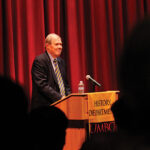
CALL TO HISTORY
The proscenium theatre of UMBC’s recently-opened Performing Arts and Humanities Building was perhaps the most appropriate venue for this year’s W. Augustus Low Lecture in History.
The lecturer was John Jeffries, dean of UMBC’s College of Arts, Humanities and Social Sciences (CAHSS) and professor of history, who will retire from the university on June 30. Among the greatest legacies of his 40 years of scholarship and service to UMBC – much of it as leader of the Faculty Senate and the college – was his guiding hand in making the new building a reality, and literally cementing the university’s continuing commitment to the arts and humanities.
The capacity crowd gave Jeffries two standing ovations – both before and after his lecture, which was entitled “A Life in History: Reflections on Studying Politics and Policy in Twentieth Century America.”
The lecture took the audience through Jeffries’ journey from majoring in history as an undergraduate on a Navy ROTC scholarship at Harvard University in the late 1950s and early 1960s and a five year career in the U.S. Navy to graduate studies at Yale University and a career in academe that took hold at UMBC in 1973.
Yet Jeffries’ lecture was as much a tale of the shifting currents in the study of his chosen subject – 20th century electoral politics and policy in the United States – as it was a personal reminiscence. Jeffries recalled the excitement of entering the discipline when the “new political history” was in the ascendance. It was a moment when historians were reshaping the field with “systematic, quantitative and social-science approaches to the study of American politics” and seeking to uncover larger currents and patterns in the nation’s political history.
Though the “new political history” itself was subject to critiques and corrections in subsequent decades, Jeffries made a compelling case for its emphasis on the centrality of “ethnocultural attachments and antagonisms in voting” by pointing to the persistence of its influence in recent elections.
Jeffries also explained his own shift as a historian away from studies of voting to the wider seas of how election results played out in the policies enacted by elected officials – with special attention to the era of the New Deal. “I have tried to root my study of policymaking in the matrices of politics and public opinion,” he said, “not just the documents found in archives.”
Asked in the question-and-answer session after the lecture what his advice would be to future students of history, Jeffries had a simple and straightforward reply: “Work hard and have fun. I’ve really enjoyed my life in history…. Enjoy what you’re doing.”
At the end of the lecture, UMBC president Freeman A. Hrabowski, III capped off the event by announcing that Jeffries had been named by the university as both a professor emeritus of history and a dean emeritus of the college.
Members of the CAHSS faculty also announced that a new John Jeffries International Fellowship was being established to provide UMBC faculty with resources to create, or redesign, and teach a course in their fields with an explicit international or transnational focus.
– Richard Byrne ’86
– Watch Dean Jeffries’ lecture here.
Interested in helping to endow the John Jeffries International Fellowship? Point your browser to UMBC’s online giving site to select an amount and type “John Jeffries Fellowship” in the “Other Designation” line provided in the web form.
TIME PASSAGES
 As UMBC prepares to celebrate its 50th anniversary in 2016, the university will mark a number of landmark dates in its founding. The first of them, in fact, fell in late April of this year, with the 50th anniversary of the passage of the legislation that authorized UMBC’s founding.
The legislation implemented some of the recommendations made by a 1962 state commission on expanding higher education in Maryland. The bill itself was sponsored by longtime Baltimore County Senator James A. Pine, Sr., who was also chair of the Maryland Senate’s Economic Affairs Committee. Pine died in 1988 at the age of 85.
While the 1963 legislation authorized the building of four new branches of the University of Maryland (including locations in the state’s western and southern regions and on the Eastern Shore), UMBC was the only university actually founded as a result of the legislation.
The bill also specifically mentions that the university would not only alleviate overcrowding at other state universities, but also serve as a “nucleus for scientific research and development” in Baltimore County – a definition of its mission which has been amply fulfilled over more than four decades.
UMBC was also the first public university founded in Maryland after the state fully desegregated its higher education system in 1954.
“This university was founded at a time when people of all races could come here and study,” says UMBC president Freeman A. Hrabowski, III. “We are a part of an experiment in which America has been engaged, providing public higher education in an atmosphere of excellence and diversity.”
– Richard Byrne ’86
Image provided by the Maryland Archives
KICK IN
 Stroll near the Commons on most weekdays and you’ll see tables piled high with tasty baked goods, or featuring games of chance. The students at these tables are asking for help – spare change, really – to fund their clubs’ latest and greatest pursuits in a way that hasn’t changed much since the university opened in 1966.
But now these passionate student appeals are now getting a boost from the power of the Internet via GiveCorps, UMBC’s newest fundraising tool. The UMBC pilot of GiveCorps – which focuses on university needs as well as student causes – has just launched online, harnessing social media’s power to publicize, track and aggregate philanthropic campaigns.
“We are incredibly excited to work with student groups to help them understand the ins and outs of philanthropy through GiveCorps,” says Dayna Carpenter, UMBC’s associate director of annual giving. “Our students are very motivated to do good in this world, and this is an important element of their education.”
The GiveCorps site already boasts colorful channels to help student causes. Visitors can help the SAE Mini Baja team get to their next competition, for instance, or send students from Engineers Without Borders to Kenya to dig wells. Donors can also support university giving that directly benefits current students, including the Stay Black and Gold Fund for those who have emergency financial needs.
“The best part is that this lets the students take the lead in promoting their own projects using social media,” says Carpenter. “They’re really good at that, already, so this should feel like a natural fit.”
— Jenny O’Grady
– Visit UMBC’s GiveCorps site here.
]]>
CALL TO HISTORY The proscenium theatre of UMBC’s recently-opened Performing Arts and Humanities Building was perhaps the most appropriate venue for this year’s W. Augustus Low Lecture in...
https://umbc.edu/stories/the-news-summer-2013/
https://my3.my.umbc.edu/api/v0/pixel/news/123238/guest@my.umbc.edu/dab2b73bbe18a45bcbe9d3c4291a4ef8/api/pixel
campus-life
summer-2013
UMBC News & Magazine
https://my3.my.umbc.edu/groups/umbc-news-magazine
https://assets1-my.umbc.edu/system/shared/avatars/groups/000/001/943/24435aa6207c452e7bc15cc74b42c7bb/xsmall.png?1748556657
https://assets1-my.umbc.edu/system/shared/avatars/groups/000/001/943/24435aa6207c452e7bc15cc74b42c7bb/original.png?1748556657
https://assets2-my.umbc.edu/system/shared/avatars/groups/000/001/943/24435aa6207c452e7bc15cc74b42c7bb/xxlarge.png?1748556657
https://assets2-my.umbc.edu/system/shared/avatars/groups/000/001/943/24435aa6207c452e7bc15cc74b42c7bb/xlarge.png?1748556657
https://assets3-my.umbc.edu/system/shared/avatars/groups/000/001/943/24435aa6207c452e7bc15cc74b42c7bb/large.png?1748556657
https://assets1-my.umbc.edu/system/shared/avatars/groups/000/001/943/24435aa6207c452e7bc15cc74b42c7bb/medium.png?1748556657
https://assets2-my.umbc.edu/system/shared/avatars/groups/000/001/943/24435aa6207c452e7bc15cc74b42c7bb/small.png?1748556657
https://assets1-my.umbc.edu/system/shared/avatars/groups/000/001/943/24435aa6207c452e7bc15cc74b42c7bb/xsmall.png?1748556657
https://assets2-my.umbc.edu/system/shared/avatars/groups/000/001/943/24435aa6207c452e7bc15cc74b42c7bb/xxsmall.png?1748556657
UMBC News & Magazine
0
0
false
Mon, 17 Jun 2013 20:02:55 -0400
Team Player – Stephanie Hill ’86, CompSci and Economics

When Stephanie Hill ’86, computer science and economics, signed up for her first computer programming class at UMBC, it was almost as an afterthought – an elective to fill out the semester.
That class in the programming language COBOL led Hill to become (in her words) an “accidental engineer.” And however serendipitous her start in engineering may have been, she’s been quite a success. At Lockheed Martin’s Information Systems & Global Solutions-Civil division, Hill oversees some of the largest government computer systems in operation today. She’s also been honored by the university as one of its 2012 Alumni of the Year.
At UMBC, Hill says she learned that she “loved the problem-solving aspect” of programming and software engineering. “You could make things happen. It took me to a new level of satisfaction, figuring out a problem and being able to see the answer,” Hill says. She also cites a three-year professional practice co-op that UMBC had set up with the Department of Labor during her time at the university as instrumental in setting the stage for her success.
The problems that Hill tackles now at Lockheed Martin involve immense complexity. Her division is responsible for the company’s work with U.S. civil federal agencies and other government agencies worldwide – tasks that demand the smooth operation of many large computer systems that Hill’s group oversees.
If you’ve been on an airplane, you likely have flown through airspace managed by an air traffic control system that Hill’s division at Lockheed Martin runs on behalf of the Federal Aviation Administration. Those who served in the armed forces may use a disability system Hill oversees for the Department of Veterans Affairs, and anyone who has drawn on the resources provided by Medicare or Medicaid also depends on the work in Hill’s division.
“We literally impact the lives of American citizens every day,” Hill says.
Soon after graduating from UMBC, Hill took a job with defense contractor Martin Marietta. The only open position was in software testing, but she let the company know she was eager to be in software engineering.
Hill proved her mettle and was promoted to software engineer within a few years. Ever since, she has tirelessly worked up through the ranks of the company (which in 1995 merged with Lockheed Corporation to become Lockheed Martin) in roles of increasing responsibility that included positions as the company’s Director of Quality and Mission Success and as its Director of Technical Operations.
As she has risen to greater prominence, Hill has also been visible as a leader in efforts to help more women and minorities follow her into careers in engineering.
As Hill pointed out in an op-ed she wrote for The Washington Post in May 2012, only 14 percent of engineers today are women, and only 6 percent of those working in the fields of science, technology, engineering, and mathematics (STEM) are black or Hispanic.
One problem in boosting those dismal numbers is that many women and minorities don’t see role models in their neighborhoods and schools – a reason why Hill has served as a mentor to many UMBC students.
“We have a real responsibility to share what we do,” she says. She is also a member of the state of Maryland’s STEM Task Force, which seeks ways to encourage more learning in the sciences.
“I never imagined I’d have the opportunities that I have had. I want other people to experience it,” Hill says. “Seeing people blossom and become leaders is very motivating and satisfying.”
Hill says one of the biggest misconceptions people have about engineering is that it is a job for introverts. In fact, she says, much of her time at Lockheed Martin is spent working with others – meeting employees for first-hand accounts of what’s happening in the field, or checking in with customers to make sure their expectations are met.
Pursuing a career in engineering doesn’t mean that “you are sitting behind the desk with your head down, not talking to anybody,” Hill says. “There is some of that individual work, but most of the work we do we do in a team. And we do some of the most exciting things any career could offer.”
– Joab Jackson ’90
Read more about Hill’s piece in the Washington Post here.
]]>
When Stephanie Hill ’86, computer science and economics, signed up for her first computer programming class at UMBC, it was almost as an afterthought – an elective to fill out the semester. That...
https://umbc.edu/stories/team-player-stephanie-hill-86-compsci-and-economics/
https://my3.my.umbc.edu/api/v0/pixel/news/123239/guest@my.umbc.edu/31f9dd49663ee3af7aea5517a8c573a7/api/pixel
alumni
summer-2013
UMBC News & Magazine
https://my3.my.umbc.edu/groups/umbc-news-magazine
https://assets1-my.umbc.edu/system/shared/avatars/groups/000/001/943/24435aa6207c452e7bc15cc74b42c7bb/xsmall.png?1748556657
https://assets1-my.umbc.edu/system/shared/avatars/groups/000/001/943/24435aa6207c452e7bc15cc74b42c7bb/original.png?1748556657
https://assets2-my.umbc.edu/system/shared/avatars/groups/000/001/943/24435aa6207c452e7bc15cc74b42c7bb/xxlarge.png?1748556657
https://assets2-my.umbc.edu/system/shared/avatars/groups/000/001/943/24435aa6207c452e7bc15cc74b42c7bb/xlarge.png?1748556657
https://assets3-my.umbc.edu/system/shared/avatars/groups/000/001/943/24435aa6207c452e7bc15cc74b42c7bb/large.png?1748556657
https://assets1-my.umbc.edu/system/shared/avatars/groups/000/001/943/24435aa6207c452e7bc15cc74b42c7bb/medium.png?1748556657
https://assets2-my.umbc.edu/system/shared/avatars/groups/000/001/943/24435aa6207c452e7bc15cc74b42c7bb/small.png?1748556657
https://assets1-my.umbc.edu/system/shared/avatars/groups/000/001/943/24435aa6207c452e7bc15cc74b42c7bb/xsmall.png?1748556657
https://assets2-my.umbc.edu/system/shared/avatars/groups/000/001/943/24435aa6207c452e7bc15cc74b42c7bb/xxsmall.png?1748556657
UMBC News & Magazine
0
0
false
Mon, 17 Jun 2013 20:01:44 -0400
How To Make a Great Cupcake

 With Michelle Kupiec ’89, interdisciplinary studies, Owner of Kupcakes & Co.
by Meredith Purvis
America’s craze for cupcakes is still going strong – and why not? The best bakers have pushed the boundaries of the cupcake to concoct dozens of colorful confections with new twists (bouffant icings and inventive garnishes) that can dazzle the eyes and delight the taste buds.
It’s not as easy as it looks to make a truly amazing cupcake, however, and even for the most polished pastry chefs wrestle with perfecting this single serving of scrumptiousness. So we headed into the kitchen with Michelle Kupiec ’89, interdisciplinary studies, owner of the Elkridge boutique bakery Kupcakes & Co. – whose cupcake offerings includes such gems as French Toast and Mint Oreo – to find out the secret to making a great cupcake.
Tools of the Trade
- An organized kitchen
- The basic baking arsenal, including spatulas, mixing bowls, and measuring cups and spoons
- A sweet tooth and some creativity to help you dream up great new flavors
STEP 1: Scour the grocery store
A great cupcake needs the right ingredients to make it truly special. Seems like a no brainer, right? But Kupiec says it pays to give even the most basic ingredients extra attention. Kupcakes & Co. uses specialty garnishes such as gourmet lemon curd and homemade brownies, and even orders gourmet cocoa from Belgium. Those things may be out of reach for the average baker, but Kupiec says that even basic upgrades can make a huge difference. “The most crucial thing you need are the freshest eggs you can get,” she observes. Substituting sea salt for regular salt can also boost flavor, as will opting for fresh fruit and spices instead of dried alternatives. (Those who want to kick it up even higher can look for Madagascar vanilla and gourmet chocolate chips at upscale grocery stores.) Kupiec adds that you should set aside your calorie counter apps: Using whole milk and real butter is rewarded with a better tasting cupcake.
STEP 2: Practice, practice, practice
 Don’t expect your first cupcakes to be your best cupcakes, Kupiec warns. She and her team of bakers are experts, but that’s because they’ve spent decades (collectively) learning these skills. “You have to have patience with baking; it’s so important that you don’t rush it,” says Kupiec. The best way to do that, she says, is to build an environment that will allow you to succeed: Get your kitchen cleaned before you begin, and organize all your ingredients before you even begin to bake. And, of course, look for an excuse to bake! Whether it’s a bake sale at school or someone’s birthday party, you will get a chance to perfect your skills, with the added bonus of sweet treats for you and your friends to enjoy.
STEP 3: Unleash your mad scientist
One of the best ways to make your cupcakes stand out is to develop a unique taste or look. For many bakers, the thought of deviating from a recipe is slightly terrifying: what if something goes wrong? Will my cupcakes self-destruct? Baking is a science, says Kupiec, and there are plenty of ways to experiment. “Think about what you can do to enhance the cupcake without really changing the recipe,” she advises. The best place to start? The icing: “You can easily add in some zest or dried fruit to boost a cupcake’s flavor,” says Kupiec. A key part of her cupcake creation process is coming up with the signature topping for a cupcake, which doesn’t change the recipe at all, but really gives the cupcake some added panache. “Consider adding elements that add texture, like crushed cookies or tiny marshmallows,” she suggests. Even simple touches can make a cupcake seem extra special.
STEP 4: Share the (baked) goodness
 Few things in life are quite so wonderful as enjoying good food in good company. So when you do come up with a fancy new cupcake, make sure you share it. “To me, baking is love, and I like to share that with my friends and co-workers as a gift,” says Kupiec. “I take care with the presentation, and personalize it so that people will know I did this just for them.” That way, she adds, every step that you’ve taken – from the using best ingredients and choosing the most unique toppings to finding the perfect packaging – adds up to a wonderful gift.
Sidebar: Cupcakes By the Numbers
 It’s no surprise that the folks at Kupcakes & Co. make tons of cupcakes. But just how many? On average, they work about 84 hours per week to make about 10,000 cupcakes, and that takes:
- 400 pounds of flour
- 700 pounds of powdered sugar
- 1,620 eggs
- 400 pounds of chocolate chips
- 16 full- and part-time staff members
- 350 different kinds of sprinkles
- 95 cupcake pans
- 2,400 square feet of kitchen and storefront space
Read more about Michelle and Kupcakes & Co. on the UMBC Alumni Blog at umbcalumni.wordpress.com
]]>
With Michelle Kupiec ’89, interdisciplinary studies, Owner of Kupcakes & Co. by Meredith Purvis America’s craze for cupcakes is still going strong – and why not? The best bakers have...
https://umbc.edu/stories/how-to-make-a-great-cupcake/
https://my3.my.umbc.edu/api/v0/pixel/news/123240/guest@my.umbc.edu/068017b5bba0ac4b6d3473659c5191d1/api/pixel
cupcakes
discovery
summer-2013
UMBC News & Magazine
https://my3.my.umbc.edu/groups/umbc-news-magazine
https://assets1-my.umbc.edu/system/shared/avatars/groups/000/001/943/24435aa6207c452e7bc15cc74b42c7bb/xsmall.png?1748556657
https://assets1-my.umbc.edu/system/shared/avatars/groups/000/001/943/24435aa6207c452e7bc15cc74b42c7bb/original.png?1748556657
https://assets2-my.umbc.edu/system/shared/avatars/groups/000/001/943/24435aa6207c452e7bc15cc74b42c7bb/xxlarge.png?1748556657
https://assets2-my.umbc.edu/system/shared/avatars/groups/000/001/943/24435aa6207c452e7bc15cc74b42c7bb/xlarge.png?1748556657
https://assets3-my.umbc.edu/system/shared/avatars/groups/000/001/943/24435aa6207c452e7bc15cc74b42c7bb/large.png?1748556657
https://assets1-my.umbc.edu/system/shared/avatars/groups/000/001/943/24435aa6207c452e7bc15cc74b42c7bb/medium.png?1748556657
https://assets2-my.umbc.edu/system/shared/avatars/groups/000/001/943/24435aa6207c452e7bc15cc74b42c7bb/small.png?1748556657
https://assets1-my.umbc.edu/system/shared/avatars/groups/000/001/943/24435aa6207c452e7bc15cc74b42c7bb/xsmall.png?1748556657
https://assets2-my.umbc.edu/system/shared/avatars/groups/000/001/943/24435aa6207c452e7bc15cc74b42c7bb/xxsmall.png?1748556657
UMBC News & Magazine
0
0
false
Mon, 17 Jun 2013 19:58:02 -0400
Giving Back – Greg Cantori ’84, Geography

 There’s a conventional wisdom that nonprofits should be run like businesses. Be accountable. Watch the bottom line. But Greg Cantori ’84, geography, argues that this thinking’s just as useful the other way around.
“Businesses need to be run more like nonprofits,” says Cantori, 52, who was appointed in October as president and CEO of Maryland Nonprofits – an advocacy group for the state’s more than 1,400 nonprofit organizations.
Corporations can learn from nonprofits, for instance, that social responsibility shouldn’t be an add-on. “It needs to be embedded into the corporate structure,” Cantori explains. “The best companies to work for watch the bottom line and take care of others.”
Cantori illustrates his point by reaching for a bag of Michele’s Granola. He points out that Michele Thornett has made a success of her Timonium-based business by employing forward-looking strategies that are as good for the environment as they are for the spread sheet.
“Everything we do has an impact on others,” he observes.
Cantori has just about finished moving into his Hampden office. Photos of his sailboat rest against the wall, waiting to be hung. Parked by the door is the bike he uses to commute each day to the Pasadena home he shares with his wife, Renee, and their two daughters.
As head of Maryland Nonprofits, Cantori leads an organization that does more than advocate for this key sector in the state’s economy. The group also seeks to educate and engage those who run nonprofits and strengthen their organizations, offering advice on everything from fundraising to social media, and helping to develop policies and create uniform standards for excellence. It even does group buying for things like health insurance and copier services.
Cantori’s UMBC roots have stayed strong. His late father, Louis J. Cantori, was a longtime political science professor and rowing coach at UMBC. His brother, Eric Cantori ’86, computer science, is also an alumnus. And he also has two nieces in the classes of 2013 and 2014.
As a student, Cantori worked with Thomas D. Rabenhorst, director of instructional cartography in UMBC’s geography department, to produce a bicycle map incorporating slope for Baltimore City and County. “I absolutely loved cartography,” he recalls. Cantori even field tested the routes himself.
It is a “landmark work,” says Rabenhorst. “We’ve used it as a model for a number of other bike maps we’ve produced over the years.”
Now, Cantori is thinking about combining cartography and fundraising to improve Chesapeake Bay water quality. He recently met with Rabenhorst, as well as Joseph School and Sandy Parker of UMBC’s geography department to develop a graduate project in waterfront GIS (geographic information systems) database and mapping. The project will likely start as a small scale study before taking on the mapping thousands of miles of shoreline, but Rabenhorst says he’s delighted to work with a former student who has “a heart for humanity — and people in general.”
That sympathy for others and the desire to put it into action is partly why Cantori moved from a successful post-graduation career in the defense mapping industry onto his present path.
“Nonprofits have always been part of my life,” says Cantori, who also holds an MBA from Loyola University. He’s worked on both sides of the equation as a director of operations with the Marion I. & Henry J. Knott Foundation (a key source of philanthropic giving to Maryland nonprofits) and helping run nonprofits including the Downtown Sailing Center and Light Street Housing – a nonprofit that endeavors to move people from homelessness to homeownership.
Cantori’s heart – and his savvy as a businessman and leader – are going to be necessary as he helps guide Maryland nonprofits through the continuing challenges of a recession that tamps down philanthropic giving and the effects of a federal government sequestration process that is only beginning to be understood.
Donations to nonprofits may drop in a worsening economy, he observes, but the human capital of volunteerism may increase in that climate.
“Philanthropy is something we can do all the time,” Cantori says. “You can see it making a difference.”
– Mary K. Tilghman ’79
Did you know UMBC still produces a bike map? Get one here for $5.
]]>
There’s a conventional wisdom that nonprofits should be run like businesses. Be accountable. Watch the bottom line. But Greg Cantori ’84, geography, argues that this thinking’s just as useful the...
https://umbc.edu/stories/giving-back-greg-cantori-84-geography/
https://my3.my.umbc.edu/api/v0/pixel/news/123241/guest@my.umbc.edu/ea16aa614ef8f8a14bb045a4faff1ea5/api/pixel
alumni
summer-2013
UMBC News & Magazine
https://my3.my.umbc.edu/groups/umbc-news-magazine
https://assets1-my.umbc.edu/system/shared/avatars/groups/000/001/943/24435aa6207c452e7bc15cc74b42c7bb/xsmall.png?1748556657
https://assets1-my.umbc.edu/system/shared/avatars/groups/000/001/943/24435aa6207c452e7bc15cc74b42c7bb/original.png?1748556657
https://assets2-my.umbc.edu/system/shared/avatars/groups/000/001/943/24435aa6207c452e7bc15cc74b42c7bb/xxlarge.png?1748556657
https://assets2-my.umbc.edu/system/shared/avatars/groups/000/001/943/24435aa6207c452e7bc15cc74b42c7bb/xlarge.png?1748556657
https://assets3-my.umbc.edu/system/shared/avatars/groups/000/001/943/24435aa6207c452e7bc15cc74b42c7bb/large.png?1748556657
https://assets1-my.umbc.edu/system/shared/avatars/groups/000/001/943/24435aa6207c452e7bc15cc74b42c7bb/medium.png?1748556657
https://assets2-my.umbc.edu/system/shared/avatars/groups/000/001/943/24435aa6207c452e7bc15cc74b42c7bb/small.png?1748556657
https://assets1-my.umbc.edu/system/shared/avatars/groups/000/001/943/24435aa6207c452e7bc15cc74b42c7bb/xsmall.png?1748556657
https://assets2-my.umbc.edu/system/shared/avatars/groups/000/001/943/24435aa6207c452e7bc15cc74b42c7bb/xxsmall.png?1748556657
UMBC News & Magazine
0
0
false
Mon, 17 Jun 2013 19:54:14 -0400
Discovery – Summer 2013

CENTER STAGE
On a hazy day in Baltimore, Ray Hoff can tell you if the smog that you see is from the Midwest, from Quebec, or from Baltimore itself.
Hoff, a UMBC professor of physics and senior science advisor to the Joint Center for Earth Systems Technology (JCET), began his career at Environment Canada with two projects: studying the deposition of toxic chemicals in the Great Lakes and looking at particle concentration in the atmosphere using a laser technology called LIDAR (Light Detection and Ranging) to take those measurements.
When Hoff moved to UMBC in 1999 to become the director of JCET (a collaborative center run by UMBC and NASA’s Goddard Space Flight Center), he abandoned chemical research to concentrate fully on efforts using LIDAR. Yet Hoff’s desire to use research to explore environmental concerns never waned.
“I remained interested in thinking about what kinds of things a physicist could apply to environmental problems,” he recalls.
Hoff’s thinking eventually took the shape of what’s now known as the “Smog Blog” – a website he started with Jill Engel-Cox, ’04. Ph.D., marine estuarine environmental science, in 2004. The website merges real-time satellite imagery and air quality data with analysis of air pollution across the United States for people interested in air quality. It’s been a tremendous success, logging more than 50 million hits during its first eight years.
Hoff’s arrival helped boost UMBC’s research culture by expanding its funding base. “The university,” he says, “was hungry to increase its research portfolio.” So Hoff got to work. During Hoff’s tenure as JCET director, the university brought in $130 million to be spread out over 10 years for GEST (Goddard Earth Sciences Technology Center) from NASA, and an additional $18 million for JCET which was spread out over five years.
These centers brought significant research dollars to the UMBC between 2000 and 2005. And with that funding came recognition. From 2001 to 2005, UMBC ranked third in the number of published earth science citations according to an analysis by Thompson-Reuters (ISI).
“These research centers were critical in helping transform UMBC to a research class university,” Hoff says.
This year Hoff won the NASA Distinguished Public Service Medal for the use of satellite data in the study of pollution and bringing public awareness to NASA research for projects including the Smog Blog. Hoff joined such luminaries as Carl Sagan and Robert Heinlein in receiving the prestigious award.
At the end of June, Hoff will retire from UMBC to pursue other interests while also keeping a hand in science research. One of his activities may come as a surprise after a career spent using lasers to help study the skies.
“I’m thinking of writing a book on the Spanish Civil War,” he says.
– Nicole Ruediger
COMMUNICATING WITH COLOR
 Animals have all kinds of ways of communicating – colors, smells, sounds, dances. Indeed, the diversity of communication channels can make it difficult to figure out exactly why animals make the choices they do.
“Most of the time, we don’t know why different species – such as cardinals and blue jays – don’t mate with each other,” says Tamra Mendelson, an associate professor of biology at UMBC. “Is it because they’re different colors, or because they have different songs?”
The streams of Kentucky may just have an answer. Mendelson and a UMBC graduate student, Tory Williams, work on two closely-related species of small fish, called darters, which are found in the waters of that state. Like many animals, including birds, male darters are brightly colored. Female darters have a drab brown color.
Darters can’t communicate with song, so Mendelson and Williams hypothesized that female and male darters may base their mating preferences on the coloration of the opposite sex in their species.
“There are many examples where you have groups of closely related species that seem to differ almost exclusively in color,” says Mendelson. “And it’s almost always the males that express this color. So the default assumption is that when they’re together in nature, the females are attracted to the colors of their own species and that’s how they tell each other apart. But really there’s been pretty poor evidence for that.”
To test the idea experimentally, the researchers selected two species of darters (one with reddish males and one with greenish males) and then built color models of them. These “fish decoys” – which look something like a fishing lure – were attached to a long stick that was rotated back and forth using a motor to simulate swimming behavior. Each model was then placed on the opposite end of a tank from the other behind a plate of glass.
Eventually, a real female was added to the tank and allowed to acclimate. The fish would then make a selection. Mendelson and Williams found that each darter in their experiment selected the model of the opposite sex that most closely represented its own species.
Using models of darters instead of actual fish ends up playing a key role as a control for the experiment. “If you were to use live fish to see if a female was attracted to a live green male or a live red male,” explains Williams, “you couldn’t control for how those males decide to behave.”
The researchers say that the study tells us just as much about how animals think as it does about how they mate. The darters’ colors, for instance, may have evolved due to different evolutionary pressures and could convey different information. The red coloration might reflect good diet. The green color might express good camouflage.
“We think of colors as their own specific language,” says Mendelson. “So each species has a different language.”
Williams agrees: “We learned that these colors have a biological role in these fish. The fish see these colors and they are meaningful to them.”
– Nicole Ruediger
NOW HEAR THIS
 When UMBC’s Center for Art, Design and Visual Culture (CADVC) brought its award-winning exhibit For All the World to See back for a triumphant return to campus after a national tour, the center also extended the reach of the project beyond those images and into another realm: storytelling and oral history.
This affiliated project, titled For All the World to Hear: Stories from the Struggle for Civil Rights, was created as a collaboration between CADVC and Heritage Theatre Artists’ Consortium founder Harriet Lynn. The project was curated by Sandra Abbott, the CADVC’s curator of collections and outreach, and it received funding from the Maryland Humanities Council.
Lynn recruited veterans of the Civil Rights movement to tell their stories on stage, seeking them out via advertisements in publications read avidly by seniors in the Mid-Atlantic region.
“I was looking for diversity,” Lynn says. “Different voices. Some actively engaged in the Civil Rights movement, and others who were supportive of it.”
The participants whom she gathered together shared deep personal connections to the movement. Robert Houston is a photographer who covered the 1968 Poor People’s Campaign for Life magazine. Patricia Brown Leak, a former music educator in Washington, D.C., talked at length about her family’s involvement with the movement – and specifically the prominent role played by her brother, H. Rap Brown, who was head of the Student Nonviolent Coordinating Committee and Minister of Justice for the Black Panther Party. Another member of the performing troupe, Deryck Charles, was born in South Africa, studied at Cambridge University, and joined up with the Freedom Rider movement in 1961.
“We were very lucky to get the wonderful people we got,” Lynn observes.
Many of the stories told by the project’s participants – augmented by song and simple props – recounted the small indignities and insults of an American society steeped in racism and unwilling to change its ways. Yet as For All the World to Hear built to its climax, the participants shaped their accounts of the brutality of the nation’s racism – and the determination required to overcome it – into intensely harrowing personal tales.
The price paid by some of the storytellers was heartbreaking. In a few vignettes, John and Shirley Billy recounted the story of his blossoming career as a singer and the almost instant love that John (a young black man from Washington, D.C.) and blue-collar Irish girl Shirley felt for each other upon meeting. But their subsequent marriage (which is still going strong after 54 years) and the birth of their son left the couple at the mercy of Maryland’s harsh miscegenation laws – which landed Shirley in jail and compelled them to place their child in an orphanage for a time.
These stories of police beatings and incarcerations and contempt and insult remain powerful and poignant despite the fact that America’s Civil Rights struggle – while continuing – has scored immense and important victories. By showcasing the voices of those who worked and suffered to win those victories unite in hope and song at the end of For All the World to Hear provides another window into the tragedies and triumphs of our shared history.
– Richard Byrne ’86
– Watch a video from For All the World to Hear here.
FAULT LINES
 When disastrous events take place, it’s common to try to find a single person to hold responsible for failure.
“It was George Bush. It was Dick Cheney. It was Michael Brown. It was [British Petroleum]’s CEO,” says John Rennie Short, a professor of public policy at UMBC. “In other words, there was one person, a bad person, to blame.”
But Short urges caution in settling on singular scapegoats. In Stress Testing the USA: Public Policy and Reaction to Disaster Events (Palgrave Macmillan), he examines four major traumas the United States experienced from 2000 to 2010: the Global War on Terror, the flooding of New Orleans after Hurricane Katrina, the global financial meltdown, and the Deepwater Horizon spill in the Gulf of Mexico.
“The point of the book was to move beyond the surface appearance [of what caused each event], to move beyond the easy points of criticism, and to look for much deeper and more profound structural concerns,” Short explains. “I think we’ve missed some profound lessons if we don’t look at these things in some detail.”
Analysis of Katrina, for instance, reveals a chain of responsibility that includes local, state and federal elements. Environmental policies that led to the erosion of coastal barriers over 50 years set the stage for catastrophe. When the storm hit, Short explains, “it was not the hurricane itself that drowned New Orleans, but the failure of the levees.”
The idea of a stress test to assess stability or health is concept that is familiar from engineering and medicine. The application of pressure to a material or a human being can help reveal weak spots – preferably before any collapse. Short says that disasters can provide a similar test for larger elements of our political and economic infrastructure.
“Stress testing is really a form of looking at the effects of big pressures on a system,” observes Short.
In Stress Testing the USA, Short identifies specific structural flaws with the potential to fracture our nation: a large, active military that promotes a state of permanent war; an aging physical infrastructure with bridges and roads that receive failing grades; financial and corporate deregulation; and a blind acceptance of major institutions’ increasingly risky behavior.
Identifying these systemic problems also clarifies broader concerns for Short, particularly the problem of “cognitive capture.”
Cognitive capture involves paying attention only to what is immediately in front of us, to the detriment of the less clearly visible. In terms of disaster prevention, cognitive capture can mean sidelining unpopular perspectives or more subtle voices that might alert us to possible threats.
“There were people who argued that the invasion of Iraq was wrong, people who said that there was a housing bubble, people who said that the levees were inadequate, people who said that the oil drilling was becoming more dangerous,” Short emphasizes.
But as alarming as the disasters and structural problems in the book are, Short’s goal is not to simply scare readers; it’s to inspire action.
“Almost all these events were completely predictable when you look at the underlying structural flaws,” says Short. “For every event there was a small group of people who knew exactly what was happening, we just didn’t listen to them. So the point of the book is we should be more careful and more attentive to alternative, dissident voices.”
—Dinah Winnick
Watch a video interview with John Rennie Short here.
]]>
CENTER STAGE On a hazy day in Baltimore, Ray Hoff can tell you if the smog that you see is from the Midwest, from Quebec, or from Baltimore itself. Hoff, a UMBC professor of physics and senior...
https://umbc.edu/stories/discovery-summer-2013/
https://my3.my.umbc.edu/api/v0/pixel/news/123242/guest@my.umbc.edu/2dba4f06106ff4be0f8a61fea95e4653/api/pixel
discovery
summer-2013
UMBC News & Magazine
https://my3.my.umbc.edu/groups/umbc-news-magazine
https://assets1-my.umbc.edu/system/shared/avatars/groups/000/001/943/24435aa6207c452e7bc15cc74b42c7bb/xsmall.png?1748556657
https://assets1-my.umbc.edu/system/shared/avatars/groups/000/001/943/24435aa6207c452e7bc15cc74b42c7bb/original.png?1748556657
https://assets2-my.umbc.edu/system/shared/avatars/groups/000/001/943/24435aa6207c452e7bc15cc74b42c7bb/xxlarge.png?1748556657
https://assets2-my.umbc.edu/system/shared/avatars/groups/000/001/943/24435aa6207c452e7bc15cc74b42c7bb/xlarge.png?1748556657
https://assets3-my.umbc.edu/system/shared/avatars/groups/000/001/943/24435aa6207c452e7bc15cc74b42c7bb/large.png?1748556657
https://assets1-my.umbc.edu/system/shared/avatars/groups/000/001/943/24435aa6207c452e7bc15cc74b42c7bb/medium.png?1748556657
https://assets2-my.umbc.edu/system/shared/avatars/groups/000/001/943/24435aa6207c452e7bc15cc74b42c7bb/small.png?1748556657
https://assets1-my.umbc.edu/system/shared/avatars/groups/000/001/943/24435aa6207c452e7bc15cc74b42c7bb/xsmall.png?1748556657
https://assets2-my.umbc.edu/system/shared/avatars/groups/000/001/943/24435aa6207c452e7bc15cc74b42c7bb/xxsmall.png?1748556657
UMBC News & Magazine
0
0
false
Mon, 17 Jun 2013 19:52:47 -0400
Alamogordo Journal: Hunting for an E.T. Castoff in a Most Terrestrial Place
A company plans to excavate a landfill in the New Mexico desert where Atari is rumored to have dumped millions of copies of the video game E.T. after it flopped in 1983.
 ]]>
A company plans to excavate a landfill in the New Mexico desert where Atari is rumored to have dumped millions of copies of the video game E.T. after it flopped in 1983.
http://www.nytimes.com/2013/06/18/us/hunting-for-an-et-castoff-in-a-most-terrestrial-place.html?partner=rss&emc=rss
https://my3.my.umbc.edu/api/v0/pixel/news/31421/guest@my.umbc.edu/650a4ced1cc428e4c49fec6104d5895c/api/pixel
alamogordo-nm
atari
computer-and-video-games
e-t-the-extra-terrestrial-movie
new
technology
york
Web Developer - Build Group
https://my3.my.umbc.edu/groups/retired-583
https://assets3-my.umbc.edu/system/shared/avatars/groups/000/000/583/fc60f5d7abc2e080599bb6dc465db54d/xsmall.png?1363101197
https://assets4-my.umbc.edu/system/shared/avatars/groups/000/000/583/fc60f5d7abc2e080599bb6dc465db54d/original.jpg?1363101197
https://assets4-my.umbc.edu/system/shared/avatars/groups/000/000/583/fc60f5d7abc2e080599bb6dc465db54d/xxlarge.png?1363101197
https://assets4-my.umbc.edu/system/shared/avatars/groups/000/000/583/fc60f5d7abc2e080599bb6dc465db54d/xlarge.png?1363101197
https://assets3-my.umbc.edu/system/shared/avatars/groups/000/000/583/fc60f5d7abc2e080599bb6dc465db54d/large.png?1363101197
https://assets3-my.umbc.edu/system/shared/avatars/groups/000/000/583/fc60f5d7abc2e080599bb6dc465db54d/medium.png?1363101197
https://assets4-my.umbc.edu/system/shared/avatars/groups/000/000/583/fc60f5d7abc2e080599bb6dc465db54d/small.png?1363101197
https://assets3-my.umbc.edu/system/shared/avatars/groups/000/000/583/fc60f5d7abc2e080599bb6dc465db54d/xsmall.png?1363101197
https://assets4-my.umbc.edu/system/shared/avatars/groups/000/000/583/fc60f5d7abc2e080599bb6dc465db54d/xxsmall.png?1363101197
Web Developer - Build Group
0
0
true
Mon, 17 Jun 2013 19:46:59 -0400
Back Story – Summer 2013
]]>
A company plans to excavate a landfill in the New Mexico desert where Atari is rumored to have dumped millions of copies of the video game E.T. after it flopped in 1983.
http://www.nytimes.com/2013/06/18/us/hunting-for-an-et-castoff-in-a-most-terrestrial-place.html?partner=rss&emc=rss
https://my3.my.umbc.edu/api/v0/pixel/news/31421/guest@my.umbc.edu/650a4ced1cc428e4c49fec6104d5895c/api/pixel
alamogordo-nm
atari
computer-and-video-games
e-t-the-extra-terrestrial-movie
new
technology
york
Web Developer - Build Group
https://my3.my.umbc.edu/groups/retired-583
https://assets3-my.umbc.edu/system/shared/avatars/groups/000/000/583/fc60f5d7abc2e080599bb6dc465db54d/xsmall.png?1363101197
https://assets4-my.umbc.edu/system/shared/avatars/groups/000/000/583/fc60f5d7abc2e080599bb6dc465db54d/original.jpg?1363101197
https://assets4-my.umbc.edu/system/shared/avatars/groups/000/000/583/fc60f5d7abc2e080599bb6dc465db54d/xxlarge.png?1363101197
https://assets4-my.umbc.edu/system/shared/avatars/groups/000/000/583/fc60f5d7abc2e080599bb6dc465db54d/xlarge.png?1363101197
https://assets3-my.umbc.edu/system/shared/avatars/groups/000/000/583/fc60f5d7abc2e080599bb6dc465db54d/large.png?1363101197
https://assets3-my.umbc.edu/system/shared/avatars/groups/000/000/583/fc60f5d7abc2e080599bb6dc465db54d/medium.png?1363101197
https://assets4-my.umbc.edu/system/shared/avatars/groups/000/000/583/fc60f5d7abc2e080599bb6dc465db54d/small.png?1363101197
https://assets3-my.umbc.edu/system/shared/avatars/groups/000/000/583/fc60f5d7abc2e080599bb6dc465db54d/xsmall.png?1363101197
https://assets4-my.umbc.edu/system/shared/avatars/groups/000/000/583/fc60f5d7abc2e080599bb6dc465db54d/xxsmall.png?1363101197
Web Developer - Build Group
0
0
true
Mon, 17 Jun 2013 19:46:59 -0400
Back Story – Summer 2013
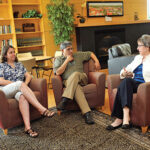
The Hrabowski Fund for Innovation – established in honor of UMBC President Freeman A. Hrabowski, III, to help UMBC faculty pursue new approaches to teaching – made its inaugural awards in January. Among the recipients were Marie desJardins, a professor of computer science and electrical engineering, Nagaraj Neerchal, chair of the department of mathematics and statistics, and Leslie Morgan, a professor of sociology and anthropology.
Each project pushed UMBC’s already burgeoning culture of curricular innovation and pushed it into new directions and disciplines. DesJardins created the ACTIVE (Active Computing Teaching and InnoVation Environment) center to create a more collaborative environment for computer science students. Neerchal piloted a new “Math Gym” that allows students to exercise and improve specific mathematics skills. Morgan was the co-creator of a new “Wisdom Institute” that will harness the talents of UMBC’s emeritus professors.
As the deadline for the next round of the awards approaches on Friday, October 11, 2013, UMBC Magazine asked these awardees what inspires them to think creatively about teaching and the university – and how they took that extra step to make their vision happen.
* * * *
UMBC Magazine: How did you get the idea for ACTIVE?
DesJardins: In some ways, ACTIVE started with the CNMS Active Science Teaching and Learning Environment (CASTLE). I knew the CASTLE was a College of Natural and Mathematical Sciences thing, so I didn’t know anybody who was in there. But at some point someone mentioned that I might be able to use it for a class I was teaching.
And so I asked: “Would it be possible to use the center for some labs that I was doing for a class?” And it was available. So we did that for a few sessions. It was really nice to have this collaborative space where students can work online on something together. So I was wondering: Why don’t we have these kinds of labs in computer science? What we have now are the kind of sucky ones in the basement of the engineering building, with rows of big monitors that you can’t see past. So we started talking about: “Wow, wouldn’t it be cool if we had a resource like this.”
I started asking some of the people involved in CASTLE how they had put it together. And around that time our department got a corporate donation from BAE Systems. It wasn’t enough money to do something like the CASTLE, but it was a start. And then our department chair [Gary Carter, a professor of computer science and electrical engineering] said: “You know, I have a space you might be able to use.” So we started to believe that maybe we could do something like this.
When the Hrabowski Fund was announced, I was talking with Penny Rheingans [ a professor of computer science and electrical engineering] and I said: “We have to propose something.” I didn’t know what to propose but knew we had to propose something. And we settled on trying to do something like the CASTLE. But we knew that the Hrabowski Fund money wouldn’t be enough money to build the room. But we thought: “What if we assume that we have enough money from corporate donations to get the room. What would we do with it?”
And that was when inspiration struck. I knew we would never get enough money to build it if we had to buy 50 computers. And we’d never be able to maintain it if there are 50 computers in there. So we thought – what if we had a room like the CASTLE, but more configurable, and we call it a “laptop lab” and we make the students bring their own laptops? So we needed some resources to figure out just how to do that – and all those threads came together in our proposal.
What makes Math Gym innovative? The university already has programs for remediation for students who have trouble with mathematics.
Neerchal: You said the key word: “remediation.” When students don’t have the skills they are supposed to have we recommend that they take a remedial class. The word “remediation” has a negative tone to it, like “rehab.” In the Math Gym we substitute the negative terms with positive words such as “working out” and “building strength” instead of remediation, “coaches” instead of “helpers” or “assistants”. Students are not going there to work on a deficiency, but they are “working out” to build strength. It’s a paradigm change. If you want to be good at math, you have to work out.
There are a lot of parallels between sports and athletics. Like sports, Mathematics is also about skill. Just as you don’t build any muscles watching football, you don’t build any skills by just watching your teacher do mathematics.
So that’s why I called this project a “Math Gym.” Students will think of going there as a positive experience.
The “Wisdom Institute” seems to channel the power that emeritus faculty can provide to a campus in a new and attractive concept and name.
Morgan: I triggered the idea unintentionally. I had been doing a lot of work on aging. My research is on aging and the social dynamics of aging. And when I was named the Lipitz Professor of the Arts, Humanities and Social Sciences two years ago, I decided to focus on age and ageism as issues in society.
So I put together my talk, and Craig Saper [professor and chair of the Language, Literacy, and Culture program] came to my talk, and we then started an email exchange about the fact that as a maturing institution, UMBC is seeing a lot more retirements – and more retirements on the horizon – and that there is a lot of talent and experience and wisdom that those people have.
You can think of it as a brain drain or a talent drain or a wisdom drain, but there are a people who remain engaged with UMBC in a variety of ways. And the Provost’s Office had put together a list of ways that people can remain engaged. But there is no entity that brings that to people’s attention, or that actively moves forward to invite people who might be interested in staying engaged to do that.
So the idea of the Wisdom Institute is to both create a nexus where we can identify all of the opportunities, and collect all of these people and utilize their wisdom and experiences – including creating a course that would be more about life skills, and that would bring the experience and wisdom of emeritus faculty to bear on finding a path through life for graduate students, perhaps, or even for faculty and staff.
It has broadened a bit from the original proposal to approach this issue in a more holistic way. There are a lot of organizations in the country for retirees, but some of them are purely social. And knowing the faculty and staff at UMBC, people would like something with a little more engagement, where their wisdom and experience can be put to use at a level that they would like. It’s a way of keeping our heritage and tradition as part of the momentum moving forward.
UMBC has a tradition of curricular innovation. It also has a tradition of getting things done even when there is a scarcity of funding. How does the Hrabowski Award encourage both impulses at the university?
DesJardins: First of all, these innovations are risky. Sometimes they don’t go so well. And they also represent a lot of effort on the part of the people doing them. I also think that there is great variability across time and space and departments and economic cycles about how much support and recognition there is for that effort.
The reason I came to UMBC was to teach students. At the root, that’s what I care about. So if it has a benefit for students that is my primary motivator and my primary reward. But after a while of draining yourself to do that, if no one else around you is recognizing that value, it can get tiring/ so it makes such a huge difference when you feel like your efforts are valued.
The funding [provided by the Hrabowski award] is nice, but just the fact that there is a program, and a recognition and visibility is important. When there is an appreciation of the effort and the amount of energy that it takes to do those things, it creates a culture where it snowballs. People start thinking: “Oh, he did that and everybody really liked it.” There’s a glow around that activity that makes people feel like it would be worthwhile for them.
It also makes you feel like you’re not working in a vacuum. The award draws attention to the fact that people are doing these things and that you should do it too – and that we value that effort in our culture.
Neerchal: In our department, certain elements that make up the Math Gym were already being done.
A key piece of Math Gym is Quiz Zero. It started about five years ago. Students take a quiz on day zero – on the weekend before the class begins. Quiz Zero is diagnostics and placement all rolled into one. Some of our faculty members were doing it and we decided to scale it up for all our foundation courses.
We also have faculty who are giving extra help to students outside the classroom. Bonny Tighe [a senior lecturer in the department of mathematics and statistics], for instance, hosts a Friday afternoon extra office hour for her students in CASTLE. They’re basically doing problems. Math Gym combines these two ideas scaled up to all our foundations classes.
DesJardins: But it’s the commitment. We’re trying to get this space for ACTIVE renovated. We don’t have a huge amount of clout, but we can say that this is associated with the Hrabowski Fund and it helps get it done.
Morgan: You can say this is an entity. And we’ve gotten some funding. We are building.
So the awards provide a certain amount of momentum too?
Neerchal: Freeman mentions Math Gym almost every time I see him speak. The Hrabowski award enabled us to pilot the idea for two semesters. Hopefully we will get to continue to help the students beyond the pilot.
Morgan: That’s one of the hallmarks of the innovation culture at UMBC. People of good will can make it happen. And then it does happen.
DesJardins: Yes and when you get one of these awards you actually do have to make it happen!
Morgan: The award keeps a project on the agenda in a way that you feel responsible for. And we all set our goals and it gives us a reason to fit this in amongst all the different priorities.
Neerchal: We are already up and running. We are in the corridors of the math department. Based on the Quiz Zero scores, we targeted about 750 students with low QuizZero scores, and close to 600 showed up for a total of 1800 visits. One student came 34 times.
DesJardins: How did he do in his classes?
Neerchal: He did very well. In fact, he told me it was a life saver. And he is a non-traditional student.
A key aspect of Math Gym is what I call “closing the communication gap.” Students are sent to Math Gym by their instructors with the prescription: “You need to work out.” They come to Math Gym. We log them. We have an algorithm to determine a personalized workout plan. We keep track of their hours. When they are done, we provide the instructors feedback: “This student just finished the prescribed workout in the Math Gym.” We’re closing that communication loop.
DesJardins: We have three students who are going to be working for us to support ACTIVE. They are undergraduates who are interested in education and learning and teaching and pedagogy. It creates a lot of energy. We just went over to our space. It was a lab and it’s been disused for a few years. We’ve removed all the detritus. It’s a big open room. We’re going to have moveable furniture and moveable chairs and moveable white boards and projector screens. I was over there with one of these students and she was getting excited and that made me excited too.
Neerchal: Changing the language really helps to generate student interest. When we were recruiting student coaches for the Math Gym, we did not call them “tutors” or “helpers.” Words with negative connotation are out. Instead they are called “coaches.”
DesJardins: Language is important.
Neerchal: We made a call through the instructors for 8 positions, and we had 32 applications. So we decided do a group interview. Forty plus students showed up for the event.
Morgan: There is an Association for Retired Faculty and Staff that exists but the connotation of that is so different than a Wisdom Institute. A lot of these things are about the lens we use to frame the problem.
DesJardins: Our name is an acronym. Tim Finin [professor of computer science and electrical engineering] came up with that. He’s a genius with acronyms, with coming up with names for things that capture the feeling you want people to have. All three of these projects have names that crystallize their sense.
Neerchal: The name Math Gym is self explanatory. Recently I was introduced to an alumnus, who is a major donor to the university, as the creator of the Math Gym. Before I could begin my explanation, he said: “I wish it was there when I was a student here.”
It was inspiring to see Freeman donate his entire award check to start a foundation dedicated to promote innovation in the campus.
DesJardins: He’s taken this energy that was already there but a little dissipated and put a name and a program to it. It makes a big difference.
Morgan: I think it encourages people who have a great idea to not toss that idea away because they say I’m too busy.
– Richard Byrne ’86
Learn more about the Hrabowski Fund for Innovation here.
]]>
The Hrabowski Fund for Innovation – established in honor of UMBC President Freeman A. Hrabowski, III, to help UMBC faculty pursue new approaches to teaching – made its inaugural awards in January....
https://umbc.edu/stories/back-story-summer-2013/
https://my3.my.umbc.edu/api/v0/pixel/news/123243/guest@my.umbc.edu/9cfe7c998be1cf1bb30cb99d9a725fc7/api/pixel
perspectives
summer-2013
UMBC News & Magazine
https://my3.my.umbc.edu/groups/umbc-news-magazine
https://assets1-my.umbc.edu/system/shared/avatars/groups/000/001/943/24435aa6207c452e7bc15cc74b42c7bb/xsmall.png?1748556657
https://assets1-my.umbc.edu/system/shared/avatars/groups/000/001/943/24435aa6207c452e7bc15cc74b42c7bb/original.png?1748556657
https://assets2-my.umbc.edu/system/shared/avatars/groups/000/001/943/24435aa6207c452e7bc15cc74b42c7bb/xxlarge.png?1748556657
https://assets2-my.umbc.edu/system/shared/avatars/groups/000/001/943/24435aa6207c452e7bc15cc74b42c7bb/xlarge.png?1748556657
https://assets3-my.umbc.edu/system/shared/avatars/groups/000/001/943/24435aa6207c452e7bc15cc74b42c7bb/large.png?1748556657
https://assets1-my.umbc.edu/system/shared/avatars/groups/000/001/943/24435aa6207c452e7bc15cc74b42c7bb/medium.png?1748556657
https://assets2-my.umbc.edu/system/shared/avatars/groups/000/001/943/24435aa6207c452e7bc15cc74b42c7bb/small.png?1748556657
https://assets1-my.umbc.edu/system/shared/avatars/groups/000/001/943/24435aa6207c452e7bc15cc74b42c7bb/xsmall.png?1748556657
https://assets2-my.umbc.edu/system/shared/avatars/groups/000/001/943/24435aa6207c452e7bc15cc74b42c7bb/xxsmall.png?1748556657
UMBC News & Magazine
0
0
false
Mon, 17 Jun 2013 19:45:29 -0400


