A Couple of Best Practices for Tablet-Friendly Design
The following is a guest post by Ben Terrill. Ben is co-author of the e-book Tablet Web Design Best Practices and is the VP of Customer Success at Mobify, where he works on big client sites like British Telecom, Starbucks and Expedia.
The tablet revolution is upon us. New data from Adobe shows that global websites now get more traffic from tablets than smartphones. And yet, a standard desktop site doesn’t work very well on a tablet. The typical desktop 12-pixel font is too small, as are buttons. Images aren’t sharp and, worst of all, some features simply don’t work.
The good news is you don’t have to completely revamp your website. A working desktop site is a great place to start building an effective tablet site. In this article, I’ll share six techniques from Mobify’s latest ebook Tablet Web Design Best Practices for significantly improving desktop websites on tablets.
Go 100% Touch Friendly
One of the best ways to make your desktop website sing on a tablet is to make it touch friendly. If website elements look as though they can be swiped, tapped or pinched, then you’ll need to build in that functionality to make your website tablet ready.
Consider adding elements like carousels and accordions, drawers and panels. Mobify has a variety of open source JavaScript modules you can use for this purpose.
Editor's note: We recently covered the JavaScript for touch-friendly sliders. I also think Royal Slider is a nice slider that is touch-friendly and also responsive.
Bump Up Default Font Size and Line Height
Don’t make users double tap or pinch your content. Instead, increase the font size to at least 16px. You can also use a line height of 1.5 to allow for breathing room between text on content-rich pages, as Mashable does in the example below. Remember, text must always be legible, no matter how a user holds their tablet.

Be Finger Friendly
Our fingers are much clumsier than a cursor, so bumping up the spacing between different touch targets will improve user accuracy. And, make those touch targets big! Our fingertips typically require upwards of 44px to comfortably fit within a touch target so design for that.
 Make each touch target at least 44px by 44px and use padding rather than margin. Padding increases the actual tappable area, whereas margin simply increases the whitespace around the element.
Enable Contextual Keyboards
The great thing about software keyboards is that they’re dynamic. That is, you can change their layout to suit context. For instance, if your input field requires an email address, the keyboard should feature the ‘@’ symbol, underscores and hyphens. If the user is asked to input a phone number, provide a numeric keypad. Try using the following input types on form fields:
- Standard keyboard |
<input type="text" />
- URL parameters |
<input type="url" />
- Email-specific keyboard |
<input type="email" />
- Numeric keyboard |
<input type="text" pattern="[0-9]*" />
 Example of a better numeric keyboard (iOS on left, Android on right) (via)
Editor's note: I also detailed data about HTML5 input attributes/types/elements. It's getting a smidge old, but still useful.
Font-Based Icons for the Win
Resolutions and pixel densities on tablet screens are far greater than on desktop and laptop screens. As a result, graphics can look pixelated if they’re not designed with high resolution screens in mind. For this reason, font-based icons are a good choice because they scale well on super high resolution displays; they’re easy to colour and shade using CSS; and they only require one HTTP request to download. Plus, you don’t have to deal with a sprite sheet.
Create your own icon font sets, or use existing sets like Font Awesome, glyphish, iconsweets, symbolset, or icnfnt.

Editor's note: I once did a massive roundup of icon fonts (which I still have to add to). I'm a fan of using these HTML techniques for adding them to the page, which keep them accessible. I'm also a fan of IcoMoon for the creating trimmed down, customized icon font sets.
Performance is Design
Modern web design techniques, like responsive design, can cripple website performance. Since 57% of users are likely to leave your website if it takes 3 seconds to load, performance considerations are critical. Some tips for improving mobile website performance include compressing images and concatenating CSS and JavaScript to reduce the number of HTTP requests and overall page size. With these fixes, you’ll notice significantly speedier page load time and happier, higher converting users. Use tools like Uglify, Sass, Compass and Mobify.js to automate performance improvements.
Editor's note: I cover some of these performance techniques and some others in #114: Let’s Do Simple Stuff to Make Our Websites Faster
Go Forth!
With these tablet transformation techniques in your toolbox, there’s no reason to get stressed out about not having a totally tablet-optimized website. For more ways to make your desktop site tablet friendly, read Mobify’s free ebook, Tablet Web Design Best Practices.
A Couple of Best Practices for Tablet-Friendly Design is a post from CSS-Tricks
]]>
The following is a guest post by Ben Terrill. Ben is co-author of the e-book Tablet Web Design Best Practices and is the VP of Customer Success at Mobify, where he works on big client sites like...
http://css-tricks.com/a-couple-of-best-practices-for-tablet-friendly-design/
https://my3.my.umbc.edu/api/v0/pixel/news/31385/guest@my.umbc.edu/98d99063068c435e705dee1c498f0d1e/api/pixel
article
css
html
javascript
mysql
php
sql
tricks
Web Developer - Build Group
https://my3.my.umbc.edu/groups/retired-583
https://assets3-my.umbc.edu/system/shared/avatars/groups/000/000/583/fc60f5d7abc2e080599bb6dc465db54d/xsmall.png?1363101197
https://assets4-my.umbc.edu/system/shared/avatars/groups/000/000/583/fc60f5d7abc2e080599bb6dc465db54d/original.jpg?1363101197
https://assets4-my.umbc.edu/system/shared/avatars/groups/000/000/583/fc60f5d7abc2e080599bb6dc465db54d/xxlarge.png?1363101197
https://assets4-my.umbc.edu/system/shared/avatars/groups/000/000/583/fc60f5d7abc2e080599bb6dc465db54d/xlarge.png?1363101197
https://assets3-my.umbc.edu/system/shared/avatars/groups/000/000/583/fc60f5d7abc2e080599bb6dc465db54d/large.png?1363101197
https://assets3-my.umbc.edu/system/shared/avatars/groups/000/000/583/fc60f5d7abc2e080599bb6dc465db54d/medium.png?1363101197
https://assets4-my.umbc.edu/system/shared/avatars/groups/000/000/583/fc60f5d7abc2e080599bb6dc465db54d/small.png?1363101197
https://assets3-my.umbc.edu/system/shared/avatars/groups/000/000/583/fc60f5d7abc2e080599bb6dc465db54d/xsmall.png?1363101197
https://assets4-my.umbc.edu/system/shared/avatars/groups/000/000/583/fc60f5d7abc2e080599bb6dc465db54d/xxsmall.png?1363101197
Web Developer - Build Group
0
0
true
Mon, 17 Jun 2013 08:33:22 -0400
Mon, 17 Jun 2013 08:33:22 -0400
DreamWorks and Netflix in Deal for New TV Shows
DreamWorks Animation will supply Netflix with a flood of new episodic TV programs inspired by characters from past DreamWorks franchises, which include “Shrek” and “The Croods.”
 ]]>
DreamWorks Animation will supply Netflix with a flood of new episodic TV programs inspired by characters from past DreamWorks franchises, which include “Shrek” and “The Croods.”
http://www.nytimes.com/2013/06/18/business/media/dreamworks-and-netflix-in-deal-for-new-tv-programs.html?partner=rss&emc=rss
https://my3.my.umbc.edu/api/v0/pixel/news/31381/guest@my.umbc.edu/9fa7bf7eb99a777c99ffd8ea8a9b8bba/api/pixel
dreamworks-animation-skg-inc-dwa-nasdaq
mergers-acquisitions-and-divestitures
netflix-inc-nflx-nasdaq
new
technology
television
viacom-inc-viab-nasdaq
video-recordings-and-downloads
walt-disney-company-dis-nyse
york
Web Developer - Build Group
https://my3.my.umbc.edu/groups/retired-583
https://assets3-my.umbc.edu/system/shared/avatars/groups/000/000/583/fc60f5d7abc2e080599bb6dc465db54d/xsmall.png?1363101197
https://assets4-my.umbc.edu/system/shared/avatars/groups/000/000/583/fc60f5d7abc2e080599bb6dc465db54d/original.jpg?1363101197
https://assets4-my.umbc.edu/system/shared/avatars/groups/000/000/583/fc60f5d7abc2e080599bb6dc465db54d/xxlarge.png?1363101197
https://assets4-my.umbc.edu/system/shared/avatars/groups/000/000/583/fc60f5d7abc2e080599bb6dc465db54d/xlarge.png?1363101197
https://assets3-my.umbc.edu/system/shared/avatars/groups/000/000/583/fc60f5d7abc2e080599bb6dc465db54d/large.png?1363101197
https://assets3-my.umbc.edu/system/shared/avatars/groups/000/000/583/fc60f5d7abc2e080599bb6dc465db54d/medium.png?1363101197
https://assets4-my.umbc.edu/system/shared/avatars/groups/000/000/583/fc60f5d7abc2e080599bb6dc465db54d/small.png?1363101197
https://assets3-my.umbc.edu/system/shared/avatars/groups/000/000/583/fc60f5d7abc2e080599bb6dc465db54d/xsmall.png?1363101197
https://assets4-my.umbc.edu/system/shared/avatars/groups/000/000/583/fc60f5d7abc2e080599bb6dc465db54d/xxsmall.png?1363101197
Web Developer - Build Group
0
0
true
Mon, 17 Jun 2013 07:18:21 -0400
Mon, 17 Jun 2013 11:34:28 -0400
Bits Blog: End of ESPN in 3-D May Herald the Format’s Demise
ESPN, the nation’s largest sports network and an early adopter of 3-D technology, said that it would discontinue its 3-D channel.
]]>
DreamWorks Animation will supply Netflix with a flood of new episodic TV programs inspired by characters from past DreamWorks franchises, which include “Shrek” and “The Croods.”
http://www.nytimes.com/2013/06/18/business/media/dreamworks-and-netflix-in-deal-for-new-tv-programs.html?partner=rss&emc=rss
https://my3.my.umbc.edu/api/v0/pixel/news/31381/guest@my.umbc.edu/9fa7bf7eb99a777c99ffd8ea8a9b8bba/api/pixel
dreamworks-animation-skg-inc-dwa-nasdaq
mergers-acquisitions-and-divestitures
netflix-inc-nflx-nasdaq
new
technology
television
viacom-inc-viab-nasdaq
video-recordings-and-downloads
walt-disney-company-dis-nyse
york
Web Developer - Build Group
https://my3.my.umbc.edu/groups/retired-583
https://assets3-my.umbc.edu/system/shared/avatars/groups/000/000/583/fc60f5d7abc2e080599bb6dc465db54d/xsmall.png?1363101197
https://assets4-my.umbc.edu/system/shared/avatars/groups/000/000/583/fc60f5d7abc2e080599bb6dc465db54d/original.jpg?1363101197
https://assets4-my.umbc.edu/system/shared/avatars/groups/000/000/583/fc60f5d7abc2e080599bb6dc465db54d/xxlarge.png?1363101197
https://assets4-my.umbc.edu/system/shared/avatars/groups/000/000/583/fc60f5d7abc2e080599bb6dc465db54d/xlarge.png?1363101197
https://assets3-my.umbc.edu/system/shared/avatars/groups/000/000/583/fc60f5d7abc2e080599bb6dc465db54d/large.png?1363101197
https://assets3-my.umbc.edu/system/shared/avatars/groups/000/000/583/fc60f5d7abc2e080599bb6dc465db54d/medium.png?1363101197
https://assets4-my.umbc.edu/system/shared/avatars/groups/000/000/583/fc60f5d7abc2e080599bb6dc465db54d/small.png?1363101197
https://assets3-my.umbc.edu/system/shared/avatars/groups/000/000/583/fc60f5d7abc2e080599bb6dc465db54d/xsmall.png?1363101197
https://assets4-my.umbc.edu/system/shared/avatars/groups/000/000/583/fc60f5d7abc2e080599bb6dc465db54d/xxsmall.png?1363101197
Web Developer - Build Group
0
0
true
Mon, 17 Jun 2013 07:18:21 -0400
Mon, 17 Jun 2013 11:34:28 -0400
Bits Blog: End of ESPN in 3-D May Herald the Format’s Demise
ESPN, the nation’s largest sports network and an early adopter of 3-D technology, said that it would discontinue its 3-D channel.
 ]]>
ESPN, the nation’s largest sports network and an early adopter of 3-D technology, said that it would discontinue its 3-D channel.
http://bits.blogs.nytimes.com/2013/06/17/daily-report-end-of-espn-in-3-d-may-herald-the-formats-demise/?partner=rss&emc=rss
https://my3.my.umbc.edu/api/v0/pixel/news/31382/guest@my.umbc.edu/ba281d7dcce0857b8a1931b1c739de5a/api/pixel
3-d-devices-and-effects
discovery-communications-inc
espn
new
technology
television
york
Web Developer - Build Group
https://my3.my.umbc.edu/groups/retired-583
https://assets3-my.umbc.edu/system/shared/avatars/groups/000/000/583/fc60f5d7abc2e080599bb6dc465db54d/xsmall.png?1363101197
https://assets4-my.umbc.edu/system/shared/avatars/groups/000/000/583/fc60f5d7abc2e080599bb6dc465db54d/original.jpg?1363101197
https://assets4-my.umbc.edu/system/shared/avatars/groups/000/000/583/fc60f5d7abc2e080599bb6dc465db54d/xxlarge.png?1363101197
https://assets4-my.umbc.edu/system/shared/avatars/groups/000/000/583/fc60f5d7abc2e080599bb6dc465db54d/xlarge.png?1363101197
https://assets3-my.umbc.edu/system/shared/avatars/groups/000/000/583/fc60f5d7abc2e080599bb6dc465db54d/large.png?1363101197
https://assets3-my.umbc.edu/system/shared/avatars/groups/000/000/583/fc60f5d7abc2e080599bb6dc465db54d/medium.png?1363101197
https://assets4-my.umbc.edu/system/shared/avatars/groups/000/000/583/fc60f5d7abc2e080599bb6dc465db54d/small.png?1363101197
https://assets3-my.umbc.edu/system/shared/avatars/groups/000/000/583/fc60f5d7abc2e080599bb6dc465db54d/xsmall.png?1363101197
https://assets4-my.umbc.edu/system/shared/avatars/groups/000/000/583/fc60f5d7abc2e080599bb6dc465db54d/xxsmall.png?1363101197
Web Developer - Build Group
0
0
true
Mon, 17 Jun 2013 07:14:28 -0400
Mon, 17 Jun 2013 07:14:28 -0400
How to choose the right type
Font choice should be a science as well as an art. Veronika Burian and José Scaglione provide a concise primer for type selection
]]>
ESPN, the nation’s largest sports network and an early adopter of 3-D technology, said that it would discontinue its 3-D channel.
http://bits.blogs.nytimes.com/2013/06/17/daily-report-end-of-espn-in-3-d-may-herald-the-formats-demise/?partner=rss&emc=rss
https://my3.my.umbc.edu/api/v0/pixel/news/31382/guest@my.umbc.edu/ba281d7dcce0857b8a1931b1c739de5a/api/pixel
3-d-devices-and-effects
discovery-communications-inc
espn
new
technology
television
york
Web Developer - Build Group
https://my3.my.umbc.edu/groups/retired-583
https://assets3-my.umbc.edu/system/shared/avatars/groups/000/000/583/fc60f5d7abc2e080599bb6dc465db54d/xsmall.png?1363101197
https://assets4-my.umbc.edu/system/shared/avatars/groups/000/000/583/fc60f5d7abc2e080599bb6dc465db54d/original.jpg?1363101197
https://assets4-my.umbc.edu/system/shared/avatars/groups/000/000/583/fc60f5d7abc2e080599bb6dc465db54d/xxlarge.png?1363101197
https://assets4-my.umbc.edu/system/shared/avatars/groups/000/000/583/fc60f5d7abc2e080599bb6dc465db54d/xlarge.png?1363101197
https://assets3-my.umbc.edu/system/shared/avatars/groups/000/000/583/fc60f5d7abc2e080599bb6dc465db54d/large.png?1363101197
https://assets3-my.umbc.edu/system/shared/avatars/groups/000/000/583/fc60f5d7abc2e080599bb6dc465db54d/medium.png?1363101197
https://assets4-my.umbc.edu/system/shared/avatars/groups/000/000/583/fc60f5d7abc2e080599bb6dc465db54d/small.png?1363101197
https://assets3-my.umbc.edu/system/shared/avatars/groups/000/000/583/fc60f5d7abc2e080599bb6dc465db54d/xsmall.png?1363101197
https://assets4-my.umbc.edu/system/shared/avatars/groups/000/000/583/fc60f5d7abc2e080599bb6dc465db54d/xxsmall.png?1363101197
Web Developer - Build Group
0
0
true
Mon, 17 Jun 2013 07:14:28 -0400
Mon, 17 Jun 2013 07:14:28 -0400
How to choose the right type
Font choice should be a science as well as an art. Veronika Burian and José Scaglione provide a concise primer for type selection
 ]]>
Font choice should be a science as well as an art. Veronika Burian and José Scaglione provide a concise primer for type selection
http://feedproxy.google.com/~r/net/topstories/~3/KoBl4thBIMM/story01.htm
https://my3.my.umbc.edu/api/v0/pixel/news/31380/guest@my.umbc.edu/e9e9a6c515648753026e0cf683460ee8/api/pixel
css
development
html
javascript
mysql
net
php
sql
web
Web Developer - Build Group
https://my3.my.umbc.edu/groups/retired-583
https://assets3-my.umbc.edu/system/shared/avatars/groups/000/000/583/fc60f5d7abc2e080599bb6dc465db54d/xsmall.png?1363101197
https://assets4-my.umbc.edu/system/shared/avatars/groups/000/000/583/fc60f5d7abc2e080599bb6dc465db54d/original.jpg?1363101197
https://assets4-my.umbc.edu/system/shared/avatars/groups/000/000/583/fc60f5d7abc2e080599bb6dc465db54d/xxlarge.png?1363101197
https://assets4-my.umbc.edu/system/shared/avatars/groups/000/000/583/fc60f5d7abc2e080599bb6dc465db54d/xlarge.png?1363101197
https://assets3-my.umbc.edu/system/shared/avatars/groups/000/000/583/fc60f5d7abc2e080599bb6dc465db54d/large.png?1363101197
https://assets3-my.umbc.edu/system/shared/avatars/groups/000/000/583/fc60f5d7abc2e080599bb6dc465db54d/medium.png?1363101197
https://assets4-my.umbc.edu/system/shared/avatars/groups/000/000/583/fc60f5d7abc2e080599bb6dc465db54d/small.png?1363101197
https://assets3-my.umbc.edu/system/shared/avatars/groups/000/000/583/fc60f5d7abc2e080599bb6dc465db54d/xsmall.png?1363101197
https://assets4-my.umbc.edu/system/shared/avatars/groups/000/000/583/fc60f5d7abc2e080599bb6dc465db54d/xxsmall.png?1363101197
Web Developer - Build Group
0
0
true
Mon, 17 Jun 2013 06:05:45 -0400
Tips for Building Your First Web App
]]>
Font choice should be a science as well as an art. Veronika Burian and José Scaglione provide a concise primer for type selection
http://feedproxy.google.com/~r/net/topstories/~3/KoBl4thBIMM/story01.htm
https://my3.my.umbc.edu/api/v0/pixel/news/31380/guest@my.umbc.edu/e9e9a6c515648753026e0cf683460ee8/api/pixel
css
development
html
javascript
mysql
net
php
sql
web
Web Developer - Build Group
https://my3.my.umbc.edu/groups/retired-583
https://assets3-my.umbc.edu/system/shared/avatars/groups/000/000/583/fc60f5d7abc2e080599bb6dc465db54d/xsmall.png?1363101197
https://assets4-my.umbc.edu/system/shared/avatars/groups/000/000/583/fc60f5d7abc2e080599bb6dc465db54d/original.jpg?1363101197
https://assets4-my.umbc.edu/system/shared/avatars/groups/000/000/583/fc60f5d7abc2e080599bb6dc465db54d/xxlarge.png?1363101197
https://assets4-my.umbc.edu/system/shared/avatars/groups/000/000/583/fc60f5d7abc2e080599bb6dc465db54d/xlarge.png?1363101197
https://assets3-my.umbc.edu/system/shared/avatars/groups/000/000/583/fc60f5d7abc2e080599bb6dc465db54d/large.png?1363101197
https://assets3-my.umbc.edu/system/shared/avatars/groups/000/000/583/fc60f5d7abc2e080599bb6dc465db54d/medium.png?1363101197
https://assets4-my.umbc.edu/system/shared/avatars/groups/000/000/583/fc60f5d7abc2e080599bb6dc465db54d/small.png?1363101197
https://assets3-my.umbc.edu/system/shared/avatars/groups/000/000/583/fc60f5d7abc2e080599bb6dc465db54d/xsmall.png?1363101197
https://assets4-my.umbc.edu/system/shared/avatars/groups/000/000/583/fc60f5d7abc2e080599bb6dc465db54d/xxsmall.png?1363101197
Web Developer - Build Group
0
0
true
Mon, 17 Jun 2013 06:05:45 -0400
Tips for Building Your First Web App

As someone who creates web apps (both for myself and for clients), I’ve learned a few things throughout my journey that have helped me get the best results for the time and resources I have.
These tips are from a person who started out as someone who wasn’t familiar with Web programming. When I first started developing my first web app, I wasn’t a web developer. I was a business guy.
(If you want to read my story on how I built my first web app in only a few months using Ruby on Rails, check out my article: Why Making Web Apps with Rails Is Awesome.)
An assumption I’m going to make about you, the person reading this article, is that you’re already a web developer, or that you’ll be hiring one for your first web app. I’ll be discussing practical, general tips that are applicable to all web apps regardless of what Web technologies you’re using. So please don’t expect some deep-level web programming techniques in this article, because you’ll find none.
Another assumption I’m making is that you’re going to build your first web app without investing hundreds of thousands of dollars into version 1.0. I’ll assume that your budget is in the $5,000 range largely because that’s where my experience lies.
With my preface all said and done, let me share my seven tips based off my own web app development experience.
1. Think in Terms of Data Relationships
Regardless of complexity, size or feature set, you can break down any web application into this simple operational mechanics:
- The web app takes in data from users
- The web app processes and decides what to do with that data
- The web app produces some output for the users
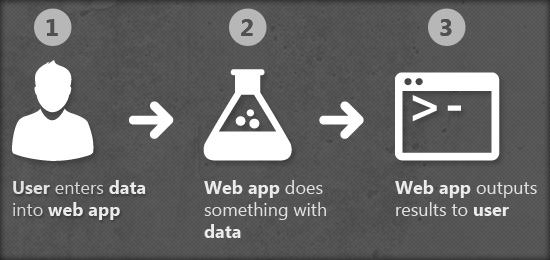
All web apps work like that, so at the start, it’s best to break down your web app’s core features into data relationships to see:
- How your web app should be built
- How your web app might deal with user data and presentation
- What features you need to prioritize
- What web services and web technologies you’ll need to enlist and get familiar with
And so on.
For example, let’s take the primary feature of Instagram — posting a photo up on the photo-sharing service — and break it down into the fundamental operational mechanics above:
- The web app takes in a photo from users
- The web app processes the photo to scale it up or down to the layout of Instagram and also what photo effect the user wants to apply to the photo
- The web app produces a modified image and displays it for the users
So if you were hiring me to create an Instagram clone for you, I would probably create a breakdown of the data relationships like this:
| Users |
| Has 2 permission roles (User and Admin) |
| A User can upload Photos
|
| A User can manipulate Photos
|
| A User can like or dislike Photos of other Users
|
| A User can comment on Photos
|
| Photos |
|
Photos are uploaded by a User
|
| A Photo can get a Filter applied to it by the User who owns the Photo
|
| A Photo can get liked/disliked |
| A Photo can get a Comment
|
| A Photo can be deleted/edited/updated |
| A Photo can be private or public |
| Filter |
| A Filter can be applied to Photos
|
| A Filter can be created by an Admin
|
| Comment |
| A Comment belongs to a Photo
|
| A Comment can be created, edited and deleted by the User who own the Comment
|
| A Comment can be deleted by the User who owns the Photo where the Comment is on |
I know you may not be able to think naturally like that at first whenever you look at web apps, but the more you use other web apps, and the more you think about them in all of these little pieces of data relationships, the easier it is for you to conceptualize and build your web app.
2. Keep Track of UIs and Websites That Inspire You
Do you have examples of web applications and websites that you like?
From as little as small, interactive components (like the way a button feels when it’s pressed or how a web app deals with an image uploading feature) to as big as the color scheme for the entire site and general design theme and sensibility, you should have some way of recording these inspirational examples.
Anything you have come across on the Web that you like, make a note of it.
 UI inspiration board on Pinterest by Stefan Marshall
You can use a multimedia note-taking tool like Evernote or an image bookmarking service like Pinterest for this.
Having this collection of web user interfaces and website designs that inspire you will help you as you begin developing your web app’s interface — you can look to your collection for ideas.
Also, familiarize yourself with common user interface design patterns to make sure that your UI components are the best solutions for a given task.
3. Keep the First Version as Simple as Possible
Building a minimum viable product (MVP) is a popular concept for online startups. A minimum viable product is something that has the most basic core features of a web app and nothing more.
Producing an MVP has many benefits, but the primary reason is to validate your web app idea as quickly and as cheaply as possible.
If you keep the web app to a very strict and defined set of core features, you can test out whether or not those core features are what your users need.
Do you remember the first version of Google?
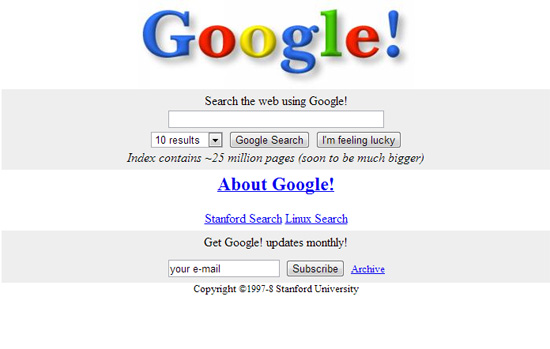
Google’s core feature is search. And all you need for that core feature is a text input field for the user’s search term, and a button to execute the search. It doesn’t have to be pretty. It doesn’t have to be any more complicated than that. It just has to do what it promises very well.
The MVP allowed Google to launch the product to the public so that the company can validate their idea before developing it further.
The MVP also allowed them to start gathering user search behaviors and to tease out new features and opportunities for improvements in future versions of the product.
Fast forward to today and Google is now more than just a search company. Their core feature is also a lot more sophisticated compared to the first version.
But it was that first version that led them on the path they are now.
I have never seen a web app fail because it did too little or because it didn’t have enough features.
To me, web apps fail because there is no demand for the problem they’re aiming to solve, or because the web app doesn’t execute the solution to the problem effectively.
4. Focus on Behavior and Less on Look-and-Feel
Quite often, frustrations that people have with a web app come from the way it behaves, not the way it looks.
I’m not saying you should ignore how your web app looks altogether, but I think that this is something you can refine, polish, and invest in more once you confirm your solution is something users actually want.
What I’m suggesting is that you direct your time and resources into your web app’s value proposition — which for a web app is usually the fundamental problem it’s aiming to solve for its users.
To that end, I encourage you to use a reliable HTML/CSS framework or boilerplate such as Twitter Bootstrap, Skeleton and Foundation when it comes to developing the front-end interface of your MVP.
CSS/HTML frameworks and boilerplates speed up front-end design and development so that you can have more time to concentrate on how your web app behaves.
This way, you can put most of your time and resources on actually developing new and novel stuff, rather than on things that have already been solved. There is no need to reinvent the wheel.
Kippt — a web app trying to enhance the way people find, read, store, search, and share Web content — uses Twitter Bootstrap:
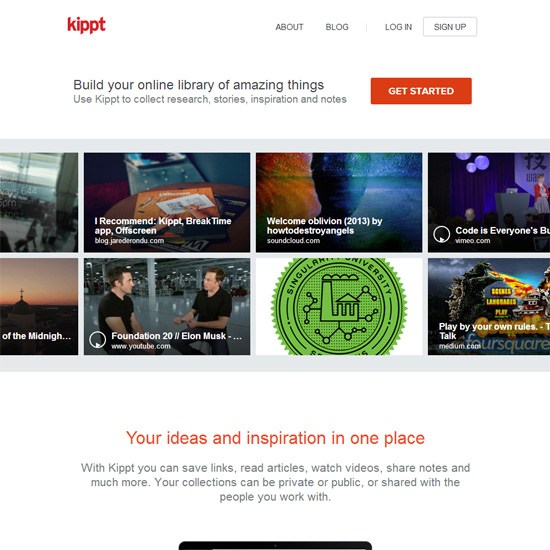
Kippt’s aiming to solve a complex and ambitious problem — what, with the billions of web pages out there — and they realize that how their website looks isn’t the primary reason they’re going to get more web app sign-ups.
So for the front-end design, they lean on a reliable and beautiful front-end framework to help them with things like responsive web design, content layout, CSS resets, cross-browser compatibility, and the myriad other things that are critical in any Web project, but have already been solved by others before them.
After you validate your web app, and are convinced that it’s worth pursuing, then you can invest your retirement fund designing that perfect web app favicon if you so desire.
5. Use Free or Affordable Web Services as Much as Possible
Even if you just won the lottery and have money to burn, don’t be frivolous with your funds.
There are many powerful web services built for modern web applications that have free (or very affordable) pricing plans.
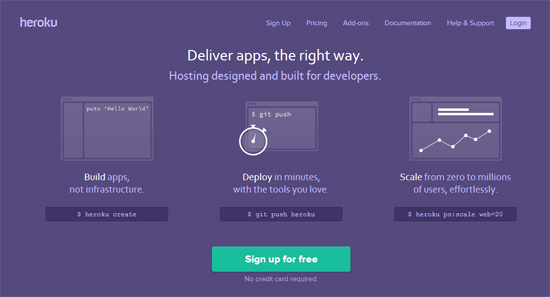
From Heroku (my favorite Rails host) to Amazon S3 (for storing images and other content) to SendGrid (for handling your transactional emails) to Stripe (that handles your payments and only charges you a transaction fee) to Google Analytics (for relatively robust web analytics) — with a bit of online research and self-education, you can end up saving yourself a lot of money.
Once your app takes off like the next Facebook, you can invest in more robust web services replacements if you need to, or scale up your existing solutions. The web services I’ve mentioned above don’t need any replacements; they will scale with you as you grow.
Another point I want to make is there’s no need to think about scalability right now. If you pick the right solutions, they will scale up with you when you need them to.
So if you’re thinking about buying dedicated server racks hosted in your own datacenters even before you’ve launched an MVP, you’re putting your worries and time in the wrong places.
6. Use Third-Party APIs with Caution
An API is a way for a developer to get access to the data of an external web service. For example, Twitter’s API allows any developer to build an app that accesses public tweets and the account information of Twitter users.
Not all APIs are created equally. The best APIs are those that are RESTful (i.e. they conform to best practices and industry standards about the way data should be interacted with) and they provide wrappers for multiple popular languages (PHP, Ruby, Python, Java, etc.). They should also provide good documentation.
The reason you want to be extremely choosy with which APIs you use is that your web app’s performance can be affected significantly by these third-party web services.
And even if you choose a good high-performance API, you will not escape the vagaries of the API owner’s company direction. For example, Twitter’s API has been subject to criticisms because of the company’s choices to limit access to their API and enforce new terms of use, significantly crippling some web apps with those changes.
Be especially mindful of web app ideas that have core features relying heavily or solely on third-party APIs. External APIs can change at any time, and these changes can drastically affect the direction and success of your web app.
7. Focus on the Excellent Execution of Your Idea
I can’t think of one web app that was successful based solely on being "the first."
Rather than spending time and money on lawyers drafting your non-disclosure agreements (NDAs) and rather than being fearful of someone "stealing" your idea, you’re much better off thinking about how you’ll execute your idea effectively.
In the words of a very successful and well-regarded entrepreneur, Derek Sivers: Ideas "are worth nothing unless executed."
Ideas to Sivers are just multipliers of actual success. An idea alone won’t generate anything fruitful:
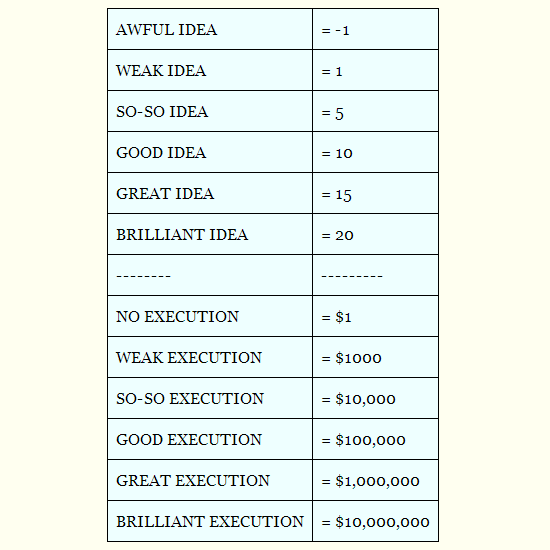
In other words: Ideas don’t make you rich. The correct execution of ideas does.
What makes a great product great is not about your one big idea — it’s the thousands of smaller ideas that are executed very well.
It’s the small idea of using a "pull to refresh" interface to save the user from having to reload the page. It’s conceptualizing the idea for making image uploads simpler and easier. It’s the multitude of little ideas that you effectively execute that make the difference.
Conclusion
In my experience, the most successful projects I have built and the best clients I have worked with tended to have these things covered.
I hope I was able to inspire you in some way towards thinking about how to approach the development of your very first web app.
What are your own tips for building web apps? Do you disagree with anything I’ve said? Please share your thoughts in the comments and let’s start a discussion.
Related Content
About the Author
 Marc Gayle is a Rails developer and the founder of 5KMVP where he builds minimum viable products for just $5000. Follow him on Twitter.
The post Tips for Building Your First Web App appeared first on Six Revisions.
]]>
As someone who creates web apps (both for myself and for clients), I’ve learned a few things throughout my journey that have helped me get the best results for the time and resources I have....
http://feedproxy.google.com/~r/SixRevisions/~3/xKPe2i3-BPk/
https://my3.my.umbc.edu/api/v0/pixel/news/31378/guest@my.umbc.edu/67f4a379fb15110457a10ef5613e3b08/api/pixel
css
database
design
development
html
javascript
mysql
sql
web
web-development
Web Developer - Build Group
https://my3.my.umbc.edu/groups/retired-583
https://assets3-my.umbc.edu/system/shared/avatars/groups/000/000/583/fc60f5d7abc2e080599bb6dc465db54d/xsmall.png?1363101197
https://assets4-my.umbc.edu/system/shared/avatars/groups/000/000/583/fc60f5d7abc2e080599bb6dc465db54d/original.jpg?1363101197
https://assets4-my.umbc.edu/system/shared/avatars/groups/000/000/583/fc60f5d7abc2e080599bb6dc465db54d/xxlarge.png?1363101197
https://assets4-my.umbc.edu/system/shared/avatars/groups/000/000/583/fc60f5d7abc2e080599bb6dc465db54d/xlarge.png?1363101197
https://assets3-my.umbc.edu/system/shared/avatars/groups/000/000/583/fc60f5d7abc2e080599bb6dc465db54d/large.png?1363101197
https://assets3-my.umbc.edu/system/shared/avatars/groups/000/000/583/fc60f5d7abc2e080599bb6dc465db54d/medium.png?1363101197
https://assets4-my.umbc.edu/system/shared/avatars/groups/000/000/583/fc60f5d7abc2e080599bb6dc465db54d/small.png?1363101197
https://assets3-my.umbc.edu/system/shared/avatars/groups/000/000/583/fc60f5d7abc2e080599bb6dc465db54d/xsmall.png?1363101197
https://assets4-my.umbc.edu/system/shared/avatars/groups/000/000/583/fc60f5d7abc2e080599bb6dc465db54d/xxsmall.png?1363101197
Web Developer - Build Group
0
0
true
Mon, 17 Jun 2013 06:00:02 -0400
Mon, 17 Jun 2013 06:00:02 -0400
Has flat design made our sites too simple?

When I was first introduced to graphic design, I was extremely young and a member of a pretty popular message board. Posters showed respect for other members by presenting them with these things called “sigs” — they were little rectangular graphics that fit in the reserved area for a person’s signature. If you’re familiar with message boards and forums, you know exactly what I mean. If not, it was just an image that showed up at the bottom of someone’s message. This wasn’t an exclusive concept for these message boards, as many did use this feature.
Back then, I downloaded either Adobe Photoshop 4 or 5 (it was so long ago, I can’t recall the version). I went to work and eventually taught myself how to do many of the things these other designers were doing.
The designs we made were elaborate and colorful. They were fantastical and made people feel like they were mystical creatures hidden by the cloud of reality. These sigs were nothing but decoration and the more fun you had, the more the receiving member loved it.
This is now

Fast forward to now and if I showed you all some of the graphics I made during this time, you’d critique me harshly and probably continue by laughing at some of the choices I made. I would (and have) too.
We’ve strayed away from formerly learned concepts and there’s two reasons why: 1) Design doesn’t rest upon the favor of decorations and unnecessary aesthetics and 2) It’s just not cool anymore.
Times change and trends do as well. In 2013, what we seem to value is flat design.
As we progress, so do our trends and our taste in creative things. That’s an understandable concept, but it’s gotten to the point where we just don’t do lots of designing at all. We don’t rarely make any of our design elements design heavy, even when they can be tasteful. We tend to opt for the flat, minimalist look. But when is enough enough?
Predictability and creativity

Lots of us preach creativity and urge others to think outside the box. I’m one of those people, but every so often it seems like we forget this concept and create graphics that are the norm or that are the trend. Sure, some of the things we do now just happen to work, but where’s the creativity? Isn’t there a way to use a trend but make it work for a certain person or brand. Have we become a little too predictable?
A while back, I touched on the idea that minimalism could be killing creativity after I saw redesigns for USA Today and eBay logos. There are obviously standards in design, whether it be logo design or web design, but everything seems to be so…regular. These logos weren’t bad logos, but there were very simple and the rest of the branding seemed to fall into that category. There wasn’t much character (especially with eBay) or style and I’m pretty sure I could open Photoshop or Illustrator now and make exact replicas of these two logos.
It seems that we’ve decided that the cleaner our graphics are, then the better they are. And this makes some sense — we are designing now for people to use things. The less clutter it has, the easier it is to use, but there’s a very fine line between simple and plain. There’s certainly an air of beauty that comes from simplicity, but we’ve got to do a better job of learning when that’s necessary and when that’s not.
Again, I like to think of the eBay logo as a prime example. The former logo stood for fun, but that idea has kind of been taken away. Simplicity is not just stripping the character of an element, but about taking away what doesn’t need to be there, it’s a very fine line. But distinguishing the line shouldn’t be rocket science. What needs to be there and what doesn’t? Not just from an aesthetics point of view but also from a branding point of view as well.
What we do with Photoshop

Adobe Photoshop is still the standard for web design. If you think about this, it’s somewhat baffling because Photoshop was created to be an image editing application for photographers. As we continue to make it the go-to app for everything else, Adobe expands our capabilities and what we can actually create with Photoshop.
Unlike any other programs in Creative Cloud, Photoshop really allows you to do some extremely creative things. We can change and add the lighting in a photograph, add motion and different types of blurs, create glowing edges, warp shapes and so much more. It’s great for graphical elements as well as light and heavy adjustments to photographs. You can literally create a new world and new feel just by messing with images and filters in Photoshop.
All these filters and all this ability to be extremely creative in Photoshop (and other programs), begs the question of why or why don’t we utilize these effects more? Why are we so fond of solid color backgrounds and flat design? Why don’t we create these new worlds for our audiences when they visit us online? Why don’t we do more creatively?
Images and excuses

It’s common to keep our designs fairly simple in print because not all printers and all colors are created equal. We try to control this with Pantone colors, but even still, bad things can happen after you ship a job off to print. This is a concept many who are familiar with print design are familiar with and understand: don’t do a lot of gradients, fine details or crazy colors in print because you may end up very disappointed when your print is in your hand. It seems as if this mentality has crept into our website designs.
We know what Photoshop is capable of. And we know we can see the fine details, wonderous gradients, blurs and bright colors online. All screens aren’t created equal (thanks to developments in retina screens and the like) but there’s a standard that makes so many things viewable, so what’s the excuse?
Many will point to image loading times as more complex designs will typically load slower than usual. And this is definitely the most valid concern, but there are various solutions. In Photoshop, we’re able to splice large images and put them together with code. We can also find different ways and formats to save images so they don’t take as long. There are hacks in web development that help sites load faster and so many other solutions to help out.
Another excuse is the ease of converting a flat design into a responsive site; but whoever said that easy was good?
When are we going to get back to being a bit more creative?
We are minimalist
We’ve been there before, that one website that has so much going on you don’t know where to go or what to do. But that’s not what needs to come back. No one is saying you have to design every piece of your web site, but perhaps create a more intricate background or other elements for your design.
Making everything so clean and simple is nice and it works many times. But we have to think of different ways to be creative and to utilize all the capabilities possible in our applications to really bring forth our creativity.
We aren’t artists, but we are designers, and it’s truly okay to design a little more.
Has the pursuit of flat design stifled our creativity? Is minimalism dull? Let us know your thoughts in the comments.
Source
 ]]>
When I was first introduced to graphic design, I was extremely young and a member of a pretty popular message board. Posters showed respect for other members by presenting them with these things...
http://rss.feedsportal.com/c/35285/f/661066/s/2d631f89/l/0L0Swebdesignerdepot0N0C20A130C0A60Chas0Eflat0Edesign0Emade0Eour0Esites0Etoo0Esimple0C/story01.htm
https://my3.my.umbc.edu/api/v0/pixel/news/31377/guest@my.umbc.edu/2923f37bd8800a0398b631a0320343d2/api/pixel
art
css
design
development
flat-design
html
html5
illustrator
javascript
minimalism
mysql
oracle
photoshop
photoshop-design
php
simple-design
sql
too-simple
web-design
Web Developer - Build Group
https://my3.my.umbc.edu/groups/retired-583
https://assets3-my.umbc.edu/system/shared/avatars/groups/000/000/583/fc60f5d7abc2e080599bb6dc465db54d/xsmall.png?1363101197
https://assets4-my.umbc.edu/system/shared/avatars/groups/000/000/583/fc60f5d7abc2e080599bb6dc465db54d/original.jpg?1363101197
https://assets4-my.umbc.edu/system/shared/avatars/groups/000/000/583/fc60f5d7abc2e080599bb6dc465db54d/xxlarge.png?1363101197
https://assets4-my.umbc.edu/system/shared/avatars/groups/000/000/583/fc60f5d7abc2e080599bb6dc465db54d/xlarge.png?1363101197
https://assets3-my.umbc.edu/system/shared/avatars/groups/000/000/583/fc60f5d7abc2e080599bb6dc465db54d/large.png?1363101197
https://assets3-my.umbc.edu/system/shared/avatars/groups/000/000/583/fc60f5d7abc2e080599bb6dc465db54d/medium.png?1363101197
https://assets4-my.umbc.edu/system/shared/avatars/groups/000/000/583/fc60f5d7abc2e080599bb6dc465db54d/small.png?1363101197
https://assets3-my.umbc.edu/system/shared/avatars/groups/000/000/583/fc60f5d7abc2e080599bb6dc465db54d/xsmall.png?1363101197
https://assets4-my.umbc.edu/system/shared/avatars/groups/000/000/583/fc60f5d7abc2e080599bb6dc465db54d/xxsmall.png?1363101197
Web Developer - Build Group
0
0
true
Mon, 17 Jun 2013 05:15:33 -0400
Mon, 17 Jun 2013 05:15:33 -0400
UMBC: Pumping Up Their Math Muscles
]]>
When I was first introduced to graphic design, I was extremely young and a member of a pretty popular message board. Posters showed respect for other members by presenting them with these things...
http://rss.feedsportal.com/c/35285/f/661066/s/2d631f89/l/0L0Swebdesignerdepot0N0C20A130C0A60Chas0Eflat0Edesign0Emade0Eour0Esites0Etoo0Esimple0C/story01.htm
https://my3.my.umbc.edu/api/v0/pixel/news/31377/guest@my.umbc.edu/2923f37bd8800a0398b631a0320343d2/api/pixel
art
css
design
development
flat-design
html
html5
illustrator
javascript
minimalism
mysql
oracle
photoshop
photoshop-design
php
simple-design
sql
too-simple
web-design
Web Developer - Build Group
https://my3.my.umbc.edu/groups/retired-583
https://assets3-my.umbc.edu/system/shared/avatars/groups/000/000/583/fc60f5d7abc2e080599bb6dc465db54d/xsmall.png?1363101197
https://assets4-my.umbc.edu/system/shared/avatars/groups/000/000/583/fc60f5d7abc2e080599bb6dc465db54d/original.jpg?1363101197
https://assets4-my.umbc.edu/system/shared/avatars/groups/000/000/583/fc60f5d7abc2e080599bb6dc465db54d/xxlarge.png?1363101197
https://assets4-my.umbc.edu/system/shared/avatars/groups/000/000/583/fc60f5d7abc2e080599bb6dc465db54d/xlarge.png?1363101197
https://assets3-my.umbc.edu/system/shared/avatars/groups/000/000/583/fc60f5d7abc2e080599bb6dc465db54d/large.png?1363101197
https://assets3-my.umbc.edu/system/shared/avatars/groups/000/000/583/fc60f5d7abc2e080599bb6dc465db54d/medium.png?1363101197
https://assets4-my.umbc.edu/system/shared/avatars/groups/000/000/583/fc60f5d7abc2e080599bb6dc465db54d/small.png?1363101197
https://assets3-my.umbc.edu/system/shared/avatars/groups/000/000/583/fc60f5d7abc2e080599bb6dc465db54d/xsmall.png?1363101197
https://assets4-my.umbc.edu/system/shared/avatars/groups/000/000/583/fc60f5d7abc2e080599bb6dc465db54d/xxsmall.png?1363101197
Web Developer - Build Group
0
0
true
Mon, 17 Jun 2013 05:15:33 -0400
Mon, 17 Jun 2013 05:15:33 -0400
UMBC: Pumping Up Their Math Muscles

Pumping Up Their Math Muscles
Coach Sory Kante, moves quickly across the gym. One of his students working out needs help. But what�s stumped the student isn�t a 220 pound bench press or a complicated yoga move. It�s a calculus problem.
Kante is a coach in UMBC�s newest type of gym: The Math Gym. One recent evening, dozens of students lined up for the gym, knowing that rather than hitting the treadmill, they�d be tackling a regimen of worksheets and quizzes specifically designed for them. The gym provides students with training in foundational skills, skills they�ve supposedly already learned, but have now faded into distant memory. And, on this particular night, more than 40 students, working with as many as 7 coaches, spill out of the seminar room and into the corridors of the math department.
Math Gym is the first of the projects funded by the inaugural Hrabowski Fund for Innovation grants to get off the ground. The fund invests in creative faculty initiatives that reimagine our students� learning experiences.
Nagaraj Neerchal, professor and chairman of the department of mathematics and statistics, came up with the idea for Math Gym. �It�s something Freeman Hrabowski inspired,� he says.
Math Gym is a departure from traditional tutoring in focusing on crucial, yet basic skills�rather than a specific topic that�s stumping a student in a current class. �Tutoring is like going to the clinic when you�re sick,� says Neerchal. �Working in Math Gym is like working out to stay fit so you won�t get sick. We need both.�
The custom workout begins with QuizZero, a quiz Neerchal and his colleagues designed to test students� understanding of prerequisite material before classes start. It�s administered through Blackboard and evaluates students� preparation in the foundational classes, such as algebra, pre-calculus, calculus I and calculus II. Students who score below the median of the class are notified they should brush up on their skills. About 1800 students every semester take the test.
More than half of the freshman entering UMBC each year don�t place into pre-calculus. Those that do may be lacking in foundational skills. �Almost all of them have taken algebra in high school,� says Neerchal, �they just forget.�
The solution, he says: come to Math Gym and get fitted for a �custom workout.� Last semester, nearly 800 students whose QuizZero performance indicated they could use a refresher were invited to participate. Of those, over 500 came to Math Gym.
�If students are taking a class, any class,� says Neerchal, �and if they are unable to do well in class, it�s because they�ve lost their foundational math skills.�
Once a student completes QuizZero, they can come to the Math Gym and have their �workout� customized. The Math Gym coaches and manager have a spreadsheet that they can check to find out what students have to work on. They pass out worksheets and the students are ready for their �workout.�
As the semester progresses the gym rats develop their foundational skills and they can begin to move on to working on their current class, says Chris Harris, Math Gym manager.
And Math Gym appears to be working. �This semester, I saw a dramatic increase in student exam grades in applied calculus as compared to last year of approximately twenty points,� says instructor Elizabeth Stanwyck. �We are tracking the progress of those students who have come to Math Gym versus those who have not,� says Neerchal.
And students say that Math Gym is helping them in their classes. Take Aaron Good, a junior, majoring in physical therapy. Good is taking trigonometry and pre-calculus. �I noticed that my test scores and everything significantly improved,� since the opening of Math Gym, he says. Good says that he hopes to make around a B in his class.
Other gym rats, Nnamdi Onyioofor, a senior, and Caleb Zhou, a freshman, are at Math Gym one evening to work on Calculus I. �I�ve been here for the past week every day,� Zhou says.
Professors also offer extra credit for students who regularly go to Math Gym. But Nicole Lentz, a freshman, says it�s not just the extra credit that keeps her coming back.
�The people here are really helpful too,� she says. �Whenever I have a question they just sit down and help you work it through. They don�t just tell you how to get it so it really makes me understand everything a lot better.�
What�s next for Math Gym? Neerchal and Harris are looking to target a wider range of courses, including those in disciplines beyond mathematics and statistics. They would like to build relationships with other departments and colleges so that students could come to work on math skills relevant for their subjects, such as chemistry, physics and economics. No matter the subject, the underlying math skills are the same.
And the key to mastering them, Neerchal says, �is doing reps. It�s all about repetition just like at the gym.�
(6/17/13)
]]>
Pumping Up Their Math Muscles Coach Sory Kante, moves quickly across the gym. One of his students working out needs help. But what�s stumped the student isn�t a 220 pound bench press or a...
https://umbc.edu/stories/umbc-pumping-up-their-math-muscles/
https://my3.my.umbc.edu/api/v0/pixel/news/123245/guest@my.umbc.edu/37b62d7454d2be4b17a7db74e92e4a5d/api/pixel
window-stories
UMBC News & Magazine
https://my3.my.umbc.edu/groups/umbc-news-magazine
https://assets1-my.umbc.edu/system/shared/avatars/groups/000/001/943/24435aa6207c452e7bc15cc74b42c7bb/xsmall.png?1748556657
https://assets1-my.umbc.edu/system/shared/avatars/groups/000/001/943/24435aa6207c452e7bc15cc74b42c7bb/original.png?1748556657
https://assets2-my.umbc.edu/system/shared/avatars/groups/000/001/943/24435aa6207c452e7bc15cc74b42c7bb/xxlarge.png?1748556657
https://assets2-my.umbc.edu/system/shared/avatars/groups/000/001/943/24435aa6207c452e7bc15cc74b42c7bb/xlarge.png?1748556657
https://assets3-my.umbc.edu/system/shared/avatars/groups/000/001/943/24435aa6207c452e7bc15cc74b42c7bb/large.png?1748556657
https://assets1-my.umbc.edu/system/shared/avatars/groups/000/001/943/24435aa6207c452e7bc15cc74b42c7bb/medium.png?1748556657
https://assets2-my.umbc.edu/system/shared/avatars/groups/000/001/943/24435aa6207c452e7bc15cc74b42c7bb/small.png?1748556657
https://assets1-my.umbc.edu/system/shared/avatars/groups/000/001/943/24435aa6207c452e7bc15cc74b42c7bb/xsmall.png?1748556657
https://assets2-my.umbc.edu/system/shared/avatars/groups/000/001/943/24435aa6207c452e7bc15cc74b42c7bb/xxsmall.png?1748556657
UMBC News & Magazine
0
0
false
Mon, 17 Jun 2013 04:00:00 -0400
UMBC: World-class students

World-Class Students
Five UMBC students have been awarded Fulbright grants, and two additional students have been named alternates for the prestigious program that takes students around the world to teach English or conduct original research. This ties last year�s number, which set a record for the most UMBC students to receive the award in one year.
Four students were awarded English teaching assistantships: Yasmin Radbod �13, Asian studies, for Nepal; Alexandra Mills �13, gender and women�s studies, for Malaysia; Hannah Kurlansky �13, English and media and communication studies, for Slovakia; and Andrew Holter �12, English and history, for the Czech Republic. In addition, Madeline Hall �12, environmental studies, received a grant to conduct research in New Zealand.
The Fulbright Program is the flagship international educational exchange program sponsored by the U.S. government and is designed to increase mutual understanding between the people of the United States and the people of other countries. The Program operates in over 155 countries worldwide.
Holter said that when he learned he had received the award, he was both thrilled and humbled by the offer. �It was excitement paired with a really unexpected and satisfying sense of responsibility, since the Department of State doesn’t just hand these out so that 23-year-olds can take vacations,� he said.
Two additional students were named alternates for the awards, Abigail Bratcher �13, history and Russian, for research in Russia and Nathan Rehr �13, political science, for an English Teaching Assistantship in Turkey.
�I could not be happier for or more proud of our Fulbright recipients and alternates, and am thrilled that UMBC’s talented students are being recognized by the U.S. Student Fulbright Program,� said Brian Souders, the associate director of international education services. �It is rewarding to see that our students are recognized internationally for the work they do.�
�I have always been interested in exploring and learning from other cultures. I believe that no one person, nation, or group of people has a monopoly on knowledge,� said Mills, who plans to attend graduate school in public policy after she returns from abroad.
Recipients of Fulbright grants are selected on the basis of academic or professional achievement, as well as demonstrated leadership potential in their fields. At UMBC, the process of applying for a Fulbright starts six to eight months prior to the October application deadline. Students develop ideas for a research or service project, write essays and gather letters of support from UMBC faculty members and research mentors overseas. They receive advice from academic mentors and Souders along the way. Applicants also have an on-campus interview that is geared to help strengthen their final proposals prior to submission.
�This year’s cohort of applicants brought a unique set of academic interests, creativity and endurance to get through the Fulbright application process,� said Souders. �Almost all had participated in a semester-length study abroad program, and many wanted to continue research they started overseas, or give back as a teacher of English and cultural ambassador.�
Radbod, for example, has worked extensively with refugee populations in Baltimore, some of which are Nepalese immigrants. She also spent a year studying abroad in China.
Students� courses of studies and extracurricular activities on campus also contribute to the strength of their Fulbright applications.
�At UMBC I’ve been able to study language and communication in depth, which should help me in teaching English abroad. I’ve learned what can be accomplished when students work together and I’m excited to see how this translates for me with this experience,� said Kurlanski.
If Bratcher and Rher do not receive grants this year, they will be encouraged to reapply. One of this year�s awardees, Madeline Hall, was selected as an alternate last year but awarded a grant this year after tweaking her research proposal.
�I will be researching how sheep and cattle farmers in New Zealand decide whether or not to take part in carbon capture programs,� said Hall. �Carbon capture is still a very new field. Since New Zealand is ahead of the curve, it�s a really great place to get experience that I could potentially use elsewhere.�
(5/30/13)
]]>
World-Class Students Five UMBC students have been awarded Fulbright grants, and two additional students have been named alternates for the prestigious program that takes students around the...
https://umbc.edu/stories/umbc-world-class-students/
https://my3.my.umbc.edu/api/v0/pixel/news/123244/guest@my.umbc.edu/48a1f9818dbddda4a370bd50debea039/api/pixel
window-stories
UMBC News & Magazine
https://my3.my.umbc.edu/groups/umbc-news-magazine
https://assets1-my.umbc.edu/system/shared/avatars/groups/000/001/943/24435aa6207c452e7bc15cc74b42c7bb/xsmall.png?1748556657
https://assets1-my.umbc.edu/system/shared/avatars/groups/000/001/943/24435aa6207c452e7bc15cc74b42c7bb/original.png?1748556657
https://assets2-my.umbc.edu/system/shared/avatars/groups/000/001/943/24435aa6207c452e7bc15cc74b42c7bb/xxlarge.png?1748556657
https://assets2-my.umbc.edu/system/shared/avatars/groups/000/001/943/24435aa6207c452e7bc15cc74b42c7bb/xlarge.png?1748556657
https://assets3-my.umbc.edu/system/shared/avatars/groups/000/001/943/24435aa6207c452e7bc15cc74b42c7bb/large.png?1748556657
https://assets1-my.umbc.edu/system/shared/avatars/groups/000/001/943/24435aa6207c452e7bc15cc74b42c7bb/medium.png?1748556657
https://assets2-my.umbc.edu/system/shared/avatars/groups/000/001/943/24435aa6207c452e7bc15cc74b42c7bb/small.png?1748556657
https://assets1-my.umbc.edu/system/shared/avatars/groups/000/001/943/24435aa6207c452e7bc15cc74b42c7bb/xsmall.png?1748556657
https://assets2-my.umbc.edu/system/shared/avatars/groups/000/001/943/24435aa6207c452e7bc15cc74b42c7bb/xxsmall.png?1748556657
UMBC News & Magazine
0
0
false
Mon, 17 Jun 2013 04:00:00 -0400
A Popular Ad Blocker Also Helps the Ad Industry
Millions of people use the tool Ghostery to block online tracking technology—some may not realize that it feeds data to the ad industry.
Whenever discussion starts about how to hide from the tracking code that follows users around the Web to serve them targeted ads, recommendations soon pile up for a browser add-on called Ghostery. It blocks tracking code, noticeably speeds up how quickly pages load as a result, and has roughly 19 million users. Yet some of those who advocate Ghostery as a way to escape the clutches of the online ad industry may not realize that the company behind it, Evidon, is in fact part of that selfsame industry.
]]>
Millions of people use the tool Ghostery to block online tracking technology—some may not realize that it feeds data to the ad industry. Whenever discussion starts about how to hide from the...
http://www.technologyreview.com/news/516156/a-popular-ad-blocker-also-helps-the-ad-industry/
https://my3.my.umbc.edu/api/v0/pixel/news/31375/guest@my.umbc.edu/96c77ca8df0b0083c8d4e89d61e04d86/api/pixel
development
internet
mit
technology
web
Web Developer - Build Group
https://my3.my.umbc.edu/groups/retired-583
https://assets3-my.umbc.edu/system/shared/avatars/groups/000/000/583/fc60f5d7abc2e080599bb6dc465db54d/xsmall.png?1363101197
https://assets4-my.umbc.edu/system/shared/avatars/groups/000/000/583/fc60f5d7abc2e080599bb6dc465db54d/original.jpg?1363101197
https://assets4-my.umbc.edu/system/shared/avatars/groups/000/000/583/fc60f5d7abc2e080599bb6dc465db54d/xxlarge.png?1363101197
https://assets4-my.umbc.edu/system/shared/avatars/groups/000/000/583/fc60f5d7abc2e080599bb6dc465db54d/xlarge.png?1363101197
https://assets3-my.umbc.edu/system/shared/avatars/groups/000/000/583/fc60f5d7abc2e080599bb6dc465db54d/large.png?1363101197
https://assets3-my.umbc.edu/system/shared/avatars/groups/000/000/583/fc60f5d7abc2e080599bb6dc465db54d/medium.png?1363101197
https://assets4-my.umbc.edu/system/shared/avatars/groups/000/000/583/fc60f5d7abc2e080599bb6dc465db54d/small.png?1363101197
https://assets3-my.umbc.edu/system/shared/avatars/groups/000/000/583/fc60f5d7abc2e080599bb6dc465db54d/xsmall.png?1363101197
https://assets4-my.umbc.edu/system/shared/avatars/groups/000/000/583/fc60f5d7abc2e080599bb6dc465db54d/xxsmall.png?1363101197
Web Developer - Build Group
0
0
true
Mon, 17 Jun 2013 00:16:13 -0400
Mon, 17 Jun 2013 00:16:13 -0400
Composition as Conversation – James Polchin ’89, PoliSci and English

Teaching students how to write more clearly and powerfully in introductory writing classes is at the heart of the university’s mission. But technology is transforming the task, says James Polchin ’89, political science and English, who teaches writing and founded a website – WritingInPublic.com – that celebrates the contemporary essay. Polchin has taught in the Princeton Writing Program, the New School for Social Research, and is currently on the faculty of the Global Liberal Studies Program at New York University.
by James Polchin ’89
It has been nearly 30 years since I walked into a small, green-walled classroom in what is now the Robert and Jane Meyerhoff Chemistry Building for my first session of English composition. The course included the usual curriculum of academic writing exercises and ended with a large research essay. For my final essay, I wrote about the 19th century British painter J.M.W. Turner’s influence on the French Impressionists. Along with my classmates, I created a stack of note cards scribbled with fragments of quotes copied from books and journals, organized the note cards, and then wrote outlines. Some of my peers had those early, boxy versions of personal computers, but I drafted my essay by hand and then typed it out, footnotes carefully measured, on an electric typewriter. The Internet was still a sci-fi fantasy several years down the road.
Just about the time that I was tackling Turner on my typewriter, a professor of English at the University of Pittsburgh named David Bartholomae published an influential article entitled “Inventing the University.” It began with some provocative first lines: “Every time a student sits down to write for us, he has to invent the university for the occasion…. He has to learn to speak our language, to speak as we do, to try on the peculiar ways of knowing, selecting, evaluating, reporting, concluding, and arguing that defines the discourse of our community.”
Bartholomae argued that each writing assignment did more than ask students to turn thinking into sentences and paragraphs, but rather it asked students to turn thinking into forms of academic discourse – a term that would later become common usage in my graduate school years in the 1990s, when exposure to Bartholomae’s essay helped shape my training and work as a future instructor of writing.
My own UMBC English Composition class had a focus on “inventing the university,” presenting us with isolated exercises in academic writing. Very few of my classmates wrote much beyond the work assigned to them. For many of us, writing seemed divided into either creative efforts (personal and often private) or class assignments that didn’t venture beyond the professor’s tote bag.

Teaching writing today is much different than in 1985. So what’s changed? Today, my students have access to a vast global archive of facts and figures both common and strange. They have more evidence for writing an essay than at any other time in history, and certainly more than I did in the bowels of the Albin O. Kuhn library, searching for ideas about J.M.W. Turner. My more sophisticated first-year students come into the writing class with their own blogs or online sites. Many share writing across borders in ways that I could have never conceived in English Composition.
In our digital world, where writing is increasingly more public than private, more social than solely anchored in classroom assignments or private journals, the teaching of writing, like most things today, is more complex. I am often wondering what are we asking students to invent when we ask them to write at the university today?
Recently I gave my first-year students an essay by cultural historian Neal Gabler entitled “The Elusive Big Idea.” Gabler argues that we are in an age where the concept of the big idea, such as Freud’s unconscious or Betty Friedan’s the “feminine mystique” have become passé. Information is more important than big ideas. “In the past,” Gabler explains, “we collected information not simply to know things. That was only the beginning. We also collected information to convert it into something larger than facts and ultimately more useful – into ideas that made sense of the information.”
I was surprised to find many of my students agreed with Gabler, and even believe that we have found all the great ideas already. “We are simply building on the big ideas from the past,” one student claimed. This claim is the echo of the information culture, where facts and sound bites and fragments of knowledge stand for knowledge itself. It is a bit like having all those note cards with quotes and comments and ideas but not actually turning them into the essay.
If English Composition taught us the rigors of academic research, today’s writing classes have to engage with the very fragmented process of writing and thinking, a vast network of facts and figures and frauds. If big ideas are difficult to find today, the work of reflecting on evidence and ideas is even harder to grasp. Reflection requires a distance, a stepping back from all the information, getting out of the net.
For years I have been trying to recover the essay from mere assignment, or a tool used only to invent the university. I have wished to give it a more active and engaged place. For my students, conversation, rather than pure self-contained argument, is crucial and necessary to the kind of writing they need to invent. While many of us may have been taught how to form arguments, our students today need to find ways of becoming interlocutors. They need to be able to gather facts, evaluate evidence, come up with ideas. But they also need to see how their ideas are in a larger conversation. They need to see that forming ideas is not the end of the process but a step along the way.
Those of us who teach need to confront this reality. In her recent book, Planned Obsolescence, Kathleen Fitzpatrick, shows how digital technologies are changing the way we think about university scholarship. In assessing the increasing demands of scholarly output placed on university professors, Fitzpatrick claims that “writing has been reduced from a process of discovery, exploration, and communication to a system for the assembly of more and more new products.” Writing as product offers, in Fitzpatrick’s view, a disincentive to the dynamic nature of scholarly work. She writes about how blogging, for example, can shift scholarly work toward a more public and more collaborative, international process.
Our digital lives are only just beginning to reshape our writing lives, and these changes are becoming more and more central to my work in the classroom. Last year, The New York Times published an article that wondered if the blog was replacing the term paper. The conclusion was “not exactly” but the article pointed to a Stanford University study on the use of new media in writing education. “The students love writing for an audience, engaging with it,” the article noted in summarizing the study. “They feel as if they’re actually producing something personally rewarding and valuable, whereas when they write a term paper, they feel as if they do so only to produce a grade.”
Shifting perspective from grade to audience, from argument to interlocution and inquiry allows for new approaches to writing so crucial in our digital age. In many respects, it allows college students to invent the university in a whole new way. While I can get nostalgic for English Composition, much of it now sadly feels as old as that electric typewriter.
]]>
Teaching students how to write more clearly and powerfully in introductory writing classes is at the heart of the university’s mission. But technology is transforming the task, says James Polchin...
https://umbc.edu/stories/composition-as-conversation-james-polchin-89-polisci-and-english/
https://my3.my.umbc.edu/api/v0/pixel/news/123246/guest@my.umbc.edu/7dd3ed09ecb996e0c288810abe97fc33/api/pixel
perspectives
summer-2013
UMBC News & Magazine
https://my3.my.umbc.edu/groups/umbc-news-magazine
https://assets1-my.umbc.edu/system/shared/avatars/groups/000/001/943/24435aa6207c452e7bc15cc74b42c7bb/xsmall.png?1748556657
https://assets1-my.umbc.edu/system/shared/avatars/groups/000/001/943/24435aa6207c452e7bc15cc74b42c7bb/original.png?1748556657
https://assets2-my.umbc.edu/system/shared/avatars/groups/000/001/943/24435aa6207c452e7bc15cc74b42c7bb/xxlarge.png?1748556657
https://assets2-my.umbc.edu/system/shared/avatars/groups/000/001/943/24435aa6207c452e7bc15cc74b42c7bb/xlarge.png?1748556657
https://assets3-my.umbc.edu/system/shared/avatars/groups/000/001/943/24435aa6207c452e7bc15cc74b42c7bb/large.png?1748556657
https://assets1-my.umbc.edu/system/shared/avatars/groups/000/001/943/24435aa6207c452e7bc15cc74b42c7bb/medium.png?1748556657
https://assets2-my.umbc.edu/system/shared/avatars/groups/000/001/943/24435aa6207c452e7bc15cc74b42c7bb/small.png?1748556657
https://assets1-my.umbc.edu/system/shared/avatars/groups/000/001/943/24435aa6207c452e7bc15cc74b42c7bb/xsmall.png?1748556657
https://assets2-my.umbc.edu/system/shared/avatars/groups/000/001/943/24435aa6207c452e7bc15cc74b42c7bb/xxsmall.png?1748556657
UMBC News & Magazine
0
0
false
Sun, 16 Jun 2013 19:47:05 -0400


