<?xml version="1.0"?>
<News hasArchived="true" page="8715" pageCount="10720" pageSize="10" timestamp="Wed, 08 Jul 2026 21:37:04 -0400" url="https://my3.my.umbc.edu/posts.xml?page=8715">
<NewsItem contentIssues="false" id="29615" important="false" status="posted" url="https://my3.my.umbc.edu/posts/29615">
<Title>Retriever Volleyball Welcomes Katelyn Panzau as New Assistant Coach</Title>
<Body>
<![CDATA[
    <div class="html-content">BALTIMORE � Katelyn Panzau has joined the UMBC Volleyball staff as the top assistant coach, head coach Ian Blanchard announced on Friday afternoon.  Panzau comes to UMBC from her alma mater, Missouri State, where she served as an assistant for the Bears last year.</div>
]]>
</Body>
<Summary>BALTIMORE � Katelyn Panzau has joined the UMBC Volleyball staff as the top assistant coach, head coach Ian Blanchard announced on Friday afternoon.  Panzau comes to UMBC from her alma mater,...</Summary>
<Website>http://www.umbcretrievers.com/release.asp?RELEASE_ID=8017</Website>
<TrackingUrl>https://my3.my.umbc.edu/api/v0/pixel/news/29615/guest@my.umbc.edu/fa35d30742320c7cbc4467b1a2ae8756/api/pixel</TrackingUrl>
<Group token="athletics">UMBC Athletics</Group>
<GroupUrl>https://my3.my.umbc.edu/groups/athletics</GroupUrl>
<AvatarUrl>https://assets2-my.umbc.edu/system/shared/avatars/groups/000/000/009/69595c9b99f609d75fbb8232d9bd73d3/xsmall.png?1709304849</AvatarUrl>
<AvatarUrl size="original">https://assets4-my.umbc.edu/system/shared/avatars/groups/000/000/009/69595c9b99f609d75fbb8232d9bd73d3/original.jpg?1709304849</AvatarUrl>
<AvatarUrl size="xxlarge">https://assets3-my.umbc.edu/system/shared/avatars/groups/000/000/009/69595c9b99f609d75fbb8232d9bd73d3/xxlarge.png?1709304849</AvatarUrl>
<AvatarUrl size="xlarge">https://assets3-my.umbc.edu/system/shared/avatars/groups/000/000/009/69595c9b99f609d75fbb8232d9bd73d3/xlarge.png?1709304849</AvatarUrl>
<AvatarUrl size="large">https://assets4-my.umbc.edu/system/shared/avatars/groups/000/000/009/69595c9b99f609d75fbb8232d9bd73d3/large.png?1709304849</AvatarUrl>
<AvatarUrl size="medium">https://assets4-my.umbc.edu/system/shared/avatars/groups/000/000/009/69595c9b99f609d75fbb8232d9bd73d3/medium.png?1709304849</AvatarUrl>
<AvatarUrl size="small">https://assets1-my.umbc.edu/system/shared/avatars/groups/000/000/009/69595c9b99f609d75fbb8232d9bd73d3/small.png?1709304849</AvatarUrl>
<AvatarUrl size="xsmall">https://assets2-my.umbc.edu/system/shared/avatars/groups/000/000/009/69595c9b99f609d75fbb8232d9bd73d3/xsmall.png?1709304849</AvatarUrl>
<AvatarUrl size="xxsmall">https://assets3-my.umbc.edu/system/shared/avatars/groups/000/000/009/69595c9b99f609d75fbb8232d9bd73d3/xxsmall.png?1709304849</AvatarUrl>
<Sponsor>UMBC Athletics</Sponsor>
<PawCount>0</PawCount>
<CommentCount>0</CommentCount>
<CommentsAllowed>true</CommentsAllowed>
<PostedAt>Fri, 17 May 2013 01:00:00 -0400</PostedAt>
</NewsItem>

<NewsItem contentIssues="true" id="29594" important="false" status="posted" url="https://my3.my.umbc.edu/posts/29594">
<Title>Are you ready to intern w/a Nonprofit or Social Venture?</Title>
<Tagline>Do you have an interest in Becoming a Nonprofit Leader?</Tagline>
<Body>
<![CDATA[
    <div class="html-content">
    <strong>If yes, apply to the Shattuck Family Internship Program for Entrepreneurship Innovation and Social Change for fall 2013.</strong><br><br>The
     Shattuck Family Internship Program for Entrepreneurship Innovation and 
    Social Change prepares UMBC students for the rigors and rewards of 
    entrepreneurship and social innovation.  This program places 
    highly-motivated students from diverse backgrounds in mentored 
    internships to better prepare them to launch nonprofit or social 
    ventures.  Students get training and experience to empower them to 
    become the next generation of social entrepreneurs–working largely in 
    the not-for-profit world, developing and delivering innovative solutions
     to some of our region’s most urgent social problems.<br><br>Internships
     last one semester (15 weeks) and students will work, on average, 8 to 
    10 hours per week.  Students receive a stipend of $1,000 toward their 
    compensation.  In addition to the internship, students engage in 
    projects and activities that further expose them to the social 
    entrepreneurial mindset.<br><strong><br>BONUS:</strong>  The 
    Shattuck Interns can apply to become Family Entrepreneurial 
    Scholars/Fellows which provides selected interns who successfully 
    completed their placements, and have demonstrated particularly strong 
    proclivity to become social entrepreneurs with awards up to $5,000.  The
     awards can be used as academic scholarships, or as “seed funding” to 
    launch new ventures or community-based social entrepreneurship projects.<br><br><strong>Why Participate? </strong><br>-
     Earn a competitive stipend of $1,000 plus an opportunity to potentially
     earn credit and obtain up to $5,000 for a scholarship or seed funding 
    for a new venture or community-based social entrepreneurship projects <br>- Gain valuable experience in your career field by interning 120 hours over the course of the semester (8-10 hours per week) <br>- Be exposed to the knowledge, skills, and mindset required to successfully launch and manage a nonprofit/social venture<br>- Develop a network of contacts in the nonprofit community for future references and opportunities <br>- Apply classroom knowledge in a realistic work environment and apply lessons learned in the workplace to academic coursework <br><br><strong>ELIGIBLE APPLICANTS MUST: </strong><br>-
     Have completed a minimum of 30 credits with a GPA of 3.0 or above, and 
    possess an interest in social change.  ALL majors are encouraged to 
    apply. <br><br><strong>TO APPLY:</strong><br>Interested students are asked to submit a Resume and a Cover Letter answering the following questions:<br>Discuss
     your interest in both entrepreneurship and this intern program.  What 
    has been your entrepreneurial involvement thus far such as coursework, 
    seminars, etc. (if applicable)?  What type of start-up would you like to
     intern for and why?  <br><br>Credentials can be e-mailed to:    Christine Routzahn<br>Director of Professional Practice<br>The Shriver Center, UMBC<br><a href="mailto:routzahn@umbc.edu">routzahn@umbc.edu</a>, 410-455-2493<br><br><strong>DEADLINE TO APPLY:</strong>  Friday, June 28th<br>
    </div>
]]>
</Body>
<Summary>If yes, apply to the Shattuck Family Internship Program for Entrepreneurship Innovation and Social Change for fall 2013.  The  Shattuck Family Internship Program for Entrepreneurship Innovation...</Summary>
<AttachmentKind>Flyer</AttachmentKind>
<AttachmentUrl>https://assets4-my.umbc.edu/system/shared/attachments/074d47823e2f8d08cd3a9b17f231e92e/6a4efb40/news/000/029/594/11aa8d2c762f3b0b56e9e9ed8d4015f0/Fall 2013 Nonprofit Intern Recruitment Flyer.pdf?1368765873</AttachmentUrl>
<Attachments>
<Attachment kind="Flyer" url="https://my3.my.umbc.edu/posts/29594/attachments/10162"></Attachment>
</Attachments>
<TrackingUrl>https://my3.my.umbc.edu/api/v0/pixel/news/29594/guest@my.umbc.edu/0fbb848d9d77502f6ffb2e4041e83b22/api/pixel</TrackingUrl>
<Group token="shriver">The Shriver Center</Group>
<GroupUrl>https://my3.my.umbc.edu/groups/shriver</GroupUrl>
<AvatarUrl>https://assets2-my.umbc.edu/system/shared/avatars/groups/000/000/008/0bfad113286cf6b1bc6dedbdbfc7e5ef/xsmall.png?1441293069</AvatarUrl>
<AvatarUrl size="original">https://assets1-my.umbc.edu/system/shared/avatars/groups/000/000/008/0bfad113286cf6b1bc6dedbdbfc7e5ef/original.jpg?1441293069</AvatarUrl>
<AvatarUrl size="xxlarge">https://assets3-my.umbc.edu/system/shared/avatars/groups/000/000/008/0bfad113286cf6b1bc6dedbdbfc7e5ef/xxlarge.png?1441293069</AvatarUrl>
<AvatarUrl size="xlarge">https://assets2-my.umbc.edu/system/shared/avatars/groups/000/000/008/0bfad113286cf6b1bc6dedbdbfc7e5ef/xlarge.png?1441293069</AvatarUrl>
<AvatarUrl size="large">https://assets1-my.umbc.edu/system/shared/avatars/groups/000/000/008/0bfad113286cf6b1bc6dedbdbfc7e5ef/large.png?1441293069</AvatarUrl>
<AvatarUrl size="medium">https://assets1-my.umbc.edu/system/shared/avatars/groups/000/000/008/0bfad113286cf6b1bc6dedbdbfc7e5ef/medium.png?1441293069</AvatarUrl>
<AvatarUrl size="small">https://assets4-my.umbc.edu/system/shared/avatars/groups/000/000/008/0bfad113286cf6b1bc6dedbdbfc7e5ef/small.png?1441293069</AvatarUrl>
<AvatarUrl size="xsmall">https://assets2-my.umbc.edu/system/shared/avatars/groups/000/000/008/0bfad113286cf6b1bc6dedbdbfc7e5ef/xsmall.png?1441293069</AvatarUrl>
<AvatarUrl size="xxsmall">https://assets3-my.umbc.edu/system/shared/avatars/groups/000/000/008/0bfad113286cf6b1bc6dedbdbfc7e5ef/xxsmall.png?1441293069</AvatarUrl>
<Sponsor>Shriver Center:Intern, Co-op, Research &amp; Service-Learning</Sponsor>
<ThumbnailUrl size="xxlarge">https://assets4-my.umbc.edu/system/shared/thumbnails/news/000/029/594/7929d0c1c363d229873f32a2364556f9/xxlarge.jpg?1368766034</ThumbnailUrl>
<ThumbnailUrl size="xlarge">https://assets3-my.umbc.edu/system/shared/thumbnails/news/000/029/594/7929d0c1c363d229873f32a2364556f9/xlarge.jpg?1368766034</ThumbnailUrl>
<ThumbnailUrl size="large">https://assets2-my.umbc.edu/system/shared/thumbnails/news/000/029/594/7929d0c1c363d229873f32a2364556f9/large.jpg?1368766034</ThumbnailUrl>
<ThumbnailUrl size="medium">https://assets2-my.umbc.edu/system/shared/thumbnails/news/000/029/594/7929d0c1c363d229873f32a2364556f9/medium.jpg?1368766034</ThumbnailUrl>
<ThumbnailUrl size="small">https://assets4-my.umbc.edu/system/shared/thumbnails/news/000/029/594/7929d0c1c363d229873f32a2364556f9/small.jpg?1368766034</ThumbnailUrl>
<ThumbnailUrl size="xsmall">https://assets4-my.umbc.edu/system/shared/thumbnails/news/000/029/594/7929d0c1c363d229873f32a2364556f9/xsmall.jpg?1368766034</ThumbnailUrl>
<ThumbnailUrl size="xxsmall">https://assets2-my.umbc.edu/system/shared/thumbnails/news/000/029/594/7929d0c1c363d229873f32a2364556f9/xxsmall.jpg?1368766034</ThumbnailUrl>
<PawCount>2</PawCount>
<CommentCount>0</CommentCount>
<CommentsAllowed>true</CommentsAllowed>
<PostedAt>Fri, 17 May 2013 00:44:45 -0400</PostedAt>
<EditAt>Fri, 17 May 2013 00:47:37 -0400</EditAt>
</NewsItem>

<NewsItem contentIssues="true" id="29593" important="false" status="posted" url="https://my3.my.umbc.edu/posts/29593">
<Title>Are you ready to intern within a Start-up this Fall?</Title>
<Tagline>Obtain a PAID internship in a Start-up- Apply today!</Tagline>
<Body>
<![CDATA[
    <div class="html-content">Do you have an interest in Entrepreneurship?<br><div>
    <div>Are you ready to intern within a Start-up this Fall? <br><br><strong>If yes, apply to the Shattuck Family Internship Program for Entrepreneurship Innovation and Social Change for fall 2013.</strong><br><br>The
     Shattuck Family Internship Program for Entrepreneurship Innovation and 
    Social Change prepares UMBC students for the rigors and rewards of 
    entrepreneurship and social innovation.  This program places 
    highly-motivated students from diverse backgrounds in mentored 
    internships to better prepare them to launch for-profit ventures.<br><br>Internships
     last one semester (15 weeks) and students will work, on average, 8 to 
    10 hours per week.  Students receive a stipend of $1,000 toward their 
    compensation.  In addition to the internship, students engage in 
    projects and activities that further expose them to the entrepreneurial 
    mindset.<br><br>BONUS:  The Shattuck Interns can apply to become Family 
    Entrepreneurial Scholars/Fellows which provides selected interns who 
    successfully completed their placements in companies, and have 
    demonstrated particularly strong proclivity to become entrepreneurs with
     awards up to $5,000.  The awards can be used as academic scholarships, 
    or as “seed funding” to launch new ventures or community-based social 
    entrepreneurship projects.<br><strong><br>Why Participate? </strong><br>-
     Earn a competitive stipend of $1,000 plus an opportunity to potentially
     earn credit and obtain up to $5,000 for a scholarship or seed funding 
    for a new venture <br>- Gain valuable experience in your career field by interning 120 hours over the course of the semester (8-10 hours per week) <br>- Be exposed to the knowledge, skills, and mindset required to successfully launch and manage a growing business<br>- Develop a network of contacts in the entrepreneurial community for future references and opportunities <br>- Apply classroom knowledge in a realistic work environment and apply lessons learned in the workplace to academic coursework <br><br><strong>TO APPLY:</strong><br>Interested students are asked to submit a Resume and a Cover Letter answering the following questions:<br>Discuss
     your interest in both entrepreneurship and this intern program.  What 
    has been your entrepreneurial involvement thus far such as coursework, 
    seminars, etc. (if applicable)?  What type of start-up would you like to
     intern for and why?  <br><br>Credentials can be e-mailed to:    Christine Routzahn<br>Director of Professional Practice<br>The Shriver Center, UMBC<br><a href="mailto:routzahn@umbc.edu">routzahn@umbc.edu</a>, 410-455-2493<br><br><strong>DEADLINE TO APPLY:  Friday, June 28th</strong><br>
    </div>
    </div>
    </div>
]]>
</Body>
<Summary>Do you have an interest in Entrepreneurship?   Are you ready to intern within a Start-up this Fall?   If yes, apply to the Shattuck Family Internship Program for Entrepreneurship Innovation and...</Summary>
<AttachmentKind>Flyer</AttachmentKind>
<AttachmentUrl>https://assets2-my.umbc.edu/system/shared/attachments/15900655a37e344469b0765eb6d3c34e/6a4efb41/news/000/029/593/b569502f473b890f9fcfc45b8a227baa/Fall2013 Entrepreneur Intern Recruitment Flyer.pdf?1368765543</AttachmentUrl>
<Attachments>
<Attachment kind="Flyer" url="https://my3.my.umbc.edu/posts/29593/attachments/10161"></Attachment>
</Attachments>
<TrackingUrl>https://my3.my.umbc.edu/api/v0/pixel/news/29593/guest@my.umbc.edu/eeb63874c9907c3dbc60a14c246e46b7/api/pixel</TrackingUrl>
<Group token="shriver">The Shriver Center</Group>
<GroupUrl>https://my3.my.umbc.edu/groups/shriver</GroupUrl>
<AvatarUrl>https://assets2-my.umbc.edu/system/shared/avatars/groups/000/000/008/0bfad113286cf6b1bc6dedbdbfc7e5ef/xsmall.png?1441293069</AvatarUrl>
<AvatarUrl size="original">https://assets1-my.umbc.edu/system/shared/avatars/groups/000/000/008/0bfad113286cf6b1bc6dedbdbfc7e5ef/original.jpg?1441293069</AvatarUrl>
<AvatarUrl size="xxlarge">https://assets3-my.umbc.edu/system/shared/avatars/groups/000/000/008/0bfad113286cf6b1bc6dedbdbfc7e5ef/xxlarge.png?1441293069</AvatarUrl>
<AvatarUrl size="xlarge">https://assets2-my.umbc.edu/system/shared/avatars/groups/000/000/008/0bfad113286cf6b1bc6dedbdbfc7e5ef/xlarge.png?1441293069</AvatarUrl>
<AvatarUrl size="large">https://assets1-my.umbc.edu/system/shared/avatars/groups/000/000/008/0bfad113286cf6b1bc6dedbdbfc7e5ef/large.png?1441293069</AvatarUrl>
<AvatarUrl size="medium">https://assets1-my.umbc.edu/system/shared/avatars/groups/000/000/008/0bfad113286cf6b1bc6dedbdbfc7e5ef/medium.png?1441293069</AvatarUrl>
<AvatarUrl size="small">https://assets4-my.umbc.edu/system/shared/avatars/groups/000/000/008/0bfad113286cf6b1bc6dedbdbfc7e5ef/small.png?1441293069</AvatarUrl>
<AvatarUrl size="xsmall">https://assets2-my.umbc.edu/system/shared/avatars/groups/000/000/008/0bfad113286cf6b1bc6dedbdbfc7e5ef/xsmall.png?1441293069</AvatarUrl>
<AvatarUrl size="xxsmall">https://assets3-my.umbc.edu/system/shared/avatars/groups/000/000/008/0bfad113286cf6b1bc6dedbdbfc7e5ef/xxsmall.png?1441293069</AvatarUrl>
<Sponsor>Shriver Center:Intern, Co-op, Research &amp; Service-Learning</Sponsor>
<ThumbnailUrl size="xxlarge">https://assets4-my.umbc.edu/system/shared/thumbnails/news/000/029/593/765be53f0233ac540e58b3a6c1ffdecb/xxlarge.jpg?1368766126</ThumbnailUrl>
<ThumbnailUrl size="xlarge">https://assets1-my.umbc.edu/system/shared/thumbnails/news/000/029/593/765be53f0233ac540e58b3a6c1ffdecb/xlarge.jpg?1368766126</ThumbnailUrl>
<ThumbnailUrl size="large">https://assets3-my.umbc.edu/system/shared/thumbnails/news/000/029/593/765be53f0233ac540e58b3a6c1ffdecb/large.jpg?1368766126</ThumbnailUrl>
<ThumbnailUrl size="medium">https://assets4-my.umbc.edu/system/shared/thumbnails/news/000/029/593/765be53f0233ac540e58b3a6c1ffdecb/medium.jpg?1368766126</ThumbnailUrl>
<ThumbnailUrl size="small">https://assets1-my.umbc.edu/system/shared/thumbnails/news/000/029/593/765be53f0233ac540e58b3a6c1ffdecb/small.jpg?1368766126</ThumbnailUrl>
<ThumbnailUrl size="xsmall">https://assets4-my.umbc.edu/system/shared/thumbnails/news/000/029/593/765be53f0233ac540e58b3a6c1ffdecb/xsmall.jpg?1368766126</ThumbnailUrl>
<ThumbnailUrl size="xxsmall">https://assets4-my.umbc.edu/system/shared/thumbnails/news/000/029/593/765be53f0233ac540e58b3a6c1ffdecb/xxsmall.jpg?1368766126</ThumbnailUrl>
<PawCount>1</PawCount>
<CommentCount>0</CommentCount>
<CommentsAllowed>true</CommentsAllowed>
<PostedAt>Fri, 17 May 2013 00:39:13 -0400</PostedAt>
<EditAt>Mon, 20 May 2013 16:38:49 -0400</EditAt>
</NewsItem>

<NewsItem contentIssues="true" id="29609" important="false" status="posted" url="https://my3.my.umbc.edu/posts/29609">
<Title>Case Study: Typographic Design Patterns And Current Practices (2013 Edition)</Title>
<Body>
<![CDATA[
    <div class="html-content">
    <table width="650">
    <tbody>
    <tr>
    <td>
    <div>
    <img src="http://statisches.auslieferung.commindo-media-ressourcen.de/advertisement.gif" alt="" style="max-width: 100%; height: auto;"><br><a href="http://auslieferung.commindo-media-ressourcen.de/random.php?mode=target&amp;collection=smashing-rss&amp;position=1" rel="nofollow external" class="bo"><img src="http://auslieferung.commindo-media-ressourcen.de/random.php?mode=image&amp;collection=smashing-rss&amp;position=1" alt="" style="max-width: 100%; height: auto;"></a> <a href="http://auslieferung.commindo-media-ressourcen.de/random.php?mode=target&amp;collection=smashing-rss&amp;position=2" rel="nofollow external" class="bo"><img src="http://auslieferung.commindo-media-ressourcen.de/random.php?mode=image&amp;collection=smashing-rss&amp;position=2" alt="" style="max-width: 100%; height: auto;"></a> <a href="http://auslieferung.commindo-media-ressourcen.de/random.php?mode=target&amp;collection=smashing-rss&amp;position=3" rel="nofollow external" class="bo"><img src="http://auslieferung.commindo-media-ressourcen.de/random.php?mode=image&amp;collection=smashing-rss&amp;position=3" alt="" style="max-width: 100%; height: auto;"></a>
    </div>
    </td>
    </tr>
    </tbody>
    </table>
    <p>Good typography has always been a defining aspect of effective Web design, and this holds true especially for websites in which the emphasis is on presenting a large amount of content — specifically, articles, news and stories. Whether for a magazine or international newspaper, the designer of any website that distributes a lot of content has always had to consider typographic details as seriously and thoroughly as a print designer would.</p>
    <p>In 2009, we conducted a <a href="http://www.smashingmagazine.com/2009/08/20/typographic-design-survey-best-practices-from-the-best-blogs/" rel="nofollow external" class="bo">survey of then current typographic practices</a>. Since then, responsive design techniques have clearly gained momentum and established their place in the landscape of CSS layout. With the advent of mobile, new modes of browsing websites and reading text have emerged.</p>
    <p>Online publications have had to reevaluate how their content is presented on mobile devices. Web typography is as rich, versatile and accessible as ever before. Yet new opportunities introduce new complexity; and with new implementation challenges, we are all spurred to reconsider our practices.</p>
    <p>Now, three years later, <strong>we’ve reviewed the original study and explored how Web typography has changed</strong> over these years. We spent countless hours between February and April of this year collecting new data and exploring common developments and trends in Web typography.</p>
    <h4>How Did We Conduct The Study?</h4>
    <p>We have compiled relevant data from over 50 well-respected websites to address these questions. For this study, we selected a wide variety of international newspapers, magazines and blogs, all of whose typographic choices should have been carefully and thoroughly weighed. We chose publications and organizations that have a very large readership (such as The Boston Globe and The Financial Times) as well as specialized magazines with smaller yet often more demanding readerships (such as A List Apart and UX Booth).</p>
    <p>These websites focus primarily on text-based content rather than on generic environments such as <a href="http://www.instapaper.com/" rel="nofollow external" class="bo">Instapaper</a> and <a href="http://www.readability.com/" rel="nofollow external" class="bo">Readability</a>. As such, they need to be highly legible in order to ensure that users continue visiting and reading on their websites. Because <strong>readability of content</strong> is (or rather should be) the main design goal of these publications, the techniques they follow could be considered good practices. However, the results presented in this study should be taken with a grain of salt.</p>
    <h4>Issues We Were Interested In</h4>
    <p>The questions asked in our first study nearly four year ago remain relevant but need to be complemented by questions about the challenges of mobile devices. How widely has responsive design been adopted by publications, if at all? Has there been any change in the typographic choices of big and small publications? How many weights of a large font family should we deliver to mobile devices? How large should the font size of body copy be? How should the font size change on a responsive website? Optimizing readability could require changing the font’s style, size and spacing according to the viewport’s width <em>and</em> height.</p>
    <p>The second article in this series will address the growing diversity of eBook readers and mobile apps whose purpose is to give users a pleasant, improved or enhanced reading experience — from desktop readers down to smartphone readers. We were curious about the specifics of design and typographic choices that make reading articles in these applications more pleasing than reading on the original websites.</p>
    <p><strong>Note:</strong> For the sake of continuity, we have stayed close to the format of the original study from 2009. This article is meant to update the data, and hopefully detect new trends and reach new conclusions.</p>
    <h3>Typography In Online Publications</h3>
    <p>After carefully analyzing the style sheets in the publications in this study, we compiled a comprehensive spreadsheet of typographic points and collected the relevant data. You can view a <a href="https://docs.google.com/spreadsheet/ccc?key=0Atqua-tBbLCAdHVsTG1iazU4aXZWS1J6OE5hYUJvNEE" rel="nofollow external" class="bo">spreadsheet of the raw data</a>, which contains more data than was pertinent to this article.</p>
    <p>Not limiting ourselves to the questions in the original study, we will broach issues that have arisen since then as a result of responsive design techniques, and we’ll examine whether such techniques are being applied at all. This led us to the following questions:</p>
    <ol>
    <li>How popular are serif and sans-serif typefaces in body copy and headlines?</li>
    <li>Which fonts are used most frequently?</li>
    <li>What is the average font size (on narrow, mid-sized and large screens)?</li>
    <li>What is the average ratio of the font sizes of headlines to the font sizes of body copy?</li>
    <li>What is the average line height of body copy?</li>
    <li>What is the average ratio of line height to font size in body copy?</li>
    <li>What is the average ratio of line height to line length in body copy?</li>
    <li>What is the average amount of space between paragraphs?</li>
    <li>What is the average ratio of paragraph spacing to line height in body copy?</li>
    <li>How are links styled?</li>
    <li>How many characters per line are common in body copy?</li>
    <li>How often are links underlined?</li>
    <li>How often are font fallbacks used?</li>
    <li>How often are responsive design techniques implemented?</li>
    <li>Which ratios of display sizes are discernible?</li>
    <li>How do websites deal with the performance of Web fonts?</li>
    </ol>
    <p>To answer these questions, we collected more than 40 data points, all of which can be found in the aforementioned spreadsheet. We can extract several rules of thumb from this data. We wouldn’t recommend acting on the data from this study blindly; the statistical data, however, will no doubt yield useful insights.</p>
    <h3>Popular Serif And Sans-Serif Fonts</h3>
    <p>“Which typeface to use?” Obviously, this is one of the most important questions a designer has to answer when considering Web typography. The typeface will set the tone for the entire website, and a poor choice could send the wrong message or thwart the intended atmosphere. The argument for either serif or sans-serif hasn’t been won yet. Interestingly, looking back to the results of the 2009 study, sans-serif typefaces seemed to be more popular in body copy and headlines. The last four years have seen a tiny shift away from that.</p>
    <p><img src="http://media.smashingmagazine.com/wp-content/uploads/2013/03/Headings_serif_-sans1.png" alt="Diagram serif vs. sans-serif in headings" style="max-width: 100%; height: auto;"><br><em>Serif and sans-serif are almost equally popular in headlines.</em></p>
    <p>The motivations of designers likely haven’t changed much. Serif fonts apparently stand out in headlines, but arguments have been made for serifs’ ability to guide the reader and for its readable structure in body copy as well. Still, <strong>contrasting a serif body with a sans-serif headline</strong> or vice versa can improve the overall visual appeal and readability of a website.</p>
    <p>The data suggests that serifs have gained in popularity in recent years, leading almost to a reversal in common usage in the last four years, at least where body copy is concerned.</p>
    <p><img src="http://media.smashingmagazine.com/wp-content/uploads/2013/03/body_serif_sans1.png" alt="Diagram serif vs. sans-serif in body" style="max-width: 100%; height: auto;"><br><em>Serifs have strongly gained in popularity in body copy.</em></p>
    <ul>
    <li>Half of the websites analyzed use serifs in their headlines, the other half sans-serifs. The two most popular typefaces are Georgia — used on such websites as <a href="http://www.guardian.co.uk/" rel="nofollow external" class="bo">The Guardian</a> and the <a href="http://www.ft.com/home/uk" rel="nofollow external" class="bo">Financial Times</a> — and Arial — found on <a href="http://www.zeit.de/" rel="nofollow external" class="bo">Zeit.de</a> and the <a href="http://www.bbc.co.uk/" rel="nofollow external" class="bo">BBC</a>’s website.</li>
    <li>Only 37% use a sans-serif typeface for body copy.</li>
    <li>The most popular serif typefaces for headlines are Georgia (14%) and Chaparral Pro (6%).</li>
    <li>The most popular serif typefaces for body copy are Georgia (20%) and Chaparral Pro (4%).</li>
    <li>The most popular sans-serif typefaces for headlines are Arial (10%) and Freight Sans Pro (4%).</li>
    <li>The most popular sans-serif typefaces for body copy are Arial (14%) and Helvetica (6%).</li>
    <li>However, 66% of headline typefaces and 39% of body copy typefaces are found in only one instance.</li>
    </ul>
    <p>So, in summary we can state that nearly two thirds of the websites analyzed use serifs for body copy, and Georgia and Arial are still the most common primary typefaces. However, <strong>our most surprising find is that a majority of websites use non-standard fonts as their primary typeface</strong> — 39% of body copy and 66% of headlines. This development is truly interesting, because it shows that typography has become an important element in establishing brand identity and character. These numbers indicate <strong>growing typographic diversity on the Web</strong> — which we should probably expect anyway.</p>
    <p><img src="http://media.smashingmagazine.com/wp-content/uploads/2013/03/Typfaces-comparison.png" alt="Diagram most popular typefaces" style="max-width: 100%; height: auto;"><br><em>A majority of websites use non-standard fonts as their primary typeface.</em></p>
    <p>The growth of “bulletproof” font-delivery services such as Typekit and Fontdeck likely explains the increasing variety of primary typefaces. Fallback typefaces are predominantly standard core Web fonts. <strong>Times, Times New Roman, Georgia, Helvetica and Arial</strong> are most often used in CSS font stacks. Mobile platform fonts such as Droid Sans, Palatino and Cambria are almost never used.</p>
    <p>Ironically, a consequence of the resurgence in serif typefaces is that Times and Times New Roman, which had almost been written off as too old-fashioned in the last study, have made kind of a comeback as the two most popular fallbacks. Roughly 11% of headline and body copy fallbacks have Times, and another 11% have Times New Roman.</p>
    <p>There is much literature on typography in Web design, most of which discusses the applications of serif or sans-serif typefaces. Increasingly, the argument for better readability combined with artistic value supports a judicious use of both styles. Douglas Bonneville discusses the <a href="http://www.smashingmagazine.com/2010/11/04/best-practices-of-combining-typefaces/" rel="nofollow external" class="bo">benefits and best practices of combining serifs and sans-serifs</a>, and Simon Pascal Klein discusses the intricacies of font families and makes further typographic considerations in his article “<a href="http://klepas.org/achieving-good-legibility-and-readability-on-the-web/" rel="nofollow external" class="bo">Achieving Good Legibility and Readability on the Web</a>.”</p>
    <p><a href="http://thegreatdiscontent.com/sarah-parmenter" rel="nofollow external" class="bo"><img src="http://media.smashingmagazine.com/wp-content/uploads/2013/05/greatdiscontent-opt.png" alt="Screeenshot 'The Great Discontent'" style="max-width: 100%; height: auto;"></a><br>
    <em><a href="http://thegreatdiscontent.com/sarah-parmenter" rel="nofollow external" class="bo">The Great Discontent</a> combines both the Stratum and Meta Serif Web Pro fonts to generate a dynamic yet respectable feel.</em></p>
    <p>Compared to the previous study’s results, Verdana and Lucida Grande are the big losers. Verdana is used only twice as a primary font, and neither is used more than once as a fallback font. <strong>Chaparral Pro and Helvetica have risen in prominence.</strong> The increasing diversity and individuality in design is due to both the increased use of font foundries and the wider range of Web fonts.</p>
    <p>One discovery of the previous study, that “alternative” fonts are more common among headline typefaces, is still proving accurate. No doubt, the general belief that experimentation is best applied to small details still stands. The look and feel of a page can be adjusted just enough by changes to the font family of headings, rather than by drastic changes to body copy. However, the overall <strong>use of alternative fonts for body copy has increased</strong> dramatically, creating a much richer and more diverse typographic landscape on the Web.</p>
    <h3>Light Or Dark Background?</h3>
    <p>The previous study concluded that a large majority of websites favored dark on light color schemes. Not much has changed, although the websites surveyed this time are more varied in their light background tones.</p>
    <p><a href="http://aneventapart.com/news/post/aea-2012-relaunch" rel="nofollow external" class="bo"><img src="http://media.smashingmagazine.com/wp-content/uploads/2013/01/an_event_apart.png" alt="Screenshot 'An Event Apart'" style="max-width: 100%; height: auto;"></a><br>
    <em><a href="http://aneventapart.com/news/post/aea-2012-relaunch" rel="nofollow external" class="bo">An Event Apart</a> demonstrates the readability of a subdued color scheme.</em></p>
    <p>Several websites have a less aggressive contrast of an off-white or even beige background with dark-gray text. The off-white is often chosen to lower contrast. The designers in this case have clearly opted for a comfortable, lengthy reading experience.</p>
    <p>Black text on a white background is a common pattern for body copy. The contrast is easy on the eyes and is, at least among these websites, the status quo.</p>
    <h3>Average Font Size For Headlines</h3>
    <p>Generally, the font size of headlines is chosen according to the typeface of the body copy. Still, it’s interesting to see what common ranges designers prefer for body copy and headlines. In this study, the headlines for large display sizes average at roughly 38 pixels. Of course, we made sure that the text always displayed at the actual size, without any zoom.</p>
    <p><img src="http://media.smashingmagazine.com/wp-content/uploads/2013/03/heading_font_sizes.png" alt="Diagram heading font sizes" style="max-width: 100%; height: auto;"><br><em>The most popular sizes range from 20 to 32 pixels.</em></p>
    <p>You can easily notice the increase in font size since the last study. Not only did the average increase by more than 10 pixels (!), but the range of headline sizes starts further up, at 20 pixels, and tops out at an impressive 212 pixels in the case of <a href="http://thegreatdiscontent.com/ike-edeani" rel="nofollow external" class="bo">The Great Discontent</a>. This publication is an exception, with its magazine-like headlines and smaller font sizes for headings.</p>
    <p><a href="http://thegreatdiscontent.com/ike-edeani" rel="nofollow external" class="bo"><img src="http://media.smashingmagazine.com/wp-content/uploads/2013/01/tgd_heading_font.png" alt="Font size heading 'The Great Discontent'" style="max-width: 100%; height: auto;"></a><br><em>We’re going further up. <a href="http://thegreatdiscontent.com/ike-edeani" rel="nofollow external" class="bo">The Great Discontent</a> shows an impressive 212 pixels font size.</em></p>
    <h3>Average Font Size For Body Copy</h3>
    <p>With readability as the determining criterion, the average pixel size of body copy has increased in four years as well. Back then, most of the websites were between 12 and 14 pixels in font size. Now, <strong>14 pixels is as popular as 16 pixels</strong>; each is used on 13 websites.</p>
    <p><img src="http://media.smashingmagazine.com/wp-content/uploads/2013/03/body-copy-font-size.png" alt="Diagram body copy font size" style="max-width: 100%; height: auto;"></p>
    <p><a href="http://www.theverge.com/2013/1/11/3866228/body-request-give-me-back-my-data" rel="nofollow external" class="bo"><img src="http://media.smashingmagazine.com/wp-content/uploads/2013/01/website_body_font_size.png" alt="Body font size on 'The Verge'" style="max-width: 100%; height: auto;"></a><br><em>14 pixels is also <a href="http://www.theverge.com/" rel="nofollow external" class="bo">The Verge’s</a> font size. While some websites offset the first paragraph of an article with a larger font size, many, like The Verge, follow a uniform size.</em></p>
    <h3>Ratio Of Headline to Body Font Size</h3>
    <p>We’ve updated <strong>our rule of thumb</strong> based on the current average ratio between headline and body font size. Don’t follow this rule blindly; rather, just keep it in mind as you make decisions in your projects.</p>
    <h4>Headline ÷ Body Copy = 2.5</h4>
    <p>According to our study, on average, the ratio between the headline and the body copy is around 2.5. The traditional scale (6, 7, 8, 9, 10, 11, 12, 14, 16, 18, 21, 24, 36, 48, 60, 72) and the Fibonacci sequence (16, 24, 40, 64, 104) are still relevant, of course, and represent a more naturalistic approach. The <strong>golden ratio (1.618)</strong> might also yield an organic effect, too.</p>
    <h3>Optimal Line Height For Body Copy</h3>
    <p>Leading (or <code>line-height</code> in CSS) will always depend on your font size and measure (or line length). But in general, the longer the measure, the longer the leading should be. Therefore, presenting a chart of the most popular leading values in pixel units wouldn’t make sense here. More appropriate for you would be to use a relative unit, such as an em or percentage value, that determines the ratio between leading and measure and between leading and font size.</p>
    <p>This latest study reveals the following:</p>
    <ul>
    <li>
    <strong>line height (pixels) ÷ body copy font size (pixels) = 1.46</strong><br>
    Classic typography books recommend 1.5, a value backed up by this and our last study. Very few websites use anything less than that. The number of websites that go above 1.48 decreases as you get further from this value.</li>
    <li>
    <strong>line length (pixels) ÷ line height (pixels) = 24.9</strong><br>
    The average line length (570 pixels, excluding margins and padding) has grown comparatively less than font size and line height have since 2009 (the latter averaging 22.9 pixels). The average line lengthened by approximatively 5% (from 538,64 pixels in 2009), while the average line height has increased from 12 pixels in 2009 to 13 pixels in 2013.</li>
    <li>
    <strong>space between paragraphs (pixels) ÷ line height (pixels) = 1.39</strong><br>
    In the first study, it turned out that paragraph spacing (i.e. the space between the last line of one paragraph and the first line of the next) rarely equaled the leading (which would be the main characteristic of a perfect vertical rhythm). According to our results, paragraph spacing is around 1.39 × the paragraph leading. Paragraphs are more clearly delineated with this increased ratio, thus increasing readability.</li>
    </ul>
    <p>Multiplying the value of your body’s font size by 1.46 would give you the optimal line height, which you could then adapt to your font style. Multiplying this new value by 24.9 should give you the optimal line length. Note that the layout would also need gutters, margins and padding to let the body copy breathe.</p>
    <h3>Characters Per Line</h3>
    <p>As explained by Robert Bringhurst, the classic rules of Web typography dictate that the optimal number of characters per line is 55 to 75. Our data shows that at their actual size (i.e. with no zoom and at the default font size), most websites average <strong>83.9 characters per line</strong> at a widescreen resolution (in our case, a browser width of 1100 pixels).</p>
    <p>While this average fluctuates quite significantly when the browser is at various other widths — between 83 and 86 characters per line at display widths of 700, 950 and 1600 pixels — only in smaller views of 500 pixels this average comes close to the classic rule. At that width, the average lies around 77 characters per line.</p>
    <p>This is most likely the result of an attempt among designers to balance the font size with the amount of text displayed on narrow screens. With more characters displayed per line, the font size would have to become small, making the reading experience a bit more difficult on the eyes.
    </p>
    <p><img src="http://media.smashingmagazine.com/wp-content/uploads/2013/03/characters_per_line1.jpg" alt="Diagram characters per line" style="max-width: 100%; height: auto;"></p>
    <p>The highest number is, of course, much higher, but in general most designers stay in the range of 75 to 90 characters. In the most extreme cases, <a href="http://www.sbnation.com/" rel="nofollow external" class="bo">SB Nation</a> has 55 characters per line, and <a href="http://www.polygon.com/" rel="nofollow external" class="bo">Polygon</a> averages 118 for the introductory paragraph. A more exact average could be derived by averaging several lines. But such an in-depth analysis probably would not vary greatly from the average that we calculated here. Still, the discrepancy between the number of characters at different widths is peculiar.</p>
    <p><a href="http://www.polygon.com/features/2013/1/10/3853198/ken-levine-bioshock-infinite-vgas" rel="nofollow external" class="bo"><img src="http://media.smashingmagazine.com/wp-content/uploads/2013/01/website_character_per_line.png" style="max-width: 100%; height: auto;"></a><br>
    <em>Polygon displays more characters per line in the introductory paragraph than in the rest of the article. However, the font size of that paragraph is larger as well.</em></p>
    <h3>Web Typography And Responsive Design</h3>
    <p>A burning issue we wanted to explore was the impact of of responsive design in Web typography today. The results were surprising: <strong>22 out of 52 (i.e. 42%) of the websites we analyzed show (minor or major) changes</strong> when the browser size changes. Considering that responsive design has been around for two years, that number is quite impressive. We calculated the number of characters per line, the body font size and the headline font size at five browser widths (and experimented with the height as well): 500, 700, 950, 1100 and 1600 pixels. The font sizes for those three metrics do not differ greatly across the screen sizes — except at the 500-pixel view.</p>
    <p>Unexpected, though, were the <strong>visual changes</strong> that occurred as we resized the browser. Changes in layout, image scaling, content and font size were evident to varying degrees on 22 websites. The changes are as minimal as images being scaled down to suit the display width. In some cases, however, the websites display other minor and expected changes. At the 500-pixel view, for example, the menu is often replaced by an icon; design components are moved from a multi-column layout to a single column; and both images and fonts are scaled.</p>
    <p><strong>No sign of responsive design was evident on 30 websites</strong>, including major publications such as <a href="http://www.ft.com/home/uk" rel="nofollow external" class="bo">The Financial Times</a> and <a href="http://www.economist.com/" rel="nofollow external" class="bo">The Economist</a>. At least some, if not all, of these websites seem to opt for a separate mobile website or application. The Financial Times immediately invites mobile visitors to use its FT app. At the moment, large online publications seem to prefer to invest in an app than in responsive design. If this trend continues, then the question becomes, how much will users be annoyed by being prompted to download an app for every single publication they’re interested in.</p>
    <p>Despite this, we were happy to find that the layouts of the large majority of websites <strong>do not break</strong> when being zoomed in.</p>
    <h4>Some Numbers on the Implementation of Responsive Design</h4>
    <p>42% of websites implement responsive design changes, including for layout, image scale, content and font size.</p>
    <p>At a display width of 500 pixels:</p>
    <ul>
    <li>Average line height: 28 pixels</li>
    <li>Average font size of body: 15 pixels</li>
    <li>Average number of characters per line: 77</li>
    </ul>
    <p>At a display width of 700 pixels:</p>
    <ul>
    <li>Average font size of headlines: 36 pixels</li>
    <li>Average font size of body: 15.6 pixels</li>
    <li>Average number of characters per line: 82.7</li>
    </ul>
    <p>At a display width of 950 pixels:</p>
    <ul>
    <li>Average font size of headlines: 37.9 pixels</li>
    <li>Average font size of body: 16.1 pixels</li>
    <li>Average number of characters per line: 84.8</li>
    </ul>
    <p>At a display width of 1600 pixels:</p>
    <ul>
    <li>Average font size of headlines: 40.7 pixels</li>
    <li>Average font size of body: 16.2 pixels</li>
    <li>Average number of characters per line: 86.8</li>
    </ul>
    <p>These averages might be somewhat skewed because of the mixture of responsive and non-responsive websites. But they show how little the body font size and characters per line change over varying widths. The only exception is the 500-pixel width, which have a lower number of characters per line.</p>
    <h3>Performance Considerations</h3>
    <p>While <strong>embedded fonts</strong> are slowly becoming a de facto standard in Web design, they also introduce overhead in performance because, well, they have to be loaded. Chris Coyier recently discussed the idea of <a href="http://css-tricks.com/preventing-the-performance-hit-from-custom-fonts/" rel="nofollow external" class="bo">loading Web fonts only on large screens</a> to avoid the performance hit. You could also load Web fonts into AppCache or LocalStorage first and show them on subsequent page loads.</p>
    <p>Moreover, you could use Google’s <a href="https://developers.google.com/fonts/docs/webfont_loader" rel="nofollow external" class="bo">WebFont Loader</a> to ensure that the content is displayed in fallback fonts even before the Web fonts have loaded, and then switch to the Web fonts once they have completely loaded (this is what we’re implementing in this very moment).</p>
    <p>Our study shows that Web fonts are indeed a heavy bottleneck in performance, with <strong>5.7 font files being loaded on average</strong>, totalling an average of 133.5 KB of extra bandwidth. In cases such as a page being loaded on a slow mobile connection, the user would initially see no text other than the underlining of links (apparently due to the use of the <code>border-bottom</code> property). Only once the fonts have loaded would the text be visible — and even then, elements would appear one by one (headings, then subheadings, then body copy). We can avoid this suboptimal experience by properly adjusting the CSS font stack, as Richard Rutter explains in his talk “<a href="http://webtypography.net/talks/rdo13/" rel="nofollow external" class="bo">Responsive Web Fonts</a>” (slidedeck).</p>
    <h3>Other Findings</h3>
    <ul>
    <li>45% of websites underline the links in body copy. The others do so only on hover or not at all.</li>
    <li>71% of websites highlight links with color. The rest do not or only on hover.</li>
    <li>99% of websites left-align text.</li>
    <li>No website uses hyphenation.</li>
    <li>84% of websites use the same fonts in the print and standard style sheets.</li>
    <li>The loading weight of home pages averages around 1.346 MB. Article pages are marginally less, at around 1.146 MB.</li>
    <li>The websites average 119 HTTP requests!</li>
    </ul>
    <h3>Conclusion</h3>
    <p>This study has revealed a set of common practices in Web typography. These results should <strong>not be interpreted as law</strong>. They should not be interpreted as “best” practices; rather, just as rough guidelines that we encountered in current Web design.</p>
    <p>For example, the performance hit introduced by Web fonts and the (huge) number of HTTP requests should be reduced as far as it’s possible, while the content-out approach in responsive design would dictate how the font size would need to adjust depending on the settings in which it’s used. These findings are no doubt <strong>just a snapshot of current trends</strong> and may very well be outdated in a year’s time.</p>
    <ul>
    <li>Serif fonts are more popular than sans-serifs for both headlines and body copy. There is, however, a trend to mix sans-serifs and serifs to contrasting effect.</li>
    <li>The most common fonts for headlines are Georgia, Arial and Chaparral Pro. But the majority of websites are individualized and use less common fonts.</li>
    <li>The most common fonts for body copy are Georgia, Arial and Helvetica. But, again, the majority of websites are individualized and use less common fonts.</li>
    <li>The most popular font size for headlines is between 29 and 32 pixels.</li>
    <li>The most popular font size for body copy is between 14 and 16 pixels.</li>
    <li>headline font size ÷ body copy font size = 2.4</li>
    <li>line height (pixels) ÷ body copy font size (pixels) = 1.47</li>
    <li>line length (pixels) ÷ line height (pixels) = 24.8</li>
    <li>space between paragraphs (pixels) ÷ line height (pixels) = 1.43</li>
    <li>The optimal number of characters per line is between 55 and 75, but 75 to 90 is more popular.</li>
    <li>Body text is left-aligned. Hyphenation is not used at line endings. And links are underlined and/or highlighted with bold or color, sometimes only on hover.</li>
    <li>Mobile devices are mostly adapted to via responsive design, although some publications opt for a dedicated app.</li>
    </ul>
    <p>The decision of whether to modify any typographic element always lies with the designer. Most of the results shown in these websites are likely the outcome of much trial and error. When designing a new website, you might want to stay close to these parameters, but with adjustments to suit your layout. Feel free to review the study’s <a href="https://docs.google.com/spreadsheet/ccc?key=0Atqua-tBbLCAdHVsTG1iazU4aXZWS1J6OE5hYUJvNEE" rel="nofollow external" class="bo">spreadsheet</a> for the raw data.</p>
    <p>As we mentioned at the beginning, the second article in this series will deal with the <strong>intricacies of eBook readers and mobile apps.</strong> We don’t necessarily expect very different results. However, apps do offer more interactivity to the user. It will be interesting to see how much developers take advantage of the range of possibilities in mobile apps. Because there is not yet an inordinate number of readers on the market, we’ll accumulate data on as many readers as possible.</p>
    <h3>More Studies On Smashing Magazine?</h3>
    <p>Interested in more studies? Let us know what you’re interested in, and we’ll see what we can do!</p>
    <p></p>
    <a href="http://polldaddy.com/poll/7110396/" rel="nofollow external" class="bo">What kind of studies would you like to see on Smashing Magazine?</a>
    <p><em>(al)</em></p>
    <hr>
    <p><small>© Jan Constantin for <a href="http://www.smashingmagazine.com" rel="nofollow external" class="bo">Smashing Magazine</a>, 2013.</small></p>
    </div>
]]>
</Body>
<Summary>        Good typography has always been a defining aspect of effective Web design, and this holds true especially for websites in which the emphasis is on presenting a large amount of content —...</Summary>
<Website>http://www.smashingmagazine.com/2013/05/17/typographic-design-patterns-practices-case-study-2013/</Website>
<TrackingUrl>https://my3.my.umbc.edu/api/v0/pixel/news/29609/guest@my.umbc.edu/ccc24c13391f11ce45c5c15fb080c3a5/api/pixel</TrackingUrl>
<Tag>css</Tag>
<Tag>design</Tag>
<Tag>development</Tag>
<Tag>fonts</Tag>
<Tag>global-web-design</Tag>
<Tag>html</Tag>
<Tag>javascript</Tag>
<Tag>mysql</Tag>
<Tag>php</Tag>
<Tag>sql</Tag>
<Tag>trends</Tag>
<Tag>typography</Tag>
<Tag>web</Tag>
<Tag>web-design</Tag>
<Group token="retired-583">Web Developer - Build Group</Group>
<GroupUrl>https://my3.my.umbc.edu/groups/retired-583</GroupUrl>
<AvatarUrl>https://assets3-my.umbc.edu/system/shared/avatars/groups/000/000/583/fc60f5d7abc2e080599bb6dc465db54d/xsmall.png?1363101197</AvatarUrl>
<AvatarUrl size="original">https://assets4-my.umbc.edu/system/shared/avatars/groups/000/000/583/fc60f5d7abc2e080599bb6dc465db54d/original.jpg?1363101197</AvatarUrl>
<AvatarUrl size="xxlarge">https://assets4-my.umbc.edu/system/shared/avatars/groups/000/000/583/fc60f5d7abc2e080599bb6dc465db54d/xxlarge.png?1363101197</AvatarUrl>
<AvatarUrl size="xlarge">https://assets4-my.umbc.edu/system/shared/avatars/groups/000/000/583/fc60f5d7abc2e080599bb6dc465db54d/xlarge.png?1363101197</AvatarUrl>
<AvatarUrl size="large">https://assets3-my.umbc.edu/system/shared/avatars/groups/000/000/583/fc60f5d7abc2e080599bb6dc465db54d/large.png?1363101197</AvatarUrl>
<AvatarUrl size="medium">https://assets3-my.umbc.edu/system/shared/avatars/groups/000/000/583/fc60f5d7abc2e080599bb6dc465db54d/medium.png?1363101197</AvatarUrl>
<AvatarUrl size="small">https://assets4-my.umbc.edu/system/shared/avatars/groups/000/000/583/fc60f5d7abc2e080599bb6dc465db54d/small.png?1363101197</AvatarUrl>
<AvatarUrl size="xsmall">https://assets3-my.umbc.edu/system/shared/avatars/groups/000/000/583/fc60f5d7abc2e080599bb6dc465db54d/xsmall.png?1363101197</AvatarUrl>
<AvatarUrl size="xxsmall">https://assets4-my.umbc.edu/system/shared/avatars/groups/000/000/583/fc60f5d7abc2e080599bb6dc465db54d/xxsmall.png?1363101197</AvatarUrl>
<Sponsor>Web Developer - Build Group</Sponsor>
<PawCount>0</PawCount>
<CommentCount>0</CommentCount>
<CommentsAllowed>true</CommentsAllowed>
<PostedAt>Thu, 16 May 2013 22:25:49 -0400</PostedAt>
<EditAt>Thu, 16 May 2013 22:25:49 -0400</EditAt>
</NewsItem>

<NewsItem contentIssues="false" id="29587" important="false" status="posted" url="https://my3.my.umbc.edu/posts/29587">
<Title>June Meeting: Let Us Know Your Availability</Title>
<Tagline>Fill out our Doodle survey</Tagline>
<Body>
<![CDATA[
    <div class="html-content">Hey everybody,<br><br>Please fill out this Doodle survey sometime this week to let us know what time and date works best for our June meeting:<br><br><a href="http://www.doodle.com/6yag5zta2up4yzq3" rel="nofollow external" class="bo">http://www.doodle.com/6yag5zta2up4yzq3</a><br><br>Thanks!<br><br>Jenny O<br>
    </div>
]]>
</Body>
<Summary>Hey everybody,  Please fill out this Doodle survey sometime this week to let us know what time and date works best for our June meeting:  http://www.doodle.com/6yag5zta2up4yzq3  Thanks!  Jenny O</Summary>
<Website>http://www.doodle.com/6yag5zta2up4yzq3</Website>
<TrackingUrl>https://my3.my.umbc.edu/api/v0/pixel/news/29587/guest@my.umbc.edu/042f98b34b870e954b93c6611a2cd639/api/pixel</TrackingUrl>
<Group token="retired-459">Landscape Stewardship Committee</Group>
<GroupUrl>https://my3.my.umbc.edu/groups/retired-459</GroupUrl>
<AvatarUrl>https://assets4-my.umbc.edu/system/shared/avatars/groups/000/000/459/697a571d88c53996edc8d72759d40b1c/xsmall.png?1398962125</AvatarUrl>
<AvatarUrl size="original">https://assets3-my.umbc.edu/system/shared/avatars/groups/000/000/459/697a571d88c53996edc8d72759d40b1c/original.png?1398962125</AvatarUrl>
<AvatarUrl size="xxlarge">https://assets4-my.umbc.edu/system/shared/avatars/groups/000/000/459/697a571d88c53996edc8d72759d40b1c/xxlarge.png?1398962125</AvatarUrl>
<AvatarUrl size="xlarge">https://assets3-my.umbc.edu/system/shared/avatars/groups/000/000/459/697a571d88c53996edc8d72759d40b1c/xlarge.png?1398962125</AvatarUrl>
<AvatarUrl size="large">https://assets2-my.umbc.edu/system/shared/avatars/groups/000/000/459/697a571d88c53996edc8d72759d40b1c/large.png?1398962125</AvatarUrl>
<AvatarUrl size="medium">https://assets4-my.umbc.edu/system/shared/avatars/groups/000/000/459/697a571d88c53996edc8d72759d40b1c/medium.png?1398962125</AvatarUrl>
<AvatarUrl size="small">https://assets2-my.umbc.edu/system/shared/avatars/groups/000/000/459/697a571d88c53996edc8d72759d40b1c/small.png?1398962125</AvatarUrl>
<AvatarUrl size="xsmall">https://assets4-my.umbc.edu/system/shared/avatars/groups/000/000/459/697a571d88c53996edc8d72759d40b1c/xsmall.png?1398962125</AvatarUrl>
<AvatarUrl size="xxsmall">https://assets4-my.umbc.edu/system/shared/avatars/groups/000/000/459/697a571d88c53996edc8d72759d40b1c/xxsmall.png?1398962125</AvatarUrl>
<Sponsor>Landscape Stewardship Committee</Sponsor>
<PawCount>0</PawCount>
<CommentCount>0</CommentCount>
<CommentsAllowed>true</CommentsAllowed>
<PostedAt>Thu, 16 May 2013 19:31:10 -0400</PostedAt>
</NewsItem>

<NewsItem contentIssues="false" id="123299" important="false" status="posted" url="https://my3.my.umbc.edu/posts/123299">
<Title>Donald Norris, Public Policy, in the Baltimore Sun</Title>
<Body>
<![CDATA[
    <div class="html-content">
    <p>Maryland Gov. Martin O’Malley today signed a bill banning the sale of assault weapons, limiting magazines to 10 bullets, requiring handgun purchasers to submit fingerprints and get a license, and creating penalties for people who don’t notify police when their firearms are lost or stolen. <a href="http://articles.baltimoresun.com/2013-05-15/news/bs-md-gun-control-campaign-20130515_1_central-maryland-gun-rights-gun-control-law" rel="nofollow external" class="bo">The <em>Baltimore Sun</em> reports</a> that gun control advocates are now planning Baltimore-area TV ads to bolster support among Maryland voters, in case of a future referendum or campaigns to oust lawmakers who backed the bill in the General Assembly.</p>
    <p><a href="/wp-content/uploads/2012/09/donald-norris-umbc.jpg" rel="nofollow external" class="bo"><img alt="Donald Norris UMBC" src="/wp-content/uploads/2012/09/donald-norris-umbc.jpg?w=150" width="150" height="135" style="max-width: 100%; height: auto;"></a>This ad buy begs the question: Could Maryland’s anti-gun control community gather enough support to change course in the state? The NRA’s threats “scared the pants off Congress,” says Donald F. Norris, professor and chair of public policy at UMBC. But, he clarifies, the national stage and state are different matters.</p>
    <p>Asked about potential efforts to remove legislators who supported the gun control bill, Norris noted, “Whether that will work in Maryland, I’m not so sure. My gut tells me no. They might be able to knock off a few people, but I think it’s very much a long shot.”</p>
    </div>
]]>
</Body>
<Summary>Maryland Gov. Martin O’Malley today signed a bill banning the sale of assault weapons, limiting magazines to 10 bullets, requiring handgun purchasers to submit fingerprints and get a license, and...</Summary>
<Website>https://umbc.edu/stories/donald-norris-public-policy-in-the-baltimore-sun-15/</Website>
<TrackingUrl>https://my3.my.umbc.edu/api/v0/pixel/news/123299/guest@my.umbc.edu/c1eeb1c4a6782df6c6777be313d6d488/api/pixel</TrackingUrl>
<Tag>cahss</Tag>
<Tag>policy-and-society</Tag>
<Tag>publicpolicy</Tag>
<Group token="umbc-news-magazine">UMBC News &amp;amp; Magazine</Group>
<GroupUrl>https://my3.my.umbc.edu/groups/umbc-news-magazine</GroupUrl>
<AvatarUrl>https://assets1-my.umbc.edu/system/shared/avatars/groups/000/001/943/24435aa6207c452e7bc15cc74b42c7bb/xsmall.png?1748556657</AvatarUrl>
<AvatarUrl size="original">https://assets1-my.umbc.edu/system/shared/avatars/groups/000/001/943/24435aa6207c452e7bc15cc74b42c7bb/original.png?1748556657</AvatarUrl>
<AvatarUrl size="xxlarge">https://assets2-my.umbc.edu/system/shared/avatars/groups/000/001/943/24435aa6207c452e7bc15cc74b42c7bb/xxlarge.png?1748556657</AvatarUrl>
<AvatarUrl size="xlarge">https://assets2-my.umbc.edu/system/shared/avatars/groups/000/001/943/24435aa6207c452e7bc15cc74b42c7bb/xlarge.png?1748556657</AvatarUrl>
<AvatarUrl size="large">https://assets3-my.umbc.edu/system/shared/avatars/groups/000/001/943/24435aa6207c452e7bc15cc74b42c7bb/large.png?1748556657</AvatarUrl>
<AvatarUrl size="medium">https://assets1-my.umbc.edu/system/shared/avatars/groups/000/001/943/24435aa6207c452e7bc15cc74b42c7bb/medium.png?1748556657</AvatarUrl>
<AvatarUrl size="small">https://assets2-my.umbc.edu/system/shared/avatars/groups/000/001/943/24435aa6207c452e7bc15cc74b42c7bb/small.png?1748556657</AvatarUrl>
<AvatarUrl size="xsmall">https://assets1-my.umbc.edu/system/shared/avatars/groups/000/001/943/24435aa6207c452e7bc15cc74b42c7bb/xsmall.png?1748556657</AvatarUrl>
<AvatarUrl size="xxsmall">https://assets2-my.umbc.edu/system/shared/avatars/groups/000/001/943/24435aa6207c452e7bc15cc74b42c7bb/xxsmall.png?1748556657</AvatarUrl>
<Sponsor>UMBC News &amp; Magazine</Sponsor>
<PawCount>0</PawCount>
<CommentCount>0</CommentCount>
<CommentsAllowed>false</CommentsAllowed>
<PostedAt>Thu, 16 May 2013 18:36:07 -0400</PostedAt>
</NewsItem>

<NewsItem contentIssues="true" id="29584" important="false" status="posted" url="https://my3.my.umbc.edu/posts/29584">
<Title>Why Google Loves Developers</Title>
<Body>
<![CDATA[
    <div class="html-content">
    <p>Google sent a love letter to developers yesterday by way of a <a href="http://www.engadget.com/2013/05/15/live-from-google-i-os-2013-opening-keynote/" rel="nofollow external" class="bo">three and a half hour keynote presentation</a> at Google I/O 2013. Take a minute and watch this opening video from the keynote and tell me if you don’t feel inspired as a developer, or as a user of technology, for that matter:</p>
    <p></p>
    <div class="embed-container"><iframe src="http://www.youtube.com/embed/Dr3STRBtTp0" frameborder="0" webkitallowfullscreen="webkitAllowFullScreen" mozallowfullscreen="mozallowfullscreen" allowfullscreen="allowFullScreen">[Video]</iframe></div>
    <blockquote><p>It’s really not about us. It’s about you: developers, who are building the most amazing and magical experiences that make those platforms and services come alive.</p></blockquote>
    <p><em>- Vic Gundotra, Senior Vice President, Engineering</em></p>
    <p>But words, spoken or shown on a giant screen in Moscone Center, are empty unless there are actions to back them up. Fortunately for us, the keynote was a parade of actions taken by Google to make our jobs as developers easier and more enjoyable.</p>
    <p>Let’s get the devil’s advocate stuff out of the way first, though. Sure, I understand that the “Don’t Be Evil” corporation has a reputation lately of being a little more, well, evil. Take <a href="http://techcrunch.com/2013/03/13/googlereaderpocalypse-for-real-this-time/" rel="nofollow external" class="bo">the reaction to sunsetting Google Reader</a>, for example. Those types of decisions are open for criticism, but as far as developer relations go, Google has a history of taking care of developers and listening to their feedback. That trend continued today with a long list of developer-friendly announcements. (Feel free to continue this discussion in the comments!)</p>
    <h2>Why Google Loves Web Developers</h2>
    <p>Though Android was first up in the docket, Google spent plenty of time talking about Chrome and the web. Developers would love to see web technologies become first class citizens for native app development, but that just ain’t happening yet. Google did, however, talk about improvements to Chrome and some new file formats that will help improve the experience of web applications on mobile devices.</p>
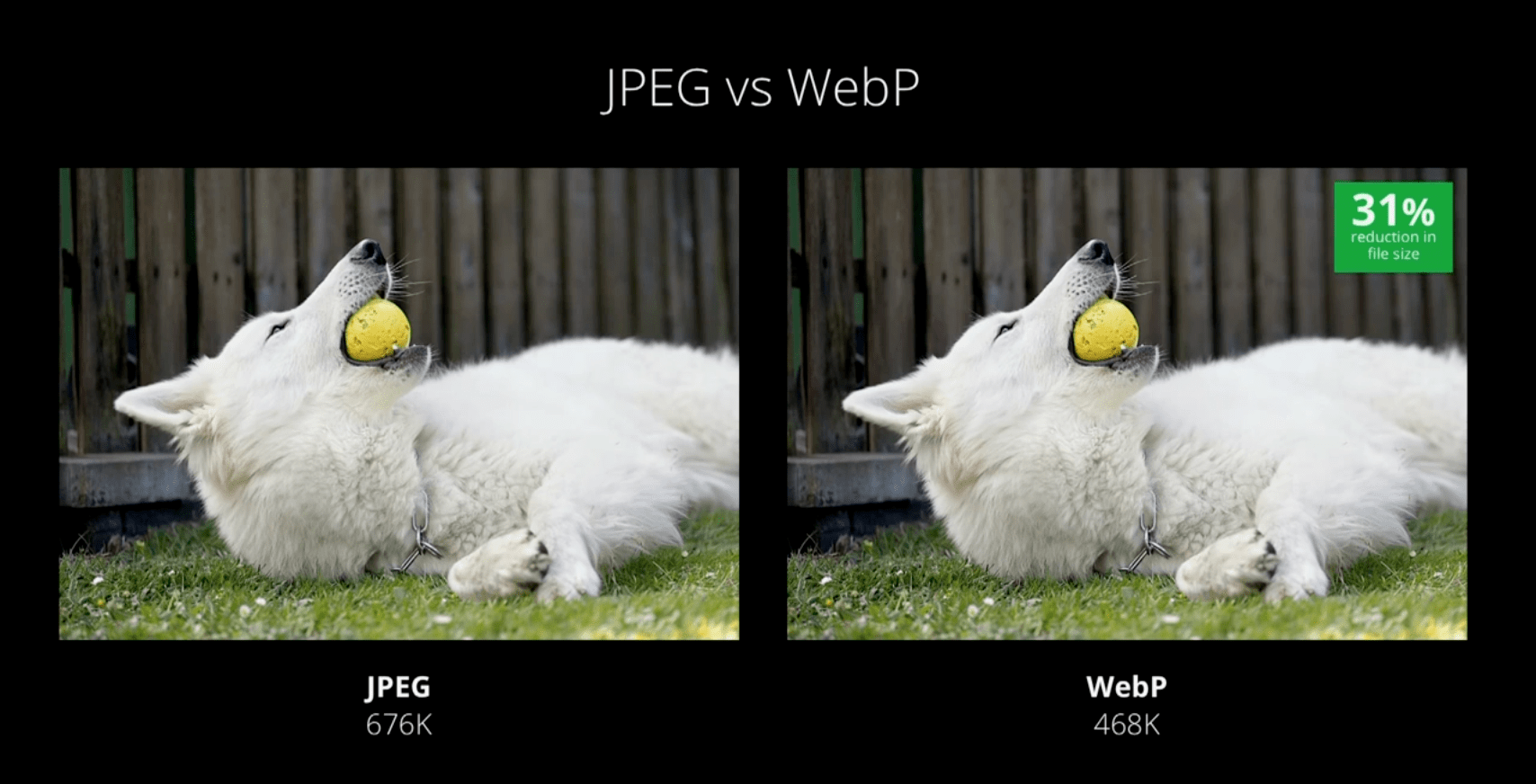
    <p>First up was support for a few new file formats for compressed images and videos. Google showed side-by-side comparisons of images in JPEG and the more recent <a href="https://developers.google.com/speed/webp/gallery" rel="nofollow external" class="bo">WebP</a> format, which is free and supports lossless compression, transparency, and animation. The images looked nearly identical but the WebP file was 31% smaller. (This is currently only supported in the beta version of Chrome for Android.)</p>
    <div>
    <a href="http://blog.teamtreehouse.com/wp-content/uploads/2013/05/Screen-Shot-2013-05-16-at-12.24.05-AM.png" rel="nofollow external" class="bo"><img alt="Mobile-friendly WebP format will help sites load faster" src="http://blog.teamtreehouse.com/wp-content/uploads/2013/05/Screen-Shot-2013-05-16-at-12.24.05-AM.png" width="1708" height="872" style="max-width: 100%; height: auto;"></a><p>Mobile-friendly WebP format will help sites load faster</p>
    </div>
    <p>They also showed two videos simultaneously that compared the standard H.264 versus the VP9 format. The videos were again nearly identical, but the bitrate was much lower for VP9 and the overall file size was nearly a third of the size of the H.264 file.</p>
    <p>This is a big deal for web developers because a high speed internet connection on a mobile device is not a given. We need to be aware that users around the world are accessing our content from all sorts of networks, and while speed is certainly an issue, cost is too. Anything that Google or developers can do to reduce file sizes helps to speed things up and keep costs down.</p>
    <p>Google has been hard at work improving Chrome on mobile devices, too. Performance increased by 50% in the past year for the mobile version of Chrome, according to their own <a href="https://developers.google.com/octane/" rel="nofollow external" class="bo">Octane benchmark</a>.</p>
    <h2>Why Google Loves Android Developers</h2>
    <p>It seemed like everyone who took the stage yesterday said “Thank you” to developers. It felt like some real recognition of how developers have contributed to Google’s success by creating such an amazingly rich ecosystem of apps. They announced that over 48 billion apps have been downloaded to date from Google Play, and that more payments have been made to developers in the first four months of this year than all of last year. Revenue per user is 2.5 times what it was last year globally.</p>
    <p>The other phrase that was repeated often was “we listened to your feedback”. Many of the new features released have been asked for by the development community, including some really exciting ones like the ability to publish to alpha and beta testers within Google Play, using Google+ circles for authorization. The Google Play Developer Console also offers a new translation service to more easily globalize our apps, and it will analyze apps and give feedback on how they might be improved to make more money from them.</p>
    <h3>Games! Cross-Platform Games!</h3>
    <p>Another big change for Android developers is the introduction of Google Play Game Services. This is like Apple’s Game Center that allows easy multiplier gaming in apps, but it is cross-platform, meaning that it will work on Android, iOS, and the web. The Game Services will allow developers to easily hook into multiplayer functionality that includes things like leaderboards and integration with your Google+ circles.</p>
    <p>Game Center is pretty slick, but if developers and users adopt this, it could blow Game Center out of the water. There is no technical reason to dictate that you can’t play a multiplier game with any device you choose, and it is very refreshing to see Google provide these types of services.</p>
    <h3>One IDE to Rule Them All: Android Studio</h3>
    <p>The biggest announcement in the eyes of many Android developers was the unveiling of a new-ish tool called <a href="http://developer.android.com/sdk/installing/studio.html" rel="nofollow external" class="bo">Android Studio</a>. Since Android’s inception, the officially supported Integrated Development Environment (IDE) has been <a href="http://eclipse.org/" rel="nofollow external" class="bo">Eclipse</a>, an open source IDE built in and for Java that frankly has come a long way in the past few years. It has a reputation for being slow, clunky, and buggy, though, and many an experienced Android developer use a more polished and powerful product by JetBrains called <a href="http://www.jetbrains.com/idea/" rel="nofollow external" class="bo">IntelliJ IDEA</a>.</p>
    <p><a href="http://blog.teamtreehouse.com/wp-content/uploads/2013/05/studio_splash.png" rel="nofollow external" class="bo"><img alt="Android Studio Splash Screen" src="http://blog.teamtreehouse.com/wp-content/uploads/2013/05/studio_splash.png" width="799" height="600" style="max-width: 100%; height: auto;"></a></p>
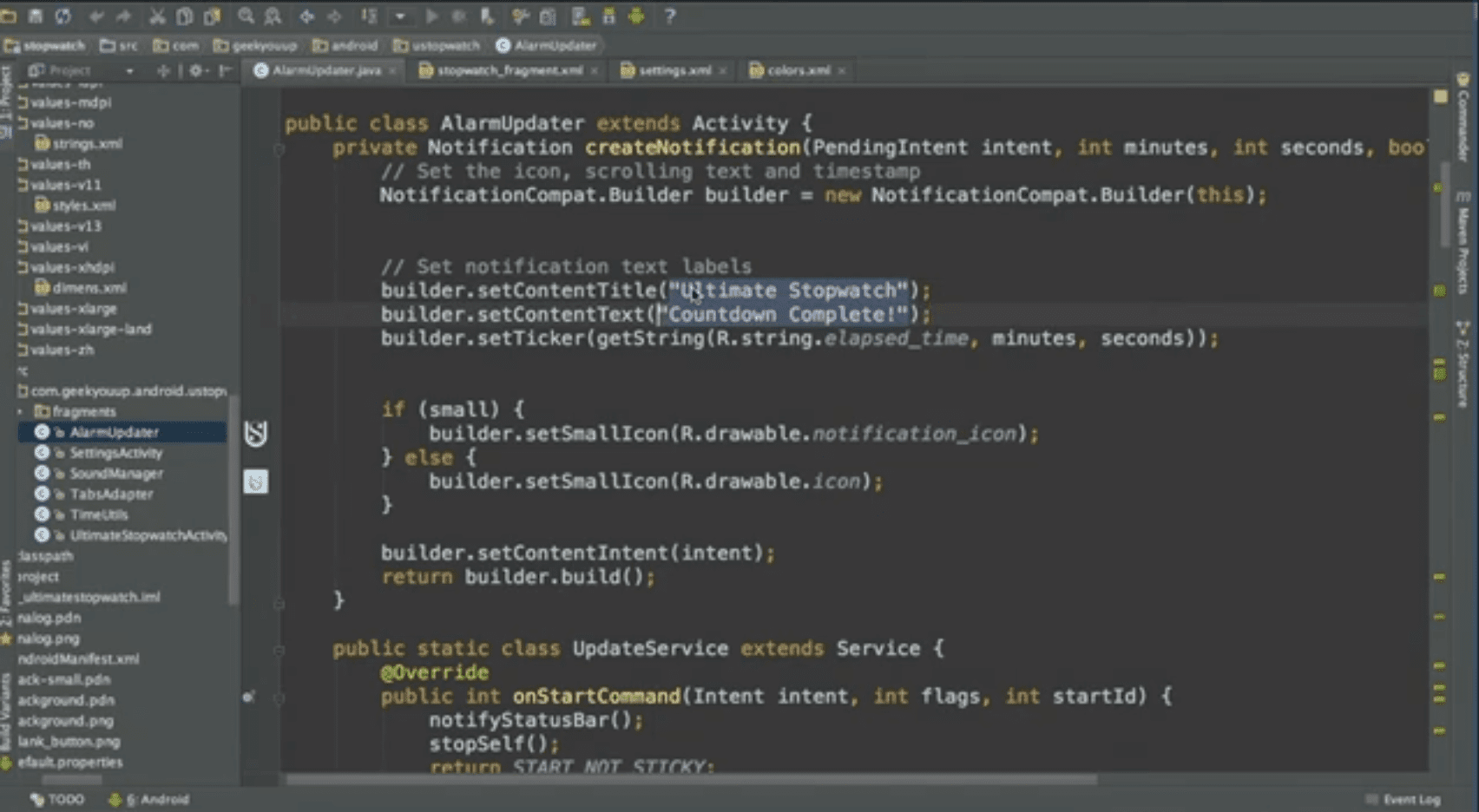
    <p>Android Studio is a new package based on IntelliJ IDEA. I downloaded the preview and at its core it is the same as using IntelliJ IDEA. It does have some new branded and integrated features that should make developers happy. For example, instead of clunky string resource identifiers, we will now be able to see the actual string values pulled in and displayed in layout files and code, as if we had hard-coded the string. We also will see real-time updates to layout files as we edit them in XML or the Graphical Layout Editor.</p>
    <div>
    <a href="http://blog.teamtreehouse.com/wp-content/uploads/2013/05/Screen-Shot-2013-05-15-at-9.26.34-PM.png" rel="nofollow external" class="bo"><img alt="Live string resource preview makes code more readable" src="http://blog.teamtreehouse.com/wp-content/uploads/2013/05/Screen-Shot-2013-05-15-at-9.26.34-PM.png" width="1704" height="936" style="max-width: 100%; height: auto;"></a><p>Live string resource preview makes code more readable</p>
    </div>
    <p>This early access preview doesn’t have many features that differentiate it from IntelliJ, or Eclipse, for that matter. But as <a href="https://twitter.com/tornorbye" rel="nofollow external" class="bo">Tor Norbye</a> (an engineer on the Android team) says, “We have big plans for Android Studio.”</p>
    <p>Having used both tools, I am excited to see official support move to IntelliJ. I have long defended Eclipse as a robust tool that shows how open source software can be very effective and useful. The support community around Eclipse is large and helpful as any question about an Eclipse bug or oddity on StackOverflow will show. But IntelliJ is the <a href="http://stackoverflow.com/questions/4964168/benefits-of-switching-from-eclipse-to-intellij-idea-for-android-development" rel="nofollow external" class="bo">more powerful</a> and <a href="http://stackoverflow.com/questions/239732/things-possible-in-intellij-that-arent-possible-in-eclipse" rel="nofollow external" class="bo">feature-rich IDE</a>, and becoming the officially supported tool means that the community of developers using it will grow quite a lot, which means better support for everyone and more voices pushing the envelope for Android development tools.</p>
    <h3>The Hidden Meaning Behind These Android Updates</h3>
    <p>In other news for Android developers, there were some exciting new APIs released as well. For location-based apps, there are new APIs regarding a “fused location provider” (which will be better on battery life), geofencing (one of my favorites), and activity recognition, which means you’ll be able to tell if the user is walking, biking, or driving. Google+ sign in was enhanced to allow users to sign in seamlessly across devices, upstream messaging was added to Google Cloud Messaging service, and some <a href="http://developer.android.com/design/patterns/navigation-drawer.html" rel="nofollow external" class="bo">new UI features were even snuck in</a> without any fanfare during the keynote.</p>
    <p>Dustin Earley from <a href="http://androidandme.com" rel="nofollow external" class="bo">Android and Me</a> wrote a post called “<a href="http://androidandme.com/2013/05/opinions/google-updating-android-without-updating-android-is-the-biggest-news-out-of-io-2013/" rel="nofollow external" class="bo">Google updating Android without updating Android is the biggest news out of I/O 2013</a>” that sums the hidden meaning behind all these updates. In it he says, “Google’s answer to fragmentation has been fully realized at Google I/O 2013.” This is <strong>good news for developers</strong> (and everyone, really). His observation is really astute. The new features today are part of different support libraries like Google Play Services that don’t require a new version of Android for developers to take advantage of them. We can start writing apps right away that make use of the new location APIs, for example, which means we can reach a much wider audience than waiting for the latest version of Android to trickle through the system to end users.</p>
    <h2>Lightning Round</h2>
    <p>The rest of these announcements are not necessarily meaningful from a developer perspective, though some are certainly ripe with opportunity for developers, like Google Play for Education:</p>
    <ul>
    <li>Google Play for Education was announced, which looks like a <a href="http://techcrunch.com/2013/05/15/with-google-play-for-education-google-looks-to-challenge-apples-dominance-in-the-classroom/" rel="nofollow external" class="bo">great resource for educators</a>.</li>
    <li>The new Hangouts app is a <a href="http://mashable.com/2013/05/16/google-hangouts-app-analysis/" rel="nofollow external" class="bo">cross-platform messaging service</a> with apps for the web, Android, and iOS.</li>
    <li>A new Google Play Music: All Access service looks to <a href="http://www.theverge.com/2013/5/15/4333464/google-takes-on-spotify-with-google-play-music-all-access" rel="nofollow external" class="bo">compete with Spotify</a>.</li>
    <li>Many enhancements were made to how <a href="http://bits.blogs.nytimes.com/2013/05/15/photos-take-the-spotlight-in-updates-to-googles-social-network/" rel="nofollow external" class="bo">photos are stored and edited</a> in the cloud through Google+.</li>
    <li>Google Now (voice search) was improved with more results, and it’s <a href="http://9to5mac.com/2013/05/15/google-beats-siri-to-the-desktop-with-google-now-like-voice-search-for-chrome/" rel="nofollow external" class="bo">now available on the desktop version of Chrome</a>.</li>
    <li>Improvements were made to Google Maps to give more <a href="http://techcrunch.com/2013/05/15/deep-dive-with-the-new-google-maps-for-desktop-with-google-earth-integration-its-more-than-just-a-utility/" rel="nofollow external" class="bo">real-time, context-aware information</a>.</li>
    <li>There were no hardware announcements except for a special <a href="http://bits.blogs.nytimes.com/2013/05/15/google-to-sell-its-own-version-of-samsungs-galaxy-s4/" rel="nofollow external" class="bo">Samsung Galaxy S4 that runs stock Android</a>. It’s cool, but expensive at $649.</li>
    <li>There was <a href="http://bits.blogs.nytimes.com/2013/05/15/little-is-said-about-google-glass-at-developers-conference/" rel="nofollow external" class="bo">no mention at all of Google Glass</a> (though it was in attendance on audience member’s faces).</li>
    <li>Developers still can’t access Google+ through an API. (Don’t you trust us, Google?)</li>
    </ul>
    <h2>Looking Forward</h2>
    <p>All in all it was an exciting day for the tech world, and the rest of the world as this technology spreads to developing nations and people who have never used anything like this before. It’s an exciting time to be a developer, and that enthusiasm and excitement showed in everyone who presented, all the way up to one of the top dogs himself, Larry Page:</p>
    <blockquote><p>I think today we’re still just scratching the surface of what’s possible. That’s why I’m so excited … I cannot wait to see what comes next. I got goosebumps while I was watching some of these presentations here.</p></blockquote>
    <p>I cannot wait either. I wonder what will be revealed at WWDC? <img src="http://blog.teamtreehouse.com/wp-includes/images/smilies/icon_smile.gif" alt=":-)" style="max-width: 100%; height: auto;"> </p>
    <p>The post <a href="http://blog.teamtreehouse.com/why-google-loves-developers" rel="nofollow external" class="bo">Why Google Loves Developers</a> appeared first on <a href="http://blog.teamtreehouse.com" rel="nofollow external" class="bo">Treehouse Blog</a>.</p>
    </div>
]]>
</Body>
<Summary>Google sent a love letter to developers yesterday by way of a three and a half hour keynote presentation at Google I/O 2013. Take a minute and watch this opening video from the keynote and tell me...</Summary>
<Website>http://feedproxy.google.com/~r/teamtreehouse/~3/_shP_U2S6jE/why-google-loves-developers</Website>
<TrackingUrl>https://my3.my.umbc.edu/api/v0/pixel/news/29584/guest@my.umbc.edu/639e9a6f01a4cbc24c25632e9614c298/api/pixel</TrackingUrl>
<Tag>android</Tag>
<Tag>chrome</Tag>
<Tag>css</Tag>
<Tag>design</Tag>
<Tag>developers</Tag>
<Tag>development</Tag>
<Tag>google</Tag>
<Tag>google-io</Tag>
<Tag>google-io-2013</Tag>
<Tag>html</Tag>
<Tag>io-2013</Tag>
<Tag>io13</Tag>
<Tag>ios</Tag>
<Tag>javascript</Tag>
<Tag>mobile</Tag>
<Tag>responsive</Tag>
<Tag>web</Tag>
<Tag>web-industry</Tag>
<Group token="retired-583">Web Developer - Build Group</Group>
<GroupUrl>https://my3.my.umbc.edu/groups/retired-583</GroupUrl>
<AvatarUrl>https://assets3-my.umbc.edu/system/shared/avatars/groups/000/000/583/fc60f5d7abc2e080599bb6dc465db54d/xsmall.png?1363101197</AvatarUrl>
<AvatarUrl size="original">https://assets4-my.umbc.edu/system/shared/avatars/groups/000/000/583/fc60f5d7abc2e080599bb6dc465db54d/original.jpg?1363101197</AvatarUrl>
<AvatarUrl size="xxlarge">https://assets4-my.umbc.edu/system/shared/avatars/groups/000/000/583/fc60f5d7abc2e080599bb6dc465db54d/xxlarge.png?1363101197</AvatarUrl>
<AvatarUrl size="xlarge">https://assets4-my.umbc.edu/system/shared/avatars/groups/000/000/583/fc60f5d7abc2e080599bb6dc465db54d/xlarge.png?1363101197</AvatarUrl>
<AvatarUrl size="large">https://assets3-my.umbc.edu/system/shared/avatars/groups/000/000/583/fc60f5d7abc2e080599bb6dc465db54d/large.png?1363101197</AvatarUrl>
<AvatarUrl size="medium">https://assets3-my.umbc.edu/system/shared/avatars/groups/000/000/583/fc60f5d7abc2e080599bb6dc465db54d/medium.png?1363101197</AvatarUrl>
<AvatarUrl size="small">https://assets4-my.umbc.edu/system/shared/avatars/groups/000/000/583/fc60f5d7abc2e080599bb6dc465db54d/small.png?1363101197</AvatarUrl>
<AvatarUrl size="xsmall">https://assets3-my.umbc.edu/system/shared/avatars/groups/000/000/583/fc60f5d7abc2e080599bb6dc465db54d/xsmall.png?1363101197</AvatarUrl>
<AvatarUrl size="xxsmall">https://assets4-my.umbc.edu/system/shared/avatars/groups/000/000/583/fc60f5d7abc2e080599bb6dc465db54d/xxsmall.png?1363101197</AvatarUrl>
<Sponsor>Web Developer - Build Group</Sponsor>
<PawCount>0</PawCount>
<CommentCount>0</CommentCount>
<CommentsAllowed>true</CommentsAllowed>
<PostedAt>Thu, 16 May 2013 16:42:55 -0400</PostedAt>
</NewsItem>

<NewsItem contentIssues="false" id="29585" important="false" status="posted" url="https://my3.my.umbc.edu/posts/29585">
<Title>Jank Busting With Daft Punk</Title>
<Body>
<![CDATA[
    <div class="html-content">Yesterday, I looked at the new Daft Punk web experience on Pitchfork. It was visually stunning, featuring rich-animations throughout. I noticed however that scrolling on the page felt quite janky in Chrome. It was sluggish and stuttered regularly. You could … <a href="http://addyosmani.com/blog/jank-busting-with-daft-punk/" rel="nofollow external" class="bo">Continue reading <span>→</span></a>
    </div>
]]>
</Body>
<Summary>Yesterday, I looked at the new Daft Punk web experience on Pitchfork. It was visually stunning, featuring rich-animations throughout. I noticed however that scrolling on the page felt quite janky...</Summary>
<Website>http://addyosmani.com/blog/jank-busting-with-daft-punk/</Website>
<TrackingUrl>https://my3.my.umbc.edu/api/v0/pixel/news/29585/guest@my.umbc.edu/27d5dc49e5ad68da84462dd95b007ba3/api/pixel</TrackingUrl>
<Tag>60fps</Tag>
<Tag>chrome</Tag>
<Tag>developer</Tag>
<Tag>devtools</Tag>
<Tag>javascript</Tag>
<Tag>layout</Tag>
<Tag>modern-javascript-development</Tag>
<Tag>paint</Tag>
<Tag>parallax</Tag>
<Tag>rendering</Tag>
<Tag>scrolling</Tag>
<Tag>web-development</Tag>
<Group token="retired-583">Web Developer - Build Group</Group>
<GroupUrl>https://my3.my.umbc.edu/groups/retired-583</GroupUrl>
<AvatarUrl>https://assets3-my.umbc.edu/system/shared/avatars/groups/000/000/583/fc60f5d7abc2e080599bb6dc465db54d/xsmall.png?1363101197</AvatarUrl>
<AvatarUrl size="original">https://assets4-my.umbc.edu/system/shared/avatars/groups/000/000/583/fc60f5d7abc2e080599bb6dc465db54d/original.jpg?1363101197</AvatarUrl>
<AvatarUrl size="xxlarge">https://assets4-my.umbc.edu/system/shared/avatars/groups/000/000/583/fc60f5d7abc2e080599bb6dc465db54d/xxlarge.png?1363101197</AvatarUrl>
<AvatarUrl size="xlarge">https://assets4-my.umbc.edu/system/shared/avatars/groups/000/000/583/fc60f5d7abc2e080599bb6dc465db54d/xlarge.png?1363101197</AvatarUrl>
<AvatarUrl size="large">https://assets3-my.umbc.edu/system/shared/avatars/groups/000/000/583/fc60f5d7abc2e080599bb6dc465db54d/large.png?1363101197</AvatarUrl>
<AvatarUrl size="medium">https://assets3-my.umbc.edu/system/shared/avatars/groups/000/000/583/fc60f5d7abc2e080599bb6dc465db54d/medium.png?1363101197</AvatarUrl>
<AvatarUrl size="small">https://assets4-my.umbc.edu/system/shared/avatars/groups/000/000/583/fc60f5d7abc2e080599bb6dc465db54d/small.png?1363101197</AvatarUrl>
<AvatarUrl size="xsmall">https://assets3-my.umbc.edu/system/shared/avatars/groups/000/000/583/fc60f5d7abc2e080599bb6dc465db54d/xsmall.png?1363101197</AvatarUrl>
<AvatarUrl size="xxsmall">https://assets4-my.umbc.edu/system/shared/avatars/groups/000/000/583/fc60f5d7abc2e080599bb6dc465db54d/xxsmall.png?1363101197</AvatarUrl>
<Sponsor>Web Developer - Build Group</Sponsor>
<PawCount>0</PawCount>
<CommentCount>0</CommentCount>
<CommentsAllowed>true</CommentsAllowed>
<PostedAt>Thu, 16 May 2013 16:35:15 -0400</PostedAt>
<EditAt>Thu, 16 May 2013 16:35:15 -0400</EditAt>
</NewsItem>

<NewsItem contentIssues="false" id="29580" important="false" status="posted" url="https://my3.my.umbc.edu/posts/29580">
<Title>SQL 101: Leading Ranks and Lagging Percentages: Analytic Functions, Continued</Title>
<Body>
<![CDATA[
    <div class="html-content">Part 11 in a series on the basics of the relational database and SQL</div>
]]>
</Body>
<Summary>Part 11 in a series on the basics of the relational database and SQL</Summary>
<Website>http://www.oracle.com/technetwork/issue-archive/2013/13-may/o33sql-1917326.html</Website>
<TrackingUrl>https://my3.my.umbc.edu/api/v0/pixel/news/29580/guest@my.umbc.edu/6156fcc3a5bf0ac392f0bbd6277de30d/api/pixel</TrackingUrl>
<Tag>css</Tag>
<Tag>design</Tag>
<Tag>development</Tag>
<Tag>html</Tag>
<Tag>javascript</Tag>
<Tag>mysql</Tag>
<Tag>oracle</Tag>
<Tag>pl-sql</Tag>
<Tag>sql</Tag>
<Group token="retired-583">Web Developer - Build Group</Group>
<GroupUrl>https://my3.my.umbc.edu/groups/retired-583</GroupUrl>
<AvatarUrl>https://assets3-my.umbc.edu/system/shared/avatars/groups/000/000/583/fc60f5d7abc2e080599bb6dc465db54d/xsmall.png?1363101197</AvatarUrl>
<AvatarUrl size="original">https://assets4-my.umbc.edu/system/shared/avatars/groups/000/000/583/fc60f5d7abc2e080599bb6dc465db54d/original.jpg?1363101197</AvatarUrl>
<AvatarUrl size="xxlarge">https://assets4-my.umbc.edu/system/shared/avatars/groups/000/000/583/fc60f5d7abc2e080599bb6dc465db54d/xxlarge.png?1363101197</AvatarUrl>
<AvatarUrl size="xlarge">https://assets4-my.umbc.edu/system/shared/avatars/groups/000/000/583/fc60f5d7abc2e080599bb6dc465db54d/xlarge.png?1363101197</AvatarUrl>
<AvatarUrl size="large">https://assets3-my.umbc.edu/system/shared/avatars/groups/000/000/583/fc60f5d7abc2e080599bb6dc465db54d/large.png?1363101197</AvatarUrl>
<AvatarUrl size="medium">https://assets3-my.umbc.edu/system/shared/avatars/groups/000/000/583/fc60f5d7abc2e080599bb6dc465db54d/medium.png?1363101197</AvatarUrl>
<AvatarUrl size="small">https://assets4-my.umbc.edu/system/shared/avatars/groups/000/000/583/fc60f5d7abc2e080599bb6dc465db54d/small.png?1363101197</AvatarUrl>
<AvatarUrl size="xsmall">https://assets3-my.umbc.edu/system/shared/avatars/groups/000/000/583/fc60f5d7abc2e080599bb6dc465db54d/xsmall.png?1363101197</AvatarUrl>
<AvatarUrl size="xxsmall">https://assets4-my.umbc.edu/system/shared/avatars/groups/000/000/583/fc60f5d7abc2e080599bb6dc465db54d/xxsmall.png?1363101197</AvatarUrl>
<Sponsor>Web Developer - Build Group</Sponsor>
<PawCount>0</PawCount>
<CommentCount>0</CommentCount>
<CommentsAllowed>true</CommentsAllowed>
<PostedAt>Thu, 16 May 2013 14:49:47 -0400</PostedAt>
</NewsItem>

<NewsItem contentIssues="false" id="110157" important="false" status="posted" url="https://my3.my.umbc.edu/posts/110157">
<Title>Donald Norris, Public Policy, in the Baltimore Sun</Title>
<Body>
<![CDATA[
    <div class="html-content">Maryland Gov. Martin O’Malley today signed a bill banning the sale of assault weapons, limiting magazines to 10 bullets, requiring handgun purchasers to submit fingerprints and get a license, and creating penalties for people who don’t notify police when their firearms are lost or stolen. The Baltimore Sun reports that gun control advocates are now planning Baltimore-area TV ads to bolster support among Maryland voters, in case of a future referendum or campaigns to oust lawmakers who backed the bill in the General Assembly. This ad buy begs the question: Could Maryland’s anti-gun control community gather enough support to change course …</div>
]]>
</Body>
<Summary>Maryland Gov. Martin O’Malley today signed a bill banning the sale of assault weapons, limiting magazines to 10 bullets, requiring handgun purchasers to submit fingerprints and get a license, and...</Summary>
<Website>https://news.umbc.edu/donald-norris-public-policy-in-the-baltimore-sun-15/</Website>
<TrackingUrl>https://my3.my.umbc.edu/api/v0/pixel/news/110157/guest@my.umbc.edu/78bbf48b1ac672ed682580cb9b8b8f6a/api/pixel</TrackingUrl>
<Tag>cahss</Tag>
<Tag>policy-and-society</Tag>
<Tag>publicpolicy</Tag>
<Group token="umbc-news">UMBC News</Group>
<GroupUrl>https://my3.my.umbc.edu/groups/umbc-news</GroupUrl>
<AvatarUrl>https://assets2-my.umbc.edu/system/shared/avatars/groups/000/001/944/2c79aeea85b1abb37f8cf9fbcdc382b0/xsmall.png?1632921809</AvatarUrl>
<AvatarUrl size="original">https://assets4-my.umbc.edu/system/shared/avatars/groups/000/001/944/2c79aeea85b1abb37f8cf9fbcdc382b0/original.png?1632921809</AvatarUrl>
<AvatarUrl size="xxlarge">https://assets4-my.umbc.edu/system/shared/avatars/groups/000/001/944/2c79aeea85b1abb37f8cf9fbcdc382b0/xxlarge.png?1632921809</AvatarUrl>
<AvatarUrl size="xlarge">https://assets1-my.umbc.edu/system/shared/avatars/groups/000/001/944/2c79aeea85b1abb37f8cf9fbcdc382b0/xlarge.png?1632921809</AvatarUrl>
<AvatarUrl size="large">https://assets1-my.umbc.edu/system/shared/avatars/groups/000/001/944/2c79aeea85b1abb37f8cf9fbcdc382b0/large.png?1632921809</AvatarUrl>
<AvatarUrl size="medium">https://assets1-my.umbc.edu/system/shared/avatars/groups/000/001/944/2c79aeea85b1abb37f8cf9fbcdc382b0/medium.png?1632921809</AvatarUrl>
<AvatarUrl size="small">https://assets4-my.umbc.edu/system/shared/avatars/groups/000/001/944/2c79aeea85b1abb37f8cf9fbcdc382b0/small.png?1632921809</AvatarUrl>
<AvatarUrl size="xsmall">https://assets2-my.umbc.edu/system/shared/avatars/groups/000/001/944/2c79aeea85b1abb37f8cf9fbcdc382b0/xsmall.png?1632921809</AvatarUrl>
<AvatarUrl size="xxsmall">https://assets4-my.umbc.edu/system/shared/avatars/groups/000/001/944/2c79aeea85b1abb37f8cf9fbcdc382b0/xxsmall.png?1632921809</AvatarUrl>
<Sponsor>UMBC News</Sponsor>
<PawCount>0</PawCount>
<CommentCount>0</CommentCount>
<CommentsAllowed>false</CommentsAllowed>
<PostedAt>Thu, 16 May 2013 14:36:07 -0400</PostedAt>
</NewsItem>

</News>