<?xml version="1.0"?>
<News hasArchived="true" page="8882" pageCount="10712" pageSize="10" timestamp="Wed, 01 Jul 2026 21:14:38 -0400" url="https://my3.my.umbc.edu/posts.xml?page=8882">
<NewsItem contentIssues="false" id="27251" important="false" status="posted" url="https://my3.my.umbc.edu/posts/27251">
<Title>Summer Trusted Infrastructure Workshop for graduate students</Title>
<Body>
<![CDATA[
    <div class="html-content">
    <p><img alt="IMG_1279" height="308" src="//www.csee.umbc.edu/wp-content/uploads/2013/04/IMG_1279.jpg" width="700" style="max-width: 100%; height: auto;"></p>
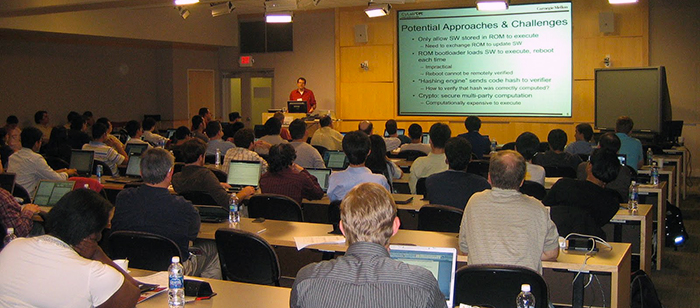
    <p>The Fourth <a href="https://tiw2013.cse.psu.edu" rel="nofollow external" class="bo">Trusted Infrastructure Workshop</a> (TIW 2013) will be held at Penn State University in University Park, PA from Sunday afternoon, June 2 to Thursday, June 6.</p>
    <p>TIW 2013 is a free premier educational meeting for graduate students with a focus on computer systems security research and research that builds on trusted computing foundations. TIW 2013 will consist of lectures and hands-on labs, enabling the students to learn concepts and apply them in practice. Speakers include world-class experts in their respective fields from industry, government, and academia. See the <a href="https://tiw2013.cse.psu.edu/program.shtml" rel="nofollow external" class="bo"> preliminary program</a> for more information.</p>
    <p>The workshop is designed for graduate students with a research interest in computer security. Although the workshop is free for students, students must <a href="https://tiw2013.cse.psu.edu/application.php" rel="nofollow external" class="bo">apply</a> to be selected for TIW 2013. Applications received by April 25 will also receive full consideration for travel support. Applications will continue to be received until May 20 based on space and funds. The workshop may have space for a small number of other attendees, but a fee will be required for other attendees.</p>
    </div>
]]>
</Body>
<Summary>The Fourth Trusted Infrastructure Workshop (TIW 2013) will be held at Penn State University in University Park, PA from Sunday afternoon, June 2 to Thursday, June 6.   TIW 2013 is a free premier...</Summary>
<Website>http://www.csee.umbc.edu/2013/04/summer-trusted-infrastructure-workshop-for-graduate-students/</Website>
<TrackingUrl>https://my3.my.umbc.edu/api/v0/pixel/news/27251/guest@my.umbc.edu/2928ab1bb038551280ac797fde330595/api/pixel</TrackingUrl>
<Tag>cybersecurity</Tag>
<Tag>fyi</Tag>
<Tag>graduate</Tag>
<Group token="csee">Computer Science and Electrical Engineering</Group>
<GroupUrl>https://my3.my.umbc.edu/groups/csee</GroupUrl>
<AvatarUrl>https://assets3-my.umbc.edu/system/shared/avatars/groups/000/000/099/d117dca133c64bf78a4b7696dd007189/xsmall.png?1314043393</AvatarUrl>
<AvatarUrl size="original">https://assets1-my.umbc.edu/system/shared/avatars/groups/000/000/099/d117dca133c64bf78a4b7696dd007189/original.png?1314043393</AvatarUrl>
<AvatarUrl size="xxlarge">https://assets1-my.umbc.edu/system/shared/avatars/groups/000/000/099/d117dca133c64bf78a4b7696dd007189/xxlarge.png?1314043393</AvatarUrl>
<AvatarUrl size="xlarge">https://assets4-my.umbc.edu/system/shared/avatars/groups/000/000/099/d117dca133c64bf78a4b7696dd007189/xlarge.png?1314043393</AvatarUrl>
<AvatarUrl size="large">https://assets3-my.umbc.edu/system/shared/avatars/groups/000/000/099/d117dca133c64bf78a4b7696dd007189/large.png?1314043393</AvatarUrl>
<AvatarUrl size="medium">https://assets1-my.umbc.edu/system/shared/avatars/groups/000/000/099/d117dca133c64bf78a4b7696dd007189/medium.png?1314043393</AvatarUrl>
<AvatarUrl size="small">https://assets2-my.umbc.edu/system/shared/avatars/groups/000/000/099/d117dca133c64bf78a4b7696dd007189/small.png?1314043393</AvatarUrl>
<AvatarUrl size="xsmall">https://assets3-my.umbc.edu/system/shared/avatars/groups/000/000/099/d117dca133c64bf78a4b7696dd007189/xsmall.png?1314043393</AvatarUrl>
<AvatarUrl size="xxsmall">https://assets3-my.umbc.edu/system/shared/avatars/groups/000/000/099/d117dca133c64bf78a4b7696dd007189/xxsmall.png?1314043393</AvatarUrl>
<Sponsor>Computer Science and Electrical Engineering</Sponsor>
<PawCount>0</PawCount>
<CommentCount>0</CommentCount>
<CommentsAllowed>true</CommentsAllowed>
<PostedAt>Thu, 04 Apr 2013 23:16:04 -0400</PostedAt>
<EditAt>Thu, 04 Apr 2013 23:16:04 -0400</EditAt>
</NewsItem>

<NewsItem contentIssues="false" id="27250" important="false" status="posted" url="https://my3.my.umbc.edu/posts/27250">
<Title>CSEE professor Nilanjan Banerjee wins Microsoft SEIF award to fund research</Title>
<Body>
<![CDATA[
    <div class="html-content">
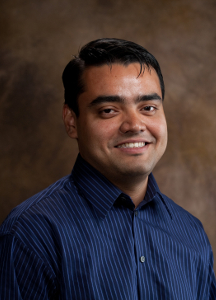
    <p><img alt="http://www.csee.umbc.edu/wp-content/uploads/2012/10/Banerjeecropped.jpg" src="http://www.csee.umbc.edu/wp-content/uploads/2012/10/Banerjeecropped.jpg" style="max-width: 100%; height: auto;">CSEE professor <strong>Nilanjan Banerjee</strong> has received a <a href="http://research.microsoft.com/en-us/collaboration/focus/cs/seif.aspx" rel="nofollow external" class="bo">Microsoft Software Engineering Innovation (SEIF) Award. </a>The award comes with a $25,000 grant to help fund a research project that uses inventive wearable computing devices to help paraplegics and quadriplegics get around their homes. It’s called “Wearable Multi-Sensor Gesture Recognition in Assistive Devices for Paralysis Patients”.</p>
    <p>Dr. Banerjee’s proposal was chosen from a pool of more than one hundred. He joins sixteen professors and researchers across the world who are also 2013 SEIF recipients.</p>
    <p>The aim of the Microsoft SEIF award is to advance software engineering applications and tools by funding researchers with state of the art ideas. Projects involving devices, services, cloud-computing, and applications based on natural user interface (NUI) are top priority.</p>
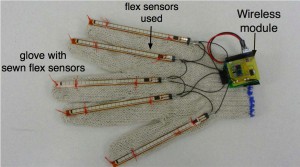
    <p>Banerjee’s project speaks to this goal. The project proposes a gesture-based <img alt="Glove" src="http://www.csee.umbc.edu/wp-content/uploads/2013/04/Glove-300x167.jpg" style="max-width: 100%; height: auto;">system that will allow paralysis patients to do everyday household activities, like watch television, adjust the thermostat, and turn on a lamp. The heart of the system is two wearable devices. A headband with textile-based EOG sensors will capture eye movement. A glove with flex sensors and an accelerometer will capture hand gestures. Once collected, this data that will be analyzed with a smartphone, translating the wearer’s intent.  </p>
    <p>Fellow UMBC professors Shaun Kane and Amy Hurst (Information Systems) were also among this year’s SEIF award recipients. Like Banejree, their project deals with improving accessibility for the handicapped. It’s called “Wheeltop Interaction: Full-Body Gesture Control for Power Wheelchair Users”.</p>
    </div>
]]>
</Body>
<Summary>CSEE professor Nilanjan Banerjee has received a Microsoft Software Engineering Innovation (SEIF) Award. The award comes with a $25,000 grant to help fund a research project that uses inventive...</Summary>
<Website>http://www.csee.umbc.edu/2013/04/csee-professor-nilanjan-banerjee-wins-microsoft-seif-award-to-fund-research/</Website>
<TrackingUrl>https://my3.my.umbc.edu/api/v0/pixel/news/27250/guest@my.umbc.edu/31da3a64180125d7ba0c2dcadb309be7/api/pixel</TrackingUrl>
<Tag>faculty-and-staff</Tag>
<Tag>news</Tag>
<Tag>research</Tag>
<Tag>research-awards</Tag>
<Group token="csee">Computer Science and Electrical Engineering</Group>
<GroupUrl>https://my3.my.umbc.edu/groups/csee</GroupUrl>
<AvatarUrl>https://assets3-my.umbc.edu/system/shared/avatars/groups/000/000/099/d117dca133c64bf78a4b7696dd007189/xsmall.png?1314043393</AvatarUrl>
<AvatarUrl size="original">https://assets1-my.umbc.edu/system/shared/avatars/groups/000/000/099/d117dca133c64bf78a4b7696dd007189/original.png?1314043393</AvatarUrl>
<AvatarUrl size="xxlarge">https://assets1-my.umbc.edu/system/shared/avatars/groups/000/000/099/d117dca133c64bf78a4b7696dd007189/xxlarge.png?1314043393</AvatarUrl>
<AvatarUrl size="xlarge">https://assets4-my.umbc.edu/system/shared/avatars/groups/000/000/099/d117dca133c64bf78a4b7696dd007189/xlarge.png?1314043393</AvatarUrl>
<AvatarUrl size="large">https://assets3-my.umbc.edu/system/shared/avatars/groups/000/000/099/d117dca133c64bf78a4b7696dd007189/large.png?1314043393</AvatarUrl>
<AvatarUrl size="medium">https://assets1-my.umbc.edu/system/shared/avatars/groups/000/000/099/d117dca133c64bf78a4b7696dd007189/medium.png?1314043393</AvatarUrl>
<AvatarUrl size="small">https://assets2-my.umbc.edu/system/shared/avatars/groups/000/000/099/d117dca133c64bf78a4b7696dd007189/small.png?1314043393</AvatarUrl>
<AvatarUrl size="xsmall">https://assets3-my.umbc.edu/system/shared/avatars/groups/000/000/099/d117dca133c64bf78a4b7696dd007189/xsmall.png?1314043393</AvatarUrl>
<AvatarUrl size="xxsmall">https://assets3-my.umbc.edu/system/shared/avatars/groups/000/000/099/d117dca133c64bf78a4b7696dd007189/xxsmall.png?1314043393</AvatarUrl>
<Sponsor>Computer Science and Electrical Engineering</Sponsor>
<PawCount>13</PawCount>
<CommentCount>0</CommentCount>
<CommentsAllowed>true</CommentsAllowed>
<PostedAt>Thu, 04 Apr 2013 21:30:21 -0400</PostedAt>
</NewsItem>

<NewsItem contentIssues="false" id="27249" important="false" status="posted" url="https://my3.my.umbc.edu/posts/27249">
<Title>Baltimore Sun Launches "Sparrows Point Memories" Site</Title>
<Body>
<![CDATA[
    <div class="html-content"><strong>The Baltimore Sun is collecting photos and memories of Sparrows Point Mill for an upcoming project. </strong></div>
]]>
</Body>
<Summary>The Baltimore Sun is collecting photos and memories of Sparrows Point Mill for an upcoming project. </Summary>
<Website>http://photos.baltimoresun.com/768470400?fb_ref=g768470400</Website>
<TrackingUrl>https://my3.my.umbc.edu/api/v0/pixel/news/27249/guest@my.umbc.edu/6d3ac13da554883f2d73568102ad10cb/api/pixel</TrackingUrl>
<Group token="millstories">Mill Stories</Group>
<GroupUrl>https://my3.my.umbc.edu/groups/millstories</GroupUrl>
<AvatarUrl>https://assets1-my.umbc.edu/system/shared/avatars/groups/000/000/555/b12131e87c87b7c13a36825bdc4abe77/xsmall.png?1368367350</AvatarUrl>
<AvatarUrl size="original">https://assets3-my.umbc.edu/system/shared/avatars/groups/000/000/555/b12131e87c87b7c13a36825bdc4abe77/original.gif?1368367350</AvatarUrl>
<AvatarUrl size="xxlarge">https://assets3-my.umbc.edu/system/shared/avatars/groups/000/000/555/b12131e87c87b7c13a36825bdc4abe77/xxlarge.png?1368367350</AvatarUrl>
<AvatarUrl size="xlarge">https://assets4-my.umbc.edu/system/shared/avatars/groups/000/000/555/b12131e87c87b7c13a36825bdc4abe77/xlarge.png?1368367350</AvatarUrl>
<AvatarUrl size="large">https://assets2-my.umbc.edu/system/shared/avatars/groups/000/000/555/b12131e87c87b7c13a36825bdc4abe77/large.png?1368367350</AvatarUrl>
<AvatarUrl size="medium">https://assets2-my.umbc.edu/system/shared/avatars/groups/000/000/555/b12131e87c87b7c13a36825bdc4abe77/medium.png?1368367350</AvatarUrl>
<AvatarUrl size="small">https://assets4-my.umbc.edu/system/shared/avatars/groups/000/000/555/b12131e87c87b7c13a36825bdc4abe77/small.png?1368367350</AvatarUrl>
<AvatarUrl size="xsmall">https://assets1-my.umbc.edu/system/shared/avatars/groups/000/000/555/b12131e87c87b7c13a36825bdc4abe77/xsmall.png?1368367350</AvatarUrl>
<AvatarUrl size="xxsmall">https://assets4-my.umbc.edu/system/shared/avatars/groups/000/000/555/b12131e87c87b7c13a36825bdc4abe77/xxsmall.png?1368367350</AvatarUrl>
<Sponsor>Mill Stories</Sponsor>
<PawCount>0</PawCount>
<CommentCount>0</CommentCount>
<CommentsAllowed>true</CommentsAllowed>
<PostedAt>Thu, 04 Apr 2013 20:46:44 -0400</PostedAt>
</NewsItem>

<NewsItem contentIssues="false" id="123384" important="false" status="posted" url="https://my3.my.umbc.edu/posts/123384">
<Title>For All the World to See Highlight of Addison Gallery Exhibition Series</Title>
<Body>
<![CDATA[
    <div class="html-content">
    <p><a href="/wp-content/uploads/2013/01/fatwts03-s.jpg" rel="nofollow external" class="bo"><img alt="fatwts03-s" src="/wp-content/uploads/2013/01/fatwts03-s.jpg?w=117" width="117" height="150" style="max-width: 100%; height: auto;"></a>The traveling exhibition <em><a href="http://cadvc.org/cadvc/foralltheworld/index.php" rel="nofollow external" class="bo">For All the World to See:</a> Visual Culture the Struggle for Civil Rights</em> curated by Maurice Berger, CADVC, and organized by the CADVC opens Saturday, April 13 in the <a href="http://www.andover.edu/museums/addison/Pages/default.aspx" rel="nofollow external" class="bo">Addison Gallery of American Art</a> of Andover, Massachusetts, and continues through July 31.</p>
    <p>An opening reception for the exhibit, as well as <a href="http://www.andover.edu/Museums/Addison/AboutUs/AddisonNews/Documents/PR_130405_SpringShows.pdf" rel="nofollow external" class="bo">two other spring exhibitions</a> in the Addison Gallery, will take place Friday, April 26, 6 pm to 8 pm in the Addison. Additional programming inspired by the exhibition includes a panel discussion titled “Voices of a Generation: The View from Andover Hill,” featuring Phililips Academy faculty and alumni who will discuss their personal experiences as part of the American civil rights movement.</p>
    </div>
]]>
</Body>
<Summary>The traveling exhibition For All the World to See: Visual Culture the Struggle for Civil Rights curated by Maurice Berger, CADVC, and organized by the CADVC opens Saturday, April 13 in the Addison...</Summary>
<Website>https://umbc.edu/stories/for-all-the-world-to-see-highlight-of-addison-gallery-spring-exhibition-series/</Website>
<TrackingUrl>https://my3.my.umbc.edu/api/v0/pixel/news/123384/guest@my.umbc.edu/52098550a274be7b461bfdb3c9b25ffd/api/pixel</TrackingUrl>
<Tag>cadvc</Tag>
<Tag>cahss</Tag>
<Tag>policy-and-society</Tag>
<Tag>visualarts</Tag>
<Group token="umbc-news-magazine">UMBC News &amp;amp; Magazine</Group>
<GroupUrl>https://my3.my.umbc.edu/groups/umbc-news-magazine</GroupUrl>
<AvatarUrl>https://assets1-my.umbc.edu/system/shared/avatars/groups/000/001/943/24435aa6207c452e7bc15cc74b42c7bb/xsmall.png?1748556657</AvatarUrl>
<AvatarUrl size="original">https://assets1-my.umbc.edu/system/shared/avatars/groups/000/001/943/24435aa6207c452e7bc15cc74b42c7bb/original.png?1748556657</AvatarUrl>
<AvatarUrl size="xxlarge">https://assets2-my.umbc.edu/system/shared/avatars/groups/000/001/943/24435aa6207c452e7bc15cc74b42c7bb/xxlarge.png?1748556657</AvatarUrl>
<AvatarUrl size="xlarge">https://assets2-my.umbc.edu/system/shared/avatars/groups/000/001/943/24435aa6207c452e7bc15cc74b42c7bb/xlarge.png?1748556657</AvatarUrl>
<AvatarUrl size="large">https://assets3-my.umbc.edu/system/shared/avatars/groups/000/001/943/24435aa6207c452e7bc15cc74b42c7bb/large.png?1748556657</AvatarUrl>
<AvatarUrl size="medium">https://assets1-my.umbc.edu/system/shared/avatars/groups/000/001/943/24435aa6207c452e7bc15cc74b42c7bb/medium.png?1748556657</AvatarUrl>
<AvatarUrl size="small">https://assets2-my.umbc.edu/system/shared/avatars/groups/000/001/943/24435aa6207c452e7bc15cc74b42c7bb/small.png?1748556657</AvatarUrl>
<AvatarUrl size="xsmall">https://assets1-my.umbc.edu/system/shared/avatars/groups/000/001/943/24435aa6207c452e7bc15cc74b42c7bb/xsmall.png?1748556657</AvatarUrl>
<AvatarUrl size="xxsmall">https://assets2-my.umbc.edu/system/shared/avatars/groups/000/001/943/24435aa6207c452e7bc15cc74b42c7bb/xxsmall.png?1748556657</AvatarUrl>
<Sponsor>UMBC News &amp; Magazine</Sponsor>
<PawCount>0</PawCount>
<CommentCount>0</CommentCount>
<CommentsAllowed>false</CommentsAllowed>
<PostedAt>Thu, 04 Apr 2013 20:35:01 -0400</PostedAt>
</NewsItem>

<NewsItem contentIssues="false" id="123385" important="false" status="posted" url="https://my3.my.umbc.edu/posts/123385">
<Title>David Lansing, GES, Awarded Ashby Prize</Title>
<Body>
<![CDATA[
    <div class="html-content"><p>“Performing Carbon’s Materiality: the production of carbon offsets and the framing of exchange,” an article by David Lansing, assistant professor of geography and environmental systems, has been awarded the Ashby Prize.  The Ashby Prize is awarded by the journal <em>Environment and Planning A</em> to the two ‘”most innovative articles” to appear during the calendar year.  <em>Environment and Planning A, </em>an interdisciplinary journal of urban and regional research, publishes more than 150 articles each year.</p></div>
]]>
</Body>
<Summary>“Performing Carbon’s Materiality: the production of carbon offsets and the framing of exchange,” an article by David Lansing, assistant professor of geography and environmental systems, has been...</Summary>
<Website>https://umbc.edu/stories/david-lansing-ges-awarded-ashby-prize/</Website>
<TrackingUrl>https://my3.my.umbc.edu/api/v0/pixel/news/123385/guest@my.umbc.edu/262c28c3f7e8c7b1c5dc43caa67bad2f/api/pixel</TrackingUrl>
<Tag>cahss</Tag>
<Tag>ges</Tag>
<Tag>policy-and-society</Tag>
<Group token="umbc-news-magazine">UMBC News &amp;amp; Magazine</Group>
<GroupUrl>https://my3.my.umbc.edu/groups/umbc-news-magazine</GroupUrl>
<AvatarUrl>https://assets1-my.umbc.edu/system/shared/avatars/groups/000/001/943/24435aa6207c452e7bc15cc74b42c7bb/xsmall.png?1748556657</AvatarUrl>
<AvatarUrl size="original">https://assets1-my.umbc.edu/system/shared/avatars/groups/000/001/943/24435aa6207c452e7bc15cc74b42c7bb/original.png?1748556657</AvatarUrl>
<AvatarUrl size="xxlarge">https://assets2-my.umbc.edu/system/shared/avatars/groups/000/001/943/24435aa6207c452e7bc15cc74b42c7bb/xxlarge.png?1748556657</AvatarUrl>
<AvatarUrl size="xlarge">https://assets2-my.umbc.edu/system/shared/avatars/groups/000/001/943/24435aa6207c452e7bc15cc74b42c7bb/xlarge.png?1748556657</AvatarUrl>
<AvatarUrl size="large">https://assets3-my.umbc.edu/system/shared/avatars/groups/000/001/943/24435aa6207c452e7bc15cc74b42c7bb/large.png?1748556657</AvatarUrl>
<AvatarUrl size="medium">https://assets1-my.umbc.edu/system/shared/avatars/groups/000/001/943/24435aa6207c452e7bc15cc74b42c7bb/medium.png?1748556657</AvatarUrl>
<AvatarUrl size="small">https://assets2-my.umbc.edu/system/shared/avatars/groups/000/001/943/24435aa6207c452e7bc15cc74b42c7bb/small.png?1748556657</AvatarUrl>
<AvatarUrl size="xsmall">https://assets1-my.umbc.edu/system/shared/avatars/groups/000/001/943/24435aa6207c452e7bc15cc74b42c7bb/xsmall.png?1748556657</AvatarUrl>
<AvatarUrl size="xxsmall">https://assets2-my.umbc.edu/system/shared/avatars/groups/000/001/943/24435aa6207c452e7bc15cc74b42c7bb/xxsmall.png?1748556657</AvatarUrl>
<Sponsor>UMBC News &amp; Magazine</Sponsor>
<PawCount>0</PawCount>
<CommentCount>0</CommentCount>
<CommentsAllowed>false</CommentsAllowed>
<PostedAt>Thu, 04 Apr 2013 20:03:06 -0400</PostedAt>
</NewsItem>

<NewsItem contentIssues="false" id="30071" important="false" status="posted" url="https://my3.my.umbc.edu/posts/30071">
<Title>The Facebook Phone Is Finally Here, but Who Wants It?</Title>
<Body>
<![CDATA[
    <div class="html-content">
    <p>The appeal of Facebook’s new phone software may be limited to hardcore users.</p>
    <p>On Thursday morning, Mark Zuckerberg stood smiling in  front of a crowd of journalists and employees at Facebook’s headquarters and  put months of rumors to an end. “Today we’re finally going to talk about that  Facebook phone,” he said, referring to long-swirling speculation that the  social network was secretly developing a device to rival the iPhone. He immediately  clarified, adding, “More accurately, we’re going to talk about how you can turn  your Android phone into a great, simple, social device.”</p>
    </div>
]]>
</Body>
<Summary>The appeal of Facebook’s new phone software may be limited to hardcore users.  On Thursday morning, Mark Zuckerberg stood smiling in  front of a crowd of journalists and employees at Facebook’s...</Summary>
<Website>http://www.technologyreview.com/news/513341/the-facebook-phone-is-finally-here-but-who-wants-it/</Website>
<TrackingUrl>https://my3.my.umbc.edu/api/v0/pixel/news/30071/guest@my.umbc.edu/1ec2d356bf97bee05d685baa169ba0d8/api/pixel</TrackingUrl>
<Tag>development</Tag>
<Tag>internet</Tag>
<Tag>mit</Tag>
<Tag>technology</Tag>
<Tag>web</Tag>
<Group token="retired-583">Web Developer - Build Group</Group>
<GroupUrl>https://my3.my.umbc.edu/groups/retired-583</GroupUrl>
<AvatarUrl>https://assets3-my.umbc.edu/system/shared/avatars/groups/000/000/583/fc60f5d7abc2e080599bb6dc465db54d/xsmall.png?1363101197</AvatarUrl>
<AvatarUrl size="original">https://assets4-my.umbc.edu/system/shared/avatars/groups/000/000/583/fc60f5d7abc2e080599bb6dc465db54d/original.jpg?1363101197</AvatarUrl>
<AvatarUrl size="xxlarge">https://assets4-my.umbc.edu/system/shared/avatars/groups/000/000/583/fc60f5d7abc2e080599bb6dc465db54d/xxlarge.png?1363101197</AvatarUrl>
<AvatarUrl size="xlarge">https://assets4-my.umbc.edu/system/shared/avatars/groups/000/000/583/fc60f5d7abc2e080599bb6dc465db54d/xlarge.png?1363101197</AvatarUrl>
<AvatarUrl size="large">https://assets3-my.umbc.edu/system/shared/avatars/groups/000/000/583/fc60f5d7abc2e080599bb6dc465db54d/large.png?1363101197</AvatarUrl>
<AvatarUrl size="medium">https://assets3-my.umbc.edu/system/shared/avatars/groups/000/000/583/fc60f5d7abc2e080599bb6dc465db54d/medium.png?1363101197</AvatarUrl>
<AvatarUrl size="small">https://assets4-my.umbc.edu/system/shared/avatars/groups/000/000/583/fc60f5d7abc2e080599bb6dc465db54d/small.png?1363101197</AvatarUrl>
<AvatarUrl size="xsmall">https://assets3-my.umbc.edu/system/shared/avatars/groups/000/000/583/fc60f5d7abc2e080599bb6dc465db54d/xsmall.png?1363101197</AvatarUrl>
<AvatarUrl size="xxsmall">https://assets4-my.umbc.edu/system/shared/avatars/groups/000/000/583/fc60f5d7abc2e080599bb6dc465db54d/xxsmall.png?1363101197</AvatarUrl>
<Sponsor>Web Developer - Build Group</Sponsor>
<PawCount>0</PawCount>
<CommentCount>0</CommentCount>
<CommentsAllowed>true</CommentsAllowed>
<PostedAt>Thu, 04 Apr 2013 18:17:00 -0400</PostedAt>
<EditAt>Thu, 04 Apr 2013 18:17:00 -0400</EditAt>
</NewsItem>

<NewsItem contentIssues="true" id="27247" important="false" status="posted" url="https://my3.my.umbc.edu/posts/27247">
<Title>Getting into Ember.js: The Next Steps</Title>
<Body>
<![CDATA[
    <div class="html-content">
    <a href="http://rss.buysellads.com/click.php?z=1260013&amp;k=d754f1e9ba63a736ba8ff5ece958f7dd&amp;a=31132&amp;c=2094337184" rel="nofollow external" class="bo"><img src="http://rss.buysellads.com/img.php?z=1260013&amp;k=d754f1e9ba63a736ba8ff5ece958f7dd&amp;a=31132&amp;c=2094337184" alt="" style="max-width: 100%; height: auto;"></a><p>In my introductory article, I went over the <a href="http://net.tutsplus.com/tutorials/javascript-ajax/getting-into-ember-js/" rel="nofollow external" class="bo">basics of the Ember.js framework</a>, and the foundational concepts for building an Ember application. In this follow-up article, we’ll dive deeper into specific areas of the framework to understand how many of the features work together to abstract the complexities of single-page application development.</p>
    <p></p>
    <hr>
    <h2>A Basic App</h2>
    <p>I noted previously that the easiest way to get the files you need is to go to the Ember.js Github repo and pull down the start kit, and that still holds true. This boilerplate kit includes all the files that you’ll need to kickstart your Ember experience, so be sure to download it from this article.</p>
    <p>The interesting thing is that the starter kit is also a great example of a very basic Ember app. Let’s walk through it to gain an understanding of what’s going on. Note that I’ll be digging deeper into specific areas later, so don’t worry if something doesn’t make immediate sense in this section. It’s more to give you a high-level understanding of the functionality before diving into the details.</p>
    <p>Open <code>index.html</code> in your browser, and you’ll see the following:</p>
    <p><strong>Welcome to Ember.js</strong></p>
    <ul>
    <li>red</li>
    <li>yellow</li>
    <li>blue</li>
    </ul>
    <p>This is not very exciting, I know, but if you look at the code that rendered this, you’ll see that it was done with very little effort. If we look at "js/app.js", we see the following code:</p>
    <pre>App = Ember.Application.create({});&#x000A;    &#x000A;    App.IndexRoute = Ember.Route.extend({&#x000A;      setupController: function(controller) {&#x000A;        controller.set('content', ['red', 'yellow', 'blue']);&#x000A;      }&#x000A;    });&#x000A;    </pre>
    <p>At its most basic level, an Ember app only needs this one line to technically be considered an "app":</p>
    <pre>App = Ember.Application.create({});&#x000A;    </pre>
    <p>This code sets up an instance of the Ember application object, along with a default application template, event listeners and application router. Take a second and try to think of the code you would normally have to write to create a global namespace, a client-side template, bind event handlers for global user interaction and include history &amp; state management in your code. Yes, that one line does all of that. Let’s be clear, though: I’m not saying that it’s doing all of the work for you, but it is creating the foundation you’ll build upon, via one method call.</p>
    <p>The next set of code sets up the behavior of a route, in this case, for the main <code>index.html</code> page:</p>
    <pre>App.IndexRoute = Ember.Route.extend({&#x000A;      setupController: function(controller) {&#x000A;        controller.set('content', ['red', 'yellow', 'blue']);&#x000A;      }&#x000A;    });&#x000A;    </pre>
    <p>Remember that routes are used to manage the resources associated with a specific URL within the application, and allows Ember to track the various states of individual pages. The URL is the key identifier that Ember uses to understand which application state needs to be presented to the user.</p>
    <p>In this case, the root route is created by default in Ember. I could’ve also explicitly defined the route this way:</p>
    <pre>App.Router.map( function() {&#x000A;        this.resource( 'index', { path: '/' } ); // Takes us to &amp;quot;/&amp;quot;&#x000A;    });&#x000A;    </pre>
    <p>But Ember takes care of that for me for the "root" of my application. We’ll tackle routes in more detail later.</p>
    <p>Going back to the following code:</p>
    <pre>App.IndexRoute = Ember.Route.extend({&#x000A;      setupController: function(controller) {&#x000A;        controller.set('content', ['red', 'yellow', 'blue']);&#x000A;      }&#x000A;    });&#x000A;    </pre>
    <p>In this case, when a user hits the site’s root, Ember will setup a controller that will load a sample set of data with a semantic name, called <code>content</code>. This data can later be used in the app, via this controller using that name. And that’s specifically what happens in <code>index.html</code>. Open the file and you’ll find the following:</p>
    <pre>&lt;script type="text/x-handlebars" data-template-name="index"&gt;&#x000A;    &lt;h2&gt;Welcome to Ember.js&lt;/h2&gt;&#x000A;    &lt;ul&gt;&#x000A;    {{#each item in model}}&#x000A;        &lt;li&gt;{{item}}&lt;/li&gt;&#x000A;    {{/each}}&#x000A;     &lt;/ul&gt;&#x000A;    &lt;/script&gt;&#x000A;    </pre>
    <p>This is a Handlebars client-side template. Remember that Handlebars is the templating library for Ember, and is vital to creating data-driven user interfaces for your app. Ember uses data attributes to link these templates to the controllers that manage your data, whether they’re specified via a route or as a standalone controller.</p>
    <p>In my last article, I mentioned that naming conventions are important in Ember, and that they make connecting features easy. If you look at the template code, you’ll see that the name of the template (specified via the <em>data-template-name</em> attribute) is "index". This is purposeful and is meant to make it easy to connect to the controller specified within the route of the same name. If we look at the route code once again, you’ll see that it’s called "IndexRoute" and inside of it is a controller with data being set:</p>
    <pre>App.IndexRoute = Ember.Route.extend({&#x000A;      setupController: function(controller) {&#x000A;        controller.set('content', ['red', 'yellow', 'blue']);&#x000A;      }&#x000A;    });&#x000A;    </pre>
    <p>The controller sets a datasource named "content" and loads it with an array of strings for the colors. Basically, the array is your model, and the controller is used to expose that attributes of the model.</p>
    <p>The naming conventions allow Ember to link this route’s resources (e.g.: the controller with data) to the template specified by the same name. This gives the template access to the data exposed by the controller so it can render it using Handlebars’ directives. From there, the items in the array are looped over using Handlebars’ <em>each</em> directive and specifying the alias <em>model</em> which points to the datasource:</p>
    <pre>{{#each item in model}}&#x000A;        &lt;li&gt;{{item}}&lt;/li&gt;&#x000A;    {{/each}}&#x000A;    </pre>
    <p>To be more precise, the data is populated into dynamically created list items, thus generating the markup for you on the fly. That’s the beauty of client-side templates.</p>
    <p>I think this basic app highlights how Ember abstracts a lot of things for you. It is a bit of black magic though and it’s not always easy to grasp how things work. That actually happened to me and things didn’t quite click at first. Once you start understanding the relationships between the various components of the framework, it starts to make more sense. Let’s start from the ground up to get a better understanding of this.</p>
    <hr>
    <h2>Starting from the Ground Up</h2>
    <p>I briefly touched on the Ember application object and the fact that it builds the foundation for your application. The <a href="http://emberjs.com/guides/application/" rel="nofollow external" class="bo">Ember guides</a> do an excellent job of outlining specifically what instantiating an Ember application object does:</p>
    <ul>
    <li>It sets your application’s namespace. All of the classes in your application will be defined as properties on this object (e.g. <code>App.PostsView</code> and <code>App.PostsController</code>). This helps to prevent polluting the global scope.</li>
    <li>It adds event listeners to the document and is responsible for sending events to your views.</li>
    <li>It automatically renders the application template, the root-most template, into which your other templates will be rendered.</li>
    <li>It automatically creates a router and begins routing, based on the current URL.</li>
    </ul>
    <p>So this simple statement:</p>
    <pre>App = Ember.Application.create({});&#x000A;    </pre>
    <p>wires up a whole ton of foundational pieces that your application will depend on. It’s important to note that <em>App</em> is not a keyword in Ember. It’s a normal global variable that you’re using to define the namespace and could be any valid variable name. From what I’ve seen, though, the variable name, <em>App</em>, is a commonly used convention in most Ember apps and is actually recommended to make it easier to copy and paste much of the sample code being created in the community.</p>
    <p>Taking the list above, what Ember does, via that one line, is essentially create this code for you automatically behind the scenes:</p>
    <pre>// Create the application namespace&#x000A;    App = Ember.Application.create({});&#x000A;    &#x000A;    // Create the global router to manage page state via URLs &#x000A;    App.Router.map( function() {});&#x000A;    &#x000A;    // Create the default application route to set application-level state properties&#x000A;    App.ApplicationRoute = Ember.Route.extend({});&#x000A;    &#x000A;    // Create the default application template&#x000A;    &lt;script type="text/x-handlebars" data-template-name="application"&gt;&#x000A;        {{outlet}}&#x000A;    &lt;/script&gt;&#x000A;    </pre>
    <p>So, while the starter kit didn’t explicitly define an application-scoped router, route or template, Ember ensured that they’re created and available so that the foundation of your app is set and available to you. It’s definitely okay to explicitly create the code. In fact, you may want to do so if you plan to pass data or set attributes for your instance of the application object.</p>
    <p>Now you might be wondering about this "application template" getting automatically rendered and why you don’t see it in <code>index.html</code>. That’s because it’s optional to explicitly create the <em>application</em> template. If it’s in the markup, Ember will immediately render it. Otherwise, it carries on processing other parts of your application as normal. The typical use-case for the <em>application</em> template is defining global, application-wide user interface elements, such as header and footers.</p>
    <p>Defining the <em>application</em> template uses the same style syntax as any other template except with one small difference: the template name doesn’t need to be specified. So defining your template like this:</p>
    <pre>&lt;script type="text/x-handlebars"&gt;&#x000A;        &lt;h1&gt;Application Template&lt;/h1&gt;&#x000A;    &lt;/script&gt;&#x000A;    &#x000A;    </pre>
    <p>or this:</p>
    <pre>&lt;script type="text/x-handlebars" data-template-name="application"&gt;&#x000A;        &lt;h1&gt;Application Template&lt;/h1&gt;&#x000A;    &lt;/script&gt;&#x000A;    &#x000A;    </pre>
    <p>gives you the same exact results. Ember will interpret a template with no <em>data-template-name</em> as the application template and will render it automatically when the application starts.</p>
    <p>If you update <code>index.html</code> by adding this code:</p>
    <pre>&lt;script type="text/x-handlebars" data-template-name="application"&gt;&#x000A;        &lt;h1&gt;Application Template&lt;/h1&gt;&#x000A;        {{outlet}}&#x000A;    &lt;/script&gt;&#x000A;    &#x000A;    </pre>
    <p>You’ll now see that the contents of the header tag appears on top of the content of the index template. The Handlebars <em>{{outlet}}</em> directive serves as a placeholder in the <em>application</em> template, allowing Ember to inject other templates into it (serving as a wrapper of sorts), and allowing you to have global UI features such as headers and footers that surround your content and functionality. By adding the <em>application</em> template to <code>index.html</code>, you’ve instructed Ember to:</p>
    <ul>
    <li>Automatically render the <em>application</em> template</li>
    <li>Inject the index template into the <em>application</em> template via the Handlebars <code>{{outlet}}</code> directive</li>
    <li>Immediately process and render the <code>index</code> template</li>
    </ul>
    <p>An important takeaway is that all we did was add one template (<em>application</em>), and Ember immediately took care of the rest. It’s these feature bindings that make Ember.js such a powerful framework to work with.</p>
    <hr>
    <h2>Setting up Routes</h2>
    <p>Routing is arguably the most difficult concept to understand in Ember, so I’ll do my best to break it down to manageable steps. As a user navigates your application, there needs to be a method for managing the state of the various parts the user visits. That’s where the application’s router and location-specific routes come in.</p>
    <p>The Ember router object is what manages this through the use of routes that identify the resources needed for specification locations. I like to think of the router as a traffic cop that’s directing cars (users) to different streets (URLs &amp; routes). The routes, themselves, are tied to specific URLs and, when the URL is accessed, the routes resources are made available.</p>
    <p>Looking at <code>js/app.js</code> again, you’ll notice that a route has been created for the root page (<em>index</em>):</p>
    <pre>App.IndexRoute = Ember.Route.extend({&#x000A;      setupController: function(controller) {&#x000A;        controller.set('content', ['red', 'yellow', 'blue']);&#x000A;      }&#x000A;    });&#x000A;    </pre>
    <p>However, there’s no router instance. Remember that Ember will create a router by default if you don’t specify one. It will also create a default route entry for the root of the application similar to this:</p>
    <pre>App.Router.map( function() {&#x000A;       this.resource( 'index', { path: '/' } ); &#x000A;    });&#x000A;    </pre>
    <p>This tells Ember that, when the root of the application is hit, it should load the resources of a route object instance called <em>IndexRoute</em> if it’s available. This is why, despite no router instance being declared, the application still runs. Ember internally knows that the root route should be named <em>IndexRoute</em>, will look for it, and load its resources, accordingly. In this case, it’s creating a controller that will contain data to be used in the index template.</p>
    <p>Since URLs are the key identifiers that Ember uses to manage the state of your application, each one will generally have their own route handler specified if resources need to be loaded for that section of the app. Here’s what I mean; suppose that you have an app with three sections:</p>
    <ul>
    <li>Account: (URL: /account)</li>
    <li>Profile (URL: /profile)</li>
    <li>Gallery (URL: /gallery)</li>
    </ul>
    <p>In most cases, each one of these sections will have its own unique resources that need to be loaded (e.g.: data or images). So you would create route handlers using the <em>resource()</em> method within Ember’s application router object instance like this:</p>
    <pre>App.Router.map( function() {&#x000A;       this.resource( 'accounts' ); &#x000A;       this.resource( 'profiles' ); &#x000A;       this.resource( 'gallery' ); &#x000A;    });&#x000A;    </pre>
    <p>This allows Ember to understand the structure of the application and manage resources, accordingly. The routes definitions will correlate to individual route object instances which actually do the heavy-lifting like setting up or interfacing controllers:</p>
    <pre>App.GalleryRoute = Ember.Route.extend({&#x000A;      setupController: function(controller) {&#x000A;        controller.set('content', ['pic-1.png', 'pic-2.png', 'pic-3.png']);&#x000A;      }&#x000A;    });&#x000A;    </pre>
    <p>So in the example above, when a user visits "/gallery", Ember.js instantiate the GalleryRoute route object, setup a controller with data and  render the <em>gallery</em> template. Again, this is why naming conventions are so important in Ember.</p>
    <p>Your application may also have nested URLs, like <em>/account/new</em></p>
    <p>For these instances, you can define Ember resources that allow you to group routes together, like so:</p>
    <pre>App.Router.map( function() {&#x000A;       this.resource( 'accounts',  function() {&#x000A;         this.route( 'new' ); &#x000A;       });&#x000A;    });&#x000A;    </pre>
    <p>In this example, we used the <code>resource()</code> method to group the routes together and the <code>route()</code> method to define the routes within the group. The general rule of thumb is to use <code>resource()</code> for nouns (Accounts and Account would both be resources even when nested) and <code>route()</code> for modifiers: (verbs like <code>new</code> and <code>edit</code> or adjectives like <code>favorites</code> and <code>starred</code>).</p>
    <p>Apart from grouping the routes, Ember builds internal references to the controllers, routes and templates for each of the group routes specified. This is what it would look like (and again it touches on Ember’s naming conventions):</p>
    <p>"/accounts":</p>
    <ul>
    <li>Controller: AccountsController</li>
    <li>Route: AccountsRoute</li>
    <li>Template: accounts (yes it’s lowercase)</li>
    </ul>
    <p>"/accounts/new":</p>
    <ul>
    <li>Controller: AccountsNewController</li>
    <li>Route: AccountsNewRoute</li>
    <li>Template: accounts/new</li>
    </ul>
    <p>When a user visits "/accounts/new" there’s a bit of a parent/child or master/detail scenario that occurs. Ember will first ensure that the resources for <em>accounts</em> are available and render the <em>accounts</em> template (this is the master part of it). Then, it will follow-up and do the same for  "/accounts/new", setting up resources and rendering the <em>accounts.new</em> template.</p>
    <p>Note that resources can also be nested for much deeper URL structures, like this:</p>
    <pre>App.Router.map( function() {&#x000A;      this.resource( 'accounts', function() {&#x000A;        this.route( 'new' ); &#x000A;        this.resource( 'pictures', function() {&#x000A;          this.route( 'add' ); &#x000A;        });&#x000A;      });&#x000A;    });&#x000A;    </pre>
    <hr>
    <h2>Next Steps</h2>
    <p>I’ve covered a lot of material in this post. Hopefully, it has helped to simplify some of the aspects of how an Ember application functions and how routes work.</p>
    <p>We’re still not finished, though. In the next entry, I’ll dive into Ember’s features for pulling back data and making it available with your app. This is where models and controllers come in, so we’ll focus on understanding how the two work together.</p>
    </div>
]]>
</Body>
<Summary>In my introductory article, I went over the basics of the Ember.js framework, and the foundational concepts for building an Ember application. In this follow-up article, we’ll dive deeper into...</Summary>
<Website>http://feedproxy.google.com/~r/nettuts/~3/OFXrutqXark/</Website>
<TrackingUrl>https://my3.my.umbc.edu/api/v0/pixel/news/27247/guest@my.umbc.edu/63676a6ba146f4550352ab1790941308/api/pixel</TrackingUrl>
<Tag>css</Tag>
<Tag>development</Tag>
<Tag>ember</Tag>
<Tag>html</Tag>
<Tag>javascript</Tag>
<Tag>javascript-and-ajax</Tag>
<Tag>mysql</Tag>
<Tag>php</Tag>
<Tag>sql</Tag>
<Tag>wed</Tag>
<Group token="retired-583">Web Developer - Build Group</Group>
<GroupUrl>https://my3.my.umbc.edu/groups/retired-583</GroupUrl>
<AvatarUrl>https://assets3-my.umbc.edu/system/shared/avatars/groups/000/000/583/fc60f5d7abc2e080599bb6dc465db54d/xsmall.png?1363101197</AvatarUrl>
<AvatarUrl size="original">https://assets4-my.umbc.edu/system/shared/avatars/groups/000/000/583/fc60f5d7abc2e080599bb6dc465db54d/original.jpg?1363101197</AvatarUrl>
<AvatarUrl size="xxlarge">https://assets4-my.umbc.edu/system/shared/avatars/groups/000/000/583/fc60f5d7abc2e080599bb6dc465db54d/xxlarge.png?1363101197</AvatarUrl>
<AvatarUrl size="xlarge">https://assets4-my.umbc.edu/system/shared/avatars/groups/000/000/583/fc60f5d7abc2e080599bb6dc465db54d/xlarge.png?1363101197</AvatarUrl>
<AvatarUrl size="large">https://assets3-my.umbc.edu/system/shared/avatars/groups/000/000/583/fc60f5d7abc2e080599bb6dc465db54d/large.png?1363101197</AvatarUrl>
<AvatarUrl size="medium">https://assets3-my.umbc.edu/system/shared/avatars/groups/000/000/583/fc60f5d7abc2e080599bb6dc465db54d/medium.png?1363101197</AvatarUrl>
<AvatarUrl size="small">https://assets4-my.umbc.edu/system/shared/avatars/groups/000/000/583/fc60f5d7abc2e080599bb6dc465db54d/small.png?1363101197</AvatarUrl>
<AvatarUrl size="xsmall">https://assets3-my.umbc.edu/system/shared/avatars/groups/000/000/583/fc60f5d7abc2e080599bb6dc465db54d/xsmall.png?1363101197</AvatarUrl>
<AvatarUrl size="xxsmall">https://assets4-my.umbc.edu/system/shared/avatars/groups/000/000/583/fc60f5d7abc2e080599bb6dc465db54d/xxsmall.png?1363101197</AvatarUrl>
<Sponsor>Web Developer - Build Group</Sponsor>
<PawCount>0</PawCount>
<CommentCount>0</CommentCount>
<CommentsAllowed>true</CommentsAllowed>
<PostedAt>Thu, 04 Apr 2013 18:08:37 -0400</PostedAt>
<EditAt>Thu, 04 Apr 2013 18:08:37 -0400</EditAt>
</NewsItem>

<NewsItem contentIssues="true" id="27248" important="false" status="posted" url="https://my3.my.umbc.edu/posts/27248">
<Title>College Entrepreneurs Create Software to Help Businesses Thrive</Title>
<Body>
<![CDATA[
    <div class="html-content">How three UPenn students created Airtime, a program that creates banners that turn e-mail signatures into branded messages.</div>
]]>
</Body>
<Summary>How three UPenn students created Airtime, a program that creates banners that turn e-mail signatures into branded messages.</Summary>
<Website>http://feedproxy.google.com/~r/YoungentrepreneurcomBlog/~3/RCYm1L9rgdg/</Website>
<TrackingUrl>https://my3.my.umbc.edu/api/v0/pixel/news/27248/guest@my.umbc.edu/a5d75dc508a4a48db21f961cdb6fb996/api/pixel</TrackingUrl>
<Tag>college-entrepreneurs</Tag>
<Tag>marketing</Tag>
<Tag>on-campus</Tag>
<Tag>software</Tag>
<Tag>young-entrepreneurs</Tag>
<Group token="entrepreneurship">Alex. Brown Center for Entrepreneurship</Group>
<GroupUrl>https://my3.my.umbc.edu/groups/entrepreneurship</GroupUrl>
<AvatarUrl>https://assets2-my.umbc.edu/system/shared/avatars/groups/000/000/092/53c03b106bdc6e19e4bf0a41b5a37add/xsmall.png?1771000363</AvatarUrl>
<AvatarUrl size="original">https://assets3-my.umbc.edu/system/shared/avatars/groups/000/000/092/53c03b106bdc6e19e4bf0a41b5a37add/original.jpg?1771000363</AvatarUrl>
<AvatarUrl size="xxlarge">https://assets2-my.umbc.edu/system/shared/avatars/groups/000/000/092/53c03b106bdc6e19e4bf0a41b5a37add/xxlarge.png?1771000363</AvatarUrl>
<AvatarUrl size="xlarge">https://assets1-my.umbc.edu/system/shared/avatars/groups/000/000/092/53c03b106bdc6e19e4bf0a41b5a37add/xlarge.png?1771000363</AvatarUrl>
<AvatarUrl size="large">https://assets4-my.umbc.edu/system/shared/avatars/groups/000/000/092/53c03b106bdc6e19e4bf0a41b5a37add/large.png?1771000363</AvatarUrl>
<AvatarUrl size="medium">https://assets1-my.umbc.edu/system/shared/avatars/groups/000/000/092/53c03b106bdc6e19e4bf0a41b5a37add/medium.png?1771000363</AvatarUrl>
<AvatarUrl size="small">https://assets3-my.umbc.edu/system/shared/avatars/groups/000/000/092/53c03b106bdc6e19e4bf0a41b5a37add/small.png?1771000363</AvatarUrl>
<AvatarUrl size="xsmall">https://assets2-my.umbc.edu/system/shared/avatars/groups/000/000/092/53c03b106bdc6e19e4bf0a41b5a37add/xsmall.png?1771000363</AvatarUrl>
<AvatarUrl size="xxsmall">https://assets3-my.umbc.edu/system/shared/avatars/groups/000/000/092/53c03b106bdc6e19e4bf0a41b5a37add/xxsmall.png?1771000363</AvatarUrl>
<Sponsor>The Alex. Brown Center for Entrepreneurship</Sponsor>
<PawCount>0</PawCount>
<CommentCount>0</CommentCount>
<CommentsAllowed>true</CommentsAllowed>
<PostedAt>Thu, 04 Apr 2013 18:00:24 -0400</PostedAt>
</NewsItem>

<NewsItem contentIssues="false" id="110215" important="false" status="posted" url="https://my3.my.umbc.edu/posts/110215">
<Title>For All the World to See Highlight of Addison Gallery Exhibition Series</Title>
<Body>
<![CDATA[
    <div class="html-content">The traveling exhibition For All the World to See: Visual Culture the Struggle for Civil Rights curated by Maurice Berger, CADVC, and organized by the CADVC opens Saturday, April 13 in the Addison Gallery of American Art of Andover, Massachusetts, and continues through July 31. An opening reception for the exhibit, as well as two other spring exhibitions in the Addison Gallery, will take place Friday, April 26, 6 pm to 8 pm in the Addison. Additional programming inspired by the exhibition includes a panel discussion titled “Voices of a Generation: The View from Andover Hill,” featuring Phililips Academy faculty …</div>
]]>
</Body>
<Summary>The traveling exhibition For All the World to See: Visual Culture the Struggle for Civil Rights curated by Maurice Berger, CADVC, and organized by the CADVC opens Saturday, April 13 in the Addison...</Summary>
<Website>https://news.umbc.edu/for-all-the-world-to-see-highlight-of-addison-gallery-spring-exhibition-series/</Website>
<TrackingUrl>https://my3.my.umbc.edu/api/v0/pixel/news/110215/guest@my.umbc.edu/496beb70b52c8942dfa448fd91ce12ff/api/pixel</TrackingUrl>
<Tag>cadvc</Tag>
<Tag>cahss</Tag>
<Tag>policy-and-society</Tag>
<Tag>visualarts</Tag>
<Group token="umbc-news">UMBC News</Group>
<GroupUrl>https://my3.my.umbc.edu/groups/umbc-news</GroupUrl>
<AvatarUrl>https://assets2-my.umbc.edu/system/shared/avatars/groups/000/001/944/2c79aeea85b1abb37f8cf9fbcdc382b0/xsmall.png?1632921809</AvatarUrl>
<AvatarUrl size="original">https://assets4-my.umbc.edu/system/shared/avatars/groups/000/001/944/2c79aeea85b1abb37f8cf9fbcdc382b0/original.png?1632921809</AvatarUrl>
<AvatarUrl size="xxlarge">https://assets4-my.umbc.edu/system/shared/avatars/groups/000/001/944/2c79aeea85b1abb37f8cf9fbcdc382b0/xxlarge.png?1632921809</AvatarUrl>
<AvatarUrl size="xlarge">https://assets1-my.umbc.edu/system/shared/avatars/groups/000/001/944/2c79aeea85b1abb37f8cf9fbcdc382b0/xlarge.png?1632921809</AvatarUrl>
<AvatarUrl size="large">https://assets1-my.umbc.edu/system/shared/avatars/groups/000/001/944/2c79aeea85b1abb37f8cf9fbcdc382b0/large.png?1632921809</AvatarUrl>
<AvatarUrl size="medium">https://assets1-my.umbc.edu/system/shared/avatars/groups/000/001/944/2c79aeea85b1abb37f8cf9fbcdc382b0/medium.png?1632921809</AvatarUrl>
<AvatarUrl size="small">https://assets4-my.umbc.edu/system/shared/avatars/groups/000/001/944/2c79aeea85b1abb37f8cf9fbcdc382b0/small.png?1632921809</AvatarUrl>
<AvatarUrl size="xsmall">https://assets2-my.umbc.edu/system/shared/avatars/groups/000/001/944/2c79aeea85b1abb37f8cf9fbcdc382b0/xsmall.png?1632921809</AvatarUrl>
<AvatarUrl size="xxsmall">https://assets4-my.umbc.edu/system/shared/avatars/groups/000/001/944/2c79aeea85b1abb37f8cf9fbcdc382b0/xxsmall.png?1632921809</AvatarUrl>
<Sponsor>UMBC News</Sponsor>
<PawCount>0</PawCount>
<CommentCount>0</CommentCount>
<CommentsAllowed>false</CommentsAllowed>
<PostedAt>Thu, 04 Apr 2013 16:35:01 -0400</PostedAt>
</NewsItem>

<NewsItem contentIssues="false" id="123386" important="false" status="posted" url="https://my3.my.umbc.edu/posts/123386">
<Title>Robert Deluty, Graduate School, in The Faculty Voice</Title>
<Body>
<![CDATA[
    <div class="html-content"><p>Robert Deluty, associate dean of the graduate school, has published three poems in the March 2013 issue of <em>The Faculty Voice. </em>The poems – “Thinking Ahead,” “English Department,” and “Unhappy Returns” – may be found on-line at <a href="http://imerrill.umd.edu/facultyvoice1/" rel="nofollow external" class="bo">imerrill.umd.edu/facultyvoice1/</a></p></div>
]]>
</Body>
<Summary>Robert Deluty, associate dean of the graduate school, has published three poems in the March 2013 issue of The Faculty Voice. The poems – “Thinking Ahead,” “English Department,” and “Unhappy...</Summary>
<Website>https://umbc.edu/stories/robert-deluty-graduate-school-in-the-faculty-voice-3/</Website>
<TrackingUrl>https://my3.my.umbc.edu/api/v0/pixel/news/123386/guest@my.umbc.edu/a7d9d2d5eea3b3603587a487df190daf/api/pixel</TrackingUrl>
<Tag>arts-and-culture</Tag>
<Group token="umbc-news-magazine">UMBC News &amp;amp; Magazine</Group>
<GroupUrl>https://my3.my.umbc.edu/groups/umbc-news-magazine</GroupUrl>
<AvatarUrl>https://assets1-my.umbc.edu/system/shared/avatars/groups/000/001/943/24435aa6207c452e7bc15cc74b42c7bb/xsmall.png?1748556657</AvatarUrl>
<AvatarUrl size="original">https://assets1-my.umbc.edu/system/shared/avatars/groups/000/001/943/24435aa6207c452e7bc15cc74b42c7bb/original.png?1748556657</AvatarUrl>
<AvatarUrl size="xxlarge">https://assets2-my.umbc.edu/system/shared/avatars/groups/000/001/943/24435aa6207c452e7bc15cc74b42c7bb/xxlarge.png?1748556657</AvatarUrl>
<AvatarUrl size="xlarge">https://assets2-my.umbc.edu/system/shared/avatars/groups/000/001/943/24435aa6207c452e7bc15cc74b42c7bb/xlarge.png?1748556657</AvatarUrl>
<AvatarUrl size="large">https://assets3-my.umbc.edu/system/shared/avatars/groups/000/001/943/24435aa6207c452e7bc15cc74b42c7bb/large.png?1748556657</AvatarUrl>
<AvatarUrl size="medium">https://assets1-my.umbc.edu/system/shared/avatars/groups/000/001/943/24435aa6207c452e7bc15cc74b42c7bb/medium.png?1748556657</AvatarUrl>
<AvatarUrl size="small">https://assets2-my.umbc.edu/system/shared/avatars/groups/000/001/943/24435aa6207c452e7bc15cc74b42c7bb/small.png?1748556657</AvatarUrl>
<AvatarUrl size="xsmall">https://assets1-my.umbc.edu/system/shared/avatars/groups/000/001/943/24435aa6207c452e7bc15cc74b42c7bb/xsmall.png?1748556657</AvatarUrl>
<AvatarUrl size="xxsmall">https://assets2-my.umbc.edu/system/shared/avatars/groups/000/001/943/24435aa6207c452e7bc15cc74b42c7bb/xxsmall.png?1748556657</AvatarUrl>
<Sponsor>UMBC News &amp; Magazine</Sponsor>
<PawCount>0</PawCount>
<CommentCount>0</CommentCount>
<CommentsAllowed>false</CommentsAllowed>
<PostedAt>Thu, 04 Apr 2013 16:28:02 -0400</PostedAt>
</NewsItem>

</News>