<?xml version="1.0"?>
<News hasArchived="true" page="8895" pageCount="10712" pageSize="10" timestamp="Wed, 01 Jul 2026 16:31:25 -0400" url="https://my3.my.umbc.edu/posts.xml?page=8895">
<NewsItem contentIssues="false" id="27099" important="false" status="posted" url="https://my3.my.umbc.edu/posts/27099">
<Title>talk: Sensor-based assessment of human motion during therapeutic exercise</Title>
<Body>
<![CDATA[
    <div class="html-content">
    <p><img alt="sensor-prototype-web" height="308" src="http://www.csee.umbc.edu/wp-content/uploads/2013/04/sensor-prototype-web.jpg" width="700" style="max-width: 100%; height: auto;"></p>
    <p><span>UMBC Information Systems</span></p>
    <p><strong><span>Sensor-based assessment of the quality<br>
    	of human motion during therapeutic exercise</span></strong></p>
    <p><span>Dr. Portia Taylor<br>
    	Social Security Administration</span></p>
    <p><span>12-1pm Wednesday, 10 April 2013, ITE 459</span></p>
    <p>Advances in technology and research have been employed in recent years to develop efficient mechanisms to deliver home-based exercise therapy to patients suffering from knee osteoarthritis, a degenerative disease associated with aging. Essential to the success of a therapeutic home-exercise program is the quality of the motion performed by the patient. The unsupervised nature of home-based exercise may lead to incorrect exercise performance by patients; however, current home-based exercise programs do not provide mechanisms for monitoring the quality of motion performed or for providing feedback to the patient. This lack of support has been found to be a factor in patient non-compliance to home exercise programs.</p>
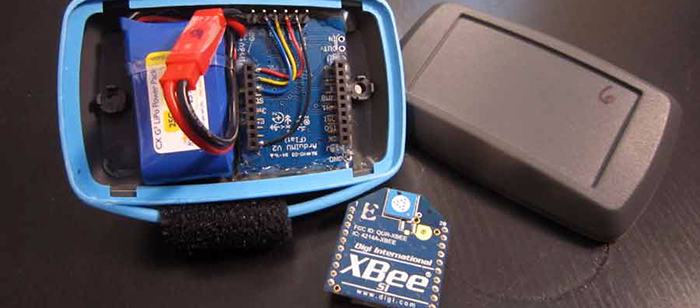
    <p>Our goal is to provide a motion sensor-based system that can evaluate the quality of exercise to support home rehabilitation. We introduce the Quality Assessment Framework (QAF) that uses low-cost motion sensors with data processing and machine learning techniques to assess the quality of human motion performed during therapeutic exercises. Data from fifteen persons with knee osteoarthritis was collected in a laboratory environment, and a classifier was trained using multi-label learning methods to detect descriptive characteristics of the patient's motion. These characteristics represent errors in the exercise performance as well as variables regularly monitored by the patient's therapist, such as speed.</p>
    <p>Results from multi-label learning are presented and recommendations made on requirements for an in-home therapeutic exercise system. The QAF can be adapted to the home therapy needs of conditions other than knee OA. We present a preliminary design of the InForm Exercise System that utilizes the QAF and has the potential to present feedback to patients completing home exercise programs.</p>
    <p>Portia Taylor received her BS degree in Computer Science from Grambling State University in 2007 and a Ph.D. degree in Biomedical Engineering from Carnegie Mellon University in 2012. At CMU, she was part of the <a href="http://www.cmu.edu/qolt/" rel="nofollow external" class="bo">Quality of LifeTechnology Center</a>, a NSF Engineering Research Center dedicated to the development of technologies for the elderly and disabled. Currently, Dr. Taylor works at the Social Security Administration as an IT Fellow. Her research interests include machine learning applications in biomedical engineering, intelligent systems for rehabilitation and physical therapy, and heath information technology.</p>
    </div>
]]>
</Body>
<Summary>UMBC Information Systems   Sensor-based assessment of the quality   of human motion during therapeutic exercise   Dr. Portia Taylor   Social Security Administration   12-1pm Wednesday, 10 April...</Summary>
<Website>http://www.csee.umbc.edu/2013/04/talk-sensor-based-assessment-of-human-motion-during-therapeutic-exercise/</Website>
<TrackingUrl>https://my3.my.umbc.edu/api/v0/pixel/news/27099/guest@my.umbc.edu/d82a5232e0b7f8757242b3717cd88350/api/pixel</TrackingUrl>
<Tag>news</Tag>
<Tag>talks</Tag>
<Group token="csee">Computer Science and Electrical Engineering</Group>
<GroupUrl>https://my3.my.umbc.edu/groups/csee</GroupUrl>
<AvatarUrl>https://assets3-my.umbc.edu/system/shared/avatars/groups/000/000/099/d117dca133c64bf78a4b7696dd007189/xsmall.png?1314043393</AvatarUrl>
<AvatarUrl size="original">https://assets1-my.umbc.edu/system/shared/avatars/groups/000/000/099/d117dca133c64bf78a4b7696dd007189/original.png?1314043393</AvatarUrl>
<AvatarUrl size="xxlarge">https://assets1-my.umbc.edu/system/shared/avatars/groups/000/000/099/d117dca133c64bf78a4b7696dd007189/xxlarge.png?1314043393</AvatarUrl>
<AvatarUrl size="xlarge">https://assets4-my.umbc.edu/system/shared/avatars/groups/000/000/099/d117dca133c64bf78a4b7696dd007189/xlarge.png?1314043393</AvatarUrl>
<AvatarUrl size="large">https://assets3-my.umbc.edu/system/shared/avatars/groups/000/000/099/d117dca133c64bf78a4b7696dd007189/large.png?1314043393</AvatarUrl>
<AvatarUrl size="medium">https://assets1-my.umbc.edu/system/shared/avatars/groups/000/000/099/d117dca133c64bf78a4b7696dd007189/medium.png?1314043393</AvatarUrl>
<AvatarUrl size="small">https://assets2-my.umbc.edu/system/shared/avatars/groups/000/000/099/d117dca133c64bf78a4b7696dd007189/small.png?1314043393</AvatarUrl>
<AvatarUrl size="xsmall">https://assets3-my.umbc.edu/system/shared/avatars/groups/000/000/099/d117dca133c64bf78a4b7696dd007189/xsmall.png?1314043393</AvatarUrl>
<AvatarUrl size="xxsmall">https://assets3-my.umbc.edu/system/shared/avatars/groups/000/000/099/d117dca133c64bf78a4b7696dd007189/xxsmall.png?1314043393</AvatarUrl>
<Sponsor>Computer Science and Electrical Engineering</Sponsor>
<PawCount>0</PawCount>
<CommentCount>0</CommentCount>
<CommentsAllowed>true</CommentsAllowed>
<PostedAt>Tue, 02 Apr 2013 09:34:48 -0400</PostedAt>
</NewsItem>

<NewsItem contentIssues="true" id="123398" important="false" status="posted" url="https://my3.my.umbc.edu/posts/123398">
<Title>Khaki &#8217;10, Vis Arts, Explores Impact of War in Film</Title>
<Body>
<![CDATA[
    <div class="html-content">
    <img width="150" height="150" src="https://umbc.edu/wp-content/uploads/2013/04/sarakhaki-150x150.jpg" alt="" style="max-width: 100%; height: auto;"><p><a href="/wp-content/uploads/2013/03/sarakhaki.jpg" rel="nofollow external" class="bo"><img alt="sarakhaki" src="/wp-content/uploads/2013/03/sarakhaki.jpg?w=300" width="300" height="182" style="max-width: 100%; height: auto;"></a>A native of Iran, <strong>Sara Khaki ’10</strong>, visual arts, has seen the after-effects of war first-hand. Now she’s combining her passion for film making and the love of her home country into a documentary that examines how one doctor has “dedicated his life to offering hope and healing to those whose lives and bodies have been ravaged by war.”</p>
    <p>Khaki’s film, “Facing the Mirror,” recently won the Center for Asian American Media’s <a href="http://caamedia.org/blog/caam-presents/2013/03/19/ready-set-pitch-winner-and-live-crowdsourcing-campaigns/" rel="nofollow external" class="bo">“Ready, Set, Pitch”</a> award — along with $5,000 in research and development funding to help expand the documentary to full-length. <a href="http://www.indiegogo.com/projects/facing-the-mirror" rel="nofollow external" class="bo">She is also currently running an indiegogo campaign to raise funds; read more about the effort here.</a></p>
    <p>“This story is very close to my heart,” said Khaki, who after UMBC earned an MFA in social documentary film making from the School of Visual Arts.</p>
    <p>“I grew up in Iran during and after the Iran-Iraq war. I remember walking in the streets and seeing men with missing limbs. It was considered normal for men to go to war and, if they survived, to return as different people — sometimes physically, sometimes psychologically, often both. I witnessed not only the visible scars, but the long term effects that war had on the people of my country.”</p>
    </div>
]]>
</Body>
<Summary>A native of Iran, Sara Khaki ’10, visual arts, has seen the after-effects of war first-hand. Now she’s combining her passion for film making and the love of her home country into a documentary...</Summary>
<Website>https://umbc.edu/stories/khaki-10-vis-arts-explores-impact-of-war-in-film/</Website>
<TrackingUrl>https://my3.my.umbc.edu/api/v0/pixel/news/123398/guest@my.umbc.edu/52ad13eaf45c5e9e95c3ed4e6fa2dbf6/api/pixel</TrackingUrl>
<Tag>alumni</Tag>
<Group token="umbc-news-magazine">UMBC News &amp;amp; Magazine</Group>
<GroupUrl>https://my3.my.umbc.edu/groups/umbc-news-magazine</GroupUrl>
<AvatarUrl>https://assets1-my.umbc.edu/system/shared/avatars/groups/000/001/943/24435aa6207c452e7bc15cc74b42c7bb/xsmall.png?1748556657</AvatarUrl>
<AvatarUrl size="original">https://assets1-my.umbc.edu/system/shared/avatars/groups/000/001/943/24435aa6207c452e7bc15cc74b42c7bb/original.png?1748556657</AvatarUrl>
<AvatarUrl size="xxlarge">https://assets2-my.umbc.edu/system/shared/avatars/groups/000/001/943/24435aa6207c452e7bc15cc74b42c7bb/xxlarge.png?1748556657</AvatarUrl>
<AvatarUrl size="xlarge">https://assets2-my.umbc.edu/system/shared/avatars/groups/000/001/943/24435aa6207c452e7bc15cc74b42c7bb/xlarge.png?1748556657</AvatarUrl>
<AvatarUrl size="large">https://assets3-my.umbc.edu/system/shared/avatars/groups/000/001/943/24435aa6207c452e7bc15cc74b42c7bb/large.png?1748556657</AvatarUrl>
<AvatarUrl size="medium">https://assets1-my.umbc.edu/system/shared/avatars/groups/000/001/943/24435aa6207c452e7bc15cc74b42c7bb/medium.png?1748556657</AvatarUrl>
<AvatarUrl size="small">https://assets2-my.umbc.edu/system/shared/avatars/groups/000/001/943/24435aa6207c452e7bc15cc74b42c7bb/small.png?1748556657</AvatarUrl>
<AvatarUrl size="xsmall">https://assets1-my.umbc.edu/system/shared/avatars/groups/000/001/943/24435aa6207c452e7bc15cc74b42c7bb/xsmall.png?1748556657</AvatarUrl>
<AvatarUrl size="xxsmall">https://assets2-my.umbc.edu/system/shared/avatars/groups/000/001/943/24435aa6207c452e7bc15cc74b42c7bb/xxsmall.png?1748556657</AvatarUrl>
<Sponsor>UMBC News &amp; Magazine</Sponsor>
<PawCount>0</PawCount>
<CommentCount>0</CommentCount>
<CommentsAllowed>false</CommentsAllowed>
<PostedAt>Tue, 02 Apr 2013 09:32:53 -0400</PostedAt>
</NewsItem>

<NewsItem contentIssues="true" id="27095" important="false" status="posted" url="https://my3.my.umbc.edu/posts/27095">
<Title>Library Services Focus Groups</Title>
<Tagline>Tell us which services are important to you and earn $20!</Tagline>
<Body>
<![CDATA[
    <div class="html-content">Would you like to participate in a focus group designed to improve the Library at UMBC, and be paid for your time?  
    <br><br>Participants will be given a campus card worth $20.  Refreshments will be served.<br><br>These focus groups will consist of a small group discussion, led by a moderator.  Your participation is greatly appreciated.
    <br><br>In order to participate, you must be currently registered for classes at UMBC and have experience using the Library.  Current student employees at the UMBC Library are ineligible for participation.
    <br><br>For more information and to register, visit the website.</div>
]]>
</Body>
<Summary>Would you like to participate in a focus group designed to improve the Library at UMBC, and be paid for your time?     Participants will be given a campus card worth $20.  Refreshments will be...</Summary>
<Website>http://aok2.lib.umbc.edu/reference/focusGroups/index.php</Website>
<TrackingUrl>https://my3.my.umbc.edu/api/v0/pixel/news/27095/guest@my.umbc.edu/7ed7564a244d1e17219cf4db8087d0c1/api/pixel</TrackingUrl>
<Tag>focus-groups</Tag>
<Group token="library">Albin O. Kuhn Library &amp;amp; Gallery</Group>
<GroupUrl>https://my3.my.umbc.edu/groups/library</GroupUrl>
<AvatarUrl>https://assets1-my.umbc.edu/system/shared/avatars/groups/000/000/016/854d6fae5ee42911677c739ee1734486/xsmall.png?1279120404</AvatarUrl>
<AvatarUrl size="original">https://assets2-my.umbc.edu/system/shared/avatars/groups/000/000/016/854d6fae5ee42911677c739ee1734486/original.png?1279120404</AvatarUrl>
<AvatarUrl size="xxlarge">https://assets2-my.umbc.edu/system/shared/avatars/groups/000/000/016/854d6fae5ee42911677c739ee1734486/xxlarge.png?1279120404</AvatarUrl>
<AvatarUrl size="xlarge">https://assets4-my.umbc.edu/system/shared/avatars/groups/000/000/016/854d6fae5ee42911677c739ee1734486/xlarge.png?1279120404</AvatarUrl>
<AvatarUrl size="large">https://assets2-my.umbc.edu/system/shared/avatars/groups/000/000/016/854d6fae5ee42911677c739ee1734486/large.png?1279120404</AvatarUrl>
<AvatarUrl size="medium">https://assets1-my.umbc.edu/system/shared/avatars/groups/000/000/016/854d6fae5ee42911677c739ee1734486/medium.png?1279120404</AvatarUrl>
<AvatarUrl size="small">https://assets2-my.umbc.edu/system/shared/avatars/groups/000/000/016/854d6fae5ee42911677c739ee1734486/small.png?1279120404</AvatarUrl>
<AvatarUrl size="xsmall">https://assets1-my.umbc.edu/system/shared/avatars/groups/000/000/016/854d6fae5ee42911677c739ee1734486/xsmall.png?1279120404</AvatarUrl>
<AvatarUrl size="xxsmall">https://assets1-my.umbc.edu/system/shared/avatars/groups/000/000/016/854d6fae5ee42911677c739ee1734486/xxsmall.png?1279120404</AvatarUrl>
<Sponsor>Albin O. Kuhn Library &amp; Gallery</Sponsor>
<ThumbnailUrl size="xxlarge">https://assets3-my.umbc.edu/system/shared/thumbnails/news/000/027/095/5211bda24f5c44114c473a74b8bdf361/xxlarge.jpg?1364909387</ThumbnailUrl>
<ThumbnailUrl size="xlarge">https://assets4-my.umbc.edu/system/shared/thumbnails/news/000/027/095/5211bda24f5c44114c473a74b8bdf361/xlarge.jpg?1364909387</ThumbnailUrl>
<ThumbnailUrl size="large">https://assets4-my.umbc.edu/system/shared/thumbnails/news/000/027/095/5211bda24f5c44114c473a74b8bdf361/large.jpg?1364909387</ThumbnailUrl>
<ThumbnailUrl size="medium">https://assets1-my.umbc.edu/system/shared/thumbnails/news/000/027/095/5211bda24f5c44114c473a74b8bdf361/medium.jpg?1364909387</ThumbnailUrl>
<ThumbnailUrl size="small">https://assets4-my.umbc.edu/system/shared/thumbnails/news/000/027/095/5211bda24f5c44114c473a74b8bdf361/small.jpg?1364909387</ThumbnailUrl>
<ThumbnailUrl size="xsmall">https://assets2-my.umbc.edu/system/shared/thumbnails/news/000/027/095/5211bda24f5c44114c473a74b8bdf361/xsmall.jpg?1364909387</ThumbnailUrl>
<ThumbnailUrl size="xxsmall">https://assets2-my.umbc.edu/system/shared/thumbnails/news/000/027/095/5211bda24f5c44114c473a74b8bdf361/xxsmall.jpg?1364909387</ThumbnailUrl>
<PawCount>9</PawCount>
<CommentCount>0</CommentCount>
<CommentsAllowed>true</CommentsAllowed>
<PostedAt>Tue, 02 Apr 2013 09:31:29 -0400</PostedAt>
<EditAt>Tue, 30 Apr 2013 14:32:29 -0400</EditAt>
</NewsItem>

<NewsItem contentIssues="true" id="27093" important="false" status="posted" url="https://my3.my.umbc.edu/posts/27093">
<Title>Women in Science: Get Used to It</Title>
<Body>
<![CDATA[
    <div class="html-content">
    <h5><span>by Emily Scheerer and Abigail Williams</span></h5>
    <div><span><br></span></div>
    <div>
    <span>Recently, the author of the popular blog </span><a href="https://www.facebook.com/IFeakingLoveScience" rel="nofollow external" class="bo">“I fucking love science</a><span>” (with more than 4 million Facebook followers) created a Twitter account and asked readers for suggestions about other scientists with Twitter accounts she could follow. Instead of answers to her question, Elise Andrew (yes, she’s female) got snarky responses expressing surprise that  that she was a woman, and even more shockingly, an attractive woman. Many of her Facebook followers leaped to her defense. Elise Andrew replied with a tweet saying, “EVERY COMMENT on that thread is about how shocking it is that I’m a woman! Is this really 2013?” ... <a href="http://umbcbreakingground.wordpress.com/2013/04/01/women-in-science-get-used-to-it/" rel="nofollow external" class="bo">(continue reading)</a></span>
    </div>
    </div>
]]>
</Body>
<Summary>by Emily Scheerer and Abigail Williams     Recently, the author of the popular blog “I fucking love science” (with more than 4 million Facebook followers) created a Twitter account and asked...</Summary>
<Website>http://umbcbreakingground.wordpress.com/2013/04/01/women-in-science-get-used-to-it/</Website>
<TrackingUrl>https://my3.my.umbc.edu/api/v0/pixel/news/27093/guest@my.umbc.edu/c89fc5780c7483388290a759edef143e/api/pixel</TrackingUrl>
<Group token="bg">UMBC BreakingGround</Group>
<GroupUrl>https://my3.my.umbc.edu/groups/bg</GroupUrl>
<AvatarUrl>https://assets3-my.umbc.edu/system/shared/avatars/groups/000/000/493/e0dc61eceffa1a7dff9d396b4b7c5011/xsmall.png?1360169927</AvatarUrl>
<AvatarUrl size="original">https://assets2-my.umbc.edu/system/shared/avatars/groups/000/000/493/e0dc61eceffa1a7dff9d396b4b7c5011/original.png?1360169927</AvatarUrl>
<AvatarUrl size="xxlarge">https://assets3-my.umbc.edu/system/shared/avatars/groups/000/000/493/e0dc61eceffa1a7dff9d396b4b7c5011/xxlarge.png?1360169927</AvatarUrl>
<AvatarUrl size="xlarge">https://assets1-my.umbc.edu/system/shared/avatars/groups/000/000/493/e0dc61eceffa1a7dff9d396b4b7c5011/xlarge.png?1360169927</AvatarUrl>
<AvatarUrl size="large">https://assets4-my.umbc.edu/system/shared/avatars/groups/000/000/493/e0dc61eceffa1a7dff9d396b4b7c5011/large.png?1360169927</AvatarUrl>
<AvatarUrl size="medium">https://assets2-my.umbc.edu/system/shared/avatars/groups/000/000/493/e0dc61eceffa1a7dff9d396b4b7c5011/medium.png?1360169927</AvatarUrl>
<AvatarUrl size="small">https://assets4-my.umbc.edu/system/shared/avatars/groups/000/000/493/e0dc61eceffa1a7dff9d396b4b7c5011/small.png?1360169927</AvatarUrl>
<AvatarUrl size="xsmall">https://assets3-my.umbc.edu/system/shared/avatars/groups/000/000/493/e0dc61eceffa1a7dff9d396b4b7c5011/xsmall.png?1360169927</AvatarUrl>
<AvatarUrl size="xxsmall">https://assets4-my.umbc.edu/system/shared/avatars/groups/000/000/493/e0dc61eceffa1a7dff9d396b4b7c5011/xxsmall.png?1360169927</AvatarUrl>
<Sponsor>UMBC BreakingGround</Sponsor>
<ThumbnailUrl size="xxlarge">https://assets2-my.umbc.edu/system/shared/thumbnails/news/000/027/093/dd3c407bbd2567d5d793e720ca3f2da2/xxlarge.jpg?1364908641</ThumbnailUrl>
<ThumbnailUrl size="xlarge">https://assets1-my.umbc.edu/system/shared/thumbnails/news/000/027/093/dd3c407bbd2567d5d793e720ca3f2da2/xlarge.jpg?1364908641</ThumbnailUrl>
<ThumbnailUrl size="large">https://assets2-my.umbc.edu/system/shared/thumbnails/news/000/027/093/dd3c407bbd2567d5d793e720ca3f2da2/large.jpg?1364908641</ThumbnailUrl>
<ThumbnailUrl size="medium">https://assets3-my.umbc.edu/system/shared/thumbnails/news/000/027/093/dd3c407bbd2567d5d793e720ca3f2da2/medium.jpg?1364908641</ThumbnailUrl>
<ThumbnailUrl size="small">https://assets1-my.umbc.edu/system/shared/thumbnails/news/000/027/093/dd3c407bbd2567d5d793e720ca3f2da2/small.jpg?1364908641</ThumbnailUrl>
<ThumbnailUrl size="xsmall">https://assets1-my.umbc.edu/system/shared/thumbnails/news/000/027/093/dd3c407bbd2567d5d793e720ca3f2da2/xsmall.jpg?1364908641</ThumbnailUrl>
<ThumbnailUrl size="xxsmall">https://assets1-my.umbc.edu/system/shared/thumbnails/news/000/027/093/dd3c407bbd2567d5d793e720ca3f2da2/xxsmall.jpg?1364908641</ThumbnailUrl>
<PawCount>56</PawCount>
<CommentCount>1</CommentCount>
<CommentsAllowed>true</CommentsAllowed>
<PostedAt>Tue, 02 Apr 2013 09:18:27 -0400</PostedAt>
<EditAt>Tue, 02 Apr 2013 09:22:18 -0400</EditAt>
</NewsItem>

<NewsItem contentIssues="false" id="27092" important="false" status="posted" url="https://my3.my.umbc.edu/posts/27092">
<Title>Exposed: Our Power Grid</Title>
<Body>
<![CDATA[
    <div class="html-content">
    <h1>
              <span> 
                Exposed: Our Power Grid          </span>
            </h1>


              <div>     
                  <div>
                    <div>
        
                    <img src="http://66.147.244.140/%7Ecitzente/wp-content/uploads/2013/04/CYBERWARFAREgrid1-700x325.jpg" alt="Exposed: Our Power Grid" style="max-width: 100%; height: auto;">                                  </div>
                  </div>
    		  </div>


            <div>
    
                          <div>
                  <br>              <ul>
    <li><strong><a href="http://66.147.244.140/%7Ecitzente/author/bjorn-frogner/" title="Posts by Bjorn Frogner" rel="nofollow external" class="bo">Bjorn Frogner</a></strong></li>
    <li>On <span>April 1, 2013</span> </li>
    <li><a href="http://www.bwtechumbc.com/">http://www.bwtechumbc.com/</a></li>
    </ul>
                   
               </div>     


            </div>   
                                
                                   
              <h4>Today’s electric power grid is very different from the one
     my grandfather built in a small town in Norway during the 1930s. There 
    were no computer controls and the reliability was poor compared with 
    today’s standard. Personally, I helped develop some of the automation in
     the current US grid during the late 1970s and some of those solutions 
    might still be operating. I was well versed with control systems, SCADA 
    and power-system modeling. During those days the key issues were high 
    uptime and low cost. Protecting against hackers and people with 
    malicious intent did not enter our minds.</h4>
    <p> </p>
    <p>Today the situation is very different. The electric grid is highly 
    automated and efficient. We enjoy a system that moves electric power 
    long distances with an impressive reliability. We are so accustomed to 
    electricity being available by the flip of a switch that we cannot 
    imagine what we will do if it suddenly was unavailable for extended 
    periods.</p>
    <p> </p>
    <p>There is essentially no public discussion about how we might manage 
    if the electricity in our large cities is unavailable for days and 
    weeks. When a major <a href="http://en.wikipedia.org/wiki/New_York_City_blackout_of_1977" rel="nofollow external" class="bo">blackout</a><a title="" rel="nofollow external" class="bo"><sup><sup>[1]</sup></sup></a><a href="http://en.wikipedia.org/wiki/New_York_City_blackout_of_1977" rel="nofollow external" class="bo"> hit <strong>New York City in 1977</strong></a>,
     it resulted in widespread looting, vandalism and violence. The blackout
     that started on August 14, 2003 in Ohio resulted in a loss of 61,800 MW
     of load that served 10 million people in Ontario Canada plus 45 million
     people in eight states in northeast of the US. The total economic 
    impact of this event was about <strong>$6B</strong><a title="" rel="nofollow external" class="bo"><sup><sup>[2]</sup></sup></a>.
     The 2003 event lasted as little as a few hours for some people and as 
    long as two days for others. Can you imagine the impact of a blackout 
    that lasts for days and weeks? Experts with experience in analyzing the 
    grid know that people determined to cause damage can create huge impact.
     It is unfortunately easier to cause such damage than the public thinks.</p>
    <p> </p>
    <p>We have for several years adequately protected the computers used by 
    the military, financial institutions, and others. There are best 
    practices to protect secrets, fend off thieves, and make sure the 
    computers continue working. These issues, despite receiving quite a bit 
    of publicity, are easier and of less consequence than protecting the 
    electric grid. Damaging the electric grid by a cyber attack has the 
    potential of having catastrophic impact. Furthermore, the source of such
     an attack would probably not be traceable due to the ease of using 
    nested proxy servers to mask where the attack is coming from.</p>
    <p> </p>
    <p>Unfortunately, the electric utilities appear to be unwilling to 
    acknowledge the seriousness of the problem and do what it takes to make 
    the grid more resilient. A key reason for this reluctance is that the 
    electric utilities are a regulated industry and they do what the state 
    public service commissions ask them to do. Furthermore, they usually ask
     for permission from these commissions to recover their expenses before 
    they embark on expensive projects.</p>
    <p> </p>
    <p>As you can see, there is a built-in mechanism to go slow, not to 
    spend money, and not to be proactive. The industry is simply not 
    organized in a manner that enables it to move rapidly in response to 
    accelerated sophistication of cyber hackers, some of whom are believed 
    to be funded by nation states.</p>
    <p> </p>
    <p>During the last three years, I have followed the Smart Grid Cyber 
    Security work at National Institute of Standards and Technology (NIST). 
    They have coordinated the activities of about a hundred volunteers who 
    have debated and documented cyber security guidelines for the electric 
    grid resulting in a three volume document named <strong>NISTIR 7628</strong><a title="" rel="nofollow external" class="bo"><sup><sup><strong>[</strong>3]</sup></sup></a>. Unfortunately, the utilities have not adopted these results to any substantive extent.</p>
    <p> </p>
    <p>Several years ago, a software “worm” called <strong>Stuxnet</strong><a title="" rel="nofollow external" class="bo"><sup><sup>[4]</sup></sup></a>
     was inserted by clandestine means in the computers controlling Iran’s 
    uranium enrichment plant with the result that many centrifuges were made
     inoperable by malicious control signals generated by Stuxnet in 2010. 
    Although Stuxnet is well analyzed and documented, I am not aware that 
    the electric power industry knows how to protect the electric grid 
    against this type of malware.</p>
    <p> </p>
    <p>By discussing these issues, my hope is that the public will demand 
    solutions, the state utility commissions will approve rate recovery for 
    substantive cyber security projects, our politicians will provide 
    leadership and regulation, and the brightest IT minds will seek careers 
    in the electric utility industry. As a result, the grid my grandfather 
    started in his hometown and the solutions I contributed to when I was 
    young, will continue to provide reliable power regardless of the 
    intentions of bad actors.</p>
    <br>
    <hr>
    <div>
    <p><a title="" rel="nofollow external" class="bo"><sup><sup>[1]</sup></sup></a> <a href="http://en.wikipedia.org/wiki/New_York_City_blackout_of_1977">http://en.wikipedia.org/wiki/New_York_City_blackout_of_1977</a></p>
    </div>
    <div>
    <p><a title="" rel="nofollow external" class="bo"><sup><sup>[2]</sup></sup></a> <a href="http://www.elcon.org/Documents/EconomicImpactsOfAugust2003Blackout.pdf" rel="nofollow external" class="bo">http://www.elcon.org/Documents/EconomicImpactsOfAugust2003Blackout.pdf</a></p>
    </div>
    <div>
    <p><a title="" rel="nofollow external" class="bo"><sup><sup>[3]</sup></sup></a> NISTIR 7628: Guidelines for Smart Grid Cyber Security; <a href="http://csrc.nist.gov/publications/nistir/ir7628/nistir-7628_vol1.pdf" rel="nofollow external" class="bo">http://csrc.nist.gov/publications/nistir/ir7628/nistir-7628_vol1.pdf</a></p>
    </div>
    
    <p><a title="" rel="nofollow external" class="bo"><sup><sup>[4]</sup></sup></a> <a href="http://en.wikipedia.org/wiki/Stuxnet">http://en.wikipedia.org/wiki/Stuxnet</a></p>
    </div>
]]>
</Body>
<Summary>Exposed: Our Power Grid...</Summary>
<Website>http://66.147.244.140/~citzente/2013/04/01/scada/</Website>
<TrackingUrl>https://my3.my.umbc.edu/api/v0/pixel/news/27092/guest@my.umbc.edu/7e5d1c162a3ec0546a98218d4c374bad/api/pixel</TrackingUrl>
<Group token="bwtech">bwtech@UMBC Research and Technology Park</Group>
<GroupUrl>https://my3.my.umbc.edu/groups/bwtech</GroupUrl>
<AvatarUrl>https://assets1-my.umbc.edu/system/shared/avatars/groups/000/000/410/afff9420ec03574fa84c6bb85b54a3e3/xsmall.png?1760034935</AvatarUrl>
<AvatarUrl size="original">https://assets2-my.umbc.edu/system/shared/avatars/groups/000/000/410/afff9420ec03574fa84c6bb85b54a3e3/original.png?1760034935</AvatarUrl>
<AvatarUrl size="xxlarge">https://assets4-my.umbc.edu/system/shared/avatars/groups/000/000/410/afff9420ec03574fa84c6bb85b54a3e3/xxlarge.png?1760034935</AvatarUrl>
<AvatarUrl size="xlarge">https://assets3-my.umbc.edu/system/shared/avatars/groups/000/000/410/afff9420ec03574fa84c6bb85b54a3e3/xlarge.png?1760034935</AvatarUrl>
<AvatarUrl size="large">https://assets4-my.umbc.edu/system/shared/avatars/groups/000/000/410/afff9420ec03574fa84c6bb85b54a3e3/large.png?1760034935</AvatarUrl>
<AvatarUrl size="medium">https://assets1-my.umbc.edu/system/shared/avatars/groups/000/000/410/afff9420ec03574fa84c6bb85b54a3e3/medium.png?1760034935</AvatarUrl>
<AvatarUrl size="small">https://assets4-my.umbc.edu/system/shared/avatars/groups/000/000/410/afff9420ec03574fa84c6bb85b54a3e3/small.png?1760034935</AvatarUrl>
<AvatarUrl size="xsmall">https://assets1-my.umbc.edu/system/shared/avatars/groups/000/000/410/afff9420ec03574fa84c6bb85b54a3e3/xsmall.png?1760034935</AvatarUrl>
<AvatarUrl size="xxsmall">https://assets3-my.umbc.edu/system/shared/avatars/groups/000/000/410/afff9420ec03574fa84c6bb85b54a3e3/xxsmall.png?1760034935</AvatarUrl>
<Sponsor>bwtech@UMBC</Sponsor>
<PawCount>0</PawCount>
<CommentCount>0</CommentCount>
<CommentsAllowed>true</CommentsAllowed>
<PostedAt>Tue, 02 Apr 2013 09:07:04 -0400</PostedAt>
</NewsItem>

<NewsItem contentIssues="true" id="27094" important="false" status="posted" url="https://my3.my.umbc.edu/posts/27094">
<Title>Need a place to meet? Check out our facility rental page!</Title>
<Body>
<![CDATA[
    <div class="html-content">Need a place to meet? Check out our facility rental page!<br><br><a href="http://www.facebook.com/l.php?u=http%3A%2F%2Fwww.umbc.edu%2Ftrainctr%2Fabout%2Fprofessional-meeting-facilities.html&amp;h=UAQFup2OF&amp;s=1" title="" rel="nofollow external" class="bo"><img src="https://fbexternal-a.akamaihd.net/safe_image.php?d=AQAyHUBZtuvzrLlM&amp;w=154&amp;h=154&amp;url=http%3A%2F%2Fwww.umbc.edu%2Ftrainctr%2Fabout%2F..%2Fimages%2Fconf-room-umbc.jpg" alt="" style="max-width: 100%; height: auto;"></a><br><a href="http://www.facebook.com/l.php?u=http%3A%2F%2Fwww.umbc.edu%2Ftrainctr%2Fabout%2Fprofessional-meeting-facilities.html&amp;h=xAQHzWJu_&amp;s=1" rel="nofollow external" class="bo">Professional Meeting Facilities | UMBC Training Centers</a><br><a href="http://www.umbc.edu">www.umbc.edu</a><br>UMBC Training Centers offers professional meeting facilities that are flexible, convenient and cost effective. Our newly-constructed (2012), university-affiliated facility is fully equipped with the latest technologies and furnishings.</div>
]]>
</Body>
<Summary>Need a place to meet? Check out our facility rental page!   Professional Meeting Facilities | UMBC Training Centers www.umbc.edu UMBC Training Centers offers professional meeting facilities that...</Summary>
<Website>http://www.facebook.com/umbctraining/posts/118431801683901</Website>
<TrackingUrl>https://my3.my.umbc.edu/api/v0/pixel/news/27094/guest@my.umbc.edu/45fe8ed83015c72ea82da63e0bd39ab2/api/pixel</TrackingUrl>
<Tag>ccna</Tag>
<Tag>ceh</Tag>
<Tag>centers</Tag>
<Tag>cisco</Tag>
<Tag>cyber</Tag>
<Tag>cybersecurity</Tag>
<Tag>information</Tag>
<Tag>it</Tag>
<Tag>leadership</Tag>
<Tag>management</Tag>
<Tag>microsoft</Tag>
<Tag>project</Tag>
<Tag>security</Tag>
<Tag>technology</Tag>
<Tag>training</Tag>
<Tag>umbc</Tag>
<Group token="retired-575">UMBC Training Centers</Group>
<GroupUrl>https://my3.my.umbc.edu/groups/retired-575</GroupUrl>
<AvatarUrl>https://assets1-my.umbc.edu/system/shared/avatars/groups/000/000/575/83756b985266168d0d29c6c9a146db50/xsmall.png?1361981335</AvatarUrl>
<AvatarUrl size="original">https://assets4-my.umbc.edu/system/shared/avatars/groups/000/000/575/83756b985266168d0d29c6c9a146db50/original.jpg?1361981335</AvatarUrl>
<AvatarUrl size="xxlarge">https://assets3-my.umbc.edu/system/shared/avatars/groups/000/000/575/83756b985266168d0d29c6c9a146db50/xxlarge.png?1361981335</AvatarUrl>
<AvatarUrl size="xlarge">https://assets4-my.umbc.edu/system/shared/avatars/groups/000/000/575/83756b985266168d0d29c6c9a146db50/xlarge.png?1361981335</AvatarUrl>
<AvatarUrl size="large">https://assets1-my.umbc.edu/system/shared/avatars/groups/000/000/575/83756b985266168d0d29c6c9a146db50/large.png?1361981335</AvatarUrl>
<AvatarUrl size="medium">https://assets2-my.umbc.edu/system/shared/avatars/groups/000/000/575/83756b985266168d0d29c6c9a146db50/medium.png?1361981335</AvatarUrl>
<AvatarUrl size="small">https://assets4-my.umbc.edu/system/shared/avatars/groups/000/000/575/83756b985266168d0d29c6c9a146db50/small.png?1361981335</AvatarUrl>
<AvatarUrl size="xsmall">https://assets1-my.umbc.edu/system/shared/avatars/groups/000/000/575/83756b985266168d0d29c6c9a146db50/xsmall.png?1361981335</AvatarUrl>
<AvatarUrl size="xxsmall">https://assets2-my.umbc.edu/system/shared/avatars/groups/000/000/575/83756b985266168d0d29c6c9a146db50/xxsmall.png?1361981335</AvatarUrl>
<Sponsor>UMBC Training Centers</Sponsor>
<PawCount>0</PawCount>
<CommentCount>0</CommentCount>
<CommentsAllowed>true</CommentsAllowed>
<PostedAt>Tue, 02 Apr 2013 09:00:00 -0400</PostedAt>
<EditAt>Tue, 02 Apr 2013 09:00:00 -0400</EditAt>
</NewsItem>

<NewsItem contentIssues="true" id="27091" important="false" status="posted" url="https://my3.my.umbc.edu/posts/27091">
<Title>.net Awards 2013: top 10 young developers</Title>
<Body>
<![CDATA[
    <div class="html-content">We delve into the minds of the 10 talented individuals who've made it onto the shortlist for the Young Developer of the Year category in this year's .net Awards<div><table border="0"><tbody><tr>
    <td><a href="http://share.feedsportal.com/viral/sendEmail.cfm?lang=en&amp;title=.net+Awards+2013%3A+top+10+young+developers&amp;link=http%3A%2F%2Fwww.netmagazine.com%2Ffeatures%2Fnet-awards-2013-top-10-young-developers" rel="nofollow external" class="bo"><img src="http://res3.feedsportal.com/images/emailthis2.gif" style="max-width: 100%; height: auto;"></a></td>
    <td><a href="http://res.feedsportal.com/viral/bookmark.cfm?title=.net+Awards+2013%3A+top+10+young+developers&amp;link=http%3A%2F%2Fwww.netmagazine.com%2Ffeatures%2Fnet-awards-2013-top-10-young-developers" rel="nofollow external" class="bo"><img src="http://res3.feedsportal.com/images/bookmark.gif" style="max-width: 100%; height: auto;"></a></td>
    </tr></tbody></table></div>
    <br><br><a href="http://da.feedsportal.com/r/161990863088/u/49/f/502346/c/32632/s/2a3e3b89/a2.htm" rel="nofollow external" class="bo"><img src="http://da.feedsportal.com/r/161990863088/u/49/f/502346/c/32632/s/2a3e3b89/a2.img" style="max-width: 100%; height: auto;"></a>
    </div>
]]>
</Body>
<Summary>We delve into the minds of the 10 talented individuals who've made it onto the shortlist for the Young Developer of the Year category in this year's .net Awards</Summary>
<Website>http://feedproxy.google.com/~r/net/topstories/~3/XPwDiiJ862g/story01.htm</Website>
<TrackingUrl>https://my3.my.umbc.edu/api/v0/pixel/news/27091/guest@my.umbc.edu/90adba1bab60eab7d4d5d85901683f64/api/pixel</TrackingUrl>
<Tag>css</Tag>
<Tag>development</Tag>
<Tag>html</Tag>
<Tag>javascript</Tag>
<Tag>mysql</Tag>
<Tag>net</Tag>
<Tag>php</Tag>
<Tag>sql</Tag>
<Tag>web</Tag>
<Group token="retired-583">Web Developer - Build Group</Group>
<GroupUrl>https://my3.my.umbc.edu/groups/retired-583</GroupUrl>
<AvatarUrl>https://assets3-my.umbc.edu/system/shared/avatars/groups/000/000/583/fc60f5d7abc2e080599bb6dc465db54d/xsmall.png?1363101197</AvatarUrl>
<AvatarUrl size="original">https://assets4-my.umbc.edu/system/shared/avatars/groups/000/000/583/fc60f5d7abc2e080599bb6dc465db54d/original.jpg?1363101197</AvatarUrl>
<AvatarUrl size="xxlarge">https://assets4-my.umbc.edu/system/shared/avatars/groups/000/000/583/fc60f5d7abc2e080599bb6dc465db54d/xxlarge.png?1363101197</AvatarUrl>
<AvatarUrl size="xlarge">https://assets4-my.umbc.edu/system/shared/avatars/groups/000/000/583/fc60f5d7abc2e080599bb6dc465db54d/xlarge.png?1363101197</AvatarUrl>
<AvatarUrl size="large">https://assets3-my.umbc.edu/system/shared/avatars/groups/000/000/583/fc60f5d7abc2e080599bb6dc465db54d/large.png?1363101197</AvatarUrl>
<AvatarUrl size="medium">https://assets3-my.umbc.edu/system/shared/avatars/groups/000/000/583/fc60f5d7abc2e080599bb6dc465db54d/medium.png?1363101197</AvatarUrl>
<AvatarUrl size="small">https://assets4-my.umbc.edu/system/shared/avatars/groups/000/000/583/fc60f5d7abc2e080599bb6dc465db54d/small.png?1363101197</AvatarUrl>
<AvatarUrl size="xsmall">https://assets3-my.umbc.edu/system/shared/avatars/groups/000/000/583/fc60f5d7abc2e080599bb6dc465db54d/xsmall.png?1363101197</AvatarUrl>
<AvatarUrl size="xxsmall">https://assets4-my.umbc.edu/system/shared/avatars/groups/000/000/583/fc60f5d7abc2e080599bb6dc465db54d/xxsmall.png?1363101197</AvatarUrl>
<Sponsor>Web Developer - Build Group</Sponsor>
<PawCount>0</PawCount>
<CommentCount>0</CommentCount>
<CommentsAllowed>true</CommentsAllowed>
<PostedAt>Tue, 02 Apr 2013 07:00:53 -0400</PostedAt>
</NewsItem>

<NewsItem contentIssues="true" id="27090" important="false" status="posted" url="https://my3.my.umbc.edu/posts/27090">
<Title>A Thorough Introduction To Backbone.Marionette (Part 2)</Title>
<Body>
<![CDATA[
    <div class="html-content">
    <table width="650">
    <tbody>
    <tr>
    <td>
    <div>
    <img src="http://statisches.auslieferung.commindo-media-ressourcen.de/advertisement.gif" alt="" style="max-width: 100%; height: auto;"><br><a href="http://auslieferung.commindo-media-ressourcen.de/random.php?mode=target&amp;collection=smashing-rss&amp;position=1" rel="nofollow external" class="bo"><img src="http://auslieferung.commindo-media-ressourcen.de/random.php?mode=image&amp;collection=smashing-rss&amp;position=1" alt="" style="max-width: 100%; height: auto;"></a> <a href="http://auslieferung.commindo-media-ressourcen.de/random.php?mode=target&amp;collection=smashing-rss&amp;position=2" rel="nofollow external" class="bo"><img src="http://auslieferung.commindo-media-ressourcen.de/random.php?mode=image&amp;collection=smashing-rss&amp;position=2" alt="" style="max-width: 100%; height: auto;"></a> <a href="http://auslieferung.commindo-media-ressourcen.de/random.php?mode=target&amp;collection=smashing-rss&amp;position=3" rel="nofollow external" class="bo"><img src="http://auslieferung.commindo-media-ressourcen.de/random.php?mode=image&amp;collection=smashing-rss&amp;position=3" alt="" style="max-width: 100%; height: auto;"></a>
    </div>
    </td>
    </tr>
    </tbody>
    </table>
    <p>In the first part of this series, we discussed <a href="http://coding.smashingmagazine.com/2013/02/11/introduction-backbone-marionette/" rel="nofollow external" class="bo">Backbone.Marionette’s <code>Application</code></a>. This time around, we’ll discuss the module system that is included in Backbone.Marionette. Modules are accessible through the <code>Application</code>, but modules are a very large topic and deserve an article dedicated to them.</p>
    <h3>What Are Modules?</h3>
    <p>Before we get into the details of how to use Marionette’s module system, we should make sure we all have a decent definition of a module. A module is <strong>an independent unit of code that ideally does one thing</strong>. It can be used in conjunction with other modules to create an entire system. The more independent a unit of code is, the more easily it can be exchanged or internally modified without affecting other parts of the system.</p>
    <p>For this article, that’s about as much as we need to define modules, but if you want to learn more about writing modular code, plenty of resources are on the Internet, of which the “<a href="http://singlepageappbook.com/maintainability1.html" rel="nofollow external" class="bo">Maintainability Depends on Modularity</a>” chapter of <em>Single Page Apps in Depth</em> is one of the better ones out there.</p>
    <p>The JavaScript language doesn’t currently have any built-in methods for defining modules (the <a href="http://wiki.ecmascript.org/doku.php?id=harmony:modules" rel="nofollow external" class="bo">next version should change that</a>), but many libraries have arisen to provide support for defining and loading modules. Marionette’s module system, sadly, doesn’t provide support for loading modules from other files, but it does offer some functionality that other module systems do not have, such as the ability to start and stop a module. We’ll cover more of that later. Right now, we will just start with defining a module.</p>
    <h3>Module Definition</h3>
    <p>Let’s start with the most basic of module definitions. As mentioned, modules are accessible through the <code>Application</code>, so we need to instantiate one of those. Then we can use its <code>module</code> method to define a module.</p>
    <pre><code>&#x000A;    var App = new Backbone.Marionette.Application();&#x000A;    &#x000A;    var myModule = App.module(‘myModule’);&#x000A;    </code></pre>
    <p>That’s pretty simple, right? Well, it is, but that’s the simplest module we can create. What exactly did we create, though? Essentially, we told the application that we want a barebones module, with no functionality added by us, and that it will be named <code>myModule</code> (according to the argument we passed into <code>module</code>). But what is a barebones module? It’s an instantiation of a <code>Marionette.Module</code> object.</p>
    <p><code>Module</code> comes with a bit of functionality baked in, such as events (through <code>EventAggregator</code>, which we’ll discuss thoroughly in a later article), starting with initializers (just like <code>Application</code> has), and stopping with finalizers (we’ll go over that in the “Starting and Stopping Modules” section).</p>
    <h4>Standard Module Definition</h4>
    <p>Now let’s look at how to define a module with some of our own functionality.</p>
    <pre><code>&#x000A;    App.module("myModule", function(myModule, App, Backbone, Marionette, $, _){&#x000A;        // Private Data And Functions&#x000A;        var privateData = "this is private data";&#x000A;    &#x000A;        var privateFunction = function(){&#x000A;            console.log(privateData);&#x000A;        }&#x000A;    &#x000A;        // Public Data And Functions&#x000A;        myModule.someData = "public data";&#x000A;    &#x000A;        myModule.someFunction = function(){&#x000A;            privateFunction();&#x000A;            console.log(myModule.someData);&#x000A;        }&#x000A;    });&#x000A;    </code></pre>
    <p>As you can see, there’s a lot of stuff in there. Let’s look at the top line and work our way down. Just like before, we call <code>App.module</code> and provide a name for the module. But now we’re also passing a function in, too. The function is passed several arguments. I bet you can figure out what they are, based on the names I’ve given them, but I’ll still explain them all:</p>
    <ul>
    <li>myModule is the very module you’re trying to create. Remember, it’s already created for you, and it’s a new instance of <code>Module</code>. You’re probably going to want to extend this with some new properties or methods; otherwise, you might as well stick with the short syntax that doesn’t require you to pass in a function.</li>
    <li>
    <code>App</code> is the <code>Application</code> object that you called <code>module</code> on.</li>
    <li>
    <code>Backbone</code> is, of course, the reference to the Backbone library.</li>
    <li>
    <code>Marionette</code> is the reference to the Backbone.Marionette library. It is actually available through <code>Backbone</code>, but this allows you to alias it and make it a shorter name.</li>
    <li>
    <code>$</code> is your DOM library, which will be either jQuery or Zepto (or possibly something else in the future).</li>
    <li>
    <code>_</code> is a reference to Underscore or Lodash, whichever you’re using.</li>
    </ul>
    <p>After that, you can actually pass in and use custom arguments. We’ll go over this in a bit.</p>
    <p>Normally, I would say that most of these arguments are unnecessary; after all, why wouldn’t you already have access to these references? However, I could see these being useful in a couple of situations:</p>
    <ul>
    <li>A minifier can shorten the names of the arguments, saving some bytes.</li>
    <li>If you’re using RequireJS or some other module loader, you only need to pull in the <code>Application</code> object as a dependency. The rest will be available through the arguments given to you by <code>Module</code>.</li>
    </ul>
    <p>Anyway, let’s get back to explaining the rest of what’s going on in the code above. Inside the function, you can utilize the closure to create private variables and functions, which is what we’ve done. You can also expose data and functions publicly by adding them as properties of <code>myModule</code>. This is how we create and extend our module. There is no need to return anything because the module will be accessible directly through <code>App</code>, as I’ll explain in the “Accessing a Module” section below.</p>
    <p><strong>Note:</strong> Make sure that you only try to add properties to your <code>module</code> variable and do not set it equal to something (for example, <code>myModule = {…}</code>), because when you set your <code>module</code> variable to something, that changes what the variable’s name is referencing, and none of the changes you specify will show up in your module later.</p>
    <p>Earlier, I noted that you can send in custom arguments. In fact, you can send in as many custom arguments as you want. Take a look at the code below to see how it’s done.</p>
    <pre><code>&#x000A;    App.module("myModule", function(myModule, App, Backbone, Marionette, $, _, customArg1, customArg2){&#x000A;        // Create Your Module&#x000A;    }, customArg1, customArg2);&#x000A;    </code></pre>
    <p>As you can see, if you pass additional arguments to <code>module</code>, it will pass those in to the function that you are defining your module in. Once again, <strong>the biggest benefit I see from this is saving some bytes after minification</strong>; other than that, I don’t see much value.</p>
    <p>Another thing to note is that the <code>this</code> keyword is available within the function and actually refers to the module. This means you don’t even need the first argument, but you would lose the advantage of minification if you didn’t use the argument. Let’s rewrite that first code using <code>this</code> so that you can see that it’s exactly the same as <code>myModule</code>.</p>
    <pre><code>&#x000A;    App.module("myModule", function(){&#x000A;        // Private Data And Functions&#x000A;        var privateData = "this is private data";&#x000A;    &#x000A;        var privateFunction = function(){&#x000A;            console.log(privateData);&#x000A;        }&#x000A;    &#x000A;        // Public Data And Functions&#x000A;        this.someData = "public data";&#x000A;    &#x000A;        this.someFunction = function(){&#x000A;            privateFunction();&#x000A;            console.log(this.someData);&#x000A;        }&#x000A;    });&#x000A;    </code></pre>
    <p>As you can see, because I’m not using any of the arguments, I decided not to list any of them this time. It should also be obvious that you can skip the first argument and just use <code>this</code>.</p>
    <h4>Split Definitions</h4>
    <p>The final thing I’ll mention about defining modules is that we can split up the definitions. I don’t know exactly why you would want to do this, but someone might want to extend your modules later, so splitting up the definitions might help them avoid touching your original code. Here’s an example of split definitions:</p>
    <pre><code>&#x000A;    // File 1&#x000A;    App.module("myModule", function(){&#x000A;        this.someData = "public data";&#x000A;    });&#x000A;    &#x000A;    // File 2 &#x000A;    App.module("myModule", function(){&#x000A;        // Private Data And Functions&#x000A;        var privateData = "this is private data";&#x000A;    &#x000A;        var privateFunction = function(){&#x000A;            console.log(privateData);&#x000A;        }&#x000A;    &#x000A;        this.someFunction = function(){&#x000A;            privateFunction();&#x000A;            console.log(this.someData);&#x000A;        }&#x000A;    });&#x000A;    </code></pre>
    <p>This gives us the same result as the previous definition, but it’s split up. This works because in <code>File 2</code>, the module that we defined in <code>File 1</code> is being given to us (assuming that <code>File 1</code> was run before <code>File 2</code>). Of course, if you’re trying to access a private variable or function, it has to be defined in the module definition where it is used because it’s only available within the closure where it is defined.</p>
    <h3>Accessing A Module</h3>
    <p>What good is creating modules if we can’t access them? We need to be able to access them in order to use them. Well, in the very first code snippet of this article, you saw that when I called <code>module</code>, I assigned its return value to a variable. That’s because we use the very same method to both define <em>and</em> retrieve modules.</p>
    <pre><code>&#x000A;    var myModule = App.module("myModule");&#x000A;    </code></pre>
    <p>Normally, if you’re just trying to retrieve the module, you’ll pass in the first argument, and <code>module</code> will go out and grab that module for you. But if you pass in a function as the second argument, the module will be augmented with your new functionality, <em>and</em> it will still return your newly created or modified module. This means you can define your module and retrieve it all with a single method call.</p>
    <p>This isn’t the only way to retrieve modules, though. When a module is created, it is attached directly to the <code>Application</code> object that it was constructed with. This means you can also use the normal dot notation to access your module; but this time, it <em>must</em> be defined beforehand, otherwise you’ll get <code>undefined</code> back.</p>
    <pre><code>&#x000A;    // Works but I don't recommend it&#x000A;    var myModule = App.myModule;&#x000A;    </code></pre>
    <p>While this syntax is shorter, it doesn’t convey the same meaning to other developers. I would recommend using <code>module</code> to access your modules so that it is obvious you are accessing a module and not some other property of <code>App</code>. The convenience and danger here is that it will create the module if it doesn’t already exist. The danger comes if you misspell the name of the module; you won’t have any way of knowing that you didn’t get the correct module until you try to access a property on it that doesn’t exist.</p>
    <h3>Submodules</h3>
    <p>Modules can also have submodules. Sadly, <code>Module</code> doesn’t have its own <code>module</code> method, so you can’t add submodules to it directly, but that won’t stop us. Instead, to create submodules, you call <code>module</code> on <code>App</code>, just like you used to do; but for the name of the module, you need to put a dot (<code>.</code>) after the parent module’s name and then put the name of the submodule.</p>
    <pre><code>&#x000A;    App.module('myModule.newModule', function(){&#x000A;        ...&#x000A;    });&#x000A;    </code></pre>
    <p>By using the dot separator in the module’s name, Marionette knows that it should be creating a module as a submodule of the module before the dot. The cool (and potentially dangerous) part is that if the parent module isn’t created at the time that you call this, it will create it along with its submodule. This can be dangerous because of the same potential for misspelling that I mentioned earlier. You could end up creating a module that you didn’t intend to create, and the submodule would be attached to it, instead of to the module you intended.</p>
    <h4>Accessing Submodules</h4>
    <p>As before, submodules can be accessed the very same way they are defined, or you can access them as properties of the module.</p>
    <pre><code>&#x000A;    // These all work. The first example is recommended&#x000A;    var newModule = App.module('myModule.newModule');&#x000A;    var newModule = App.module('myModule').newModule;&#x000A;    var newModule = App.myModule.newModule;&#x000A;    &#x000A;    // These don't work. Modules don't have a 'module' function&#x000A;    var newModule = App.myModule.module('newModule');&#x000A;    var newModule = App.module('myModule').module('newModule');&#x000A;    </code></pre>
    <p>Any of these methods of accessing the submodule will work equally well if both the module and submodule have already been created.</p>
    <h3>Starting And Stopping Modules</h3>
    <p>If you read the previous article in the series, about <code>Application</code>, you will know that you can start an <code>Application</code> with <code>start</code>. Well, starting modules is the same, and they can also be stopped with <code>stop</code>.</p>
    <p>If you recall (assuming you’ve read the previous article), you can add initializers with <code>addInitializer</code> to an <code>Application</code>, and they will be run when it is started (or will run immediately if the <code>Application</code> has already started). A few other things happen when you start an <code>Application</code>. Here are all of the events, in order:</p>
    <ul>
    <li>fires the <code>initialize:before</code> event,</li>
    <li>starts all of the defined modules,</li>
    <li>runs all of the initializers in the order they were added,</li>
    <li>fires the <code>initialize:after</code> event,</li>
    <li>fires the <code>start</code> event.</li>
    </ul>
    <p>A <code>Module</code> behaves in a very similar way. The number of events and some of the names of the events are different, but overall it is the same process. When a module is started, it:</p>
    <ul>
    <li>fires the <code>before:start</code> event,</li>
    <li>starts all of its defined submodules,</li>
    <li>runs all of its initializers in the order they were added,</li>
    <li>fires the <code>start</code> event.</li>
    </ul>
    <p>The <code>stop</code> method is also very similar. Instead of adding initializers, though, you need to add finalizers. You do this with <code>addFinalizer</code> and by passing in a function to run when <code>stop</code> is called. Unlike with initializers, no data or options are passed along to each of the functions. When <code>stop</code> is called, it:</p>
    <ul>
    <li>fires the <code>before:stop</code> event,</li>
    <li>stops its submodules,</li>
    <li>runs its finalizers in the order they were added,</li>
    <li>fires the <code>stop</code> event.</li>
    </ul>
    <p><strong>Initializers and finalizers aren’t only meant for use by others.</strong> In fact, they are quite helpful when used inside the module definition. This way, you can define a module inside the definition without actually creating any objects to be used, but then write your initializers to start creating the objects and setting them up, such as in the example below.</p>
    <pre><code>&#x000A;    App.module("myModule", function(myModule){&#x000A;        myModule.startWithParent = false;&#x000A;    &#x000A;        var UsefulClass = function() {...}; // Constructor definition&#x000A;        UsefulClass.prototype ... // Finish defining UsefulClass&#x000A;        ...&#x000A;    &#x000A;        myModule.addInitializer(function() {&#x000A;            myModule.useful = new UsefulClass();&#x000A;            // More setup&#x000A;        });&#x000A;    &#x000A;        myModule.addFinalizer(function() {&#x000A;            myModule.useful = null;&#x000A;            // More tear down&#x000A;        });&#x000A;    });&#x000A;    </code></pre>
    <h4>Automatic And Manual Starting</h4>
    <p>When a module is defined, by default it will automatically start at the same time that its parent starts (either the root <code>Application</code> object or a parent module). If a module is defined on a parent that has already started, it will start immediately.</p>
    <p>You can set up a module to not start automatically by changing its definition in one of two ways. Inside the definition, you can set a module’s <code>startWithParent</code> property to <code>false</code>, or you can pass an object (instead of a function) to <code>module</code> that has a <code>startWithParent</code> property set to <code>false</code> and a <code>define</code> property to replace the normal function.</p>
    <pre><code>&#x000A;    // Set 'startWithParent' inside function&#x000A;    App.module("myModule", function(){&#x000A;        // Assign 'startWithParent' to false&#x000A;        this.startWithParent = false;&#x000A;    });&#x000A;    &#x000A;    // -- or --&#x000A;    &#x000A;    // Pass in object &#x000A;    App.module("myModule", {&#x000A;        startWithParent: false,&#x000A;    &#x000A;        define: function(){&#x000A;            // Define module here&#x000A;        }&#x000A;    });&#x000A;    &#x000A;    App.start();&#x000A;    &#x000A;    // myModule wasn't started, so we need to do it manually&#x000A;    App.module('myModule').start("Data that will be passed along");&#x000A;    </code></pre>
    <p>Now the module won’t autostart. You must call <code>start</code> manually to start it, as I did in the example above. The data that is passed to <code>start</code> could be anything of any type, and it will be passed along to the submodules when they’re started, to the initializers, and to the <code>before:start</code> and <code>start</code> events.</p>
    <p>As I said, data isn’t passed along like this when you call <code>stop</code>. Also, <code>stop</code> <em>must</em> be called manually, and it will always call <code>stop</code> on submodules; there is no way around this. This makes sense because a submodule shouldn’t be running when its parent isn’t running, although there are cases when a submodule should be off when its parent is running.</p>
    <h3>Other Events And Built-In Functionality</h3>
    <p>I mentioned that <code>Module</code> comes with some baked-in functionality, such as the <code>EventAggregator</code>. As discussed, we can use the <code>on</code> method on a module to watch for events related to starting and stopping. That’s not all. There are no other built-in events, but a module can define and trigger their own events. Take a look:</p>
    <pre><code>&#x000A;    App.module('myModule', function(myModule) {&#x000A;        myModule.doSomething = function() {&#x000A;            // Do some stuff&#x000A;            myModule.trigger('something happened', randomData);&#x000A;        }&#x000A;    });&#x000A;    </code></pre>
    <p>Now, whenever we call <code>doSomething</code> on the module, it will trigger the <code>something happened</code> event, which you can subscribe to:</p>
    <pre><code>&#x000A;    App.module('myModule').on('something happened', function(data) {&#x000A;        // Whatever arguments were passed to `trigger` after the name of the event will show up as arguments to this function&#x000A;        // Do something with `data`&#x000A;    });&#x000A;    </code></pre>
    <p>This is very similar to the way we do things with events on collections, models and views in normal Backbone code.</p>
    <h3>How We Might Actually Use A Module</h3>
    <p>The modules in Marionette can definitely be used to define modules very similarly to any other module definition library, but that’s actually not how it was designed to be used. The built-in <code>start</code> and <code>stop</code> methods are an indication of this. The modules that Marionette includes are meant to represent somewhat <em>large</em> subsystems of an application. For example, <strong>let’s look at Gmail</strong>.</p>
    <p>Gmail is a single application that actually contains several smaller applications: email client, chat client, phone client and contact manager. Each of these is independent — it can exist on its own — but they are all within the same application and are able to interact with one another. When we first start up Gmail, the contact manager isn’t up, and neither is the chat window. If we were to represent this with a Marionette application, each of those sub-applications would be a module. When a user clicks the button to open the contact manager, we would stop the email application (because it becomes hidden — although, for speed, we could keep it running and just make sure it doesn’t show in the DOM) and start the contacts manager.</p>
    <p>Another example would be an application built largely out of widgets. Each widget would be a module that you can start and stop in order to show or hide it. This would be like a customizable dashboard such as iGoogle or the dashboard in the back end of WordPress.</p>
    <p>Of course, we’re not limited to using Marionette’s modules in this way, although it’s difficult to use it in the traditional sense. This is because Marionette’s modules are fully instantiated objects, while traditional modules are “classes” that are meant for instantiation later.</p>
    <h3>Conclusion</h3>
    <p>Phew! That’s a lot of information. If you’ve made it this far, I commend you (although it was much easier for you to read this than for me to write it). Anyway, I hope you’ve learned a lot about the way that Marionette handles defining, accessing, starting and stopping modules and submodules. You may find it to be a very handy tool, or you might choose to completely ignore its existence. That’s one of the great things about Backbone and Marionette: most of their features are largely independent, so you can pick and choose what you want to use.</p>
    <p><em>Credits of image on front page: <a href="http://www.flickr.com/photos/ruiwen/3260094840/" rel="nofollow external" class="bo">ruiwen</a></em></p>
    <p><em>(al) (ea)</em></p>
    <hr>
    <p><small>© Joseph Zimmerman for <a href="http://www.smashingmagazine.com" rel="nofollow external" class="bo">Smashing Magazine</a>, 2013.</small></p>
    </div>
]]>
</Body>
<Summary>        In the first part of this series, we discussed Backbone.Marionette’s Application. This time around, we’ll discuss the module system that is included in Backbone.Marionette. Modules are...</Summary>
<Website>http://www.smashingmagazine.com/2013/04/02/a-thorough-introduction-to-backbone-marionette/</Website>
<TrackingUrl>https://my3.my.umbc.edu/api/v0/pixel/news/27090/guest@my.umbc.edu/941072b608f42920b599588d767f60c8/api/pixel</TrackingUrl>
<Tag>coding</Tag>
<Tag>css</Tag>
<Tag>design</Tag>
<Tag>development</Tag>
<Tag>html</Tag>
<Tag>javascript</Tag>
<Tag>mysql</Tag>
<Tag>php</Tag>
<Tag>sql</Tag>
<Tag>web</Tag>
<Group token="retired-583">Web Developer - Build Group</Group>
<GroupUrl>https://my3.my.umbc.edu/groups/retired-583</GroupUrl>
<AvatarUrl>https://assets3-my.umbc.edu/system/shared/avatars/groups/000/000/583/fc60f5d7abc2e080599bb6dc465db54d/xsmall.png?1363101197</AvatarUrl>
<AvatarUrl size="original">https://assets4-my.umbc.edu/system/shared/avatars/groups/000/000/583/fc60f5d7abc2e080599bb6dc465db54d/original.jpg?1363101197</AvatarUrl>
<AvatarUrl size="xxlarge">https://assets4-my.umbc.edu/system/shared/avatars/groups/000/000/583/fc60f5d7abc2e080599bb6dc465db54d/xxlarge.png?1363101197</AvatarUrl>
<AvatarUrl size="xlarge">https://assets4-my.umbc.edu/system/shared/avatars/groups/000/000/583/fc60f5d7abc2e080599bb6dc465db54d/xlarge.png?1363101197</AvatarUrl>
<AvatarUrl size="large">https://assets3-my.umbc.edu/system/shared/avatars/groups/000/000/583/fc60f5d7abc2e080599bb6dc465db54d/large.png?1363101197</AvatarUrl>
<AvatarUrl size="medium">https://assets3-my.umbc.edu/system/shared/avatars/groups/000/000/583/fc60f5d7abc2e080599bb6dc465db54d/medium.png?1363101197</AvatarUrl>
<AvatarUrl size="small">https://assets4-my.umbc.edu/system/shared/avatars/groups/000/000/583/fc60f5d7abc2e080599bb6dc465db54d/small.png?1363101197</AvatarUrl>
<AvatarUrl size="xsmall">https://assets3-my.umbc.edu/system/shared/avatars/groups/000/000/583/fc60f5d7abc2e080599bb6dc465db54d/xsmall.png?1363101197</AvatarUrl>
<AvatarUrl size="xxsmall">https://assets4-my.umbc.edu/system/shared/avatars/groups/000/000/583/fc60f5d7abc2e080599bb6dc465db54d/xxsmall.png?1363101197</AvatarUrl>
<Sponsor>Web Developer - Build Group</Sponsor>
<PawCount>0</PawCount>
<CommentCount>0</CommentCount>
<CommentsAllowed>true</CommentsAllowed>
<PostedAt>Tue, 02 Apr 2013 07:00:40 -0400</PostedAt>
</NewsItem>

<NewsItem contentIssues="true" id="27088" important="false" status="posted" url="https://my3.my.umbc.edu/posts/27088">
<Title>Embrace Your Zany Side: Offbeat Ways Startups Win Over Hard-to-Reach VCs</Title>
<Body>
<![CDATA[
    <div class="html-content">Having a killer business idea is key, but it won't necessarily help get your foot in the door when you're looking for funding. Sometimes the best way to grab someone's attention is to get creative.</div>
]]>
</Body>
<Summary>Having a killer business idea is key, but it won't necessarily help get your foot in the door when you're looking for funding. Sometimes the best way to grab someone's attention is to get creative.</Summary>
<Website>http://feedproxy.google.com/~r/YoungentrepreneurcomBlog/~3/iB80s0K_uDc/</Website>
<TrackingUrl>https://my3.my.umbc.edu/api/v0/pixel/news/27088/guest@my.umbc.edu/023a0dda584bced858c5a4f9399b8126/api/pixel</TrackingUrl>
<Tag>brad-feld</Tag>
<Tag>creativity</Tag>
<Tag>incubators</Tag>
<Tag>marketing</Tag>
<Tag>marketing-strategies</Tag>
<Tag>startup-finance</Tag>
<Tag>startup-funding</Tag>
<Tag>venture-capital</Tag>
<Tag>y-combinator</Tag>
<Group token="entrepreneurship">Alex. Brown Center for Entrepreneurship</Group>
<GroupUrl>https://my3.my.umbc.edu/groups/entrepreneurship</GroupUrl>
<AvatarUrl>https://assets2-my.umbc.edu/system/shared/avatars/groups/000/000/092/53c03b106bdc6e19e4bf0a41b5a37add/xsmall.png?1771000363</AvatarUrl>
<AvatarUrl size="original">https://assets3-my.umbc.edu/system/shared/avatars/groups/000/000/092/53c03b106bdc6e19e4bf0a41b5a37add/original.jpg?1771000363</AvatarUrl>
<AvatarUrl size="xxlarge">https://assets2-my.umbc.edu/system/shared/avatars/groups/000/000/092/53c03b106bdc6e19e4bf0a41b5a37add/xxlarge.png?1771000363</AvatarUrl>
<AvatarUrl size="xlarge">https://assets1-my.umbc.edu/system/shared/avatars/groups/000/000/092/53c03b106bdc6e19e4bf0a41b5a37add/xlarge.png?1771000363</AvatarUrl>
<AvatarUrl size="large">https://assets4-my.umbc.edu/system/shared/avatars/groups/000/000/092/53c03b106bdc6e19e4bf0a41b5a37add/large.png?1771000363</AvatarUrl>
<AvatarUrl size="medium">https://assets1-my.umbc.edu/system/shared/avatars/groups/000/000/092/53c03b106bdc6e19e4bf0a41b5a37add/medium.png?1771000363</AvatarUrl>
<AvatarUrl size="small">https://assets3-my.umbc.edu/system/shared/avatars/groups/000/000/092/53c03b106bdc6e19e4bf0a41b5a37add/small.png?1771000363</AvatarUrl>
<AvatarUrl size="xsmall">https://assets2-my.umbc.edu/system/shared/avatars/groups/000/000/092/53c03b106bdc6e19e4bf0a41b5a37add/xsmall.png?1771000363</AvatarUrl>
<AvatarUrl size="xxsmall">https://assets3-my.umbc.edu/system/shared/avatars/groups/000/000/092/53c03b106bdc6e19e4bf0a41b5a37add/xxsmall.png?1771000363</AvatarUrl>
<Sponsor>The Alex. Brown Center for Entrepreneurship</Sponsor>
<PawCount>0</PawCount>
<CommentCount>0</CommentCount>
<CommentsAllowed>true</CommentsAllowed>
<PostedAt>Tue, 02 Apr 2013 06:00:59 -0400</PostedAt>
</NewsItem>

<NewsItem contentIssues="true" id="27086" important="false" status="posted" url="https://my3.my.umbc.edu/posts/27086">
<Title>Giveaway: HTML5 Interactive World Map Licenses From Simplemaps</Title>
<Body>
<![CDATA[
    <div class="html-content">
    <a href="http://rss.buysellads.com/click.php?z=1259902&amp;k=6989dd4b5220d0b14530453de7387991&amp;a=6808&amp;c=1343308189" rel="nofollow external" class="bo"><img src="http://rss.buysellads.com/img.php?z=1259902&amp;k=6989dd4b5220d0b14530453de7387991&amp;a=6808&amp;c=1343308189" alt="" style="max-width: 100%; height: auto;"></a><p><a href="http://buysellads.com/buy/sitedetails/pubkey/6989dd4b5220d0b14530453de7387991/zone/1259902" rel="nofollow external" class="bo">Advertise here with BSA</a></p>
    <br><p><a title="Click to open Simplemaps.com home in another browser window/tab." href="http://simplemaps.com/" rel="nofollow external" class="bo"><img alt="Click to open Simplemaps.com home in another browser window/tab." src="http://cdn.sixrevisions.com/0334-01_giveaway_simplemaps_april2013_thumbnail.jpg" width="550" height="200" style="max-width: 100%; height: auto;"></a></p>
    <h3>** Giveaway Period Has Ended **</h3>
    <p>This giveaway is perfect for web designers and web developers who need to display interactive, mobile-ready world maps in their user interface designs.</p>
    <p>Maybe you’re creating an interactive infographic or perhaps you need to display geolocation information visually in your social networking app. The use cases are endless.</p>
    <p></p>
    <p>In this giveaway, we’re giving away <strong>five lifetime licenses</strong> to the Simplemaps <a href="http://simplemaps.com/world" rel="nofollow external" class="bo">HTML5 World Map</a> — a prize worth <strong>$199.</strong> Read on to see how you can be one of the five lucky winners!</p>
    <h3>About Simplemaps</h3>
    <p><a href="http://simplemaps.com/world" rel="nofollow external" class="bo"><img src="http://cdn.sixrevisions.com/0334-02_giveaway_simplemaps_april2013_homepage.jpg" width="550" height="446" style="max-width: 100%; height: auto;"></a></p>
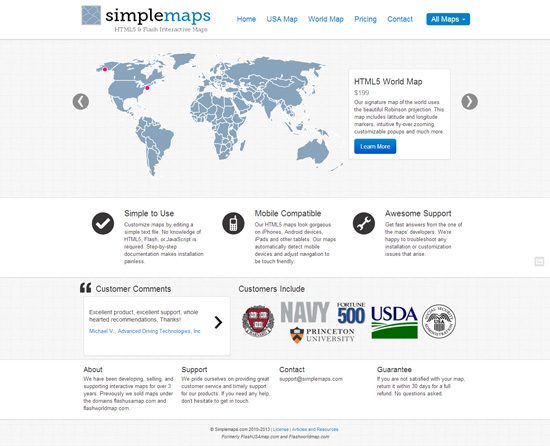
    <p><a href="http://simplemaps.com/world" rel="nofollow external" class="bo">Simplemaps</a> provides interactive map software for websites. These maps are typically used to visualize data or improve website navigation.</p>
    <p>The company’s most popular products are its HTML5/JavaScript interactive maps of the <a href="http://simplemaps.com/us" rel="nofollow external" class="bo">United States</a> and <a href="http://simplemaps.com/world" rel="nofollow external" class="bo">World.</a></p>
    <p>These maps include latitude and longitude markers, zoomable regions and descriptive pop-ups upon hover.</p>
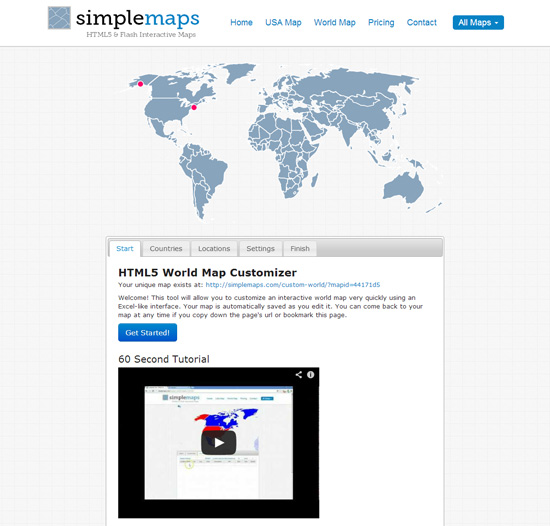
    <p>Maps can be <a href="http://simplemaps.com/custom-world" rel="nofollow external" class="bo">customized</a> and installed without any programming knowledge.</p>
    <p><a href="http://simplemaps.com/custom-world" rel="nofollow external" class="bo"><img src="http://cdn.sixrevisions.com/0334-03_giveaway_simplemaps_april2013_customizer.jpg" width="550" height="526" style="max-width: 100%; height: auto;"></a></p>
    <p>Web developers, non-profits, and businesses of all size utilize these maps on their websites.</p>
    <p><a href="http://simplemaps.com/pricing" rel="nofollow external" class="bo">Map prices</a> are $59 for a US map and $199 for a World map.</p>
    <p>Simplemaps clients include governmental agencies, Fortune 500 companies, prestigious universities, and professional sports organizations.</p>
    <h3>** Giveaway Period Has Ended **</h3>
    <h3>How to Win</h3>
    <p>For a chance to win a Simplemaps HTML5 World Map license, a prize worth $199, answer the following question in the comments:</p>
    <blockquote><p><strong><em>How would you use your Simplemaps HTML5 World Map license?</em></strong></p></blockquote>
    <p>To help you answer this question, <a href="http://simplemaps.com/world" rel="nofollow external" class="bo">check out the HTML5 World Map page</a> on Simplemaps.com.</p>
    <h3>Giveaway Details</h3>
    <p>This giveaway ends on <em>Tuesday, April 9, 2013</em> after which the comments section on this post will be closed and you will no longer be able to leave a comment. Please leave a valid email address when filling out the comment form so that we can contact you if you’ve won. Please only comment once. The winners will be randomly selected using the same method as previous Six Revisions giveaways. The winners will be announced on a separate post and you’re advised to <a href="http://feeds2.feedburner.com/SixRevisions" rel="nofollow external" class="bo">subscribe to our RSS feed</a> so that you can be quickly notified when the winners announcement post has been published. Please note that comments are moderated and so your comment may not show up right away. Please also note that comments that do not follow the instructions on how to participate (described above) may not be published, or may be removed later on.</p>
    <h3>Related Content</h3>
    <ul>
    <li><a href="http://sixrevisions.com/web_design/how-web-designers-can-adopt-a-global-mindset/" rel="nofollow external" class="bo">How Web Designers Can Adopt a Global Mindset</a></li>
    <li><a href="http://sixrevisions.com/html/html5-infographics/" rel="nofollow external" class="bo">10 Useful Infographics about HTML5</a></li>
    <li><a href="http://sixrevisions.com/graphics-design/40-useful-and-creative-infographics/" rel="nofollow external" class="bo">40 Useful and Creative Infographics</a></li>
    <li>
    <em>Related categories</em>: <a href="http://sixrevisions.com/category/web-development/" rel="nofollow external" class="bo">Web Development</a> and <a href="http://sixrevisions.com/category/user-interface/" rel="nofollow external" class="bo">User Interface</a>
    </li>
    </ul>
    <h3>About the Author</h3>
    <p><img src="http://images.sixrevisions.com/authors/jacob_gube_small.jpg" alt="" width="80" height="80" style="max-width: 100%; height: auto;"><span><strong>Jacob Gube</strong> is the Founder and Chief Editor of <strong><a href="http://sixrevisions.com/" rel="nofollow external" class="bo">Six Revisions</a></strong>. He’s also a web developer/designer who specializes in front-end development (JavaScript, HTML, CSS) and also a <a href="http://www.amazon.com/gp/product/1847194583?ie=UTF8&amp;tag=sixrevi-20&amp;linkCode=as2&amp;camp=1789&amp;creative=390957&amp;creativeASIN=1847194583" rel="nofollow external" class="bo"><strong>book author</strong></a>. If you’d like to connect with him, head on over to the <a href="http://sixrevisions.com/contact/" rel="nofollow external" class="bo"><strong>contact page</strong></a> and follow him on Twitter: <strong>@<a href="http://twitter.com/sixrevisions" rel="nofollow external" class="bo">sixrevisions</a></strong>.</span></p>
    </div>
]]>
</Body>
<Summary>Advertise here with BSA      ** Giveaway Period Has Ended **   This giveaway is perfect for web designers and web developers who need to display interactive, mobile-ready world maps in their user...</Summary>
<Website>http://feedproxy.google.com/~r/SixRevisions/~3/bFXRV3cJlvs/</Website>
<TrackingUrl>https://my3.my.umbc.edu/api/v0/pixel/news/27086/guest@my.umbc.edu/8d9ce5762c6ae879408d995274c05e89/api/pixel</TrackingUrl>
<Tag>contests</Tag>
<Tag>css</Tag>
<Tag>database</Tag>
<Tag>design</Tag>
<Tag>development</Tag>
<Tag>html</Tag>
<Tag>javascript</Tag>
<Tag>mysql</Tag>
<Tag>sql</Tag>
<Tag>web</Tag>
<Group token="retired-583">Web Developer - Build Group</Group>
<GroupUrl>https://my3.my.umbc.edu/groups/retired-583</GroupUrl>
<AvatarUrl>https://assets3-my.umbc.edu/system/shared/avatars/groups/000/000/583/fc60f5d7abc2e080599bb6dc465db54d/xsmall.png?1363101197</AvatarUrl>
<AvatarUrl size="original">https://assets4-my.umbc.edu/system/shared/avatars/groups/000/000/583/fc60f5d7abc2e080599bb6dc465db54d/original.jpg?1363101197</AvatarUrl>
<AvatarUrl size="xxlarge">https://assets4-my.umbc.edu/system/shared/avatars/groups/000/000/583/fc60f5d7abc2e080599bb6dc465db54d/xxlarge.png?1363101197</AvatarUrl>
<AvatarUrl size="xlarge">https://assets4-my.umbc.edu/system/shared/avatars/groups/000/000/583/fc60f5d7abc2e080599bb6dc465db54d/xlarge.png?1363101197</AvatarUrl>
<AvatarUrl size="large">https://assets3-my.umbc.edu/system/shared/avatars/groups/000/000/583/fc60f5d7abc2e080599bb6dc465db54d/large.png?1363101197</AvatarUrl>
<AvatarUrl size="medium">https://assets3-my.umbc.edu/system/shared/avatars/groups/000/000/583/fc60f5d7abc2e080599bb6dc465db54d/medium.png?1363101197</AvatarUrl>
<AvatarUrl size="small">https://assets4-my.umbc.edu/system/shared/avatars/groups/000/000/583/fc60f5d7abc2e080599bb6dc465db54d/small.png?1363101197</AvatarUrl>
<AvatarUrl size="xsmall">https://assets3-my.umbc.edu/system/shared/avatars/groups/000/000/583/fc60f5d7abc2e080599bb6dc465db54d/xsmall.png?1363101197</AvatarUrl>
<AvatarUrl size="xxsmall">https://assets4-my.umbc.edu/system/shared/avatars/groups/000/000/583/fc60f5d7abc2e080599bb6dc465db54d/xxsmall.png?1363101197</AvatarUrl>
<Sponsor>Web Developer - Build Group</Sponsor>
<PawCount>0</PawCount>
<CommentCount>0</CommentCount>
<CommentsAllowed>true</CommentsAllowed>
<PostedAt>Tue, 02 Apr 2013 06:00:50 -0400</PostedAt>
<EditAt>Tue, 02 Apr 2013 06:00:50 -0400</EditAt>
</NewsItem>

</News>