Have a Burning Business Question? Ask the Expert
Business consultant Joshua Medcalf wants to answer your big questions about launching and growing a small business.
]]>
Business consultant Joshua Medcalf wants to answer your big questions about launching and growing a small business.
http://feedproxy.google.com/~r/YoungentrepreneurcomBlog/~3/uu_BokdUjRM/
https://my3.my.umbc.edu/api/v0/pixel/news/25324/guest@my.umbc.edu/a9c52239e9441f5dfb2e3839653ccef7/api/pixel
ask-the-expert
business-growth-strategies
leadership
motivation
psychology
q-and-a
Alex. Brown Center for Entrepreneurship
https://my3.my.umbc.edu/groups/entrepreneurship
https://assets2-my.umbc.edu/system/shared/avatars/groups/000/000/092/53c03b106bdc6e19e4bf0a41b5a37add/xsmall.png?1771000363
https://assets3-my.umbc.edu/system/shared/avatars/groups/000/000/092/53c03b106bdc6e19e4bf0a41b5a37add/original.jpg?1771000363
https://assets2-my.umbc.edu/system/shared/avatars/groups/000/000/092/53c03b106bdc6e19e4bf0a41b5a37add/xxlarge.png?1771000363
https://assets1-my.umbc.edu/system/shared/avatars/groups/000/000/092/53c03b106bdc6e19e4bf0a41b5a37add/xlarge.png?1771000363
https://assets4-my.umbc.edu/system/shared/avatars/groups/000/000/092/53c03b106bdc6e19e4bf0a41b5a37add/large.png?1771000363
https://assets1-my.umbc.edu/system/shared/avatars/groups/000/000/092/53c03b106bdc6e19e4bf0a41b5a37add/medium.png?1771000363
https://assets3-my.umbc.edu/system/shared/avatars/groups/000/000/092/53c03b106bdc6e19e4bf0a41b5a37add/small.png?1771000363
https://assets2-my.umbc.edu/system/shared/avatars/groups/000/000/092/53c03b106bdc6e19e4bf0a41b5a37add/xsmall.png?1771000363
https://assets3-my.umbc.edu/system/shared/avatars/groups/000/000/092/53c03b106bdc6e19e4bf0a41b5a37add/xxsmall.png?1771000363
The Alex. Brown Center for Entrepreneurship
0
0
true
Wed, 06 Mar 2013 12:30:40 -0500
InvestMaryland Challenge: Q&A with Light Point Security
Check back for Q&A profiles on all the competition finalists.
The first-ever InvestMaryland Challenge is down to its final round with just 33 companies competing for more than $300,000 in grants and business services. The final winners will be announced during the Governor’s Cup Awards Ceremony on April 15.
One of the companies, selected out of more than 250 applicants, is Baltimore-based Light Point Security. To find out a little more about this growing company, founded in 2010, we spoke to co-founder Zuly Gonzalez.
Q. What does Light Point Security do, and how would you explain it to the average person?
A. We have a virtualized web browser and we prevent network computers from getting malware by allowing people to browse the Internet from remote browsers that does all of the dangerous parts of parsing and rendering a website and only sends back an interactive display of that website, so there’s no harmful content and no scripts that run on the end computer. It’s just a piece of software so companies basically just buy that software and install it on their computers and their network and it just runs and protects their networks as well as their employees from malware.
Q. What is the worst case scenario if someone does not use a product like yours?
A. They could get malware from browsing a site. One recent example is Facebook, Twitter, Apple and Microsoft—all four of those were in recent weeks infected by Web-based malware because their employees browsed to a work-related site about iPhone software development. It was a benign site that had been hacked and was spreading malware, so their employees visited that site and their networks got compromised. In fact, 75 percent of organizations are victims of cyber attacks and the attacks cost enterprises an average of $5.5 million a year—so if they’re not using our product and they’re compromised, it could cost them $5.5 million to fix it up.
Q. Tell us more about the unique and innovative things your company is doing. How is it moving the industry forward?
A. Most traditional security software products focus on detection-based security. They’re using filters, algorithms, signatures and some sort of intelligence behind the scenes to try and determine whether something is safe or dangerous. For example, anti-virus will scan files to try to determine if something is malicious based on their signatures. The flaw with these technologies is that that there’s so much malware coming out—for example, there’s 16,000 new malicious websites and 80,000 new malware variants created every day, so there’s such an abundance of malware that’s being spread that it’s impossible for these detection based software systems to be able to know exactly what’s safe and what’s not. There’s a lot of malware that sneaks by them because they aren’t able to detect it as malware. That’s the flaw in detection based security. What we do instead is isolation based security. We assume that everything is bad, everything is malicious and we keep it contained in an area where it can run if necessary, but it doesn’t do any harm to the network or the computer. It cannot reach any customer or company data. It’s just isolated all by itself where we can wipe it.
Q. If Light Point Security were to win prize money in the contest, how would it use the money to further its goals?
That money would be tremendous for us. Right now, it’s just the two of us and we’ve been entirely self-funded up to this point. We started with just 10,000 and we’ve built a really complex product just with that little bit of money. We would use it to further our marketing, maybe hire a marketing specialist, as well as hire a software developer to help us further our product, to get it refined and add some nice features that people have been asking us for.
]]>
Check back for Q&A profiles on all the competition finalists. The first-ever InvestMaryland Challenge is down to its final round with just 33 companies competing for more than $300,000 in...
http://mdbiznews.choosemaryland.org/2013/03/05/investmaryland-challenge-qa-with-light-point-security/
https://my3.my.umbc.edu/api/v0/pixel/news/25319/guest@my.umbc.edu/c6642739a23c7410c44f95904b8113fb/api/pixel
bwtech@UMBC Research and Technology Park
https://my3.my.umbc.edu/groups/bwtech
https://assets1-my.umbc.edu/system/shared/avatars/groups/000/000/410/afff9420ec03574fa84c6bb85b54a3e3/xsmall.png?1760034935
https://assets2-my.umbc.edu/system/shared/avatars/groups/000/000/410/afff9420ec03574fa84c6bb85b54a3e3/original.png?1760034935
https://assets4-my.umbc.edu/system/shared/avatars/groups/000/000/410/afff9420ec03574fa84c6bb85b54a3e3/xxlarge.png?1760034935
https://assets3-my.umbc.edu/system/shared/avatars/groups/000/000/410/afff9420ec03574fa84c6bb85b54a3e3/xlarge.png?1760034935
https://assets4-my.umbc.edu/system/shared/avatars/groups/000/000/410/afff9420ec03574fa84c6bb85b54a3e3/large.png?1760034935
https://assets1-my.umbc.edu/system/shared/avatars/groups/000/000/410/afff9420ec03574fa84c6bb85b54a3e3/medium.png?1760034935
https://assets4-my.umbc.edu/system/shared/avatars/groups/000/000/410/afff9420ec03574fa84c6bb85b54a3e3/small.png?1760034935
https://assets1-my.umbc.edu/system/shared/avatars/groups/000/000/410/afff9420ec03574fa84c6bb85b54a3e3/xsmall.png?1760034935
https://assets3-my.umbc.edu/system/shared/avatars/groups/000/000/410/afff9420ec03574fa84c6bb85b54a3e3/xxsmall.png?1760034935
bwtech@UMBC
0
0
true
Wed, 06 Mar 2013 12:19:33 -0500
Another great Spring Break Service Opportunity!
Sponsored by United Way of Central Maryland
Looking for a great way to get involved this Spring Break and help our neighbors? Check out this Alternative Break Opportunity!
United Way of Central Maryland is hosting an Alternative Spring Break right here in Baltimore.
Join college students from across the country for this unique Alternative Spring Break opportunity through United Way in Baltimore
What: 25 students will ride, fly and drive to Baltimore, MD for an Alternative Spring Break focused on eliminating hunger and promoting access to healthy foods and healthy lifestyles.
 When: The program begins March 18th and ends March 22nd
Where: Baltimore City- Students will stay at Brookshire Suites in downtown Baltimore.
Why: United Way’s core community strategies to promote healthy eating and physical activity include increasing healthy choices for eating and physical activity in schools and child care settings and increasing availability of healthy choices for eating and physical activity in neighborhoods. ASB volunteers will help move the needle in the right direction.
How: All you need to do is apply using the link below. Lodging, food and on transportation once you arrive in Baltimore will be covered. Participants are responsible for travel to Baltimore and home. There are no other registration fees for this event
Apply by 03/08!
This is great opportunity to give back with a few days of your spring break, make a huge difference in your community and meet students from across the country.
]]>
Looking for a great way to get involved this Spring Break and help our neighbors? Check out this Alternative Break Opportunity! United Way of Central Maryland is hosting an Alternative...
http://www.unitedway.org/baltimoreasb
https://my3.my.umbc.edu/api/v0/pixel/news/25317/guest@my.umbc.edu/6c4fa8c825585b22e6abdc9c0c4edb63/api/pixel
UMBC Community Engagement Network
https://my3.my.umbc.edu/groups/retired-271
https://assets1-my.umbc.edu/system/shared/avatars/groups/000/000/271/4ef352d82c0b3506a0df2ed486d44b17/xsmall.png?1498142039
https://assets4-my.umbc.edu/system/shared/avatars/groups/000/000/271/4ef352d82c0b3506a0df2ed486d44b17/original.JPG?1498142039
https://assets4-my.umbc.edu/system/shared/avatars/groups/000/000/271/4ef352d82c0b3506a0df2ed486d44b17/xxlarge.png?1498142039
https://assets3-my.umbc.edu/system/shared/avatars/groups/000/000/271/4ef352d82c0b3506a0df2ed486d44b17/xlarge.png?1498142039
https://assets1-my.umbc.edu/system/shared/avatars/groups/000/000/271/4ef352d82c0b3506a0df2ed486d44b17/large.png?1498142039
https://assets2-my.umbc.edu/system/shared/avatars/groups/000/000/271/4ef352d82c0b3506a0df2ed486d44b17/medium.png?1498142039
https://assets2-my.umbc.edu/system/shared/avatars/groups/000/000/271/4ef352d82c0b3506a0df2ed486d44b17/small.png?1498142039
https://assets1-my.umbc.edu/system/shared/avatars/groups/000/000/271/4ef352d82c0b3506a0df2ed486d44b17/xsmall.png?1498142039
https://assets4-my.umbc.edu/system/shared/avatars/groups/000/000/271/4ef352d82c0b3506a0df2ed486d44b17/xxsmall.png?1498142039
UMBC Serves
2
0
false
Wed, 06 Mar 2013 12:09:39 -0500
Presidential Voices Interview Series: Jo Ann M. Gora, Ball State University
AASHE’s Presidential Voices interview series features conversations with heads of higher education institutions who are inspiring sustainability leaders. To recommend a president or chancellor for this series, contact Judy Walton, chief publications officer, at judy@aashe.org.
Jo Ann M. Gora, our guest for this interview, became President of Ball State University in 2004. She was one of 12 charter signatories to the American College & University Presidents’ Climate Commitment in December 2006. In May 2009, she and other officials broke ground on the largest geothermal district energy system in the United States. Phase One, completed in 2012, allowed Ball State to shut down two coal-fired boilers. For its sustainability commitment, the university has been ranked in The Princeton Review's “Guide to 311 Green Colleges,” and has earned a Second Nature Climate Leadership Award. The institution also earned a STARS Gold rating from AASHE in 2012. President Gora has co-authored two book chapters on campus sustainability initiatives. She earned her bachelor's degree in political science from Vassar College and master's and doctoral degrees in sociology from Rutgers University.
JW: How is sustainability at Ball State integrated into the institution’s mission, vision and values?
JG: We have integrated various dimensions of sustainability into our university’s ongoing work by seeking broad, deep engagement from all the members of the Ball State community. Several years ago, we started these efforts with the appointment of two different green committees. The first investigated ways to broaden environmental education across our curriculum, and the second was to recommend techniques for implementing the tenets of the Talloires Declaration, which my predecessor, Dr. John Worthen, had signed in 1999. 
Our Council on the Environment (COTE) was established in 1991, making it the longest-standing green committee at any college or university in the state. It represents the full breadth of constituents within our academic community and the communities that surround our campus. One of its earliest initiatives was to adopt a university statement on sustainability, which was endorsed by senior staff, academic deans, the University Senate, and finally the Board of Trustees. This public statement has been on our web page since that cycle of review and approval. We’ve expanded that public commitment by introducing sustainability concepts into our last two strategic plans and our most recent one, which was approved by the Board of Trustees in December and will guide the university through 2017.
Included in the goals and objectives is the creation of sustainability plans by 102 administrative units on campus, including my office. We give continuing attention to the structure of these plans to feed into our STARS reporting. We’ve also created an interactive “Get on the Map” web site using the STARS framework to which any member of the campus can submit updates on his/her activity either individually or as part of a collaborative group.
These sustainability plans have influenced many of our strategic planning decisions, including my decision to be one of the first 12 signatories to the American College & University Presidents’ Climate Commitment (ACUPCC). Other examples include Ball State’s move to become one of the first Midwestern universities to use electronic shuttle buses, deploying an electric car for our on-campus deliveries, acquiring hybrid electric vehicles for our automotive fleet, and moving the majority of the remaining fleet to flex-fuel capability.
Finally, we have woven sustainability into the centerpiece of a Ball State education, a form of experiential learning we call immersive learning. Immersive learning brings together an interdisciplinary team of students under a faculty mentor for at least a semester, and often as long as an academic year. This team works with a community, business, or nonprofit organization to provide a real-world solution to a real-world problem the organization is facing. Between 2007 and 2012, more than 16,400 of our students participated in at least one of more than 1,000 immersive learning projects, which have affected every Indiana citizen and taken our students as far away as Venice, Hong Kong, Vietnam, and Malawi.
We believe this form of learning is essential to shaping the collaboration and innovation skills our students need to succeed in the complex world they are entering after graduation. And I’m proud to say that several of these projects have important sustainability outcomes. I could give many examples, but here is just one. Under the guidance of Gwen White, associate professor of accounting, several teams of students have completed a series of Global Reporting Initiative sustainability reports for local organizations, similar to what most of the world’s largest 250 companies are now doing. Their efforts last spring to develop a report for Minnetrista, a cultural center and museum here in Muncie, resulted in it becoming the first U.S. museum to file a complete GRI sustainability report.
JW: Ball State’s geothermal energy system has been hailed as the nation’s largest ground-source, closed-loop district system. What was behind this effort, and how much is it expected to reduce your carbon footprint and energy costs?
JG: Our geothermal ground-source, district-scale heating and cooling system happened because several opportunities aligned at the same time. We were facing the need to replace four aging coal-fired boilers and had secured funding from the Indiana General Assembly to do that. We had committed to becoming a climate-neutral campus through my signing of ACUPCC, and we were willing to take a long-term view of the big picture. Specifically, that view meant examining such factors as the efficiencies of high-performance heat-pump technology, the elimination of Scope 1 fossil fuel (coal) combustion on campus, the future cost avoidance for potential carbon taxing, and the opportunity to engage our students and faculty in real-time and long-term research in monitoring and evaluating the performance of the system, once installed.
 We were able to secure financial support through a state appropriation, plus a U.S. Department of Energy grant to cover the cost of Phase One, which involved the drilling of some 1,800 bore holes on the northern end of our campus and installing our first two heat-pump chillers in our North Energy Station. The picture here shows then-U.S. Senator Richard Lugar standing with me at our groundbreaking ceremony for the geothermal project in 2009. We finished Phase One last spring and our early data shows that we are on target to save $1 million a year.
We have recently completed the drilling of some of the additional 1,800 bore holes required for Phase Two. These boreholes are being installed next to our boiler plant, which is located on the south end of campus. The project is on pause until additional funding is obtained, but we continue to pursue funding to complete Phase Two and are hopeful of the outcome.
With the completion of the project, the university will be able to shut down all four coal-fired boilers that generate 85,000 metric tons of CO2 equivalent emissions annually. That’s nearly 50 percent of our carbon footprint. We will be heating and cooling 47 major buildings, and our net operational savings is projected to be $2 million per year.
JW: Is there something special about Ball State’s geology, financing, etc. that made the geothermal project pencil out? Or would you say virtually any institution in the state or region could undertake a geothermal project and see similar benefits?
JG: We are convinced that this technology is appropriate for other campuses for several reasons. It is a closed-loop, water circulating system that simply transfers thermal energy throughout campus and into or out of the ground. It can be scaled to service a single building, a group of buildings, or an entire campus. It has significant immediate and long-term cost benefits given the leveraging effect of (upstream) electrical power for sourcing and sinking of thermal energy to the earth (on-site). Finally, it positions a university to avoid future costs associated with carbon taxing—whether as a straight-up tax, a fee-and-rebate system, or a cap-and-trade system.
JW: Your biography states that since your arrival in 2004, “approximately $418 million of completed or current construction and renovation has changed the face of Ball State’s campus.” What is Ball State’s commitment to green building, and how is it manifest in all of this newly built or renovated space?
JG: Yes, we have mandated through our strategic planning process that all new construction be certified as LEED at the silver level (at a minimum), and that those same criteria be used in renovation of existing facilities. We have five buildings (new and/or renovated) that have either been so certified or will achieve such recognition. Among them are classroom buildings, such as the David Letterman Communication and Media Building, built in 2007, and residence halls, including our completely renovated DeHority Complex, originally constructed in 1960. Also on that list is our Student Recreation and Wellness Center, a building used by the entire campus.
Although seeking LEED certification requires some effort on the front side by our design teams and our facilities management staff, the payoff is substantial. We will continue to use a whole-systems approach as required in our strategic planning. In fact, we have coordinated our strategic planning cycles with those of carbon reduction planning so we can integrate these two dimensions of our resource stewardship.
JW: What are some of Ball State’s leading sustainability initiatives in the areas of curriculum and outreach?
JG: In terms of how we integrate sustainability into our curriculum and our outreach programs, there are many great examples. Ball State students over the decades have majored in environmental management or minored in environmental management, environmental policy, or environmentally sustainable practices. Generations of them have gone on to demonstrate success after graduation by leading sustainability initiatives in a number of professional fields. Our students, especially those in the College of Architecture and Planning, have studied everything from recycling and reuse of building materials to applications of solar energy in locations around the world.
We recently began our doctoral degree in environmental sciences, which enables students to use their skills in biology, chemistry, and geological sciences to address environmental problems in an interdisciplinary way.
We’ve also established the Academy for Sustainability, a knowledge group that encourages new initiatives in research, education, and service across disciplinary lines. We believe these cross-disciplinary endeavors by our faculty and students are sorely needed to address the complexities of social, economic and environmental sustainability.
Our sustainability outreach endeavors stretch back three decades to when we established Ball State’s Center for Energy Research, Education, and Service (CERES). CERES is an interdisciplinary academic support unit that focuses on sustainability issues, especially energy use and conservation. Faculty and students lead its activities, which not only serve our campus, but also the surrounding community and the state of Indiana. CERES has a long history of interdisciplinary research in everything from alternative fuels to community planning and from resource analysis to materials testing. One of its most recognizable programs is the Greening of the Campus conference, which traces back to 1996 and is generally held every other year. We have reached thousands of college faculty, students, administrators, and facilities professionals through the past nine conferences to discuss sustainability issues and share effective strategies. It has had a major impact on the decision-making process regarding sustainability issues at many colleges and universities across our country.
Finally, sustainability has become a large part of our university’s student life. The Ball State Energy Action Team is a student group that leads energy awareness initiatives, including the semi-annual residence hall energy challenge, a contest to see which living unit on our campus can demonstrate the greatest reduction in energy use over a four-week period. Last fall, students in nine residence halls reduced electricity consumption by about 100,000 kilowatts, saving Ball State approximately $5,000. Another student group, Students for a Sustainable Campus, organizes the biennial teach-in on our campus examining sustainability issues as part of the national Focus the Nation initiative.
JW: From your service on the Board of the American Council on Education, and the Council of Presidents of the Association of Governing Boards, do you see sustainability issues becoming more central to the work of these organizations and to higher education in general? What would you say are the biggest challenges to advancing sustainability in higher education?
JG: I do think sustainability issues are becoming more important in higher education. I’ve been invited to make presentations at Association of Governing Boards conferences about sustainability, and a lot of AGB members are focusing on the importance of cooperation between universities and their boards of trustees in analyzing and solving these complexities. We had a group of American Council on Education Fellows visit us last summer, specifically to investigate our geothermal project and other sustainability efforts. These are the educators who are being groomed to be presidents, chancellors, and provosts, so that shows the attention sustainability is receiving.
I think the biggest challenges to advancing sustainability in higher education are thinking long-term, both economically and environmentally, and developing the interdisciplinary knowledge and resources to address its complexities. I often tell national and state leaders that our geothermal project is not just green environmentally, in that we are reducing our carbon footprint, but also economically, because we are saving money in the long run. The initial investment is substantial, but the long-term payoff is real. Unfortunately, especially in trying economic times, the tendency is to focus on the former instead of the latter.
For any institution to be successful in its strategic planning about sustainability, the vision has to be shared at every level of the administration, in every academic department, and with all of your constituencies. Sustainability efforts can’t be short-lived; you have to develop the vision, establish the integrated associations and structure, and continue to shepherd the resources needed to sustain a long-term commitment if you want to be successful.
JW: What would you like to see accomplished next in terms of sustainability at Ball State University?
JG: With the completion of our geothermal project, we will have reduced our environmental impact significantly. However, we must not pause in our efforts. While removing Scope 1 emissions from our Greenhouse Gas portfolio is critical, we must continue to make our buildings more energy efficient. By decreasing our energy needs, we will further reduce the amount of energy we purchase from third-party suppliers.
JW: What do you do in your free time?
JG: That’s an interesting question because there isn’t much of it! In addition to my duties as Ball State president, I sit on several boards, so that service is an additional time commitment.
My husband and I are outdoor enthusiasts. We walk and hike, bicycle, and play tennis and golf. We both enjoy reading, especially books and articles about issues facing higher education or about other issues of national and state politics. Family and friends get neglected far too often, but when we do have significant blocks of time, we love to visit with our two grandchildren in North Carolina. A relaxing dinner with friends or a romp in the park with a 5 and 3 year old will do wonders for your frame of mind.
]]>
AASHE’s Presidential Voices interview series features conversations with heads of higher education institutions who are inspiring sustainability leaders. To recommend a president or chancellor for...
http://feedproxy.google.com/~r/CampusSustainabilityPerspectives/~3/iHWC5Z4wDHI/presidential-voices-interview-series-jo-ann-m-gora-ball-state-university
https://my3.my.umbc.edu/api/v0/pixel/news/25316/guest@my.umbc.edu/82cf81f855d0a7d30a5c0407a70c3949/api/pixel
interviews
presidents-and-chancellors
Sustainability Matters at UMBC
https://my3.my.umbc.edu/groups/sustainability
https://assets1-my.umbc.edu/system/shared/avatars/groups/000/000/086/91091ac32f525d88daa6d6b721420ac1/xsmall.png?1586269437
https://assets3-my.umbc.edu/system/shared/avatars/groups/000/000/086/91091ac32f525d88daa6d6b721420ac1/original.png?1586269437
https://assets4-my.umbc.edu/system/shared/avatars/groups/000/000/086/91091ac32f525d88daa6d6b721420ac1/xxlarge.png?1586269437
https://assets2-my.umbc.edu/system/shared/avatars/groups/000/000/086/91091ac32f525d88daa6d6b721420ac1/xlarge.png?1586269437
https://assets2-my.umbc.edu/system/shared/avatars/groups/000/000/086/91091ac32f525d88daa6d6b721420ac1/large.png?1586269437
https://assets4-my.umbc.edu/system/shared/avatars/groups/000/000/086/91091ac32f525d88daa6d6b721420ac1/medium.png?1586269437
https://assets4-my.umbc.edu/system/shared/avatars/groups/000/000/086/91091ac32f525d88daa6d6b721420ac1/small.png?1586269437
https://assets1-my.umbc.edu/system/shared/avatars/groups/000/000/086/91091ac32f525d88daa6d6b721420ac1/xsmall.png?1586269437
https://assets3-my.umbc.edu/system/shared/avatars/groups/000/000/086/91091ac32f525d88daa6d6b721420ac1/xxsmall.png?1586269437
UMBC SUSTAINABILITY
0
0
false
Wed, 06 Mar 2013 11:49:28 -0500
Wed, 06 Mar 2013 11:49:28 -0500
GES Professor on the State of the Global Ecosystem
Dr. Elis’s research emphasizes managing local ecosystems
Back from the Edge
Could our global ecosystem be careening towards a cliff? That’s what some scientists think. Erle Ellis, an associate professor of geography and environmental systems at UMBC, and a group of scientists from Australia and the United Kingdom are trying to talk their colleagues back from the edge in a new paper published this week in Trends in Ecology and Evolution.
There is growing agreement among scientists that we now live in an epoch called the Anthropocene – an age where humanity has transformed the world’s ecosystems, atmosphere and even its rocks. The question is whether humans are causing changes in Earth’s ecosystems that might soon trigger a global tipping point. Is the Anthropocene biosphere accelerating towards a point of no return?
While the idea of global tipping points is controversial, ecological tipping points at the local level are well studied. For example, “if you add nutrients to a lake it will continue on as before until you surpass a certain level of nutrients. Then the lake’s ecosystem will suddenly shift to a new state -- it will have reached its tipping point,” says Ellis. “The lake will go from having very clear water to very turbid water, the kinds of fish will change and the chemistry and the ecology of the lake will change almost completely. It is then very hard to get that lake back into its previous state.”
A planetary tipping point in Earth’s ecosystems could occur, say Ellis and his colleagues, if ecosystems across the planet responded to uniform human pressures in similar ways, or if there were strong connections across continents and ecosystems that enabled the rapid transmission of ecological impacts across the planet.
Fortunately, Ellis and his colleagues are convinced that a planetary tipping point in ecology isn’t likely to occur on Earth. To begin with, organisms and ecosystems on different continents aren’t strongly connected. Animals, plants and microbes are greatly limited in their interactions by distance and barriers such as oceans and mountain ranges. Accordingly, responses to human pressures depend largely on local conditions. Even global climate change is unlikely to produce a coherent global shift in ecology because local ecosystems respond so differently to changes in climate.
“Essentially, local changes aren’t acting to push each other over the edge, as is the case with tipping points,” Ellis says. “They are simply adding up to cause long-term global changes in ecology.”
While we still need to think about global impacts, Ellis’ research puts the emphasis back on managing ecosystems at the local and regional level. That assertion has significant policy implications and could help us avoid misguided conservation efforts. “The disadvantage of thinking in terms of global tipping points,”says Ellis,“is that if you think you are far from the brink, no need to act, and if you think you’ve passed the tipping point you might as well give up.”
(3/1/13)
]]>
Back from the Edge Could our global ecosystem be careening towards a cliff? That’s what some scientists think. Erle Ellis, an associate professor of geography and environmental systems at UMBC,...
https://my3.my.umbc.edu/api/v0/pixel/news/25309/guest@my.umbc.edu/a535d2c1617a0251fe5eeb2b662993a5/api/pixel
Sustainability Matters at UMBC
https://my3.my.umbc.edu/groups/sustainability
https://assets1-my.umbc.edu/system/shared/avatars/groups/000/000/086/91091ac32f525d88daa6d6b721420ac1/xsmall.png?1586269437
https://assets3-my.umbc.edu/system/shared/avatars/groups/000/000/086/91091ac32f525d88daa6d6b721420ac1/original.png?1586269437
https://assets4-my.umbc.edu/system/shared/avatars/groups/000/000/086/91091ac32f525d88daa6d6b721420ac1/xxlarge.png?1586269437
https://assets2-my.umbc.edu/system/shared/avatars/groups/000/000/086/91091ac32f525d88daa6d6b721420ac1/xlarge.png?1586269437
https://assets2-my.umbc.edu/system/shared/avatars/groups/000/000/086/91091ac32f525d88daa6d6b721420ac1/large.png?1586269437
https://assets4-my.umbc.edu/system/shared/avatars/groups/000/000/086/91091ac32f525d88daa6d6b721420ac1/medium.png?1586269437
https://assets4-my.umbc.edu/system/shared/avatars/groups/000/000/086/91091ac32f525d88daa6d6b721420ac1/small.png?1586269437
https://assets1-my.umbc.edu/system/shared/avatars/groups/000/000/086/91091ac32f525d88daa6d6b721420ac1/xsmall.png?1586269437
https://assets3-my.umbc.edu/system/shared/avatars/groups/000/000/086/91091ac32f525d88daa6d6b721420ac1/xxsmall.png?1586269437
UMBC SUSTAINABILITY
https://assets1-my.umbc.edu/system/shared/thumbnails/news/000/025/309/dc9dab195b7aeefb54a4f8bfa798d2da/xxlarge.jpg?1362586028
https://assets1-my.umbc.edu/system/shared/thumbnails/news/000/025/309/dc9dab195b7aeefb54a4f8bfa798d2da/xlarge.jpg?1362586028
https://assets1-my.umbc.edu/system/shared/thumbnails/news/000/025/309/dc9dab195b7aeefb54a4f8bfa798d2da/large.jpg?1362586028
https://assets4-my.umbc.edu/system/shared/thumbnails/news/000/025/309/dc9dab195b7aeefb54a4f8bfa798d2da/medium.jpg?1362586028
https://assets4-my.umbc.edu/system/shared/thumbnails/news/000/025/309/dc9dab195b7aeefb54a4f8bfa798d2da/small.jpg?1362586028
https://assets4-my.umbc.edu/system/shared/thumbnails/news/000/025/309/dc9dab195b7aeefb54a4f8bfa798d2da/xsmall.jpg?1362586028
https://assets4-my.umbc.edu/system/shared/thumbnails/news/000/025/309/dc9dab195b7aeefb54a4f8bfa798d2da/xxsmall.jpg?1362586028
2
1
true
Wed, 06 Mar 2013 11:08:16 -0500
'Impact Entrepreneurship' Places Importance on Social Consciousness
As a social-impact entrepreneur, you need more than a passion for doing good. Here's how some 'treps are putting their chops to work to run successful enterprises and make the world a better place.
 ]]>
As a social-impact entrepreneur, you need more than a passion for doing good. Here's how some 'treps are putting their chops to work to run successful enterprises and make the world a better place.
http://feedproxy.google.com/~r/entrepreneur/startingabusiness/~3/FZMLCe8vS_s/story01.htm
https://my3.my.umbc.edu/api/v0/pixel/news/25323/guest@my.umbc.edu/5986db799b114fd704967c3af6d025f9/api/pixel
Alex. Brown Center for Entrepreneurship
https://my3.my.umbc.edu/groups/entrepreneurship
https://assets2-my.umbc.edu/system/shared/avatars/groups/000/000/092/53c03b106bdc6e19e4bf0a41b5a37add/xsmall.png?1771000363
https://assets3-my.umbc.edu/system/shared/avatars/groups/000/000/092/53c03b106bdc6e19e4bf0a41b5a37add/original.jpg?1771000363
https://assets2-my.umbc.edu/system/shared/avatars/groups/000/000/092/53c03b106bdc6e19e4bf0a41b5a37add/xxlarge.png?1771000363
https://assets1-my.umbc.edu/system/shared/avatars/groups/000/000/092/53c03b106bdc6e19e4bf0a41b5a37add/xlarge.png?1771000363
https://assets4-my.umbc.edu/system/shared/avatars/groups/000/000/092/53c03b106bdc6e19e4bf0a41b5a37add/large.png?1771000363
https://assets1-my.umbc.edu/system/shared/avatars/groups/000/000/092/53c03b106bdc6e19e4bf0a41b5a37add/medium.png?1771000363
https://assets3-my.umbc.edu/system/shared/avatars/groups/000/000/092/53c03b106bdc6e19e4bf0a41b5a37add/small.png?1771000363
https://assets2-my.umbc.edu/system/shared/avatars/groups/000/000/092/53c03b106bdc6e19e4bf0a41b5a37add/xsmall.png?1771000363
https://assets3-my.umbc.edu/system/shared/avatars/groups/000/000/092/53c03b106bdc6e19e4bf0a41b5a37add/xxsmall.png?1771000363
The Alex. Brown Center for Entrepreneurship
0
0
true
Wed, 06 Mar 2013 11:00:00 -0500
The Smashing Conference: Videos And Interviews With Brad Frost, Andy Clarke and Nicole Sullivan
]]>
As a social-impact entrepreneur, you need more than a passion for doing good. Here's how some 'treps are putting their chops to work to run successful enterprises and make the world a better place.
http://feedproxy.google.com/~r/entrepreneur/startingabusiness/~3/FZMLCe8vS_s/story01.htm
https://my3.my.umbc.edu/api/v0/pixel/news/25323/guest@my.umbc.edu/5986db799b114fd704967c3af6d025f9/api/pixel
Alex. Brown Center for Entrepreneurship
https://my3.my.umbc.edu/groups/entrepreneurship
https://assets2-my.umbc.edu/system/shared/avatars/groups/000/000/092/53c03b106bdc6e19e4bf0a41b5a37add/xsmall.png?1771000363
https://assets3-my.umbc.edu/system/shared/avatars/groups/000/000/092/53c03b106bdc6e19e4bf0a41b5a37add/original.jpg?1771000363
https://assets2-my.umbc.edu/system/shared/avatars/groups/000/000/092/53c03b106bdc6e19e4bf0a41b5a37add/xxlarge.png?1771000363
https://assets1-my.umbc.edu/system/shared/avatars/groups/000/000/092/53c03b106bdc6e19e4bf0a41b5a37add/xlarge.png?1771000363
https://assets4-my.umbc.edu/system/shared/avatars/groups/000/000/092/53c03b106bdc6e19e4bf0a41b5a37add/large.png?1771000363
https://assets1-my.umbc.edu/system/shared/avatars/groups/000/000/092/53c03b106bdc6e19e4bf0a41b5a37add/medium.png?1771000363
https://assets3-my.umbc.edu/system/shared/avatars/groups/000/000/092/53c03b106bdc6e19e4bf0a41b5a37add/small.png?1771000363
https://assets2-my.umbc.edu/system/shared/avatars/groups/000/000/092/53c03b106bdc6e19e4bf0a41b5a37add/xsmall.png?1771000363
https://assets3-my.umbc.edu/system/shared/avatars/groups/000/000/092/53c03b106bdc6e19e4bf0a41b5a37add/xxsmall.png?1771000363
The Alex. Brown Center for Entrepreneurship
0
0
true
Wed, 06 Mar 2013 11:00:00 -0500
The Smashing Conference: Videos And Interviews With Brad Frost, Andy Clarke and Nicole Sullivan
Today we are happy to release three more exclusive interviews as well as two Smashing Conference videos featuring Brad Frost, Andy Clarke and Nicole Sullivan. You can check out even more conference interviews and talks by Jeremy Keith, Rachel Andrew and Stephen Hay. In case you are wondering whether Smashing Conference 2013 will take place or not, the answer is a definitive “yes!”, so please make sure to stay tuned to not miss it this year!
The videos of the SmashingConf 2012 were filmed by Frank Sippach, cut by Marc Thiele (the co-organizer of the event) and the interviews were conducted by the Smashing Editorial team members, Esther Arends and Melanie Lang.


The Smashing interviewers, Melanie and Esther, ready and set to go!
Interview With Brad Frost
Brad Frost is a mobile Web strategist and front-end designer in New York City. He is the creator of Mobile Web Best Practices, a resource website aimed at helping people create great mobile and responsive Web experiences. He runs a responsive Web design newsletter and also curates WTF Mobile Web, a website that teaches by example what not to do when working with the mobile Web.
Brad is passionate about mobile and is constantly tweeting and writing about it. He will also give a workshop on responsive design in Freiburg, Germany later this year.
Beyond Media Queries: An Anatomy of an Adaptive Web Experience
Brad was totally busy taking notes and listening to every single talk. Luckily, we still got the chance to ask him a few questions about his work, the conference and his dog Ziggy who does amazing things.
Beyond Media Queries: An Anatomy of an Adaptive Web Experience from beyond tellerrand on Vimeo.
Q: We would like to ask you a few questions about your work. You worked at R/GA in New York. How did you get there and what did you do before?
I started my career in Pittsburgh making websites for real-estate companies and stuff like that. My wife had just gotten a job at R/GA in New York, so I moved up there to be with her. I found a job at an e-commerce Web design company and a few years later moved to R/GA. Even though we worked at the same place, my wife and I (thankfully) didn’t actually work on the same projects together.
The company is huge. When my wife started four years ago, we had an office in New York, San Francisco and London. Now we also have an office in Chicago; Austin, Texas; Buenos Aires, Argentina; Sao Paulo, Brasil; Singapore; Sydney, Australia; Stockholm, Sweden; and Romania. I remember coming back from lunch to find out we opened an office in Stockholm. Pretty crazy.
Q: In terms of Web design, was there ever a topic that you and your wife just couldn’t agree on?
Thankfully, she mostly works on native apps and never dealt too much with the Web world. She does her apps and I do my websites — and that’s a good thing. Because we do different work, we never really had a major disagreement on anything like that, except minor things like “Why are the buttons there, there shouldn’t be so many icons in the navigation,” but that’s about it.
Q: You are very excited about everything that concerns mobile. Can you explain what’s so exciting about it?
Whats not to be excited about? It unlocks so many wonderful things. It’s opening up an entire new world to many people. More people have access to mobile phones now than have access to running water or toilets. We communicate in ways we never communicated before and make payments in ways we’ve never made payments before. And what gets me so excited about the mobile Web specifically is that we have all of these mobile devices — more devices than humans on the planet — combined with the ubiquitous power of the Web. You take mobile, you take the Web, you put both together and suddenly the world has access to all sorts of information and tools wherever they may be. What a beautiful concept.
Q: Responsive Web design has been the huge topic for the last two or three years. What is the next big thing in your opinion?
Right now the Web is incapable of doing everything that native apps can do. You’re not opening augmented reality apps in you browser. But it’s all advancing pretty quickly. When things like accessing the camera, accessing contact lists and more device capabilities make their way into the browser, it will open up a much richer world of what you can actually do on the Web. I think that will significantly change what the Web is, what it can do and who it can reach. In the meantime, we can get Web design into a more flexible place so it can reach any device you throw at it.
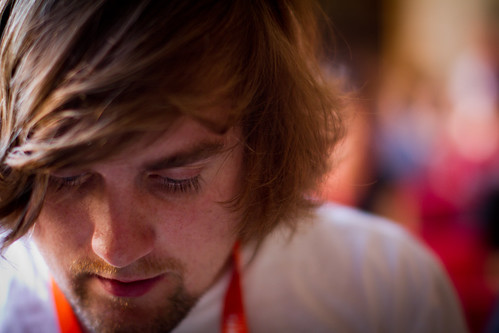
Brad Frost at the Smashing Conference. (Image John Davey)
Q: You offer a newsletter on your website. Why should people subscribe to it?
(laughing) I can’t answer this honestly because I’ve been so busy lately that I haven’t had time to send one out. But I really enjoy doing it. It’s a place to collect resources about responsive design. I also try to make it fun and friendly, and I put in horoscopes that are a bit cheeky. Some people like that, some people think that’s stupid. I thinks it’s a good resource if you want to get quick information about what’s new in responsive Web design.
Q: You’re quite new in speaking at conferences compared to people like Jeremy Keith, Paul Boag or Andy Clarke. When, where and how did you start?
I started about a year ago in my hometown Pittsburgh at a great smaller conference called Web Design Day. They try to get speakers which have an affiliation to the area, so they asked me to talk. And I also spoke at the Breaking Development Conference. They’re now on their fourth event, but I went to the first one as an attendee. On the second round they had a call for lightning round speakers, where you’re not a featured speaker but you have 30 minutes to talk. I applied and got accepted. All this speaking stuff, it’s all very new and wonderful, and I love it.
Q: Everyone has their own opinion about Web design. However, we overheard that you called Paul Boag a wanker. Why was that?
(laughing) I actually never called him that. Jeremy Keith set me up. I wanted to talk to Paul before I got on stage, because I use his site as an example of responsive sites that hide things for small screen viewers — which you shouldn’t do. On his site, he hides his comments and the comment form on small screens so you’re not able to read or make comments. I was using that as an example of what you should avoid when designing a responsive site. I didn’t want to upset him, because I love his work and I think he’s a great guy. So I just wanted to check with him beforehand. But then Jeremy called him over and said: “This guy just called you a wanker.” And I felt so embarrassed because I didn’t even know Paul personally at that point and had to explain myself.
Q: We also heard that your dog Ziggy is the new Tony Hawk?
He still pees in the house. He is very stubborn and won’t walk down the street, but he got really good at skateboarding.
Q: We noticed hat you were taking so many notes and tweeted a lot during the Smashing Conference. Did you enjoy it?
My mind was pretty much exploded. It was phenomenal. It wasn’t that I learned something new at every talk, it was that I learned something significantly new at every talk. Either a new mentality, or a new technique or a deeper understanding of a certain thing. But it wasn’t like “Oh, that’s clever,” it was more like “Oh, wow, that is really, really good.”

Vitaly and Marc: taking a short break.
Q: You have been to a few conferences now. How was the Smashing Conference for you?
It was very sincere and thorough. Everything was really thought through, which shows the care that Marc and Vitaly put into it. But they also did a great job of getting a great group of people together and making an atmosphere that was happy and inclusive, which facilitated a lot of conversation and camaraderie. Also this special venue added a lot to it. I just felt like everybody felt very comfortable, and even during my talk I felt like I was just talking to people and not like I was on stage.
Q: What was your personal highlight on the Smashing Conference?
There were many speakers that I’ve been following since the beginning of my career. For example, I was following Andy Clarke from day one of my career. But I hadn’t met pretty much everyone before. Nicole, Lea and Jonathan, for example, have all shaped the way I write CSS, so it was brilliant to meet them. I’d never met Chris Heilmann before, and I just thought that he has some of the smartest writing about this stuff. Almost everyone has been a big influence on me and just being around them has been amazing. (laughing) I can’t believe I’m just with them — that blows my mind a little bit.
Andy Clarke
Andy Clarke a designer, author and speaker who’s known for design work, books, conference presentations and contributions to the community. Jeffrey Zeldman (the Godfather of Web standards) once called him a “triple talented bastard.” If you know of Jeffrey, you’ll know how happy that made Andy. Over the last fourteen years, he made designs for clients and wrote two books, “Transcending CSS” and “Hardboiled Web Design.” He has given many conference presentations and hosted workshops and training events for other Web professionals all over the world.
Encouraging Better Client Participation In Responsive Design Projects
Andy was the mystery speaker at the Smashing Conference and shared his knowledge in two workshops. In this interview, he reveals a fun story involving scooters, he tells us why he isn’t that fond of Brighton and explains why he didn’t enjoy speaking at conferences for a long time.
Encouraging Better Client Participation In Responsive Design Projects from beyond tellerrand on Vimeo.
Q: You haven’t spoken at conferences much lately. Why have you stopped enjoying speaking?
I have spoken a lot over the last years — I did fifty talks since 2005. They involve a lot of traveling and they cost money unless you can do workshops. You may get paid for speaking, but if you fly to America, for example, you take a week off work and if you work for yourself, like I do, no one is paying for those days you’re not earning.
It’s also really hard to keep coming up with new interesting things to talk about. And I didn’t want to be the guy who is talking about the same topic again and again.
A lot of people don’t realize that there’s lot of pressure on speakers. People mostly talk about how hard it is to do public speaking, but the hardest thing is actually the emotional pressure. When you speak regularly, you have the added pressure of, “Oh, he wasn’t as good as last year.” There’s a risk-to-reward ratio. If you do a good job and you read nice things on Twitter, you get a reward, an ego boost, and that’s great. But the problem is that if you please 99 people, and just one person says something negative, you’ll always focus on that one negative person and that makes speaking really difficult.
Last year I got to the point where I’d done so many talks, I would come off stage and I didn’t feel any of that reward. But I still had the same amount of emotional risk. So I decided that to become enthusiastic again I couldn’t speak for a while. So I said no to everything — except to Jeffery Zeldman for “An Event Apart” because you can’t say no to him. And after that I felt much better, so I also said yes to Vitaly when he asked if I wanted to fill the open spot. And I’m really glad I did it.
Q: You mentioned in your talk that you work for several long-term clients at the moment. Is that different from the work you did before?
In the past I would just do one project and after it was finished I moved on to the next one. Now I’ve got regular contracts. One is with the British government and one is with a Scottish TV channel. They book me for certain number of weeks every month so I go there and see and work with the the same people. That’s nice and something I’ve not had before.
Q: Did you go to university?
Yes I did, I studied Fine Art and wanted to be a painter. But then I turned out to be a terrible painter. I like the process of things, especially the photographic and the printmaking process. So I spent a lot of time in the printmaking room and the dark room doing photography projects.

The fantastic and smashing audience!
Q: How did you start doing Web design?
I used to design for print, so when I was designing on the Web I just used software like FrontPage, Dreamweaver or something horrible like that. I thought that was okay, and I spent a few years designing websites like that. I even did this when I started my business.
Then I went to a seminar down in London, and there was a guy talking about accessibility and code. When I went back home, I looked up his website which was actually CSS-based. At that time, not many CSS-based sites were out there. So I did what I always did and pasted his code into Dreamweaver to see how it was constructed. But it was just text and I thought: “What the hell is this?” — I had no idea. I didn’t even know what the difference between HTML and XHTML was. I had no idea because I couldn’t write HTML. I spent the next six months learning HTML and CSS. There weren’t books about it at that point, just one or two blogs. I basically just learned it for myself, staying up late, trying to figure it out.
That was around 2002 or 2003, before “Designing With Web Standards” by Jeffrey Zeldman came out. I remember how I went to the bookstore in my local town one day, I saw this book, opened it and there was everything I had tried to figure out in the last six months. I thought, “damn!” I bought a copy for myself and hid all the other copies behind other books, so that no Web designer in the area could see it and have a shortcut. I feel really bad about it and I told Jeffrey that I owe him some money — he just laughed.
Q: We really liked your redesign of Stuff & Nonsense with the different responsive scooter illustrations. How did you come up with that idea?
I mostly had a scooter illustration on my page, also in my old designs. When I came to redesign it, I wanted to do something to show off responsive design and I wanted to make people smile. I thought about different things. One idea was that the scooter gets more and more mirrors as the screen gets wider. Another one was that I would have more mods. But when I started thinking about the small screen I just decided to make it an age thing. So on the tiny screen you have the little kid, and after that it transfers to the image of me that I’d like to see. And on the big screen it gets to that slightly fatter midlife-crisis guy that I probably am. [laughing]
I want to do so much more with it. We want to do CSS animation so that the scooter bounces and I want to do more on the background. However, I ran out of money for now so I have to save up a bit.
Q: Do you actually have a scooter?
I actually had a motorcycle. It took me a long time and lot of domestic negotiation [laughing] to get it. I passed my test and had a Yamaha 600 a very short time and then I came off it. This is the story that I don’t tell many people but you can tell it here [laughing].
Listen to Andy Clarke’s bike sstory (wav)
Q: Is there anything else you always wanted to do in your personal life?
I really want to go to Chile. I would like to win the lottery so that I could just continue traveling, all the time. I wouldn’t even have a house, I would just travel — forever.
Q: Apparently there is a story involving you and ferrets? What is that about?
There is my friend Sarah Parmenter who is really beautiful and talented. And I came up with the story that she keeps ferrets, which are quite dirty and smelly creatures. So I started posting on twitter that she keeps them and other people believed it. Sometimes they would send her links to new things about ferrets. And I even created a “Sarah loves Ferrets” Twitter feed and kept it going for three months. It had her picture and also photos of ferrets. She tried really hard to kill them but my friends and I had whole fun thing lined out. You know how there are people in the world who dress ferrets in little costumes? So we had them ordered and delivered to her house and things like that. So that was me and Sarah, who is one of my best friends.

Andy Clarke, giving his speech.
Q: You live in Wales, but you’re not Welsh. Was there any special reason why you moved there?
That is a long story. My son Alex was ill when he was a kid and spent some time in the hospital. We were living in South England and I was working in London, so I left early in the morning and came home very late. I realized that I didn’t have enough time to be around Alex in this difficult time, so when he got better we decided to move somewhere else. We visited the area where I live now and liked it, and someone we know said that we should move up there. So we did within four weeks, sold the house and I left the job and went up there with no plans or any job. Then I started my business and nothing has changed since then.
Q: Apparently you hate Brighton even though as a creative person you would fit in there quite well. Why don’t you like it?
It’s not that that I hate Brighton, I just hate people in Brighton who think that Brighton is the center of the universe. That anything good has to be in Brighton. When my friends come over from America to a conference in London or something, they always go to Brighton, it always has to be Brighton. I just think there are so many beautiful parts in Britain which people should visit. The Cotswolds are really nice and not far from London. It takes you three hours to get to North Wales. Scotland is also really nice, or Cornwall. Lots of great places, so why does everybody just go to Brighton just because it’s a trendy-poncy place to go to?
Q: You have been to many conferences. Is there anything that makes the Smashing Conference different from the others?
What I like here is how everybody is so enthusiastic. There are a few conferences that stand out. The An Event Apart conferences are always excellent and brilliantly organized. Web Directions in Australia is always great, and there are a few smaller conferences which are great. I hate when conferences are run by conference businesses, where it’s just about making money from the people sitting there. What I love about this one is how enthusiastic Marc and Vitaly are about the whole thing. I’ve seen how much speakers and attendees have enjoyed it. I would want to come back next year just as an attendee if I wasn’t working.
Q: What was your highlight of the Smashing Conference?
In terms of other speakers, I thought Lea Verou was excellent and it’s a shame that she’s not doing more workshops in the future. And Jeremy Keith is always great. I just had a great time overall. At first I thought it was silly to be the mystery speaker, but to be honest I really quite enjoyed it.
Actually… do you know what my personal highlight was? Feeling good about doing conferences again which I haven’t for a long time.
Nicole Sullivan
Nicole is a front-end performance consultant, CSS aficionado and author. She started the Object-Oriented CSS open source project, which answers the question: how do you scale CSS for millions of visitors or thousands of pages? She also consulted with many companies including Facebook, Salesforce, the W3C, Adobe, Paypal, and Box. She is the co-creator of Smush.it, an image optimization service in the cloud, and CSS Lint, a tool that helps correct common CSS errors before they are pushed to production.
About Working Together With Big Companies
Editor’s note: Nicole’s conference talk will be available in a couple of days.
Q: You have worked together with companies like Facebook. In what areas do they consult you and ask for your expertise?
I think what I like best about working with big companies, or startups that are really starting to be successful, is that when you make a change for them, there is a really big impact on how much they can get done. It’s exciting to see them go from being really stuck in a big pile of CSS and unable to get themselves out, pushing features out too quickly. The teams really want to build cool new stuff, but often their CSS is such a mess, that it actually prevents them from building the things that they can imagine. The liberation that a team goes through, when finally they can quickly release features, and when they have a CSS that is sane and lean and makes sense to work with, is really fun. So I really like that part of working with big companies.

Nicole Sullivan at the Smashing Conference.
Q: How did you develop your passion for coding and CSS?
I guess that I have always done whatever I felt passionate about. If you look at my career path, it looks crazy. I studied economics in college. Then I became a carpenter. After that, I moved to France, couldn’t speak the language, and was an illegal immigrant. I had nothing to do with my time there so I started reading W3C specifications and I thought, this looks interesting, maybe I’ll learn about this. Then I enrolled in an engineering school and did a couple of years of that. I then took jobs because they seemed interesting to me and I wanted to work on the code that they had.
I feel like by following your passion, and always doing what in your thought level feels right, then even if it doesn’t work out, even if your project isn’t successful, or the company stops working on the thing that you wanted to work on, you still got to spend that time working on the thing that is closest to your heart. And I guess that’s where the passion comes from. I’ve never been able to spend very long doing something I didn’t really want to be doing.
Q: So passion is what has paved the way for you?
That’s the case. Say you started something and built something you were passionate about. Even if it fails, in the end you still spent this time on something you felt really strongly about. I think that’s where my passion comes from.
Stay Tuned!
We hope that you enjoyed the interviews — more will follow soon! Please make sure to remember the 9th and 10th of September 2013 — the second Smashing Conference is just around the corner! Make sure to subscribe to our events newsletter to not miss the launch of the ticket sale as well as announcements about our workshops and meet-ups!
© Smashing Editorial for Smashing Magazine, 2013.
]]>
Today we are happy to release three more exclusive interviews as well as two Smashing Conference videos featuring Brad Frost, Andy Clarke and Nicole Sullivan. You can check out even more...
http://www.smashingmagazine.com/2013/03/06/smashing-conference-exclusive-videos-and-interviews-part-2/
https://my3.my.umbc.edu/api/v0/pixel/news/26012/guest@my.umbc.edu/2c7cad35cfa63740f68fb0e373b0bf7b/api/pixel
community
css
design
development
events
html
inspiration
interviews
javascript
mysql
php
sql
web
Web Developer - Build Group
https://my3.my.umbc.edu/groups/retired-583
https://assets3-my.umbc.edu/system/shared/avatars/groups/000/000/583/fc60f5d7abc2e080599bb6dc465db54d/xsmall.png?1363101197
https://assets4-my.umbc.edu/system/shared/avatars/groups/000/000/583/fc60f5d7abc2e080599bb6dc465db54d/original.jpg?1363101197
https://assets4-my.umbc.edu/system/shared/avatars/groups/000/000/583/fc60f5d7abc2e080599bb6dc465db54d/xxlarge.png?1363101197
https://assets4-my.umbc.edu/system/shared/avatars/groups/000/000/583/fc60f5d7abc2e080599bb6dc465db54d/xlarge.png?1363101197
https://assets3-my.umbc.edu/system/shared/avatars/groups/000/000/583/fc60f5d7abc2e080599bb6dc465db54d/large.png?1363101197
https://assets3-my.umbc.edu/system/shared/avatars/groups/000/000/583/fc60f5d7abc2e080599bb6dc465db54d/medium.png?1363101197
https://assets4-my.umbc.edu/system/shared/avatars/groups/000/000/583/fc60f5d7abc2e080599bb6dc465db54d/small.png?1363101197
https://assets3-my.umbc.edu/system/shared/avatars/groups/000/000/583/fc60f5d7abc2e080599bb6dc465db54d/xsmall.png?1363101197
https://assets4-my.umbc.edu/system/shared/avatars/groups/000/000/583/fc60f5d7abc2e080599bb6dc465db54d/xxsmall.png?1363101197
Web Developer - Build Group
0
0
true
Wed, 06 Mar 2013 10:52:22 -0500
How to Conduct Effective Job Interviews
The basics of what you need to know about interviews from what questions to ask to how to judge non-verbal clues, and more.
 ]]>
The basics of what you need to know about interviews from what questions to ask to how to judge non-verbal clues, and more.
http://feedproxy.google.com/~r/entrepreneur/startingabusiness/~3/LBZ0Hwzg5K8/story01.htm
https://my3.my.umbc.edu/api/v0/pixel/news/25315/guest@my.umbc.edu/d36b95de7723249425d02989183a9eba/api/pixel
Alex. Brown Center for Entrepreneurship
https://my3.my.umbc.edu/groups/entrepreneurship
https://assets2-my.umbc.edu/system/shared/avatars/groups/000/000/092/53c03b106bdc6e19e4bf0a41b5a37add/xsmall.png?1771000363
https://assets3-my.umbc.edu/system/shared/avatars/groups/000/000/092/53c03b106bdc6e19e4bf0a41b5a37add/original.jpg?1771000363
https://assets2-my.umbc.edu/system/shared/avatars/groups/000/000/092/53c03b106bdc6e19e4bf0a41b5a37add/xxlarge.png?1771000363
https://assets1-my.umbc.edu/system/shared/avatars/groups/000/000/092/53c03b106bdc6e19e4bf0a41b5a37add/xlarge.png?1771000363
https://assets4-my.umbc.edu/system/shared/avatars/groups/000/000/092/53c03b106bdc6e19e4bf0a41b5a37add/large.png?1771000363
https://assets1-my.umbc.edu/system/shared/avatars/groups/000/000/092/53c03b106bdc6e19e4bf0a41b5a37add/medium.png?1771000363
https://assets3-my.umbc.edu/system/shared/avatars/groups/000/000/092/53c03b106bdc6e19e4bf0a41b5a37add/small.png?1771000363
https://assets2-my.umbc.edu/system/shared/avatars/groups/000/000/092/53c03b106bdc6e19e4bf0a41b5a37add/xsmall.png?1771000363
https://assets3-my.umbc.edu/system/shared/avatars/groups/000/000/092/53c03b106bdc6e19e4bf0a41b5a37add/xxsmall.png?1771000363
The Alex. Brown Center for Entrepreneurship
0
0
true
Wed, 06 Mar 2013 10:00:00 -0500
talk: Dorband on Dynamically Reconfigurable Layered Filesystem, 3/8
]]>
The basics of what you need to know about interviews from what questions to ask to how to judge non-verbal clues, and more.
http://feedproxy.google.com/~r/entrepreneur/startingabusiness/~3/LBZ0Hwzg5K8/story01.htm
https://my3.my.umbc.edu/api/v0/pixel/news/25315/guest@my.umbc.edu/d36b95de7723249425d02989183a9eba/api/pixel
Alex. Brown Center for Entrepreneurship
https://my3.my.umbc.edu/groups/entrepreneurship
https://assets2-my.umbc.edu/system/shared/avatars/groups/000/000/092/53c03b106bdc6e19e4bf0a41b5a37add/xsmall.png?1771000363
https://assets3-my.umbc.edu/system/shared/avatars/groups/000/000/092/53c03b106bdc6e19e4bf0a41b5a37add/original.jpg?1771000363
https://assets2-my.umbc.edu/system/shared/avatars/groups/000/000/092/53c03b106bdc6e19e4bf0a41b5a37add/xxlarge.png?1771000363
https://assets1-my.umbc.edu/system/shared/avatars/groups/000/000/092/53c03b106bdc6e19e4bf0a41b5a37add/xlarge.png?1771000363
https://assets4-my.umbc.edu/system/shared/avatars/groups/000/000/092/53c03b106bdc6e19e4bf0a41b5a37add/large.png?1771000363
https://assets1-my.umbc.edu/system/shared/avatars/groups/000/000/092/53c03b106bdc6e19e4bf0a41b5a37add/medium.png?1771000363
https://assets3-my.umbc.edu/system/shared/avatars/groups/000/000/092/53c03b106bdc6e19e4bf0a41b5a37add/small.png?1771000363
https://assets2-my.umbc.edu/system/shared/avatars/groups/000/000/092/53c03b106bdc6e19e4bf0a41b5a37add/xsmall.png?1771000363
https://assets3-my.umbc.edu/system/shared/avatars/groups/000/000/092/53c03b106bdc6e19e4bf0a41b5a37add/xxsmall.png?1771000363
The Alex. Brown Center for Entrepreneurship
0
0
true
Wed, 06 Mar 2013 10:00:00 -0500
talk: Dorband on Dynamically Reconfigurable Layered Filesystem, 3/8
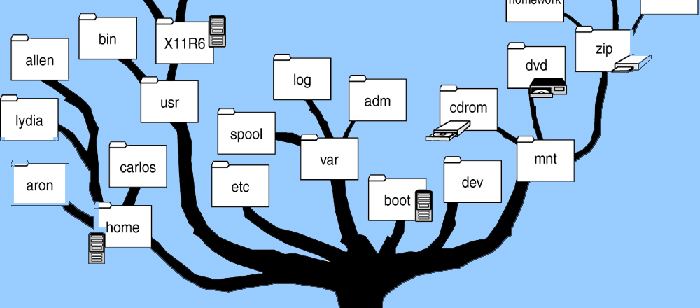
Dynamically Reconfigurable Layered Filesystem (DLFS)
Dr. John Dorband
Research Associate Professor
Computer Science and Electrical Engineering
University of Maryland, Baltimore County
1:00pm Friday, 8 March 2013, ITE 227, UMBC
The standard filesystem paradigm is based on a hierarchy of directories and files. The Dynamically reconfigurable Layered Filesystem (DLFS) adds a new dimension to filesystem organization that of filesystem layers and the ability to make custom configuration of them. The DLFS filesystem consists of many layers where each layer is mounted transparently on the root, ‘/’, directory. It is dynamic in the sense that every user can have a customizable list of layers that are included in a personalized view of the filesystem. We present in here the concept of a dynamically reconfigurable layered filesystem. We also present how it can be used, such as how it facilitates security and system management.
Dr. John E. Dorband received his PhD in Computer Science from Penn State University in 1985. He worked for NASA GFSC from 1985 until 2007. He currently is a Research Associate Professor at UMBC. Dr. Dorband was one of the builders of the first Beowulf system, constructed at GSFC in the fall of 1994. In the 80’s, he pioneered work in the generalized use of extremely parallel SIMD fixed-routing grid architectures through the use of sorting to implement generalized routing methods. This facilitated such application areas as image processing, graphics rendering, symbolic processing, database operations, and other irregular applications on parallel architectures that lacked generalized routine hardware. Dr. Dorband has been an innovator in the area of parallel programming language paradigms as a means of simplifying the implementation of applications on parallel computers. His professional specialties include designing and prototyping high-performance computer architectures; designing and implementing languages for simplified implementation of applications on parallel computers; designing and implementing algorithms for parallel computers; applying highly parallel architectures to image processing, signal processing, and data processing; and applying highly parallel architectures to computational science.
]]>
Dynamically Reconfigurable Layered Filesystem (DLFS) Dr. John Dorband Research Associate Professor Computer Science and Electrical Engineering University of Maryland, Baltimore County...
http://www.csee.umbc.edu/2013/03/talk-dorband-on-dynamically-reconfigurable-layered-filesystem-38/
https://my3.my.umbc.edu/api/v0/pixel/news/25305/guest@my.umbc.edu/cd5a8a55ce0b06de1b773946e3468119/api/pixel
news
talks
Computer Science and Electrical Engineering
https://my3.my.umbc.edu/groups/csee
https://assets3-my.umbc.edu/system/shared/avatars/groups/000/000/099/d117dca133c64bf78a4b7696dd007189/xsmall.png?1314043393
https://assets1-my.umbc.edu/system/shared/avatars/groups/000/000/099/d117dca133c64bf78a4b7696dd007189/original.png?1314043393
https://assets1-my.umbc.edu/system/shared/avatars/groups/000/000/099/d117dca133c64bf78a4b7696dd007189/xxlarge.png?1314043393
https://assets4-my.umbc.edu/system/shared/avatars/groups/000/000/099/d117dca133c64bf78a4b7696dd007189/xlarge.png?1314043393
https://assets3-my.umbc.edu/system/shared/avatars/groups/000/000/099/d117dca133c64bf78a4b7696dd007189/large.png?1314043393
https://assets1-my.umbc.edu/system/shared/avatars/groups/000/000/099/d117dca133c64bf78a4b7696dd007189/medium.png?1314043393
https://assets2-my.umbc.edu/system/shared/avatars/groups/000/000/099/d117dca133c64bf78a4b7696dd007189/small.png?1314043393
https://assets3-my.umbc.edu/system/shared/avatars/groups/000/000/099/d117dca133c64bf78a4b7696dd007189/xsmall.png?1314043393
https://assets3-my.umbc.edu/system/shared/avatars/groups/000/000/099/d117dca133c64bf78a4b7696dd007189/xxsmall.png?1314043393
Computer Science and Electrical Engineering
0
0
true
Wed, 06 Mar 2013 09:55:48 -0500
HTML5/CSS3 Image Thumbnail Gallery with Lightbox Effect
The fading lightbox interface has become a staple in many website layouts. This dynamic script was originally based off Lightbox as a pure JavaScript library. Open source developers eventually start playing around with these codes to generate new designs, plugins, and animation styles.
In this tutorial I want to demonstrate how we can use a jQuery Lightbox plugin to spruce up dynamic image galleries. You can find the documentation at this jQuery lightbox webpage created by Leandro Vieira Pinho. The plugin is open source and free to add onto any web project. There are also parameters you may edit for customizing the default features.
Constructing the Webpage
I will be adding all the image codes into an unordered list of items. These will contain an anchor link which leads to the full-size image, along with an image thumbnail. First we should take a peek at the header section. Download a copy of the plugin and extract all the files.
<!doctype html>
<html lang="en-US">
<head>
<meta http-equiv="Content-Type" content="text/html;charset=utf-8">
<title>jQuery Lightbox Image Thumbnail Gallery</title>
<meta name="author" content="Jake Rocheleau">
<link rel="shortcut icon" href="http://teamtreehouse.com/assets/favicon.ico">
<link rel="icon" href="http://teamtreehouse.com/assets/favicon.ico">
<link rel="stylesheet" type="text/css" media="all" href="css/styles.css">
<link rel="stylesheet" type="text/css" media="all" href="css/jquery.lightbox-0.5.css">
<link rel="stylesheet" type="text/css" media="all" href="http://fonts.googleapis.com/css?family=Lato|Skranji:700">
<script type="text/javascript" charset="utf-8" src="js/jquery-1.9.1.min.js"></script>
<script type="text/javascript" charset="utf-8" src="js/jquery.lightbox-0.5.min.js"></script>
</head>
We need the core plugin file named jquery.lightbox-0.5.min.js along with the customized CSS stylesheet jquery.lightbox-0.5.css. I have split up these resources into their own folders and kept everything hosted locally. Be sure to include a copy of the latest jQuery library before including the lightbox JS file. Additionally I am using a few custom web fonts to spice up the page design.
Now I should clarify that I purposefully split up two different galleries into the same HTML page. I want to demonstrate that we can build any number of different lightbox galleries together by generating them in unique lists. More specifically I have used the rel attribute on each anchor link to differentiate between the galleries.
<div class="photos">
      <ul class="clearfix">
        <!-- ATTRIBUTION: http://dribbble.com/shots/963800-New-App-design -->
        <li><a href="images/photos/01-app-design-iphone.png" rel="lightbox" title="Designed by <a href='http://dribbble.com/shots/963800-New-App-design' target='_blank'>Natalia Berowska</a>"><img src="images/photos/01-app-design-iphone-thumb.png" width="150" height="150"></a></li>

        <!-- ATTRIBUTION: http://dribbble.com/shots/963671-Navigation -->
        <li><a href="images/photos/02-ios-side-navigation.png" rel="lightbox" title="Designed by <a href='http://dribbble.com/shots/963671-Navigation' target='_blank'>Matt D. Smith</a>"><img src="images/photos/02-ios-side-navigation-thumb.png" width="150" height="150"></a></li>
I’ve copied over the codes for just the first couple of list items in my top gallery example. Notice how each link is using the rel value of “lightbox” to encapsulate all the images together in one gallery. Also the title attribute will be appended into the lightbox footer – and in this scenario I am using internal anchor links for clickable references back to the image source.
Styling the Photo Galleries
Both of the unordered lists are contained inside a div with the class .photos. This will make styling much easier because we only need to write a single set of CSS rules. The images are given a lower opacity and will apply CSS3 transitions for an animated hover effect.
/* gallery display */
    .photos {
      display: block;
    }

    .photos ul { list-style: none; }

    .photos ul li { display: inline; }

    .photos ul li a {
      display: block;
      float: left;
      padding: 4px;
      margin-right: 10px;
      margin-bottom: 7px;
      opacity: 0.75;
      -webkit-transition: all 0.3s linear;
      -moz-transition: all 0.3s linear;
      transition: all 0.3s linear;
    }
    .photos ul li a:hover {
      opacity: 1.0;
    }

    .photos ul li a img {
      border: 6px solid #e1d9ec;
    }
Most of the codes are straightforward if you are familiar with CSS3 designs. But there is one small bug I need to mention which is fixed at the very bottom of the stylesheet. My custom resets will force all elements into the border-box sizing parameters. This means any extra padding will be kept inclusive, not tacking on additional width/height. But we need this additional space to for captions to display properly.
/* lightbox hacks */
    #lightbox-container-image-data-box {
      -webkit-box-sizing: content-box;
      -moz-box-sizing: content-box;
      box-sizing: content-box;
    }

    /** uncomment to remove lightbox captions
     *
    #lightbox-container-image-data-box {
      display: none !important;
    }
     *
    **/
The top selector will reset the entire lightbox data container to be using content-box. This is the default setting in all browsers which will force additional pixels via margins or padding. Additionally I have a commented a block of code which is used to hide the caption altogether.
Some users will not want to even bother with the bottom caption area. It takes another second or two for the captions to animate, plus they may not really be useful in all circumstances. By adding display: none; onto the whole caption container we will never see it appear on any lightbox. Just uncomment this block of code and the effect should work perfectly.
jQuery Methods
Onto the final piece of our tutorial which goes into calling the function method via jQuery. You can find all the basic information on the plugin’s homepage but I have also copied over my own codes below. You should add this JS block into a <script> tag just before closing the page body.
<script type="text/javascript">
    $(function(){
      $('a[rel=lightbox]').lightBox({
        containerResizeSpeed: 250,
        fixedNavigation: true
      });
      $('a[rel=2ndlightbox]').lightBox({
        overlayBgColor: '#fff',
        overlayOpacity: 0.7
      });
    });
    </script>
Note that the jQuery selector could be almost anything which targets the internal anchor links. We could apply a unique ID onto each photo div and use a selector like $('#photos1 a'). I just prefer the rel="" attribute because it doesn’t depend on a certain HTML container. Even if the anchor links are not inside a photo div, they will still appear in the slideshow if they are using the same rel value.
The actual function parameters are a bit more complicated and may not even require customization. I have passed a series of different parameters into each of the lightboxes. The first gallery attaches fixed navigation elements and speeds up the animation time. And the 2nd gallery will change the background color to white, just to demonstrate a contrast between the default option.
$(function() {
       $('a[@rel*=lightbox]').lightBox({
    	overlayBgColor: '#fff',
    	overlayOpacity: 0.6,
            fixedNavigation: false,
    	imageLoading: 'images/loading.gif',
    	imageBtnClose: 'images/close.gif',
    	imageBtnPrev: 'images/prev.gif',
    	imageBtnNext: 'images/next.gif',
    	containerResizeSpeed: 350,
    	txtImage: 'Imagem',
    	txtOf: 'de'
       });
    });
This code block is more of a template which contains all the major default parameters. You’ll find all this content in the documentation as well. It is fairly straightforward and you can have a lot of fun toying around with different values. Try out my live demo and see how you feel about the open source jQuery lightbox plugin.
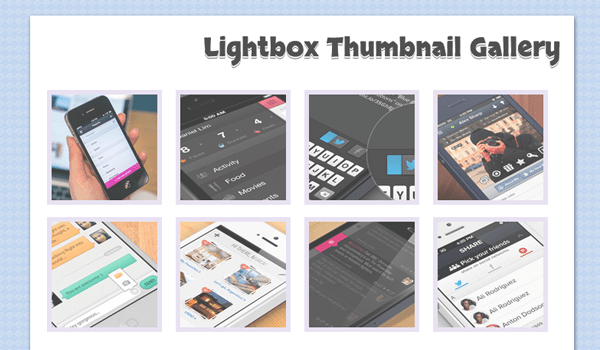
Live Demo – Download Source Code
Final Thoughts
I hope this tutorial may prove to be useful for at least a few developers. Adding your own custom lightbox effect will require a bit of studying. But it is not an overly complex topic which requires days to implement. You mostly want to ensure that you are using the right plugin for the job. And for anybody who needs a bare-bones minimalist plugin for image showcases – I will have to recommend this jQuery lightbox on any project.
The post HTML5/CSS3 Image Thumbnail Gallery with Lightbox Effect appeared first on Treehouse Blog.
]]>
The fading lightbox interface has become a staple in many website layouts. This dynamic script was originally based off Lightbox as a pure JavaScript library. Open source developers eventually...
http://feedproxy.google.com/~r/teamtreehouse/~3/Oes98_Y67jo/html5css3-image-thumbnail-gallery-with-lightbox-effect
https://my3.my.umbc.edu/api/v0/pixel/news/25790/guest@my.umbc.edu/384a818973bab4dfef4820289963cfa0/api/pixel
android
css
css3
design
development
html
html5
html5-image-gallery-tutorial
image-gallery
ios
javascript
lightbox-gallery-tutorial
make-a-website
responsive
web
Web Developer - Build Group
https://my3.my.umbc.edu/groups/retired-583
https://assets3-my.umbc.edu/system/shared/avatars/groups/000/000/583/fc60f5d7abc2e080599bb6dc465db54d/xsmall.png?1363101197
https://assets4-my.umbc.edu/system/shared/avatars/groups/000/000/583/fc60f5d7abc2e080599bb6dc465db54d/original.jpg?1363101197
https://assets4-my.umbc.edu/system/shared/avatars/groups/000/000/583/fc60f5d7abc2e080599bb6dc465db54d/xxlarge.png?1363101197
https://assets4-my.umbc.edu/system/shared/avatars/groups/000/000/583/fc60f5d7abc2e080599bb6dc465db54d/xlarge.png?1363101197
https://assets3-my.umbc.edu/system/shared/avatars/groups/000/000/583/fc60f5d7abc2e080599bb6dc465db54d/large.png?1363101197
https://assets3-my.umbc.edu/system/shared/avatars/groups/000/000/583/fc60f5d7abc2e080599bb6dc465db54d/medium.png?1363101197
https://assets4-my.umbc.edu/system/shared/avatars/groups/000/000/583/fc60f5d7abc2e080599bb6dc465db54d/small.png?1363101197
https://assets3-my.umbc.edu/system/shared/avatars/groups/000/000/583/fc60f5d7abc2e080599bb6dc465db54d/xsmall.png?1363101197
https://assets4-my.umbc.edu/system/shared/avatars/groups/000/000/583/fc60f5d7abc2e080599bb6dc465db54d/xxsmall.png?1363101197
Web Developer - Build Group
0
0
true
Wed, 06 Mar 2013 09:30:46 -0500
