Matthew Kvalheim, assistant professor of mathematics, was one of only about 20 scholars who spoke at a conference celebrating the 95th birthday of Stephen Smale, one of the most influential mathematicians alive today. Held July 21 – 22, 2025, at the Simons Institute for the Theory of Computing in Berkeley, California, the invitation to present was an honor for Kvalheim, who joined the UMBC faculty in 2023.
Stephen Smale, a Fields Medalist (an award often likened to a Nobel Prize in mathematics), revolutionized fields like topology and dynamical systems. His groundbreaking work, which Kvalheim uses as a basis for his own research, has shaped modern mathematics.
Kvalheim’s research explores systems that evolve over time. Specifically, he studies “asymptotically stable” systems—those that naturally settle into a predictable state, like a pendulum coming to rest. Kvalheim’s talk at the conference built on Smale’s foundational discoveries, using them to determine whether certain system behaviors are possible or fundamentally unattainable.
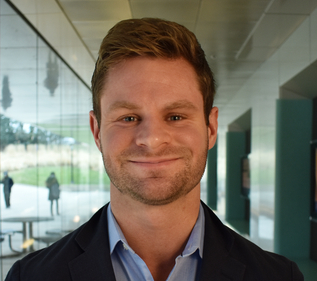 Matthew Kvalheim (courtesy of Kvalheim)
“It was a great privilege to speak about Professor Smale’s legacy, and in particular the deep impact his work has had on one of my projects funded by the Air Force Office of Scientific Research,” Kvalheim says. “The result of this project, which relies heavily on Smale’s breakthrough solution of a mathematical puzzle known as the ‘generalized Poincaré conjecture,’ helps us understand limitations in designing stable real-world systems.”
This work has far-reaching implications, from ensuring the safety of autonomous vehicles to optimizing complex robotics. By developing mathematical tools that apply across diverse applications, Kvalheim’s research offers universal insights into what systems can and cannot do, blending creativity with mathematical rigor to tackle fundamental questions with real-world impact.
Learn more about UMBC’s programs in mathematics and statistics.