UMBC has been designated as one of only three institutions in Maryland dually recognized with Carnegie R1 status—among the top 5 percent of research universities in the nation—and the Carnegie Community Engagement classification, which recognizes universities who systematically share knowledge and resources with those of the public and private sectors to enrich scholarship, research, and creative activity in order to contribute to the public good. Following an extensive full campus self-study demonstrating increased depth, breadth, and integration of engagement, this week UMBC was classified as a Carnegie Community Engaged Campus for a second six-year period.
“As a public university for the public good, community engagement is at the heart of UMBC’s mission to provide world class education and research that directly supports our students, community, and partners in an inclusive environment,” says Provost Manfred H. M. van Dulmen. “The Carnegie Community Engagement Classification is an acknowledgement of the dedication and excellent work of the UMBC faculty, staff, and students to engage and serve the city of Baltimore and the state of Maryland.”
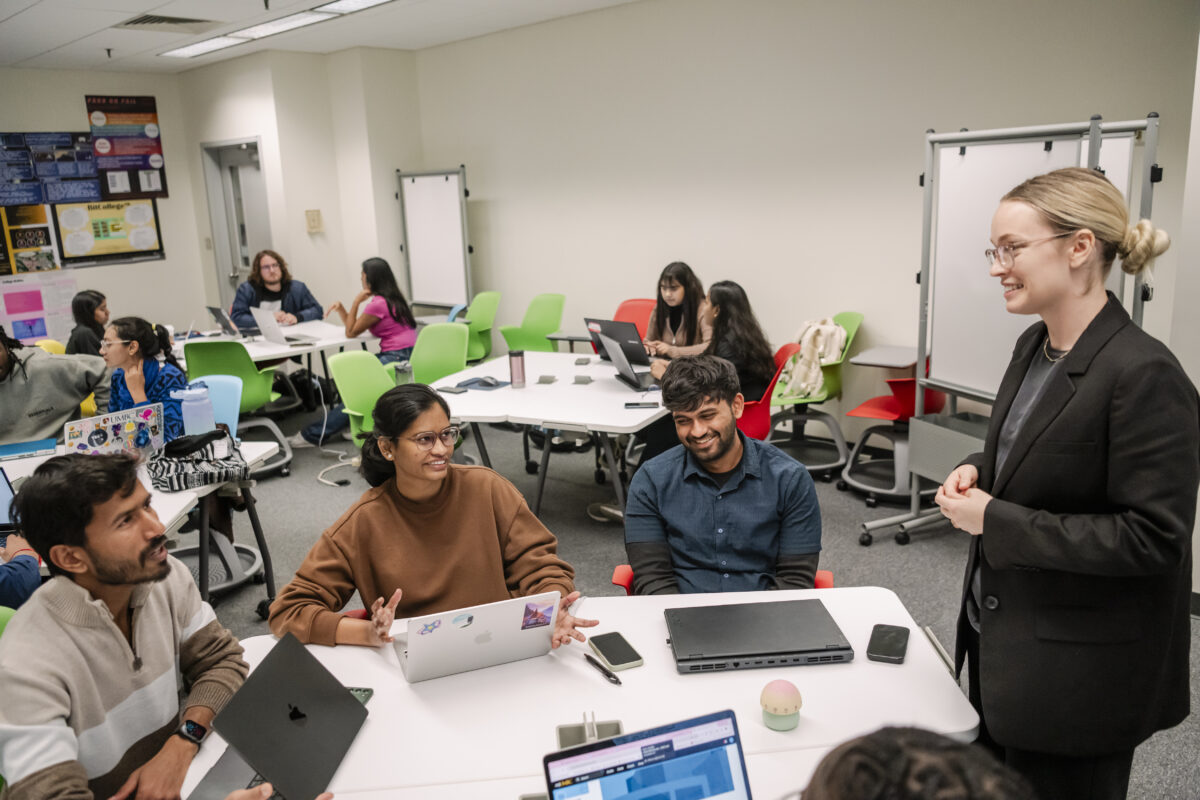 Students engaging in a lively classroom discussion.
Community engagement at UMBC flows from the university’s vision of a culture of inclusive excellence, explains Joby Taylor, Ph.D. ’05, assistant vice provost and co-leader of The Shriver Center for Public Service and Community Engagement. Taylor and Preminda Jacob, associate dean of the College of Arts, Humanities, and Social Sciences, co-chaired the reclassification study with the conviction that: “Community engagement extends our vision and practice of an inclusive culture out into the world beyond our campus through relationships and partnerships focused on mutual collaborations that matter and make a difference…locally, regionally, and globally.”
This community engagement classification re-affirms UMBC as a place where people and relationships are centered. At a time when the impact of higher education is in question, UMBC’s commitment to inclusive excellence as seen through this reclassification offers a powerful counter narrative about the roles of universities in a critically important moment.
“It speaks to how learning and knowledge can be transformational, not just transactional,” says Taylor, noting his belief that higher ed can be oriented toward positive social change, supporting holistic and lifelong learning with civic purposes, as well as professional pathways and economic mobility.
President Valerie Sheares Ashby echoes these sentiments, noting during the self-study that, “At UMBC, we do not just talk about equity and social justice, we make it happen in real, tangible ways that improve people’s everyday lives.”