Early research partnerships build strong bonds
A new initiative, which the organizers hope to expand, matched students from Baltimore City Community College with UMBC researchers. This summer the teams worked on projects advancing biodegradable plastics and harnessing AI to bring Baltimore’s hidden stories to light.
When Talisha Clinton, a student in Baltimore City Community College (BCCC)’s computer information systems program, first met Rebecca Williams, an assistant professor in the Department of Computer Science and Electrical Engineering at UMBC, she says she felt an instant connection.
“From the very beginning, there was the feeling of finding a kindred spirit,” Clinton says. Williams agrees. “When I met Talisha, I was so glad we had found each other.” The two were paired as part of a new initiative launched by the College of Engineering and Information Technology (COEIT) at UMBC to support BCCC students for a summer of research with COEIT faculty.
Clinton and Williams worked together on a project that aims to use AI to add community perspectives to historic redlining maps of Baltimore City that classed certain neighborhoods as “high risk” and led banks, insurance companies, and other businesses to refuse loans, mortgages, or other services to people who lived there.
 Talisha Clinton talks about her research at the summer poster session. (UMBC)
Kyah Young, another participant in the summer program, worked with David Garcia, assistant professor in the Department of Chemical, Biochemical, and Environmental Engineering, on work to improve the process of using ingredients from seaweed to make bioplastics in the lab.
Both Clinton and Young say the program expanded their horizons, introduced them to new ideas and career paths, and connected them with important support groups.
“This summer pushed me out of my comfort zone, helped me meet new labmates and friends, and just showed me another dimension of what I am capable of working on,” Young says.
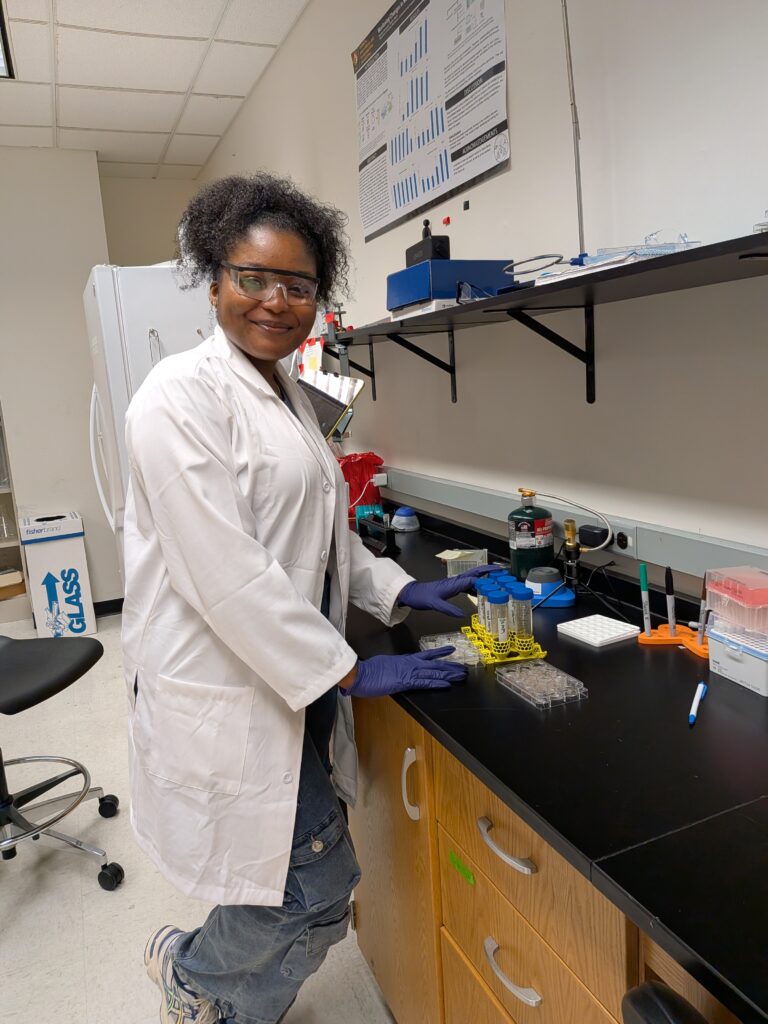
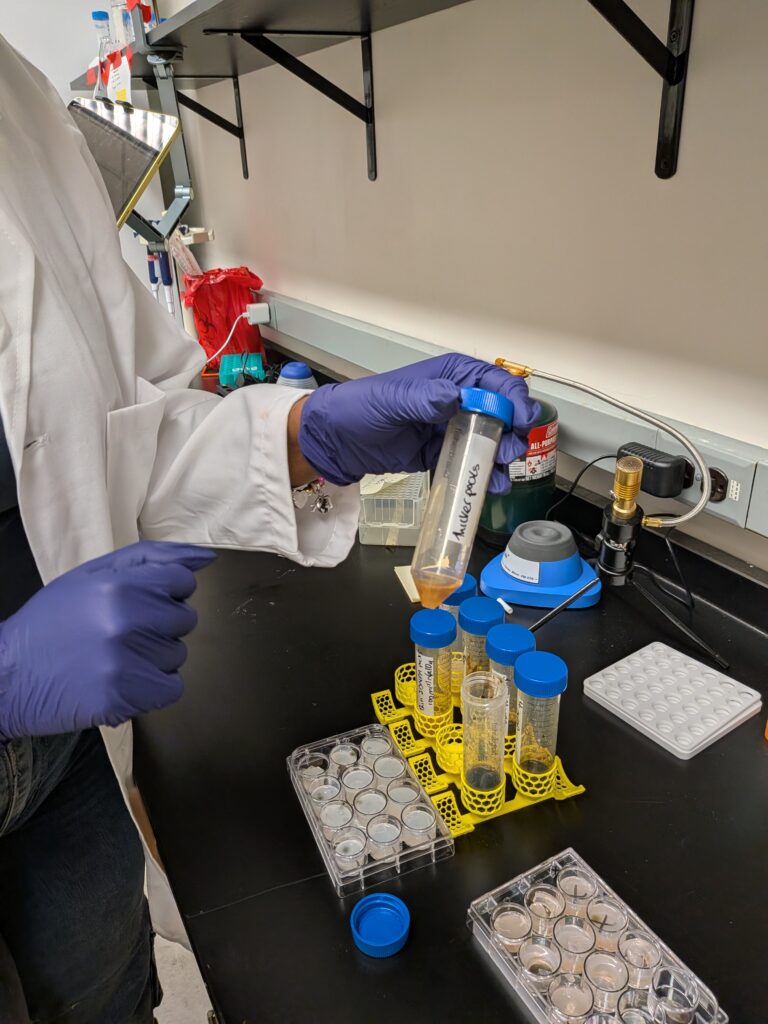
Young shows the vials of bioplastic she is making in the lab. (UMBC)
AI-assisted countermapping and better bioplastics
The program connecting the BCCC students to COEIT was conceived and led by Jorge Almodovar, associate professor in the Department of Chemical, Biochemical, and Environmental Engineering, who had run a similar program when he was at the University of Arkansas.
COEIT worked with partners in BCCC to recruit students, who were then matched with a faculty researcher based on the students’ interests. Each student received a $3,000 stipend from the COEIT dean’s office for their summer work.
Clinton says she came into the program hoping to “dip my toe into something different, go to a new campus, and learn from some new individuals.” She became instantly intrigued when she heard about Williams’s idea for a project looking to make alternative, community-focused maps of Baltimore, a practice called countermapping.
Clinton spent a large portion of the summer visiting neighborhoods around Baltimore, interviewing people and taking pictures—information that could supplement historical redlining details and demographic and socioeconomic datasets on new maps. She is now thinking about the best ways to use technology to synthesize and display the information and how she might share the interactive platform with others, such as students, teachers, and community members.
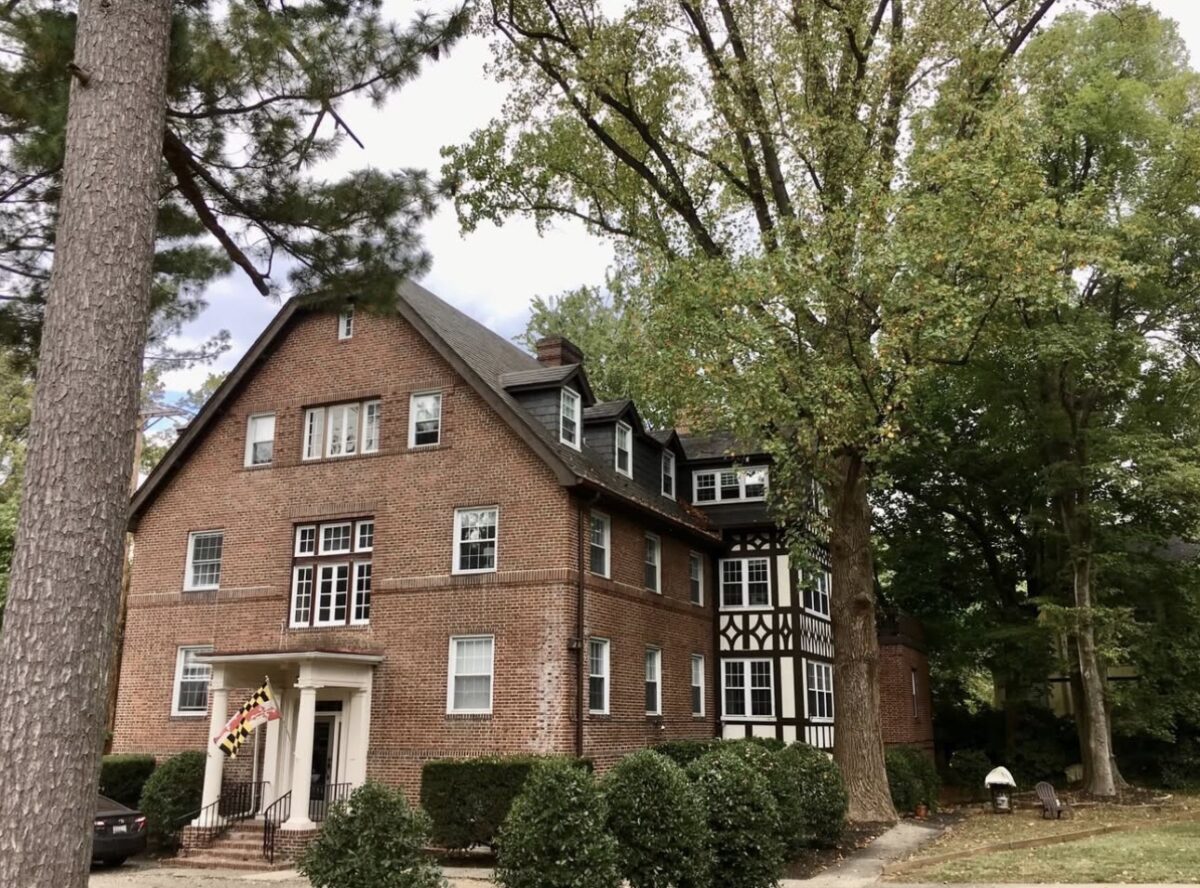
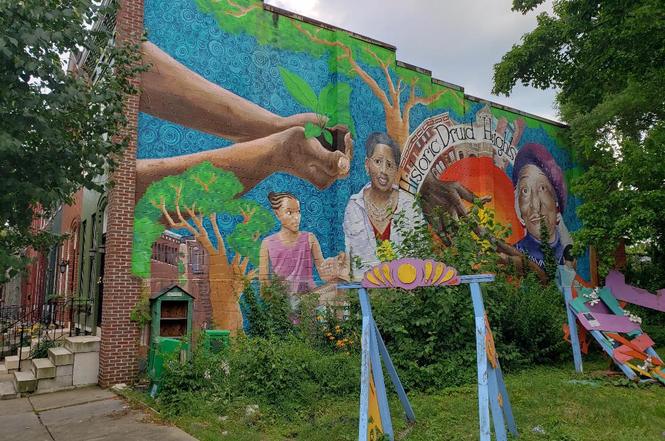
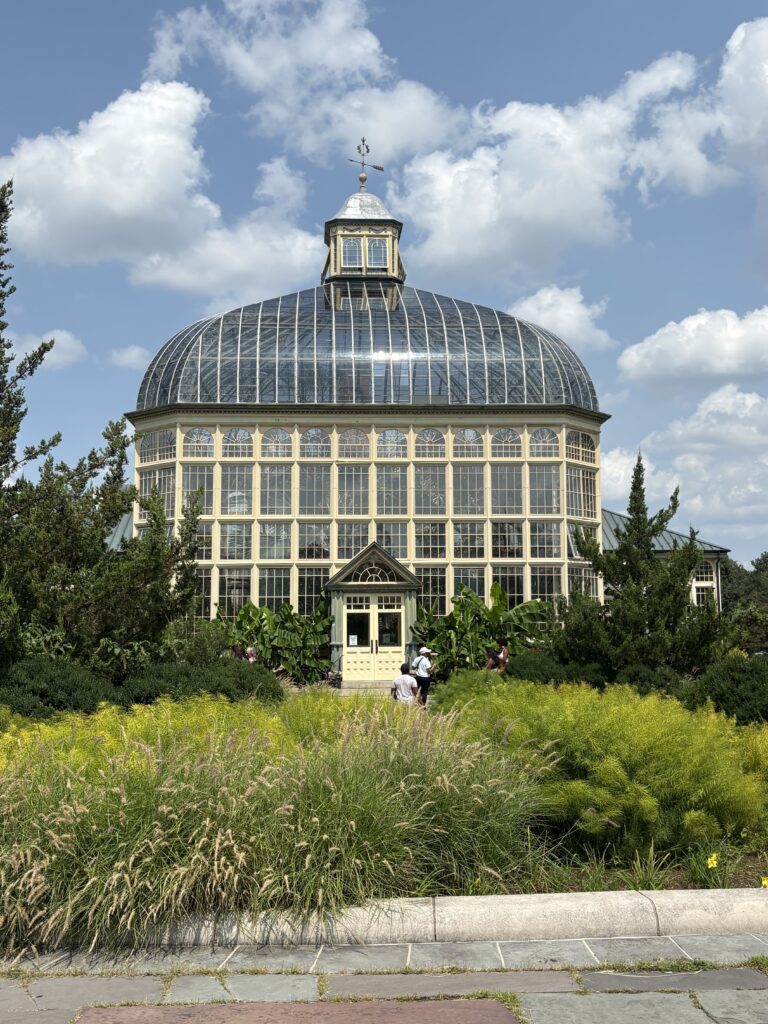
Clinton took photos around Baltimore neighborhoods, including a house in Roland Park (left), a mural in Druid Heights (center), and the Howard Peters Rawlings Conservatory and Botanic Gardens in Druid Hill Park (right). (Photos courtesy of Clinton)
Clinton says one of the most memorable parts of the experience was when she was taking pictures one day and was approached by an older gentleman, who asked what she was doing. She explained the project, not knowing what kind of reaction to expect, but his one-word reply meant a lot to her: “Finally,” he said.
Young also found a lot of meaning from her project—working to standardize the production of bioplastics in the lab so that future research could more effectively evaluate new methods of improving the plastics’ material properties, such as flexibility and strength. She says the early stage of the research was appealing: “It was like a clean slate, and I could imagine it growing in so many ways.”
Bioplastics, made from renewable organic materials such as plants or microbes, are more sustainable than petroleum-based plastics, and many are more biodegradable. Young, who plans to eventually go to medical school, says she could envision one day people making bandages from bioplastics and incorporating clinical treatments such as antibiotics to help to heal wounds without contributing to plastic pollution.
The broad benefits of research collaboration
The BCCC-COEIT summer program overlapped with the existing COEIT Student Summer Project (CSSP) awards program, which supports UMBC student researchers. Clinton and Young joined the CSSP students in professional development programming, including weekly check-in meetings, and workshops on writing an abstract, creating a poster, and exploring student entrepreneurship. Both Clinton and Young presented posters at the university-wide Summer Undergraduate Research Fest in early August and at the end of summer COEIT poster session later that month.
“From the students’ perspective, a program like this is an opportunity to be exposed to research, learn what it’s about and decide if it’s right for you,” says Almodovar. “And from UMBC’s perspective, we can build connections with local community colleges and directly engage students with the opportunities we have to offer.”
 COEIT student researchers met with President Valerie Sheares Ashby during the summer. (Photo courtesy of Chloe Evered)
Almodovar hopes to expand the program to more students from more community colleges next year and has submitted a proposal for funding from the National Science Foundation for this purpose.
The professors involved have already seen how such programs can alter the trajectory of individual lives. Almodovar says one of the community college students he worked with when he was at the University of Arkansas, Melanie Nelson, is now at UMBC pursuing a Ph.D. in biology, while continuing research with him.
Garcia notes that he got his own start as a science researcher while still an undergraduate, through a program offered at the University of Wisconsin. “These types of programs are a great way to facilitate new projects and bring in new students, so I’m pretty big on them,” he says.
This year’s participants in the BCCC-COEIT program have certainly seemed to catch the research bug. This fall, Young transferred to UMBC as a biology major and is continuing to work on bioplastics in Garcia’s lab.
Clinton is finishing her associate’s degree at BCCC, while considering her next steps.
“I’ve applied to multiple programs and I’m evaluating my options. But I’m really thinking it’s going to be UMBC—for a bachelor’s, a master’s, and maybe even a Ph.D.” she says.